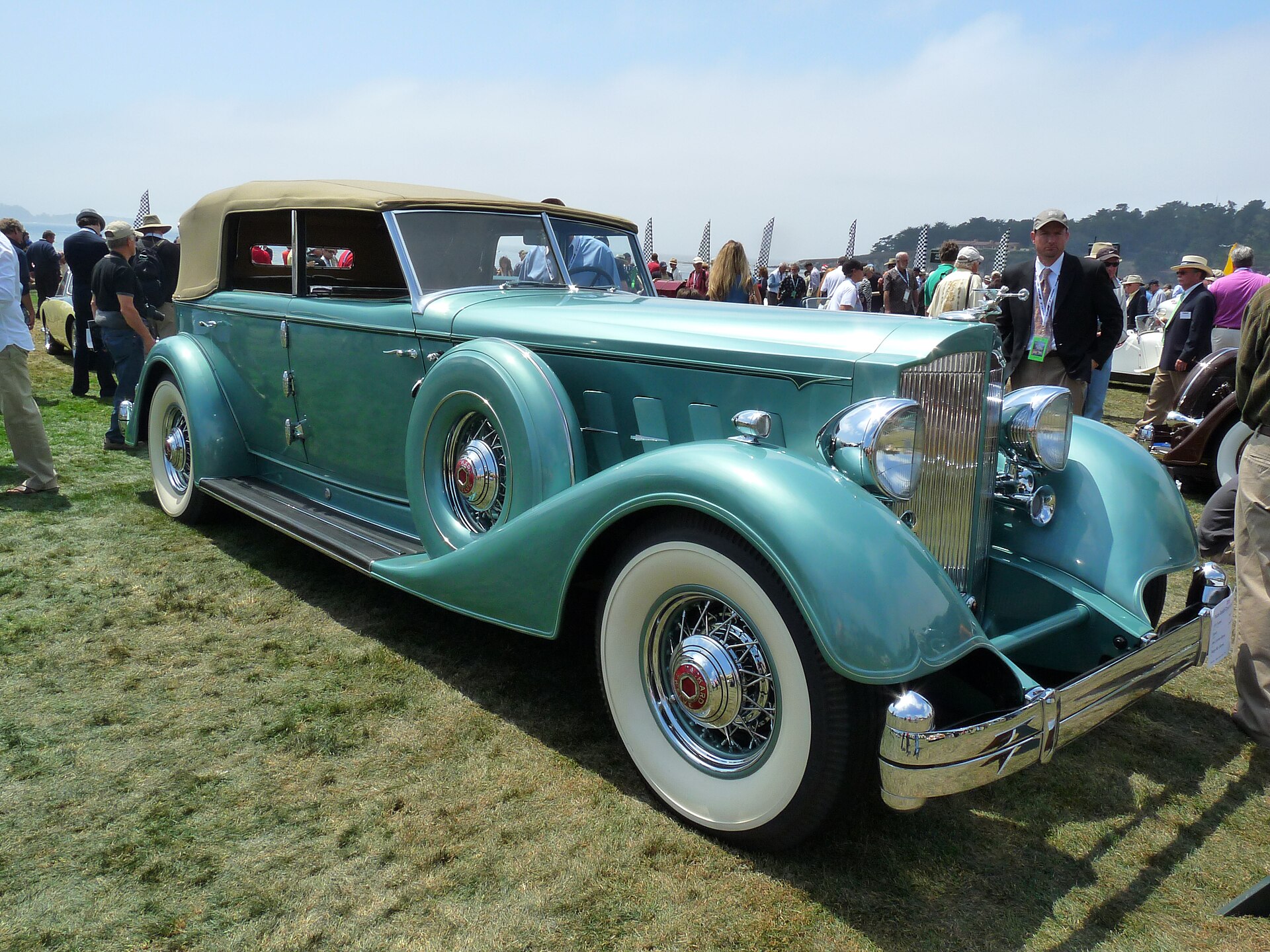
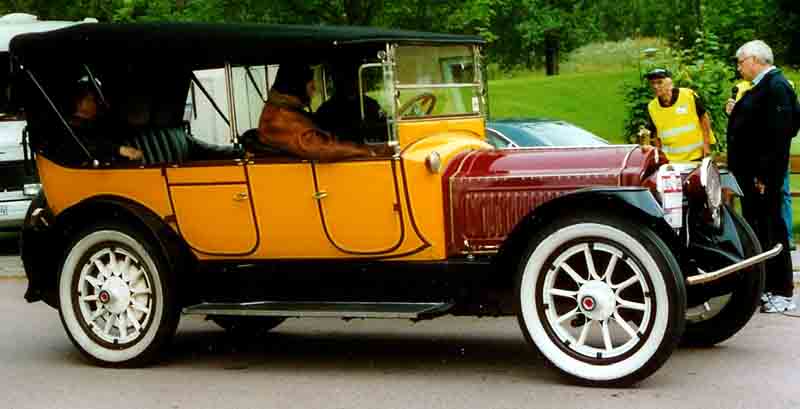
Packard — "Ask the Man Who Owns One", 1899 to 1958
Packard was one of the great American luxury car brands. It was founded in 1899 in Warren, Ohio, by the brothers James Ward and William Doud Packard, moved to Detroit in the early 1900s and, from 1924 to 1930, sold more luxury cars than any other American maker. Its Twin Six of 1915 was the company's first V12, its slogan "Ask the man who owns one" became famous, and in the Second World War it built Rolls-Royce Merlin aero engines. After a merger with Studebaker in 1954 the brand faded, and the last Packard was built in July 1958.
Key takeaways
- The first Packard car was built on 6 November 1899 in Warren, Ohio; about 400 were made there until 1903.
- The Packard Motor Car Company was formed on 2 October 1902 with Henry Bourne Joy's Detroit investors.
- Packard was America's best-selling luxury brand from 1924 to 1930 and built 55,523 Merlin aero engines in the Second World War.
- Packard bought Studebaker on 1 October 1954; the Detroit factory stopped in June 1956 and the brand ended in 1958.
Packard at a glance
| Fact | Value |
|---|---|
| Founded | 1899, Warren, Ohio |
| Founders | James Ward Packard, William Doud Packard, George Lewis Weiss |
| Company | Ohio Automobile Company (1900), Packard Motor Car Company (1902) |
| Main plant | East Grand Boulevard, Detroit (Albert Kahn) |
| Slogan | "Ask the Man Who Owns One" |
| Best-known models | Twin Six, Eight, Twelve, One-Twenty, Clipper, Caribbean |
| War production | 55,523 Merlin aero engines, PT-boat engines |
| End | Merged into Studebaker-Packard 1954; last Packard 1958 |
Origins: the Packard brothers of Warren, Ohio
James Ward Packard was born in Warren, Ohio, on 5 November 1863 and studied mechanical engineering at Lehigh University from 1880 to 1884. In 1890 he and his brother William founded the Packard Electric Company, which made carbon arc lamps. In 1893 the brothers formed a partnership with George Lewis Weiss, an investor in the Winton Motor Carriage Company. According to the Packard article, James Packard's suggestions for improving Winton's cars were ignored, and Alexander Winton reportedly told him to "go build your own car".
The brothers had drawn up plans for a car in 1893, but an economic depression delayed them. The first Packard was finished on 6 November 1899, and about 400 cars were built at the Dana Street works in Warren up to 1903. The business was incorporated in 1900 as the Ohio Automobile Company.
Detroit, Joy and Albert Kahn
One of the early buyers was Henry Bourne Joy, from a wealthy Detroit family. After buying a Packard he recruited investors, among them Truman Handy Newberry and Russell A. Alger Jr. On 2 October 1902 the company was refinanced and renamed the Packard Motor Car Company, with James Packard as president, and in 1903 it moved to Detroit, where Joy became general manager.
The new factory on East Grand Boulevard was designed by Albert Kahn Associates and grew to more than 40 acres (about 16 hectares) with 3.5 million square feet of floor space. Its Building No. 10 of 1906 was an early use of reinforced concrete in a car factory. Demolition of the plant began in September 2022. Production in Detroit rose from 192 cars in 1904 to 4,318 in 1910.

The Twin Six and luxury leadership
Packard aimed at the top of the market, competing with Rolls-Royce, Isotta Fraschini and Mercedes-Benz. Under president James Alvan Macauley the company used its famous slogan "Ask the Man Who Owns One", and with Pierce-Arrow and Peerless it formed the "Three Ps" of American luxury cars.
The Packard Six of 1913 was followed by the Twin Six, built from May 1915 and sold as the 1916 model, Packard's first V12. Its 6.9-litre engine produced 66 kW (88 hp), and 30,941 were built up to 1923; a 1919 Twin Six paced the Indianapolis 500 that year. The V12 was linked to Packard's work on the Liberty L-12 aero engine of the First World War, developed under chief engineer Jesse G. Vincent. Production reached 18,572 cars in 1916 and 34,000 in 1926.
From 1924 to 1930 Packard was the best-selling luxury brand in the United States, and in 1928 it sold cars in 61 countries. The "Goddess of Speed" mascot appeared on the Packard Eight in 1925, and in 1930 Packard built what is described as the first American diesel passenger car. The 1930s Packard Twelve returned to twelve cylinders with 7.3 and later 7.8 litres and up to 130 kW (175 hp); 5,262 were built up to 1939.

The One-Twenty and the war
In the Depression years Packard added a cheaper line. The One-Twenty of 1935 was the first Packard priced under US$1,000 in 1935; sales more than tripled that year and doubled again in 1936. The Clipper body style followed for the 1941 model year.
In 1942 Packard switched entirely to war production. Under a licence agreed with Rolls-Royce in September 1940, it built 55,523 V-1650 Merlin engines, the first of which ran in August 1941. They powered the P-51 Mustang fighter and some versions of the Lancaster, Mosquito and Spitfire, and Packard also built V12 marine engines for PT boats, three per boat. Packard's sales in 1944 were US$455.1 million.

Postwar decline
After the war Packard restarted with its 1942 designs and was slow to replace them. The rounded "bathtub" styling of 1948–1950 divided buyers. Sales rose from 42,000 in 1950 to nearly 101,000 in 1951, and the company developed its own Ultramatic automatic gearbox, but it had no modern V8 until 1955. James Nance, hired from the appliance maker Hotpoint, moved the brand back towards luxury cars such as the Caribbean convertible, of which about 750 were built for 1953.
Studebaker-Packard and the end
Nance and George W. Mason of Nash-Kelvinator planned a four-way merger of independent car makers. Packard bought Studebaker of South Bend, Indiana, on 1 October 1954, forming Studebaker-Packard; Studebaker was larger, but Packard had the stronger finances. The wider plan ended when Mason died on 8 October 1954. Production for 1954 was 89,796 Packards.
The combined company lost money heavily. After a disastrous 1956, Nance resigned and a management agreement was signed with the aircraft group Curtiss-Wright. The last car designed entirely by Packard, a Patrician saloon, left the Conner Avenue line in Detroit on 25 June 1956, and car production moved to South Bend.
The 1957 and 1958 Packards were Studebakers with Packard badges, nicknamed "Packardbakers"; only 2,622 were sold for 1958. The last Packard was built in July 1958, and in 1962 the company dropped the name and became the Studebaker Corporation. The surviving Packard model is listed in the Packard catalogue; its partner's cars are in the Studebaker catalogue. For a British rival of the luxury years, see the history of Rolls-Royce. More pre-war and post-war cars are in the classic cars section.

Packard timeline
| Year | Event |
|---|---|
| 1890 | Packard Electric Company founded |
| 1899 | First Packard car (6 November) |
| 1902 | Packard Motor Car Company formed (2 October) |
| 1903 | Move to Detroit |
| 1915 | Twin Six V12 production begins |
| 1924–1930 | Best-selling American luxury brand |
| 1935 | One-Twenty, the first Packard under US$1,000 |
| 1942 | Full conversion to war production; Merlin engines |
| 1954 | Packard buys Studebaker (1 October) |
| 1956 | Last Detroit-built Packard (25 June) |
| 1958 | Last Packard built (July) |
| 1962 | Packard dropped from the company name |
Landmark Packard models
| Model | Years | Why it matters |
|---|---|---|
| Twin Six | 1915–1923 | Packard's first V12; 30,941 built |
| Eight | From the 1920s | First car with the Goddess of Speed mascot (1925) |
| Twelve | 1933–1939 | Second V12 range, 5,262 built |
| One-Twenty | 1935 onward | First Packard under US$1,000 in 1935 |
| Caribbean | 1953 | Luxury convertible, about 750 built for 1953 |
FAQ
Who founded Packard?
James Ward Packard and his brother William Doud Packard, with George Lewis Weiss, in Warren, Ohio, in 1899.
What did "Ask the man who owns one" mean?
It was Packard's advertising slogan under president James Alvan Macauley, who led the company in its luxury years.
Did Packard build aircraft engines?
Yes. In the Second World War Packard built 55,523 Rolls-Royce Merlin engines under licence for the P-51 Mustang, as well as PT-boat engines.
Why did Packard fail?
After the war it was slow to renew its range and had no modern V8 until 1955. The 1954 merger with Studebaker brought heavy losses, and Packard production in Detroit ended in 1956.
When was the last Packard made?
In July 1958. The 1957–1958 models were Studebakers with Packard badges.
Sources
- Wikipedia — Packard (accessed 24 Oct 2026)
- Wikipedia — James Ward Packard (accessed 24 Oct 2026)
- Wikipedia — Packard Twelve (accessed 24 Oct 2026)
- Wikipedia — Studebaker-Packard Corporation (accessed 24 Oct 2026)
- Wikipedia — Packard V-1650 Merlin (accessed 24 Oct 2026)
Found a mistake? Report an error