The History of Rolls-Royce: Royce, Rolls and the Cars of Goodwood
The marque began in 1904, when the engineer Henry Royce built his first car in Manchester and the dealer Charles Rolls agreed to sell every car he could make. Rolls-Royce Limited was registered on 15 March 1906. Since 2003 the cars have been built at Goodwood in West Sussex by Rolls-Royce Motor Cars, a BMW subsidiary, which delivered a record 6,032 cars in 2023.
Key takeaways
- 1904: Henry Royce's first car; the meeting of Henry Royce and Charles Rolls at the Midland Hotel, Manchester, on 4 May 1904.
- 1906–1925: the six-cylinder "Silver Ghost" made the name; the Derby factory opened in 1908 and Bentley was bought in 1931.
- 1971: the company went into receivership over jet-engine costs; the car business was separated, joined Vickers in 1980 and was split between Volkswagen and BMW in 1998.
- Today: Phantom, Ghost, Cullinan and the electric Spectre, built at Goodwood since 2003.

Rolls-Royce at a glance
| Fact | Value |
|---|---|
| Origins | 1904, Manchester (Royce) and Fulham, London (C.S. Rolls & Co.) |
| Company founded | Rolls-Royce Limited, registered 15 March 1906 |
| Founders | Henry Royce and Charles Rolls |
| Car makers since | Rolls-Royce Motor Cars Ltd (BMW subsidiary), from 2003 |
| Headquarters and plant | Goodwood, near Chichester, West Sussex |
| Best-known models | Silver Ghost, Phantom, Silver Shadow, Ghost, Cullinan, Spectre |
| Record sales | 6,032 cars in 2023 |
Today's car company and Rolls-Royce plc, the aero-engine maker, are separate businesses. They share history and the name, which BMW uses under licence.

Royce and Rolls (1904–1906)
Henry Royce was an engineer who ran his own works in Manchester. On 1 April 1904 he completed his first car, the two-cylinder Royce 10 hp, and drove it about 48 km to his home in Knutsford. Charles Rolls, who sold imported cars through his firm C.S. Rolls & Co. in Fulham, heard about it. The two men met at the Midland Hotel in Manchester on 4 May 1904. On 23 December 1904 Rolls agreed to take every car Royce could build and sell them under the name Rolls-Royce.

The first cars under the joint name, a range of four models, appeared at the Paris motor show in December 1904. The company was registered on 15 March 1906, and the partners soon needed a larger factory than the Manchester works.
The Silver Ghost and the Derby years (1906–1939)
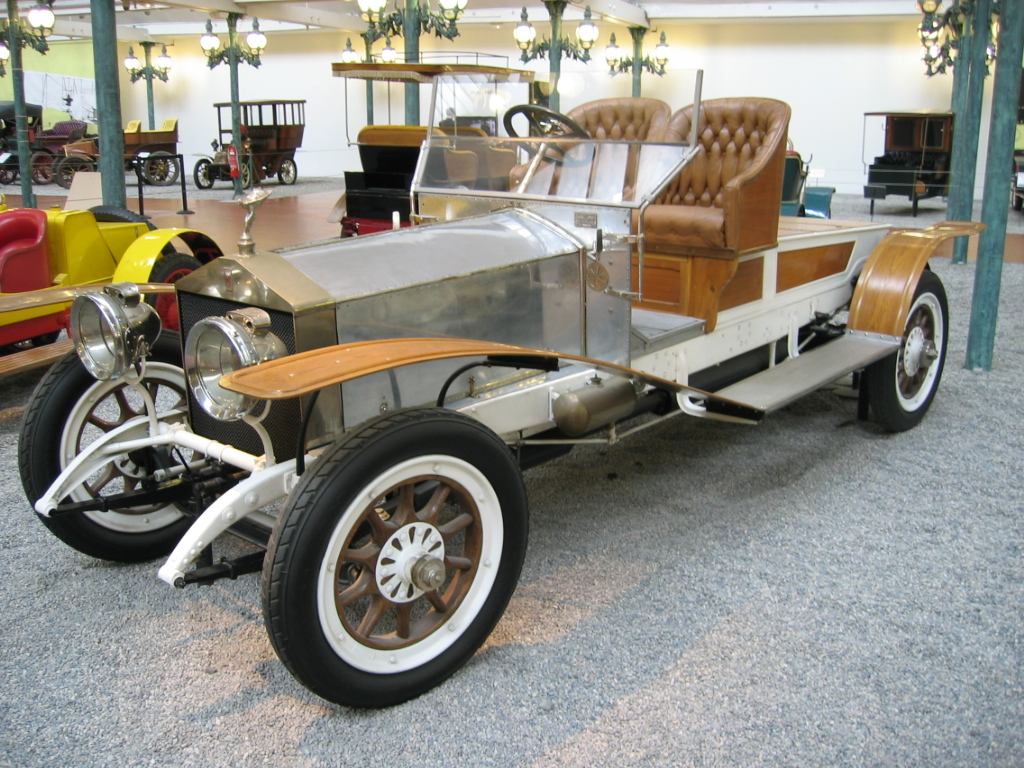
In 1906 Royce designed a new six-cylinder car, known as the 40/50. It became the company's only model for many years, and in 1908 production moved to a new factory in Derby, largely designed by Royce himself. In March 1908 an early 40/50 was christened "Silver Ghost", and the press and public applied the name to the whole model. More than 6,000 were sold between 1906 and 1925, according to the old 1cars text.

The one-model policy ended in 1922 with the smaller and cheaper Twenty, introduced when sales of the Silver Ghost fell after the First World War. In 1925 the New Phantom replaced the Silver Ghost. It also built cars in the United States: a plant in Springfield, Massachusetts, produced 2,944 vehicles between 1921 and 1931. In 1931 the company bought Bentley Motors, which had failed in the Great Depression. From then until 2002 Bentleys and Rolls-Royces were closely related, often down to the details. Henry Royce died in 1933. The story of Bentley is in the history of Bentley.
Until the Second World War, the company usually supplied only the rolling chassis. Owners then ordered a body from a coachbuilder of their choice.
Crewe and the post-war cars (1946–1971)
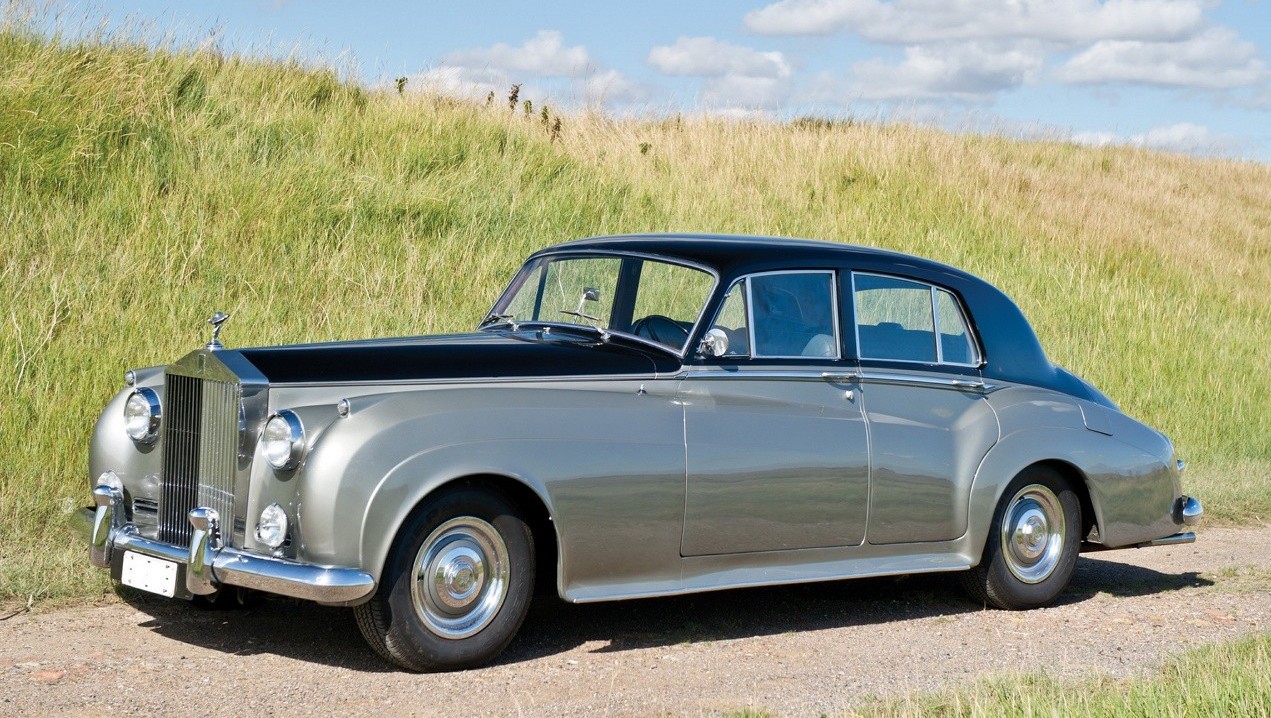
After the war car production moved to Crewe in 1946, and for the first time the company built complete cars, with bodies of its own. According to the old 1cars text, by the 1950s its cars were the choice of the aristocracy and the royal household. In 1965 the Silver Shadow brought a monocoque body, a major change after decades of separate chassis.

Crisis, Vickers and the 1998 split (1971–2002)
The aero-engine side brought the company down. Development of the RB211 jet engine cost far more than planned, and on 4 February 1971 Rolls-Royce Limited entered receivership. The government took over the aviation business, regarded as a national asset, and the car division was separated as Rolls-Royce Motors. It was floated on the stock market in May 1973. In 1980 it merged with the engineering group Vickers, a deal that became unconditional on 6 August 1980.
Under Vickers the factory was modernised, and in 1998 the Silver Seraph appeared, while the cars were still largely built by hand and to order. In the same year Vickers put Rolls-Royce Motors up for sale. Volkswagen outbid BMW and bought the company, including the Crewe factory and the Bentley brand. However, the right to the name and logo belonged to the aero-engine maker, Rolls-Royce plc, which licensed them to BMW. The two groups agreed a compromise: Volkswagen built the cars until the end of 2002, BMW bought the Spirit of Ecstasy mascot and grille trademarks, and from 2003 BMW alone made them, while Volkswagen kept Bentley and Crewe. The German side of the story is in Volkswagen's history.
| Period | Owner of the car business | Main plant |
|---|---|---|
| 1906–1971 | Rolls-Royce Limited | Manchester, Derby, then Crewe (from 1946) |
| 1971–1980 | Rolls-Royce Motors (separated, listed 1973) | Crewe |
| 1980–1998 | Vickers | Crewe |
| 1998–2002 | Volkswagen (with BMW licence for the name from 2003) | Crewe |
| From 2003 | Rolls-Royce Motor Cars Ltd (BMW) | Goodwood |
Goodwood and the BMW era (2003 to today)
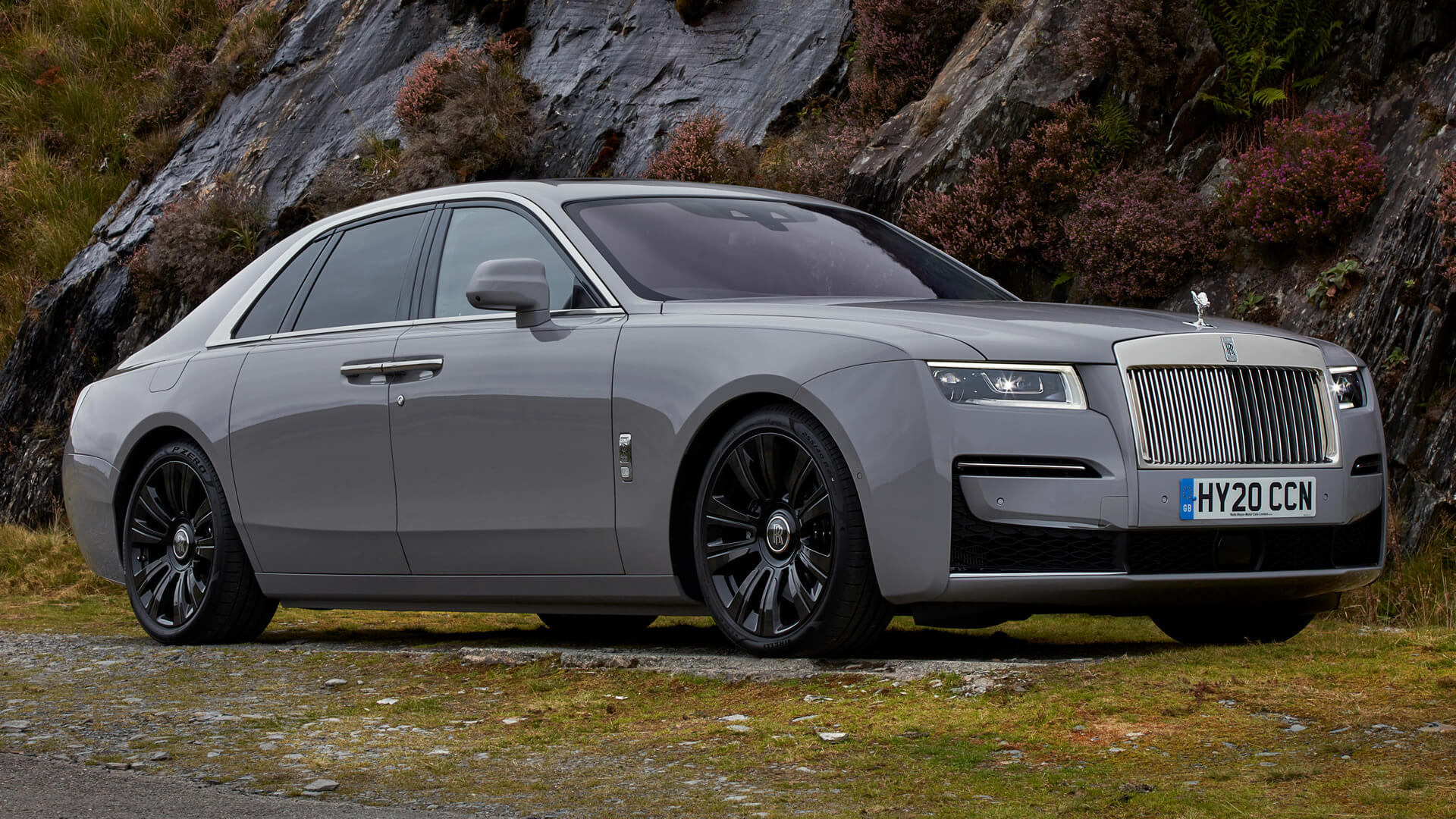
BMW built a new factory and head office for Rolls-Royce Motor Cars at Goodwood, near Chichester, on a 42-acre site. The first car was the Rolls-Royce Phantom VII, shown in January 2003 at the Detroit motor show. It used a 6.75-litre V12 supplied by BMW and was followed by a long-wheelbase version (2005), the Drophead Coupé (2007) and the Coupé (2008).

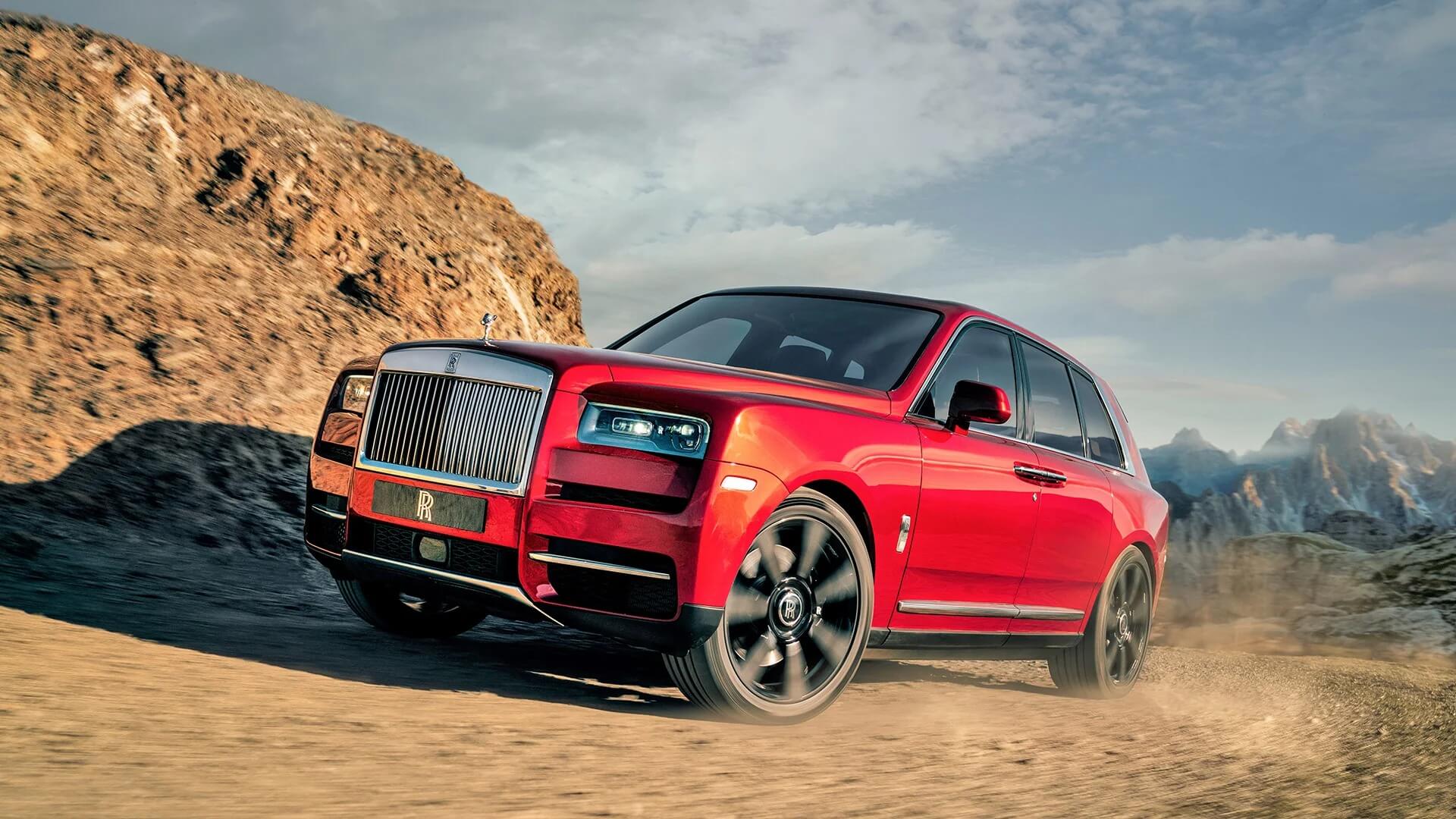
The smaller Ghost arrived in 2010, the Wraith coupé in 2013 with a 465 kW (632 PS) twin-turbo V12 and an eight-speed gearbox, and the Dawn convertible in 2015. The Phantom VIII followed in 2017 with a 6.75-litre twin-turbo V12 of 420 kW (571 PS), and the Cullinan SUV in 2018. On 18 October 2022 the company revealed the Spectre, its first all-electric car. In 2016 the company opened a technology and logistics centre in Bognor Regis, about 13 km from the plant.
Coachbuilding returned as a separate business: the Boat Tail of 2021 (three cars), the Droptail of 2023 (four cars) and, in 2026, Project Nightingale, limited to 100 cars.
| Model | Years | Type |
|---|---|---|
| Phantom VII | 2003–2016 | Saloon, also EWB, Drophead Coupé, Coupé |
| Ghost I | 2010–2020 | Saloon |
| Wraith | 2013–2022 | Coupé |
| Dawn | 2015–2023 | Convertible |
| Phantom VIII | from 2017 | Saloon |
| Cullinan | from 2018 | SUV |
| Ghost II | from 2020 (Series II 2024) | Saloon |
| Spectre | from 2022 (revealed) | Electric coupé |
Rolls-Royce in numbers
| Year | Cars delivered |
|---|---|
| 2010 | 2,711 |
| 2019 | 5,152 |
| 2021 | 5,586 |
| 2022 | 6,021 |
| 2023 | 6,032 (record) |
| 2024 | 5,712 |
| 2025 | 5,664 |
Compared with 2010, deliveries in 2023 were 123% higher, helped by the arrival of the Wraith, Dawn and Cullinan. Torsten Müller-Ötvös led the company from 2010 to November 2023, and Chris Brownridge took over on 1 December 2023.

Our view: what keeps Rolls-Royce apart
The marque has survived bankruptcy, nationalisation, two changes of owner and a split from its own aero-engine business, yet the formula has stayed the same: very few cars, built to order with a high degree of hand finishing. BMW's ownership has brought modern engineering and stable growth, from fewer than 3,000 cars a year to around 6,000. For buyers, the choice today is between the Phantom for the chauffeur-driven role, the Ghost for owners who drive themselves, the Cullinan as an SUV and the Spectre as an electric coupé. Rival luxury cars are compared in the world's most luxurious cars, and the parent company's story is in the history of BMW. Every model is listed in the Rolls-Royce catalogue.

FAQ
Who founded Rolls-Royce?
Henry Royce, an engineer from Manchester, and Charles Rolls, a car dealer from London. They met on 4 May 1904, agreed to sell Royce's cars as Rolls-Royce in December 1904, and registered Rolls-Royce Limited on 15 March 1906.
Who owns Rolls-Royce cars today?
The car company is a wholly owned subsidiary of BMW. It has built every car of the brand at Goodwood in West Sussex since 2003, using the name and logo under licence from the aero-engine maker.
Is Rolls-Royce the same company as the aircraft engine maker?
No. Both come from the original company of 1906, but the car business was separated after the 1971 receivership. Today the plc makes aero engines, while BMW's subsidiary makes the cars.
Why did Volkswagen get Bentley and BMW Rolls-Royce?
In 1998 Volkswagen bought the car company, including the Crewe factory and Bentley. The name, however, was licensed to BMW by the aero-engine maker. Volkswagen built the cars until 2002, then kept Bentley while BMW took over the brand.
What was the first Rolls-Royce car?
The first cars sold under the joint name were shown at the Paris motor show in December 1904, based on Henry Royce's two-cylinder car of April 1904. The six-cylinder Silver Ghost of 1906 made the brand famous.
Photos (3)


Videos 3

Video 1

Video 2

Video 3