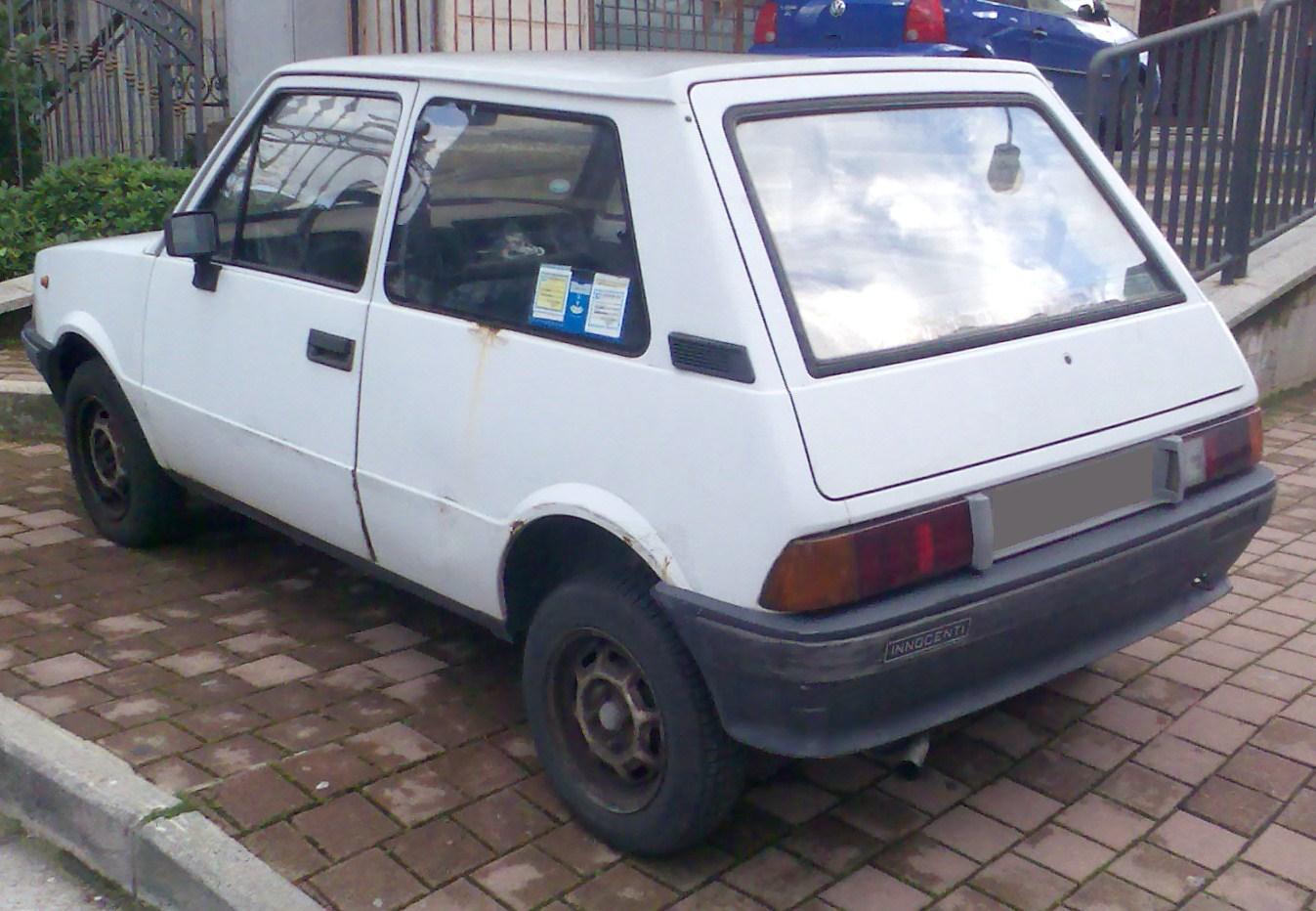
Innocenti — Milan's Lambretta and Mini maker, 1933 to 1997
Innocenti was an Italian company from Lambrate, on the eastern edge of Milan, founded in 1933 by Ferdinando Innocenti. It became famous after the war for the Lambretta scooter and, from 1960, for building British BMC cars under licence: the A40, the Austin-Healey-based Spider and, above all, the Mini. Later owners were British Leyland, Alejandro de Tomaso and finally Fiat. Innocenti's own Bertone-styled Mini of 1974 lasted until the early 1990s, and the brand ended in 1997 as a badge on imported Fiats.
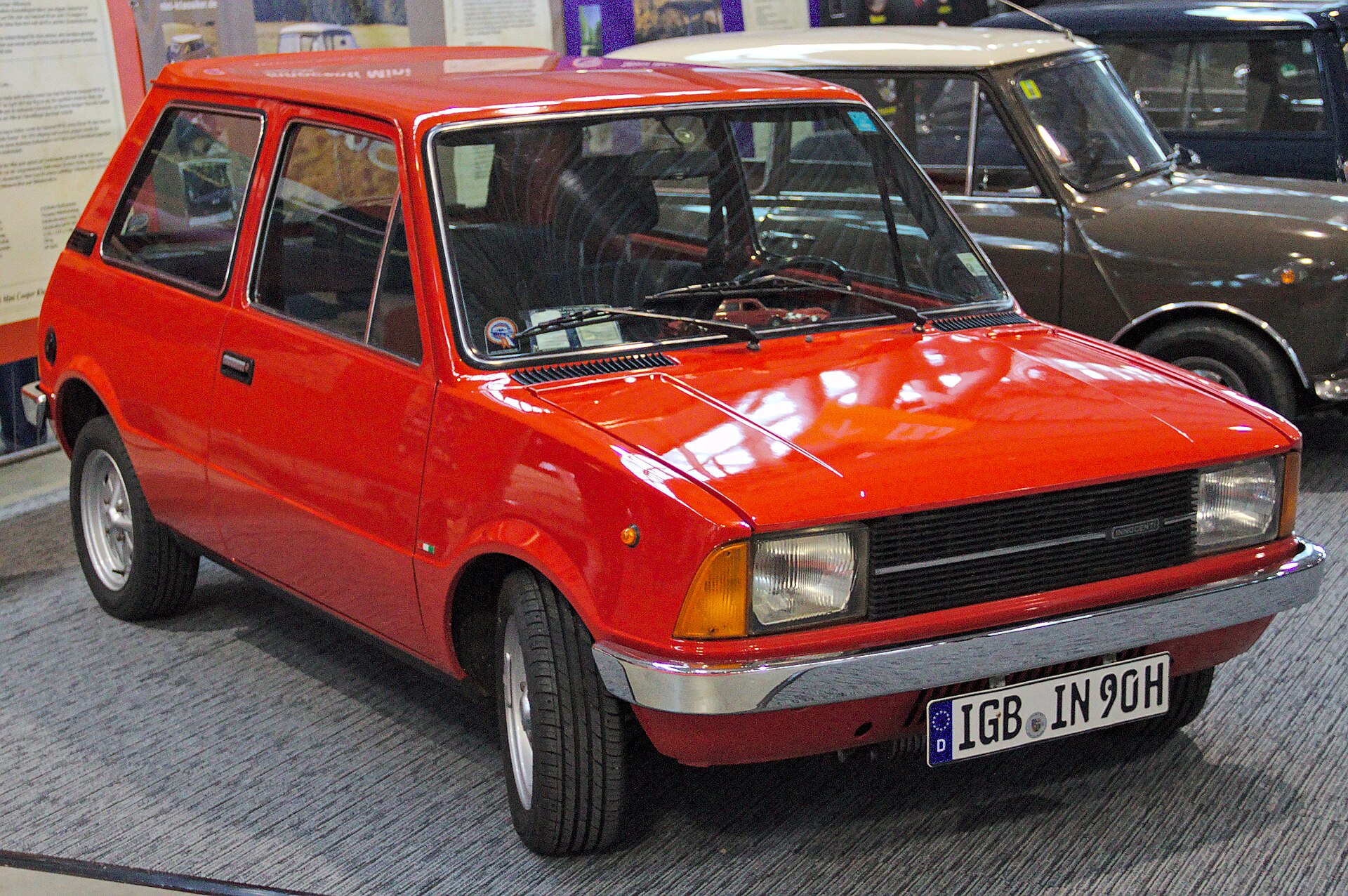
Key takeaways
- Ferdinando Innocenti (1891–1966) built up a steel-tube business in Rome and founded the Lambrate company in 1933.
- The Lambretta scooter was made from 1947 to 1971; in 1972 its machinery went to India to form Scooters India Limited.
- Innocenti built the BMC Mini under licence from 1965 and its own Bertone-designed Mini 90 and 120 from 1974.
- Annual car output peaked at 62,834 in 1972; Innocenti stopped building its own cars in early 1993, and sales of the brand ended in June 1997.
Innocenti at a glance
| Fact | Value |
|---|---|
| Founded | 1933, Lambrate, Milan |
| Founder | Ferdinando Innocenti (1891–1966) |
| Famous products | Lambretta scooter (1947–1971), licence-built BMC cars, Innocenti Mini |
| Partners and owners | BMC; British Leyland (1972); De Tomaso and GEPI (1976); Fiat (1990) |
| Best-known cars | A40, 950 Spider, IM3, Mini, Mini 90/120, Mini De Tomaso |
| Peak car output | 62,834 (1972) |
| End | Own production ended early 1993; sales ended June 1997 |
Ferdinando Innocenti and the steel tubes
Ferdinando Innocenti was born on 1 September 1891 in Pescia and grew up in Grosseto, working in his father's ironmongery. In 1923 Innocenti moved to Rome with a brother, where the two sold metal pipes and scaffolding to a fast-growing building trade. In 1931 the business opened a large factory in Rome, and in 1933 Innocenti founded the company in Lambrate, on the eastern outskirts of Milan.
The Lambretta years
After the Second World War the factories were converted to peacetime work, and in 1947 Innocenti launched a low-cost motor scooter. The Lambretta took its name from Lambrate, the Milan district named after the river Lambro. Production of the Model A began in 1947, a year after Piaggio started its Vespa.
The scooter was also built under licence in Argentina, Brazil, Chile, Colombia, India and Spain. In Milan, production ended in 1971 and the company closed the scooter works in 1972. That year the Indian government bought the machinery of the Milan factory and created Scooters India Limited, which built about 35,000 scooters in its best year, 1980–81.

Cars from BMC: A40, Spider, IM3 and Mini
In 1958 Ferdinando's son Luigi became vice-president and led the move into cars. Innocenti chose to build British BMC designs under licence:
| Model | Years | Basis |
|---|---|---|
| A40 Berlina / Combinata | 1960–1967 | Austin A40 Farina hatchback |
| 950 / 1100 Spider | 1961–1968 | Austin-Healey Sprite, body by Ghia |
| IM3, IM3S, I4, I5 | 1963–1974 | BMC ADO16 (Austin/Morris 1100) |
| Mini saloon and estate | 1965–1975 | BMC Mini, from the Mini 850 of November 1965 |
| Innocenti C coupé | 1966–1968 | Coupé; 795 built |
The cars were assembled to a high standard in Milan, and by 1966 BMC-based Innocentis held three per cent of the Italian market. Innocenti also tried something more ambitious: in 1963 it built the 186 GT prototype with a 1.8-litre Ferrari V6, which never reached production.
Ferdinando Innocenti died in Varese on 21 June 1966, and Luigi took over. Production grew from 35,967 cars in 1966 to 62,834 in 1972. Later Mini versions included a Cooper 1300.

British Leyland and the Bertone Mini
In 1972 British Leyland (BLMC) bought the company's land, buildings and equipment for about £3 million (1972) and took control. The Regent, based on the Austin Allegro, appeared in 1974. The more important car was the Innocenti Mini 90L and 120L, shown at the Turin show in 1974. It kept the Mini's mechanicals under a new three-door hatchback body styled by Bertone; the infobox of the Mini article credits the design to Marcello Gandini.
The British parent soon ran into its own crisis and was nationalised, and Innocenti output almost halved in 1975, to 33,061. The last CKD-assembled original Minis were built in early 1975.

De Tomaso, Daihatsu and Fiat
In February 1976 the company passed to the Argentine-born industrialist Alejandro de Tomaso, with the Italian state holding company GEPI as a partner. Later that year GEPI and De Tomaso combined their 95 per cent into one holding. De Tomaso, who had founded his own car company in 1959, also controlled Maserati from 1975.
The new owner added a sporty model. The Mini De Tomaso was shown at the 1976 Turin show and built from early 1977, with 53 kW (72 PS) at first and 55 kW (75 PS) from 1978. As the British engines aged, Innocenti turned to Japan. A deal with Daihatsu in 1982 brought the 993 cc three-cylinder of the Daihatsu Charade, used in all cars from 1983. A turbocharged Mini De Tomaso Turbo with 53 kW (72 PS) went on sale in early 1984, and a 1.0-litre diesel had 27 kW (37 PS).
| Innocenti Mini | Engine | Power |
|---|---|---|
| Mini 90 | 998 cc BMC A-series | 32 kW (44 PS), later 37 kW (50 PS) |
| Mini 120 | 1,275 cc BMC A-series | Up to 48 kW (66 PS) |
| Mini De Tomaso | 1,275 cc BMC A-series | 53 kW (72 PS), later 55 kW (75 PS) |
| Turbo De Tomaso | 993 cc Daihatsu three-cylinder turbo | 53 kW (72 PS) |
| Mini 990 diesel | 993 cc Daihatsu three-cylinder | 27 kW (37 PS) |
Sales kept falling, from 39,770 in 1980 to 10,100 in 1989. In 1990 Fiat took over, and in 1993 Innocenti and Maserati were formally sold to Fiat. From 1991 the Innocenti name went on imported cars: the Koral (a Yugo), the Elba (a Brazilian Fiat), and the Mille and Mille Clip versions of the Fiat Uno. Innocenti's own production ended early in 1993. In February 1996 Fiat announced that sales of the brand would stop at the end of June 1997.
The Lambretta name had a separate future: it was relaunched at the EICMA show in Milan in November 2017.
The Innocenti models on 1cars are listed in the Innocenti catalogue, and the best-known car has its own page on the Innocenti Mini, from Bertone 90 to 120. The British original is covered in the original Mini cars, the design house in the history of Bertone, and De Tomaso's other famous brand in the history of Maserati.

Innocenti timeline
| Year | Event |
|---|---|
| 1923 | Ferdinando Innocenti moves to Rome; tube and scaffolding business |
| 1933 | Company founded in Lambrate, Milan |
| 1947 | Lambretta scooter production begins |
| 1960 | A40 Berlina, first BMC-based Innocenti car |
| 1961 | 950 Spider with Ghia body |
| 1965 | Innocenti Mini (from November) |
| 1966 | Ferdinando Innocenti dies; Luigi takes over |
| 1972 | British Leyland takes control; Lambretta machinery sold to India |
| 1974 | Bertone-styled Mini 90 and 120 |
| 1976 | Alejandro de Tomaso and GEPI take over (February) |
| 1983 | Daihatsu three-cylinder engines in all cars |
| 1990 | Fiat takes over |
| 1993 | Own car production ends |
| 1997 | Sales of the brand end (June) |
Landmark Innocenti models
| Model | Years | Why it matters |
|---|---|---|
| Lambretta | 1947–1971 | Scooter that made the company famous |
| 950 Spider | 1961–1968 | Austin-Healey Sprite base with a Ghia body |
| Innocenti Mini | 1965–1975 | Licence-built Mini, including the Cooper 1300 |
| Mini 90/120 | From 1974 | Innocenti's own Bertone hatchback on Mini mechanicals |
| Mini De Tomaso Turbo | From 1983 | Turbocharged Daihatsu three-cylinder, 53 kW (72 PS) |
Photo gallery


FAQ
Who founded Innocenti?
Ferdinando Innocenti, in 1933 in Lambrate, Milan. Before that Innocenti ran a steel-tube and scaffolding business in Rome.
What is the connection between Innocenti and Lambretta?
Innocenti made the Lambretta scooter from 1947 to 1971. The name comes from Lambrate, the Milan district of the factory.
Was the Innocenti Mini the same as the British Mini?
From 1965 Innocenti built the BMC Mini under licence. From 1974 it also made its own Mini 90 and 120 with a Bertone hatchback body on Mini mechanicals.
Who owned Innocenti?
The Innocenti family until 1972, then British Leyland, then Alejandro de Tomaso with GEPI from 1976, and Fiat from 1990.
When did Innocenti stop making cars?
Its own production ended in early 1993. Imported Fiats were sold under the name until June 1997.
Sources
- Wikipedia — Innocenti (accessed 24 Oct 2026)
- Wikipedia — Ferdinando Innocenti (accessed 24 Oct 2026)
- Wikipedia — Lambretta (accessed 24 Oct 2026)
- Wikipedia — Innocenti Mini (accessed 24 Oct 2026)
- Wikipedia — Alejandro de Tomaso (accessed 24 Oct 2026)
Found a mistake? Report an error