Haval — Great Wall Motor's SUV Brand and the H6 Story
Haval is the SUV brand of Great Wall Motor (GWM), the privately owned Chinese car maker from Baoding in Hebei province, chaired by Wei Jianjun. The name first appeared on the Great Wall Hover of 2005, and Haval became a brand of its own in March 2013, built around one very successful model: the H6. By 2024 Haval was GWM's most popular brand, sold in markets from Australia to South Africa and Latin America.
Key takeaways
- The Haval name dates from April 2005, when Great Wall launched the Haval CUV, first sold as the Hover and later called the H3.
- The Haval H6 of 2011 led China's SUV segment for 103 months in a row and passed 4 million sales worldwide by 2024.
- Haval was spun off as a separate brand in March 2013; it built its 5 millionth vehicle in January 2019.
- Haval's best year was 2016 or 2017, depending on the Wikipedia article: 939,433 or 849,554 vehicles.
Haval at a glance
| Fact | Value |
|---|---|
| Name first used | April 2005 (Great Wall Haval CUV, "Hover") |
| Brand launched | March 2013 |
| Parent | Great Wall Motor, Baoding, China |
| GWM chairman | Wei Jianjun |
| Sister brands | Great Wall, WEY, Tank, Ora |
| Best-known model | Haval H6 (over 4 million sold) |
| Peak sales | 939,433 (2016, GWM article) or 849,554 (2017, Haval article) |
| Plants for the H6 | Tianjin (China), with kit or local assembly in Bulgaria, Pakistan and Brazil |
Origins: the Great Wall Hover
Before Haval, Great Wall Motor, founded in 1984 from a Baoding repair workshop of 1976 and privatised in 1998, built mostly pickups and rugged SUVs. In April 2005 it launched a more road-oriented model, the Great Wall Haval CUV, which succeeded the Great Wall Safe. Outside China the name was first written as "Hover", and the car was later renamed Haval H3. Its body resembled the Isuzu Axiom and its chassis was similar to the Isuzu MU. The main engine was a 2.4-litre petrol four-cylinder with 95 kW (128 hp), and Great Wall also offered 2.5- and 2.8-litre turbo-diesels.
The Hover was an early Chinese export success. In September 2006, 500 Haval CUVs were shipped to Italy, the first large-scale export to Europe by a privately owned Chinese car maker; in Italy an EcoDual version ran on LPG or natural gas. In Australia it was badged Great Wall X240 until 2011, and the larger Great Wall Hover H5 followed. The Hover stayed in production until 2012.
The H6 and the 2013 brand launch
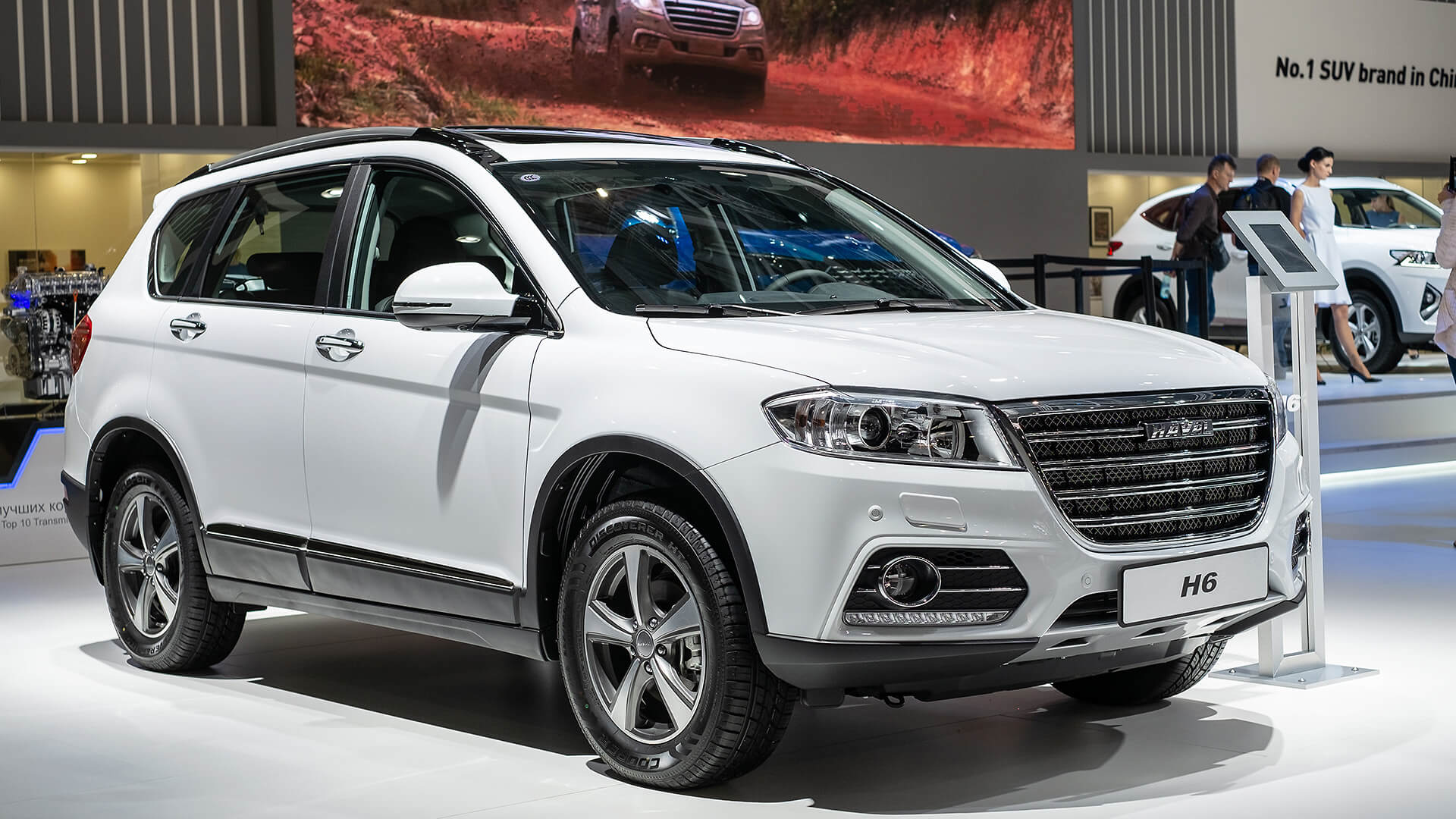
The model that changed everything was the H6, presented at the 2011 Shanghai Auto Show and built in Tianjin from February 2011. It was a compact SUV with 1.3- and 1.5-litre turbo engines; the 1.5-litre produced 112 kW (152 PS). Sales in China climbed from 112,262 in 2012 to 373,229 in 2015 and a record 580,683 in 2016, when December alone brought 80,495 cars, a monthly figure the H6 has not beaten since. The one millionth H6 left the Tianjin plant in November 2015, and the model led the Chinese SUV segment for 103 consecutive months, roughly eight years.
With this success GWM made Haval a separate brand in March 2013, with its own logo, as the company's second brand after Great Wall. Global Haval sales went from 208,652 in 2013 to 382,071 in 2014 and 640,200 in 2015. In March 2015 Haval entered Australia with four dealers and the H2, H8 and H9; it had 68 dealers there by February 2024. The first-generation Haval H6 has its own page with specifications.

Red Label, Blue Label and the new logo
In 2017 Haval split its range into two sub-brands with different badges: Red Label and Blue Label. They differed in exterior styling, interior layout and materials, and even dealer networks. The Haval article's sales table shows 849,554 vehicles for that year, its highest figure, while the Great Wall Motor article puts the peak at 939,433 in 2016. In 2018 the F-series, including the F5 and F7, was added for younger buyers. The Red and Blue split was dropped in 2019, when the logo became black again, and in January 2019 Haval built its 5 millionth vehicle. By 2018 it had been China's best-selling SUV brand for nine years in a row, according to the Haval article.
In August 2022 the brand introduced a new logo, with the brand name in angular capital letters.
GWM's founder Wei Jianjun set a "5-2-1" goal for the brand: within five years, 2 million annual sales and first place among the world's SUV brands. Sales did not reach that level; they stayed between about 750,000 and 790,000 a year from 2018 to 2021.

Hybrids, Jolion and Haval today
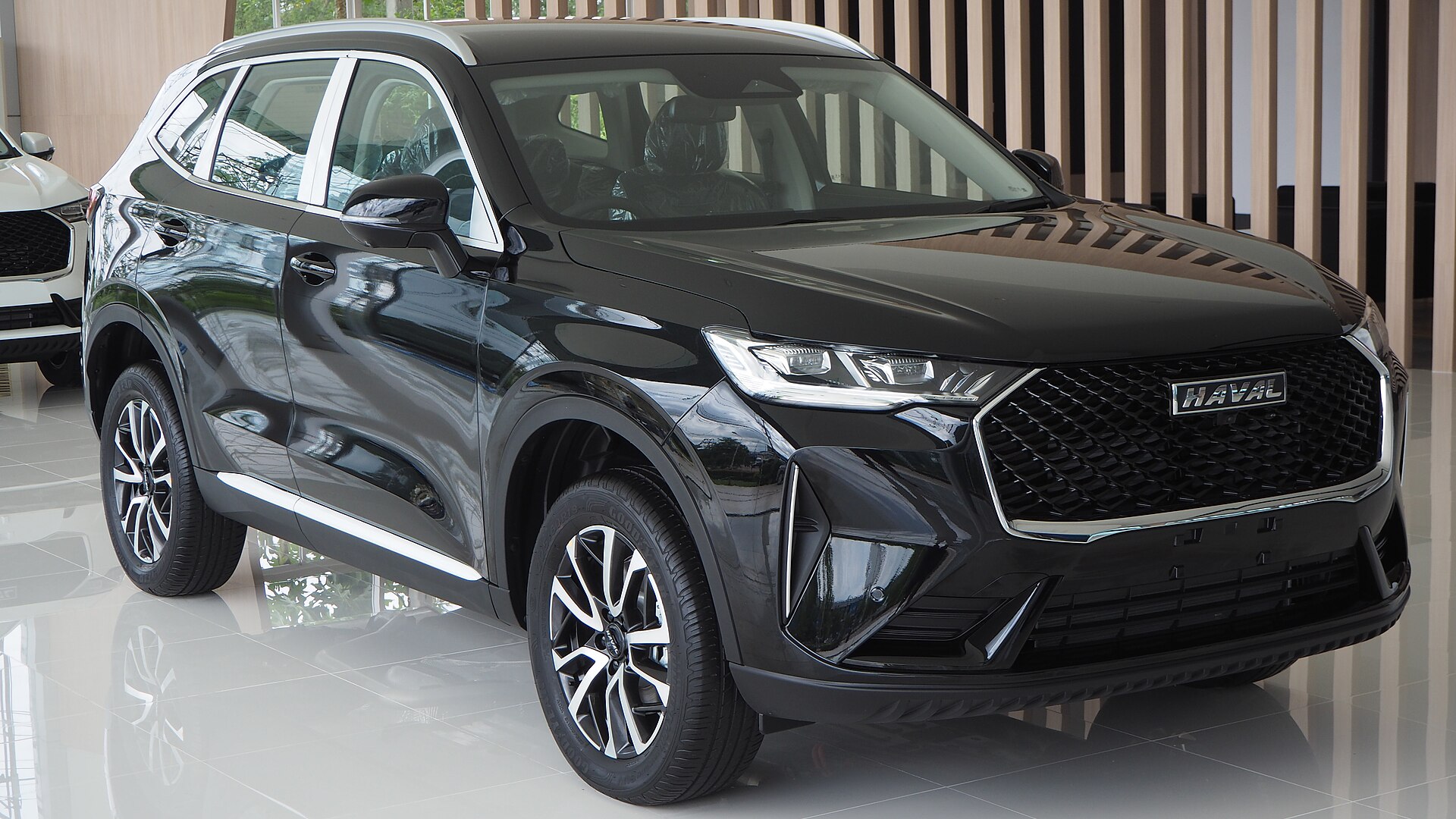
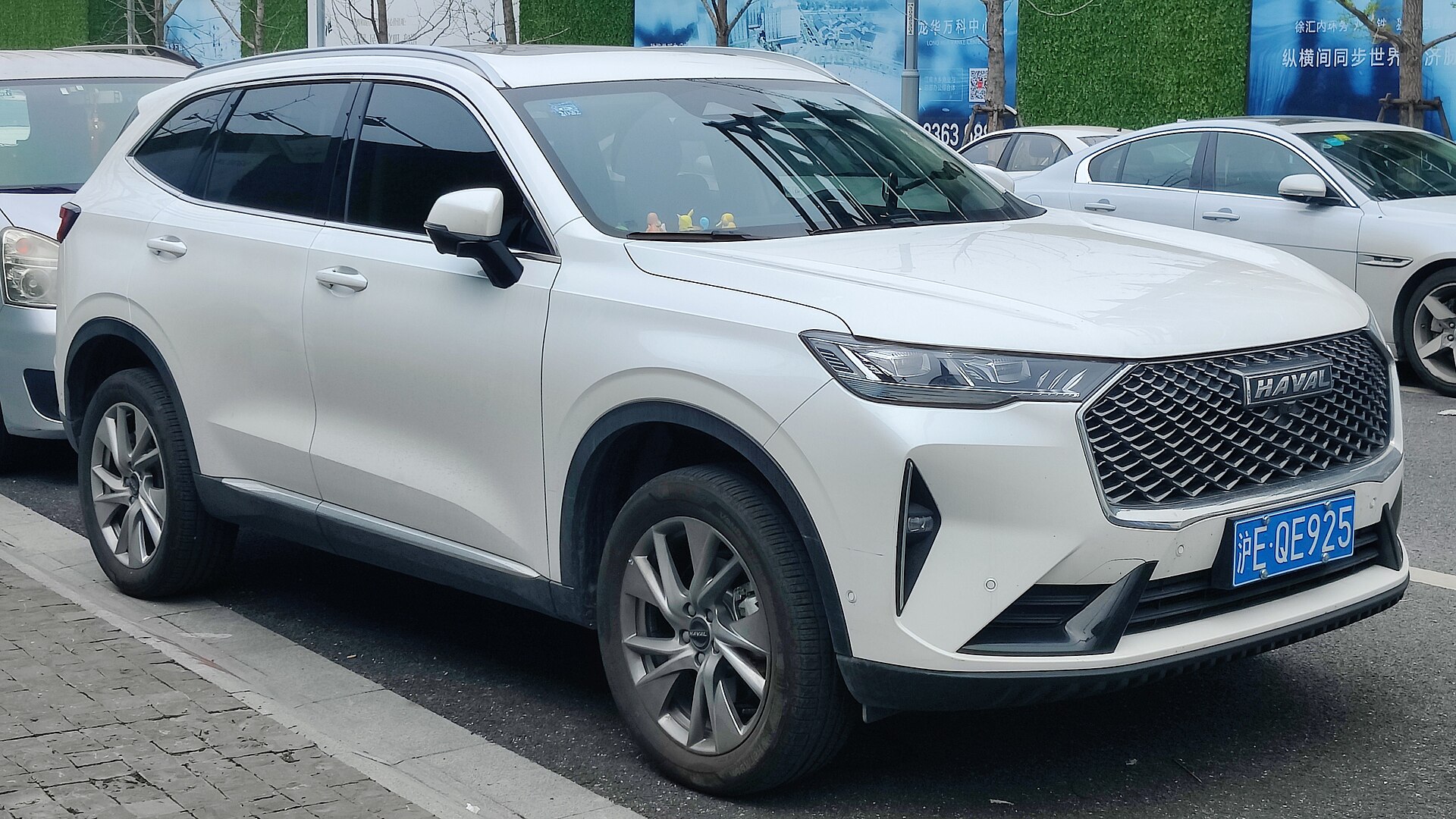
The third-generation H6 was shown at the Chengdu Motor Show in 2020 and uses GWM's Lemon platform with a 9-speed dual-clutch gearbox; the 2.0-litre turbo version produces 167 kW (227 PS). Hybrid versions followed. The H6 HEV, first shown in Bangkok in 2021, combines a 1.5-litre engine with an electric motor for 179 kW (243 PS) and 530 Nm. The H6 PHEV was launched in China on 28 September 2022 with 240 kW (326 PS).
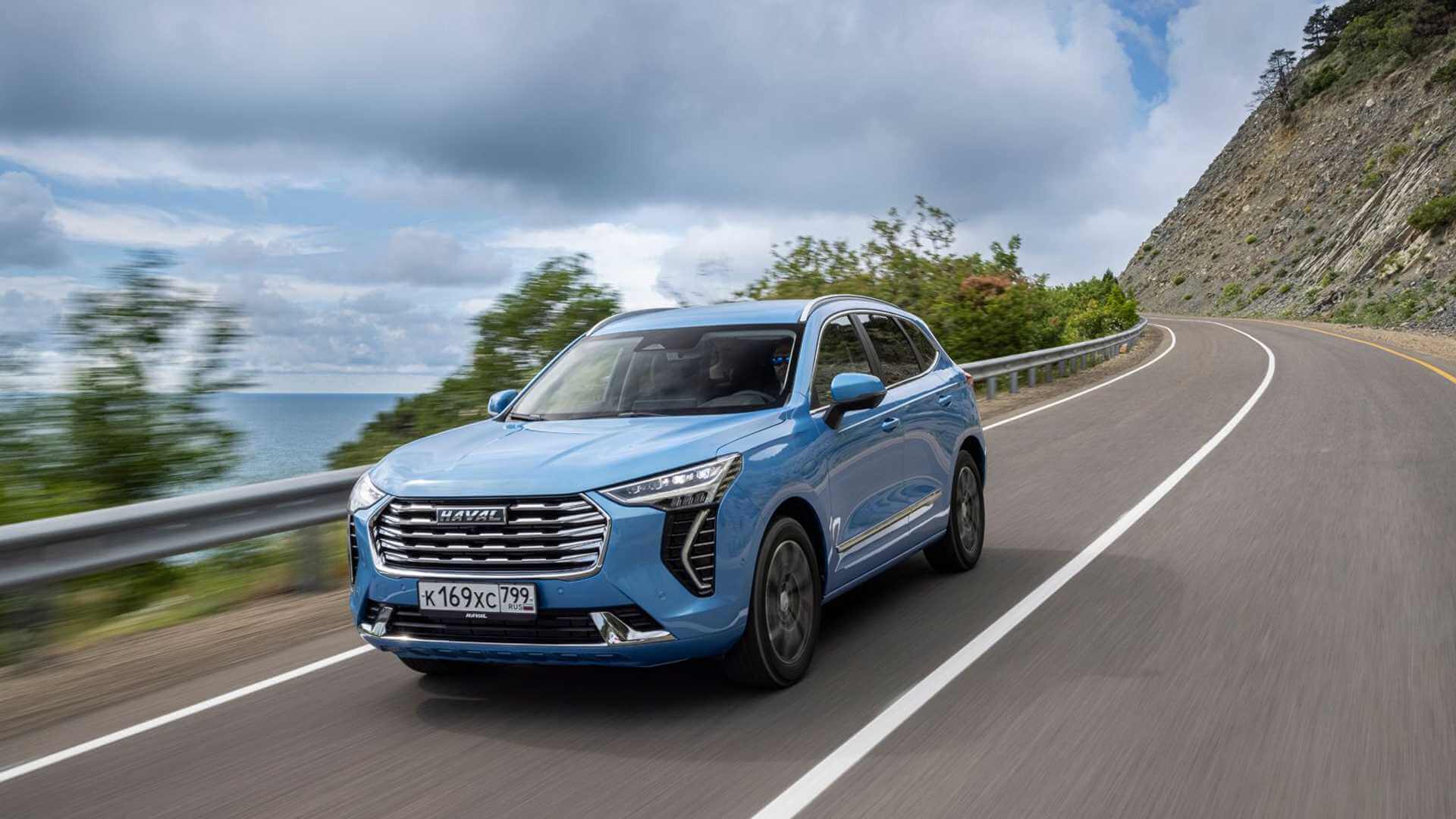
The smaller Haval Jolion, shown in Beijing in October 2020 and built from 2021, replaced the H2. Its 1.5-litre turbo produced 110 kW (150 PS) before the 2024 facelift, and the hybrid version has 140 kW (190 PS). It was launched in South Africa in April 2021 and in Australia on 2 July 2021 and is now mainly an export model.
Haval's global sales were 616,550 in 2022 and 599,732 in 2023, most of them in China. In August 2025 production of the H6, H6 GT and H9 began at Iracemápolis in São Paulo state, Brazil, a former Mercedes-Benz plant that GWM bought in August 2021. Haval vehicles are also sold in Thailand, the Philippines, Mexico, the United Kingdom and many other markets. The current range is listed in the Haval catalogue; the parent group's other brands are in the Great Wall catalogue. Rival models are compared in the best family SUVs.

Haval timeline
| Year | Event |
|---|---|
| 2005 | Great Wall Haval CUV ("Hover") launched in April |
| 2006 | 500 Hovers exported to Italy |
| 2011 | Haval H6 introduced in Shanghai |
| 2013 | Haval becomes a separate brand (March) |
| 2015 | One millionth H6; entry into Australia |
| 2016 | Record 580,683 H6 sales in China |
| 2017 | Red Label and Blue Label sub-brands |
| 2019 | 5 millionth Haval built; Red/Blue split dropped |
| 2020 | Third-generation H6; Jolion shown |
| 2022 | H6 PHEV; new logo |
| 2025 | Production starts in Brazil |
Landmark Haval models
| Model | Years | Why it matters |
|---|---|---|
| Hover / H3 | 2005–2012 | First car with the Haval name, early export to Europe |
| H6 (1st gen) | 2011 onward | China's best-selling SUV for 103 months |
| H6 Coupe | 2015 onward | Sloping-roof version of the H6 |
| H6 (3rd gen) | 2020–present | Lemon platform, hybrid and plug-in versions |
| Jolion | 2021–present | Successor of the H2, mainly an export model |
| H9 | 2015 onward | Large off-road SUV, built in Brazil from 2025 |
Photo gallery


FAQ
Who owns Haval?
Great Wall Motor (GWM), the Chinese car maker founded by Wei Jianjun. Haval has been its separate SUV brand since March 2013.
Is Haval the same as Great Wall?
Haval is a brand of Great Wall Motor. Until 2013 Haval models were sold as Great Wall cars, such as the Great Wall Hover and the first Great Wall Haval H6.
What is the best-selling Haval?
The H6. More than 4 million had been sold worldwide by 2024, making it GWM's best-selling vehicle.
What was the Haval Red Label and Blue Label?
From 2017 to 2019 Haval sold two lines with red or blue badges, which differed in styling, interiors and dealer networks.
Does Haval make hybrids?
Yes. The H6 is available as a hybrid (HEV) and plug-in hybrid (PHEV), and the Jolion as a hybrid.
Sources
- Wikipedia — Haval (marque) (accessed 24 Oct 2026)
- Wikipedia — Haval H6 (accessed 24 Oct 2026)
- Wikipedia — Great Wall Hover (accessed 24 Oct 2026)
- Wikipedia — Haval Jolion (accessed 24 Oct 2026)
- Wikipedia — Great Wall Motor (accessed 24 Oct 2026)
Found a mistake? Report an error