
 Haval H7
Specs, engines and history
Updated Published Sources (1) Report an error
By Oleksandr Hnatiuk, Automotive Editor & Used Car Specialist Reviewed by Sarah Whitmore
- Built
- 2015–2021
- Top power
- 170 kW (231 PS)
Which Haval H7 to choose in 2026
Our verdict · Oleksandr Hnatiuk
By October 2026 the name had returned in China on a different car, a plug-in hybrid with Great Wall's Hi4 drive system. It pairs a 1.5-litre engine of 85 kW with a 27.54 kWh battery for 126 km of electric range on the CLTC cycle. It has five seats. Outside China, the H7 badge is used on a version of the boxy Haval Big Dog.
A used first-generation H7 suits buyers who want a large SUV at a low price and live near a Haval dealer. At 4,900 mm the H7L needs a long space, so check it with will it fit in my garage. The Haval H6 is easier to find. See the Great Wall catalogue, our history of Great Wall Motor, the comparison tool and the SUV section.
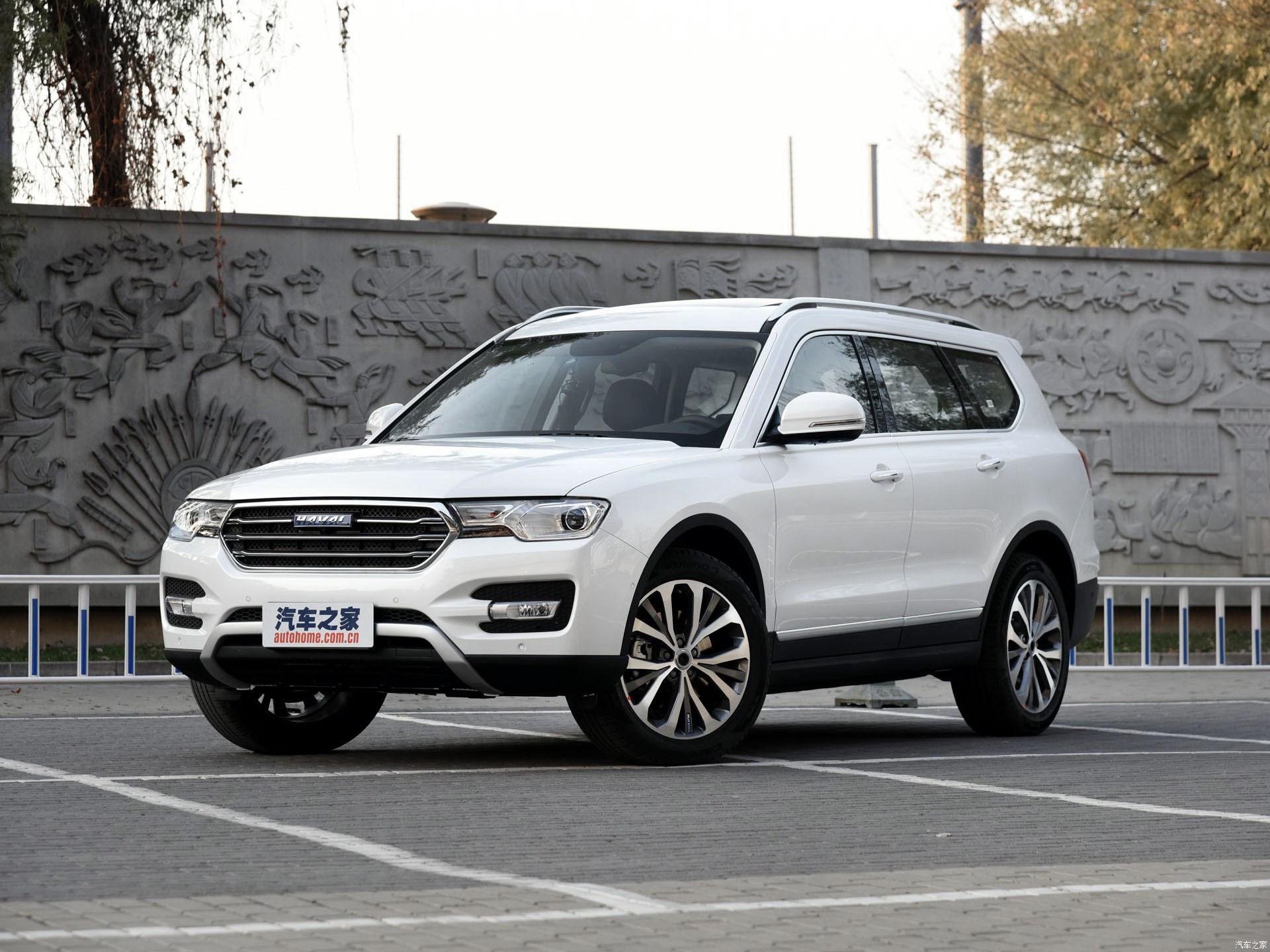
The Haval H7 was a mid-size SUV that Great Wall Motor's Haval brand showed at the Guangzhou Auto Show on 23 November 2015. It sat between the H6 and H8, had a 2.0-litre turbo engine and was later joined by the seven-seat H7L. Sales began in China in 2016 from RMB 149,800. Production ended in 2021, and a new plug-in hybrid H7 was revealed for China in 2025.
In short
- Shown in Guangzhou in November 2015; official launch with three trims at the Beijing show in April 2016.
- 2.0-litre turbo with 170 kW (231 PS) and 355 Nm, six-speed dual-clutch gearbox.
- Built in Tianjin; nearly 50,000 sold in the first eight months of 2016.
- Withdrawn in 2021; a new H7 plug-in hybrid with 126 km of electric range followed.

Size at a glance
| Dimensions | Haval H7 I |
|---|---|
| Length | 4,715 mm185.6 in |
| Width | 1,925 mm75.8 in |
| Height | 1,718 mm67.6 in |
| Wheelbase | 2,850 mm112.2 in |
Specs by version
Engines
| Version | Engine | Power | Torque | Gearbox | Drive | Production years |
|---|---|---|---|---|---|---|
| 2.0T 7DCT (168 kW) | 4 cyl · Petrol GW4C20B | 168 kW 228 PS225 hp | - | 7-sp Dual-clutch | Front-wheel drive | 2019–2021 |
| 2.0T 6DCT (170 kW) | 4 cyl · Petrol GW4C20A | 170 kW 231 PS228 hp | 355 Nm262 lb-ft | 6-sp Dual-clutch | Front-wheel drive | 2016–2018 |
Dimensions and weight
Show all 1 versions
| Version | Length | Width | Height | Wheelbase | Kerb weight |
|---|---|---|---|---|---|
| 2.0T 6DCT (170 kW) | 4,715 mm185.6 in | 1,925 mm75.8 in | 1,718 mm67.6 in | 2,850 mm112.2 in | 1,978 kg4,361 lb |
Verified Manufacturer and type-approval data from our catalog · Sources and methodology
What Haval showed in Guangzhou in 2015
Haval presented the H7 as a "high-quality" mid-size SUV for buyers who wanted more than the best-selling H6. In 2015 Haval's Chinese range consisted of the H2, H6, H8 and the off-road H9.
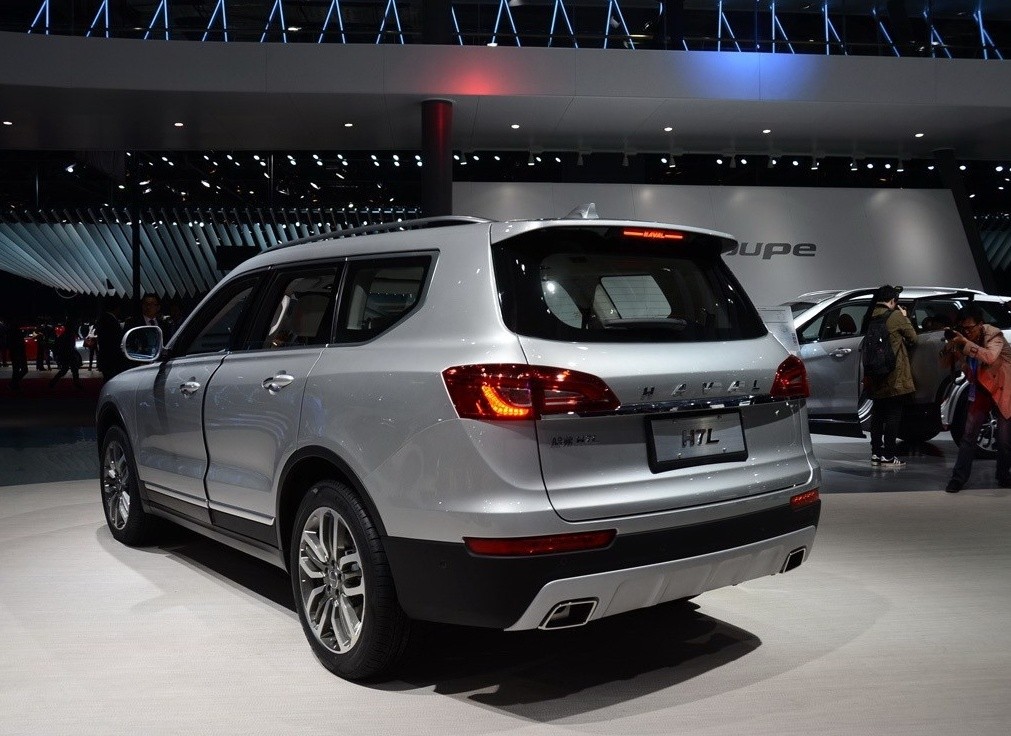
Our December 2015 report described two body lengths, the standard H7 and a stretched H7L with a third row of seats. It also mentioned a fully digital instrument panel, wood-effect trim and rear lights shaped around the Haval logo. The H7L reached showrooms later, for the 2017 model year.
H7 and H7L specifications
| Specification | Haval H7 | Haval H7L |
|---|---|---|
| Engine | 2.0-litre turbo petrol (GW4C20A) | same |
| Power / torque | 170 kW (231 PS) / 355 Nm | same |
| Gearbox | six-speed dual-clutch (Getrag) | same |
| Length | 4,715 mm | 4,900 mm |
| Width / wheelbase | 1,925 / 2,850 mm | same |
| Seats | five | seven |
| Kerb weight | 1,978 kg | 2,108 kg |
Two figures in our old article need correcting. Its length of 4.70 metres belonged to the standard H7, not the H7L. Our report also gave the engine 218 PS, while the production data list 170 kW (231 PS). From 2019 a revised 2.0-litre with 168 kW (227 PS) and a seven-speed dual-clutch gearbox replaced the first unit.
Price and rivals in 2016
Haval announced a starting price of RMB 149,800 at the Beijing show, about €20,500 at 2016 rates. Its rivals included Chinese-built versions of the Volkswagen Tiguan and Toyota RAV4.
The H7 started well, with nearly 50,000 sales in its first eight months, according to Car News China. In 2017 the figure fell to about 38,000. Part of the reason was internal: Great Wall launched its premium Wey brand in 2017, and Wey's SUVs took buyers from the upmarket Haval.
Haval H7 timeline
| Date | Event |
|---|---|
| 23 November 2015 | H7 shown at the Guangzhou Auto Show |
| April 2016 | Official launch at the Beijing show, three trims |
| 2017 model year | Seven-seat H7L and sportier "Red Label" versions added |
| 2019 | New 2.0-litre turbo and seven-speed gearbox |
| 2021 | H7 withdrawn from the market |
| October 2024 | New H7 plug-in hybrid registered with Chinese authorities |
| January 2025 | First official image of the new H7 |
Haval H7 in our rankings
- No. 117 of 509 · Widest cars (1,925 mm · top 24%)
- No. 102 of 391 · Heaviest cars (1,978 kg · top 27%)
- No. 55 of 194 · Widest SUVs and crossovers (1,925 mm · top 29%)
- No. 187 of 531 · Longest cars (4,715 mm · top 36%)
- No. 81 of 198 · Longest SUVs and crossovers (4,715 mm · top 42%)
- No. 69 of 144 · Heaviest SUVs and crossovers (1,978 kg · top 48%)
Wider than 76% of ranked cars in the 1CARS catalog (No. 117 of 509).
FAQ
When did the Haval H7 come out?
It was shown at the Guangzhou Auto Show on 23 November 2015. Sales began in China in early 2016, with an official launch at the Beijing show in April.
What engine did the Haval H7 have?
It used a 2.0-litre turbo petrol engine with 170 kW (231 PS) and 355 Nm. From 2019 a revised version with 168 kW was fitted.
Is the Haval H7 still made?
The original H7 was withdrawn in 2021. A new plug-in hybrid H7 for China was revealed in 2025, and the badge is also used on export versions of the Big Dog.
What is the difference between the Haval H7 and H7L?
The H7L is about 185 mm longer, at 4,900 mm, and has a third row of seats, making it a seven-seater. It arrived for the 2017 model year and weighed about 130 kg more.
Data sources
Data checked by an editor against the sources below.


