Haval H6 I (2011–2017)
Specs, engines, safety and known problems
Published Sources (1) Report an error
By Oleksandr Hnatiuk, Automotive Editor & Used Car Specialist
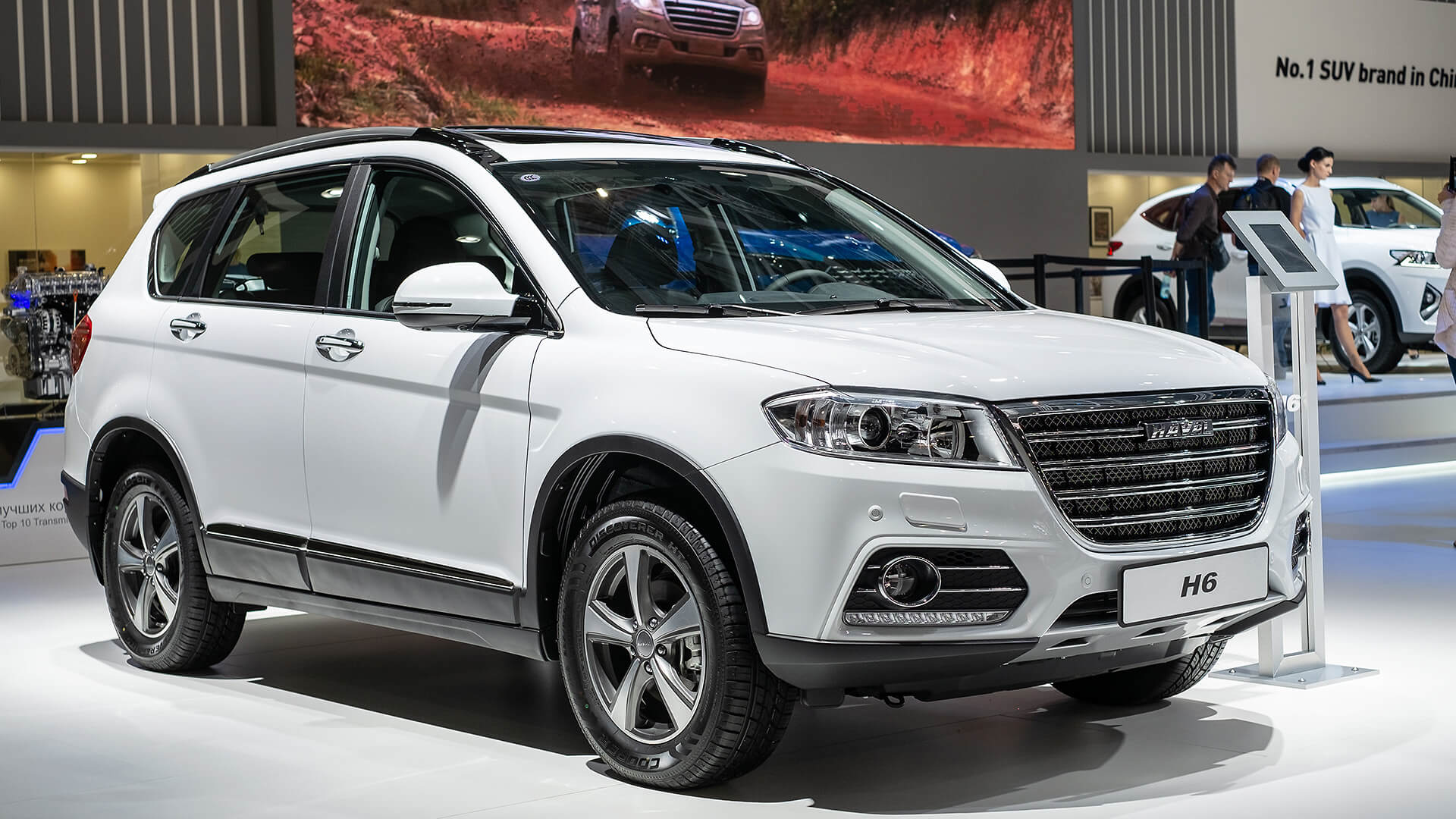
The Haval H6 is a front- or all-wheel-drive compact SUV from Haval, the SUV brand of Great Wall. This article covers the first-generation H6 (2011–2017), which in its final years was offered in two versions: the more comfortable "Red Label" and the sportier, more stylish "Blue Label". A second generation followed in 2017 and a third in 2020. The H6's story began in 2011, before Haval became a separate brand, and the sporty version arrived in spring 2015. Although Great Wall is known for body-on-frame off-roaders, the H6 is a monocoque crossover; Haval was set up as a separate SUV brand to underline its modern styling rather than to create a premium marque.
In short
- Compact monocoque SUV, launched in 2011; sporty Blue Label version from 2015.
- Engines: 1.5 turbo petrol with 108 kW (147 PS) and 2.0 turbodiesel with 105 kW (143 PS).
- Six-speed manual or automatic; front-wheel drive or an electronically controlled multi-plate all-wheel-drive system.
- A large boot - 800 litres, 2,010 litres with the rear seats folded - and rich standard equipment.
Haval H6 at a glance
The H6 builds on its predecessor, the Great Wall Hover H6, taking over its engineering, styling and interior and refining them. Its proportions and details follow European and American practice rather than older Chinese designs. More SUVs of all brands are listed in our car catalogue.
Design
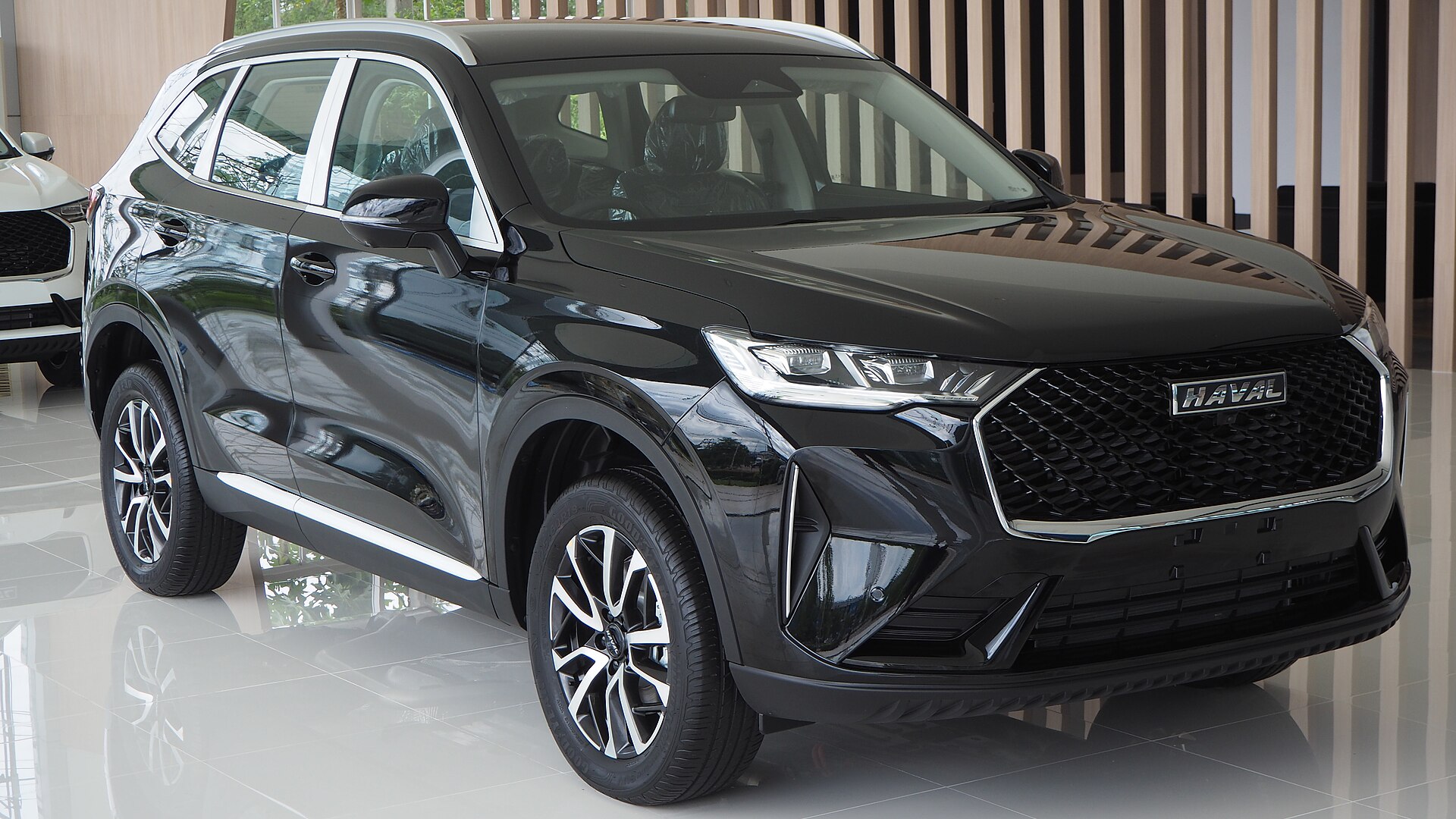
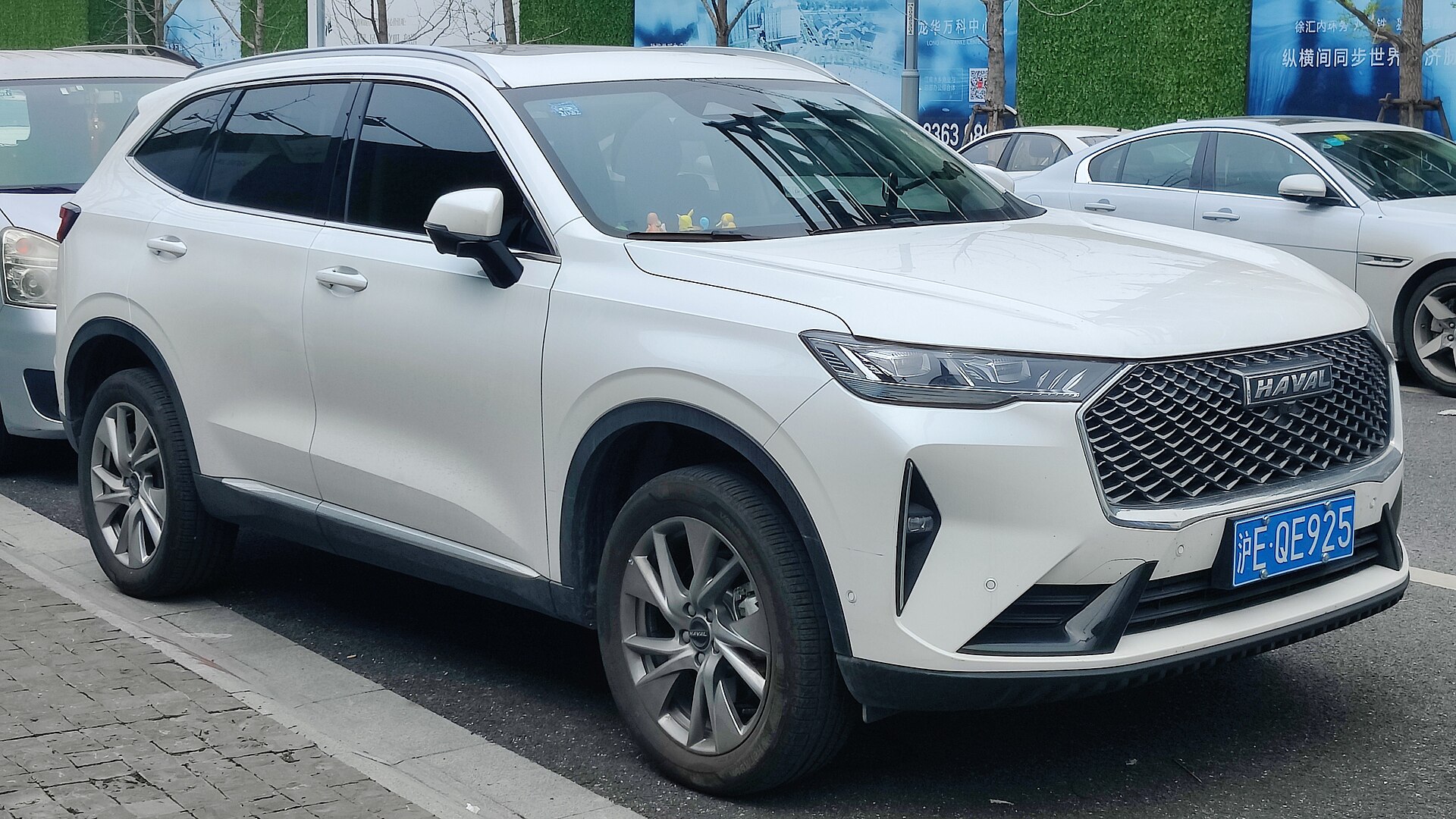
The front has a large grille with chrome surround and horizontal bars, the brand name on a red background, halogen or (on higher trims) xenon headlights, a lower grille and round fog lamps beside long LED daytime running lights. The heavy bonnet is supported by two gas struts. Higher trims have a heated wiper rest area and frameless wipers.
In profile, large wheel arches and a curved line from the front arch to the tail lights stand out; the door handles sit high, close to the windows, which some find awkward. Plastic lower cladding comes in black or body colour, and the mirrors have LED indicators, electric adjustment, heating and folding (automatic folding optional). Base cars ride on 17-inch alloys, with room for 18-inch wheels. Ground clearance is 170 mm unladen and 140 mm fully laden. At the rear are large lights, a small spoiler with an LED brake light, a central diffuser and two long LED fog lamps.
Interior and practicality
The interior layout recalls the Honda CR-V, with a split centre console. There are seat-heating buttons, a phone charger and two small armrests - one for the driver, one for the passenger - which are not very comfortable. The sporty front seats have side support; the driver's seat adjusts six ways and the passenger seat four, manually or electrically depending on version, though drivers over 1.90 m may struggle to find a good position. Sound insulation is a pleasant surprise.
The instruments are easy to read, though the trip computer display could be larger. The steering wheel adjusts for height and reach. The audio system has seven speakers, a large touchscreen, Bluetooth, AUX and USB, but the screen reflects sunlight and the interface is not intuitive. Dual-zone climate control works well, though its small display is dim with the headlights on. The rear bench is wide and suits passengers of average height; upholstery is fabric, with synthetic leather on the top-spec version. The boot holds 800 litres, or 2,010 litres with the rear seats folded, and a full-size spare is provided.
Engines and transmissions
| Engine | Fuel | Power (kW / PS) | Torque | Combined consumption |
|---|---|---|---|---|
| 1.5 turbo, 16 valves, multi-point injection, variable valve timing | Petrol | 108 kW / 147 PS | 210 Nm | 9.0 l/100 km |
| 2.0 turbo with intercooler, direct injection | Diesel | 105 kW / 143 PS | 305 Nm | 6.7 l/100 km |
Gearboxes are a six-speed manual or a smooth six-speed automatic. Base versions are front-wheel drive; more expensive ones have intelligent all-wheel drive with an electronically controlled multi-plate clutch.
Chassis
The H6 has a strong monocoque body with MacPherson struts at the front and an independent double-wishbone rear, with anti-roll bars at both ends. Brakes are ventilated discs at the front and solid discs at the rear, and the rack-and-pinion steering has hydraulic assistance.
Safety and equipment
Active driver assistance is limited, appearing only on the richest versions. Equipment includes front and side airbags, curtain airbags, a rear camera with dynamic guidelines, a camera in the right mirror for the blind spot, front and rear parking sensors, rain and light sensors, keyless entry, "follow me home" lighting, ISOFIX, emergency brake assist, ABS, EBD, stability control, cruise control and a full-size spare. Options include a parking assistant, surround-view cameras, puddle lamps projecting the logo and extra chrome and protective trim. Even the base version has 17-inch alloys, LED daytime running lights, rear parking sensors, heated electric mirrors, keyless start and dual-zone climate control.
Key specifications
| Parameter | Value |
|---|---|
| Launch | 2011 (Blue Label from 2015) |
| Body | 5-door compact SUV, monocoque |
| Power | 105–108 kW / 143–147 PS |
| Gearboxes | 6-speed manual, 6-speed automatic |
| Drive | Front or all-wheel drive |
| Ground clearance | 170 mm (unladen) |
| Boot | 800 / 2,010 l |
| Wheels | 17 in (18 in possible) |
Strengths and weaknesses
Owners praise the rich equipment, good materials and assembly, a reasonable price, a well-tuned suspension, good sound insulation and stability, the economical diesel and the available all-wheel drive. The 1.5 turbo has enough power but needs to be revved. Criticisms include modest performance, limited ground clearance when loaded, a notchy manual gearbox, high consumption from the petrol engine, an awkward and unreliable tailgate lock and blind spots when turning. Rivals include the Geely Atlas, Kia Sportage and Ford Kuga.
FAQ
What is the difference between the Haval H6 Red Label and Blue Label?
Red Label is the more comfort-oriented version; Blue Label is the sportier, more stylish one, introduced in spring 2015.
What engines does the Haval H6 have?
A 1.5 turbo petrol with 108 kW (147 PS) and a 2.0 turbodiesel with 105 kW (143 PS).
Is the Haval H6 a body-on-frame SUV?
No. Unlike many Great Wall off-roaders, the H6 has a monocoque body like a conventional crossover.
How big is the Haval H6 boot?
800 litres, or 2,010 litres with the rear seats folded.
Data sources
Data checked by an editor against the sources below.