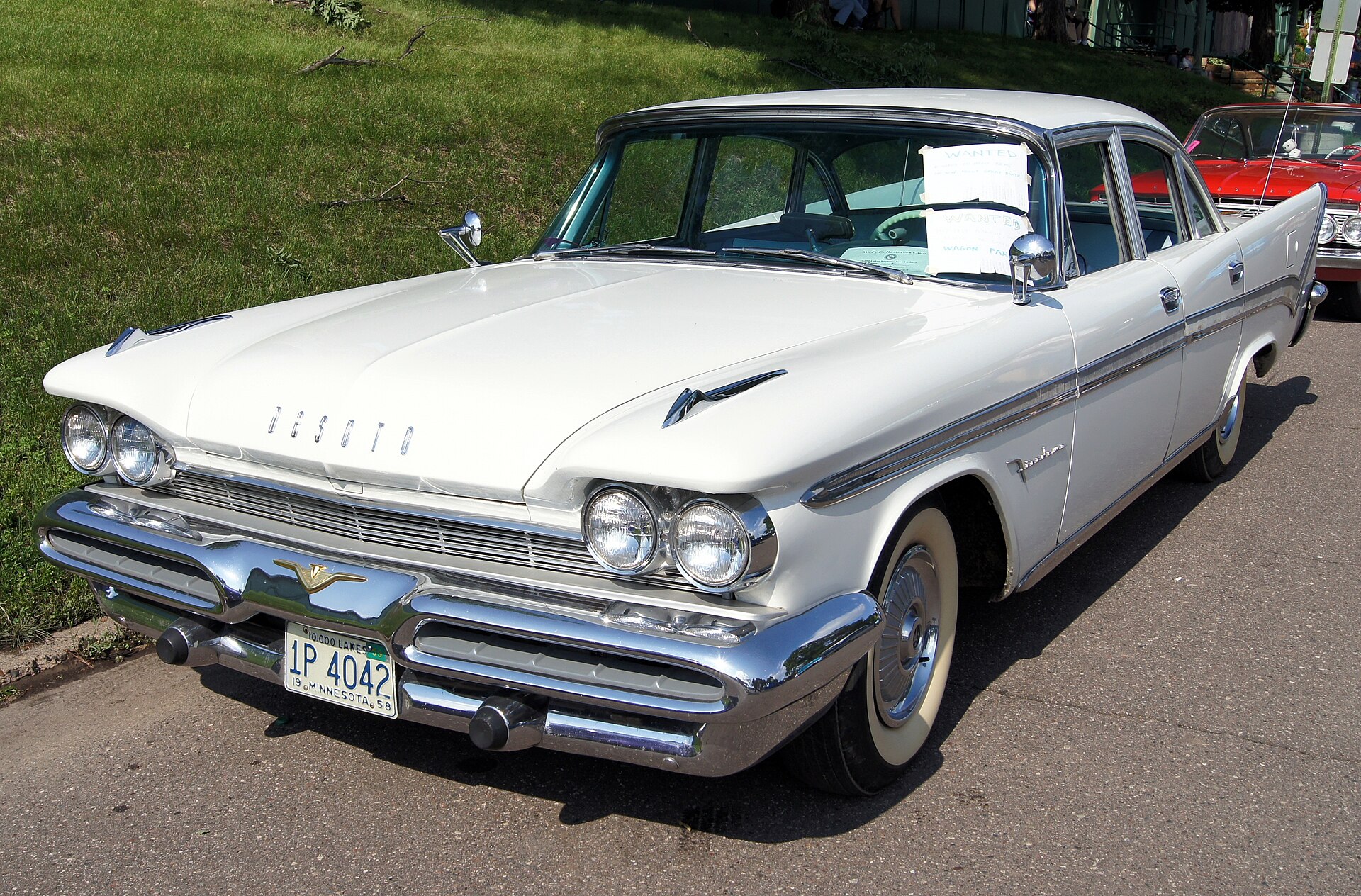
DeSoto — Walter Chrysler's Brand Between Plymouth and Chrysler
DeSoto was a mid-priced American car brand of the Chrysler Corporation, launched by Walter P. Chrysler in 1928 and dropped in November 1960. It was named after the Spanish explorer Hernando de Soto and sat in the middle of Chrysler's range, between Plymouth and Chrysler, with its position against Dodge changing over the years. DeSoto set a first-year sales record in 1929, offered the first powered hidden headlamps on a North American mass-produced car in 1942, and built Hemi V8s in the 1950s. More than two million DeSoto cars and trucks were sold in North America.
Key takeaways
- Walter Chrysler founded the DeSoto marque on 4 August 1928; 81,065 DeSoto Sixes were built for 1929, a US first-year record that stood until the 1960 Ford Falcon.
- The 1934 DeSoto was offered only with the streamlined Airflow body, and sales fell sharply.
- The Firedome of 1952 introduced a 276 cu in Hemi V8; by 1956 its output had risen to 172 kW (230 hp).
- Chrysler announced the end of DeSoto on 18 November 1960, and the last car was built on 30 November 1960; only 3,034 1961 models were sold.
DeSoto at a glance
| Fact | Value |
|---|---|
| Founded | 4 August 1928 |
| Founder | Walter P. Chrysler |
| Parent | Chrysler Corporation |
| Named after | Hernando de Soto, Spanish explorer |
| Plants | Wyoming Road plant; Los Angeles (Maywood) |
| Best-known models | Six, Airflow, Custom, Firedome, Fireflite, Adventurer, Firesweep |
| Engines | Straight-sixes and eights; Hemi and wedge V8s |
| Sales | More than two million cars and trucks in North America |
| End | Last car built on 30 November 1960 |
A new mid-priced brand for Chrysler
On 4 August 1928 Walter Chrysler founded DeSoto to compete in the mid-price class with Pontiac, Studebaker, Hudson and Willys. Plymouth, launched the same year, became the entry-level car. Shortly after DeSoto's introduction Chrysler bought Dodge Brothers, which at first was placed above DeSoto. The name honoured Hernando de Soto, the first documented European to cross the Mississippi, and his stylised portrait became the badge. Walter Chrysler's own career is covered on his biography page.
An earlier De Soto Motor Car Company had existed in Auburn, Indiana, from November 1912, as a subsidiary of Zimmerman Manufacturing, and was later bought by the Auburn Automobile Company. It had no link to Chrysler's brand beyond the name.
A record start and the Airflow
The first DeSoto, the Six of the 1929 model year, was an immediate success. 81,065 were built, a first-year production record in the United States that lasted 31 years. In 1932 sales were about 25,000, roughly the same as Dodge, and in 1933 Chrysler swapped the two brands, placing DeSoto above Dodge.
The swap was followed by a gamble. For 1934 DeSoto was given nothing but the Airflow, Chrysler's streamlined body developed by Carl Breer, Fred Zeder and Owen Skelton after wind-tunnel tests of at least 50 scale models. On DeSoto's shorter wheelbase the body looked short and stubby. With no conventional car to offer, DeSoto's sales plunged; Chrysler, which also sold traditional models, sold them at 2.5 to one against its own Airflows. Most historians blame the Airflow's looks for its failure. The 1935 Airstream, with conventional styling, replaced it.
Hidden headlamps and the war
DeSoto's best-known pre-war feature came in 1942. Its powered pop-up headlamps, marketed as "Air-Foil" lights, were the first on a North American mass-produced vehicle. The Cord 810 had offered hidden headlamps from 1936, but they were wound up by hand. Civilian production stopped for the war soon after. In 1946 DeSoto resumed with the 1942 designs, without the hidden headlamps.
DeSoto also had a commercial side. From 1937 Chrysler sold DeSoto-badged trucks, versions of Dodge and Fargo models, to expand overseas sales. They were sold in Argentina, Australia, Spain, Turkey and the United Kingdom, and in Turkey DeSoto and Fargo badges stayed on Askam trucks until 1978.

Firedome and the Hemi V8
The post-war cars used the Deluxe and Custom names until 1952, when the Firedome arrived with a 276 cu in Hemi V8. It had 119 kW (160 hp) at launch and 127 kW (170 hp) by 1953, and a top speed of 100 mph. The 1953 Firedome started at US$2,740 in 1953, and about 64,211 were built. From 1953 the six-cylinder cars were called Powermaster. The same Hemi was also sold to Facel of France: the first Facel Vega of 1954 used a 4.5-litre DeSoto Firedome V8 of 132 kW (180 hp).
Displacement grew to 291 cu in for 1955, with 138 kW (185 hp), and output reached 172 kW (230 hp) in 1956, 34 kW more in one year. The Firedome Hemi is covered in DeSoto Firedome Hemi V8 history and specifications.

The Forward Look and the Adventurer
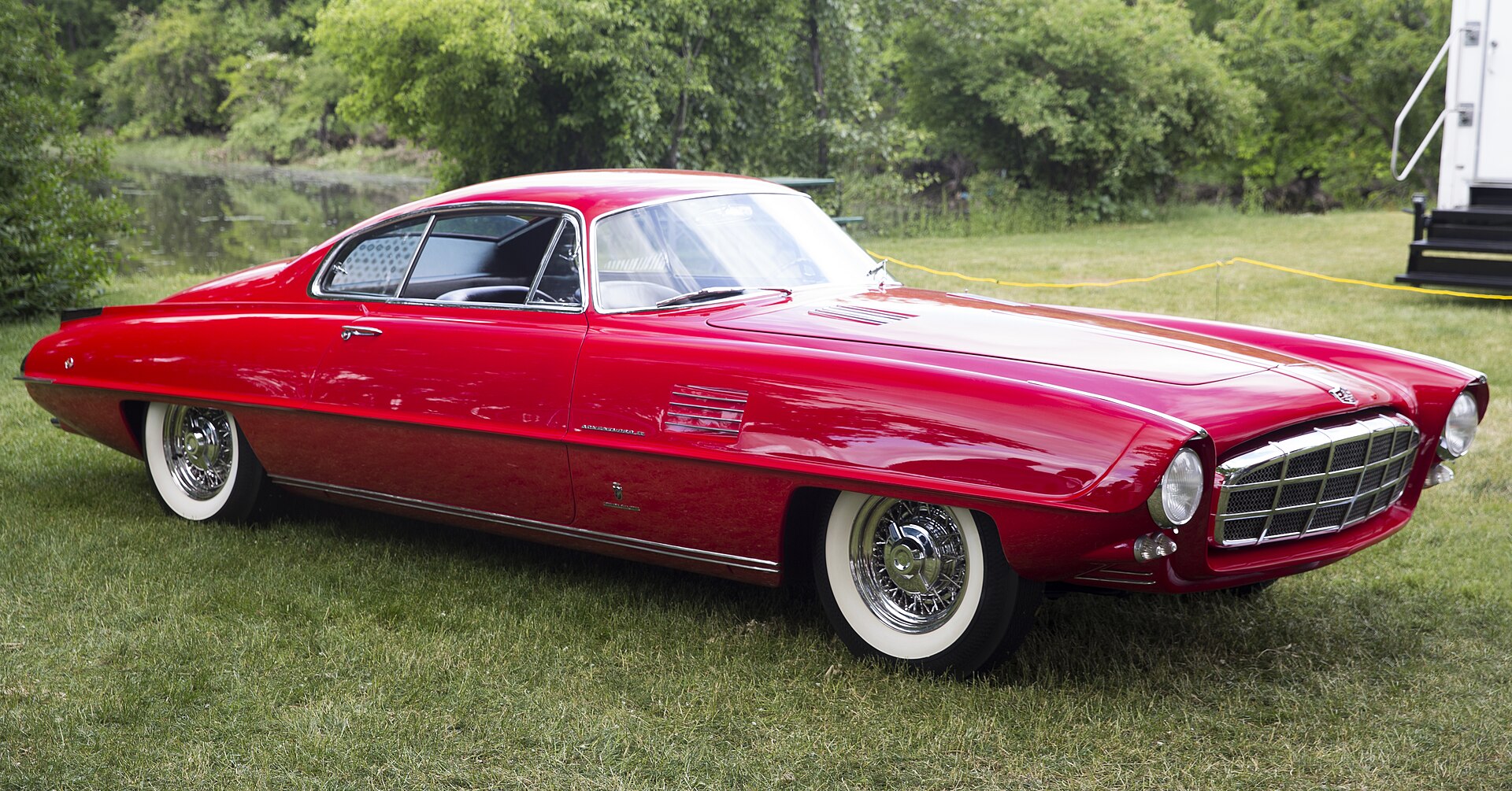
Virgil Exner's "Forward Look" redesign came to all Chrysler brands for 1955. For 1956 Exner added tail fins with triple tail lamps, sales reached record levels, and a DeSoto paced the Indianapolis 500, the only time in the brand's history. The high-performance Adventurer hardtop also appeared for 1956 with a 341 cu in Hemi and dual exhausts; 996 were built. For 1957 a convertible was added and the engine grew to 345 cu in, and 1,950 were built, including 300 convertibles.
The 1957 range was split in two. The smaller Firesweep used a 122-inch Dodge wheelbase, and the Firedome and Fireflite a 126-inch Chrysler wheelbase. In 1958 the Hemi was replaced by a 361 cu in wedge-head V8 of more than 224 kW (300 hp), and Bendix fuel injection was offered, though few cars received it. The 1959 Adventurer's 383 cu in V8 had 261 kW (350 bhp) at 5,000 rpm. DeSoto also sponsored Groucho Marx's television quiz You Bet Your Life from 1950 to 1958.
Recession, competition and the end
The decline was fast. In the 1958 recession DeSoto's sales fell by 60%, to their lowest since 1938, and in 1960 they fell another 40% from the poor 1959 total. The causes were inside Chrysler as much as outside it. Dodge moved upmarket with the Custom Royal and the 1960 Dart and took DeSoto buyers. Many dealers chose to keep Plymouth rather than DeSoto. DeSoto had no compact car in 1960, while General Motors, Ford, Dodge and Plymouth did. For 1961 the new Chrysler Newport sold more than 45,000 cars in its first year in DeSoto's price range.
The 1961 DeSoto, a single line of two- and four-door hardtops, went on sale in October 1960. Chrysler announced the end of the brand on 18 November 1960, 47 days later, and the last car was built on 30 November 1960. Dealers were left with unsold cars and received no compensation at the time. Only 3,034 of the 1961 models were sold. Dodge's Custom 880 of 1962 later filled the gap.

Collecting a DeSoto today
The Hemi Firedomes and Adventurers of 1952–1957 are the most interesting cars for collectors, because the same Hemi engines also powered the first Facel Vegas. The Adventurer is the rarest, with fewer than 2,000 a year in 1956–1957 and only 432 in 1958. The 1934 Airflow DeSoto is the brand's design landmark. The power converter translates the gross hp ratings of the period into kW. The Chrysler group's story is told in the history of the Chrysler Corporation, and the model is listed in the DeSoto catalogue.
DeSoto timeline
| Year | Event |
|---|---|
| 1928 | DeSoto founded (4 August) |
| 1929 | 81,065 Sixes built, a first-year record |
| 1933 | DeSoto placed above Dodge |
| 1934 | Airflow-only range |
| 1937 | DeSoto trucks for export |
| 1942 | Powered hidden headlamps |
| 1952 | Firedome with the Hemi V8 |
| 1955 | Forward Look styling |
| 1956 | Adventurer; Indianapolis 500 pace car |
| 1958 | Sales fall 60% |
| 1960 | End announced (18 November); last car (30 November) |
Landmark DeSoto models
| Model | Years | Why it matters |
|---|---|---|
| Six | 1929 | 81,065 built, a first-year record |
| Airflow | from 1934 | Streamlined body that hurt sales |
| Firedome | 1952–1959 | First DeSoto Hemi V8 |
| Adventurer | 1956–1960 | High-performance hardtop and convertible |
| 1961 DeSoto | 1960 | Final model; 3,034 sold |
Photo gallery

FAQ
Who made DeSoto cars?
The Chrysler Corporation. Walter P. Chrysler founded the brand in 1928.
Why was it called DeSoto?
After Hernando de Soto, the Spanish explorer who was the first documented European to cross the Mississippi River.
Did DeSoto have a Hemi?
Yes. The Firedome of 1952 introduced a 276 cu in Hemi V8, which was enlarged and used until 1957.
Why did Chrysler drop DeSoto?
Sales fell sharply after 1957, Dodge and the new Chrysler Newport competed for the same buyers, and many dealers left. Chrysler ended the brand in November 1960.
Sources
- Wikipedia — DeSoto (automobile) (accessed 24 Oct 2026)
- Wikipedia — DeSoto Firedome (accessed 24 Oct 2026)
- Wikipedia — DeSoto Adventurer (accessed 24 Oct 2026)
- Wikipedia — Chrysler Airflow (accessed 24 Oct 2026)
- Wikipedia — Facel Vega FV/FVS/HK500 (accessed 24 Oct 2026)
Found a mistake? Report an error