 DeSoto Firedome
Specs, engines and history
Published Sources (1) Report an error
By Sarah Whitmore, Senior Automotive Writer
- Built
- 1952–1959
- Top power
- 220 kW (299 PS)
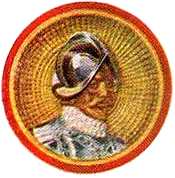
The DeSoto Firedome came from DeSoto, a Chrysler Corporation make founded by Walter Chrysler on 4 August 1928 and sold from the 1929 model year. It took its name from the Spanish explorer Hernando de Soto, the first documented European to cross the Mississippi River, and its badge showed a stylised image of him. In its first year DeSoto built 81,065 DeSoto Sixes, a first-year production record for the United States that stood for 31 years, until the 1960 Ford Falcon. DeSoto sold lower-priced versions of Chrysler designs in the mid-price class, and more than two million cars and trucks carried the name before the last one was built on 30 November 1960.
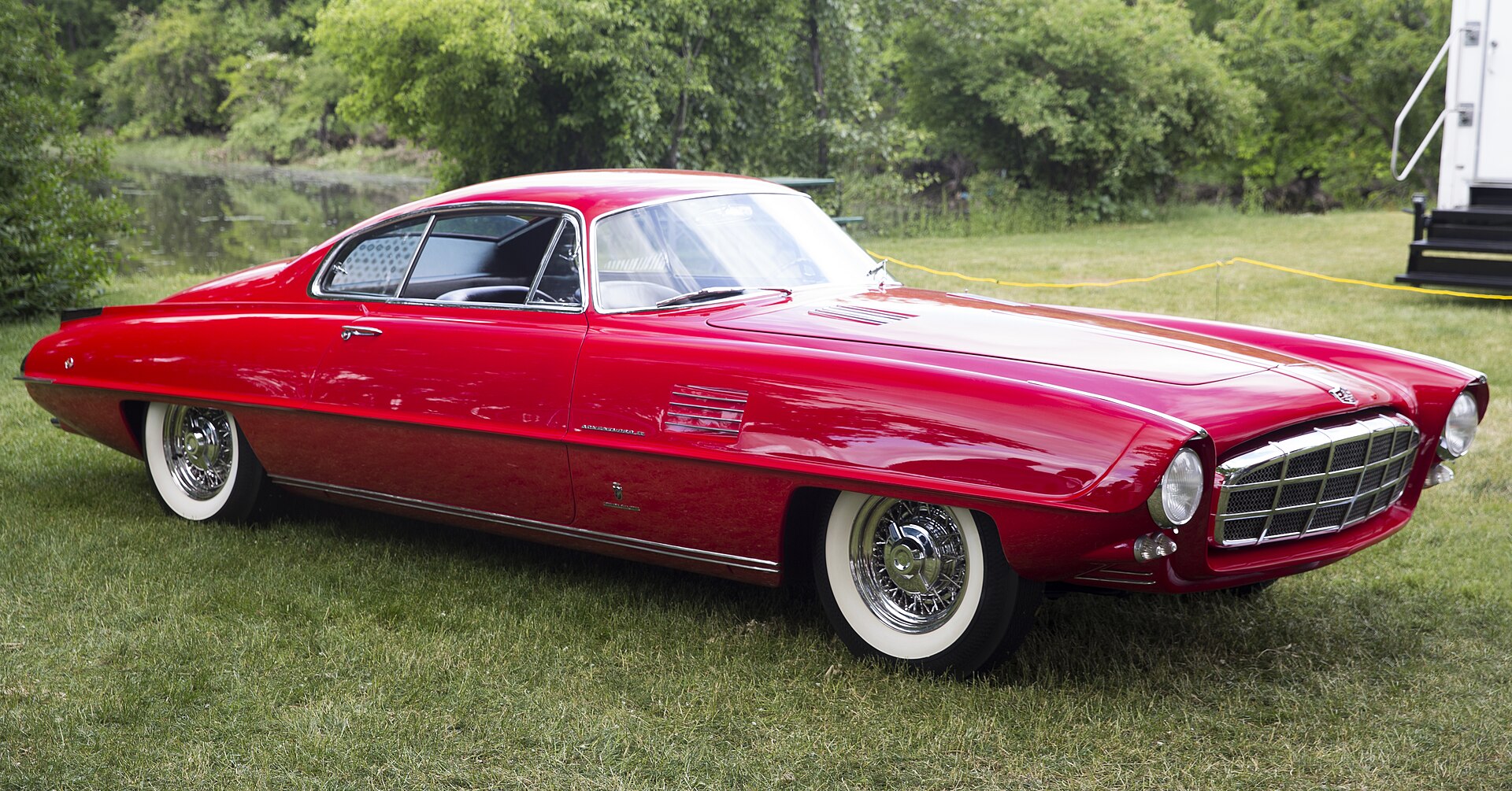
The DeSoto Firedome is the car of DeSoto's best decade. Introduced for 1952 as the top model, it brought the first DeSoto eight-cylinder engine since 1931: a 276 cu in (4.5-litre) Hemi V8. It led the range until 1955, became the entry model when the Fireflite arrived, moved to the middle of the range for 1957 and ended with the 1959 model year.
Specs by version
| Version | Engine | Power | Drive | Production years |
|---|---|---|---|---|
| 4.5 Hemi V8 (276) | 4.5 l · 8 cyl · Petrol 4,523 cc | 120 kW 163 PS161 hp | Rear-wheel drive | — |
| 4.8 V8 (291) | 4.8 l · 8 cyl · Petrol 4,769 cc | 138 kW 188 PS185 hp | Rear-wheel drive | 1955 |
Verified Manufacturer and type-approval data from our catalog · Sources and methodology
In short
- Built from 1952 to 1959 by DeSoto, a division of Chrysler Corporation, at Los Angeles (Maywood) Assembly and Wyoming Road Assembly.
- First engine: the 276 cu in (4.5 l) Hemi V8 with 119 kW (160 bhp); the Hemi grew to 291, 330 and 341 cu in.
- With the optional 361 cu in (5.9 l) V8 of 1958 output passed 220 kW (300 hp); that year 0–60 mph took just under eight seconds.
- The 1953 Firedome started at US$2,740; about 64,211 were built that year.
DeSoto Firedome at a glance
| Parameter | Metric | Imperial |
|---|---|---|
| Maker | DeSoto division of Chrysler Corporation | — |
| Production | model years 1952–1959 | — |
| Assembly | Los Angeles (Maywood) Assembly; Wyoming Road Assembly | — |
| Class and layout | full-size car, front engine, rear-wheel drive | — |
| Body styles (1953) | four-door sedan, five-door station wagon, two-door coupé, two-door convertible | — |
| Seating | six | — |
| Engines | Hemi V8 of 4.5, 4.8, 5.4 and 5.6 l; optional 5.9 l V8 in 1958 | 276, 291, 330, 341 and 361 cu in |
| Power | 119 kW (160 bhp) in 1952 to over 220 kW (300 hp) in 1958 | — |
| Gearbox | three-speed manual (official standard from 1955) or two-speed PowerFlite automatic | — |
| Kerb weight (1953) | 1,700 kg | 3,700 lb |
| Top speed | 160 km/h (1953); 185 km/h (1958) | 100 mph; 115 mph |
| Related models | Dodge Meadowbrook, Plymouth Cranbrook | — |
DeSoto before the Firedome
DeSoto's first years set its place in the Chrysler family. In 1929 the DeSoto Six broke the American first-year production record. In 1934 DeSoto received Chrysler's streamlined Airflow bodies on a shorter wheelbase. The design sold poorly, and DeSoto suffered until the more conventional Airstream arrived in 1935; the Airflow models ran from 1934 to 1936. Chrysler's own history, including the Airflow years, is told in our history of Chrysler.
DeSoto sat in the mid-price class of the corporation, with Plymouth as the entry-level make. The story of that cheaper sister brand is in our page on Plymouth's rise and fall.
Development and production history
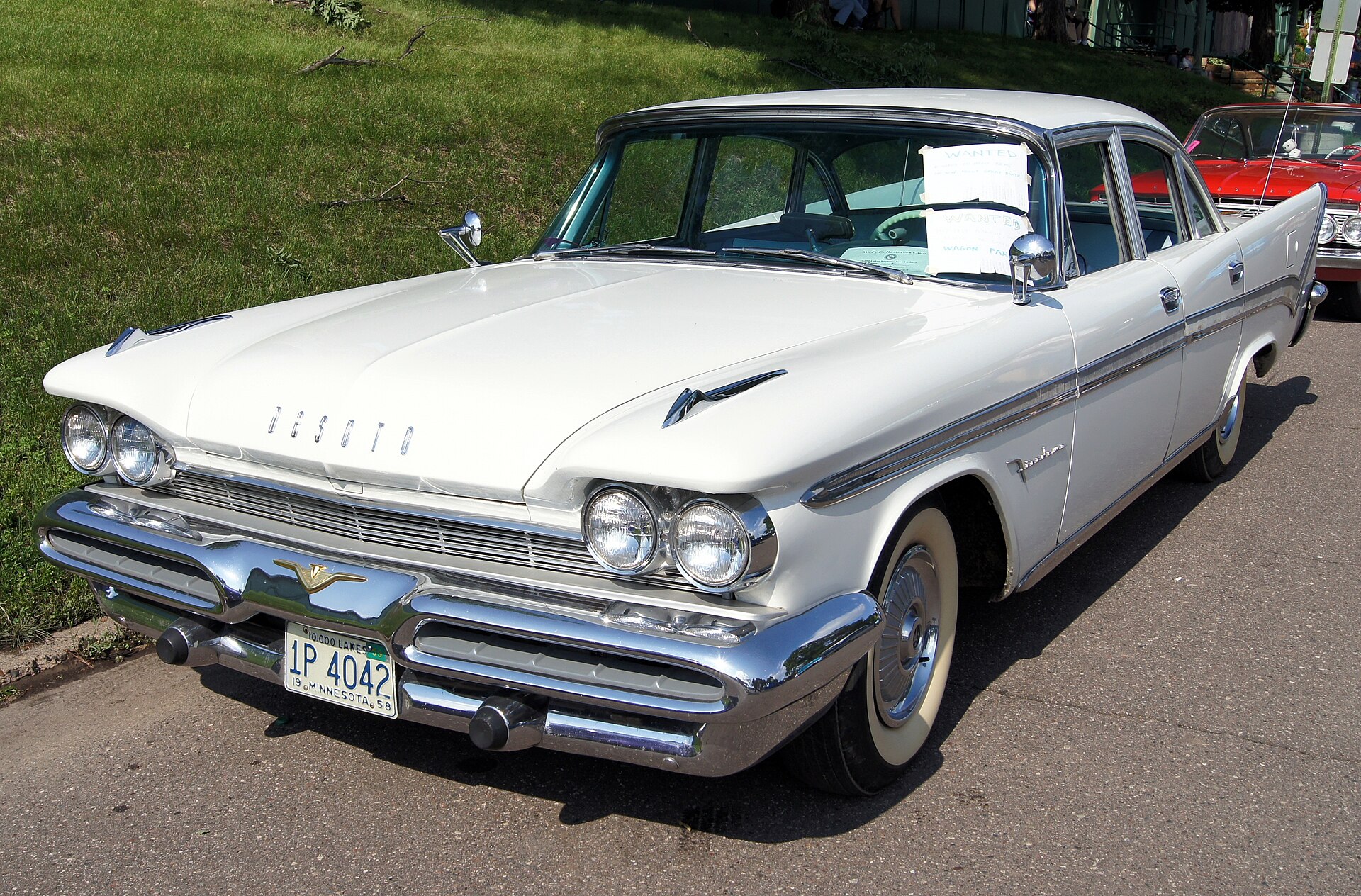
The Firedome arrived for 1952 as DeSoto's premium line, with the 276 Hemi as its reason to exist. That year the DeSoto Custom name was retired. For 1953 the whole DeSoto range was redesigned, shortly before the make's 25th anniversary, and the Firedome became the top series in place of the Custom. It seated six and came as a four-door sedan, a five-door station wagon, a two-door coupé and a two-door convertible.
For 1955 Chrysler dropped the six-cylinder DeSoto Powermaster and added the Fireflite as the new top series, so the Firedome became the entry model. Its interior was still better trimmed than the old Powermaster's. For 1957 DeSoto introduced the Dodge-based Firesweep as its cheapest car, and the Firedome moved into the middle of the range.
| Year | Event |
|---|---|
| 1952 | Firedome launched as DeSoto's top line with the 276 cu in Hemi V8 |
| 1953 | range redesigned; Firedome replaces the Custom as top series; base price US$2,740 |
| 1955 | Fireflite becomes the top series; Firedome becomes the entry model; 291 cu in V8 |
| 1956 | output up to 172 kW (230 hp); record DeSoto sales after the Forward Look redesign |
| 1957 | Firesweep added below; Firedome becomes mid-range; air conditioner offered |
| 1958 | optional 361 cu in V8 with over 220 kW (300 hp); DeSoto sales fall almost 60 % |
| 1959 | last Firedome model year; 26 solid colours and 190 two-tone finishes |
| 30 November 1960 | last DeSoto built |

Hemi V8 engines and performance
The 276 cu in Hemi of 1952 had a bore of 3.625 in and a stroke of 3.344 in. English Wikipedia's Hemi article lists it at 119 kW (160 bhp), and its Firedome article says the figure had risen to 127 kW (170 hp) by 1953. Facel Vega also used the engine. For 1955 a larger bore took the V8 to 291 cu in; the Firedome version had a two-barrel carburettor and 138 kW (185 bhp). The 1956 Hemi of 330 cu in gave 172 kW (230 bhp) in the Firedome, 34 kW (45 hp) more than in 1955. The 341 cu in Hemi, first fitted to the 1956 Adventurer, went into the Firedome and Fireflite for 1957.
| Year | Engine | Displacement | Firedome output | Notes |
|---|---|---|---|---|
| 1952–1954 | Hemi V8 "276" | 4.5 l (276.1 cu in) | 119 kW (160 bhp); 127 kW (170 hp) by 1953 | first DeSoto V8 |
| 1955 | Hemi V8 "291" | 4.8 l (291 cu in) | 138 kW (185 bhp), two-barrel | Fireflite: 149 kW (200 bhp), four-barrel |
| 1956 | Hemi V8 "330" | 5.4 l (330 cu in) | 172 kW (230 bhp), two-barrel | Fireflite: 190 kW (255 bhp) |
| 1957 | Hemi V8 "341" | 5.6 l (341.1 cu in) | — | 1956 Adventurer version: 239 kW (320 bhp) |
| 1958 | optional V8 "361" | 5.9 l (5,920 cc) | over 220 kW (300 hp) | 0–60 mph in just under 8 s |
The 1953 Firedome weighed 3,700 lb (1,700 kg), took 15.5 seconds from 0 to 60 mph and reached 100 mph (160 km/h). With 127 kW for 1,700 kg it had about 75 kW per tonne, a figure the power-to-weight calculator can set against other cars. The 1958 car with the 361 V8 was much quicker, with 0–60 mph just under eight seconds and a top speed of 115 mph (185 km/h).
The PowerFlite two-speed automatic was advertised as an option from 1955. A three-speed manual was officially standard, though few cars were built with it.
Design and equipment
The Firedome shared its body structure with the Dodge Meadowbrook and Plymouth Cranbrook. The new 1953 styling came just before DeSoto's 25th anniversary. In 1956 DeSoto reached record sales after the Forward Look redesign and the arrival of tailfins.
Equipment kept pace with the decade. In 1953 an AM radio cost US$85 extra. A new air conditioner arrived in 1957. In 1959 a padded dashboard was standard, and buyers could choose from 26 solid colours and 190 two-tone finishes.

Decline and the end of DeSoto
DeSoto sales fell almost 60 % in 1958 compared with 1957, the worst year since 1938. English Wikipedia links the fall to the economy and to build problems with the 1957 models. By 1959 Chrysler was struggling to sell DeSotos, and rumours spread that the make would be dropped.
The Firedome ended with the 1959 model year. For 1960 DeSoto offered only the Fireflite and Adventurer, and sales fell another 40 %. The 1961 car, simply called "DeSoto", came as a two-door and four-door hardtop and sold 3,034 units in total. Chrysler announced the end on 18 November 1960, and the last DeSoto left the line on 30 November 1960, 48 days after the 1961 models were introduced. Chrysler's 1961 Newport covered the same price range and sold more than 45,000 cars in its first year.

Variants and derivatives
| Variant | Years | Body / purpose | Engine | Notes |
|---|---|---|---|---|
| Firedome sedan | 1952–1959 | four-door, six seats | Hemi V8, later 361 V8 option | volume model |
| Firedome coupé and convertible | 1953 on | two-door | Hemi V8 | listed for 1953 |
| Firedome station wagon | 1953 on | five-door | Hemi V8 | listed for 1953 |
| Fireflite | 1955–1960 | top series above the Firedome | 291 and 330 Hemi with four-barrel | took over the premium role |
| Adventurer | 1956–1960 | high-performance hardtop | 341 and 345 Hemi | full range in 1960 |
| Firesweep | from 1957 | Dodge-based entry model | — | placed below the Firedome |
Collecting today
The sources give no production totals for most years and no auction figures, so this section keeps to what they record. The key split for a collector is the engine. Cars from 1952 to 1957 have a Hemi of 276 to 341 cu in, and the 1958 car could have the optional 361. The 1955 cars mark the change from top series to entry model, and the 1957 cars the move to the middle of the range. More cars of the decade are in the 1950s classics section, and the remaining DeSoto models are in the DeSoto catalogue.
Photo gallery


DeSoto Firedome in our rankings
- No. 157 of 557 · Biggest engines: cars (4,769 cc · top 29%)
- No. 441 of 859 · Most powerful cars (220 kW · top 52%)
- No. 482 of 912 · Longest-running car nameplates (7 years · top 60%)
- No. 100 of 154 · Most powerful American cars (220 kW · top 65%)
- No. 150 of 154 · Most powerful V8 cars (138 kW · top 98%)
Bigger engine than 71% of ranked cars in the 1CARS catalog (No. 157 of 557).
FAQ
What years was the DeSoto Firedome made?
From the 1952 to the 1959 model year. It was DeSoto's top series until 1955, the entry model from 1955 and a mid-range model from 1957.
What engine does the DeSoto Firedome have?
A Hemi V8: 276 cu in (4.5 l) with 119 kW (160 bhp) at launch, then 291, 330 and 341 cu in versions. In 1958 an optional 361 cu in V8 gave more than 220 kW (300 hp).
How fast is a DeSoto Firedome?
The 1953 car reached 100 mph (160 km/h) and took 15.5 seconds to 60 mph. The 1958 car with the 361 V8 did 0–60 mph in just under eight seconds and 115 mph (185 km/h).
How much did a DeSoto Firedome cost new?
The 1953 Firedome started at US$2,740, and an AM radio added US$85; about 64,211 cars were built that year.
Why did DeSoto stop making cars?
Sales fell almost 60 % in 1958 and another 40 % in 1960, and Chrysler's own Newport covered the same price range. Chrysler ended the make on 30 November 1960.
Data sources
Data checked by an editor against the sources below.