 Renault 4
Specs, engines and history
Published Sources (1) Report an error
By Oleksandr Hnatiuk, Automotive Editor & Used Car Specialist
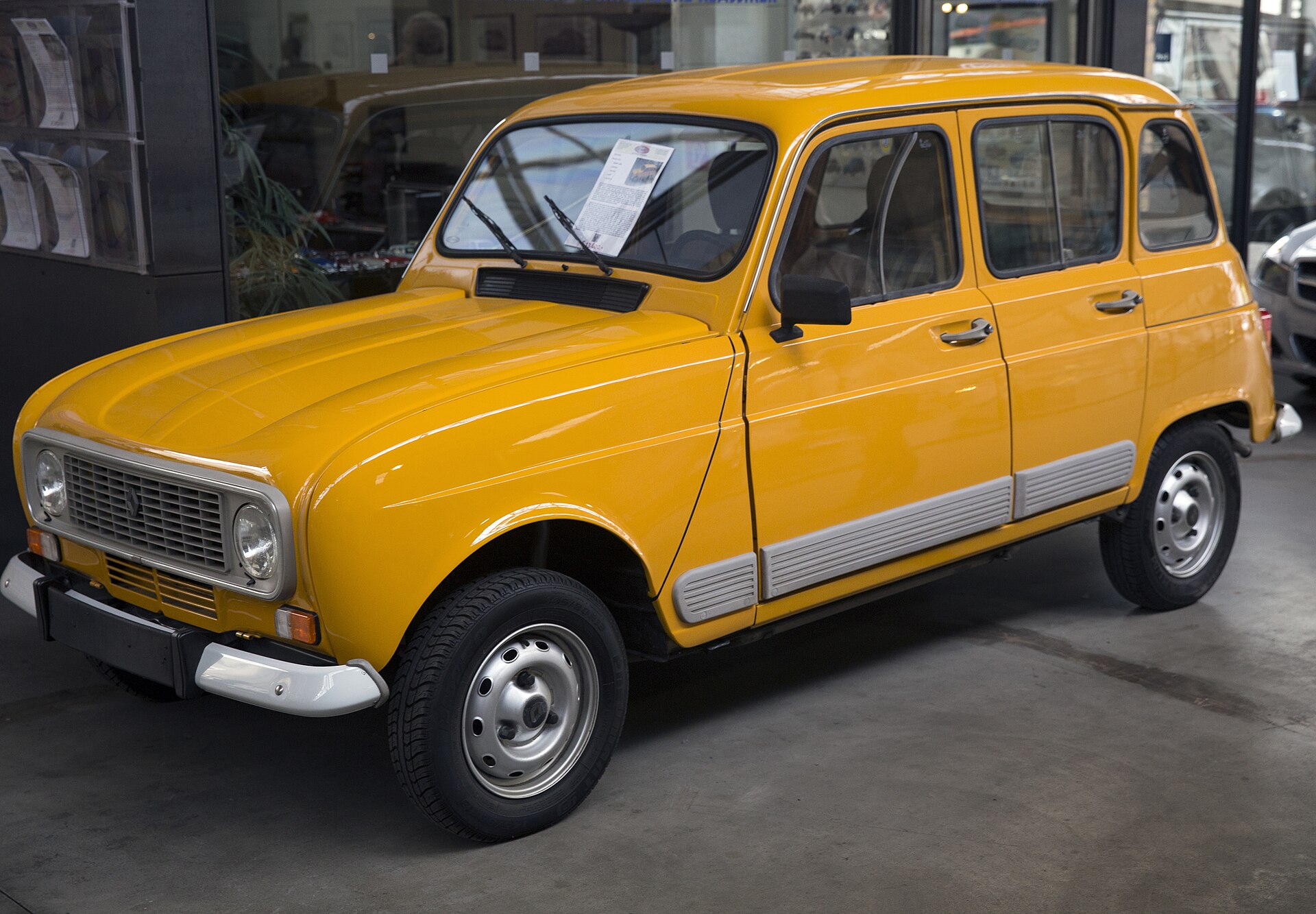
Which Renault 4 to choose
Our verdict · Oleksandr Hnatiuk
- For simplicity: an early 747 cc R4 with the three-speed gearbox.
- For everyday use: a late GTL with the 1,108 cc engine and front disc brakes (from 1983).
- For work or camping: a Fourgonnette van.
- For rarity: a Plein Air (563 built) or a Sinpar 4x4.
- For a special edition: one of the themed series such as the Safari, Sixties, Jogging, Clan or Savane, or the final "Bye-Bye" cars of 1992, of which 1,000 were made.
Other Renaults are in the Renault catalogue, and more cars of the period under 1960s classics.
The Renault 4 is the small five-door hatchback that Renault launched in July 1961 and built for 31 years, until December 1992 in France's last plants and until 1994 in Slovenia. Conceived as an answer to the Citroën 2CV, it was Renault's first front-wheel-drive family car, with a water-cooled engine, torsion-bar suspension and a large rear door. More than eight million were built in twenty factories on four continents.
In short
- Launched with the Renault 3 in July 1961 and shown at the 1961 Paris Motor Show.
- Engines from 603 cc (R3) and 747 cc at launch to 845, 956 and 1,108 cc; a sealed-for-life cooling system.
- One million built by 1 February 1966; over eight million in total.
- Kerb weight 600–750 kg; top speed over 104 km/h at launch.
Size at a glance
| Dimensions | Renault 4 |
|---|---|
| Length | 3,663 mm144.2 in |
| Width | 1,485 mm58.5 in |
| Height | 1,470 mm57.9 in |
Specs by version
Engines
| Version | Engine | Gearbox | Drive | Production years |
|---|---|---|---|---|
| 747 cc | 0.7 l · 4 cyl · Petrol 747 cc | Manual | Front-wheel drive | 1961 |
| 845 cc | 0.8 l · 4 cyl · Petrol 845 cc | Manual | Front-wheel drive | - |
| 956 cc | 1.0 l · 4 cyl · Petrol 956 cc | Manual | Front-wheel drive | 1986 |
| GTL 1108 cc | 1.1 l · 4 cyl · Petrol 1,108 cc | Manual | Front-wheel drive | 1978 |
Dimensions and weight
Verified Manufacturer and type-approval data from our catalog · Sources and methodology
Renault 4 at a glance
| Parameter | Value |
|---|---|
| Maker | Renault (Régie Nationale des Usines Renault) |
| Production | July 1961 – December 1992 (to 1994 in Slovenia) |
| Built | over 8 million, in 20 factories on four continents |
| Body styles | five-door hatchback; Fourgonnette van, pick-up, open Plein Air |
| Engines | 603–1,108 cc OHV four-cylinder, water-cooled |
| Gearbox | 3-speed manual, 4-speed from 1968; lever on the dashboard |
| Suspension | independent all round, torsion bars |
| Length × width × height | 3,663 × 1,485 × 1,470 mm |
| Successor | Twingo (as entry-level Renault); Renault 4 E-Tech (name) |
Development and production history
The project started in early 1956, when Renault's chairman Pierre Dreyfus asked for a "blue jeans car". The result was Renault's answer to the Citroën 2CV and the company's first front-wheel-drive family car, with a water-cooled engine and a sealed-for-life cooling system.
The Renault 3 and Renault 4 were launched together in July 1961 and shown at the Paris Motor Show that autumn. The basic R3, with a 603 cc engine, was priced 40 francs below the cheapest 2CV, but only 2,526 were sold before it was dropped in October 1962. The R4 and the better-equipped R4L became the core of the range. The R4L cost 400 francs (about 8%) more than the four-window R4, and the quarter-light glass that distinguished it was a 400-franc option on the basic car in 1961.
The car sold steadily for three decades. One million had been built by 1 February 1966. Renault added a four-speed gearbox in 1968, the GTL with a 1,108 cc engine in 1978 (front disc brakes followed for 1983), and the 956 cc engine replaced the 845 cc unit in 1986. French production ended in December 1992 after 31 years, with a "Bye-Bye" limited series of 1,000 cars; the Slovenian plant at Novo Mesto continued until 1994. The Twingo of 1992 took over as Renault's entry-level model.
| Year | Event |
|---|---|
| Early 1956 | Pierre Dreyfus starts the project |
| July 1961 | Launch of the R3 and R4 |
| October 1962 | End of the R3 (2,526 sold) |
| 1 February 1966 | One millionth Renault 4 |
| 1968 | Four-speed gearbox; open Plein Air |
| 1978 | GTL with 1,108 cc engine |
| 1986 | 956 cc engine replaces the 845 cc |
| December 1992 | End of French production, "Bye-Bye" series of 1,000 |
| 1994 | End of production in Slovenia |


Design and engineering
The R4 has four-wheel independent suspension with torsion bars and hydraulic telescopic dampers. The wheelbase differs from side to side: 2,440 mm on the right and 2,395 mm on the left. The gear lever is mounted on the dashboard and linked to the gearbox by a horizontal rod.
The water-cooled engine had a sealed-for-life cooling system. At first the gearbox had three speeds with synchromesh on the top two; from 1962 all three were synchronised, and a four-speed gearbox was added in 1968. The car is 3,663 mm long, 1,485 mm wide and 1,470 mm high and weighs between 600 and 750 kg.

Engines and drivetrain
| Engine | Years | Notes |
|---|---|---|
| 603 cc | 1961–1962 | R3 only; 16.5 kW (22.5 hp) |
| 747 cc | from 1961 | R4 launch engine; 19.5 or 23.5 kW (26.5 or 32 hp) |
| 845 cc | - | from the Dauphine; Super / de Luxe and later most markets |
| 956 cc | from 1986 | replaced the 845 cc |
| 1,108 cc | from 1978 | GTL |
All engines are in-line four-cylinders driving the front wheels. English Wikipedia's figures for the first R4 vary between 18 kW (24 hp), 19.5 kW (26.5 hp) and 23.5 kW (32 hp), depending on the version and market; the launch car could exceed 104 km/h. Our fuel cost calculator gives a sense of what such a small engine means in running costs today.
Renault 4 specifications
| Parameter | Metric | Imperial |
|---|---|---|
| Length | 3,663 mm | 144.2 in |
| Width | 1,485 mm | 58.5 in |
| Height | 1,470 mm | 57.9 in |
| Wheelbase | 2,440 mm right / 2,395 mm left | 96.1 / 94.3 in |
| Kerb weight | 600–750 kg | 1,323–1,653 lb |
| Engines | 603–1,108 cc I4, water-cooled | - |
| Top speed (launch) | over 104 km/h | over 65 mph |
| Suspension | independent, torsion bars, telescopic dampers | - |
Variants and derivatives
| Variant | Years | Body / purpose | Notes |
|---|---|---|---|
| Renault 3 | 1961–1962 | basic hatchback | 603 cc; 2,526 sold |
| R4 / R4L | 1961–1992 | hatchback | R4L 400 francs dearer (1961) |
| Super / de Luxe | - | better-equipped hatchback | 845 cc |
| GTL | from 1978 | hatchback | 1,108 cc; front discs from 1983 |
| Fourgonnette | to 1993 | panel van | - |
| Plein Air | 1968–1970 | doorless, roofless leisure car | 563 built |
| Sinpar 4x4 | - | four-wheel drive conversion | Paris–Dakar entries |
| Special editions | - | Safari, Sixties, Jogging, Clan, Savane | Brisa in Colombia (1989) |
Renault also offered pick-up, LPG and electric versions, and the Rodeo leisure vehicle was built on the R4 platform.
Plants around the world
The R4 was assembled in France at Billancourt and in many other countries: Algeria, Argentina, Australia (Heidelberg, 1962–1966), Belgium (Vilvoorde), Chile (Arica and Los Andes), Colombia (SOFASA, 1970–1992), Ireland (Naas from 1962 and Wexford from 1972 to 1984), Italy (by Alfa Romeo in Milan, 1962–1964), Madagascar, Mexico (to 1976), Morocco, Portugal (Guarda, 1964–1989), Spain (Valladolid) and Uruguay. The Slovenian IMV/REVOZ plant at Novo Mesto built 575,960 cars from 1973 to 1992 and was the last to build the car. The Portuguese factory at Guarda assembled the car from CKD kits from 1964 to 1989.
The Renault 4 in numbers
Simple arithmetic on the figures in English Wikipedia shows the scale of the car. Eight million cars over 31 years of French production is an average of more than 250,000 a year. The first million took four and a half years, from July 1961 to February 1966. The Slovenian plant alone built 575,960 cars in 1973–1992, about 7% of the total.
The R3, by contrast, sold only 2,526 before it was dropped after 15 months, while the slightly dearer R4 went on for three decades. With 600–750 kg and 16.5–23.5 kW at launch, the early cars were never quick, and the top speed at launch was just over 104 km/h. Our power-to-weight calculator puts these numbers next to today's small cars.
Motorsport and legacy
The R4 even had a motorsport career. Bernard and Claude Marreau finished fifth in the 1979 Paris–Dakar Rally and third in 1980 in a Sinpar 4x4. Group A GTLs took part in the Tour de Corse in 1991 and the Monte Carlo Rally in 1993, and the student charity raid 4L Trophy has been held since 1997.
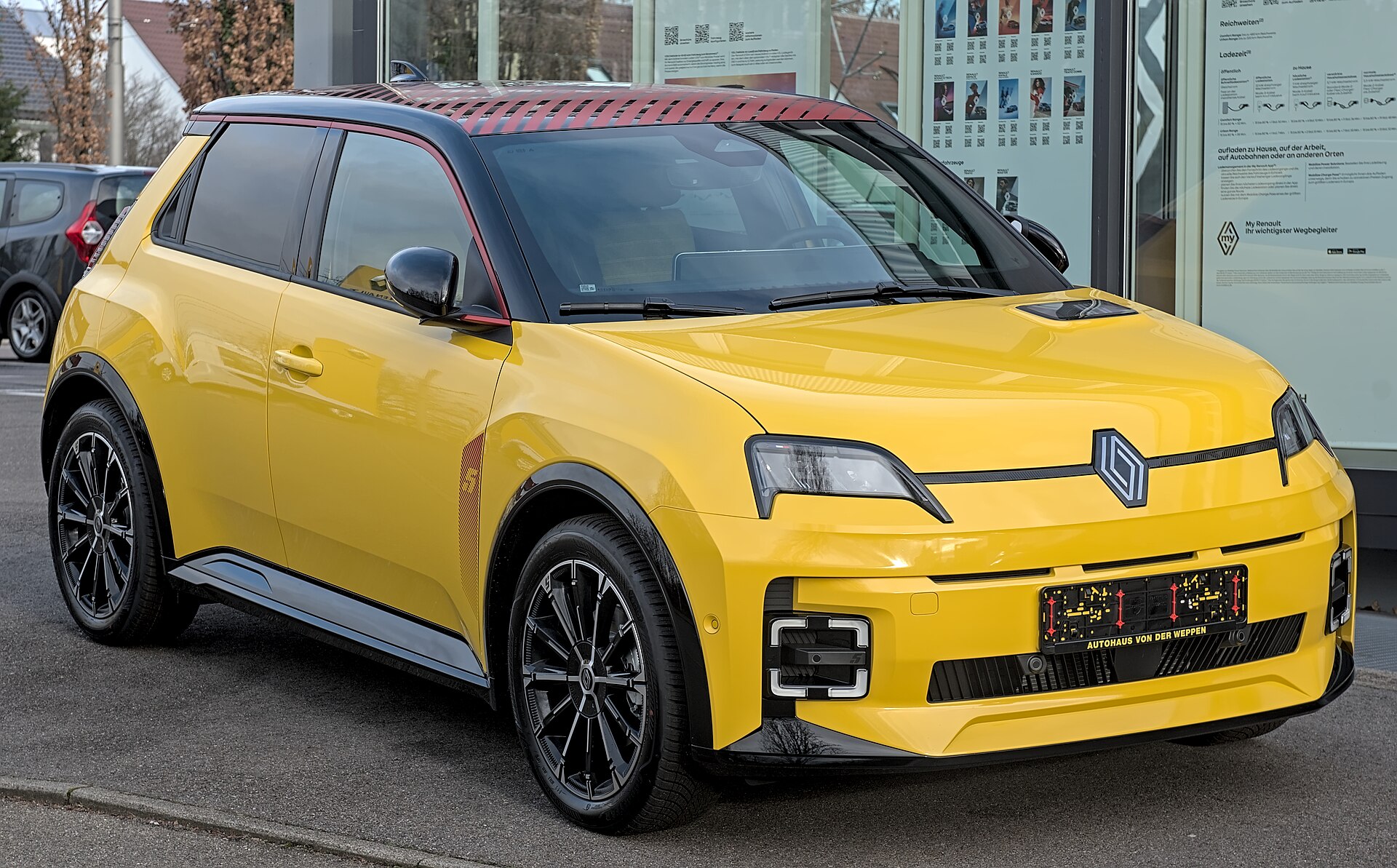
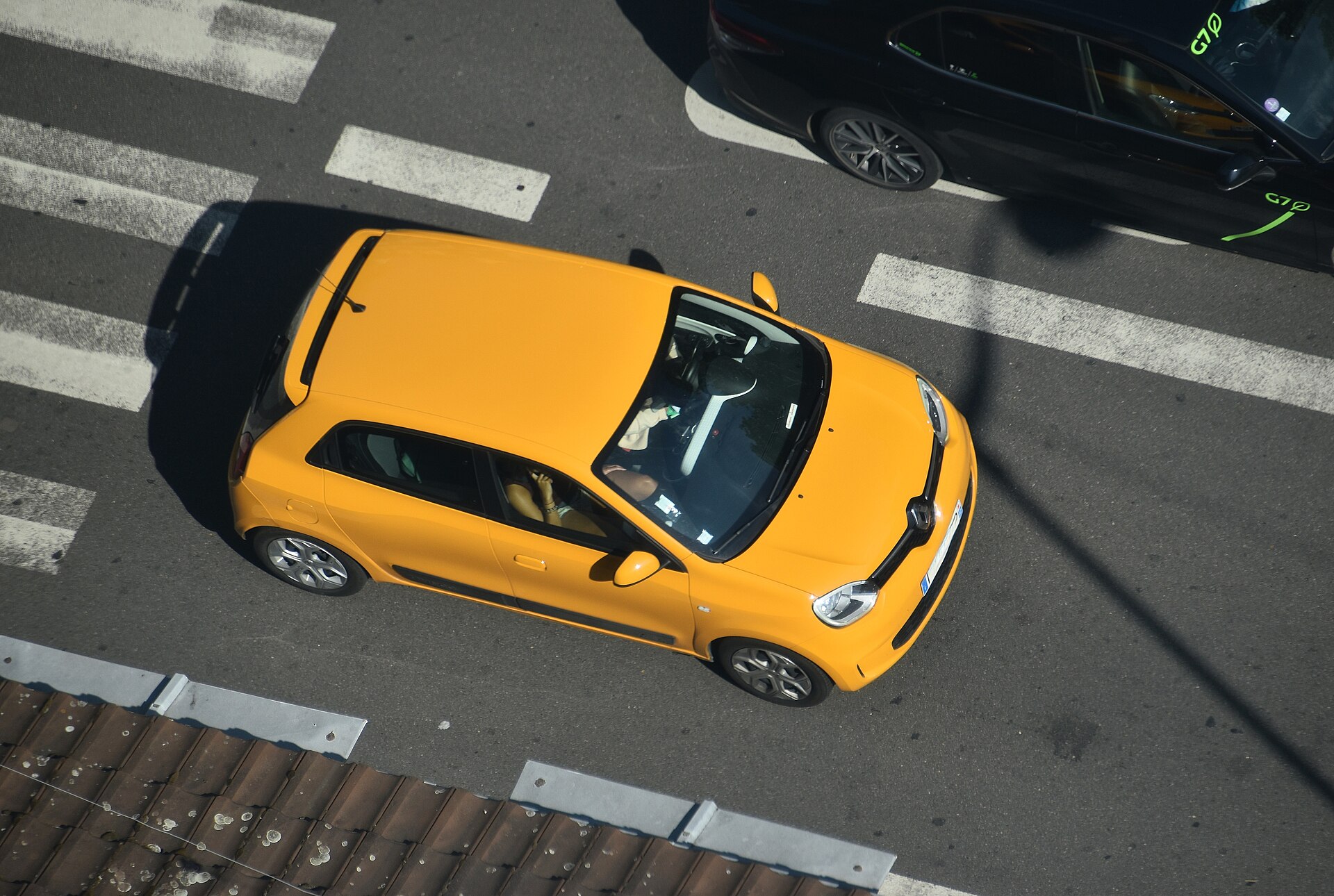
In 2021 Renault announced the "4ever" electric crossover concept, and the infobox of English Wikipedia lists the Renault 4 E-Tech as the name's successor. The company's history is told in our history of Renault, and its rival in the Citroën 2CV story. The car that replaced it as the entry-level Renault is described in our Renault Twingo article.
Photo gallery

Renault 4 in our rankings
- No. 10 of 67 · Smallest hatchbacks (3,663 mm)
- No. 12 of 420 · Smallest cars (3,663 mm · top 3%)
- No. 65 of 70 · Biggest engines: hatchbacks (1,108 cc · top 93%)
- No. 62 of 67 · Longest hatchbacks (3,663 mm · top 93%)
- No. 543 of 557 · Biggest engines: cars (1,108 cc · top 98%)
- No. 414 of 420 · Longest cars (3,663 mm · top 99%)
Shorter than 97% of ranked cars in the 1CARS catalog (No. 12 of 420).
FAQ
When was the Renault 4 produced?
From July 1961 to December 1992 in France and most other plants, and until 1994 in Slovenia.
How many Renault 4 were built?
More than eight million, in 20 factories on four continents; one million had been built by February 1966.
What engine does the Renault 4 have?
A water-cooled four-cylinder at the front, from 747 cc at launch (603 cc in the R3) to 845, 956 and 1,108 cc, driving the front wheels.
Does the Renault 4 have a different wheelbase on each side?
Yes: 2,440 mm on the right and 2,395 mm on the left, with torsion-bar suspension on all four wheels.
What replaced the Renault 4?
The Twingo of 1992 became Renault's entry-level model; the Renault 4 E-Tech later revived the name.
Data sources
Data checked by an editor against the sources below.