 Renault Express
All generations, specs and history
Published Sources (1) Report an error
By Felix Hartmann, Automotive Technology & EV Contributor
- Built
- 1985–present
- Generations
- 2
- Top power
- 55 kW (75 PS)
Timeline
Express generations
Click a generation for its own page

- Express I 1985–2000 · Pickup, Van · 31–55 kW (42–75 PS)
- Express II Current 2020–now
Newest first · 2 generations since 1985
All generations by year: Express II (2020–now) · Express I (1985–2000)
Which one is mine?
Pick the year of first registration to see which generation it is.
- Express II 2020–present
- Express I 1985–2000
Prices and verdict of the tests
Our verdict · Felix Hartmann
In France the Express Van cost from €17,500 excluding VAT with the TCe 100 and from €17,900 with the dCi 75 when sales began in 2021; the Confort trim added €900, and the top dCi 95 Confort cost €19,800. In Germany meinauto.de listed it in October 2021 at €16,886, or about €14,200 excluding VAT, below the Kangoo Rapid at €17,350 excluding VAT.
The same test praised the better equipment compared with the Dokker, including an optional 8-inch touchscreen, the wider sliding doors and the value for money, and gave it four out of five points. It criticised the lack of extra load space over the Dokker, the absence of alternative drives and the modest engine range.
The Renault Express is Renault's compact van, a name used for two different vehicles. The first Express of 1985–2000, sold as the Extra in the UK and the Rapid in German-speaking countries, was a high-roof van based on the second-generation Renault 5. The current Express Van went on sale in spring 2021 as the successor to the Dacia Dokker and sits below the larger Renault Kangoo.
In short
- Express I (1985–2000): Renault 5-based van, also a pickup and a five-seat glazed version; 31–55 kW petrol and 40–47 kW diesel engines.
- Express II (since 2021): Dokker successor with 3.3–3.7 m³ of load space and up to 780 kg payload.
- Current European engines: 1.3 TCe 100 petrol with 75 kW and 1.5 Blue dCi diesels with 55 and 70 kW, all with six-speed manual gearboxes.
- French prices at launch in 2021 started at €17,500 excluding VAT.
Renault Express at a glance
| Specification | Express I (Extra / Rapid) | Express II (Express Van) |
|---|---|---|
| Production | July 1985 – July 2000 (Uruguay to April 2001) | since 2021 |
| Base | Renault 5 (second generation) | successor of the Dacia Dokker |
| Body | panel van, glazed five-seater, pickup | panel van |
| Length / wheelbase | 4,056 mm / 2,580 mm | 4.39 m / 2.81 m |
| Load space | - | 3.3 m³, 3.7 m³ with folding partition and seat |
| Payload | - | up to 780 kg (petrol), 650 kg (diesel) |
| Engines | 1.0–1.5 petrol, 1.6 and 1.9 diesel | 1.3 TCe 100, 1.5 Blue dCi 75 and 95 |
| Predecessor / successor | Renault 4 F6 / Renault Kangoo | Dacia Dokker Express / – |
Both vans are listed in our Renault catalogue. The van the Express II replaced is covered in Renault Dokker: the budget leisure van and panel van explained.
Renault Express generations
| Generation | Years | Body styles | Engines | Power (kW) |
|---|---|---|---|---|
| Express I (Phase 1) | 1985–1991 | van, glazed van, pickup | 1.0, 1.1, 1.4 petrol; 1.6 diesel | 31–50 |
| Express I (Phase 2 and 3) | 1991–2000 | van, glazed van, pickup | 1.2, 1.4, 1.5 petrol; 1.9 diesel | 40–55 |
| Express II | 2021– | panel van | 1.3 TCe petrol, 1.5 Blue dCi diesel | 55–75 |
Express I (1985–2000): the Renault 5 van
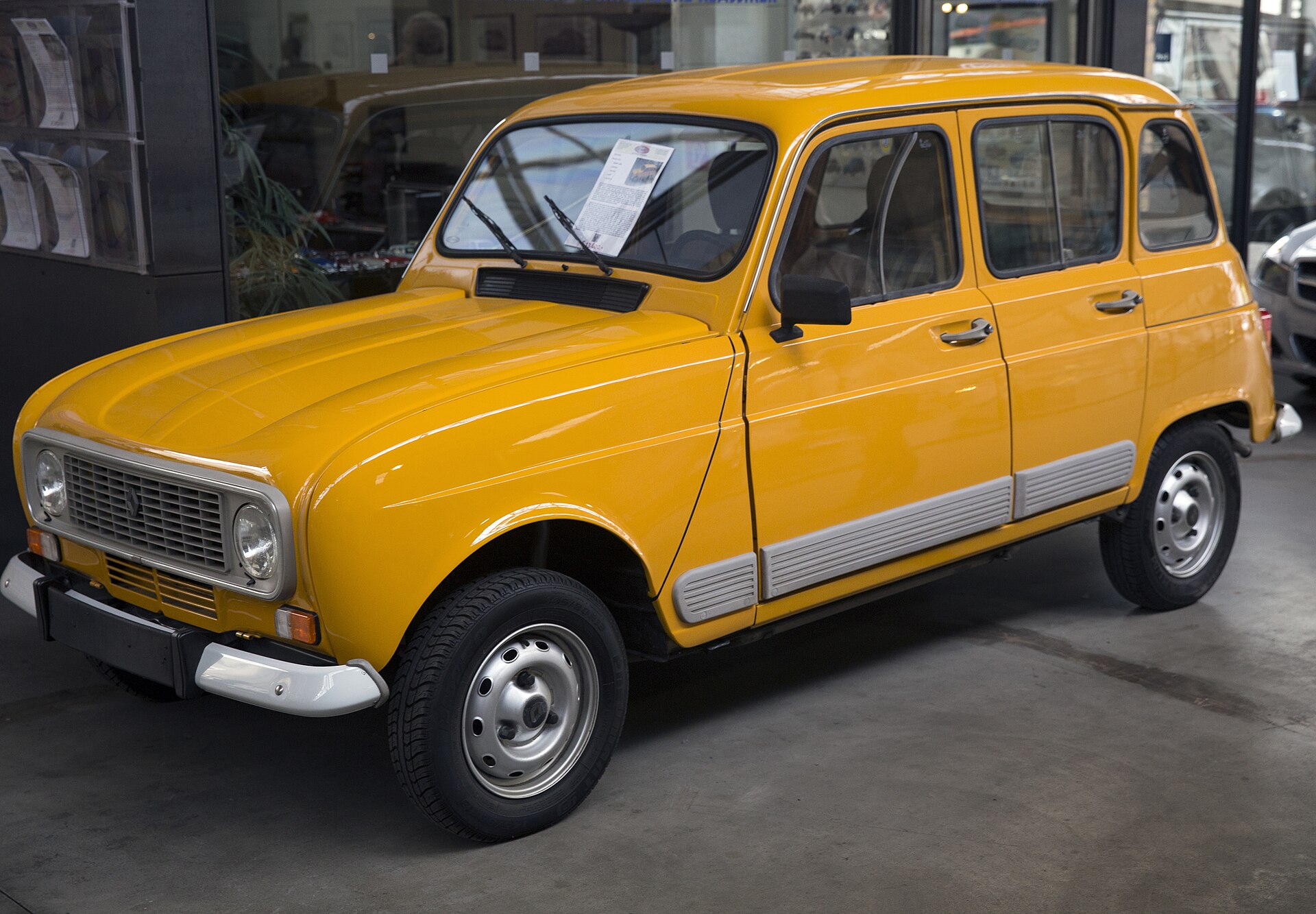
The first Express went on sale in July 1985 as the successor to the Renault 4 F6 Fourgonette. It was identical to the second-generation Renault 5 up to the A-pillars, apart from the shorter front doors of the five-door car. Behind them Renault lengthened the wheelbase by about 15 cm, raised the roof over the cab and added a box-shaped load body. The van was 4,056 mm long, 1,566 mm wide and 1,776 mm high on a 2,580 mm wheelbase.
The suspension was independent on all wheels, with MacPherson struts at the front and trailing arms with torsion bars at the rear; Ford later used the same rear layout for the Fiesta Courier van. Besides the two-seat panel van, Renault built a glazed five-seater, a pickup, a wheelchair-accessible version and special bodies such as refrigerated and workshop vans.
The van had three names. In France, Spain, Italy, Austria, Switzerland, Japan and Taiwan it was the Express; in the UK and Ireland the Extra; and in German-speaking countries mostly the Rapid. Assembly took place in France, at Palencia in Spain, in Taiwan (Sanfu Motors) and, from 1995 to 2001, by Nordex in Montevideo, Uruguay.
Phases and engines of the first Express
The Phase 1 vans (mid-1985 to summer 1991) used the Renault 5 petrol engines and a 1,596 cc diesel. Phase 2 of summer 1991 brought some Renault Clio engines, a 1,870 cc diesel, a grey plastic grille and new headlamps. Phase 3, from early 1994, had better materials, a body-coloured grille, revised tail lamps, an optional driver's airbag and updated central locking; the 1.6 diesel was dropped.
| Engine | Capacity | Power | Years |
|---|---|---|---|
| 1.0 petrol | 956 cc | 31 kW (42 hp) | 1986–1991 |
| 1.1 petrol | 1,108 cc | 33 kW (44 hp) | 1986–1991 |
| 1.2 petrol (E5F) | 1,171 cc | 40 kW (54 hp) | 1991–1997 |
| 1.4 petrol (C2J) | 1,397 cc | 50 kW (67 hp) | 1986–1992 |
| 1.4 petrol (E7J) | 1,390 cc | 55 kW (74 hp) | 1991–1997 |
| 1.5 petrol (C3L) | 1,565 cc | 43 kW (58 hp) | 1996–2000 |
| 1.6 D diesel (F8M) | 1,596 cc | 40 kW (54 hp) | 1986–1994 |
| 1.9 D diesel (F8Q) | 1,870 cc | 47 kW (63 hp) | 1991–1997 |
The Renault Kangoo replaced the Express in late 1997, but production continued until July 2000 in Europe and April 2001 in Uruguay.

Express II (since 2021): the Dokker successor
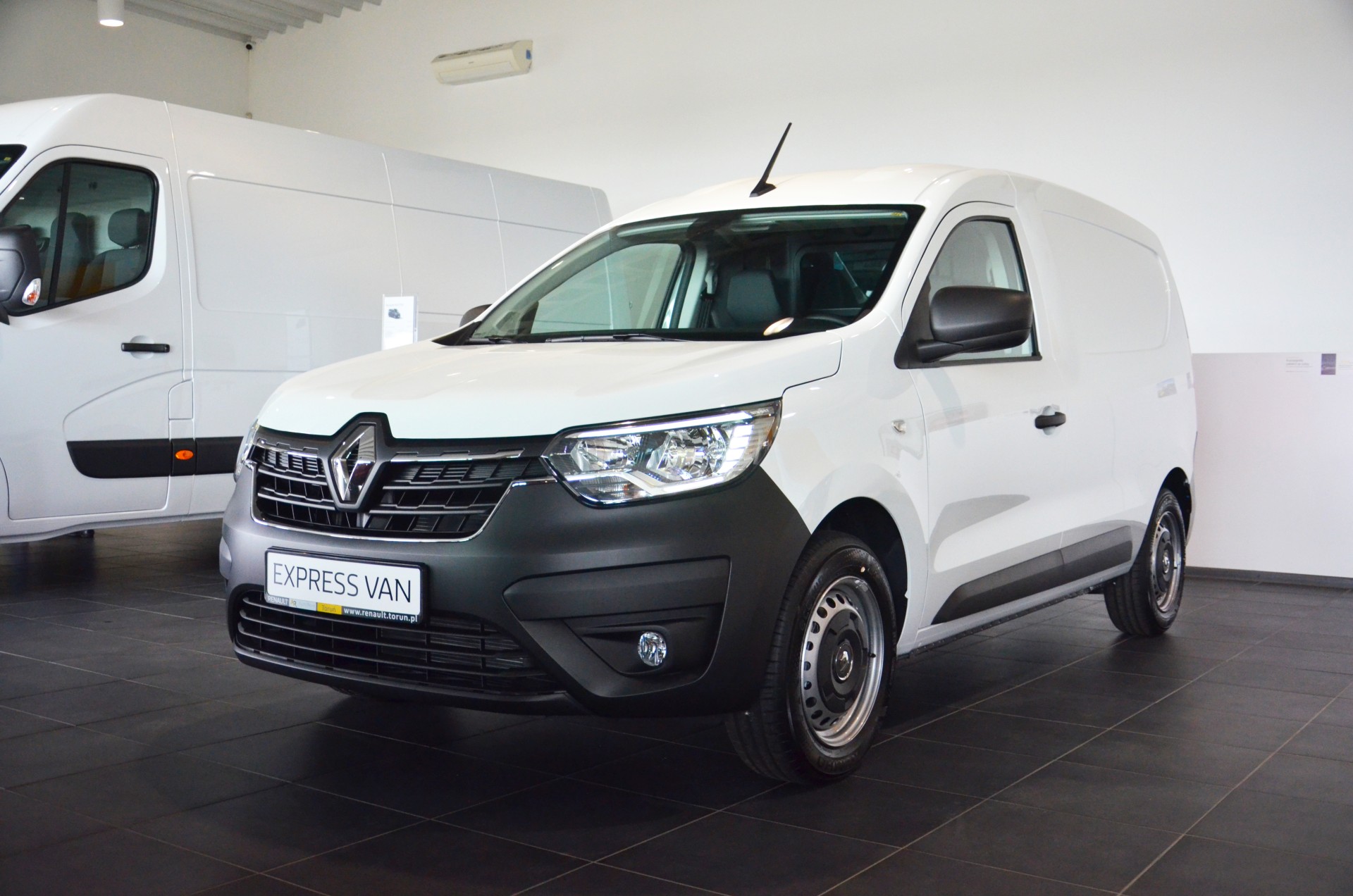
Renault opened orders for the new Express Van in France and Europe on 11 February 2021, and sales began in April and May 2021. In Western Europe it is sold only as a panel van and replaces the Dacia Dokker Express, aimed at the same buyers who want a simple, well-priced van. It sits below the third-generation Kangoo, launched in the same year.
The Express is 4.39 m long, 1.78 m wide and 1.81 m high on a 2.81 m wheelbase. The load floor is 1.91–1.92 m long behind the solid partition, and a pivoting partition with a folding passenger seat allows items up to 2.36 m long. The sliding side door opens 716 mm, the loading sill is 57 cm high, and the cab has about 48–50 litres of storage. Load volume is 3.3 m³, or 3.7 m³ with the partition and seat folded, and Renault quotes payloads of up to 780 kg for petrol and 650 kg for diesel versions.

Express II engines and running costs
| Engine | Power | Gearbox | Market |
|---|---|---|---|
| 1.3 TCe 100 FAP petrol | 75 kW (102 PS) | 6-speed manual | Europe |
| 1.5 Blue dCi 75 diesel | 55 kW (75 PS) | 6-speed manual | Europe; Ecoleader limited to 100 km/h |
| 1.5 Blue dCi 95 diesel | 70 kW (95 PS) | 6-speed manual | Europe and international |
| 1.6 SCe 110 petrol | 81 kW (110 PS) | 5-speed manual | international markets |
In the German test by meinauto.de, combined NEDC consumption was 4.1–4.4 l/100 km for the diesels and 5.9 l/100 km for the petrol, with CO2 emissions of 106–134 g/km. The Ecoleader version of the dCi 75 is limited to 100 km/h to save fuel.
Which Renault Express to choose
The first Express is now a classic van; Phase 3 models from 1994 with the 1.4 E7J petrol (55 kW) or the 1.9 diesel are the most developed. For a working van, the Express II is the budget choice in Renault's range: the Blue dCi diesels use the least fuel, while the TCe 100 petrol carries the highest payload, 780 kg. If more length or towing capacity is needed, the Renault Kangoo is the next step up. Our car comparison tool shows the Express against the Kangoo, Dokker or Fiat Doblò.
Photo gallery


Image credits · Photos from Wikimedia Commons under free licences
- Renault Express II · Photo: Charles from Port Chester, New York / Wikimedia Commons, CC BY 2.0
FAQ
How many generations of the Renault Express are there?
Two: the Renault 5-based Express (also Extra and Rapid) of 1985–2000 and the Express Van sold since 2021.
What is the load volume of the Renault Express Van?
3.3 m³, or 3.7 m³ with the pivoting partition and folded passenger seat. Payload is up to 780 kg for petrol and 650 kg for diesel models.
What engines does the Renault Express Van have?
In Europe a 1.3 TCe 100 petrol with 75 kW and 1.5 Blue dCi diesels with 55 and 70 kW, all with six-speed manual gearboxes.
Is the Renault Express the same as the Dacia Dokker?
No, but it replaced the Dokker Express and has almost the same height and wheelbase; it is 3 cm longer and better equipped.
What was the Renault Rapid?
The name of the first Express in German-speaking countries; in the UK and Ireland it was called the Renault Extra.
Data sources
Data checked by an editor against the sources below.