 Renault 5 II
Specs, engines and history
Published Report an error
By Felix Hartmann, Automotive Technology & EV Contributor
Which Supercinq to buy - verdict
Our verdict · Felix Hartmann
For collectors the GT Turbo is the obvious choice, and a Phase II adds the water-cooled turbo and a little more power. Original, unmodified cars are now rare because many were tuned or rallied. For relaxed classic motoring, a 1.4 TSE or a late Campus is simpler to keep running, while the Baccara offers the most comfort. The EBS convertible is the rarest body, with about 1,400 built.
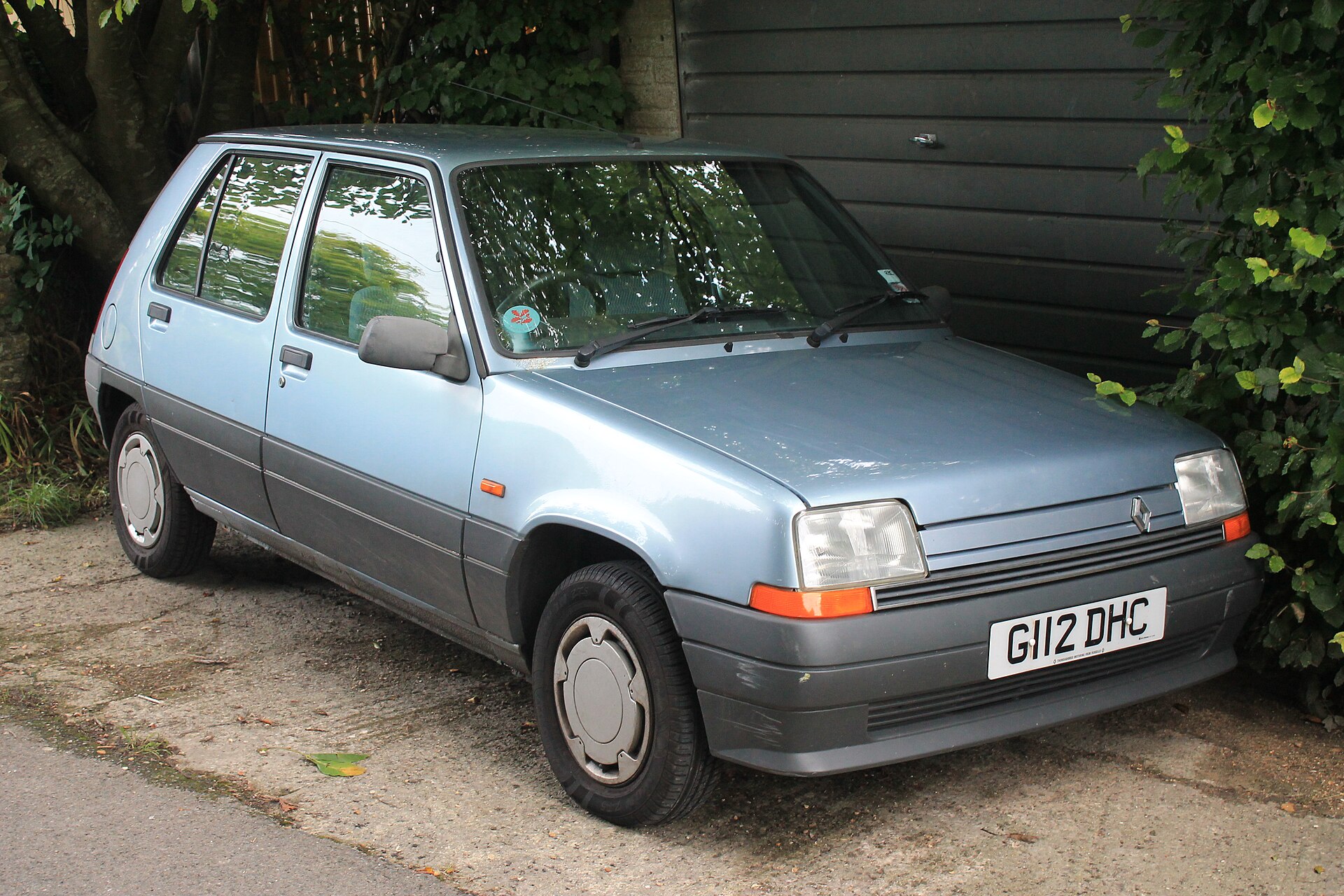
The second-generation Renault 5, sold in France as the Supercinq and in many other markets as the Super 5, was Renault's supermini from October 1984 to 1996. It kept the look of the 1972 original but was a new car underneath, with a transverse engine and a platform taken from the Renault 9 and 11. The Clio replaced it in 1990, yet production carried on in Slovenia for six more years, and 3,436,650 cars were built in total.
In short
- Launched in October 1984 as a three-door; five-door from May 1985; built until 1996.
- Styled by Marcello Gandini; transverse engines and MacPherson front struts replaced the old longitudinal layout.
- Engines from the 956 cc four with 31 kW (42 bhp) to the GT Turbo's 1.4-litre with up to 88 kW (118 hp).
- The GT Turbo won the 1989 Rallye Côte d'Ivoire, the only overall World Rally Championship win for a Group N car.
Supercinq at a glance
| Specification | Renault 5 II (Supercinq / Super 5) |
|---|---|
| Production | October 1984 – 1996 |
| Plants | Boulogne-Billancourt and Dieppe (France), Palencia (Spain), Novo Mesto (Revoz, Slovenia) |
| Total built | 3,436,650 |
| Segment | supermini (B-segment) |
| Body | three-door hatchback; five-door from May 1985; Express van |
| Layout | transverse front engine, front-wheel drive |
| Petrol engines | 956 cc, 1,108 cc, 1,397 cc, 1,397 cc turbo, 1,721 cc |
| Diesel | 1,595 cc from November 1985 |
| Drag coefficient | 0.35 (first generation 0.37) |
| Predecessor / successor | Renault 5 (1972–1985) / Renault Clio |
The Supercinq is listed in our Renault catalogue, and Renault's wider story, from Billancourt to the electric era, is in our history of Renault.
A new car under a familiar shape
By the time the new car arrived in October 1984, Renault was late. Ford, General Motors, Peugeot, Fiat and Nissan had all launched modern superminis in the previous 18 months, and the original R5 still used a longitudinal engine set behind the front axle. Marcello Gandini styled the replacement to look like an evolution of the 1972 car, but the bodyshell and platform were new.
The main change was under the bonnet. The engine now sat across the car, as in the Renault 9 and 11, and MacPherson struts replaced the old front suspension. The body was longer and wider, with about 20 per cent more glass and more room inside. A five-door with a 60 mm longer wheelbase followed in May 1985, and right-hand-drive cars reached the UK in January 1985.
Engines, transmissions and performance
Renault offered the Supercinq with five petrol engine sizes and, from November 1985, with a naturally aspirated diesel.
| Engine | Versions | Power (kW / PS) | Gearbox |
|---|---|---|---|
| 956 cc petrol | TC | 31 kW (42 bhp) | 4-speed manual |
| 1,108 cc petrol | TL | 35 kW (47 bhp) | 4-speed, 5-speed optional |
| 1,397 cc petrol | GTL | 44 kW (59 hp) | 5-speed manual |
| 1,397 cc petrol | Automatic | 50 kW (67 hp) | 3-speed automatic |
| 1,397 cc petrol | TS, TSE | 53 kW (71 hp) | 5-speed manual |
| 1,721 cc petrol | GTX, GTE, Baccara (from 1987) | GTE with catalyst: 70 kW (94 hp) | 5-speed manual |
| 1,397 cc turbo | GT Turbo Phase I (1985) | 85 kW (113 hp) | 5-speed manual |
| 1,397 cc turbo | GT Turbo Phase II (1987) | over 88 kW (118 hp) | 5-speed manual |
| 1,595 cc diesel | Diesel (from November 1985) | about 40 kW (55 hp) | 5-speed manual |
In Italy the top version also used the 1.4, while other markets had the 1.7 at the top of the range. Wikipedia's production table gives the diesel's output only in hp, so the kW figure is a conversion.
GT Turbo: the hot Supercinq
The GT Turbo arrived in February 1985. Its engine was a turbocharged 1,397 cc version of the Cléon four, a design that went back to 1962, with an air-cooled Garrett T2 turbocharger and 85 kW (113 hp). At 850 kg the car was very light. Renault added a 7-litre supplementary fuel tank to the 43-litre main tank, an oil cooler, lowered suspension and disc brakes on all four wheels. The GT Turbos were assembled by Alpine in Dieppe, about 40 a day in 1985.
The Phase II of 1987 brought a water-cooled turbo, more than 88 kW (118 hp) and a drag coefficient lowered from 0.36 to 0.35, with 0–100 km/h in 7.5 seconds. A new interior followed in 1989 and the metallic-blue Raider special edition in 1990. The GT Turbo ended in late 1991, when the Clio 16V and Clio Williams took over.
The car's best result came in rallying. Alain Oreille won the 1989 Rallye Côte d'Ivoire in a GT Turbo, which is still the only overall World Rally Championship win for a Group N production car.


Trims, Baccara and convertibles
At launch the range was TC, TL, GTL and Automatic, followed by TS and TSE. The 1.7-litre GTX and GTE sat above them. From July 1987 the Baccara was the luxury flagship with the 1.7 engine; it was sold as the Monaco in the UK, the Exclusiv in Germany and the Limited in Italy.
A small number of convertibles were made by EBS in 1989, about 1,400 cars, almost all left-hand drive. Only 14 were based on the right-hand-drive GT Turbo Phase II.
Express, Extra and Rapid vans
The Supercinq also gave Renault a small van. The Renault Express, sold as the Extra in the UK and Ireland and as the Rapid in German-speaking countries, used the car's front end with a tall load box. It replaced the Renault 4 F6 Fourgonette, which ended in 1986. Renault's current small van is covered in our article on the Renault Kangoo since 1997.

Key specifications and production
| Parameter | Metric | Imperial |
|---|---|---|
| Five-door wheelbase gain | +60 mm | +2.4 in |
| Drag coefficient | 0.35 | - |
| GT Turbo kerb weight | 850 kg | 1,874 lb |
| GT Turbo fuel tanks | 43 l + 7 l | 11.4 + 1.8 US gal |
| GT Turbo Phase II 0–100 km/h | 7.5 s | - |
| Total production 1984–1996 | 3,436,650 | - |
Production started at Boulogne-Billancourt, with the GT Turbo in Dieppe and further cars in Palencia, Spain, and at Revoz in Novo Mesto, Slovenia. When the Clio arrived in 1990, the Supercinq moved to Revoz.
The Supercinq after the Clio, 1990–1996
Renault did not drop the car when the Clio appeared. The late range used 1.1 and 1.4 petrol engines and the 1.6 diesel, and the basic R5 Campus became the most common version. It sold particularly well in the UK, where the Twingo was not offered. The 1.4 with a catalytic converter of December 1992 ended the diesel for private buyers, and production finally stopped in 1996 after twelve years. Renault's later small cars are covered in our guides to the Renault Clio generations and the Renault Twingo since 1992.
Rivals: how the Supercinq compares
The Supercinq entered a crowded class: Wikipedia names Ford, GM, Peugeot, Fiat and Nissan as the makers that had launched new superminis shortly before it. Their cars were the Ford Fiesta, the Opel Corsa (Vauxhall Nova), the Peugeot 205, the Fiat Uno and the Nissan Micra. The GT Turbo competed with the hot versions of these cars, above all the 205 GTI. Use our car comparison tool to set the figures of later superminis side by side, or search today's small hatchbacks by size and power in the car finder.

FAQ
How many generations of the Renault 5 are there?
Two in the original line: the first generation of 1972–1985 and the Supercinq of 1984–1996. The name returned in 2024 on the electric Renault 5 E-Tech, which won the 2025 European Car of the Year award.
When was the Renault Supercinq made?
From October 1984 until 1996, with 3,436,650 cars built in France, Spain and Slovenia.
How powerful is the Super 5 GT Turbo?
The 1985 Phase I had 85 kW (113 hp); the 1987 Phase II had over 88 kW (118 hp) and reached 100 km/h in 7.5 seconds.
Who designed the second-generation Renault 5?
Marcello Gandini styled it as an evolution of the 1972 shape, on a new platform derived from the Renault 9 and 11.
What replaced the Supercinq?
The Renault Clio from 1990, although the Supercinq stayed in production in Slovenia until 1996.