 Mazda Cosmo
All generations, specs and history
Published Sources (1) Report an error
By Sarah Whitmore, Senior Automotive Writer
- Built
- 1967–1995
- Generations
- 4 · L10 to JC
- Top power
- 95 kW (129 PS)
Timeline
Cosmo generations
Click a generation for its own page
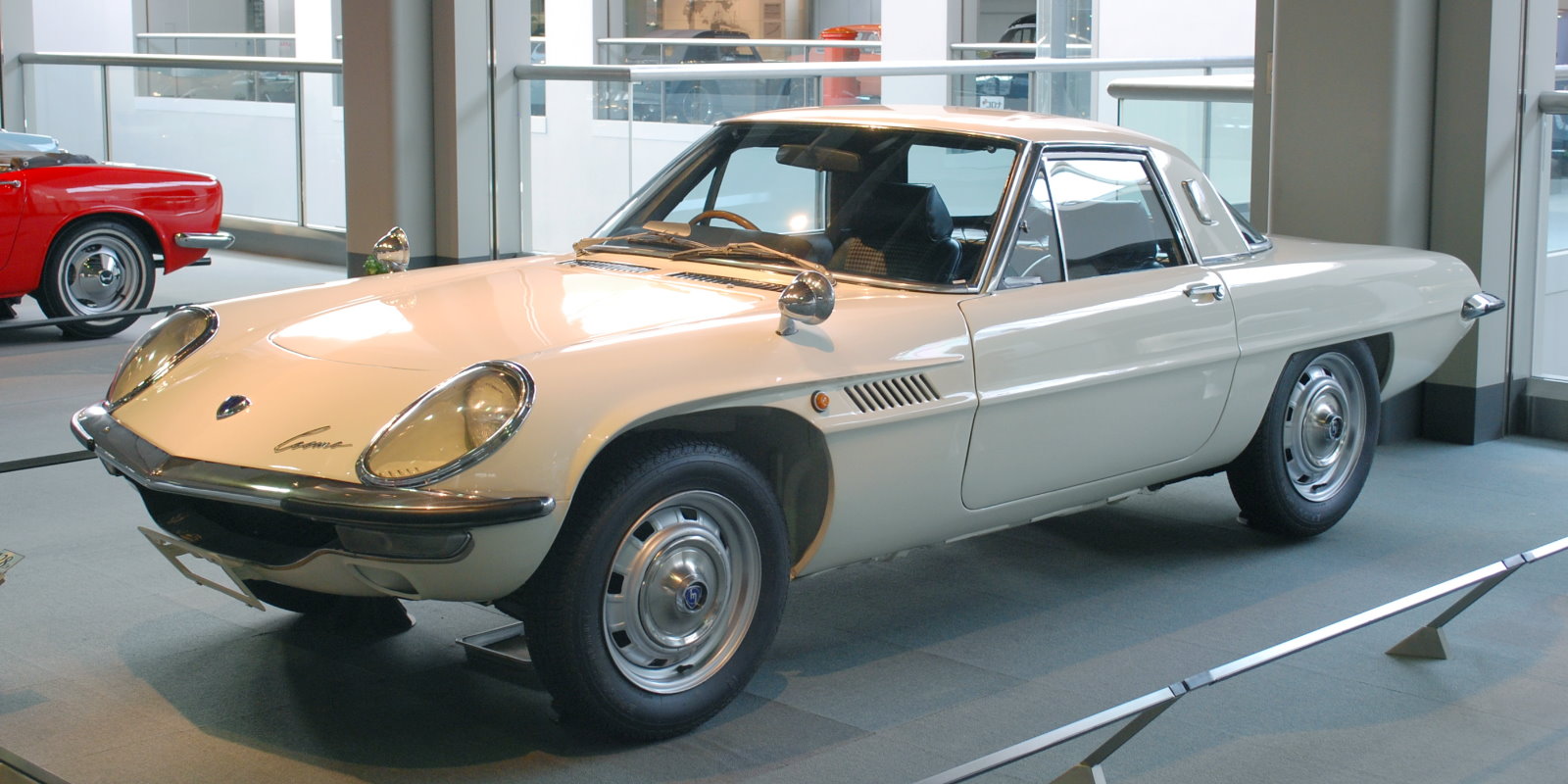
- Cosmo Sport / 110S L10 1967–1972 · Coupe · 82–95 kW (111–129 PS)
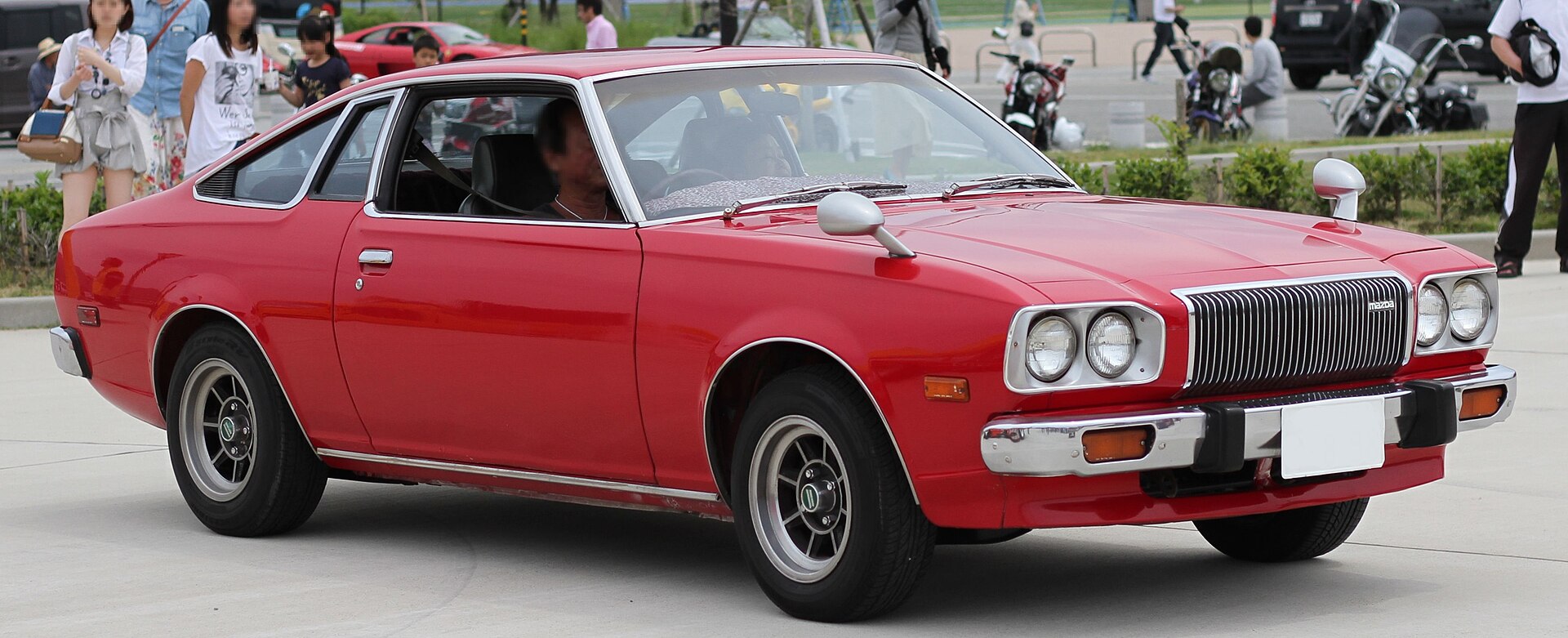
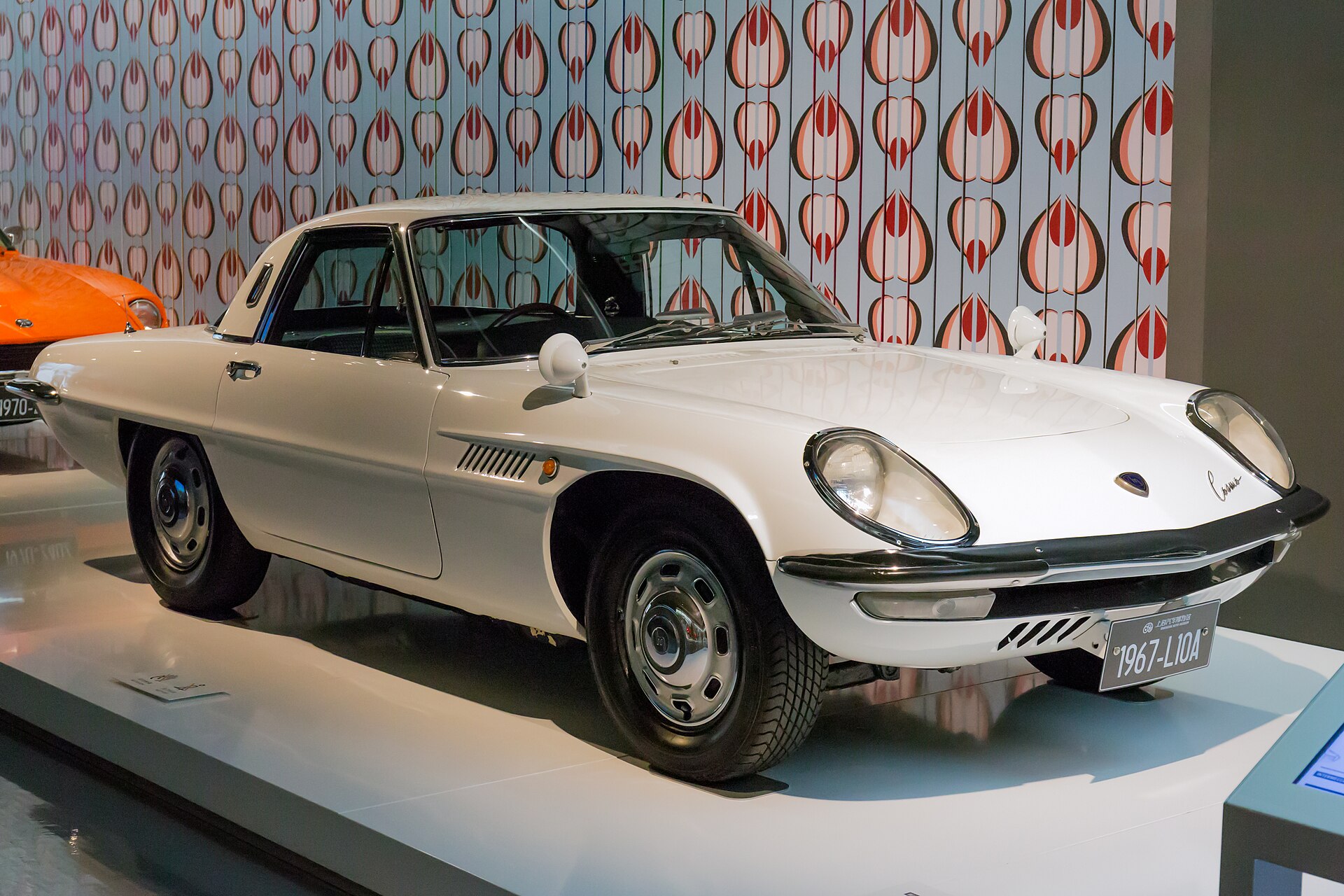
- Cosmo AP / Cosmo L CD 1975–1981 · Coupe
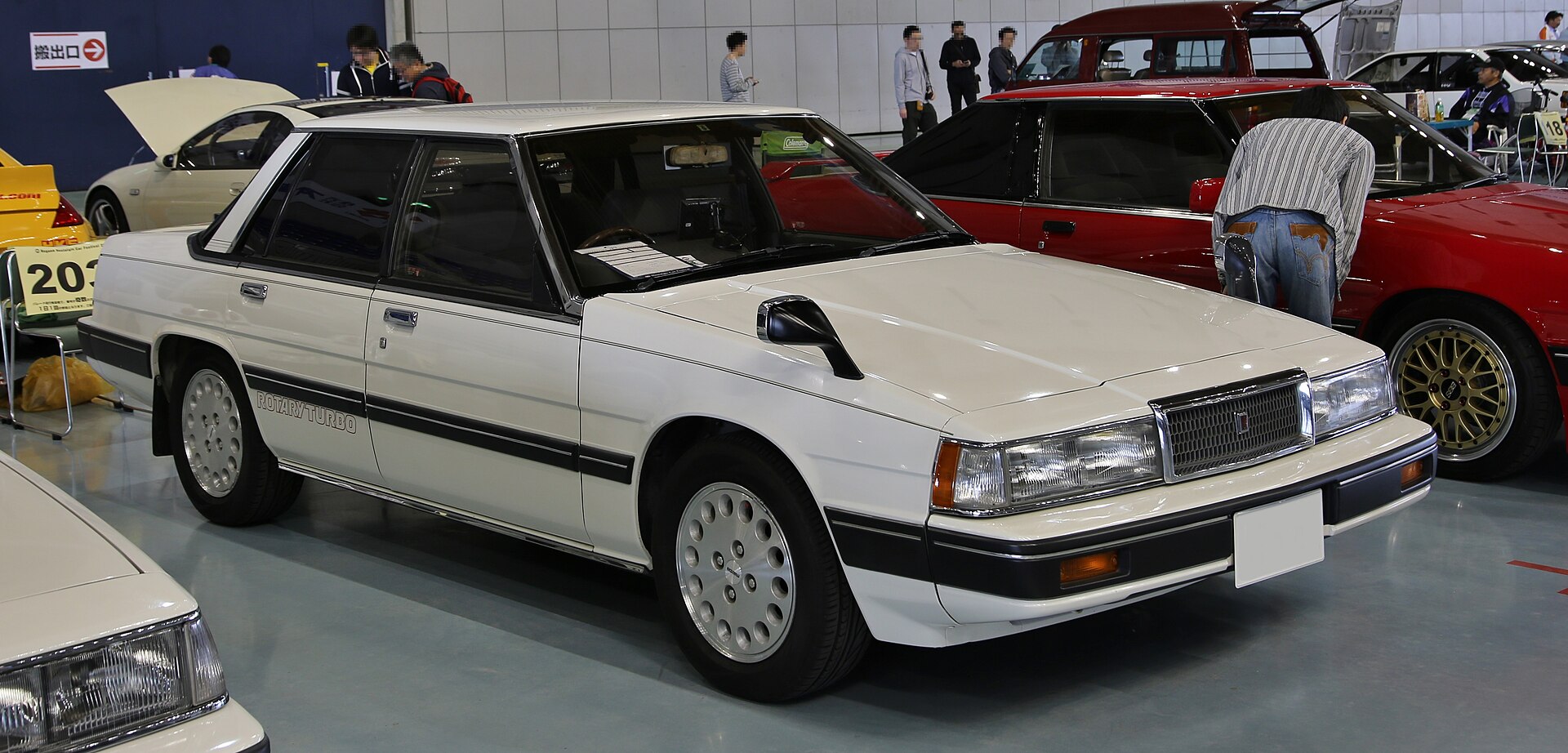
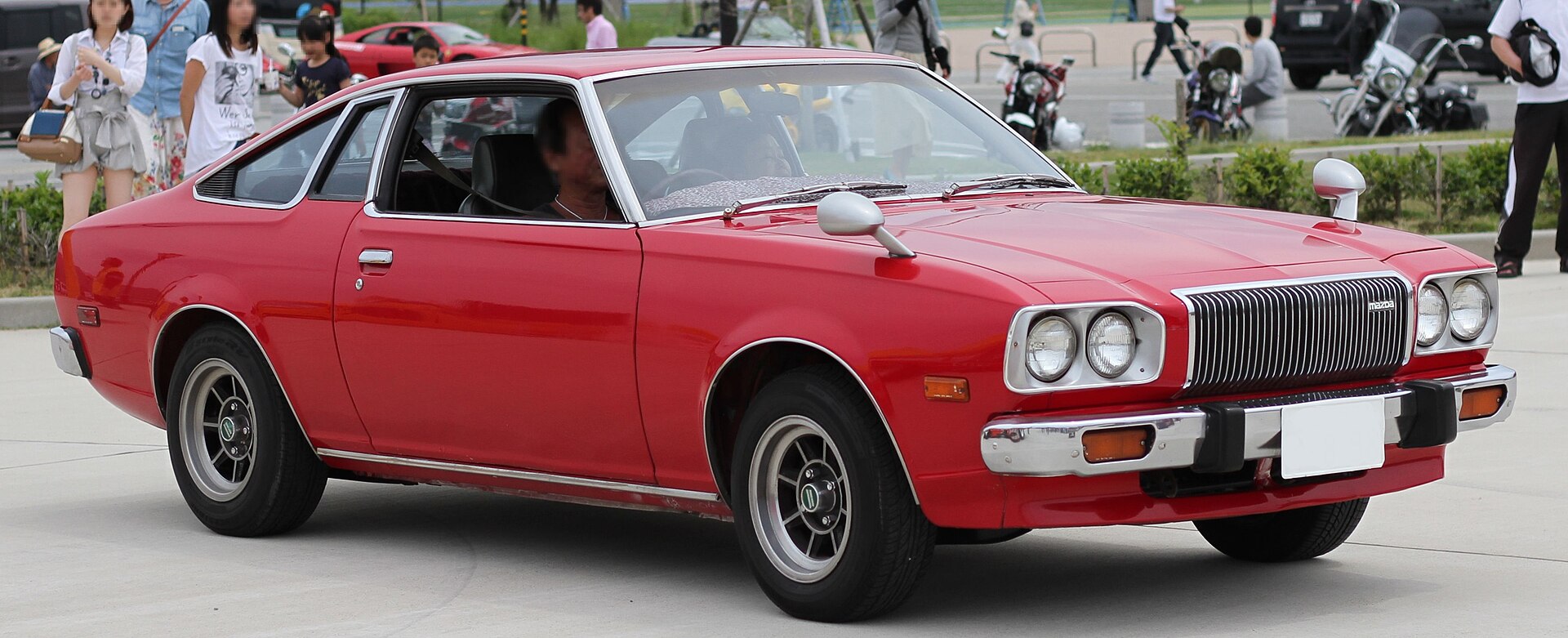
- Cosmo HB 1981–1989 · Sedan, Coupe
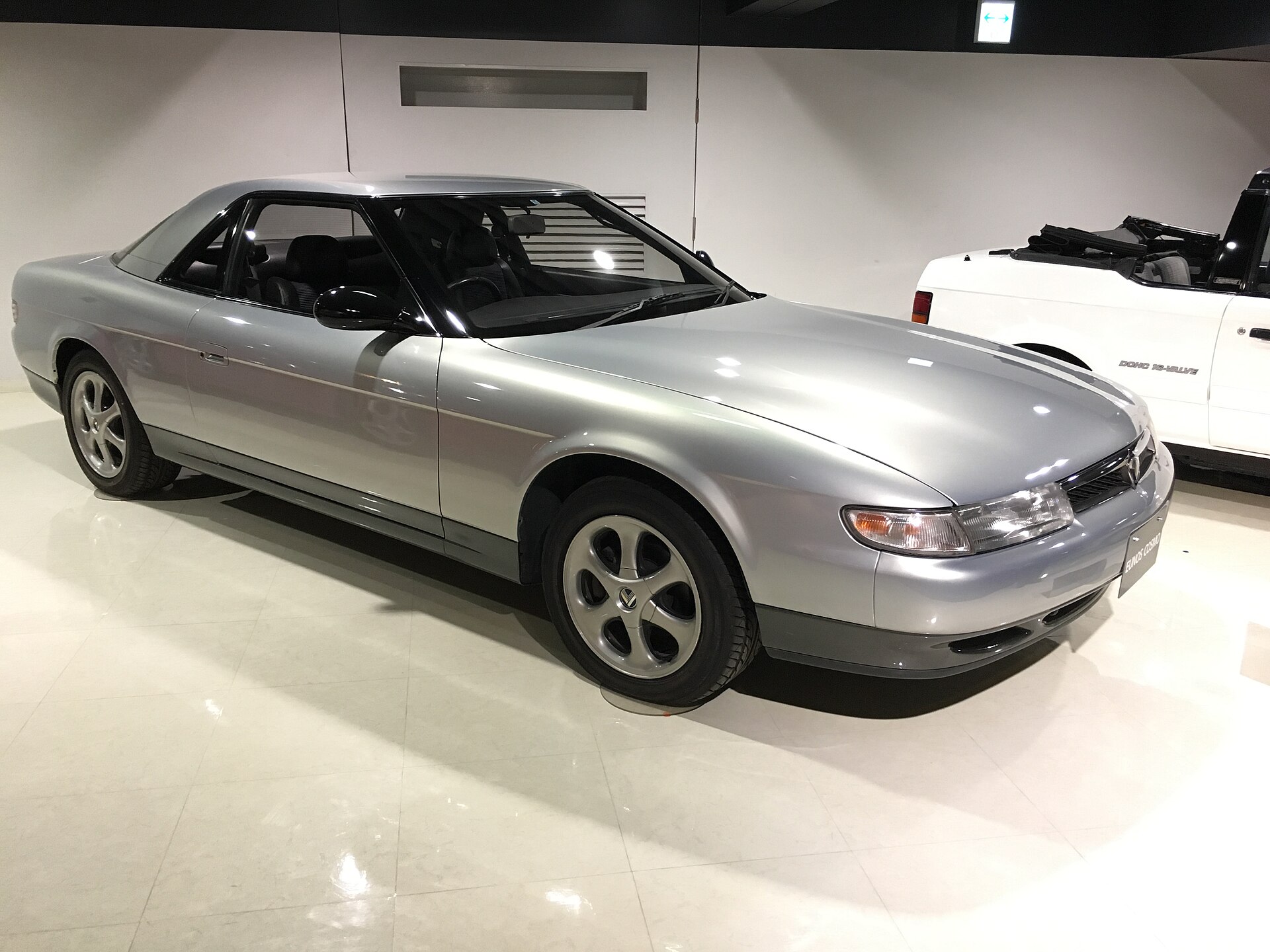
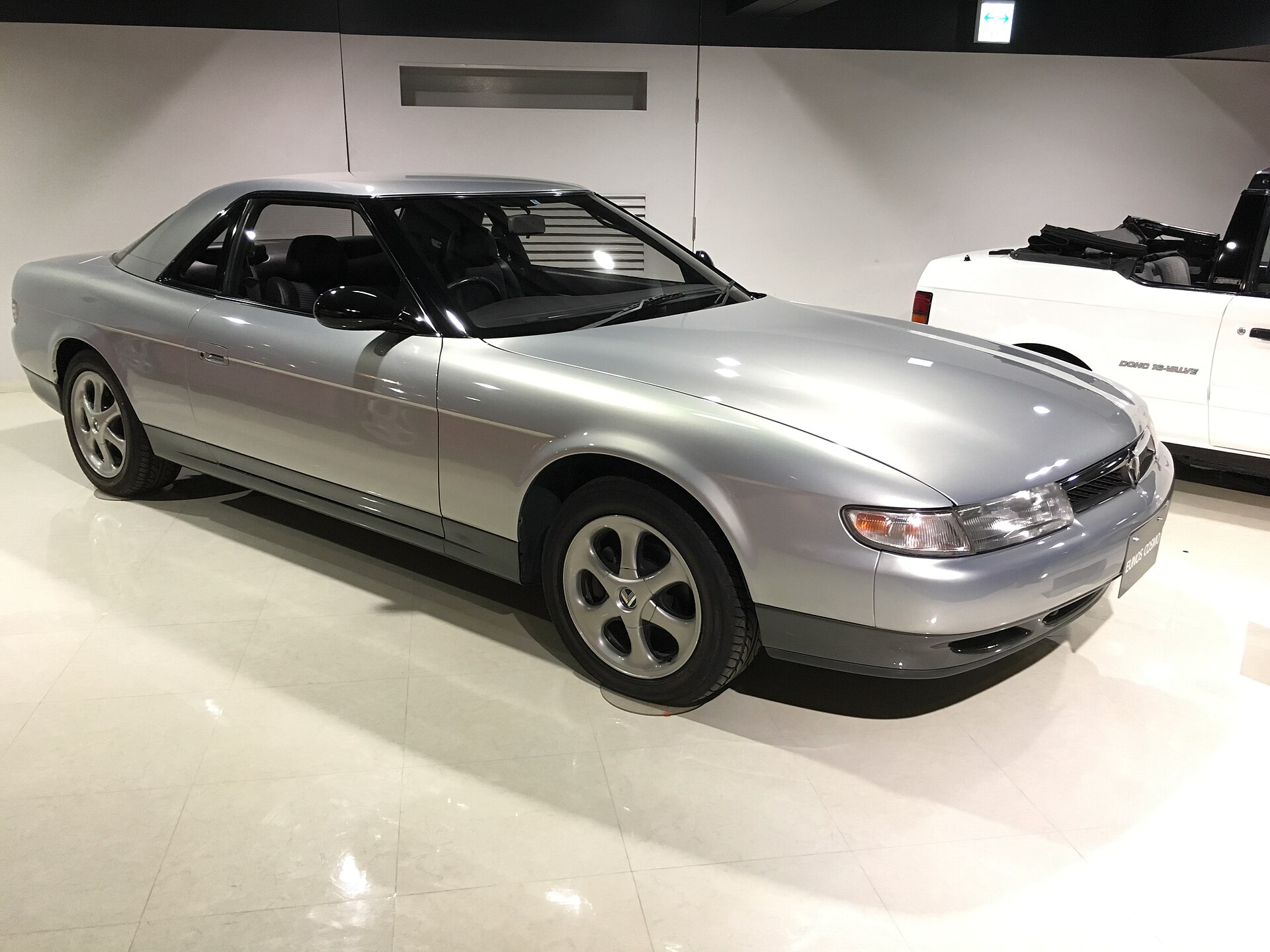
- Eunos Cosmo JC 1990–1995 · Coupe
Newest first · 4 generations since 1967
-
1990
-
1981
-
1975
-
1967
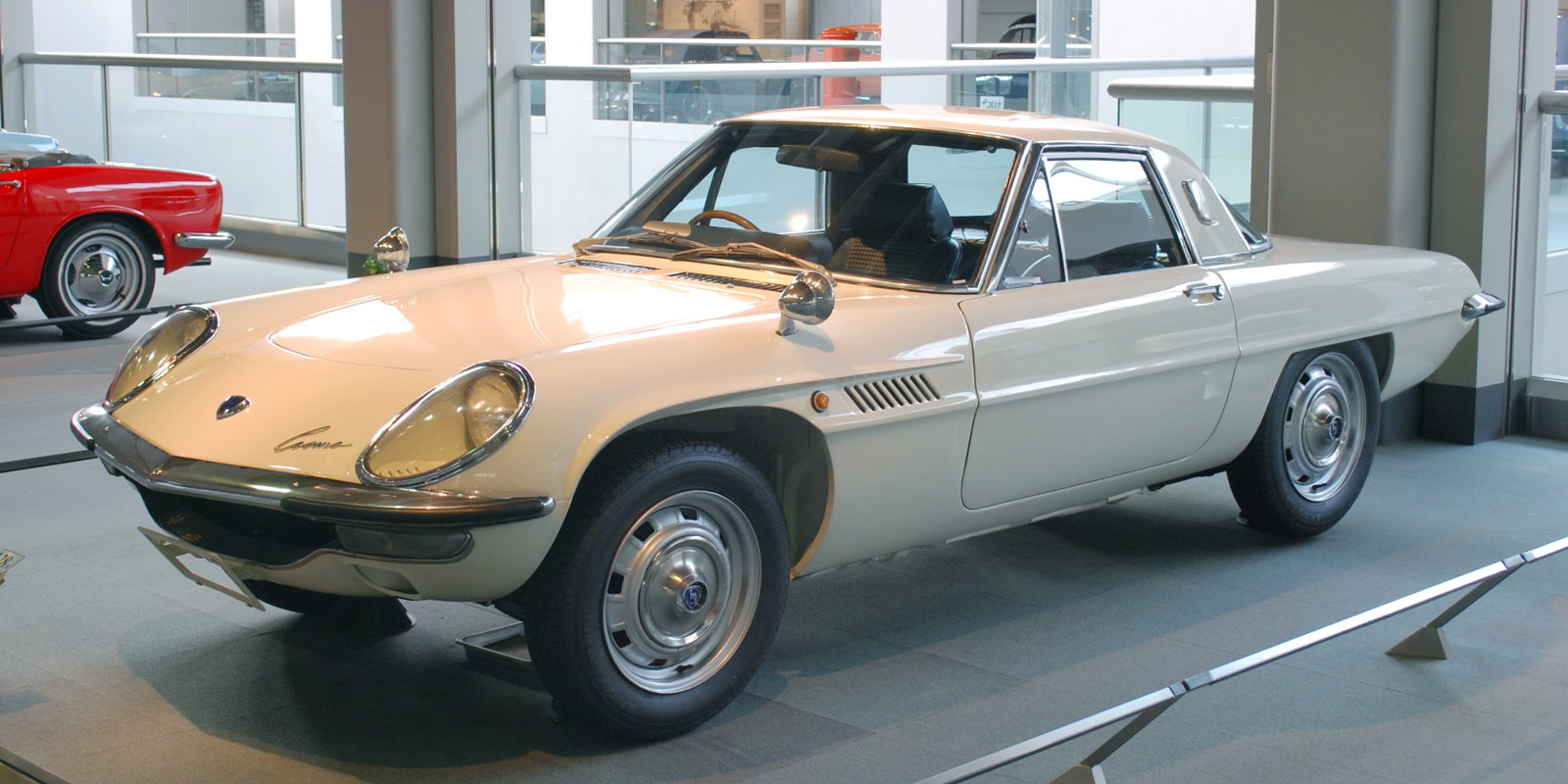


All generations by year: Eunos Cosmo JC (1990–1995) · Cosmo HB (1981–1989) · Cosmo AP / Cosmo L CD (1975–1981) · Cosmo Sport / 110S L10 (1967–1972)
Which one is mine?
Pick the year of first registration to see which generation it is.
- JC 1990–1995
- HB 1981–1989
- CD 1975–1981
- L10 1967–1972
Which Cosmo to choose
Our verdict · Sarah Whitmore
- For the purest version: an L10A Series I, of which only 343 were made.
- For driving: an L10B Series II with 95 kW (128 hp), five speeds and the longer wheelbase.
- For a usable rotary grand tourer: a 1990s Eunos Cosmo with the 13B-RE or the three-rotor 20B.
- For an affordable entry: a CD or HB Cosmo, which offered rotary as well as piston engines; the HB was also sold abroad as the Mazda 929.
Because only 1,176 Cosmo Sports exist, originality and documentation matter a great deal. The two series are easy to tell apart by the wheel size, 14 inches on the L10A and 15 inches on the L10B, and by the number of gears.
Today's Mazda models are in the Mazda catalogue, and more cars of the period under 1960s classics.
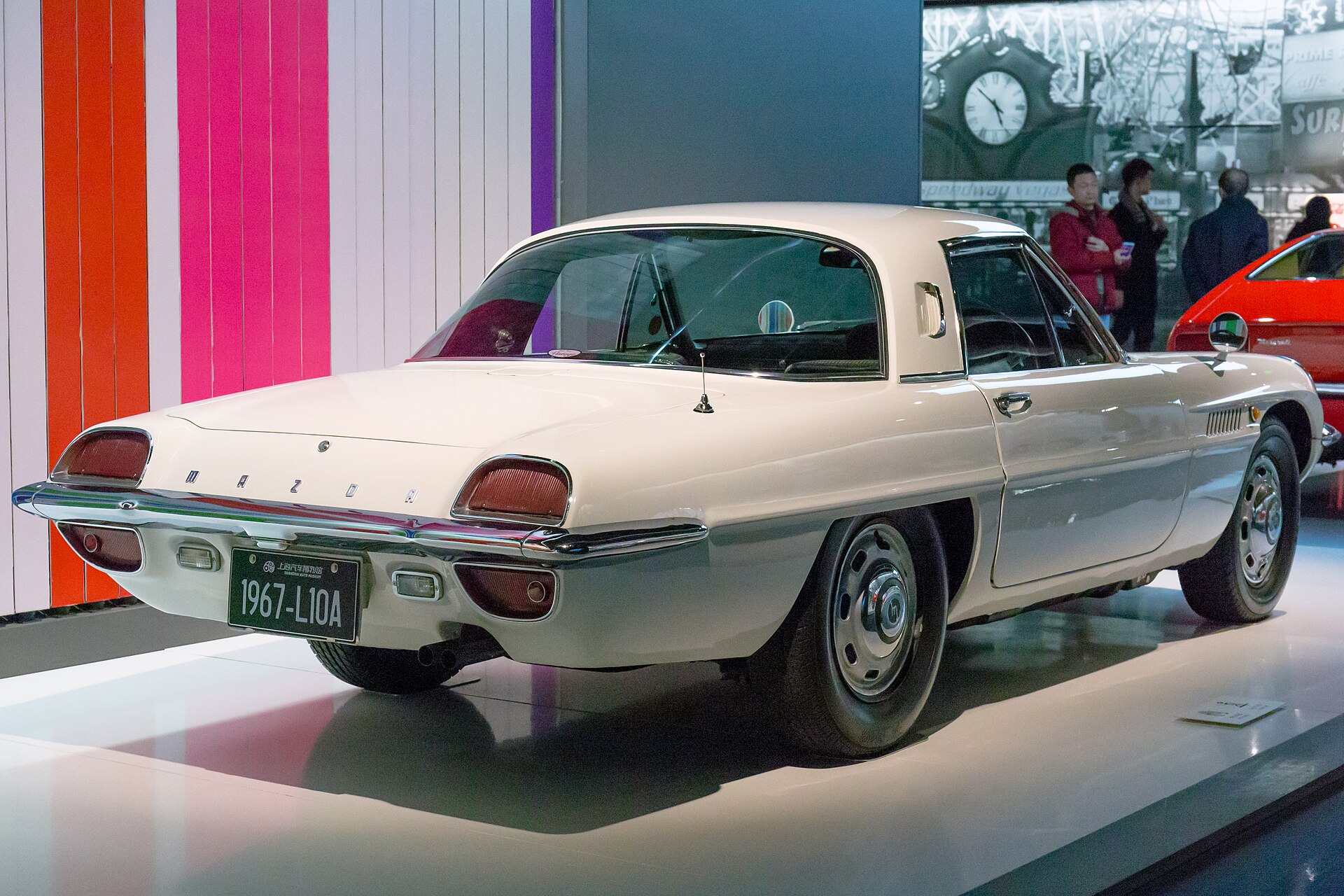
The Mazda Cosmo is the car that introduced Mazda's rotary engine. The first Cosmo Sport, sold abroad as the 110S, was a low two-seat coupé built by hand from May 1967 to September 1972 and, together with the NSU Ro 80, one of the first production cars with a twin-rotor Wankel engine. Only 1,176 were made. The Cosmo name then continued on three larger coupés and saloons until 1995, ending with the three-rotor Eunos Cosmo.
In short
- Prototype shown at the 1964 Tokyo Motor Show; 80 pre-production cars in 1965–1966; series production from May 1967.
- 982 cc 10A twin-rotor engine: about 82 kW (110 hp) in the Series I (L10A), 95 kW (128 hp) in the Series II (L10B).
- 343 Series I and 833 Series II cars, hand-built at about one per day.
- Price 1.48 million yen, lower than the Toyota 2000GT; fourth overall at the 84-hour Marathon de la Route at the Nürburgring in 1968.
Specs by version
Engines
Performance
Show all 2 versions
| Version | Top speed |
|---|---|
| Cosmo Sport L10A (10A, 982 cc) | 185 km/h115 mph |
| Cosmo Sport L10B (10A, 982 cc) | 193 km/h120 mph |
Dimensions and weight
Show all 1 versions
| Version | Wheelbase |
|---|---|
| Cosmo Sport L10B (10A, 982 cc) | 2,350 mm92.5 in |
Verified Manufacturer and type-approval data from our catalog · Sources and methodology
Mazda Cosmo at a glance
| Parameter | Value |
|---|---|
| Maker | Mazda, Japan |
| Production | Cosmo Sport / 110S: May 1967 – September 1972 |
| Built | 1,176 (343 L10A, 833 L10B) |
| Body | two-seat coupé |
| Engine | 10A twin-rotor Wankel, 982 cc |
| Power | about 82 kW (110 hp) L10A; 95 kW (128 hp) L10B |
| Gearbox | 4-speed manual (L10A); 5-speed manual (L10B) |
| Top speed | 185 km/h (L10A); over 193 km/h (L10B) |
| Later generations | CD (1975–1981), HB (1981–1989), Eunos Cosmo JC (1990–1995) |
Development and production history
The Cosmo Sport was Mazda's showcase for the Wankel rotary engine. English Wikipedia credits Heiji Kobayashi and Kenichi Yamamoto in the car's infobox. A prototype appeared at the 1964 Tokyo Motor Show, about a month before the Tokyo Summer Olympics. Mazda then built 80 pre-production cars in 1965–1966: 20 for its own test department and 60 for dealers to test in everyday use.
Full production began in May 1967. The Series I, code L10A, was built until July 1968 (343 cars). The Series II, code L10B, followed from July 1968 to September 1972 (833 cars) with more power, a five-speed gearbox, 15-inch wheels, power-assisted brakes and a wheelbase lengthened by 15 cm to 2,350 mm. All 1,176 cars were assembled by hand at a rate of about one a day.
The price was 1.48 million yen for the L10A in 1967, about US$4,100, lower than the Toyota 2000GT. The L10B of 1968 was again 1.48 million yen, quoted at US$4,390. The rival from Toyota is described in our Toyota 2000GT article.
| Year | Event |
|---|---|
| 1964 | Prototype at the Tokyo Motor Show |
| 1965–1966 | 80 pre-production cars for testing |
| May 1967 | Series production of the L10A begins |
| July 1968 | L10B with 95 kW, five-speed gearbox and longer wheelbase |
| 1968 | Fourth overall at the 84-hour Marathon de la Route |
| September 1972 | End of Cosmo Sport production |
| 1975 | Second-generation Cosmo (CD) |
| 1990 | Eunos Cosmo with the three-rotor 20B engine |

Design and engineering
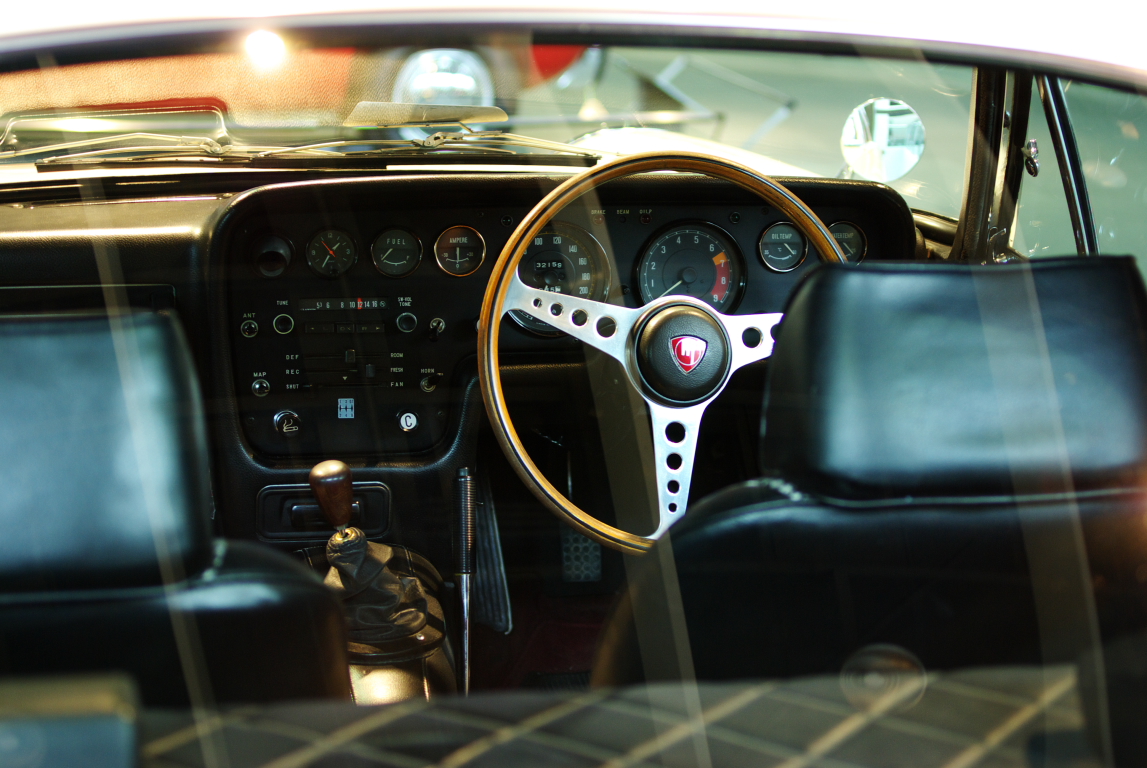
The Cosmo Sport is a two-seat coupé. Brakes were 10-inch discs at the front and 7.9-inch drums at the rear; the L10B added power assistance. The L10A rode on 14-inch wheels and the L10B on 15-inch wheels.
The Series II has a wheelbase of 2,350 mm, 15 cm longer than the Series I. The car is also remembered for its role in Japanese television: English Wikipedia mentions it in The Return of Ultraman.

The 10A rotary engine
The 10A has two rotors and a displacement of 982 cc. In the L10A (engine type 0810) it was fed by a Hitachi four-barrel carburettor and produced about 82 kW (110 hp). The L10B engine (type 0813) produced 95 kW (128 hp) and 140 N·m (103 lb·ft) of torque.
| Version | Engine | Power | Torque | Gearbox | Top speed | 400 m |
|---|---|---|---|---|---|---|
| L10A (Series I) | 0810, 982 cc | about 82 kW (110 hp) | - | 4-speed | 185 km/h | 16.4 s |
| L10B (Series II) | 0813, 982 cc | 95 kW (128 hp) | 140 N·m | 5-speed | over 193 km/h | 15.8 s |
On paper the L10B produces about 97 kW per litre of displacement. Our power converter gives the hp figures in kW and PS.


Mazda Cosmo Sport specifications
| Parameter | L10A | L10B |
|---|---|---|
| Production | May 1967 – July 1968 | July 1968 – September 1972 |
| Built | 343 | 833 |
| Engine | 982 cc twin-rotor 10A (0810) | 982 cc twin-rotor 10A (0813) |
| Power | about 82 kW (110 hp) | 95 kW (128 hp) |
| Gearbox | 4-speed manual | 5-speed manual |
| Wheelbase | 2,200 mm | 2,350 mm |
| Wheels | 14-inch | 15-inch |
| Brakes | front discs, rear drums | front discs, rear drums, power-assisted |
| Top speed | 185 km/h | over 193 km/h |
| Price | 1.48 million yen | 1.48 million yen |
The 1968 Marathon de la Route
The Cosmo's only racing outing was the 84-hour Marathon de la Route at the Nürburgring in 1968. Mazda entered two almost standard cars among 58 others, with engines limited to 96 kW (130 PS). The all-Japanese crew retired in the 82nd hour with axle damage. But the car driven by a Belgian crew finished fourth overall, a strong result for a new engine type in an endurance race of three and a half days.
The Cosmo Sport in numbers
The production figures in English Wikipedia give a clear picture of how exclusive the first Cosmo was. The 343 Series I cars make up 29% of the total and the 833 Series II cars 71%. Spread over the 64 months from May 1967 to September 1972, the 1,176 cars correspond to fewer than 20 a month, consistent with the hand assembly of about one car per working day. The Eunos Cosmo of the 1990s sold about seven and a half times as many cars as the original.
The step from L10A to L10B was significant. Power rose from about 82 kW to 95 kW, or by about 16%, the quarter-mile time fell from 16.4 to 15.8 seconds, and the top speed went from 185 km/h to over 193 km/h. At the same time the price stayed at 1.48 million yen. In US dollars English Wikipedia quotes US$4,100 for the L10A (1967) and US$4,390 for the L10B (1968); the source notes that the price rose slightly. Our power-to-weight calculator compares such figures with other cars.
Later Cosmo generations
| Generation | Years | Body | Engines | Notes |
|---|---|---|---|---|
| Cosmo Sport / 110S (L10) | 1967–1972 | two-seat coupé | 10A twin-rotor | 1,176 built |
| Cosmo AP / Cosmo L (CD) | 1975–1981 | fastback coupé and notchback | rotary and 1.8–2.0 l piston engines | sold as RX-5 in some markets |
| Cosmo (HB) | 1981–1989 | coupé and saloon | rotary, piston and diesel | shared chassis with the Luce; 929 abroad |
| Eunos Cosmo (JC) | 1990–1995 | 2+2 coupé | 13B-RE and 20B three-rotor, twin sequential turbos | 8,875 built; 20B about 206 kW (280 PS) |
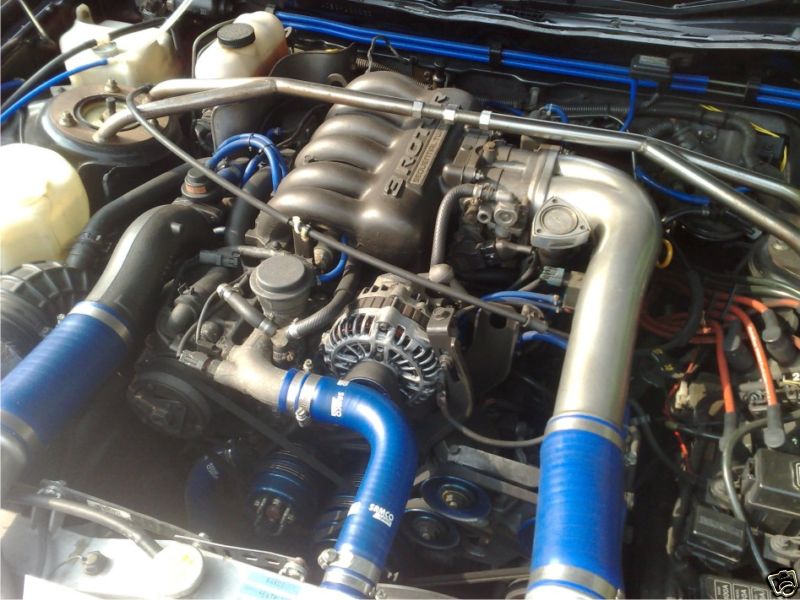
After the Cosmo Sport the name moved up-market. The CD generation of 1975 was offered as the fastback Cosmo AP (RX-5) and the notchback Cosmo L, with rotary or piston engines. The HB of 1981 shared its chassis with the Luce and added a diesel. And the JC of 1990 returned to a 2+2 coupé with twin sequential turbochargers. The last Cosmo, sold under Mazda's Eunos brand, offered the three-rotor 20B engine, rated at about 206 kW (280 PS), as well as the twin-rotor 13B-RE. With 8,875 cars it was also far more common than the original Cosmo Sport. More of Mazda's history is in our history of Mazda.

Photo gallery


Mazda Cosmo evolution in numbers
Did you know?
- The Mazda Cosmo ran for 28 years, from 1967 to 1995, over 4 generations in our catalog.
- The longest-running generation is the Cosmo HB (1981–1989): 8 years.
Image credits · Photos from Wikimedia Commons under free licences
- Mazda Cosmo Sport / 110S L10 · Photo: Mytho88 / Wikimedia Commons, CC BY-SA 3.0
- Mazda Cosmo AP / Cosmo L CD · Photo: TTTNIS / Wikimedia Commons, CC0
- Mazda Cosmo HB · Photo: TTTNIS / Wikimedia Commons, CC0
- Mazda Eunos Cosmo JC · Photo: NAParish / Wikimedia Commons, CC BY-SA 2.0
Mazda Cosmo in our rankings
- No. 76 of 912 · Longest-running car nameplates (28 years · top 9%)
- No. 92 of 345 · Cars with the most generations (4 generations · top 41%)
- No. 21 of 33 · Fastest Japanese cars (193 km/h · top 64%)
- No. 184 of 281 · Fastest cars (193 km/h · top 67%)
- No. 73 of 94 · Most powerful cars of the 1960s (95 kW · top 78%)
- No. 728 of 859 · Most powerful cars (95 kW · top 85%)
In production longer than 91% of ranked nameplates in the 1CARS catalog (No. 76 of 912).
Mazda Cosmo photos 6
FAQ
When was the Mazda Cosmo Sport produced?
From May 1967 to September 1972: the L10A until July 1968 and the L10B from July 1968.
How many Mazda Cosmo Sport were built?
1,176: 343 Series I (L10A) and 833 Series II (L10B), hand-built at about one per day.
What engine does the Mazda Cosmo Sport have?
The 982 cc 10A twin-rotor Wankel engine, with about 82 kW (110 hp) in the L10A and 95 kW (128 hp) in the L10B.
How fast is the Mazda Cosmo Sport?
185 km/h for the L10A and over 193 km/h for the L10B.
Which later cars carried the Cosmo name?
The CD Cosmo of 1975–1981, the HB of 1981–1989 and the Eunos Cosmo of 1990–1995 with the three-rotor 20B engine.
Data sources
Data checked by an editor against the sources below.