 Mazda Premacy
All generations, specs and history
Published Sources (3) Report an error
By Felix Hartmann, Automotive Technology & EV Contributor
- Built
- 1999–2018
- Generations
- 3 · CP to CW
- Top power
- 117 kW (159 PS)
- Euro NCAP
- 3 stars · CP
Timeline
Premacy generations
Click a generation for its own page


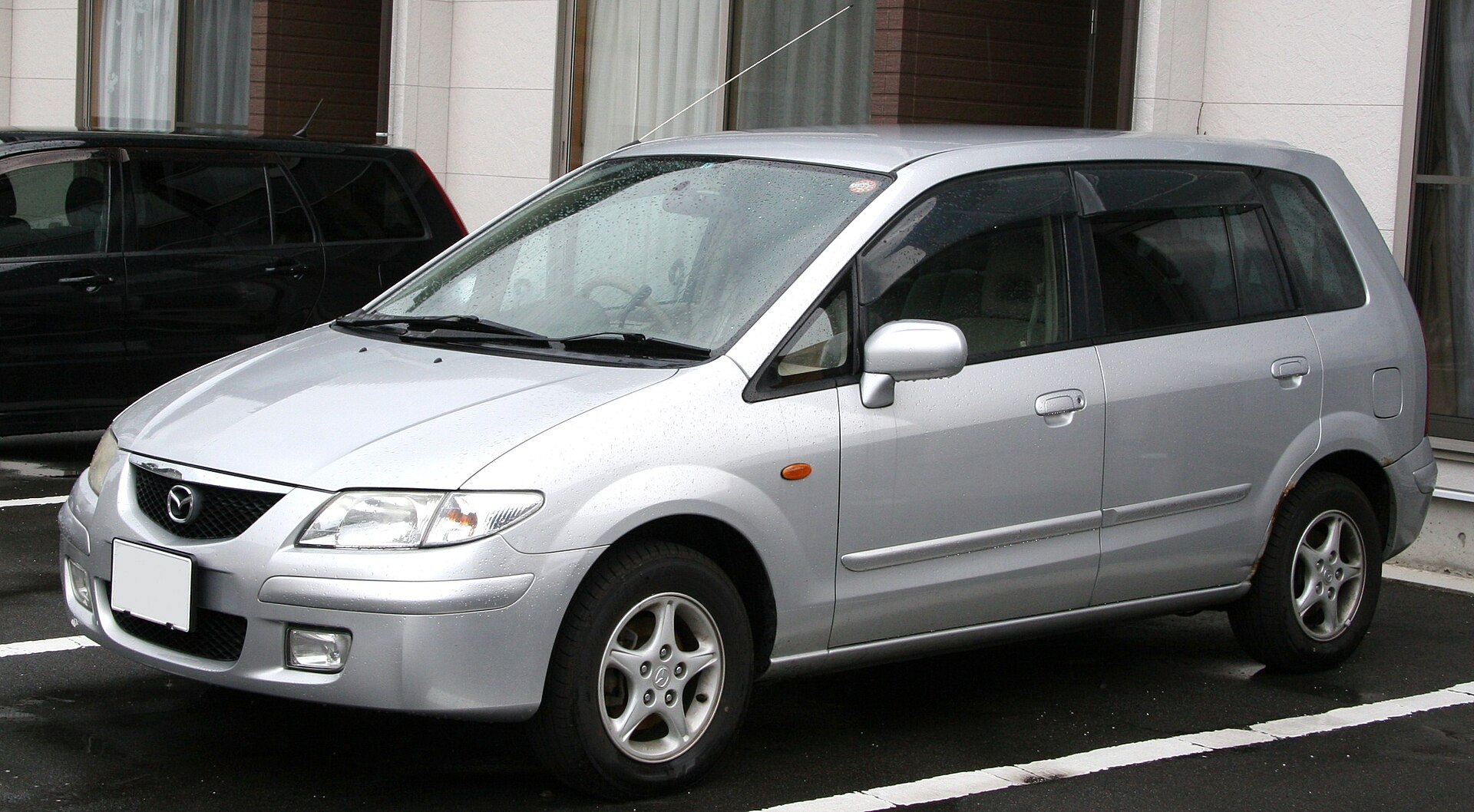
- Premacy CP 1999–2005 · Minivan / MPV · 66–96 kW (90–131 PS)
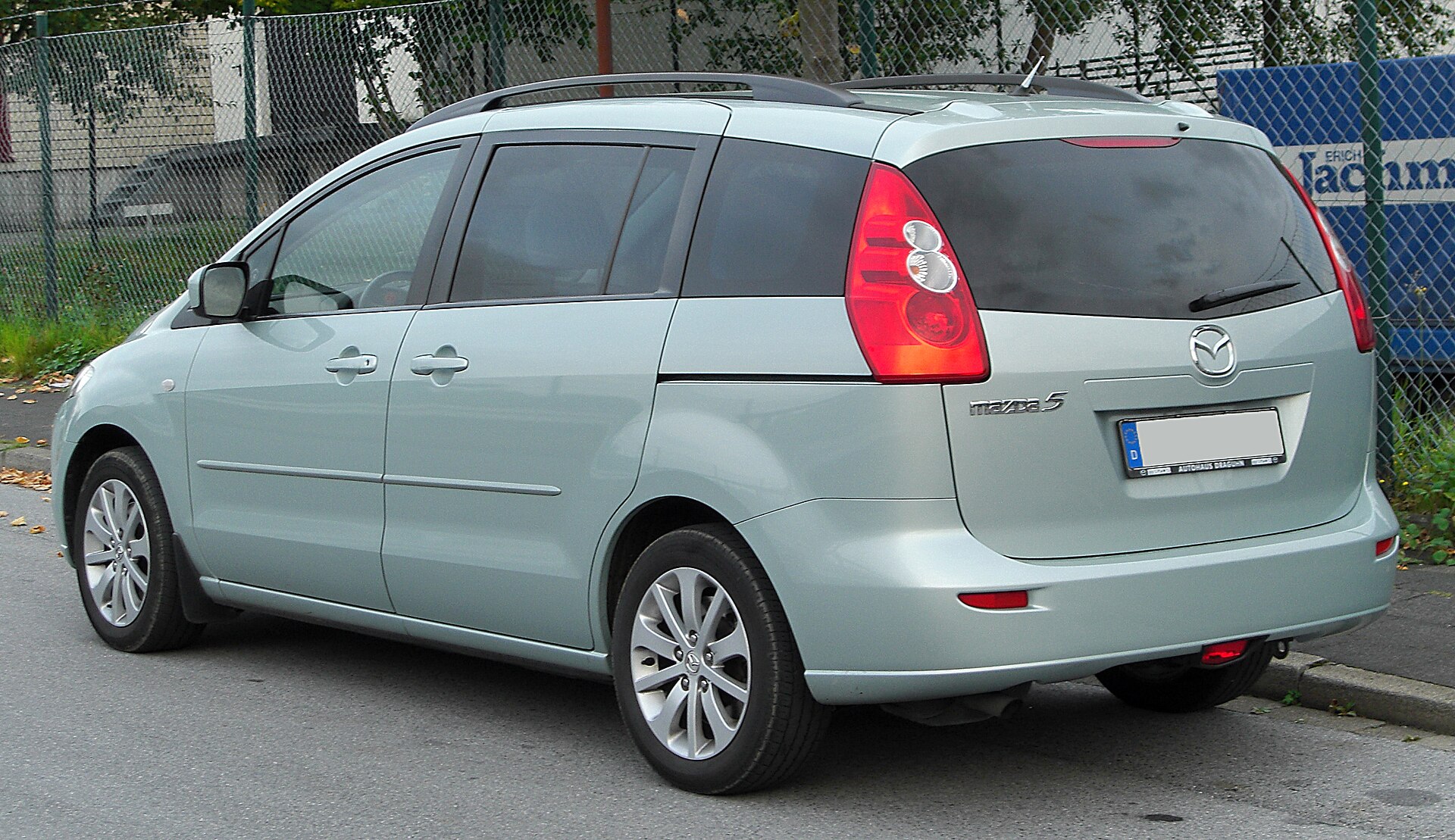
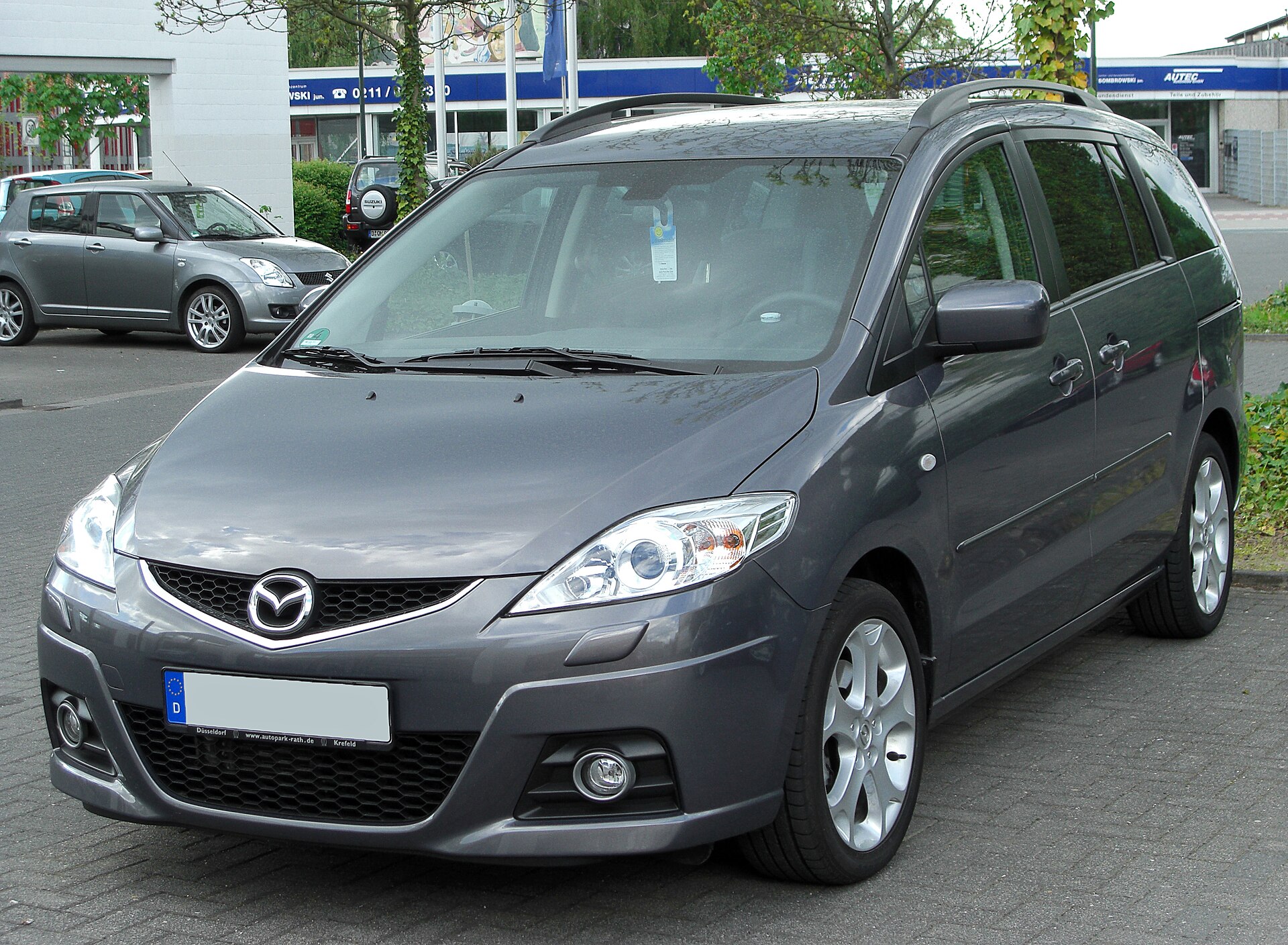
- Premacy CR / Mazda5 2005–2010 · Minivan / MPV · 81–107 kW (110–145 PS)
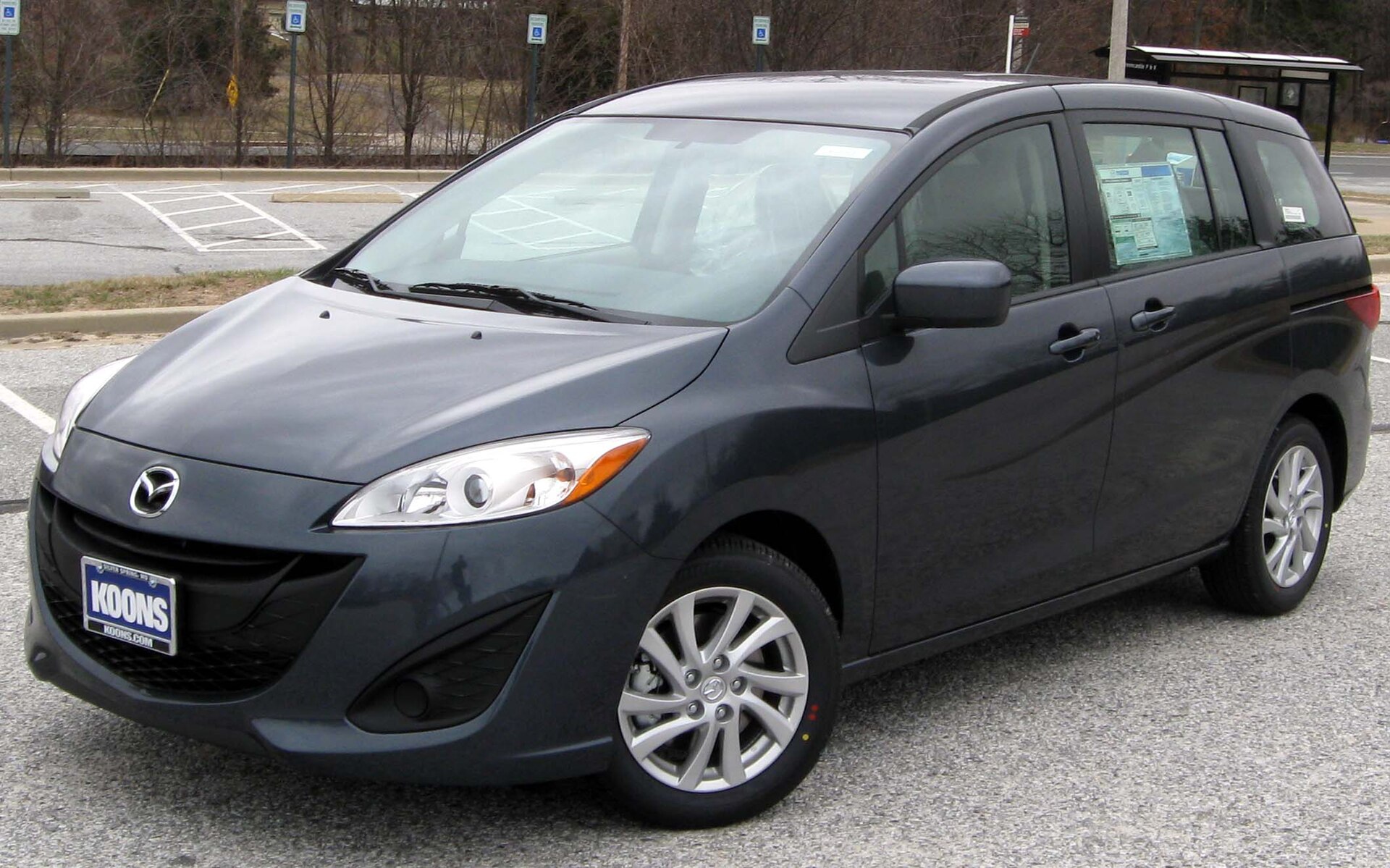
- Premacy CW / Mazda5 2010–2018 · Minivan / MPV · 85–117 kW (116–159 PS)
Newest first · 3 generations since 1999
-
2010
-
2005
-
1999
All generations by year: Premacy CW / Mazda5 (2010–2018) · Premacy CR / Mazda5 (2005–2010) · Premacy CP (1999–2005)
Which one is mine?
Pick the year of first registration to see which generation it is.
Check by VINWhich one to buy
Our verdict · Felix Hartmann
- Cheapest: a Premacy CP 2.0 or 2.0 DiTD from 2001-2005, if five seats with removable rear seats are enough.
- Best all-rounder: a Mazda5 CW 2.0 DISI i-stop, the most powerful and most economical petrol in Europe.
- For high mileage: a Mazda5 CR 2.0 CD with 105 kW (143 PS) or a CW 1.6 CD.
- For seven seats: any Mazda5, but expect only 112 litres of boot with all seats up.
The Mazda Premacy is a compact MPV built in Hiroshima from 1999 to 2018 in three generations. Europe knew the first one as the Premacy and the second and third as the Mazda5, a seven-seater with sliding rear doors. Mazda left the MPV market when Premacy sales ended in Japan on 23 February 2018, and the car had no direct successor.
In short
- Three generations: CP (1999-2005), CR (2005-2010) and CW (2010-2018; sold in Europe until 2015).
- European engines from 66 kW (90 PS) in the first 2.0 TD to 110 kW (150 PS) in the 2.0 DISI i-stop petrol of the Mazda5 CW.
- Mazda5 CW: 4,585 mm long, seven seats, 112 litres of boot behind the third row and 1,485 litres with the rear seats folded (ADAC).
- Euro NCAP: three stars for the Premacy in 2001; Wikipedia records five stars for the Mazda5 in September 2005.
Size at a glance
| Dimensions | Mazda Premacy CW / Mazda5 |
|---|---|
| Length | 4,585 mm180.5 in |
| Width | 1,750 mm68.9 in |
| Height | 1,615 mm63.6 in |
| Wheelbase | 2,750 mm108.3 in |
| Boot | 112 L4.0 cu ft |
Specs by version
Engines
| Version | Engine | Power | Gearbox | Drive | Production years |
|---|---|---|---|---|---|
| Diesel · 1 version | |||||
| CW · 1.6 CD | Diesel | 85 kW 116 PS114 hp | Manual | Front-wheel drive | 2010–2013 |
| Petrol · 3 versions | |||||
| CW · 1.8 | Petrol | 85 kW 116 PS114 hp | Manual | Front-wheel drive | 2010–2013 |
| CW · 2.0 Activematic | Petrol | 106 kW 144 PS142 hp | Automatic | Front-wheel drive | 2010–2013 |
| CW · 2.0 DISI i-stop | Petrol | 110 kW 150 PS148 hp | 6-sp Manual | Front-wheel drive | 2010–2013 |
Performance
Show all 1 versions
| Version | 0–100 km/h | Top speed |
|---|---|---|
| CW · 2010–2018 | ||
| CW · 2.0 DISI i-stop | 11.2 s 0–62 mph | 194 km/h121 mph |
Dimensions and weight
Show all 1 versions
| Version | Length | Width | Height | Wheelbase | Kerb weight | Boot |
|---|---|---|---|---|---|---|
| CW · 2010–2018 | ||||||
| CW · 2.0 DISI i-stop | 4,585 mm180.5 in | 1,750 mm68.9 in | 1,615 mm63.6 in | 2,750 mm108.3 in | 1,485 kg3,274 lb | 112 l4.0 cu ft |
Verified Manufacturer and type-approval data from our catalog · Sources and methodology
Safety
-
CP · Euro NCAP 2001
Older protocol · Full Euro NCAP result
Stars from different years and organisations are not directly comparable: test protocols change every few years.
Mazda Premacy at a glance
| Item | Mazda Premacy / Mazda5 |
|---|---|
| Segment | Compact MPV (C-MPV) |
| Body | 5-door minivan; 5 or 7 seats (6 in North America) |
| Production | 1999-2018, Hiroshima (Japan); also Zhongli (Taiwan, Ford Lio Ho) |
| Platform | CR and CW: Ford C1, shared with the Mazda3 |
| Drive | front-wheel drive; all-wheel drive in Japan |
| Other names | Mazda5, Ford Ixion, Ford i-Max, Haima Freema, Nissan Lafesta Highway Star |
The Premacy grew from a five- or seven-seat family car with removable rear seats into a longer MPV with sliding doors and a fold-away centre seat. Ford sold rebadged versions in Asia, Haima built the first generation in China from 2004 to 2014 as the Freema, and from June 2011 Nissan sold the third generation in Japan as the Lafesta Highway Star. More models of the brand are in our Mazda catalogue.
Generations: CP, CR and CW
| Generation | Code | Years | Body styles | Engines | Power (kW / hp) |
|---|---|---|---|---|---|
| Premacy I | CP | 1999-2005 | 5-door MPV, 5 or 7 seats | 1.8/1.9 and 2.0 petrol, 2.0 diesel | 66-96 kW (90-131 PS) |
| Premacy II / Mazda5 I | CR | 2005-2010 | 5-door MPV with sliding doors | 1.8 and 2.0 petrol, 2.0 diesel (Europe) | 81-107 kW (110-145 PS), Europe |
| Premacy III / Mazda5 II | CW | 2010-2018 | 5-door MPV with sliding doors | 1.8 and 2.0 petrol, 1.6 diesel (Europe), 2.5 petrol (US) | 85-117 kW (115-157 hp) |
Premacy CP (1999-2005)
The first Premacy was unveiled at the Geneva Motor Show on 9 March 1999 and went on sale in April. It had two or three rows for five or seven people, and the second and third rows could be folded or removed. ADAC lists German deliveries from June 1999.
In Germany Mazda sold the petrol as the 1.9 with 74 kW (100 PS) or 84 kW (114 PS); Japanese sources quote the same outputs for the 1.8-litre FP-DE. The 2.0 TD diesel had 66 kW (90 PS). The November 2001 facelift added a 2.0 petrol with 96 kW (131 PS) and raised the diesel, now called DiTD, to 74 kW (100 PS). Seven-seat Active7 versions followed in January 2003. German list prices started at EUR 16,867 for the 1999 1.9 Comfort and EUR 16,990 after the facelift (ADAC).
Mazda also built a research version, the Premacy Hydrogen RE Hybrid, with a twin-rotor Wankel engine that ran on hydrogen or petrol. It carried a 110-litre hydrogen tank at 350 bar, holding up to 2.4 kg, plus a 60-litre petrol tank.


Mazda5 CR (2005-2010)
The second generation was previewed by the MX-Flexa concept at the 2004 Geneva show, unveiled at the 2004 Paris Motor Show and sold in Japan from 7 February 2005. Exports, now named Mazda5, began in mid-2005. It moved to Ford's C1 platform and shared many parts with the Mazda3. The wheelbase grew to 2,750 mm, sliding rear doors were standard, and the Karakuri seating system folded a seventh centre seat away under the second row. All seven seats had three-point belts. North American cars had six seats in three rows of two.
| Mazda5 CR (Germany) | Years | Power | List price |
|---|---|---|---|
| 1.8 | 2005-2008 | 85 kW (115 PS) | from EUR 20,400 (2005) |
| 2.0 | 2005-2008 | 107 kW (145 PS) | from EUR 23,500 (2005) |
| 2.0 CD DPF | 2005-2008 | 81 kW (110 PS) | from EUR 22,800 (2005) |
| 2.0 CD DPF | 2005-2008 | 105 kW (143 PS) | from EUR 25,500 (2005) |
Gearboxes were a five-speed manual or a four-speed automatic, with a five-speed automatic from the 2008 facelift, which also brought a new front bumper, wheels and LED rear lights on some trims. The Mazda5 won Canadian Car of the Year 2006 in the best new family MPV class.

Mazda5 CW (2010-2018)
Production of the third generation started on 13 May 2010, and Japanese sales began on 1 July 2010. It was the first Mazda in the Nagare design language and kept the 2,750 mm wheelbase and sliding doors. In Germany ADAC lists four engines from October 2010:
| Mazda5 CW (Germany) | Power | Gearbox | List price |
|---|---|---|---|
| 1.8 | 85 kW (115 PS) | manual | from EUR 20,690 (2010) |
| 2.0 Activematic | 106 kW (144 PS) | automatic | from EUR 26,830 (2011) |
| 2.0 DISI i-stop | 110 kW (150 PS) | 6-speed manual | from EUR 24,390 (2010) |
| 1.6 CD | 85 kW (115 PS) | manual | from EUR 22,990 (2010) |
The direct-injection 2.0 with i-stop start-stop was the European highlight; Wikipedia says the system cut emissions by 15 percent. The United States had a 2.5-litre with 117 kW (157 hp). In Japan a 2013 update added the 2.0 Skyactiv-G and a six-speed Skyactiv-Drive automatic, rated at 16.2 km/l (6.2 l/100 km) in the JC08 cycle. From February 2012 Germany also had an Edition "40 Jahre" special model.
Europe dropped the Mazda5 in 2015, the United States after the 2015 model year and Canada after 2017. Japan kept the Premacy until 23 February 2018, when Mazda ended it together with the Biante.


Dimensions, space and boot
Figures for the Mazda5 CW 2.0 DISI i-stop (ADAC):
| Parameter | Metric | Imperial |
|---|---|---|
| Length | 4,585 mm | 180.5 in |
| Width | 1,750 mm | 68.9 in |
| Height | 1,615 mm | 63.6 in |
| Wheelbase | 2,750 mm | 108.3 in |
| Kerb weight | 1,485 kg | 3,274 lb |
| Boot, 7 seats | 112 l | 4.0 cu ft |
| Boot, rear seats folded, to the window line | 857 l | 30.3 cu ft |
| Boot, rear seats folded, to the roof | 1,485 l | 52.4 cu ft |
| Fuel tank | 60 l | 13.2 imp gal |
With all seven seats in place the boot is tiny, so the third row is best treated as occasional seating.
Fuel economy and running costs
ADAC lists the Mazda5 CW 2.0 DISI i-stop at 6.9 l/100 km (40.9 mpg imperial) and 159 g/km CO2 on the old NEDC cycle, with 0-100 km/h in 11.2 seconds and a top speed of 194 km/h. Real-world use is usually higher than NEDC figures; our fuel cost calculator helps estimate what a used one will cost to run.
Safety
Euro NCAP tested a Premacy 1.8 Comfort in 2001. The published report gives three stars; testers noted high chest loads for both front occupants and that the driver's head struck the pole hard in the side tests. The Premacy did better for pedestrians, with three stars, which UK trade magazine AM reported as one of the highest pedestrian scores at the time. For the Mazda5 CR, Wikipedia records five stars for adult occupants from Euro NCAP in September 2005 and six stars for front occupants in the Japanese J-NCAP test of April 2006. In North America electronic stability control became standard for 2010. We found no Euro NCAP result for the CW.
Reliability and known issues
Consumer Reports ranked the Mazda5 CR its best "tall wagon" but did not recommend it at the time, citing unknown reliability. Our sources do not document recurring faults, so none are listed here. On any used car with sliding doors, check that both doors run smoothly and lock properly.
Rivals
In Europe the Premacy and Mazda5 competed with the compact MPVs of the 2000s and early 2010s: the Volkswagen Touran, Opel Zafira, Renault Scenic and Grand Scenic, Citroen C4 Picasso and Ford's C-Max and Grand C-Max, which used the same C1 platform family as the Mazda5. Few of them offered sliding rear doors, which made the Mazda5 easy to use in tight parking spaces. None of these cars is sold new any more, so prices are not compared here; our comparison tool lines up their specifications.
Photo gallery

Mazda Premacy evolution in numbers
Did you know?
- The Mazda Premacy ran for 19 years, from 1999 to 2018, over 3 generations in our catalog.
- The longest-running generation is the Premacy CW / Mazda5 (2010–2018): 8 years.
- The biggest jump in power came with the Premacy CR / Mazda5: up to 107 kW (145 PS), 11 kW more than the Premacy CP.
Most powerful version, kW
Figures from the 1cars catalog: power is the strongest version of each generation; generations without the figure are left out.
Mazda Premacy: first vs latest generation
| Spec | Premacy CP | Premacy CW / Mazda5 | Change |
|---|---|---|---|
| Years | 1999–2005 | 2010–2018 | 11 years apart |
| Most powerful version | 96 kW (131 PS) | 117 kW (159 PS) | +21 kW (+22%) |
Oldest and newest generation in the 1cars catalog. Power is the strongest version of each; other rows are shown only when both generations have the figure.
Mazda Premacy in our rankings
- No. 204 of 1082 · Longest-running car nameplates (19 years · top 21%)
- No. 188 of 391 · Lightest cars (1,485 kg · top 49%)
- No. 264 of 531 · Longest cars (4,585 mm · top 50%)
- No. 30 of 59 · Fastest Japanese cars (194 km/h · top 51%)
- No. 286 of 531 · Smallest cars (4,585 mm · top 54%)
- No. 234 of 376 · Fastest cars (194 km/h · top 63%)
In production longer than 79% of ranked nameplates in the 1CARS catalog (No. 204 of 1082).
FAQ
Is the Mazda Premacy the same as the Mazda5?
Yes, from the second generation. In Japan the car stayed the Premacy; in Europe and North America it was sold as the Mazda5 from 2005.
How many seats does the Mazda5 have?
Seven in Europe, with a fold-away centre seat in the second row. North American cars had six.
When did Mazda stop making the Premacy?
Mazda5 sales ended in Europe in 2015. Japanese Premacy sales ended on 23 February 2018, and Mazda had no successor.
What engines did the Mazda5 have in Europe?
1.8 and 2.0 petrol engines from 85 to 110 kW (115-150 PS), a 2.0 diesel with 81 or 105 kW (110 or 143 PS) in the CR and a 1.6 diesel with 85 kW (115 PS) in the CW.
Data sources
Data checked by an editor against the sources below.
- Wikipedia - Mazda Premacy
- ADAC - Premacy
- ADAC