 Mazda 323
All generations, specs and history
Published Sources (3) Report an error
By Felix Hartmann, Automotive Technology & EV Contributor
- Built
- 1977–2003
- Generations
- 6 · FA4 to BJ
- Top power
- 154 kW (209 PS)
Timeline
323 generations
Click a generation for its own page
- 323 FA4 1977–1980 · Hatchback, Station wagon · 33–53 kW (45–72 PS)
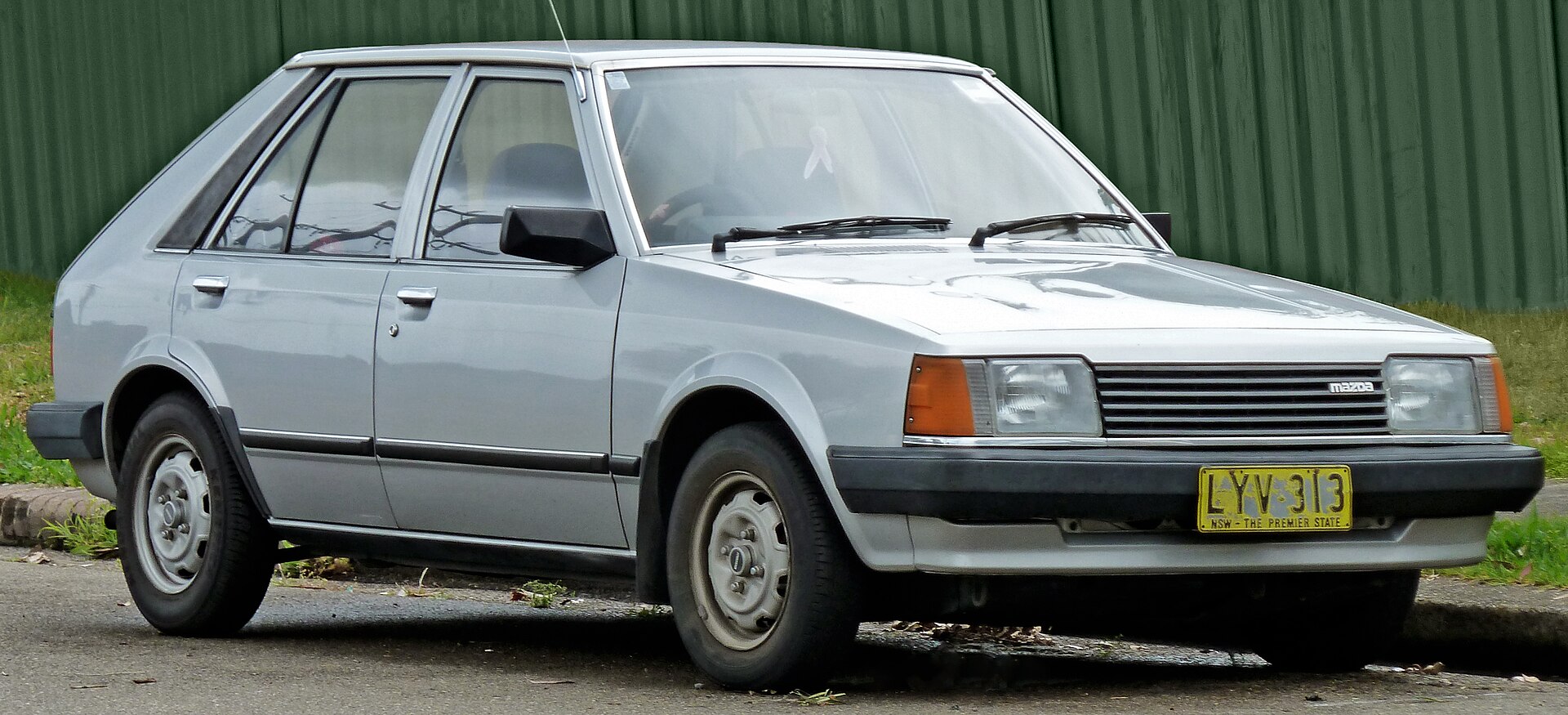
- 323 BD 1980–1985 · Sedan, Hatchback · 85 kW (116 PS)
- 323 BF 1985–1989 · Sedan, Hatchback · 43–103 kW (58–140 PS)
- 323 BG 1989–1994 · Sedan, Hatchback · 154 kW (209 PS)
- 323 BA 1994–1998 · Sedan, Hatchback · 69 kW (94 PS)
- 323 BJ 1998–2003 · Sedan, Hatchback · 53–130 kW (72–177 PS)
Newest first · 6 generations since 1977
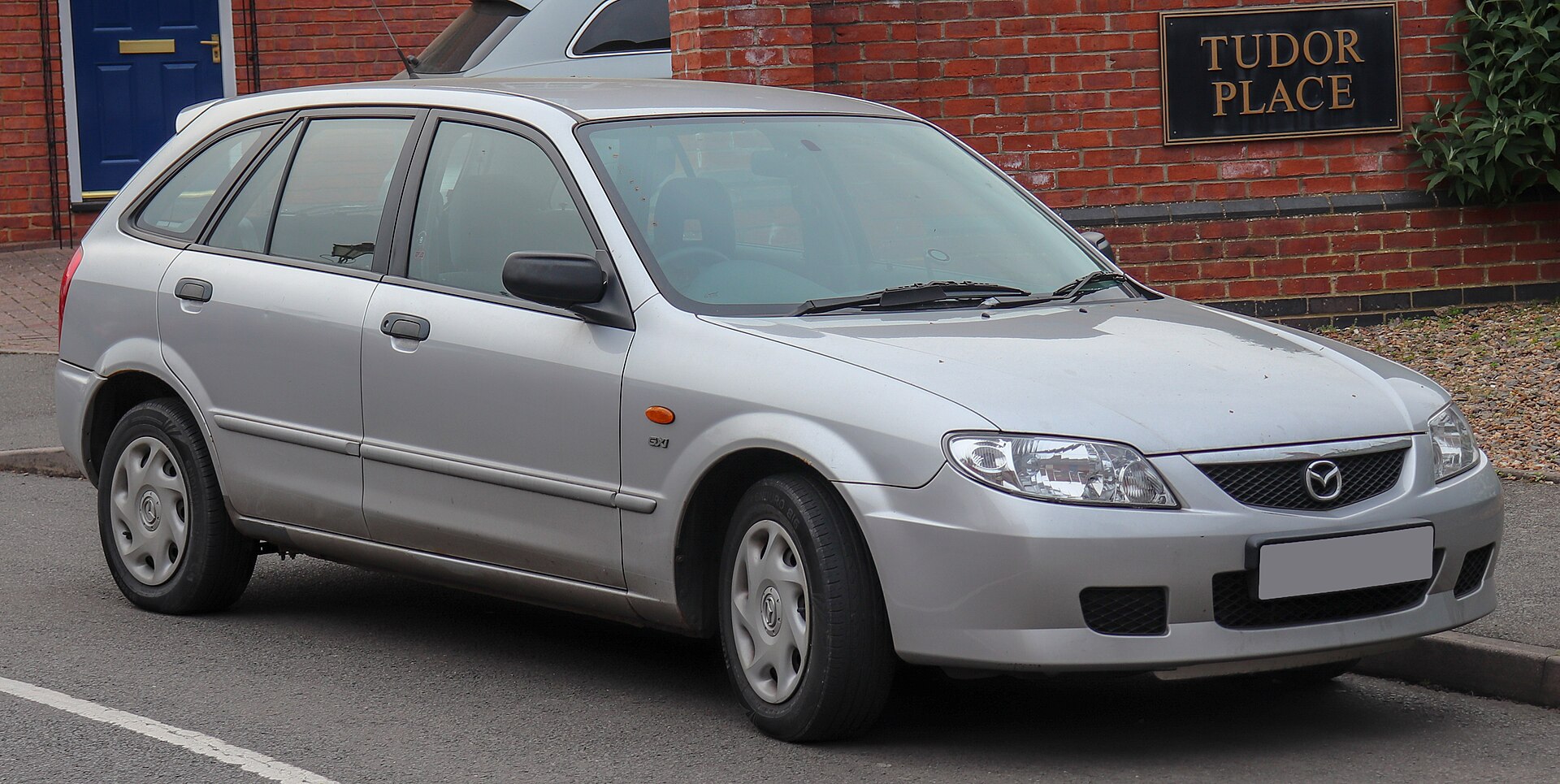
- 1998 BJ 1998–2003 · Sedan, Hatchback · 53–130 kW (72–177 PS)
-
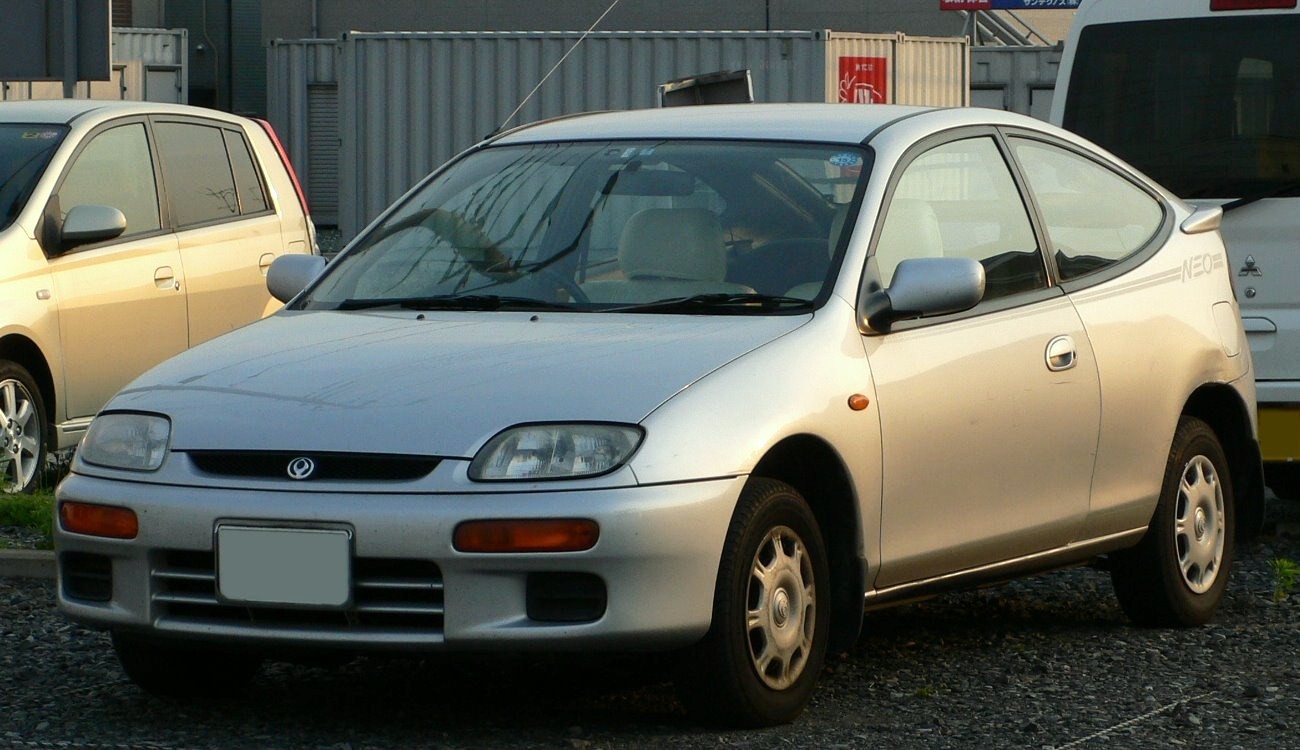
1994
-
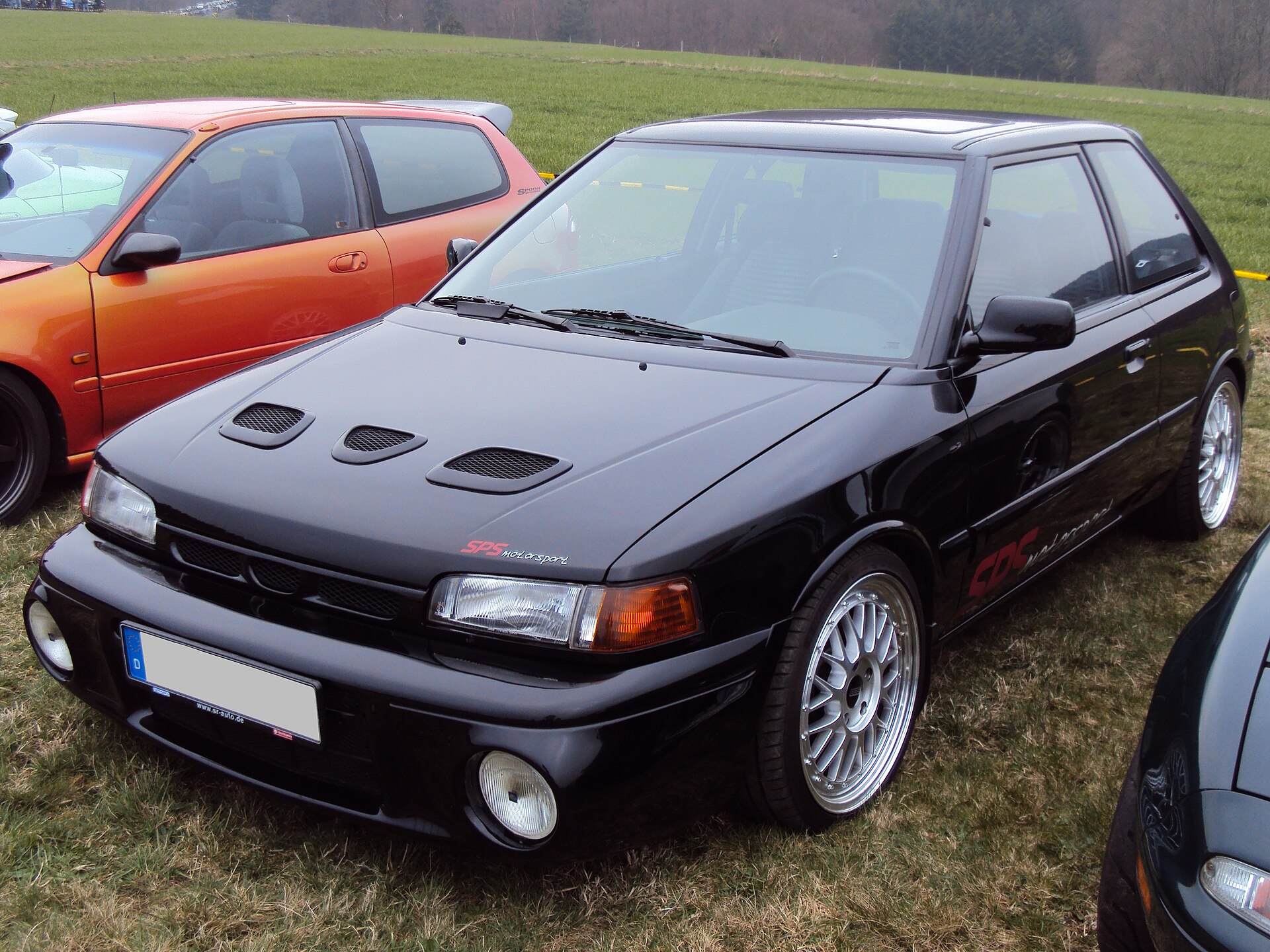
1989
-
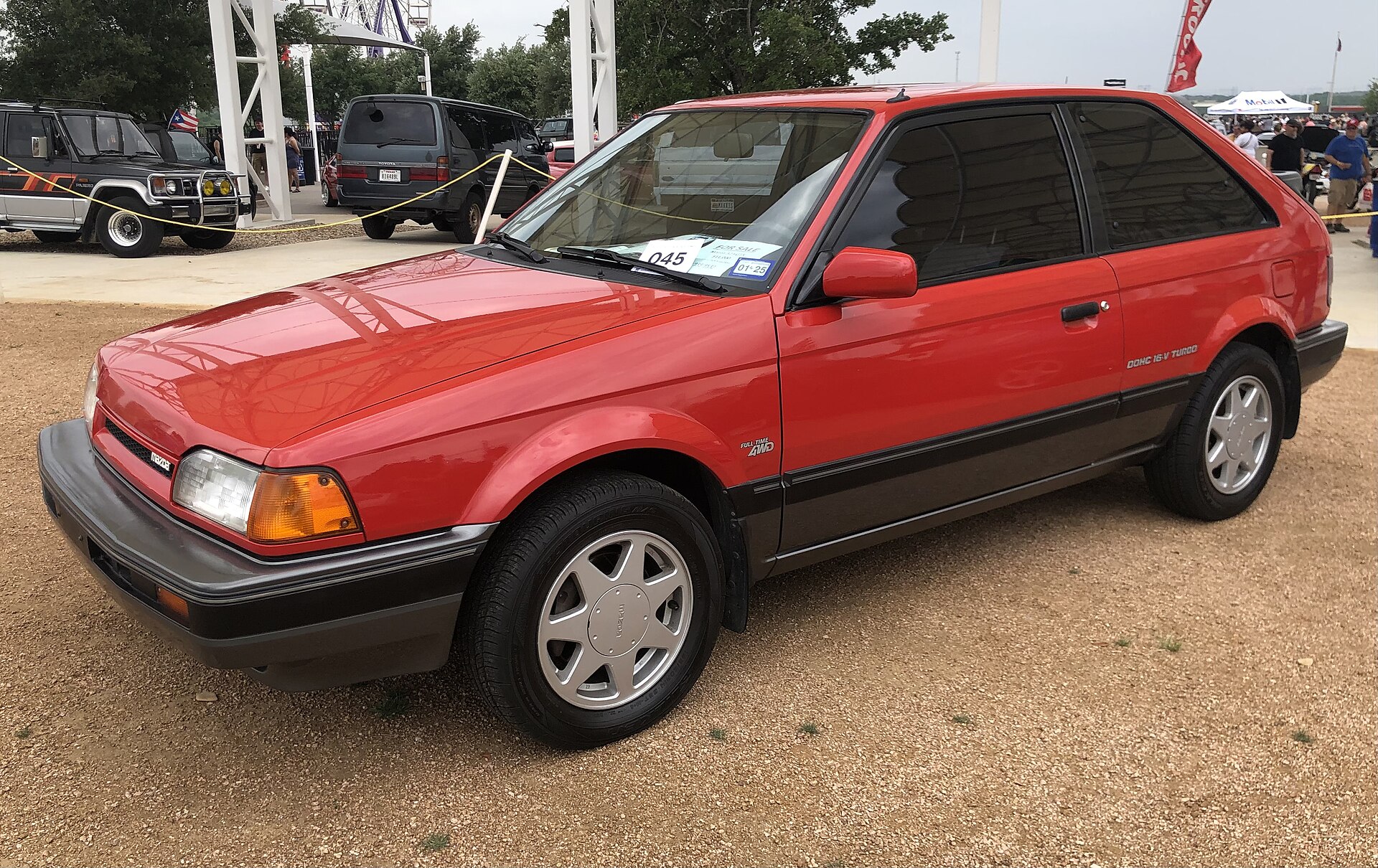
1985
-
1980
-
1977
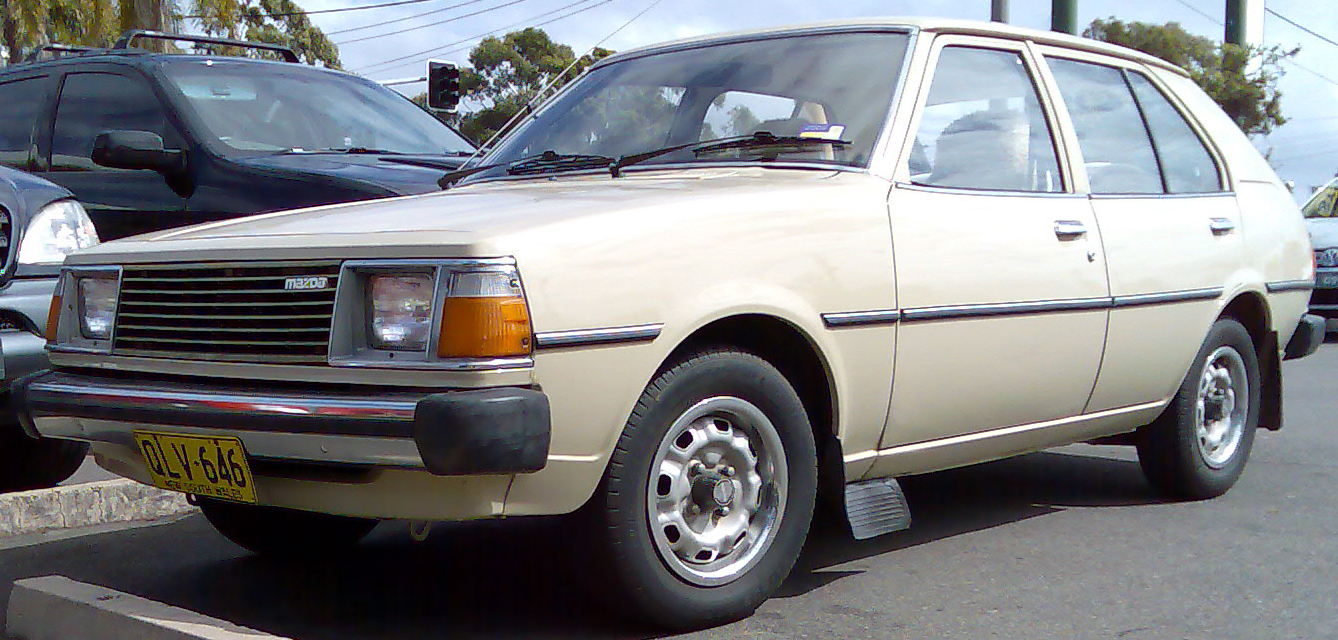


All generations by year: 323 BJ (1998–2003) · 323 BA (1994–1998) · 323 BG (1989–1994) · 323 BF (1985–1989) · 323 BD (1980–1985) · 323 FA4 (1977–1980)
Which one is mine?
Pick the year of first registration to see which generation it is.
Check by VINWhich one to buy
Our verdict · Felix Hartmann
- For a classic: a BF or BG 4WD turbo (GT-X, GT-R); rare, rally-bred and the most collectable 323s.
- For everyday use: a BJ 323F 1.6 or 2.0 from 2000-2003, the newest and most widely available in Europe.
- For economy: the BJ 2.0 DiTD diesel with 74 kW (100 PS).
Older 323s, especially the FA4 and BD, are now classic cars rather than cheap transport.
The Mazda 323 was Mazda's compact family car for export markets from 1977 to 2003, sold in Japan as the Familia and in North America also as the GLC and Protegé. Six generations ran from the rear-drive FA4 hatchback to the front-drive BJ, with turbocharged four-wheel-drive rally specials along the way. Production of the Familia line ended on 2 October 2003, and the Mazda3 took its place.
In short
- Six generations under the 323 name: FA4 (1977-1980), BD (1980-1985), BF (1985-1989), BG (1989-1994), BA (1994-1998) and BJ (1998-2003).
- The BD of 1980 was Mazda's first front-wheel-drive car in this class; the Ford Laser was its twin.
- Fastest road version: the 1992 323 GT-R with 136 kW (185 PS) in Europe and 154 kW (210 PS) in Japan.
- Last European range (BJ facelift, 2000-2003): 53-96 kW (73-131 PS) petrol and a 74 kW (100 PS) 2.0 DiTD diesel, from EUR 13,750 in Germany (2000).
Mazda 323 at a glance
| Item | Mazda 323 |
|---|---|
| Segment | Compact (C-segment) family car |
| Japanese name | Mazda Familia |
| Other names | GLC, Protegé, 323F, 323C, 323 Astina, Lantis (related) |
| Production | 1977-2003 under the 323 name; main plant Hiroshima, Japan |
| Bodies | 3- and 5-door hatchback, 4-door saloon, 5-door liftback (323F), estate |
| Drive | rear-wheel drive (FA4), then front-wheel drive; four-wheel drive from 1985 |
The Familia line was assembled from kits in many countries, from Taiwan, Indonesia and Malaysia to South Africa, Colombia and New Zealand. Ford sold its twin as the Laser in Asia and Australia, and in the United States the Mercury Tracer used the same base with different panels. By November 1986 Mazda had built five million Familias. Other models of the brand are in our Mazda catalogue.
Generations of the Mazda 323
| Generation | Code | Years | Body styles | Engines | Power (kW / hp) |
|---|---|---|---|---|---|
| 323 I | FA4 | 1977-1980 (estate to 1986) | 3/5-door hatchback, estate | 1.0, 1.3, 1.4 petrol (1.5 estate) | 33-53 kW (45-72 PS) |
| 323 II | BD | 1980-1985 | 3/5-door hatchback, saloon | 1.1, 1.3, 1.5 petrol, 1.5 turbo (Japan) | up to 85 kW (115 PS) |
| 323 III | BF | 1985-1989 (estate to 1994) | hatchback, saloon, estate, cabriolet (Japan) | 1.3-1.6 petrol, 1.6 turbo, 1.7 diesel | 43-103 kW (58-140 PS) |
| 323 IV | BG | 1989-1994 | hatchback, saloon, 323F liftback | 1.3-1.8 petrol, 1.8 turbo, 1.7 diesel | up to 154 kW (210 PS) |
| 323 V | BA | 1994-1998 | 323C 3-door, saloon, 323F 5-door | 1.3-1.8 petrol, 2.0 V6, 1.7 turbo-diesel | 69-99 kW (94-135 PS), four-cylinders |
| 323 VI | BJ | 1998-2003 | saloon, 323F 5-door hatchback | 1.4-2.0 petrol (Europe), 2.0 turbo-diesel | 53-130 kW (73-176 PS) |
Years are the main production years in Japan and Europe; some markets kept older bodies longer.
FA4 (1977-1980): rear drive and the first 323
The FA4 Familia AP of January 1977 was the first car exported under the 323 name. It was a hatchback and estate with rear-wheel drive, an interim model while Mazda developed front drive. Export engines were a 1.0 with 33 kW (45 PS) and a 1.3 with 44 kW (60 PS); a 1.4 followed in March 1978. A June 1979 facelift brought rectangular headlights. About 890,000 were sold in three years, and the estate and van stayed in production until 1986.

BD (1980-1985): front-wheel drive
Revealed in June 1980 and launched in Europe that September, the BD moved to front-wheel drive and was developed with input from Ford, which sold it as the Laser. It came as a three- or five-door hatchback and a saloon with E-series 1.1, 1.3 and 1.5 engines. In Japan the XGI Turbo of June 1983 was Mazda's first turbocharged piston engine, with 85 kW (115 PS) JIS. A January 1983 facelift brought a top European version called the 323 GT. Australia's Wheels magazine named it Car of the Year for 1980.

BF (1985-1989): turbo and four-wheel drive
The BF arrived in January 1985 as a hatchback and saloon, with an estate from November 1985. The 1.6 DOHC turbo made 103 kW (140 PS) in Japan and was offered with front or four-wheel drive. A naturally aspirated 1.7 diesel with 43 kW (58 PS) joined in July 1985. In the United States the 1988 323 GTX, with a 98 kW (132 hp) 1.6 turbo, was the first four-wheel-drive Mazda passenger car sold there. The rally-bred 4WD models gave Mazda success in Group A rallying, including a World Rally Championship win for Timo Salonen in Sweden in 1987.

BG (1989-1994): GT-X and GT-R
The BG brought the 323F, a five-door liftback sold in Japan as the Astina. Engines ranged from 1.3 to 1.8 litres, plus a 1.7 diesel, and four-wheel drive was built from August 1989. The European 1.8 4WD had 78 kW (106 PS).
| BG performance version | Year | Power (Europe) | Power (Japan) | Built |
|---|---|---|---|---|
| GT-X, 1.8 BPT turbo, 4WD | 1990 | 122 kW (166 PS) | 136 kW (185 PS) | - |
| GT-R, 1.8 turbo, 4WD | 1992 | 136 kW (185 PS) | 154 kW (210 PS) | about 5,000 |
Lightweight homologation versions, the GT-A and GT-Ae, were limited to 300 cars each. Most BG production ended on 24 May 1994.

BA (1994-1998): 323C, 323F and saloon
The BA split into three distinct cars. The 323C, sold as the Familia Neo in Japan, was a three-door coupé-like hatchback with up to 99 kW (135 PS) from the 1.8 BP-ZE. The 323F, known as the Lantis in Japan, was a sleeker five-door built on the CB platform from September 1993 and offered with a 2.0 V6. A lean-burn 1.5 Z5-DEL engine produced 69 kW (94 PS), and an Isuzu 1.7 turbo-diesel was added in October 1994. The range was facelifted in October 1996 and replaced in most markets in 1998.

BJ (1998-2003): the last 323
The final generation was announced on 9 June 1998 as a saloon and a five-door hatchback, sold as the 323F in Europe and the Protegé5 in North America. The European facelift of October 2000 brought this range in Germany (ADAC):
| 323F BJ facelift (Germany) | Fuel | Power | List price |
|---|---|---|---|
| 1.4 Comfort | petrol | 53 kW (73 PS) | EUR 13,750 (2000) |
| 1.6 | petrol | 72 kW (98 PS); 70 kW (95 PS) automatic | from EUR 14,750 (2000) |
| 2.0 Sportive | petrol | 96 kW (131 PS) | EUR 19,150 (2000) |
| 2.0 DiTD | diesel | 74 kW (100 PS) | from EUR 16,250 (2000) |
Japan and North America had faster versions: the Mazdaspeed Familia of May 2001 with 130 kW (176 PS), limited to 200 cars, and the 2003 Mazdaspeed Protegé turbo with 127 kW (172 PS), of which about 4,500 were built. European sales ended in September 2003 (ADAC).
Dimensions and practicality
Our sources do not give consistent dimensions for each generation, so we do not quote them. The BA saloon is worth noting: its wheelbase was only 5 mm shorter than the larger Mazda 626 of the same period, which made it roomy for its class. Our size comparison tool helps when you compare a 323 with a modern compact.
Safety
The early 323s were designed before Euro NCAP started crash testing in 1997, and we could not verify a Euro NCAP result for the BJ, so no rating is given here. Expect a 1980s or 1990s compact to protect its occupants far less well than a current car.
Reliability and known issues
Our sources contain no documented model-specific faults for the 323, so none are listed. As with any car of this age, the condition of the individual car decides more than the model: rust, the state of the turbo on GT-X and GT-R models and the four-wheel-drive system are what to check first.
Rivals
Over its 26 years the 323 met the Volkswagen Golf, Opel Kadett and Astra, Ford Escort, Toyota Corolla and Honda Civic in Europe. The 4WD turbo models were rivals to the Lancia Delta HF 4WD and Toyota Celica GT-Four in rallying. None of these cars is sold new, so prices are not compared.
Mazda 323 evolution in numbers
Did you know?
- The Mazda 323 ran for 26 years, from 1977 to 2003, over 6 generations in our catalog.
- The biggest jump in power came with the 323 BJ: up to 130 kW (177 PS), 61 kW more than the 323 BA.
- The most powerful Mazda 323 is not the newest: the 323 BG (1989–1994) offered up to 154 kW (209 PS), the 323 BJ up to 130 kW (177 PS).
Most powerful version, kW
Figures from the 1cars catalog: power is the strongest version of each generation; generations without the figure are left out.
Mazda 323: first vs latest generation
| Spec | 323 FA4 | 323 BJ | Change |
|---|---|---|---|
| Years | 1977–1980 | 1998–2003 | 21 years apart |
| Most powerful version | 53 kW (72 PS) | 130 kW (177 PS) | +77 kW (+145%) |
Oldest and newest generation in the 1cars catalog. Power is the strongest version of each; other rows are shown only when both generations have the figure.
Mazda 323 in our rankings
- No. 108 of 1082 · Longest-running car nameplates (26 years · top 11%)
- No. 41 of 411 · Cars with the most generations (6 generations · top 15%)
- No. 78 of 130 · Most powerful Japanese cars (154 kW · top 60%)
- No. 664 of 1011 · Most powerful cars (154 kW · top 66%)
- No. 53 of 69 · Most powerful cars of the 1980s (103 kW · top 77%)
- No. 103 of 111 · Most powerful cars of the 1990s (69 kW · top 93%)
In production longer than 89% of ranked nameplates in the 1CARS catalog (No. 108 of 1082).
FAQ
Is the Mazda 323 the same as the Familia?
Yes. Familia was the Japanese name; 323 was the export name in Europe and elsewhere, with GLC and Protegé used in North America.
When was the Mazda 323 discontinued?
The last generation ended in 2003; Familia production stopped on 2 October 2003, and the Mazda3 replaced it.
What was the most powerful Mazda 323?
The 1992 GT-R with four-wheel drive and a 1.8 turbo: 136 kW (185 PS) in Europe and 154 kW (210 PS) in Japan.
Was the Mazda 323 four-wheel drive?
Some versions were. Four-wheel drive arrived with the BF generation in 1985 and continued in the BG, mostly with turbo engines.
Data sources
Data checked by an editor against the sources below.
- Wikipedia - Mazda Familia
- ADAC
- ADAC - Bj Facelift