 Triumph Spitfire
Specs, engines and history
Published Sources (1) Report an error
By Felix Hartmann, Automotive Technology & EV Contributor
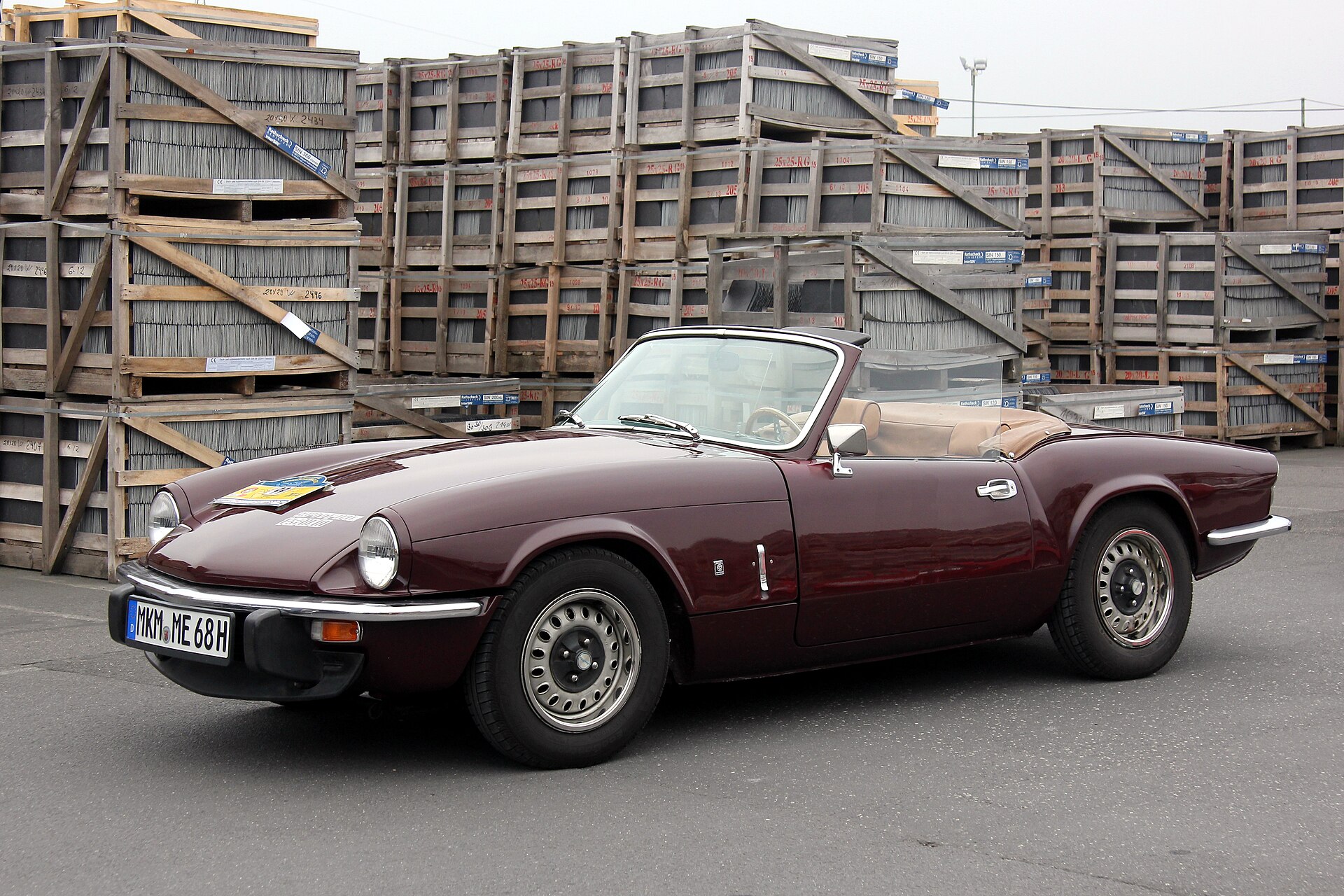
- Built
- 1962–1980
- Top power
- 52 kW (71 PS)
Which Spitfire to choose
Our verdict · Felix Hartmann
- For the purest shape: a Spitfire 4 or Mk II, with the low front bumper, but with the original swing-axle rear.
- For the best handling: a Mk IV from 1970 on, or a 1500 with the wider rear track.
- For performance: a UK-spec Mk III (56 kW claimed) or a UK 1500, which reached 100 mph.
- Check on any car: the US-market engines are much weaker, so look at the engine rating for the market the car was built for.
More British open cars are in the best sports cars list and in the 1960s classics section.
Triumph's roots go back to 1885, when Siegfried Bettmann from Nuremberg founded a bicycle import business in London. The Triumph name followed in 1886, bicycles were made in Coventry from 1889 and motorcycles from 1902. The first Triumph car, the 10/20, appeared in 1923. The company went into receivership in 1939, and its works were bombed in 1940. The Standard Motor Company bought the name in November 1944, and Standard-Triumph built the TR sports cars from 1953. Leyland Motors took over in December 1960, the company became part of British Leyland in 1968, and the last Triumph, the Acclaim, gave way to the Rover 200 in 1984. BMW has owned the Triumph car trademark since it bought the Rover Group in 1994.
The Spitfire is the small open two-seater that Triumph built at Canley, Coventry, from 1962 to 1980. It was styled by Giovanni Michelotti on a shortened Herald chassis and aimed at the Austin-Healey Sprite and the MG Midget. About 315,000 were sold in five versions, more than three quarters of them abroad.
Specs by version
| Version | Engine | Power | Gearbox | Drive | Production years |
|---|---|---|---|---|---|
| Spitfire 4 (Mark I) | 1.1 l · 4 cyl · Petrol 1,147 cc | 47 kW 64 PS63 hp | 4-sp Manual | Rear-wheel drive | 1962–1964 |
| Spitfire 1500 | 1.5 l · 4 cyl · Petrol 1,493 cc | 52 kW 71 PS70 hp | Manual | Rear-wheel drive | 1974–1980 |
Verified Manufacturer and type-approval data from our catalog · Sources and methodology
In short
- Built from October 1962 to August 1980 at Canley, with assembly also in Belgium, Ireland, South Africa and Australia.
- About 315,000 made; the five versions add up to 314,332.
- Four-cylinder engines of 1,147 cc, 1,296 cc and 1,493 cc, from 47 kW (63 bhp) to 53 kW (71 hp).
- Swing-axle rear suspension, tamed by the "swing spring" of 1970 and the wider track of the 1500.
Triumph Spitfire at a glance
| Parameter | Metric | Imperial |
|---|---|---|
| Maker | Standard-Triumph, later British Leyland; Canley, Coventry | - |
| Production | October 1962 – August 1980 | - |
| Built | about 315,000 (314,332 by version) | - |
| Designer | Giovanni Michelotti | - |
| Chassis | shortened Triumph Herald frame | - |
| Body | two-seat roadster with wind-down windows | - |
| Engines | inline four, 1,147 / 1,296 / 1,493 cc | - |
| Power | 47–56 kW (63–75 bhp), by version and market | - |
| Wheelbase | 2,108 mm | 83 in |
| Length × width × height | 3,683 × 1,448 × 1,219 mm (hood up) | 145 × 57 × 48 in |
| Kerb weight | 711–798 kg | 1,568–1,759 lb |
Triumph before the Spitfire
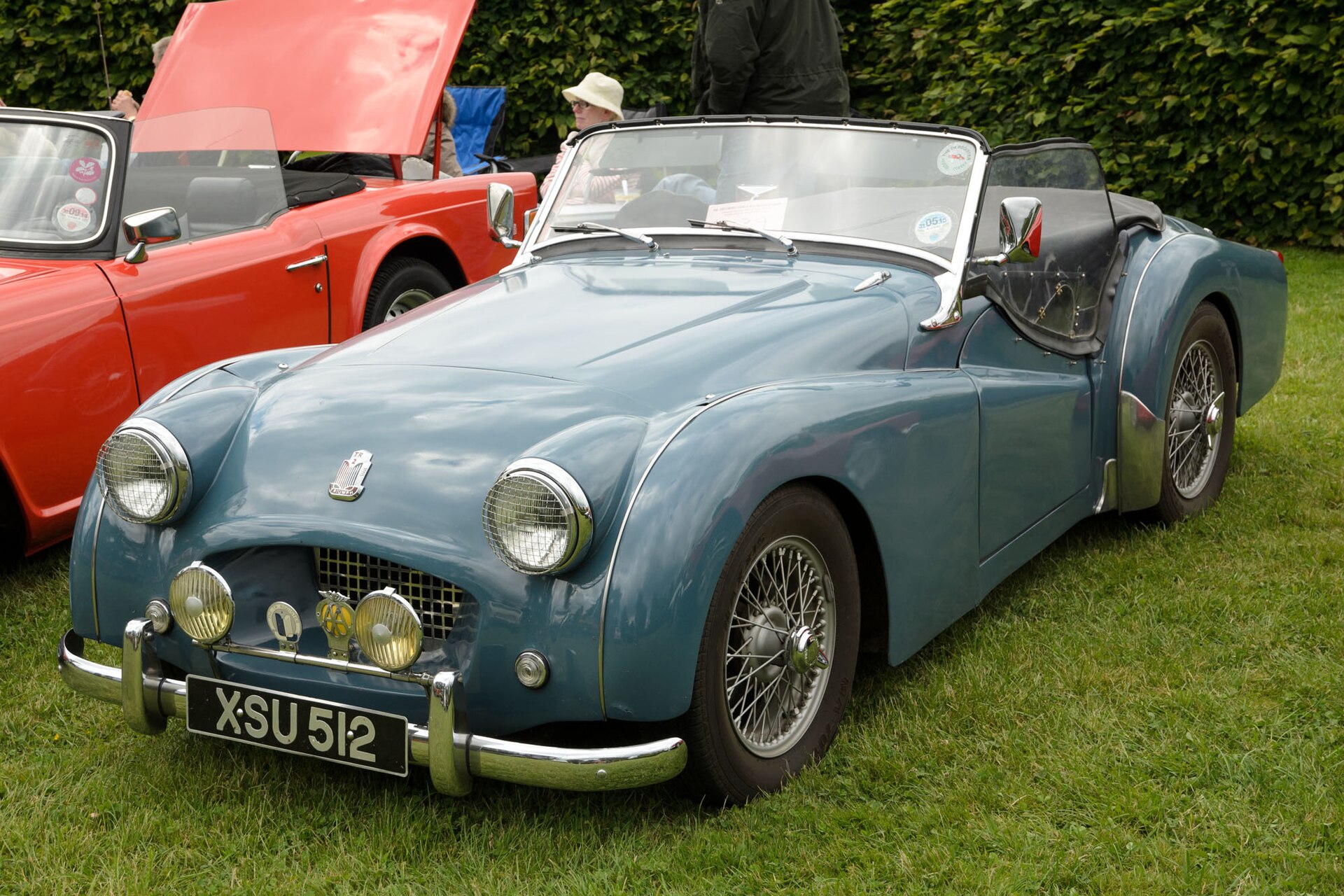
Triumph bought the assets of the Dawson Car Company in 1921, which gave it a start in car making, and the 10/20 of 1923 was the first Triumph car. The Super 7 of 1927 sold in large numbers until 1934. The firm took the name Triumph Motor Company in 1930 and sold its bicycle and motorcycle businesses in 1936; the motorcycles carried on separately as Triumph Engineering.
| Year | Event |
|---|---|
| 1885 | S. Bettmann & Co. founded in London |
| 1902 | first Triumph motorcycles, Coventry |
| 1923 | Triumph 10/20, the first Triumph car |
| 1939 | receivership |
| 1944 | Standard Motor Company buys the name; production moves to Canley |
| 1953 | TR2 starts the TR series, which runs to 1981 |
| 1959 | Triumph Herald, the basis of the Spitfire |
| 1960 | Leyland Motors buys Standard-Triumph |
| 1962 | Spitfire launched |
| 1968 | British Leyland formed |
| 1980 | last Spitfire built at Canley |
| 1984 | Triumph name retired from cars |
Project Bomb: how the Spitfire was born
Standard-Triumph developed the car to take on the Austin-Healey Sprite, under the internal code name "Project Bomb". It used a shortened version of the Herald saloon chassis with the Herald's running gear and the Standard SC engine. Giovanni Michelotti, who had also styled the Herald, drew the body. The body had wind-down windows.
Standard-Triumph's money troubles delayed the launch. Leyland Motors bought the company in December 1960 and approved the prototype for production, and the car was announced in 1962. It took its name from the Supermarine Spitfire fighter of the Second World War. The factory reached its 100,000th Spitfire on 8 February 1968, driven off the line by general manager George Turnbull.


Five versions, from Spitfire 4 to 1500
| Version | Years | Engine | Power | Top speed | 0–60 mph | Built |
|---|---|---|---|---|---|---|
| Spitfire 4 (Mk I) | Oct 1962 – Dec 1964 | 1,147 cc | 47 kW (63 bhp) | 92 mph (148 km/h) | 16.4 s | 45,753 |
| Mk II | Dec 1964 – Jan 1967 | 1,147 cc, retuned | 50 kW (67 bhp) at 6,000 rpm | 96 mph (154 km/h), claimed | 14.8 s | 37,409 |
| Mk III | Jan 1967 – Dec 1970 | 1,296 cc | 56 kW (75 bhp), claimed; 51 kW (68 bhp) US | 95 mph (153 km/h) | 13.4 s | 65,320 |
| Mk IV | Nov 1970 – Dec 1974 | 1,296 cc | 47 kW (63 hp), UK | 90 mph (145 km/h) | 15.8 s | 70,021 |
| 1500 | Dec 1974 – Aug 1980 | 1,493 cc | 53 kW (71 hp) DIN, UK; 40 kW (53 bhp) DIN, US | 100 mph (161 km/h) | 13.2 s | 95,829 |
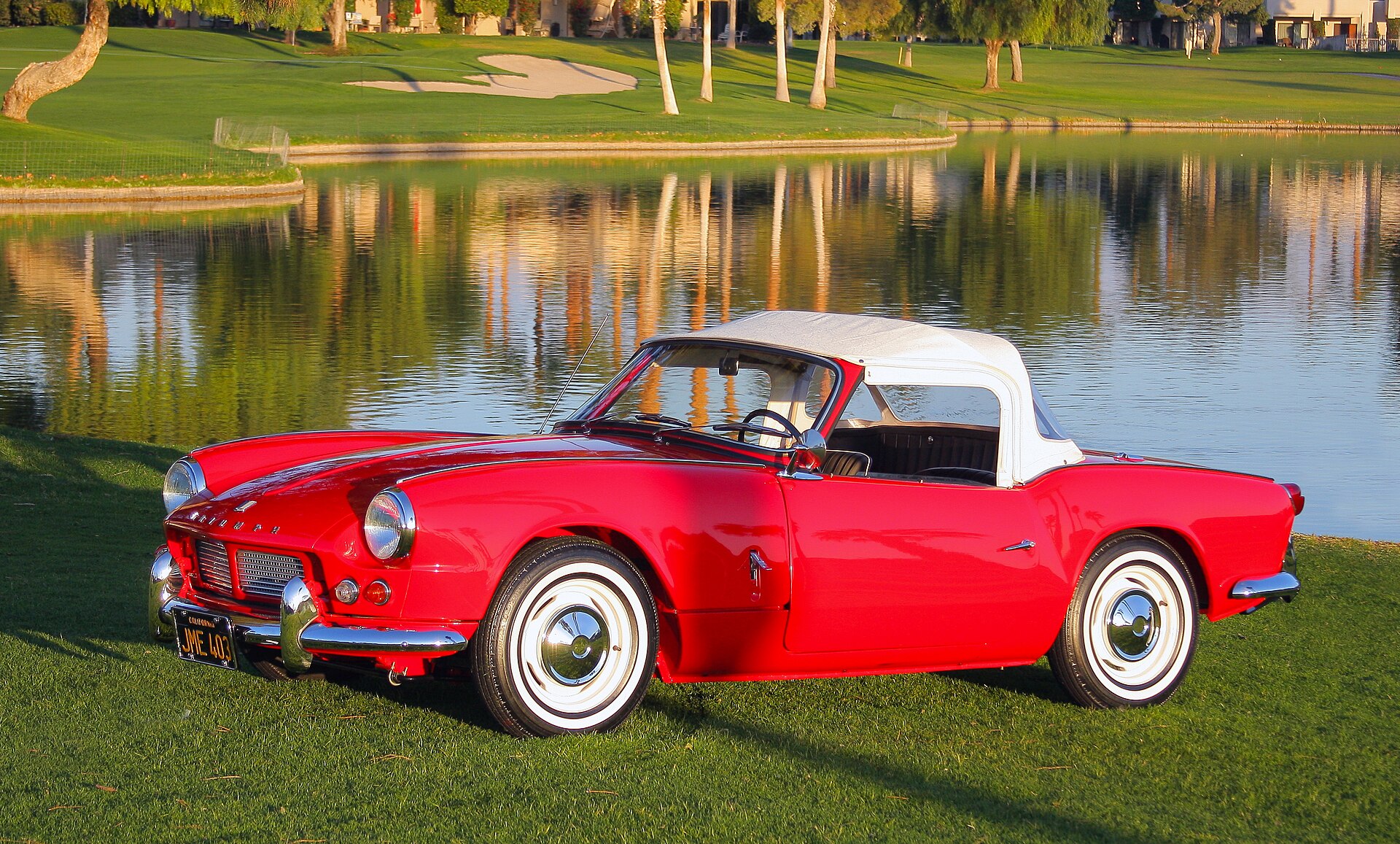
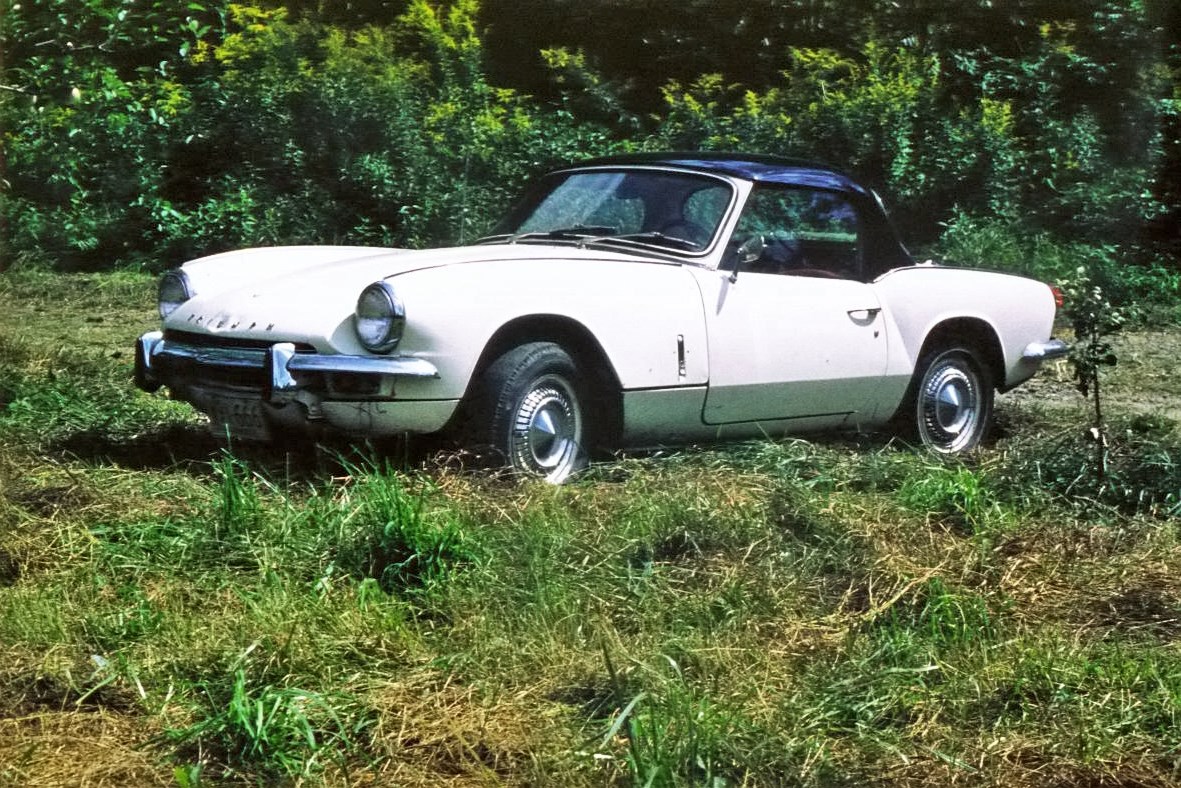
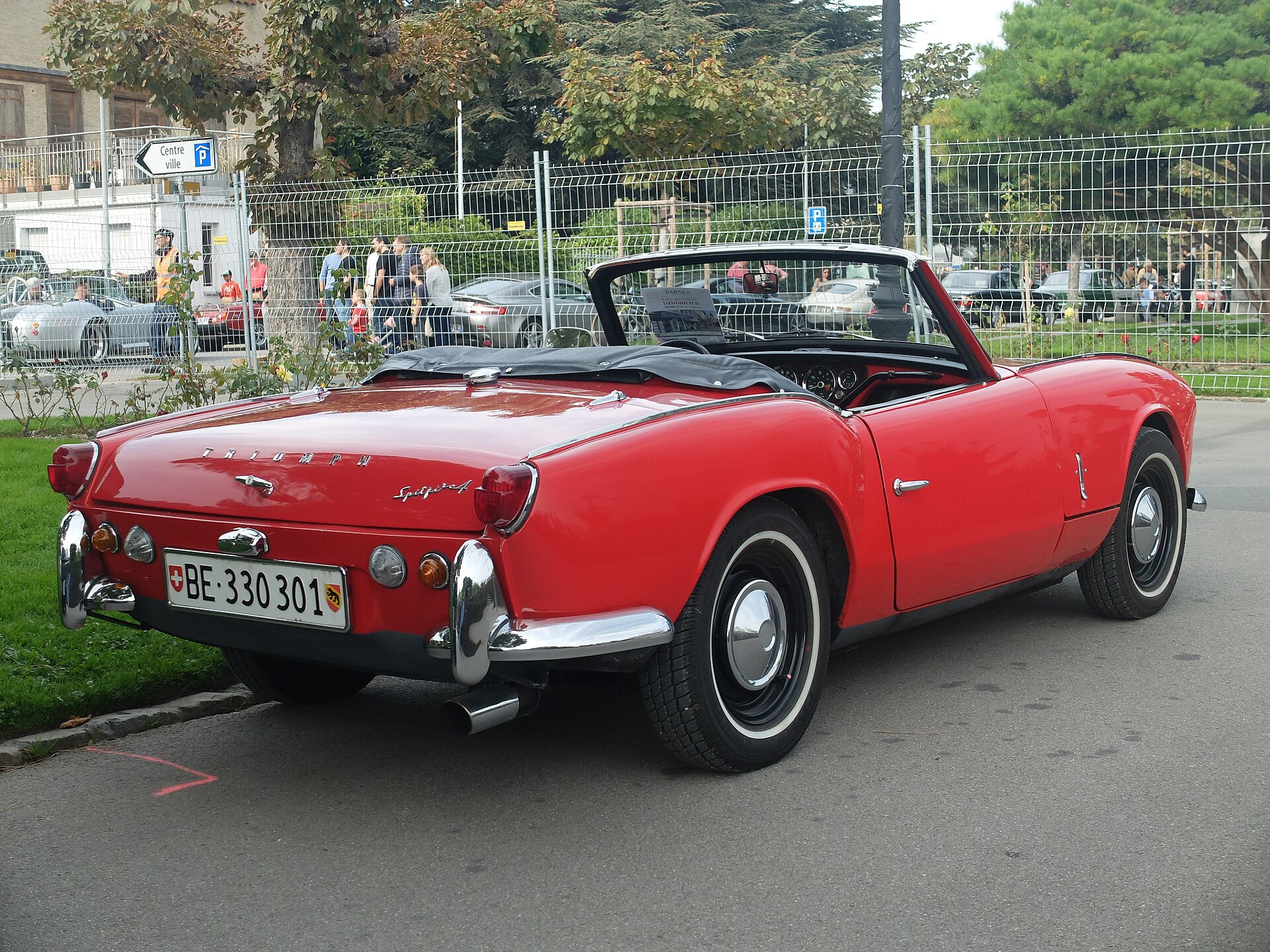
Spitfire 4 (Mk I). The first car had front disc brakes and a rear suspension with a single transverse leaf spring working as a swing axle. Under hard cornering the rear camber could change sharply and cause oversteer.
Mk II. A new camshaft and a tubular exhaust manifold gave 50 kW (67 bhp), and a diaphragm-spring clutch replaced the coil-spring type.
Mk III. The front bumper was raised to meet new crash rules, and the 1,296 cc engine with twin SU carburettors replaced the 1,147 cc unit. Tandem brakes arrived in 1968. US cars had 51 kW (68 bhp) and needed about 14 seconds to reach 60 mph.
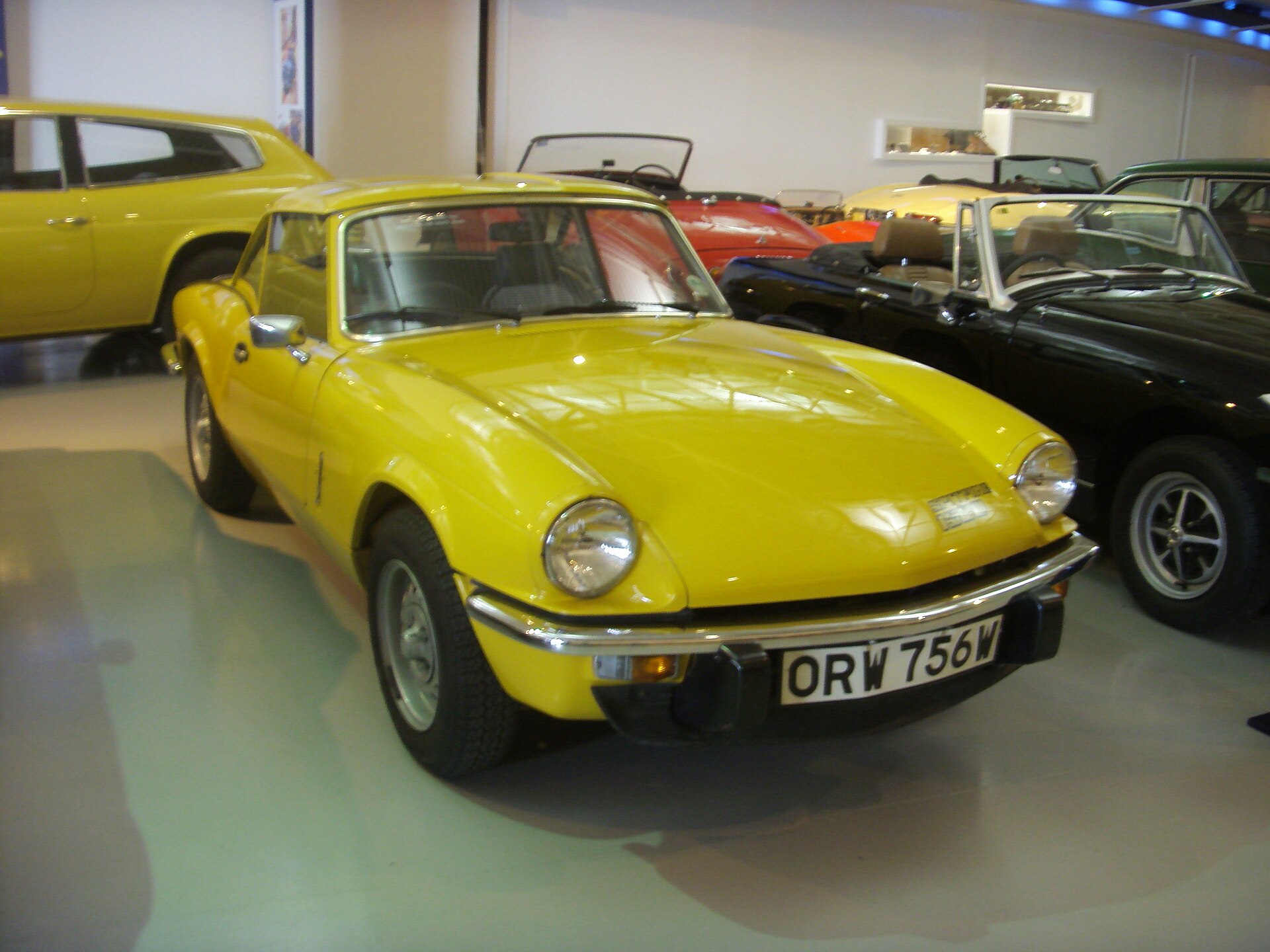
Mk IV. The tail was redesigned in the style of the Triumph Stag and 2000, and the UK engine was rated at 47 kW (63 hp).
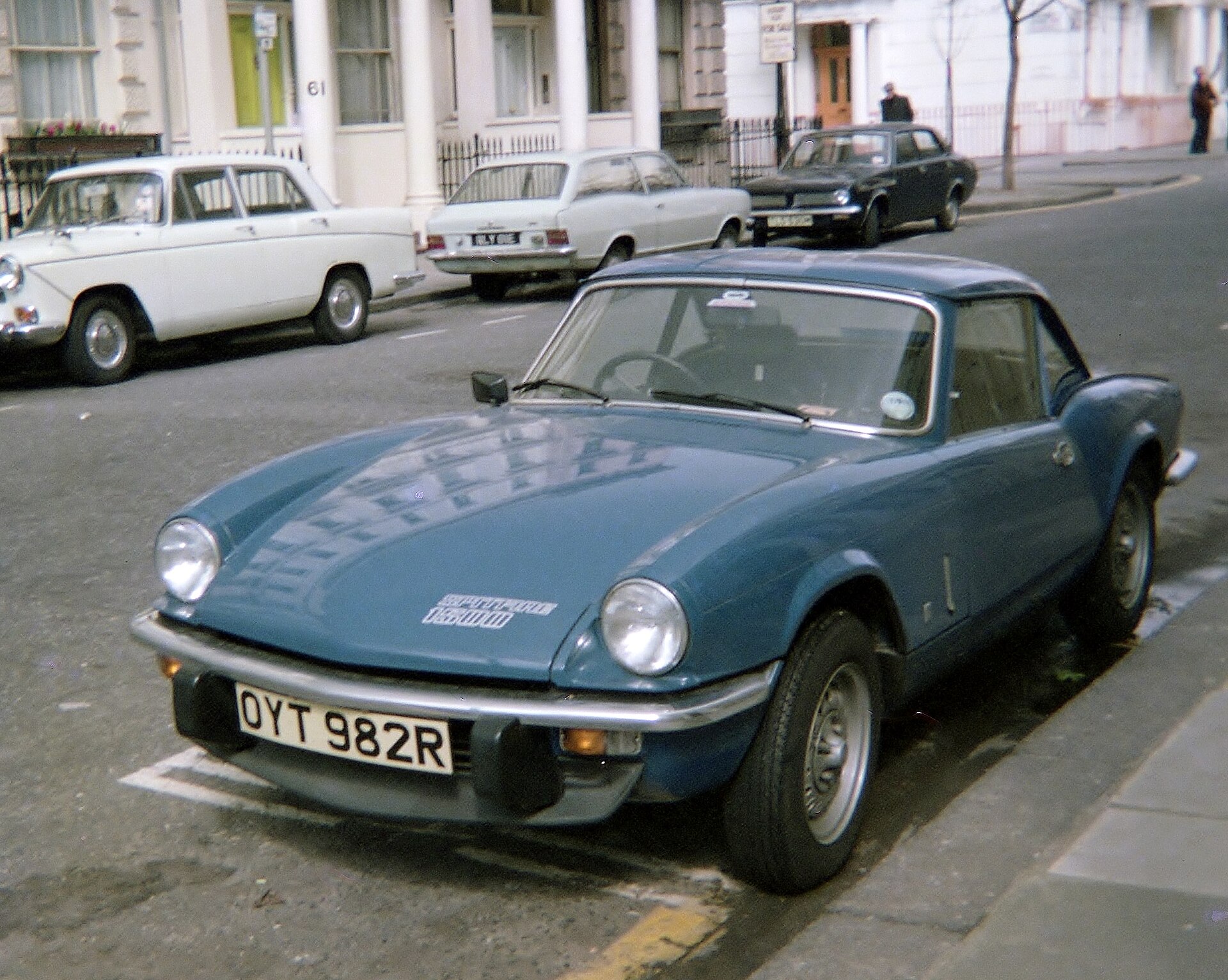
1500. The stroke grew to 87.5 mm, which raised torque, and longer swing axles, a lower spring mounting and a wider rear track improved the handling. In US form, the engine gave only 40 kW (53 bhp), and the 0–60 mph time grew to 16.3 seconds.

The swing axle and the swing spring
The Herald-derived rear end was the weak point of the early cars. Triumph's answer came in 1970, when the rear suspension was "decambered" with a "swing spring". One leaf was removed and the others were left free to pivot, which reduced the swing-axle effects. The six-cylinder GT6 Mk II and Vitesse Mk 2 got a different fix, with new lower wishbones and Rotoflex couplings in the half-shafts. The 1500 went further with its longer axles and wider track. With 53 kW and no more than 798 kg, a UK 1500 has at least 66 kW per tonne; the power-to-weight calculator compares that with modern small sports cars.
Prices and rivals
The Spitfire competed with two rivals from BMC, British Motor Corporation:
| Car and year | UK base price |
|---|---|
| Triumph Spitfire Mk II, 1965 | £550 |
| Austin-Healey Sprite, 1965 | £505 |
| MG Midget, 1965 | £515 |
| Triumph Spitfire Mk IV, end of 1970 | £735 |
| Triumph Spitfire 1500, 1980 model year | £3,631 (US$7,365 in the United States) |
The MG side of that rivalry is covered in the history of MG cars. More than 75 % of all Spitfires were exported, and US-market cars had their own, lower engine ratings.
Competition record
Spitfires won many Sports Car Club of America (SCCA) national championships in the F and G Production classes. In 1964 a Spitfire won its class in the Tour de France rally and finished second overall, and it also won the 1964 Geneva Rally. In 1965 a Spitfire won its class in the Alpine Rally.
The end at Canley and the Spitfire today
The last Spitfire was assembled at Canley in August 1980, shortly before the factory closed. It is an Inca Yellow UK car that was never sold and is now shown at the British Motor Museum. The Triumph name lasted only four more years on cars. The Spitfire's chassis family lives on in the six-cylinder GT6 and the Vitesse, which share its Herald roots.

Photo gallery


Triumph Spitfire in our rankings
- No. 189 of 912 · Longest-running car nameplates (18 years · top 23%)
- No. 86 of 94 · Most powerful cars of the 1960s (47 kW · top 92%)
- No. 72 of 79 · Most powerful convertibles and roadsters (52 kW · top 92%)
- No. 511 of 557 · Biggest engines: cars (1,493 cc · top 92%)
- No. 82 of 88 · Most powerful cars of the 1970s (52 kW · top 94%)
- No. 47 of 49 · Biggest engines: convertibles and roadsters (1,493 cc · top 96%)
In production longer than 77% of ranked nameplates in the 1CARS catalog (No. 189 of 912).
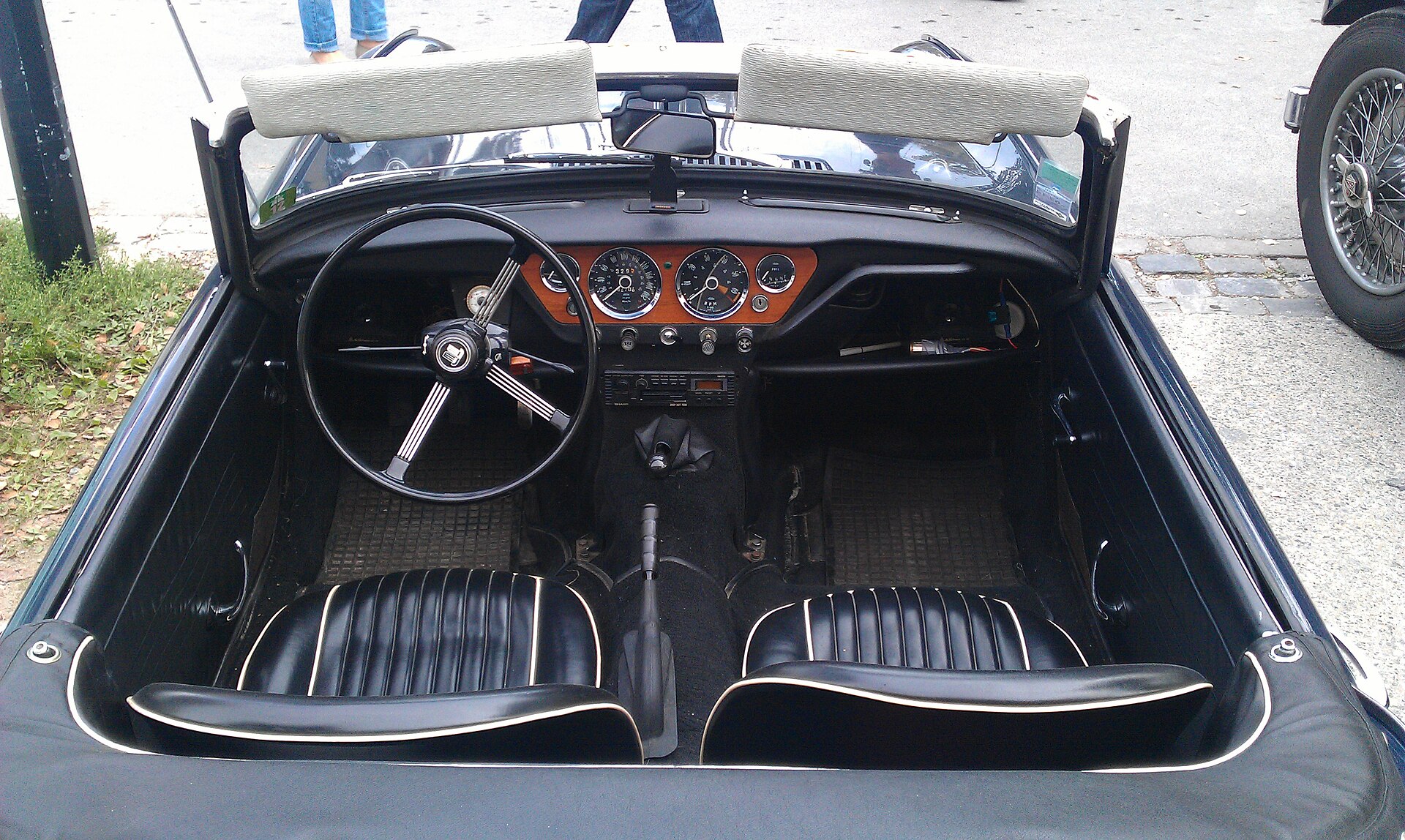
Triumph Spitfire photos 6
FAQ
How many Triumph Spitfires were made?
About 315,000 between 1962 and 1980; the per-version figures in English Wikipedia add up to 314,332.
Who designed the Triumph Spitfire?
Giovanni Michelotti, who had also styled the Triumph Herald on which it is based.
Which Spitfire is the fastest?
The UK-market 1500, with 53 kW (71 hp), a top speed of 100 mph (161 km/h) and 0–60 mph in 13.2 seconds.
What is the swing-spring Spitfire?
From 1970 the rear transverse spring had one leaf removed and the rest free to pivot, which reduced the camber changes of the swing axle.
Where was the Triumph Spitfire built?
At Canley in Coventry, with additional assembly in Belgium, Ireland, South Africa and Australia.
Data sources
Data checked by an editor against the sources below.