
 Triumph Dolomite
Specs, engines and history
Published Sources (2) Report an error
By Felix Hartmann, Automotive Technology & EV Contributor
- Built
- 1972–1980
- Top power
- 95 kW (129 PS)
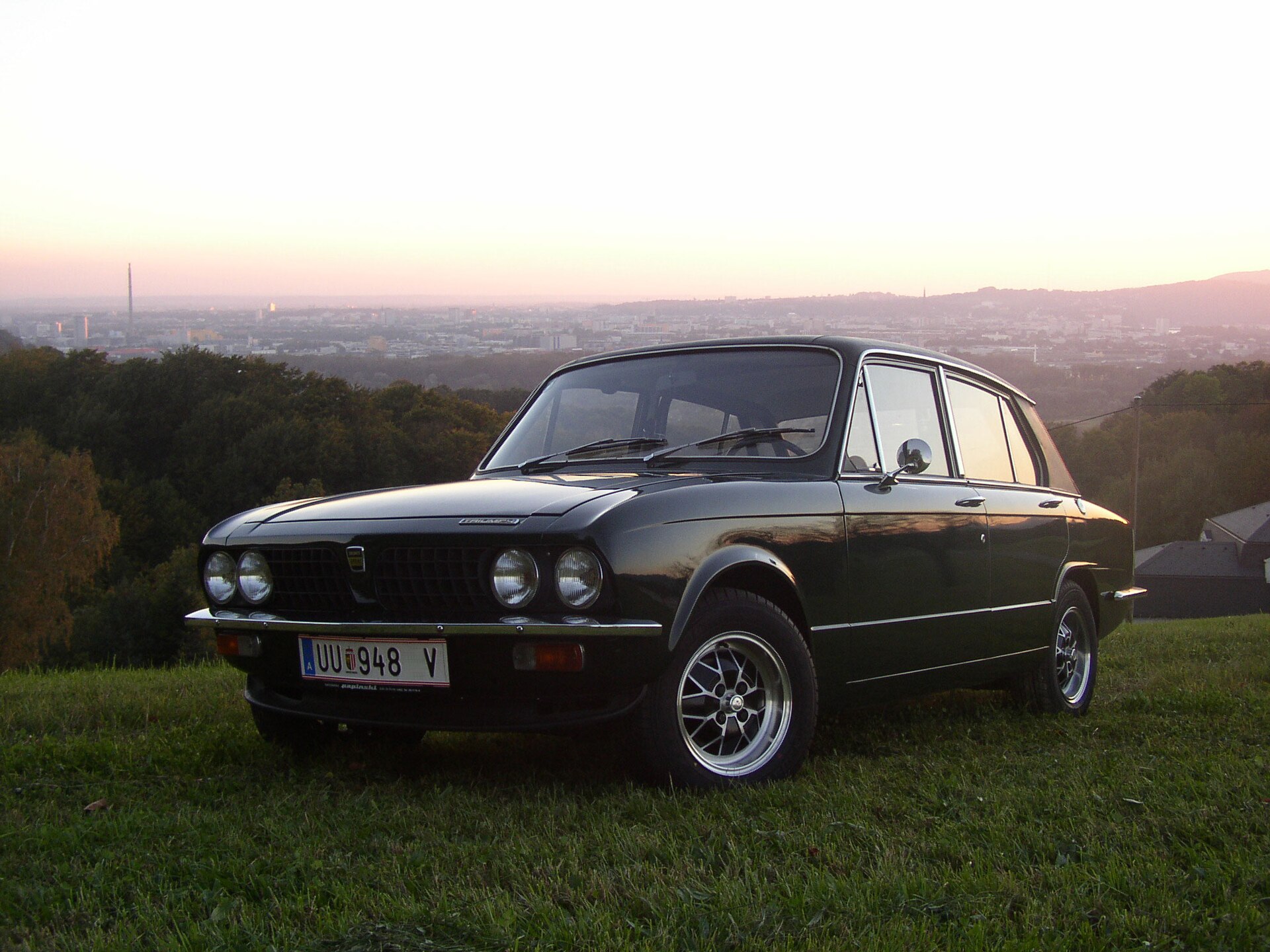
The Triumph Dolomite is the compact rear-wheel-drive saloon that Triumph built at Canley, Coventry, from 1972 to 1980, with four-cylinder engines from 1.3 to 2.0 litres. Its best-known version, the Dolomite Sprint of 1973, used a 16-valve head on a single camshaft and produced 95 kW (127 bhp). In all, 204,003 Dolomite-badged cars were made.
In short
- Shown as the 1850 in October 1971; full production from October 1972 to August 1980.
- 204,003 built: 79,010 1850s, 70,021 1500s, 32,031 1300s and 22,941 Sprints.
- Engines from 44 kW (59 bhp) in the 1300 to 95 kW (127 bhp) and 165 Nm in the Sprint.
- Sprint won the British Saloon Car Championship drivers' title in 1975 with Andy Rouse.
Specs by version
Engines
| Version | Engine | Power | Drive | Production years |
|---|---|---|---|---|
| 1300 (59 bhp) | 1.3 l · 4 cyl · Petrol 1,296 cc | 44 kW 60 PS59 hp | Rear-wheel drive | 1976–1980 |
| 1500 / 1500HL (72 bhp) | 1.5 l · 4 cyl · Petrol 1,493 cc | 54 kW 73 PS72 hp | Rear-wheel drive | 1976–1980 |
| 1850 / 1850HL (91 bhp) | 1.9 l · 4 cyl · Petrol 1,854 cc | 68 kW 92 PS91 hp | Rear-wheel drive | 1972–1980 |
| Sprint 2.0 16V (127 bhp) | 2.0 l · 4 cyl · Petrol 1,998 cc | 95 kW 129 PS127 hp | Rear-wheel drive | 1973–1980 |
Performance
Show all 4 versions
| Version | Top speed |
|---|---|
| 1300 (59 bhp) | 142 km/h88 mph |
| 1500 / 1500HL (72 bhp) | 153 km/h95 mph |
| 1850 / 1850HL (91 bhp) | 161 km/h100 mph |
| Sprint 2.0 16V (127 bhp) | 192 km/h119 mph |
Dimensions and weight
Show all 1 versions
| Version | Kerb weight |
|---|---|
| Sprint 2.0 16V (127 bhp) | 1,041 kg2,295 lb |
Verified Manufacturer and type-approval data from our catalog · Sources and methodology
Triumph Dolomite at a glance
| Item | Triumph Dolomite |
|---|---|
| Years | 1972-1980 (shown October 1971) |
| Production | 204,003 Dolomite-badged cars |
| Plant | Canley, Coventry, England |
| Body style | 4-door saloon |
| Layout | front engine, rear-wheel drive; long body of the front-drive Triumph 1500 |
| Engines | 1,296 and 1,493 cc OHV fours; 1,854 cc OHC slant-four; 1,998 cc 16-valve slant-four |
| Power | 44 kW (59 bhp) to 95 kW (127 bhp) DIN |
| Kerb weight | 1,041 kg (Sprint, Hagerty UK) |
| Top speed | 142 km/h (1300) to 192 km/h (Sprint) |
| 0-97 km/h (60 mph) | 16 s (1300) to 8.4 s (Sprint) |
| Price new | GBP 1,740 for the Sprint in 1973; GBP 2,953-4,896 for the range in 1978 |
| Successor | Triumph Acclaim (1981) |
A rear-drive saloon on the front-drive 1500 body
Triumph had used the Dolomite name before the war, on a range that included the Dolomite Straight Eight of the 1930s, a period covered in our Triumph company history. The 1970s car grew out of two existing models. The front-wheel-drive Triumph 1500 supplied its longer four-door body, and the rear-wheel-drive Toledo supplied most of the running gear.
The first car was the Dolomite 1850, unveiled at the London Motor Show in October 1971. Strikes and other disruption at British Leyland held back full production until October 1972. Classic & Sports Car dates the 1850's introduction to January 1972, so launch dates vary between sources. The 1850 gave 68 kW (91 bhp), reached 161 km/h and needed just over 11 s to 97 km/h. Triumph's other models of the period are in the Triumph catalogue.
The range was tidied up in March 1976, after the Ryder Report on British Leyland. The Toledo and 1500TC disappeared, and the Dolomite name covered everything: the 1300, 1500, 1500HL, 1850HL and Sprint. The 1300 became the base model, with single rectangular headlamps and no overdrive or automatic option. The 1500 had twin carburettors, and the HL models added a rev counter, a voltmeter and walnut door cappings. A 1500SE special edition followed in May 1979.

Sprint: sixteen valves on one camshaft
Spen King's team planned the Sprint engine with help from Harry Mundy and Coventry Climax engineers. Its cylinder head carried four valves per cylinder, all driven by a single overhead camshaft, and the capacity grew to 1,998 cc. The design won a British Design Council award in 1974, and the Sprint is often described as the first mass-produced car with a multi-valve engine. It was planned as the Dolomite 135; the author Matthew Vale explains the new name partly by the switch from SAE to DIN ratings, which turned 101 kW (135 bhp) into 95 kW (127 bhp).
The Sprint was unveiled in June 1973, a year later than planned, at GBP 1,740. The first 2,000 cars were painted Mimosa Yellow and all had alloy wheels. With 95 kW (127 bhp) at 5,700 rpm and 165 Nm at 4,500 rpm it reached 192 km/h (119 mph) and 97 km/h in 8.4 s. Its gearbox came from the TR6, and from March 1976 overdrive was standard. Hagerty UK notes that it had about 13 kW (17 bhp) more than the Ford Escort RS2000, one of its natural rivals; the RS2000 is covered in our Ford Escort history, and the BMW 2002 was the German alternative. Panther used the Dolomite as the basis of the alloy-bodied Rio and Rio Especial, of which 38 were built up to 1977.

Dolomite engines and production by version
| Version | Years | Engine | Power | Top speed | Built |
|---|---|---|---|---|---|
| Dolomite 1300 | 1976-1980 | 1,296 cc OHV four | 44 kW (59 bhp) | 142 km/h | 32,031 |
| Dolomite 1500 / 1500HL | 1976-1980 | 1,493 cc OHV four, twin carburettors | 54 kW (72 bhp) | 153 km/h | 70,021 |
| Dolomite 1850 / 1850HL | 1972-1980 | 1,854 cc OHC slant-four | 68 kW (91 bhp) | 161 km/h | 79,010 |
| Dolomite Sprint | 1973-1980 | 1,998 cc 16-valve slant-four | 95 kW (127 bhp) | 192 km/h | 22,941 |
The 1500 figure includes 2,163 1500SE cars of 1979. Sprint output peaked in its first year at 5,446 cars and fell to 493 in 1980. Classic & Sports Car gives 255,360 for the whole family when the Toledo-based 1500TC is counted.
Group 1 titles and rally wins
The Sprint raced in the British Saloon Car Championship from 1974 to 1978 under Group 1 rules. In 1974 Andy Rouse and Tony Dron took the manufacturers' title for Triumph, finished fifth in the Spa 24 Hours, and Dron was third in the Tourist Trophy at Silverstone. Rouse won the drivers' championship in 1975. Dron won seven of the twelve races in 1977 but lost the title after a tyre failure. In rallying, Brian Culcheth and Johnstone Syer won Group 1 on the 1975 Lombard RAC Rally.
British Leyland closed the Canley plant in August 1980, which ended the Dolomite. In 1981 the Triumph Acclaim took its place, a front-wheel-drive saloon developed with Honda.

Triumph Dolomite today: what to check when buying
Classic & Sports Car advises buying on body first, interior second and mechanicals third. The hardest rust repair is where the windscreen pillar meets the bulkhead and inner wing. Hagerty UK adds wheelarch lips, inner arches, door bottoms, headlamp surrounds, the bonnet, the boot floor and the chassis rails at the front subframe mounts, and suggests feeling under a vinyl roof for hidden corrosion. Genuine Sprints carry the VA prefix on chassis and engine numbers, so check both before paying a Sprint price.
The slant-four combines an aluminium head with a steel block, and overheating warps the head. Correct antifreeze, a working viscous fan, the Sprint radiator and a properly shimmed water pump all matter, and timing-chain rattle needs attention. Rough running on a Sprint often comes from perished carburettor rubber mounts. On the cast-iron 1300 and 1500 engines, check crankshaft end float at the front pulley while someone presses the clutch; too much wear can make the block scrap. Listen for layshaft noise in neutral and weak synchromesh, and confirm that overdrive engages. Nylon cord trim and real wood veneers are hard to replace.
Values vary by version. Classic & Sports Car's March 2023 guide put a good average Sprint at about GBP 10,000 (about EUR 11,500 at about 1.15 EUR per GBP) and a show car at GBP 20,000 (about EUR 23,000), an average 1850 at GBP 6,000 (about EUR 6,900) and an average 1300 or 1500 at GBP 2,500 (about EUR 2,900). The Classic Valuer, with auction results to 28 October 2026, gives a Sprint median of GBP 12,250 (about EUR 14,100) for sales since 2020. More saloons of the decade are in our classic cars section.
Triumph Dolomite in our rankings
- No. 49 of 446 · Lightest cars (1,041 kg · top 11%)
- No. 16 of 84 · Lightest sedans (1,041 kg · top 20%)
- No. 21 of 48 · Fastest cars of the 1970s (192 km/h · top 44%)
- No. 39 of 83 · Power-to-weight: sedans (91 kW/t · top 47%)
- No. 46 of 95 · Fastest sedans (192 km/h · top 49%)
- No. 589 of 1172 · Longest-running car nameplates (8 years · top 54%)
Lighter than 89% of ranked cars in the 1CARS catalog (No. 49 of 446).
FAQ
When was the Triumph Dolomite made?
From October 1972 to August 1980 at Canley, Coventry. The Dolomite 1850 had been shown at the London Motor Show in October 1971, and the Sprint followed in June 1973. The Triumph Acclaim replaced it in 1981.
How many Triumph Dolomites were built?
204,003 Dolomite-badged cars: 79,010 1850s, 70,021 1500s, 32,031 1300s and 22,941 Sprints. Counting the related 1500TC raises the family total to 255,360 according to Classic & Sports Car.
What made the Dolomite Sprint special?
Its 1,998 cc engine had a 16-valve head worked by a single camshaft and produced 95 kW (127 bhp). That gave 192 km/h and 8.4 s to 97 km/h, and the head won a British Design Council award in 1974.
Is a Dolomite Sprint a good classic to buy?
Yes, if the body is sound and the engine has been cooled properly. Rust around the windscreen pillars and a warped head are the costly faults. Auction results since 2020 give a median of GBP 12,250 according to The Classic Valuer.
Data sources
Data checked by an editor against the sources below.
- Wikipedia - Triumph Dolomite
- Carandclassic - Triumph Dolomite Models And Specs


