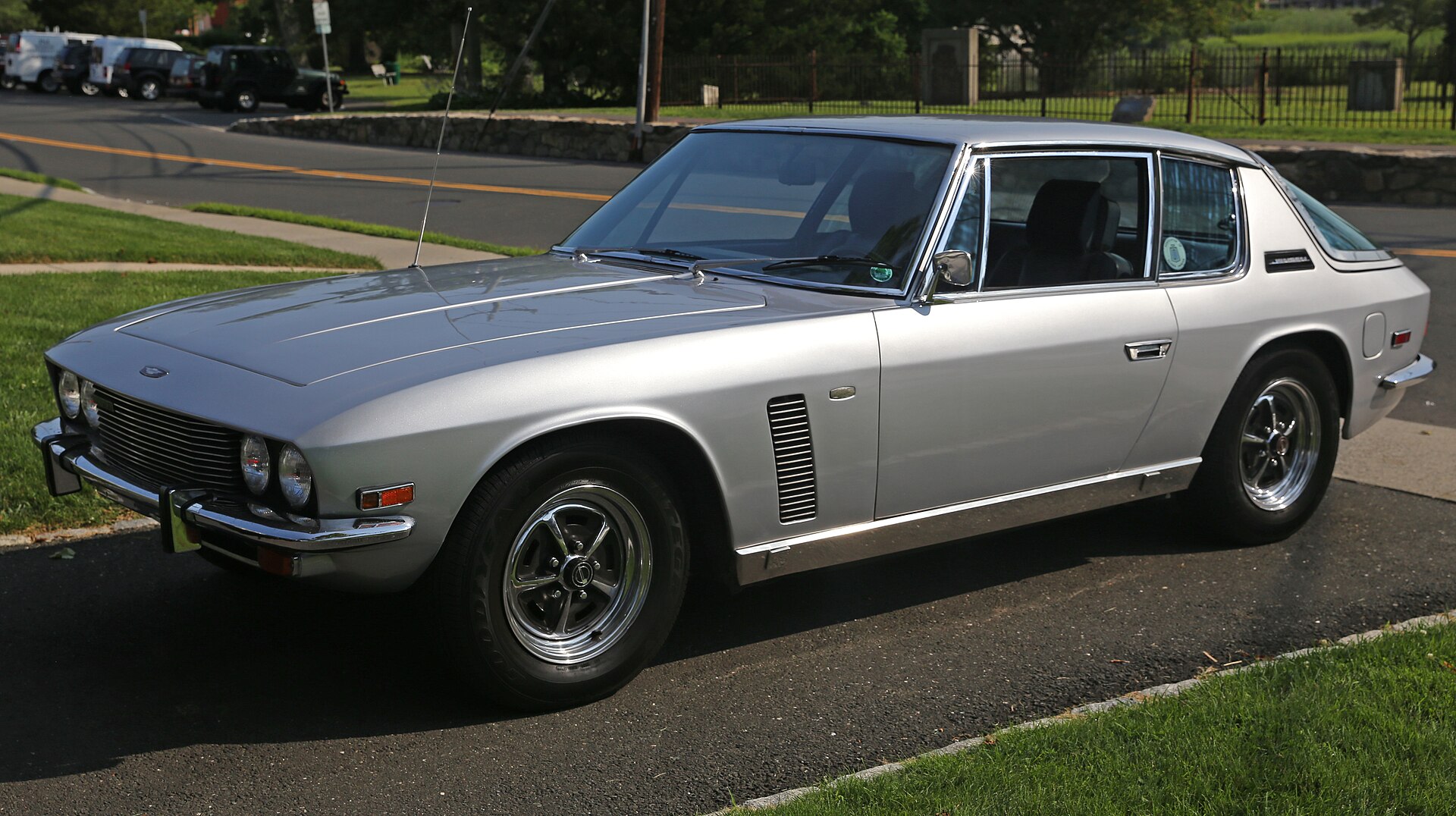
 Jensen Interceptor
Specs, engines and history
Published Sources (1) Report an error
By Felix Hartmann, Automotive Technology & EV Contributor
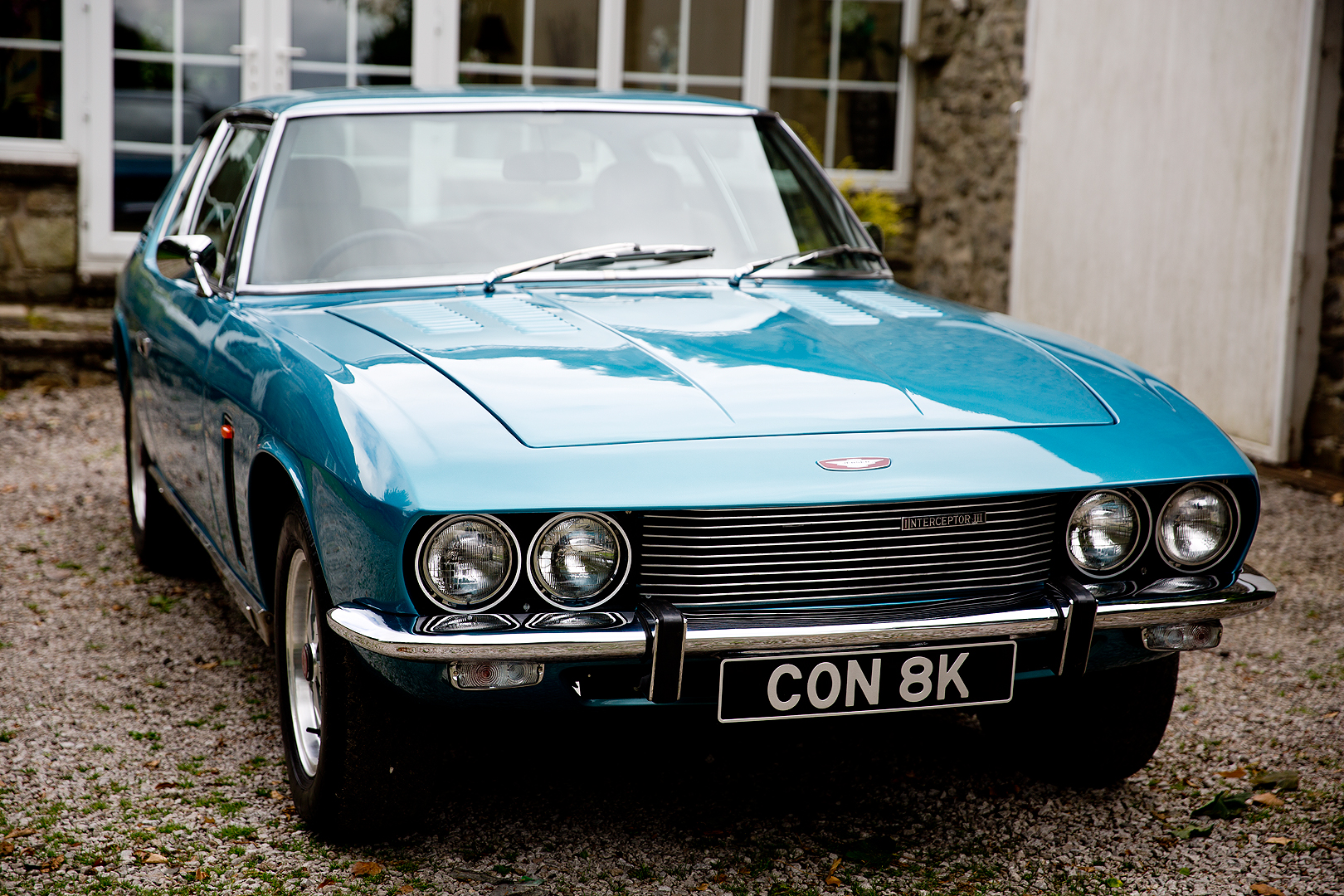
- Built
- 1966–1976
- Top power
- 227 kW (309 PS)
Jensen Motors was a coachbuilder from West Bromwich, near Birmingham, run by the brothers Alan Jensen (1906–1994) and Richard Jensen (1909–1977). The business traces back to W J Smith & Sons, founded in 1922, and took the Jensen Motors name in 1934. Before the Interceptor, Jensen built bodies for the Austin-Healey 100 and later "big Healeys" for BMC, assembled Volvo P1800 bodies from 1960 to 1963 and made its own grand tourers such as the 541 and C-V8. The original company went into receivership in September 1975 and was finally dissolved in 2011.
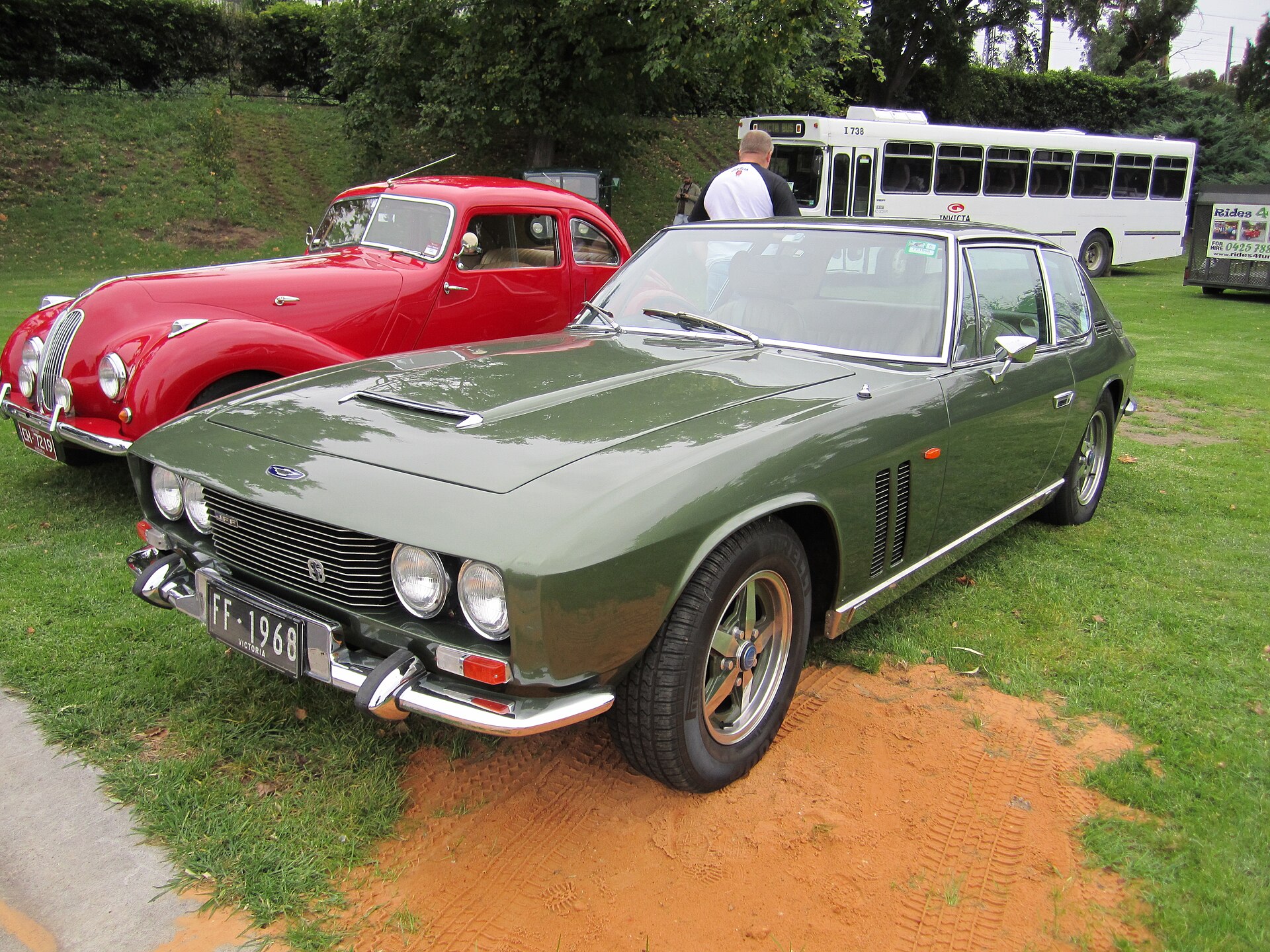
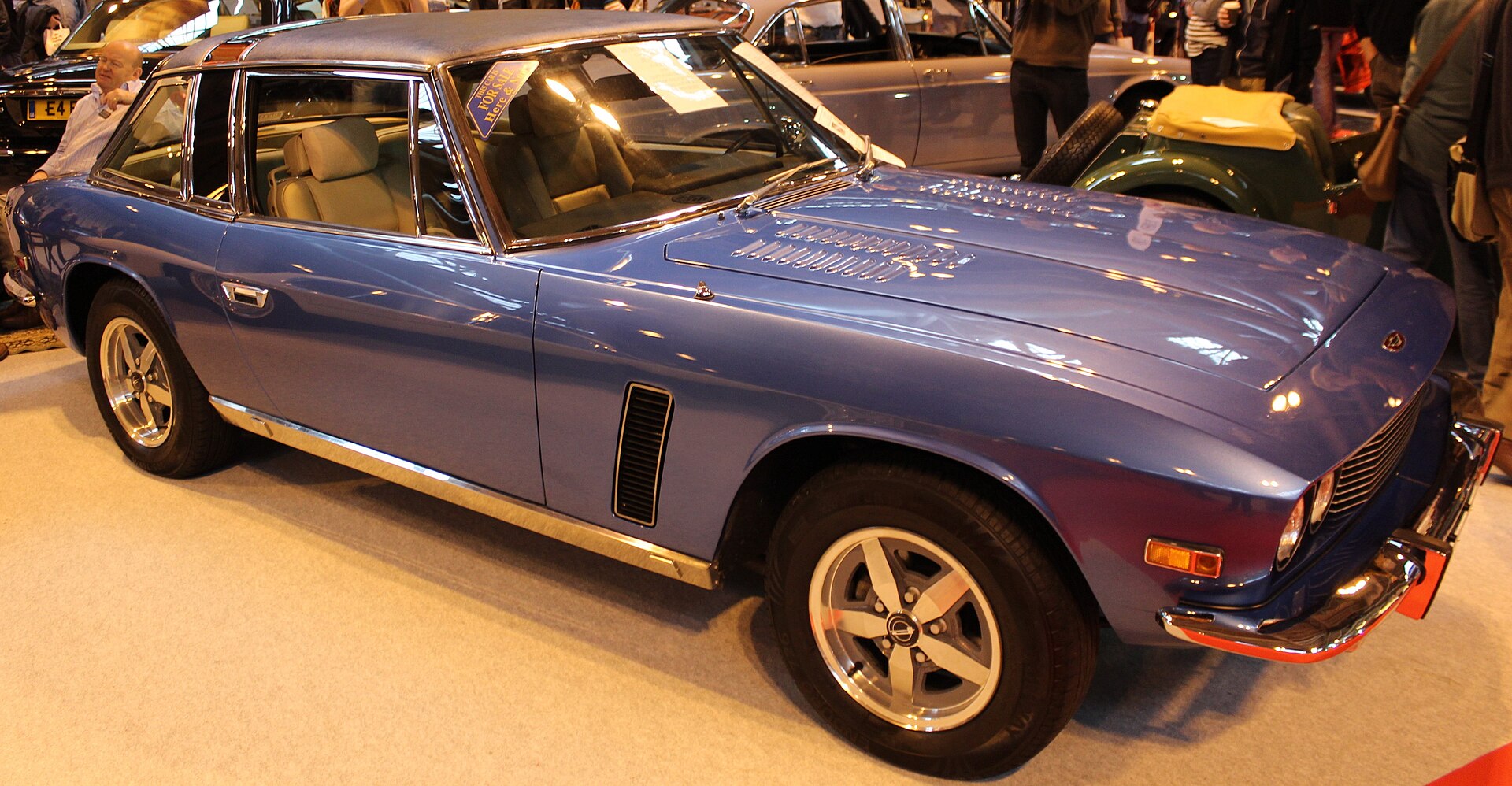
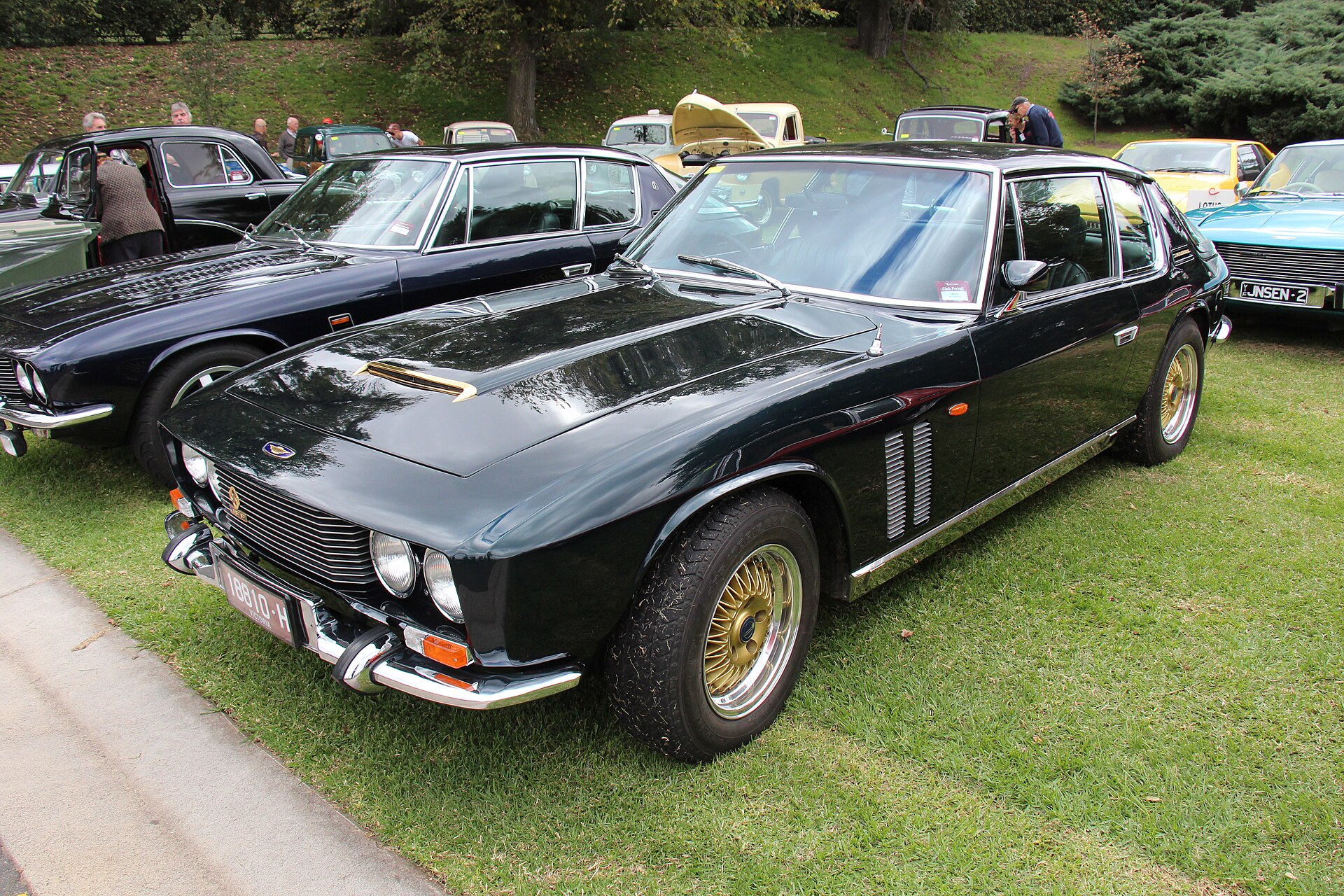
The Interceptor is the Italian-styled grand tourer with American V8 power that Jensen built by hand at its Kelvin Way factory from 1966 to 1976. A total of 6,408 were made. It combined Chrysler engines of 6.3 and 7.2 litres with a steel body designed by Carrozzeria Touring and a long list of standard equipment.
Specs by version
| Version | Engine | Power | Drive | Production years |
|---|---|---|---|---|
| 6.3 V8 (383) | 8 cyl · Petrol | 201 kW 273 PS270 hp | Rear-wheel drive | 1966–1971 |
| 7.2 V8 (440) | 8 cyl · Petrol | 227 kW 309 PS304 hp | Rear-wheel drive | 1971–1976 |
Verified Manufacturer and type-approval data from our catalog · Sources and methodology
In short
- Hand-built in West Bromwich from 1966 to 1976; 6,408 made, in Mark I, II and III form.
- Chrysler V8 engines: 6,276 cc (383 cu in) until 1971, then 7.2 litres (440 cu in), with up to 287 kW (385 bhp) in the 1971 SP.
- Four-speed manual or three-speed TorqueFlite automatic, Salisbury rear axle with a limited-slip differential.
- The related Jensen FF was the first Jensen with four-wheel drive and mechanical anti-lock brakes; 320 were built.
Jensen Interceptor at a glance
| Parameter | Metric | Imperial |
|---|---|---|
| Maker | Jensen Motors, Kelvin Way, West Bromwich | - |
| Production | 1966–1976 | - |
| Built | 6,408 | - |
| Designer | Carrozzeria Touring (Federico Formenti) | - |
| Bodies | fastback coupé; convertible (1974); coupé (1975) | - |
| Engines | Chrysler V8, 6,276 cc (383) and 7.2 l (440) | 383 and 440 cu in |
| Power | 186–287 kW (250–385 hp), by year and version | - |
| Gearbox | 4-speed manual or 3-speed TorqueFlite A727 | - |
| Wheelbase | 2,675 mm | 105.3 in |
| Length × width × height | 4,724 × 1,753 × 1,346 mm | 186 × 69 × 53 in |
| Kerb weight | 1,588 kg | 3,500 lb |
Jensen before the Interceptor
The Jensen brothers started with special bodies. In 1926 they built a boat-tailed body on an Austin Chummy, and from 1929 to 1933 Alan Jensen designed the Standard Avon open two-seaters. A car built in 1934 for Clark Gable on a Ford V8 chassis led to a deal with Ford, and the S-type of the late 1930s followed.
Contract work kept the factory busy after the war. Jensen made aluminium bodies for the Austin A40 Sports, of which more than 4,000 were built between 1951 and 1953, and at the end of 1960 about 350 of its 850 workers were building Austin-Healey bodies. In 1959 Norcros Limited bought the company. The Interceptor name was first used on a Jensen grand tourer made from 1950 to 1957; the 1966 car revived it.
| Year | Event |
|---|---|
| 1922 | W J Smith & Sons founded, later the base of Jensen |
| 1934 | Jensen Motors Limited |
| 1950–1957 | first Jensen Interceptor |
| 1962–1966 | Jensen C-V8, the glass-fibre predecessor |
| 1966 | new steel-bodied Interceptor and the FF |
| October 1969 | Mark II announced |
| 1971 | Mark III, 440 engine and the SP |
| 1972 | Jensen-Healey sports car |
| 1974 | Interceptor convertible |
| 1975 | Interceptor coupé; receivership in September |
| 1976 | Interceptor production ends |
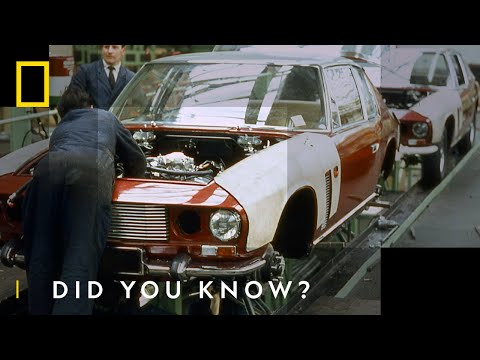
An Italian body on a British chassis
Jensen gave the styling to an outside firm, Carrozzeria Touring of Italy, rather than its own staff. The design returned Jensen to a steel body after two decades of glass-reinforced plastic panels. The first bodies were built by Vignale in Italy; Jensen then moved body production to West Bromwich and made some small changes to the shape. The fastback's large rear window is its best-known feature; the 1975 coupé, derived from the convertible, did without it.
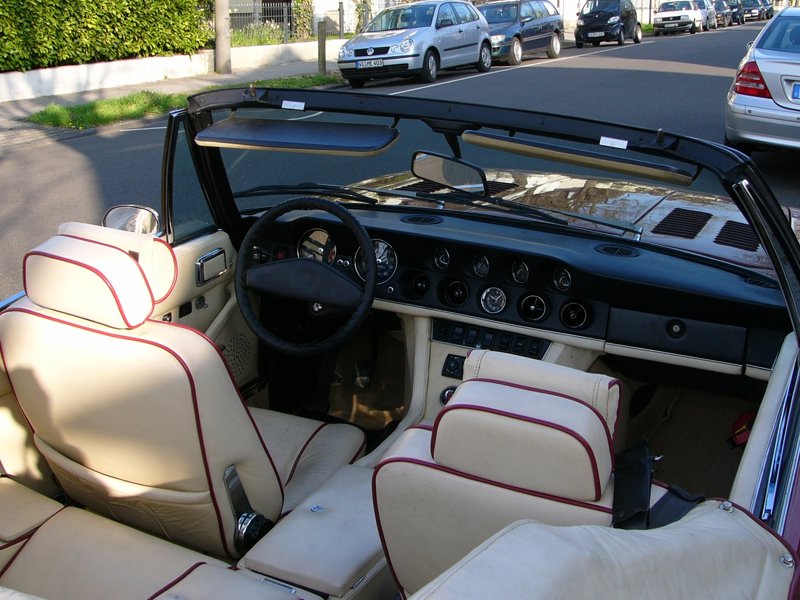
Inside, the Mark I already had electric windows, reclining front seats, a wood-rimmed steering wheel, a twin-speaker radio, reversing lights and an electric clock. Power steering became standard in September 1968.

Chrysler V8 power
The engines came from Chrysler in the United States. From 1966 to 1971 the Interceptor used the 383 cu in (6,276 cc) V8; in its 1970 form it was rated at 250 kW (335 hp SAE gross), or 201 kW (270 hp SAE net). For 1971 it was detuned to 186 kW (250 hp SAE net) to run on low-octane fuel. Only 22 Mark I cars were built with the manual gearbox; nearly all had the TorqueFlite A727 automatic.
The 440 cu in (7.2-litre) V8 replaced it in 1971:
| Engine | Years | Power (SAE net) | Notes |
|---|---|---|---|
| 383 (6.3 l), 1970 | 1966–1971 | 201 kW (270 hp) | 250 kW (335 hp) SAE gross |
| 383, detuned | 1971 | 186 kW (250 hp) | for low-octane fuel |
| 440 (7.2 l), four-barrel | from 1971 | 227 kW (305 hp) | - |
| 440 Six Pack, three twin-choke carburettors | 1971 | 246 kW (330 hp) | dropped in 1972 |
| 440, detuned | from 1972 | 209 kW (280 hp) | - |
| 440 high-performance | 1976 | 190 kW (255 hp) | - |
Drive went to the rear wheels through a Salisbury axle with a limited-slip differential.

Mark I, Mark II and Mark III
Mark I (1966). The original car, with the equipment list above.
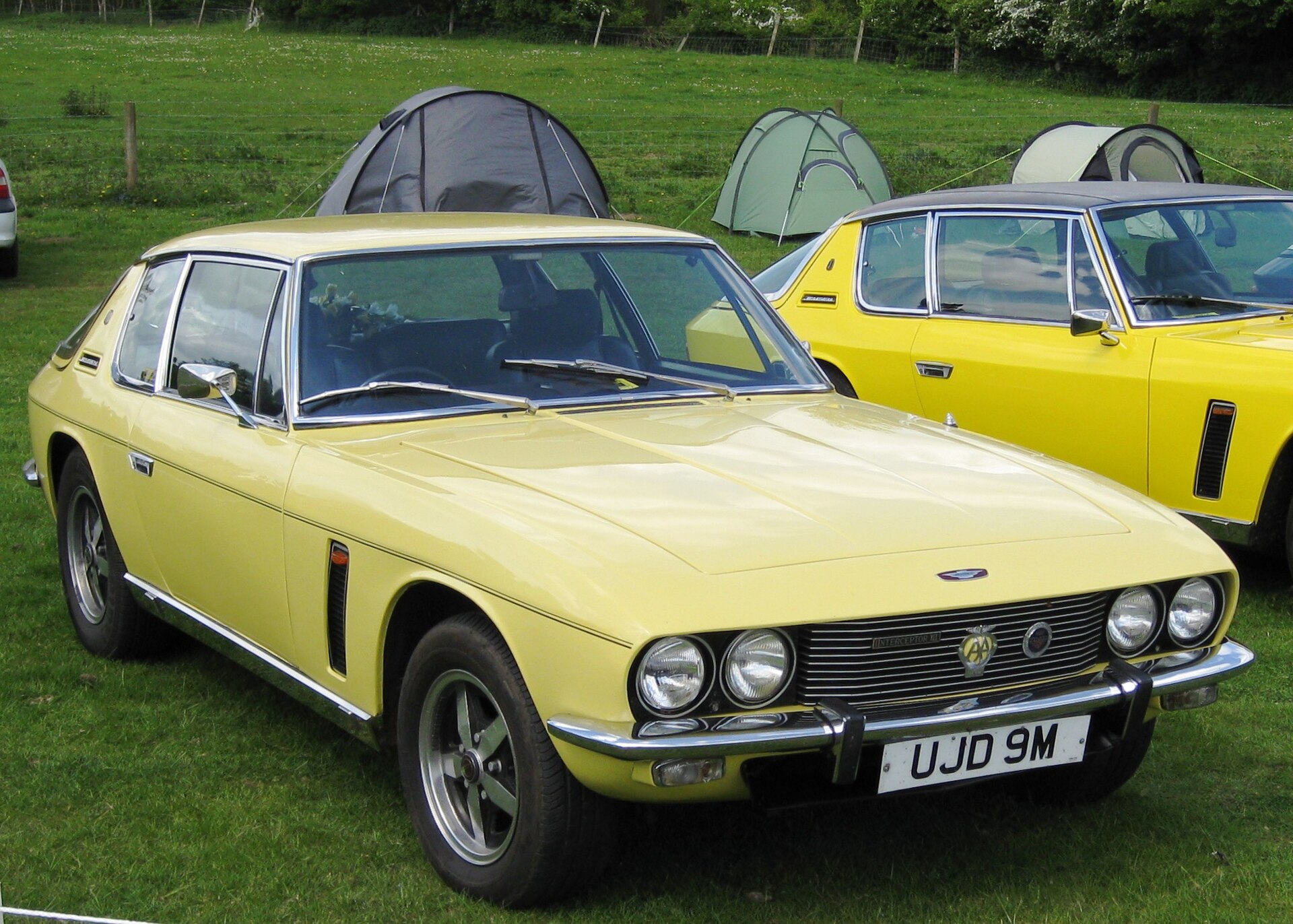
Mark II (October 1969). New headlamps, grille, bumper and rear lights, and a substantially revised interior to meet US regulations. Air conditioning became an option.
Mark III (1971). Revised grille, headlamp finishers and bumper, GKN alloy wheels and air conditioning as standard, and new seats. It was built in G, H and J series, and it brought the switch from the 383 to the 440.
FF, SP and the open Interceptor
| Variant | Years | Body / purpose | Engine | Built |
|---|---|---|---|---|
| Jensen FF | 1966–1971 | four-wheel-drive coupé, 127 mm longer | 383 V8 | 320 (195 Mk I, 110 Mk II, 15 Mk III) |
| Interceptor SP | 1971–1973 | high-performance coupé | 440 Six Pack, 287 kW (385 bhp) | 232 (219 RHD, 13 LHD) |
| Interceptor convertible | from 1974 | soft top, mainly for the US | 440 V8 | 267 |
| Interceptor coupé | 1975 | notchback coupé from the convertible | 440 V8 | 60 |
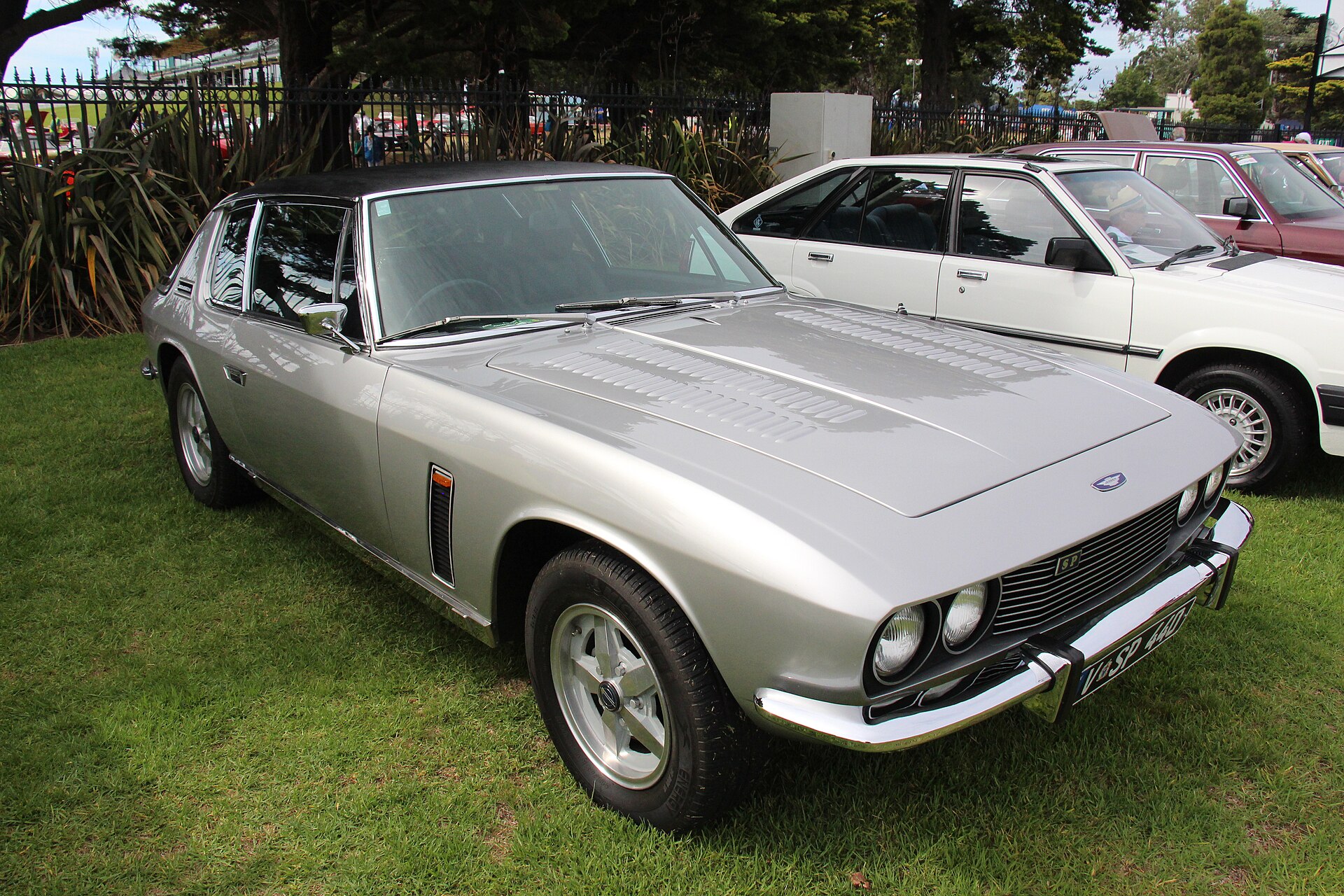
The FF used Ferguson Formula four-wheel drive with Dunlop Maxaret mechanical anti-lock brakes and traction control. The SP was Jensen's most powerful car: 287 kW (385 bhp) from the Six Pack 440, a top speed of 237 km/h (147 mph), a vinyl roof, a Learjet 8-track player and a louvred bonnet. Owners reported 16–18 mpg; the fuel cost calculator shows what that means over a year of driving today. The convertible had a powered hood, and the coupé of 1975 was built from it, so it lacked the fastback's distinctive rear window.

Receivership and the revivals
By 1975 Jensen was struggling with the world recession and with problems on the Jensen-Healey. In 1970 the American distributor Kjell Qvale had become majority shareholder, and in September 1975 Bank of America appointed a receiver; about 700 workers faced redundancy. The receivers kept the line running until parts ran out, and Interceptor production ended in 1976. The empty factory was auctioned in August 1976.
The name came back several times. In 1982 Ian Orford bought the brand rights and restarted the Interceptor as the Mk IV. This Series 4 (S4) was hand-built with a 5.9-litre (360 cu in) small-block V8 of about 186 kW (250 bhp); a new owner from 1990 built about 36 more before receivers were called again in 1993 and the company was liquidated. Jensen International Automotive, formed in Banbury in 2010 with backing from Charles Dunstone, rebuilds original cars with GM LS 6.2-litre engines and six-speed gearboxes and began the Interceptor R in 2011.
The car's Chrysler connection is covered in the history of Chrysler Corporation.
Owners, screen roles and collecting
Owners included Frank Sinatra, Cher, Lynda Carter and Winthrop Paul Rockefeller. On television, Robert Vaughn's character Harry Rule drove one in The Protectors, Simon Dutton had a 1975 Mark III in the 1980s series The Saint, and the detective in The Inspector Lynley Mysteries (2001–2008) drives a Mark II.
For collectors, the version decides the value:
- Rarity: the FF (320 built), the SP (232), the convertible (267) and the 1975 coupé (60) are far scarcer than the standard car.
- Engine: the 383 cars and the four-barrel 440 cars differ in power and fuel use; check which one is fitted, since many have been re-engined.
- Restorations: some cars have modern GM engines from specialist rebuilds, which changes their character and originality.
More grand tourers of the decade are in the 1960s classics section.
Photo gallery


Jensen Interceptor in our rankings
- No. 34 of 88 · Most powerful cars of the 1970s (227 kW · top 39%)
- No. 355 of 912 · Longest-running car nameplates (10 years · top 43%)
- No. 413 of 859 · Most powerful cars (227 kW · top 49%)
- No. 56 of 94 · Most powerful cars of the 1960s (201 kW · top 60%)
- No. 71 of 109 · Most powerful British cars (227 kW · top 66%)
- No. 117 of 154 · Most powerful V8 cars (227 kW · top 76%)
More powerful than 61% of ranked cars of the 1970s in the 1CARS catalog (No. 34 of 88).
Jensen Interceptor photos 6
FAQ
How many Jensen Interceptors were built?
6,408 between 1966 and 1976, not counting the 320 four-wheel-drive Jensen FFs.
What engine is in a Jensen Interceptor?
A Chrysler V8: the 383 cu in (6,276 cc) unit until 1971, then the 440 cu in (7.2-litre) unit.
Who designed the Jensen Interceptor?
Carrozzeria Touring of Italy; the first bodies were built by Vignale before production moved to West Bromwich.
What is the fastest Jensen Interceptor?
The SP of 1971, with the Six Pack 440 rated at 287 kW (385 bhp) and a top speed of 237 km/h (147 mph).
What is the difference between the Jensen FF and the Interceptor?
The FF has Ferguson Formula four-wheel drive and Dunlop Maxaret anti-lock brakes, and it is 127 mm longer.
Data sources
Data checked by an editor against the sources below.