
 Lada 112
Specs, engines and history
Updated Published Sources (3) Report an error
By Oleksandr Hnatiuk, Automotive Editor & Used Car Specialist Reviewed by Felix Hartmann
- Built
- 1999–2008
- Top power
- 69 kW (94 PS)
Buying a Lada 112 today: verdict
Our verdict · Oleksandr Hnatiuk
The 112 suits a buyer who wants a cheap, simple and easily repaired hatchback with a practical boot, and who accepts its age. Parts are cheap and widely available in the countries where these cars were sold, and almost any workshop can service them. The best choice is a 16-valve car from the later years, with a documented timing-belt change.
Check carefully for rust on the sills and floor: parts of the body were galvanised, but cars without extra anti-corrosion treatment rust through, especially at the sills. The radiator sits behind the bumper intakes without a guard and can be holed by stones. Expect a noisy cabin, creaking plastics and modest safety. More models of the brand are in the Lada catalogue and in the history of AvtoVAZ.
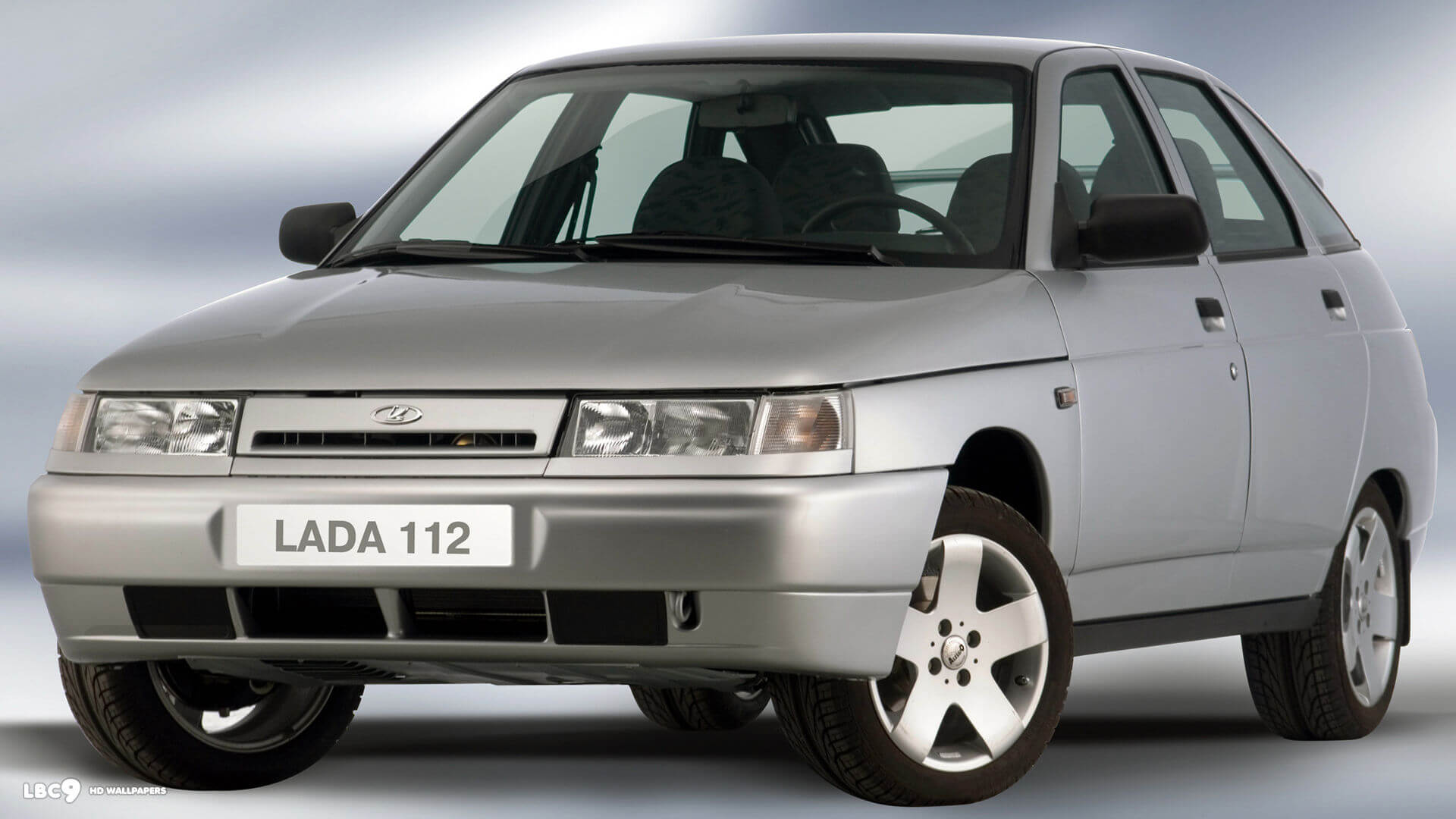
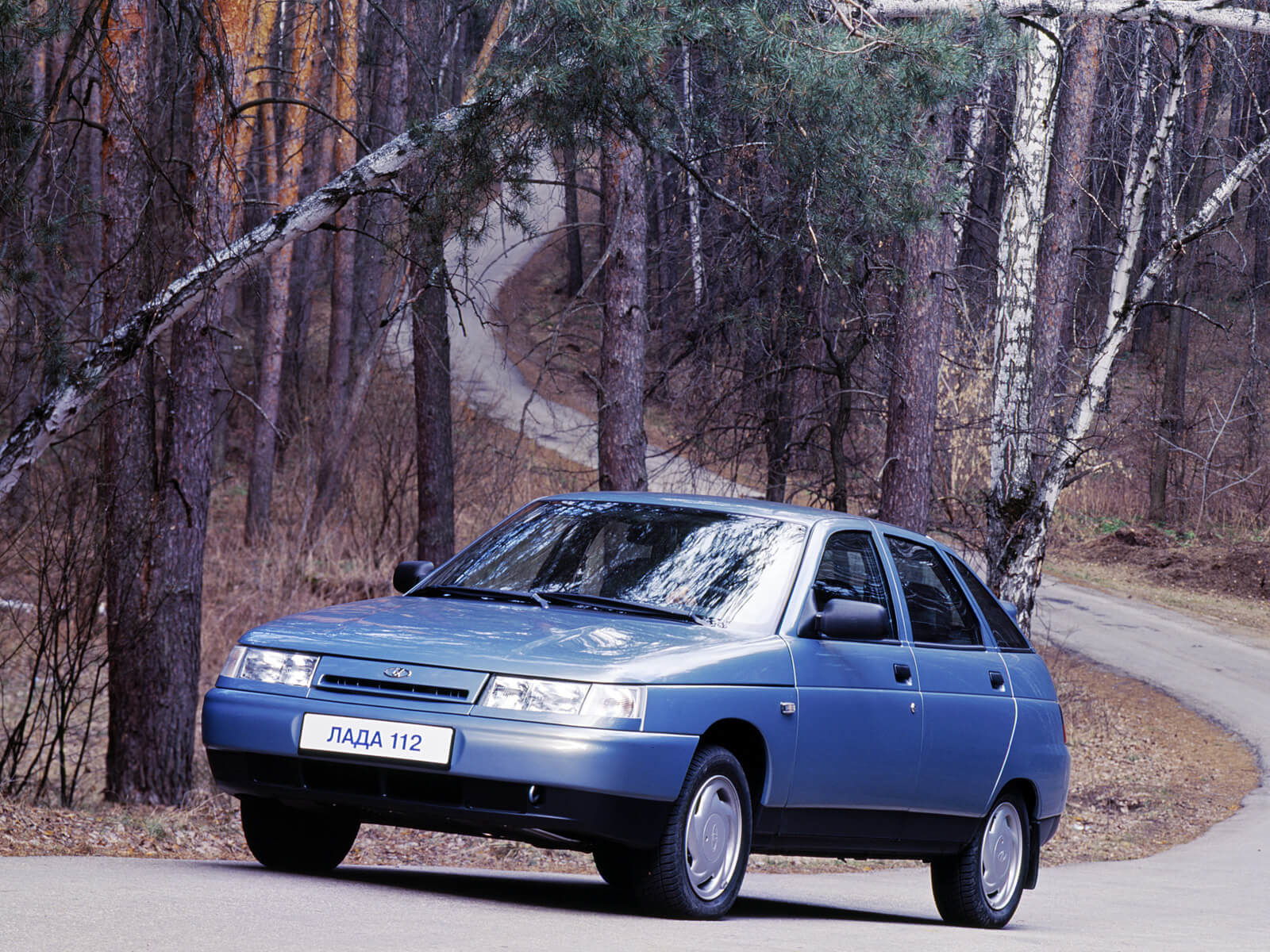
The Lada 112, factory code VAZ-2112, is the five-door hatchback version of the Lada 110 family, built by AvtoVAZ from 1999 until about 2008. It shares the saloon's 2,492 mm wheelbase but is 93 mm shorter, and it used 1.5 and 1.6-litre petrol engines with 8 or 16 valves, from 52 kW (70 hp) to 69 kW (94 hp), always with a five-speed manual gearbox.
In short
- Third body style of the Lada 110 family after the 110 saloon (1995) and 111 estate (1998); replaced by the Lada Priora hatchback.
- Engines: 1.5 and 1.6-litre inline-fours, 8 or 16 valves; the 16-valve versions give 67–69 kW (90–94 hp).
- 0–100 km/h in 12–14 seconds and a top speed of up to about 185 km/h, depending on engine.
- Boot of roughly 370–400 litres, 730 litres with the split rear seat folded; also built as the three-door 112 Coupé.

Specs by version
Engines
Performance
Show all 1 versions
| Version | 0–100 km/h | Top speed | Fuel consumption |
|---|---|---|---|
| 54 kW (73 PS) Hatchback | 14.0 s 0–62 mph | 185 km/h115 mph | 8.0 l/100 km29.4 mpg US · 35.3 mpg UK |
Verified Manufacturer and type-approval data from our catalog · Sources and methodology
Lada 112 at a glance
The 110 family was the first all-new Lada of the 1990s, a front-wheel-drive car a size above the Samara. The saloon arrived first, followed by the estate and then the hatchback, which AvtoVAZ positioned as the sportier version. Its long, tapering tail with a spoiler on the tailgate gives it a different look from the saloon, although the front end, doors and interior are shared.
| Fact | Value |
|---|---|
| Maker | AvtoVAZ (Lada) |
| Code | VAZ-2112; three-door coupé VAZ-21123 |
| Production | 1999 to about 2008 |
| Body | Five-door hatchback |
| Layout | Front engine, front-wheel drive |
| Engines | 1.5 l and 1.6 l petrol, 8V or 16V |
| Power | 52–69 kW (70–94 hp) |
| Gearbox | 5-speed manual |
| Successor | Lada Priora hatchback |
How the 110 family and the 112 hatchback came about
Work on a larger car based on the Samara platform began in the early 1980s. According to the old 1cars text, the design was started in 1983 and split in 1984 from a simpler project that later became the VAZ-21099 saloon. A prototype series was ready in 1987, and AvtoVAZ and Porsche engineers optimised its aerodynamics in Zuffenhausen. The car was shown in 1991, but an economic crisis delayed production until 27 June 1995, when the VAZ-2110 saloon went into series.

The 111 estate arrived in 1998 and the 112 hatchback in 1999. In 2007 AvtoVAZ launched the Lada Priora, a modernised 110, and the 112 was phased out once the Priora hatchback appeared in 2008. The 110 family was also assembled under licence outside the home plant, including in Ukraine, Egypt and Romania, where a version was sold as the Lada LUX 112 Europa.
1.5 and 1.6 engines: 8 or 16 valves
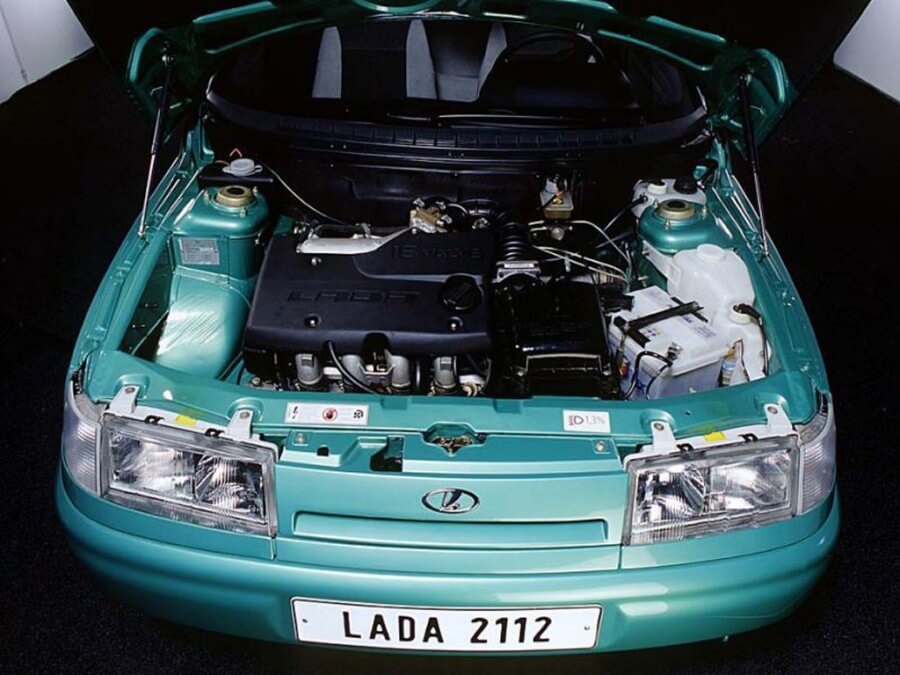
The first 112s used the same engines as the saloon. The old 1cars text mentions an early 1.5-litre carburettor engine with 54 kW (73 hp) and 109 Nm, soon replaced by fuel-injected engines. The main engine of the 112 was the 16-valve 1.5, later a 16-valve 1.6, with twin overhead camshafts and hydraulic tappets. Eight-valve versions served as the cheaper option.

| Version | Displacement | Power | Torque | 0–100 km/h |
|---|---|---|---|---|
| 1.5 8V | 1,499 cc | 52 kW (70 hp) | about 104 Nm | about 14 s |
| 1.6 8V | 1,596 cc | 60 kW (81 hp) | – | about 14 s |
| 1.6 16V | 1,596 cc | 67 kW (90 hp) | about 131 Nm | about 12.5 s |
| 1.5 16V | 1,499 cc | 69 kW (94 hp) | – | about 12 s |
These are the figures listed for the European versions sold from 2000 to 2007. Fuel consumption for all four is quoted at 7.3–7.7 l/100 km in the combined cycle, with CO₂ emissions of 180–186 g/km. The fuel cost calculator converts these figures into running costs. Top speed is quoted at up to about 185 km/h for the 16-valve cars.
The 16-valve engines are noticeably livelier above 3,000 rpm and, according to the old 1cars text, use slightly less fuel than the 8-valve units. They have one important weakness: the camshafts are driven by a toothed belt, and if the belt breaks the valves hit the pistons. Changing the belt and tensioner on time is essential.
MacPherson front, torsion beam rear
All 112s have front-wheel drive and a five-speed manual gearbox. The suspension follows the Samara pattern: MacPherson struts at the front and a semi-independent torsion beam at the rear. Steering is rack and pinion, with hydraulic power assistance on better-equipped cars. The brakes are discs at the front and drums at the rear. Eight-valve cars ran on 13-inch wheels and 16-valve cars on 14-inch wheels.

Size of the hatchback and its 730-litre load space
| Parameter | Metric | Imperial |
|---|---|---|
| Length | 4,170 mm | 164.2 in |
| Width | 1,680–1,700 mm (sources differ) | 66.1–66.9 in |
| Height | 1,420–1,435 mm | 55.9–56.5 in |
| Wheelbase | 2,492 mm | 98.1 in |
| Kerb weight | about 1,040 kg and up, by version | about 2,293 lb |
| Fuel tank | 43 l | 9.5 UK gal |
| Boot | about 370–400 l; 730 l with seats folded | 13–14 / 25.8 cu ft |
The boot is average for a compact hatchback of its time; the biggest-boot hatchbacks ranking shows how it compares with newer cars. The rear seat back is split in a 2:1 ratio, and a full-size spare wheel sits under the boot floor. The loading lip is low, which the old 1cars text counts as an advantage over the older Samara hatchbacks.

Lada 112 compared with the 110 saloon and 111 estate
| Model | Body | Introduced | Boot | Length difference |
|---|---|---|---|---|
| Lada 110 (VAZ-2110) | Four-door saloon | 1995 | – | Reference |
| Lada 111 (VAZ-2111) | Five-door estate | 1998 | 490 l, 1,420 l folded | Longer rear overhang |
| Lada 112 (VAZ-2112) | Five-door hatchback | 1999 | about 370–400 l, 730 l folded | 93 mm shorter than the saloon |
| Lada 112 Coupé (VAZ-21123) | Three-door hatchback | early 2000s | similar to 112 | Doors about 200 mm longer |
The three-door coupé was built in small numbers at an AvtoVAZ subsidiary, with longer doors and wider wheel arches, and was dropped in 2008. Among other Ladas, the VAZ-2114 was the cheaper, simpler choice of the same era, while the Lada Kalina hatchback is about 320 mm shorter than the 112. The Lada Granta versus VAZ-2110 comparison shows how the family's successors moved on.

Cabin layout and trip computer
Inside, the 112 is almost identical to the 110 saloon. The dashboard has a central display that shows which door is open, the steering wheel is adjustable for angle, and the front seat belts adjust for height. The upholstery on the seats and door cards was colour-matched to the body. The glovebox holds A4 documents. Better-equipped versions had a trip computer showing current and average consumption and remaining range, and could be ordered with power steering and electric windows.
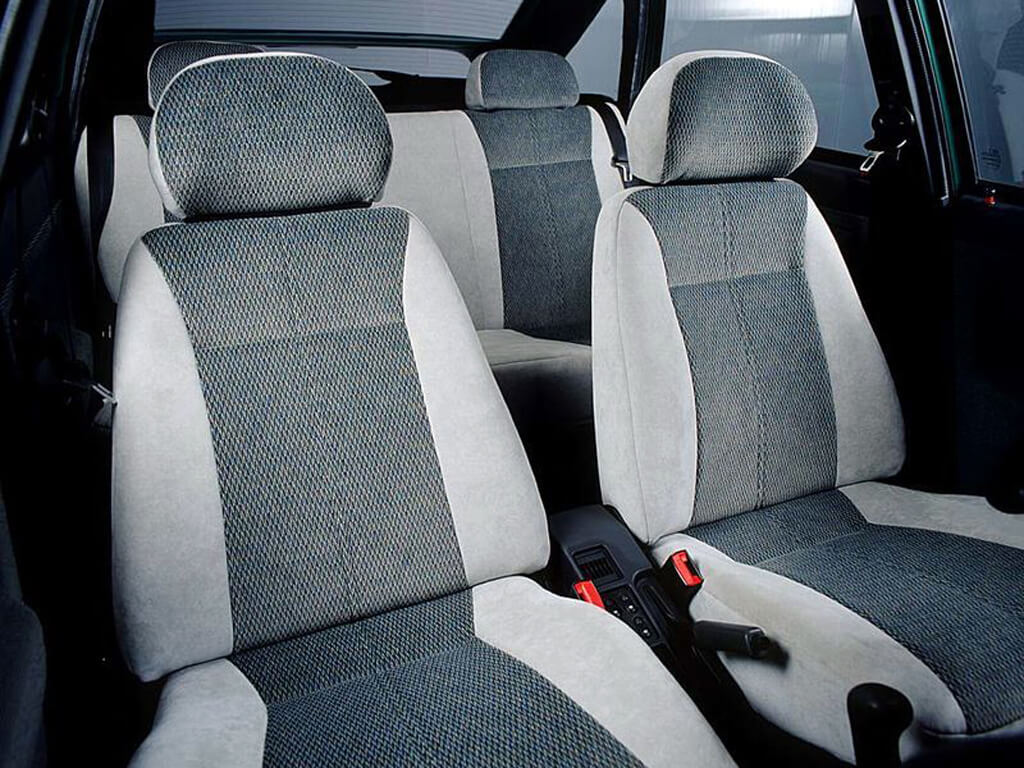
The old 1cars text points out two drawbacks. The pedals sit close together because the gearbox tunnel is wider, so the throttle and brake can be pressed together by mistake. The tailgate spoiler also limits rear visibility. Hard plastics creak, and rear legroom is tight for tall passengers.
Crash protection by today's standards
The Lada 112 was never tested by Euro NCAP. Cars of this family were commonly built without airbags, and the body design dates from the late 1980s, so passive safety is well below modern standards.
Lada 112 in our rankings
- No. 494 of 1115 · Longest-running car nameplates (9 years · top 49%)
- No. 163 of 307 · Most economical cars (8.0 l/100 km · top 54%)
- No. 38 of 72 · Fastest hatchbacks (185 km/h · top 56%)
- No. 263 of 386 · Fastest cars (185 km/h · top 69%)
- No. 118 of 142 · Most powerful hatchbacks (69 kW · top 84%)
- No. 50 of 56 · Most economical hatchbacks (8.0 l/100 km · top 90%)
In production longer than 51% of ranked nameplates in the 1CARS catalog (No. 494 of 1115).
Lada 112 photos 20



Lada 112 videos 7

Lada 112 video 1

Lada 112 video 2

Lada 112 video 3

Lada 112 video 4

Lada 112 video 5
Test drive

Video overview
FAQ
What is the Lada 112?
The Lada 112, or VAZ-2112, is the five-door hatchback of the Lada 110 family, built from 1999 to about 2008. It shares its platform, front end and interior with the 110 saloon and 111 estate.
What engines does the Lada 112 have?
It used 1.5 and 1.6-litre four-cylinder petrol engines with 8 or 16 valves. European versions produced 52 to 69 kW (70 to 94 hp). All were paired with a five-speed manual gearbox and front-wheel drive.
How big is the boot of the Lada 112?
The boot holds roughly 370 to 400 litres with the rear seats up, depending on how it is measured, and up to 730 litres with the 2:1 split rear seat folded down.
Does the 16-valve Lada 112 engine bend valves if the timing belt breaks?
Yes. On the 16-valve engines, a broken timing belt lets the valves strike the pistons, which leads to an expensive repair. Replace the belt and tensioner at the intervals in the service book or earlier.
What replaced the Lada 112?
The Lada Priora, a modernised version of the 110 family launched in 2007, replaced it. The Priora hatchback arrived in 2008, when production of the 112 and the three-door 112 Coupé came to an end.
Data sources
Data checked by an editor against the sources below.
- The text of this article (1cars archive)
- Wikipedia - Lada 110
- Cars-data


