Caterham Seven
Specs, engines and history
Published Sources (1) Report an error
By Felix Hartmann, Automotive Technology & EV Contributor
- Built
- 1973–present
- Top power
- 231 kW (314 PS)
Which Seven to choose
Our verdict · Felix Hartmann
- For the purest experience and lowest weight: the Seven 170, with 440 kg and a 660 cc turbo engine.
- For road and track days: the 360 or 420 with the 2.0-litre Ford Duratec.
- For maximum performance: the factory-built 620.
- For a first step into racing: the Caterham Academy cars.
- For more space: any model on the SV chassis, with 110 mm more cockpit width.
Other light sports cars are collected in our list of the best sports cars.
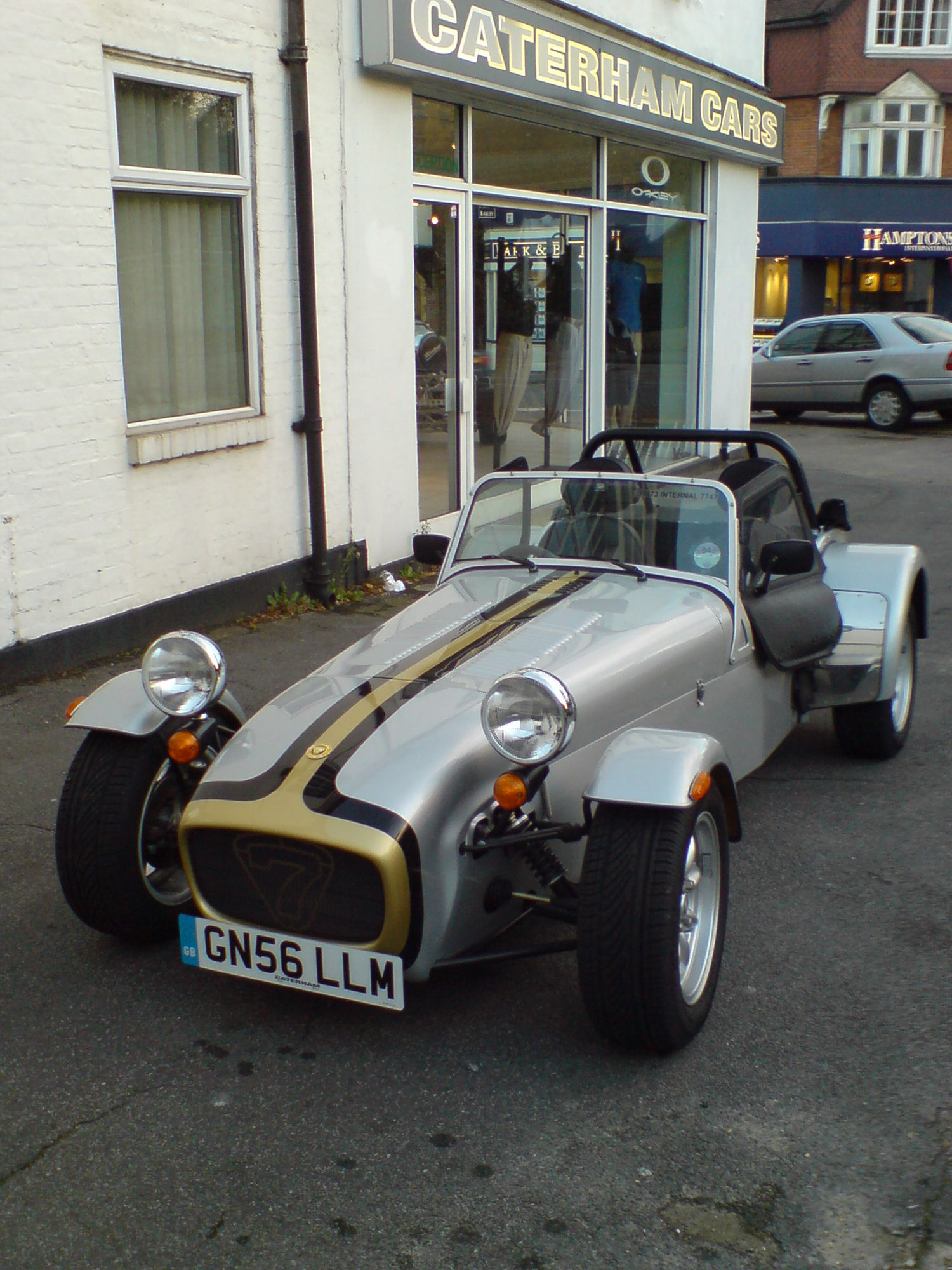
Caterham Cars is the small British company that has kept the Lotus Seven alive for more than five decades. In the 1960s Caterham, a dealer in the town of Caterham in Surrey, was one of the biggest sellers of the Lotus 7. When Lotus announced the end of the model in 1973, Graham Nearn bought the rights to keep building it from Colin Chapman. Caterham moved production to Dartford, Kent, in 1987 and into a new Dartford factory in 2024. It was owned by the Caterham Group from 2011, which also ran the Caterham F1 Team from 2012 to 2014. Since 2021 its owner has been VT Holdings of Japan, the Seven's Japanese importer since 2009.
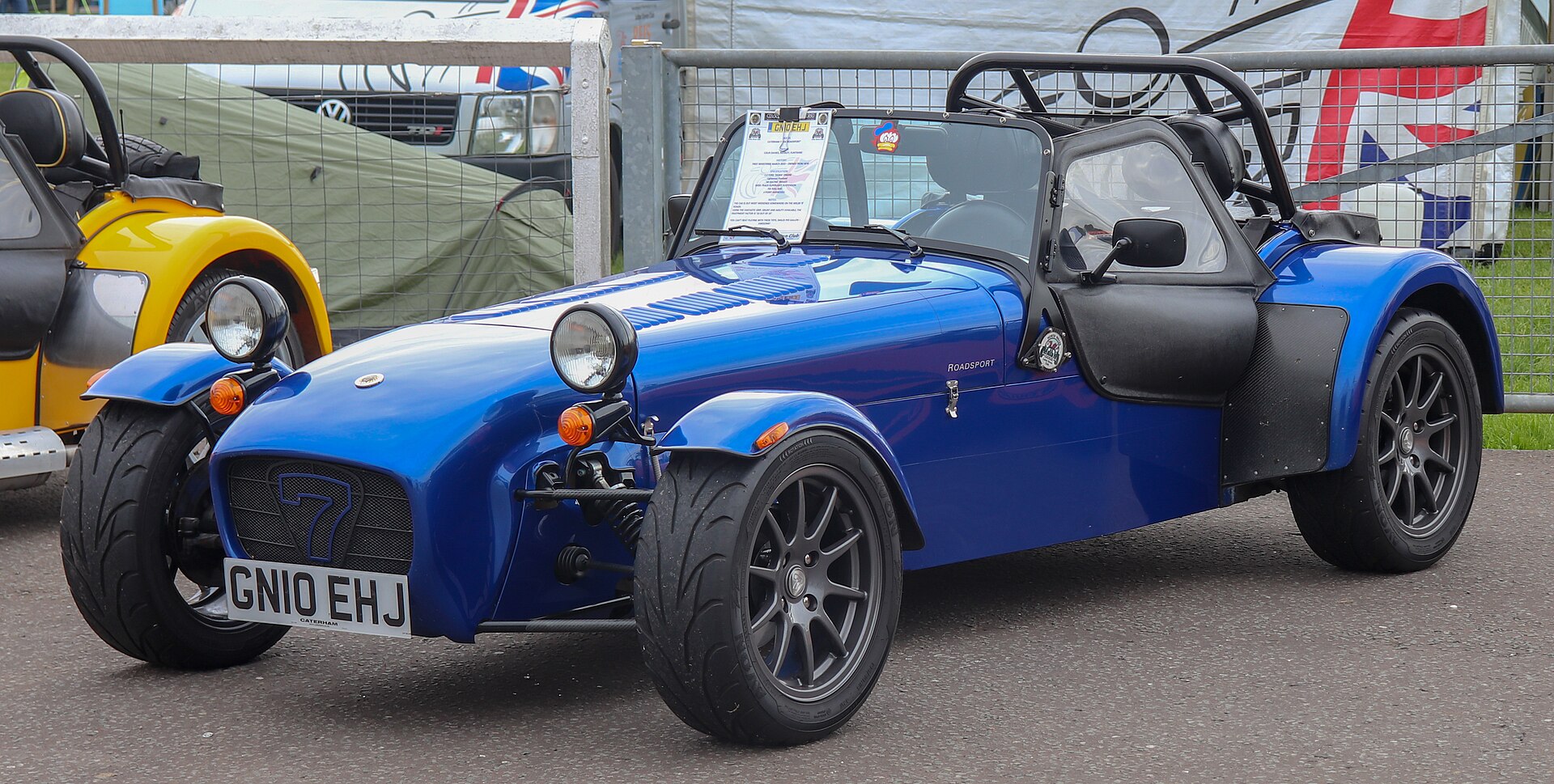
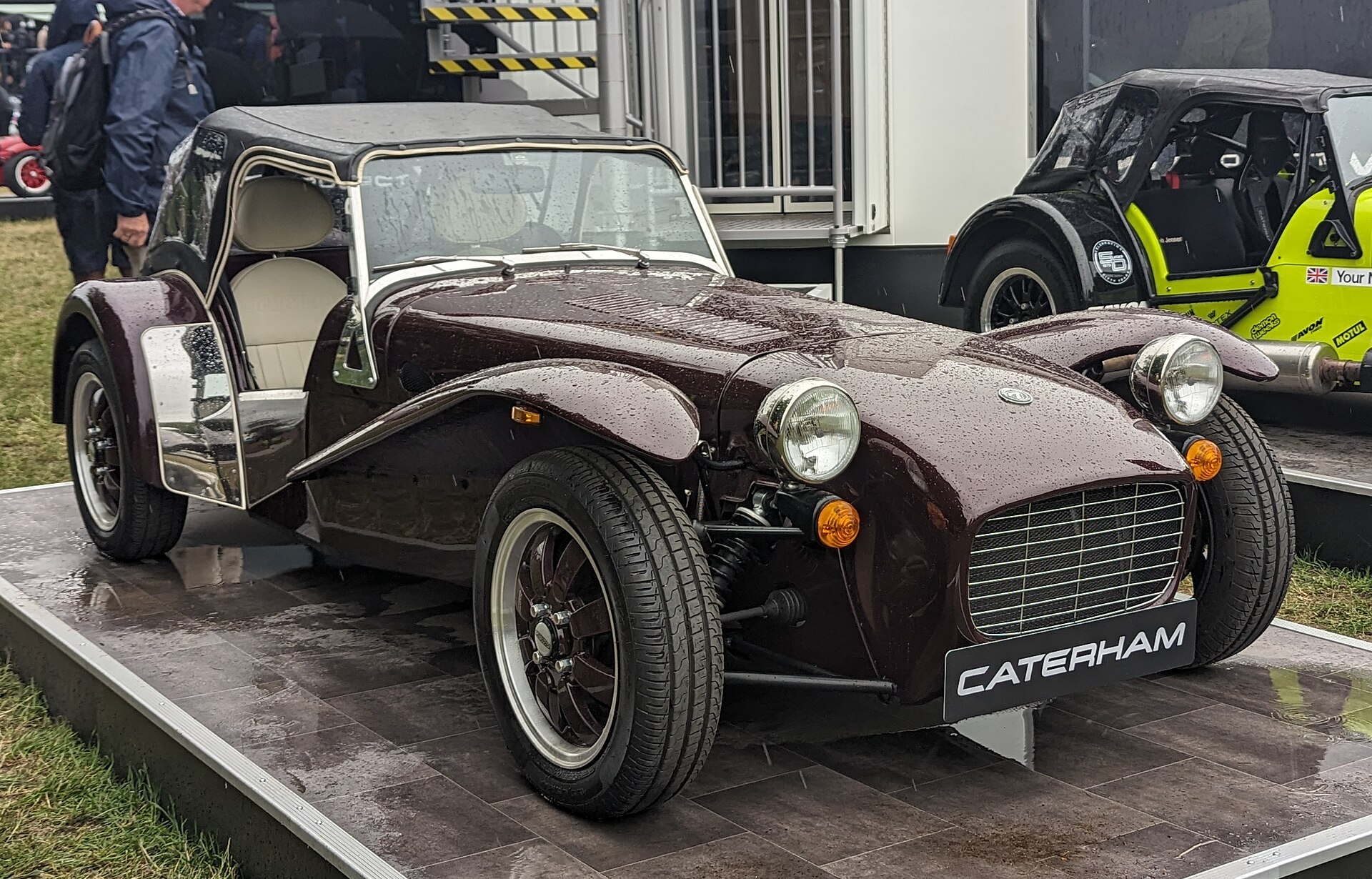
The Caterham Seven is a two-seat open sports car with a steel spaceframe chassis, aluminium body panels and front-mounted engines driving the rear wheels. Caterham has built it since 1973, first as a copy of the Lotus Seven Series 3. It is sold as a kit or ready-built. Engines have ranged from Ford and Rover units to the 660 cc Suzuki turbo of the Seven 170, which weighs 440 kg, and the supercharged 2.0-litre Ford of the 620.
Specs by version
Engines
Dimensions and weight
Show all 1 versions
| Version | Kerb weight |
|---|---|
| Seven 170 | 440 kg970 lb |
Verified Manufacturer and type-approval data from our catalog · Sources and methodology
In short
- Built since 1973 under the rights bought from Lotus; made in Dartford, Kent, since 1987.
- Spaceframe chassis with stressed aluminium panels; live rear axle or De Dion suspension depending on the model.
- Current range from the Seven 170 with a 62 kW (85 PS) Suzuki 660 cc turbo to the 620 with 231 kW (314 PS).
- The 170 weighs 440 kg in R specification; the 2013 620R had 232 kW (315 PS) and 297 Nm.
Caterham Seven at a glance
| Specification | Value |
|---|---|
| Production | since 1973 (first cars 1974), Caterham, Surrey, then Dartford, Kent, from 1987 |
| Origin | Lotus Seven Series 3 (Lotus Seven from 1957) |
| Body | two-seat open roadster |
| Chassis | steel spaceframe with stressed aluminium panels; wider SV chassis available |
| Layout | front engine, rear-wheel drive |
| Rear suspension | live axle or De Dion, depending on model |
| Engines | Ford, Vauxhall, Rover K-Series, Ford Sigma/Duratec, Suzuki 660 cc turbo |
| Power | 62 kW (85 PS) in the 170 to 231 kW (314 PS) in the 620 |
| Lightest version | 440 kg (Seven 170R) |
| Supply | kit or factory-built; the 620 factory-built only |
| Owner | VT Holdings (Japan) since 2021 |
From Lotus Seven to Caterham Seven
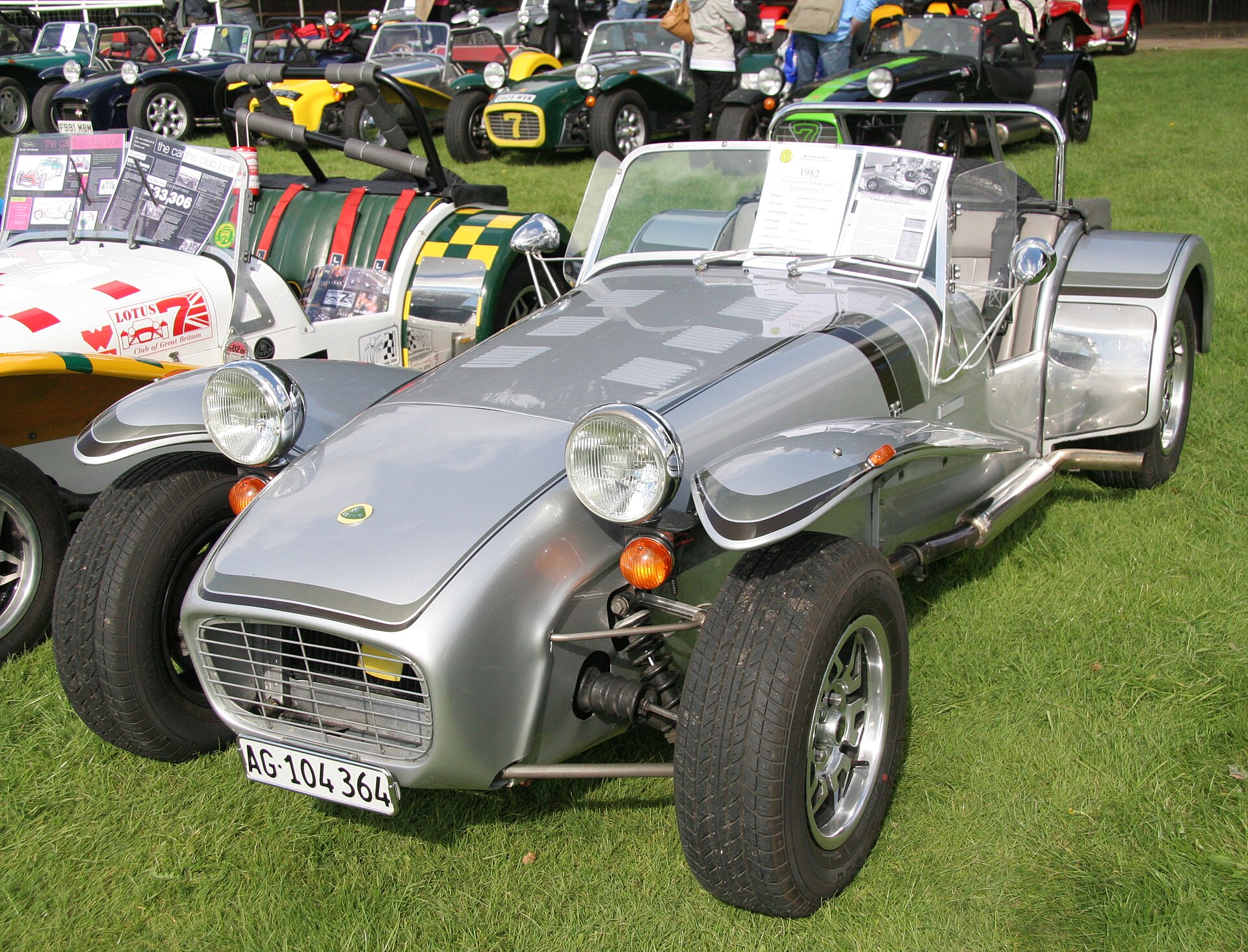
Colin Chapman's Lotus launched the Seven in 1957, and the story of the original is told in our history of the Lotus Seven. In 1973 Lotus sold the rights to its agents: Caterham Cars in England and Steel Brothers in New Zealand. Caterham's first cars, from 1974, were Series 3 Sevens, built after the stock of Series 4 kits ran out. Between 1974 and 1989 the company traded as Seven Cars Limited.
The Seven has stayed in production since then, with new engines, chassis widths and suspension layouts over the years. Chapman himself is profiled on our page about Colin Chapman, and his company in our history of Lotus.

Chassis and suspension
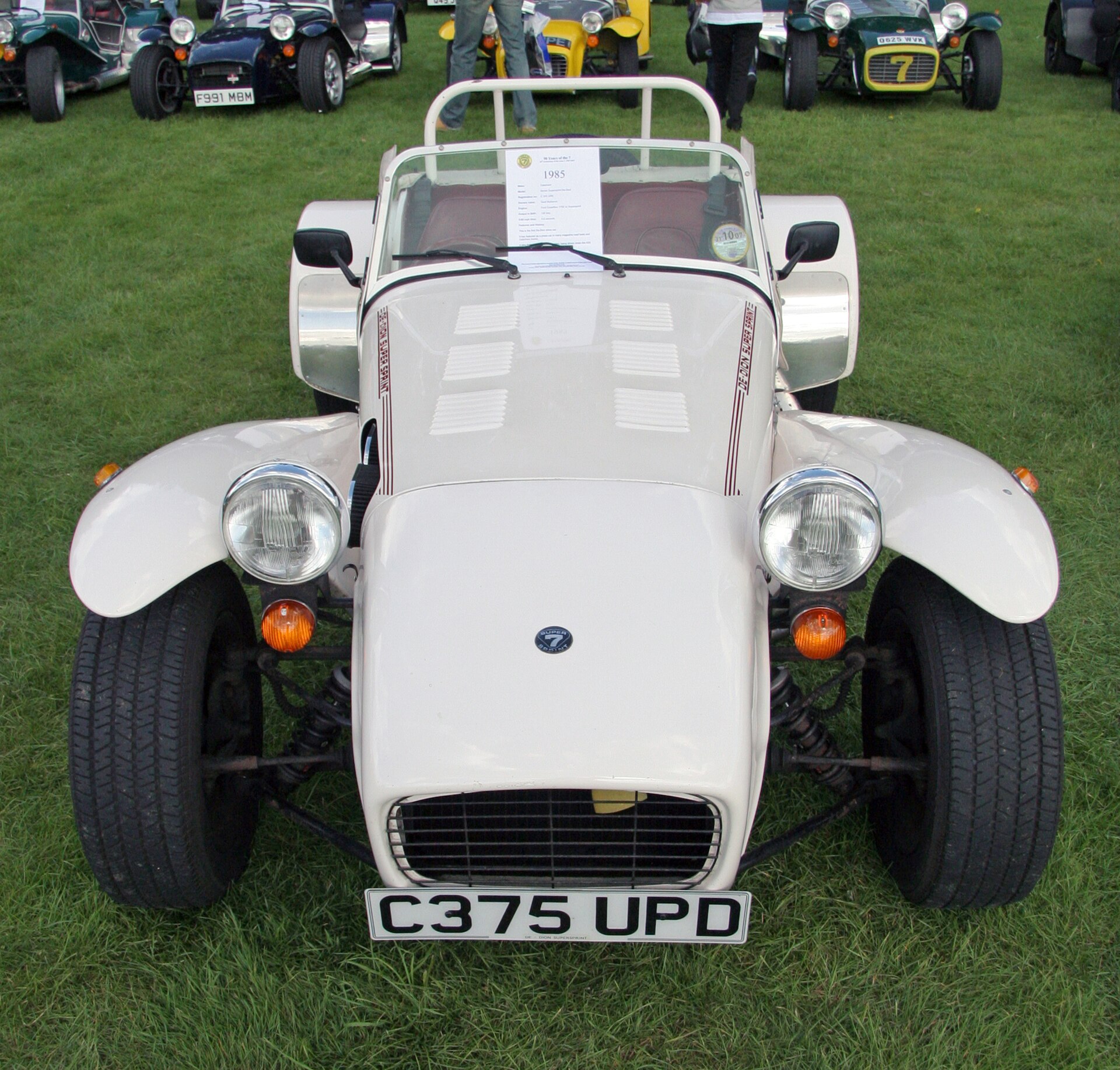
The Seven uses a steel spaceframe with stressed aluminium body panels. Early Caterhams kept the Lotus live rear axle. In the mid-1980s Caterham introduced De Dion rear suspension, and the live axle was phased out in 2002. It came back for the light Suzuki-engined 160, 165 and 170 models.
Two chassis widths are offered. The SV gives 110 mm more cockpit width than the original Series 3 chassis and adds 25 kg. The CSR of October 2004 went further: it used an SV-based frame with pushrod front suspension and double-wishbone rear suspension, and its torsional stiffness rose by 25 %.

Engines over the years
The Seven has used engines from several makers.
| Period | Engine | Notes |
|---|---|---|
| 1970s | Lotus-Ford Twin Cam; Ford Kent crossflow | Twin Cam later built by Vegantune |
| 1980s–1990s | Vauxhall twin-cam (HPC), later Vauxhall 8- and 16-valve | Vauxhall units from around 1997 too |
| 1991–2000s | Rover K-Series 1.4, 1.6 and 1.8 | 1.4 from 1991, 1.6 from 1996, 1.8 from 1997 |
| 2000s–today | Ford Sigma and Duratec | replaced the K-Series |
| 2013 | Suzuki K6A 660 cc turbo | Seven 160 and 165 |
| 2021 | Suzuki R06A 660 cc turbo | Seven 170 |
The 170, with 62 kW (85 PS), weighs 440 kg in R specification. At the other end, the supercharged Ford Duratec of the 620 makes 231 kW (314 PS).
Current models and performance
| Model | Engine | Power | Weight | Top speed |
|---|---|---|---|---|
| Seven 170 | Suzuki R06A 660 cc turbo | 62 kW (85 PS) | 440 kg (170R) | — |
| Seven 360 | Ford Duratec 2.0 | 134 kW (183 PS) | — | 209 km/h |
| Seven 420 | Ford Duratec 2.0 | 157 kW (213 PS) | — | — |
| Seven 620 | Ford Duratec 2.0, supercharged | 231 kW (314 PS) | — | — |
English Wikipedia's infobox lists a typical kerb weight of 545 kg. The 620 is sold only as a factory-built car; the other models are also available as kits. Our car rankings compare power-to-weight across models. With 62 kW and 440 kg, even the 170 has about 141 kW per tonne.
Special versions: R500 and CSR
| Version | Power | Weight | Top speed | Notes |
|---|---|---|---|---|
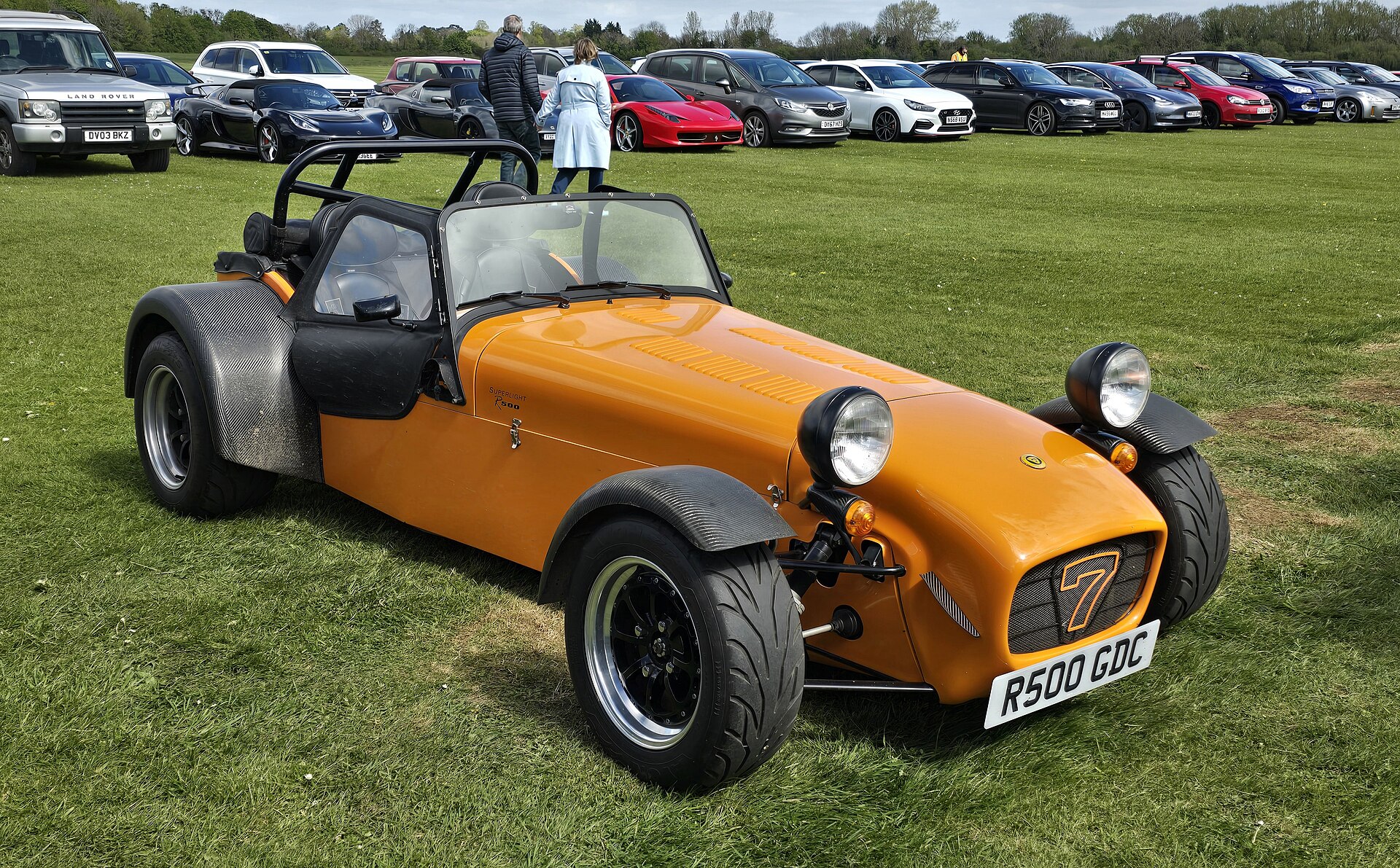
| Superlight R500 | about 172 kW (230 bhp) at 8,600 rpm | 460 kg | about 241 km/h (150 mph) | 0–100 mph (161 km/h) in 8.2 s; EVO quotes 8.8 s |
| R500 EVO | 186 kW (250 bhp) | — | — | 0–100–0 mph in 10.73 s |
| CSR200 / CSR260 | 149 kW (200 bhp) / 194 kW (260 bhp) | — | 249 km/h (CSR260) | Cosworth Duratec, from October 2004 |
| 620R (2013) | 232 kW (315 PS) | — | — | 297 Nm |
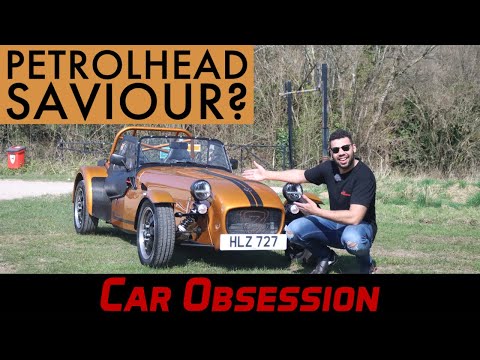
The R500 is the best-known of the extreme Sevens. Its 0–100 mph time of 8.2 seconds comes from English Wikipedia, while EVO magazine measured 8.8 seconds. Caterham also built a small number of other models: the Caterham 21 roadster of 1994 reached only 48 cars, and only eight Caterham Levante cars were made to mark more than 50 years of production.

Caterham in motorsport
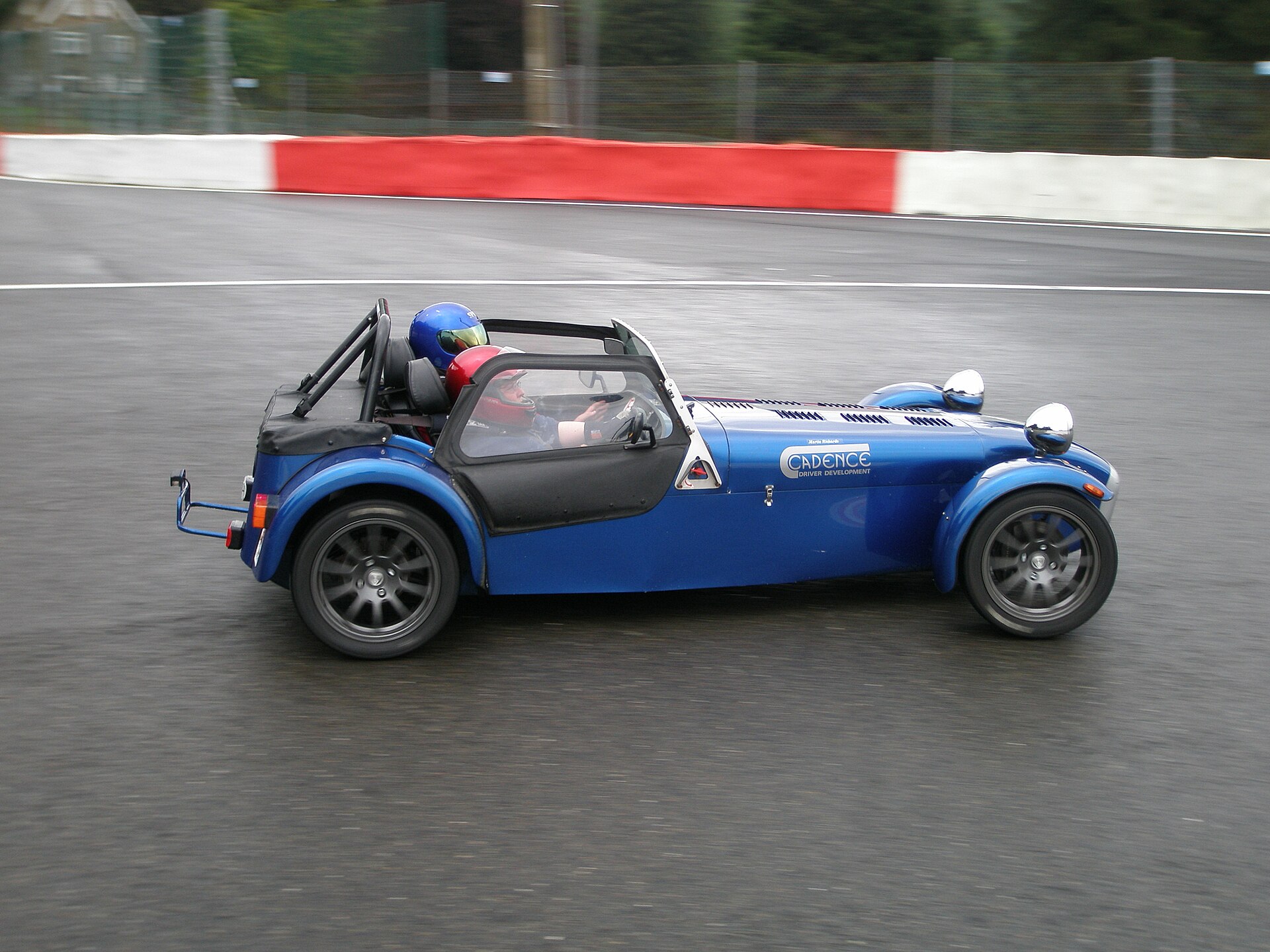
The Seven has its own racing ladder in Britain. Caterham Super 7 Racing has run as a one-make series since 1986. The Caterham Academy, introduced in 1995, is for novice drivers and uses a sealed 89 kW (120 bhp) engine and a five-speed gearbox. Further steps are the Caterham Motorsport Ladder and the Caterham Graduates Racing Club. In Formula One, the Caterham name appeared on the former Team Lotus from 2012 to 2014, before the team folded for financial reasons.

Photo gallery


Caterham Seven in our rankings
- No. 1 of 24 · Lightest convertibles and roadsters (440 kg)
- No. 1 of 304 · Lightest cars (440 kg)
- No. 13 of 912 · Longest-running car nameplates (53 years · top 2%)
- No. 11 of 305 · Oldest car models still on sale (53 years · top 4%)
- No. 101 of 301 · Power-to-weight: cars (141 kW/t · top 34%)
- No. 33 of 88 · Most powerful cars of the 1970s (231 kW · top 38%)
Lighter than 99% of ranked cars in the 1CARS catalog (No. 1 of 304).
Caterham Seven photos 6
FAQ
Is a Caterham Seven a Lotus?
It is a direct continuation of the Lotus Seven: Caterham bought the rights from Lotus in 1973 and has built the car since then.
Where is the Caterham Seven built?
In Dartford, Kent, since 1987; before that in Caterham, Surrey.
How light is a Caterham Seven?
The Seven 170R weighs 440 kg; English Wikipedia lists a typical kerb weight of 545 kg.
What engine is in the Caterham Seven 170?
A Suzuki R06A 660 cc turbocharged engine with 62 kW (85 PS).
Can a Caterham Seven be bought as a kit?
Yes. Most models are offered as a kit or ready-built; the 620 is factory-built only.
Data sources
Data checked by an editor against the sources below.