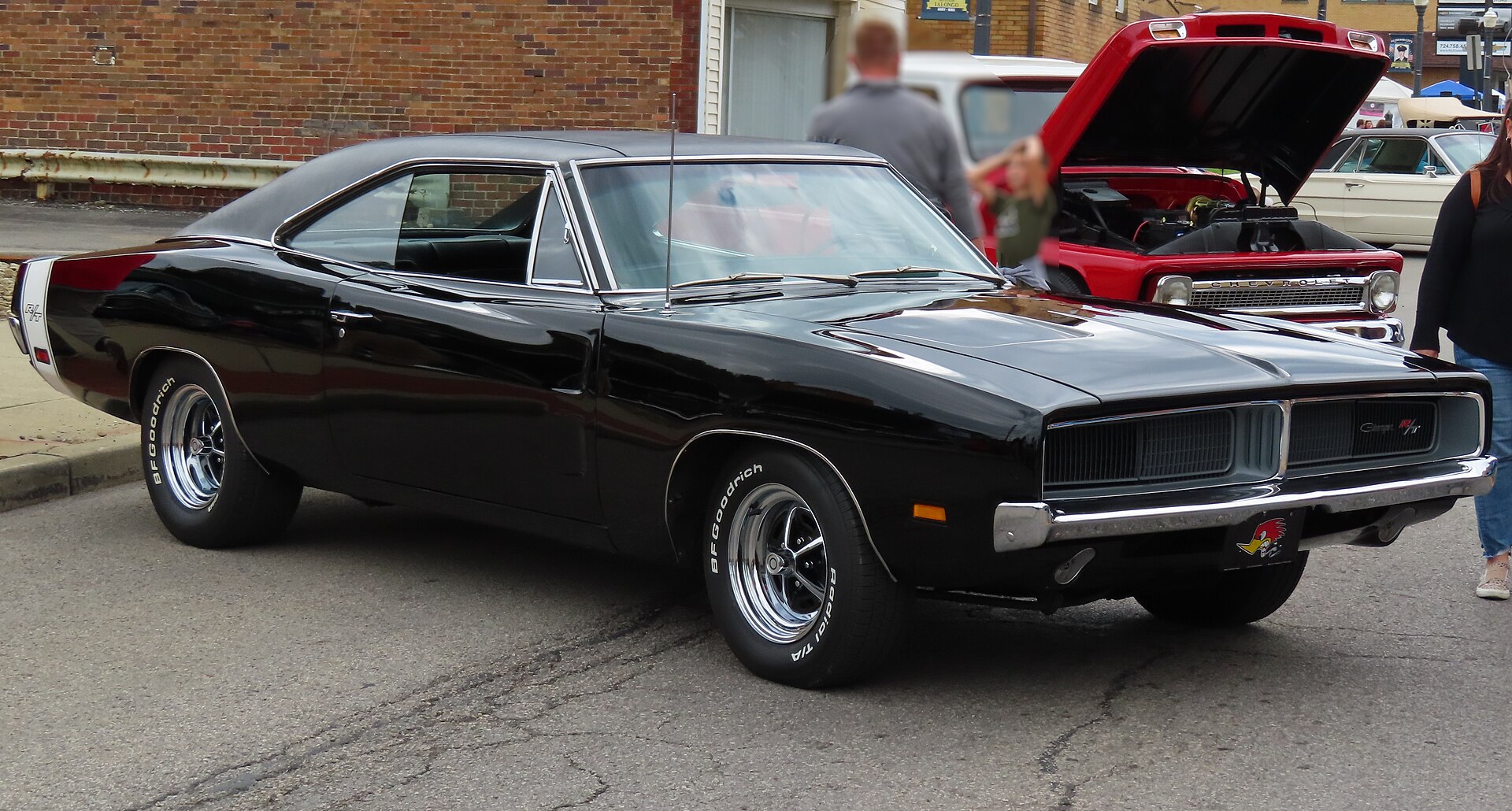
 Dodge Charger R/T
Specs, engines and history
Published Sources (2) Report an error
By Felix Hartmann, Automotive Technology & EV Contributor
- Built
- 1968–1970
- Top power
- 317 kW (431 PS)
Which Charger R/T to choose
Our verdict · Felix Hartmann
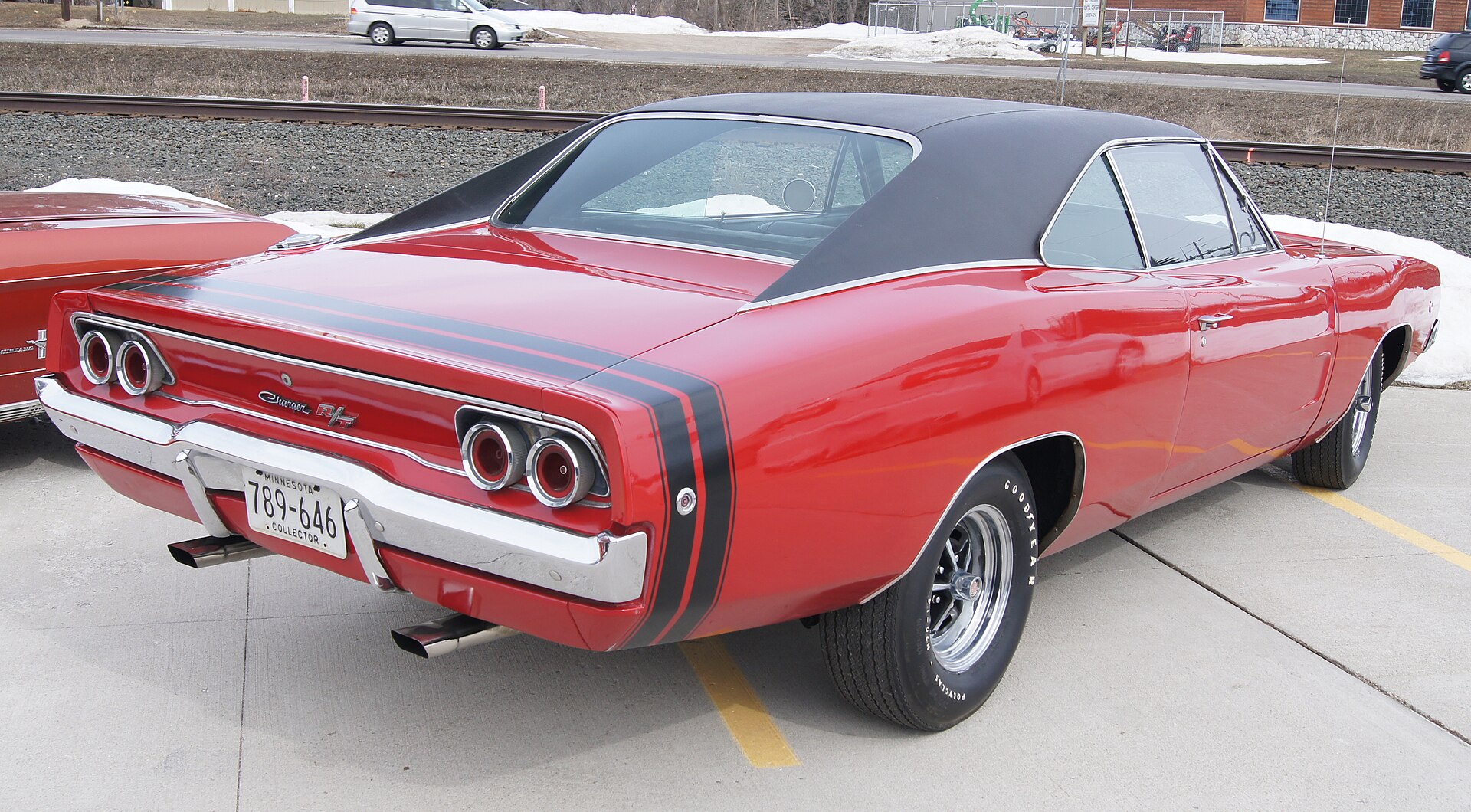
- For the purest shape: a 1968 R/T with the twin round taillights and vacuum headlight covers.
- For screen fame: a 1969 car, the year of the General Lee.
- For the widest engine choice: a 1970 R/T, the only year with the 440 Six Pack.
- For rarity and maximum power: any year with the 426 Hemi.
Related Mopar cars of the same years are the Dodge Super Bee and the Plymouth GTX. The Dodge catalogue lists the Charger R/T with its versions, and the American muscle car guide and car rankings compare its power with that of its rivals.
The Dodge Charger R/T was the performance version of the second-generation Charger, built for the 1968, 1969 and 1970 model years. It came with the 440 Magnum V8 as standard and the 426 Hemi as the only engine option, wrapped in the "Coke bottle" body that later starred in films and on television. Dodge sold more than 17,000 R/Ts in 1968 alone, according to Wikipedia.
In short
- R/T stands for "Road/Track"; the trim was the top performance Charger of 1968–1970.
- Standard 440 Magnum: 280 kW (375 hp, SAE gross) and 651 Nm; optional 426 Hemi: 317 kW (425 hp) and 664 Nm.
- 1970 added the 440 Six Pack with three two-barrel carburettors and 291 kW (390 hp).
- Screen roles include the villains' car in Bullitt (1968) and the General Lee, a 1969 Charger, in The Dukes of Hazzard.
Size at a glance
| Dimensions | Dodge Charger (second generation) |
|---|---|
| Length | 5,281 mm207.9 in |
| Width | 1,946 mm76.6 in |
| Height | 1,346 mm53.0 in |
Specs by version
Engines
| Version | Engine | Power | Torque | Drive | Production years |
|---|---|---|---|---|---|
| R/T 440 Magnum (SAE gross) | 7.2 l · 8 cyl · Petrol 7,210 cc | 280 kW 381 PS375 hp | 651 Nm480 lb-ft | Rear-wheel drive | 1968–1970 |
| R/T 440 Six Pack (SAE gross) | 7.2 l · 8 cyl · Petrol 7,210 cc | 291 kW 396 PS390 hp | - | Rear-wheel drive | 1970 |
| R/T 426 Hemi (SAE gross) | 7.0 l · 8 cyl · Petrol 6,981 cc | 317 kW 431 PS425 hp | 664 Nm490 lb-ft | Rear-wheel drive | 1968–1970 |
Dimensions and weight
Verified Manufacturer and type-approval data from our catalog · Sources and methodology
Charger R/T at a glance
| Specification | Dodge Charger R/T (1968–1970) |
|---|---|
| Model years | 1968, 1969, 1970 |
| Body | two-door hardtop coupé, "Coke bottle" styling with a flying-buttress roof |
| Platform | Chrysler B-body, front engine, rear-wheel drive |
| Standard engine | 440 cu in (7.2 l) Magnum V8, 280 kW (375 hp) at 4,600 rpm, 651 Nm |
| Option | 426 cu in (7.0 l) Hemi V8, 317 kW (425 hp), 664 Nm |
| 1970 option | 440 Six Pack, 291 kW (390 hp) |
| Gearboxes | TorqueFlite three-speed automatic; four-speed manual with Hurst shifter |
| Length / width (1970) | 5,281 mm / 1,946 mm (207.9 / 76.6 in) |
| Charger sales | 96,100 (1968), about 89,199 (1969), about 46,576 (1970), all versions |
The R/T is the sporting branch of the Dodge Charger line; its NASCAR offshoots were the Charger 500 and the Charger Daytona.
The 1968 redesign
The first Charger of 1966–1967 was a fastback designed by Carl "Cam" Cameron, and it sold slowly: 15,788 cars in 1967, according to Silodrome. For 1968 Dodge replaced it with a completely new body. Richard Sias drew its curves around the front wings and rear quarter panels, the "Coke bottle" shape of the period, and Harvey J. Winn designed the front and rear sheet metal. The fastback gave way to a notchback with a flying-buttress roof, similar in idea to the 1966–1967 Pontiac GTO, and a recessed rear window.
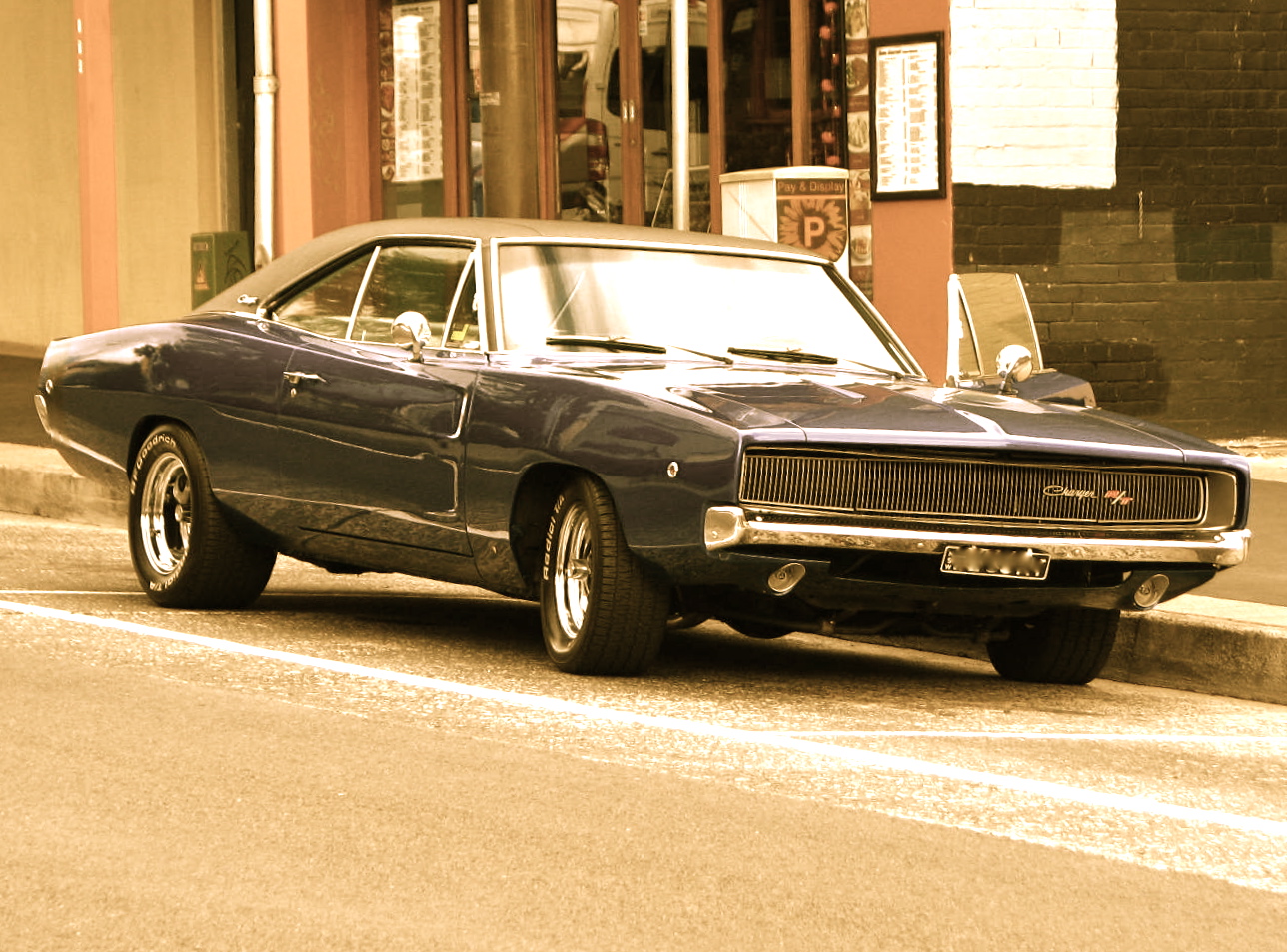
The hidden headlights stayed, but the electric rotating units were replaced by vacuum-operated covers. At the direction of Elwood P. Engel, the car received twin round taillights on each side. The result was a sales turnaround: Dodge sold 96,100 Chargers in 1968, more than six times the 1967 figure by our calculation.

What made it an R/T
Wikipedia states that R/T meant "Road/Track" and had no link to Road & Track magazine. In 1968 the R/T was the only Charger with the 440 Magnum as standard. Silodrome lists a three-speed TorqueFlite automatic as standard and a four-speed manual with a Hurst shifter as the alternative, together with a performance handling package with stiffer front torsion bars and rear leaf springs and heavy-duty brakes.
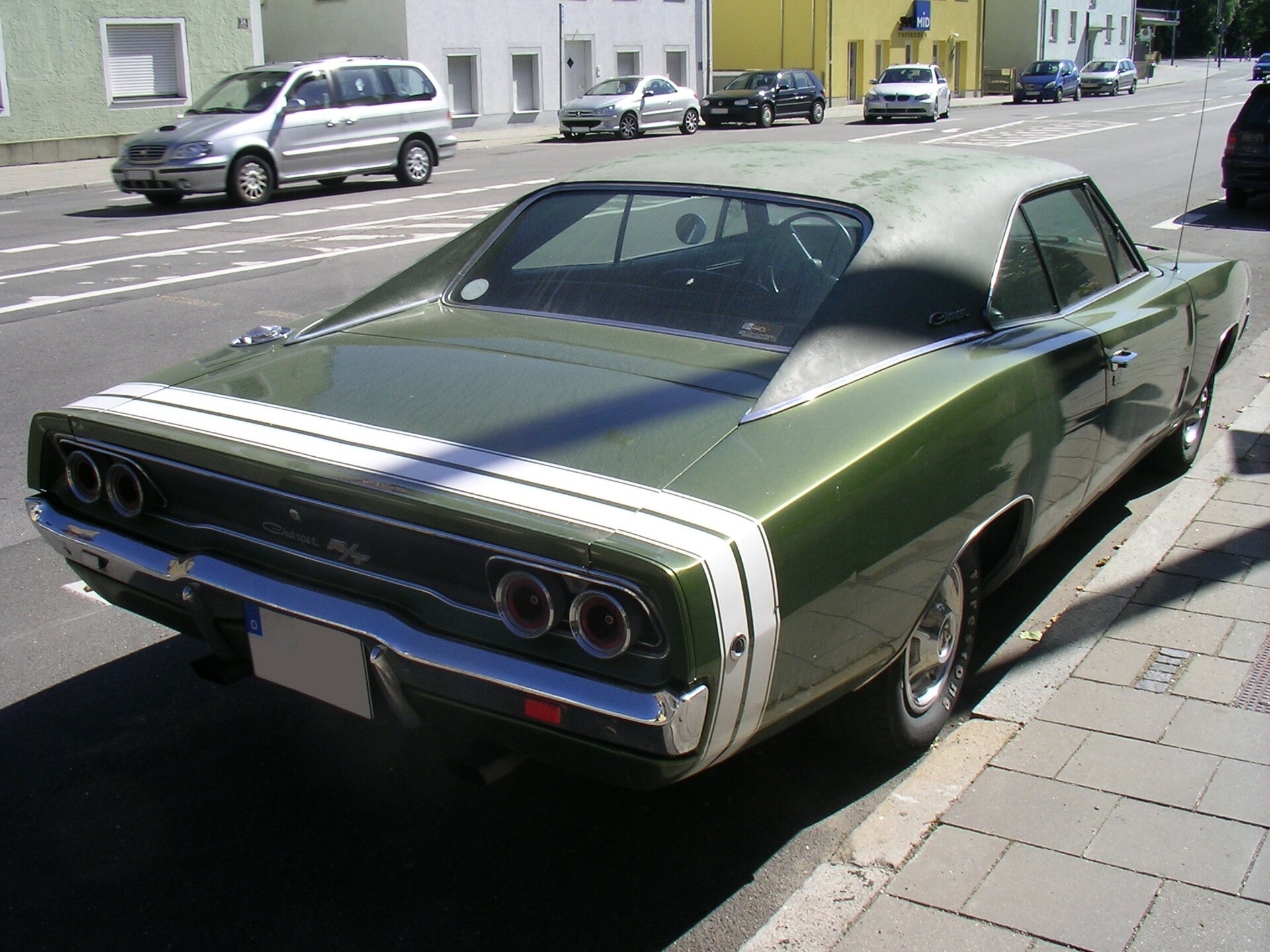
The R/T was part of Dodge's 1968 "Scat Pack" campaign, and with it came the "bumblebee" stripes around the tail. They were standard on R/Ts in red, white or black and could be deleted at no cost. For 1969 the stripe became a wide band framed by two thin lines, with an "R/T" cut-out.
Production figures differ by source. Wikipedia says more than 17,000 R/Ts were built for 1968. Silodrome gives about 20,057 and notes that sources vary; its split is 18,344 cars with the 440 Magnum and 432 with the Hemi.


Engines: 440 Magnum, 426 Hemi and Six Pack
| Engine | Years | Power (SAE gross) | Torque | Carburation |
|---|---|---|---|---|
| 440 Magnum V8 | 1968–1970 | 280 kW (375 hp) at 4,600 rpm | 651 Nm (480 lb-ft) at 3,200 rpm | one four-barrel |
| 426 Hemi V8 | 1968–1970 | 317 kW (425 hp) | 664 Nm (490 lb-ft) | - |
| 440 Six Pack V8 | 1970 | 291 kW (390 hp) | - | three two-barrels |
The 440 Magnum was the larger engine by displacement, but the Hemi carried the higher rating. The 440 Six Pack of 1970 sat between them. Sources used here give no torque figure for it. Rpm figures for the 440 Magnum are from Silodrome; Wikipedia lists the Hemi in the 1970 Challenger at 5,000 and 4,000 rpm for power and torque.
1969: split grille and taillights
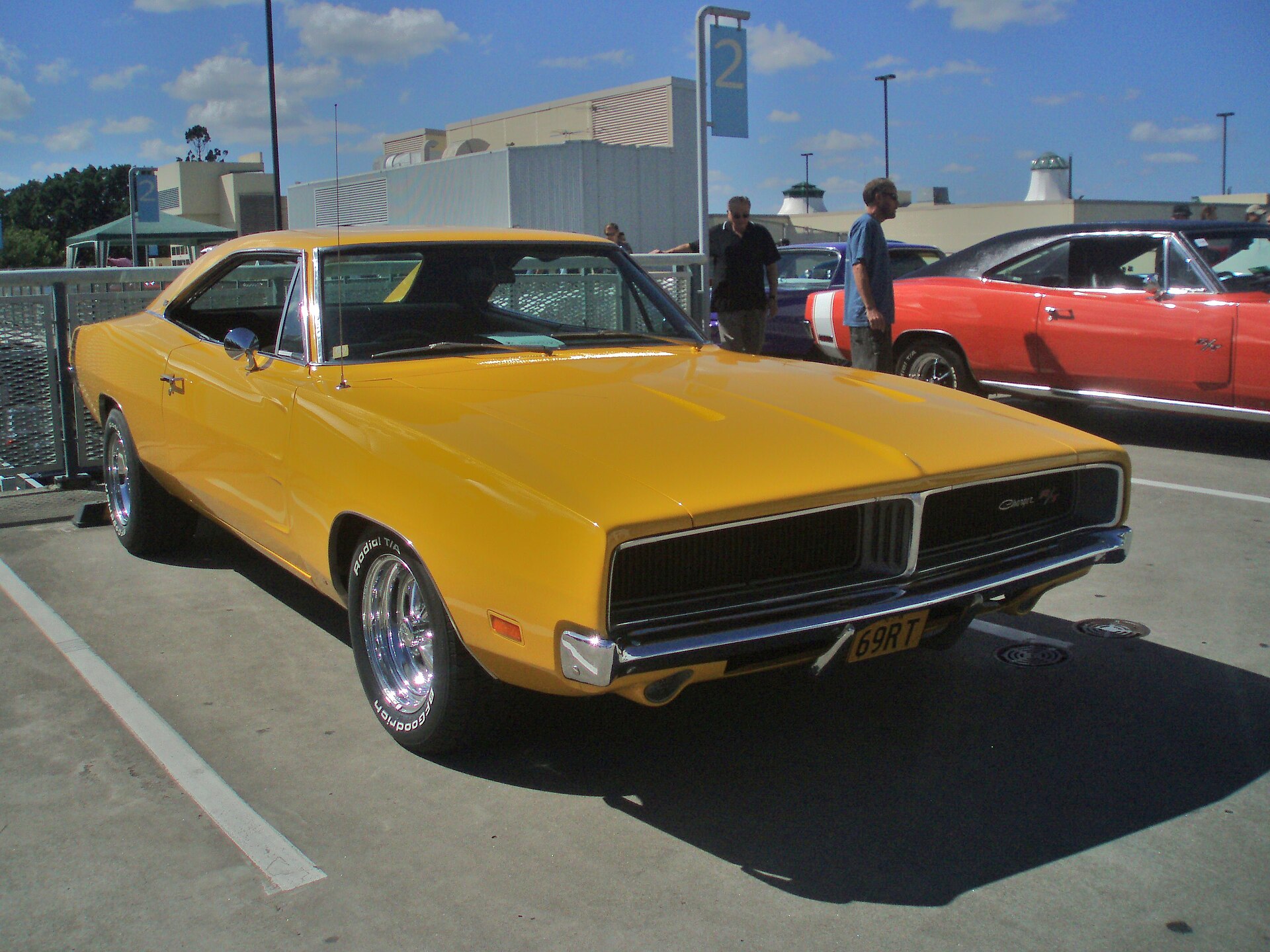
The 1969 Charger received a grille with a centre divider and new long horizontal taillights, both credited to Harvey J. Winn. A new Special Edition (SE) trim could be ordered on its own or together with the R/T, which gave a luxury R/T. A sunroof joined the options list but was fitted to only 260 cars.
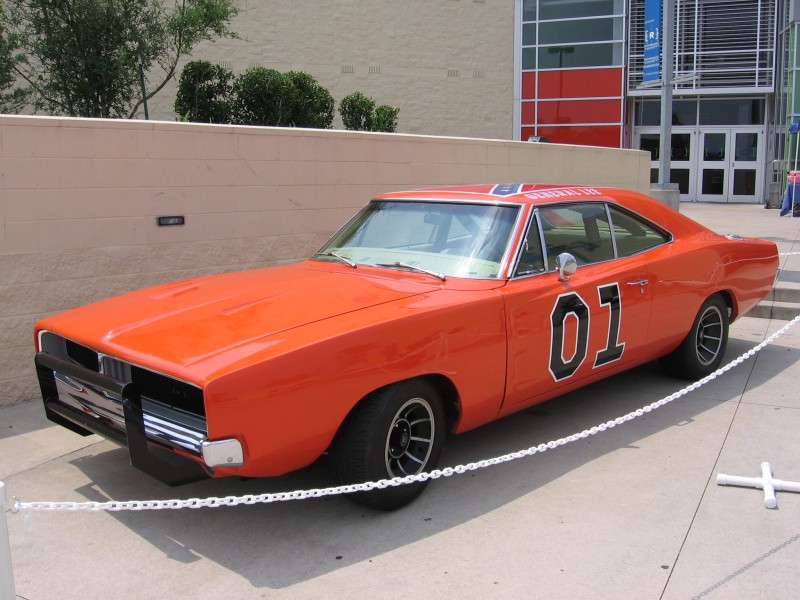
This is the year of the General Lee. In The Dukes of Hazzard (1979–1985) the stunt cars were orange 1969 Chargers with a Confederate battle flag on the roof, "GENERAL LEE" on the doors and a horn playing the opening notes of "Dixie". Total Charger production for 1969 was about 89,199, according to Wikipedia; the R/T share is not given.
1970: the loop bumper
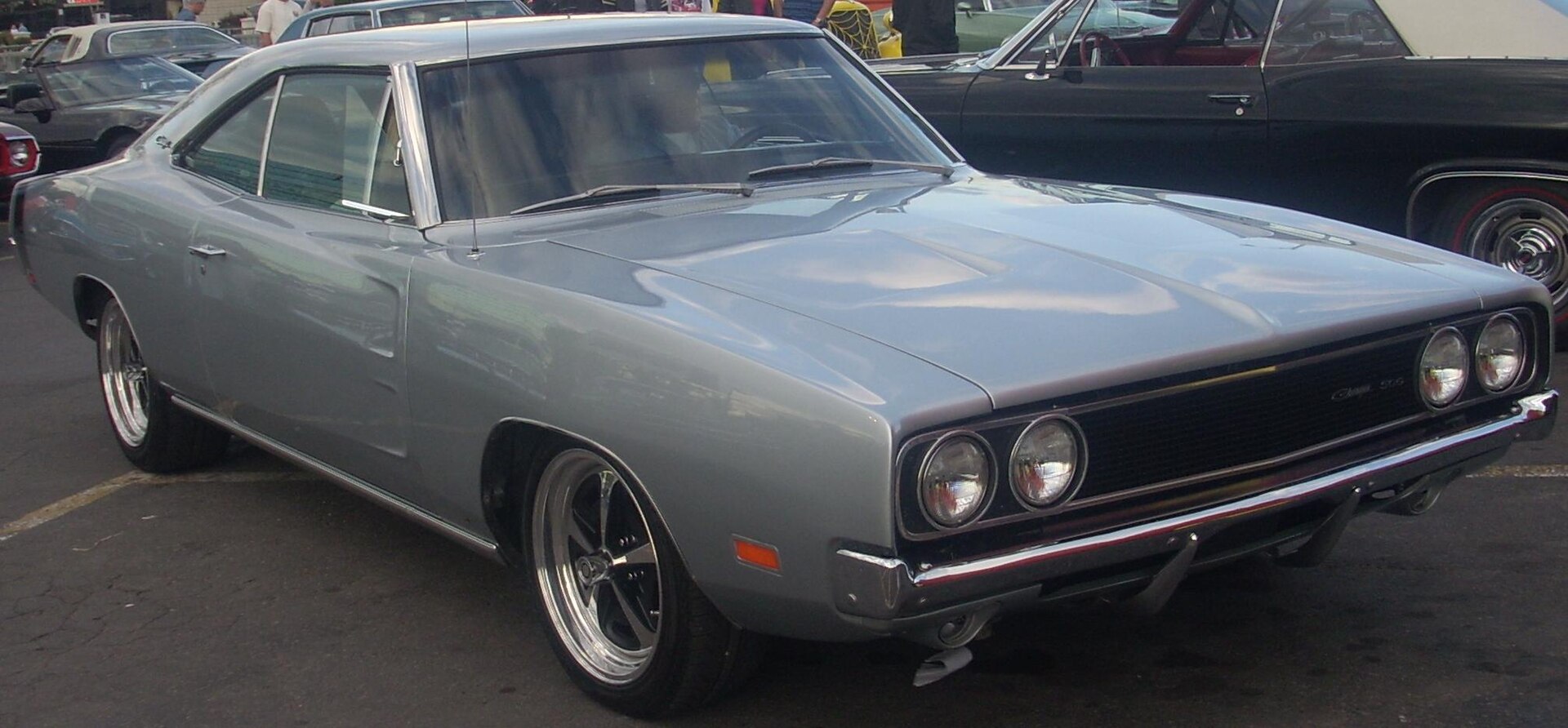
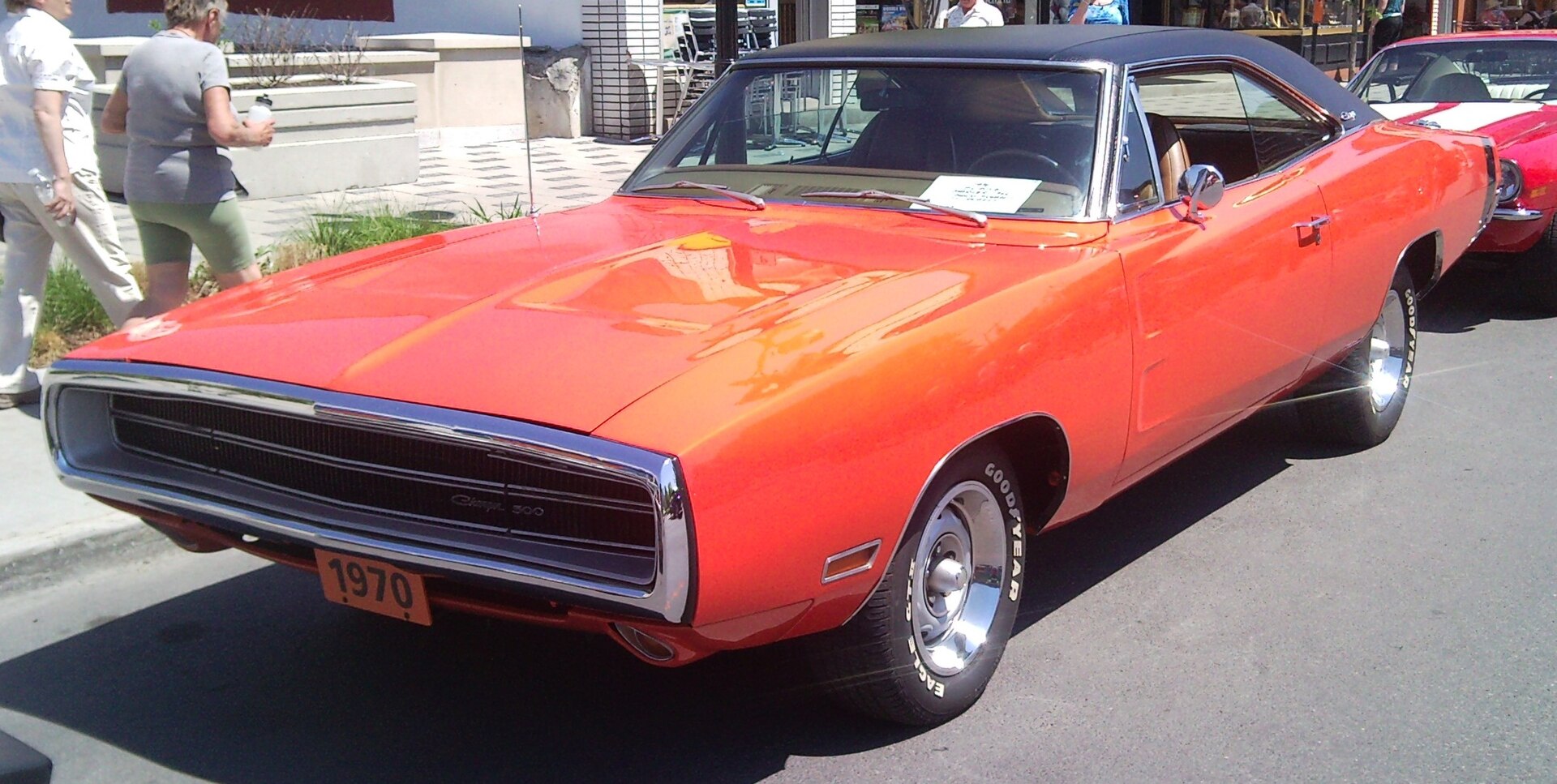
For 1970 the Charger received a large wraparound chrome bumper around an undivided grille, and electric headlight doors replaced the vacuum units. R/Ts had new rear-facing scoops on the front doors. Inside there were high-back bucket seats, a pistol-grip shifter for the four-speed and, for the first time in a Charger, an optional front bench seat; the ignition moved to the steering column.
The 440 Six Pack joined the engine list. Sales fell to about 46,576 Chargers of all versions. In 1971 the third-generation Charger took over, and the Hemi made its last production appearance in it: 63 Hemi R/Ts were built that year.
The Charger R/T on screen
- Bullitt (1968): a black Charger R/T 440 is chased through San Francisco by Steve McQueen's Ford Mustang GT, a chase Wikipedia calls one of the most influential in film history.
- The Dukes of Hazzard (1979–1985): the General Lee, an orange 1969 Charger.
- The Fast and the Furious: a 1970 Charger, also used in several other films.

Charger R/T buying guide
- Engine code first: with the Hemi fitted to only a few hundred cars in 1968 (432 according to Silodrome), a Hemi R/T needs documents that confirm it.
- R/T or tribute: in 1968 the R/T came with the 440 Magnum as standard. A car with a smaller engine and R/T badges is not an original R/T.
- Year details: split grille and long taillights mean 1969; the loop bumper and door scoops mean 1970; round twin taillights mean 1968.
- SE trim: from 1969 a Special Edition R/T combines the performance package with the luxury interior.
- Stripes: a deleted bumblebee stripe is not a sign of a fake, because the stripe could be deleted at no cost.
Photo gallery


Dodge Charger R/T in our rankings
- No. 6 of 89 · Longest coupes (5,281 mm)
- No. 10 of 94 · Most powerful cars of the 1960s (317 kW)
- No. 10 of 88 · Most powerful cars of the 1970s (291 kW)
- No. 15 of 420 · Longest cars (5,281 mm · top 4%)
- No. 26 of 557 · Biggest engines: cars (7,210 cc · top 5%)
- No. 19 of 173 · Biggest engines: coupes (7,210 cc · top 11%)
Longer than 96% of ranked cars in the 1CARS catalog (No. 15 of 420).
Dodge Charger R/T photos 6
FAQ
What does R/T mean on a Dodge Charger?
"Road/Track", according to Wikipedia; it is not a reference to Road & Track magazine.
What engine did the 1968 Charger R/T have?
The 440 Magnum V8 with 280 kW (375 hp, SAE gross) as standard, or the optional 426 Hemi with 317 kW (425 hp).
How many 1968 Charger R/Ts were built?
More than 17,000 according to Wikipedia; Silodrome gives about 20,057, of which 432 had the Hemi.
Was the General Lee an R/T?
Wikipedia describes the General Lee as an orange 1969 Charger and does not say which trim the cars had.
What is the difference between 1968, 1969 and 1970 Chargers?
1968 has round twin taillights and an undivided grille, 1969 a split grille and long taillights, and 1970 a chrome loop bumper and electric headlight doors.
Data sources
Data checked by an editor against the sources below.
- Wikipedia - Dodge Charger (B body)
- Wikipedia - Dodge Charger (1966)