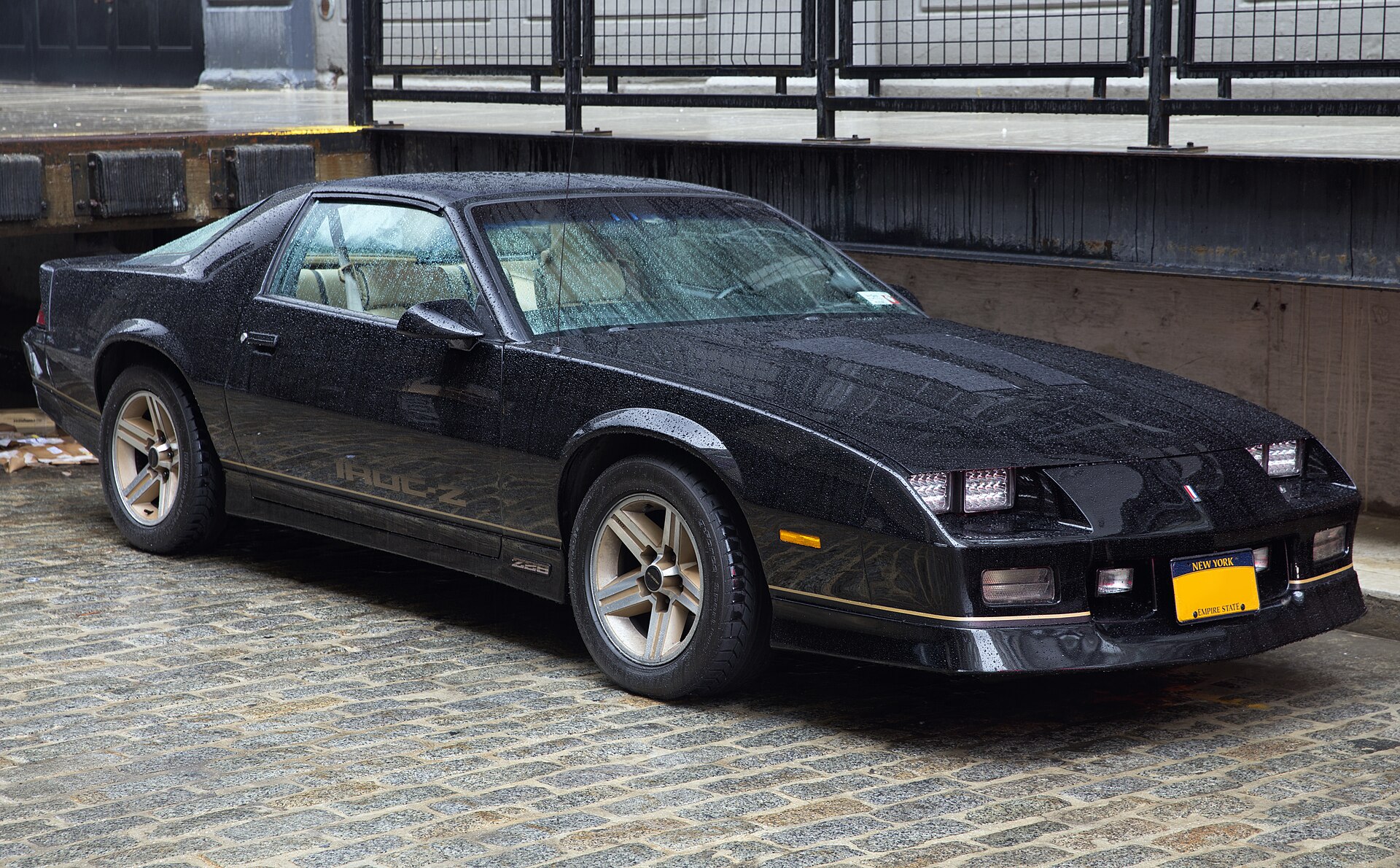
 Chevrolet Camaro IROC-Z
Specs, engines and history
Published Sources (1) Report an error
By Sarah Whitmore, Senior Automotive Writer
- Built
- 1985–1990
- Top power
- 183 kW (249 PS)
Which IROC-Z to choose
Our verdict · Sarah Whitmore
- For the original: a 1985 car with the LB9 Tuned Port Injection.
- For the most torque: a 1989 or 1990 5.7 with 468 Nm.
- For open-air driving: a 1987–1990 convertible.
- For track use: a 1989 or 1990 1LE coupé.
Its rivals of the 1980s included the Ford Mustang GT, covered in our Ford Mustang article, and its GM cousin the Pontiac Firebird Trans Am. See all Camaro versions in the Chevrolet catalogue, and compare the IROC-Z with other generations in the American muscle car guide and the car rankings.
The Chevrolet Camaro IROC-Z was the top performance version of the third-generation Camaro from 1985 to 1990. It took its name from the International Race of Champions (IROC), and it brought fuel injection, a lowered chassis and 16-inch wheels to Chevrolet's pony car. Its engines grew from a 5.0-litre V8 with 160 kW (215 hp) to a 5.7-litre with 183 kW (245 hp, SAE net).
In short
- Launched for 1985 as an option package on the Z28; from 1988 the IROC-Z replaced the base Z28.
- Engines: 5.0 L69 carburettor V8, 5.0 LB9 and 5.7 L98 Tuned Port Injection V8s, 142–183 kW (190–245 hp, SAE net).
- Chassis: Delco-Bilstein dampers, larger anti-roll bars, a frame brace and Goodyear 245/50VR16 tyres.
- 1985 sales: 21,177 IROC-Zs out of 68,199 Z28s, according to Eighties Cars.
Specs by version
Engines
| Version | Engine | Power | Torque | Drive | Production years |
|---|---|---|---|---|---|
| 5.0 L69 HO V8 | 5.0 l · 8 cyl · Petrol 5,001 cc | 142 kW 193 PS190 hp | 325 Nm240 lb-ft | Rear-wheel drive | 1985–1986 |
| 5.0 LB9 TPI V8 | 5.0 l · 8 cyl · Petrol 5,001 cc | 160 kW 218 PS215 hp | 373 Nm275 lb-ft | Rear-wheel drive | 1985–1990 |
| 5.7 L98 TPI V8 | 5.7 l · 8 cyl · Petrol 5,733 cc | 168 kW 228 PS225 hp | 447 Nm330 lb-ft | Rear-wheel drive | 1987 |
| 5.7 L98 TPI V8 | 5.7 l · 8 cyl · Petrol 5,733 cc | 183 kW 249 PS245 hp | 468 Nm345 lb-ft | Rear-wheel drive | 1990 |
Dimensions and weight
Show all 4 versions
| Version | Wheelbase |
|---|---|
| 5.0 L69 HO V8 | 2,565 mm101.0 in |
| 5.0 LB9 TPI V8 | 2,565 mm101.0 in |
| 5.7 L98 TPI V8 | 2,565 mm101.0 in |
| 5.7 L98 TPI V8 | 2,565 mm101.0 in |
Verified Manufacturer and type-approval data from our catalog · Sources and methodology
Camaro IROC-Z at a glance
| Specification | Chevrolet Camaro IROC-Z |
|---|---|
| Model years | 1985–1990 |
| Bodies | coupé; convertible from 1987 (converted by ASC) |
| Base car | third-generation Camaro Z28 (GM F-body), 2,565 mm (101.0 in) wheelbase |
| Engines | 5.0 l (305 cu in) L69 and LB9, 5.7 l (350 cu in) L98 |
| Power | 142–183 kW (190–245 hp, SAE net) |
| Torque | 325–468 Nm (240–345 lb-ft) |
| Gearboxes | manual or four-speed automatic; the 5.7 came with the automatic only |
| Wheels and tyres | 16 × 8-inch five-spoke alloys, Goodyear 245/50VR16 |
| Curb weight (third-generation Camaro) | 1,400–1,525 kg |
| Option code | B4Z (1985, per Eighties Cars) |
The IROC-Z belongs to the third generation of the Chevrolet Camaro and to the long line of the Camaro Z28. On 1CARS it is one of the muscle cars of the comeback era between the malaise years and the modern revival.
The third-generation Camaro and the IROC name
Production of the third-generation Camaro began on 12 October 1981 for the 1982 model year. Motor Trend named the 1982 Z28 its Car of the Year; about 173,000 Camaros were sold in the US that year.
For 1985 Chevrolet used the initials of the International Race of Champions for a new top Camaro. The IROC-Z began as an option package on the Z28. According to Eighties Cars, it cost extra on top of the Z28 and sold 21,177 times in its first year out of 68,199 Z28s, and by 1986 it accounted for 56 % of Z28 sales.


What the IROC-Z package added
Wikipedia lists the chassis changes:
- a lower ride height (Eighties Cars gives about half an inch) and specially valved Delco-Bilstein dampers;
- larger-diameter anti-roll bars and a steering and frame brace known as the "wonder bar";
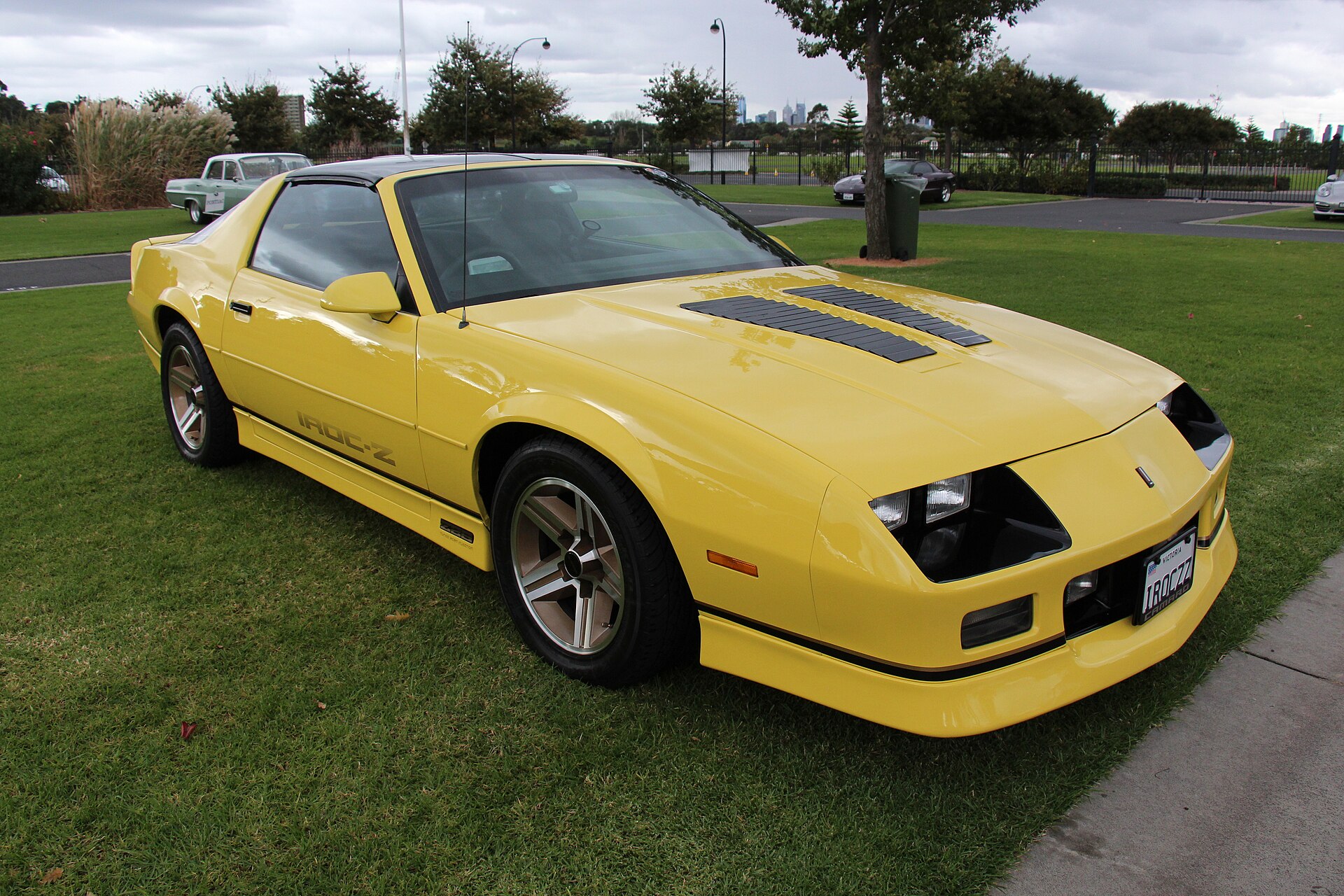
- 16 × 8-inch five-spoke aluminium wheels with "Front" or "Rear" cast into them;
- Goodyear unidirectional tyres in size 245/50VR16, close to the Corvette's 255/50VR16;
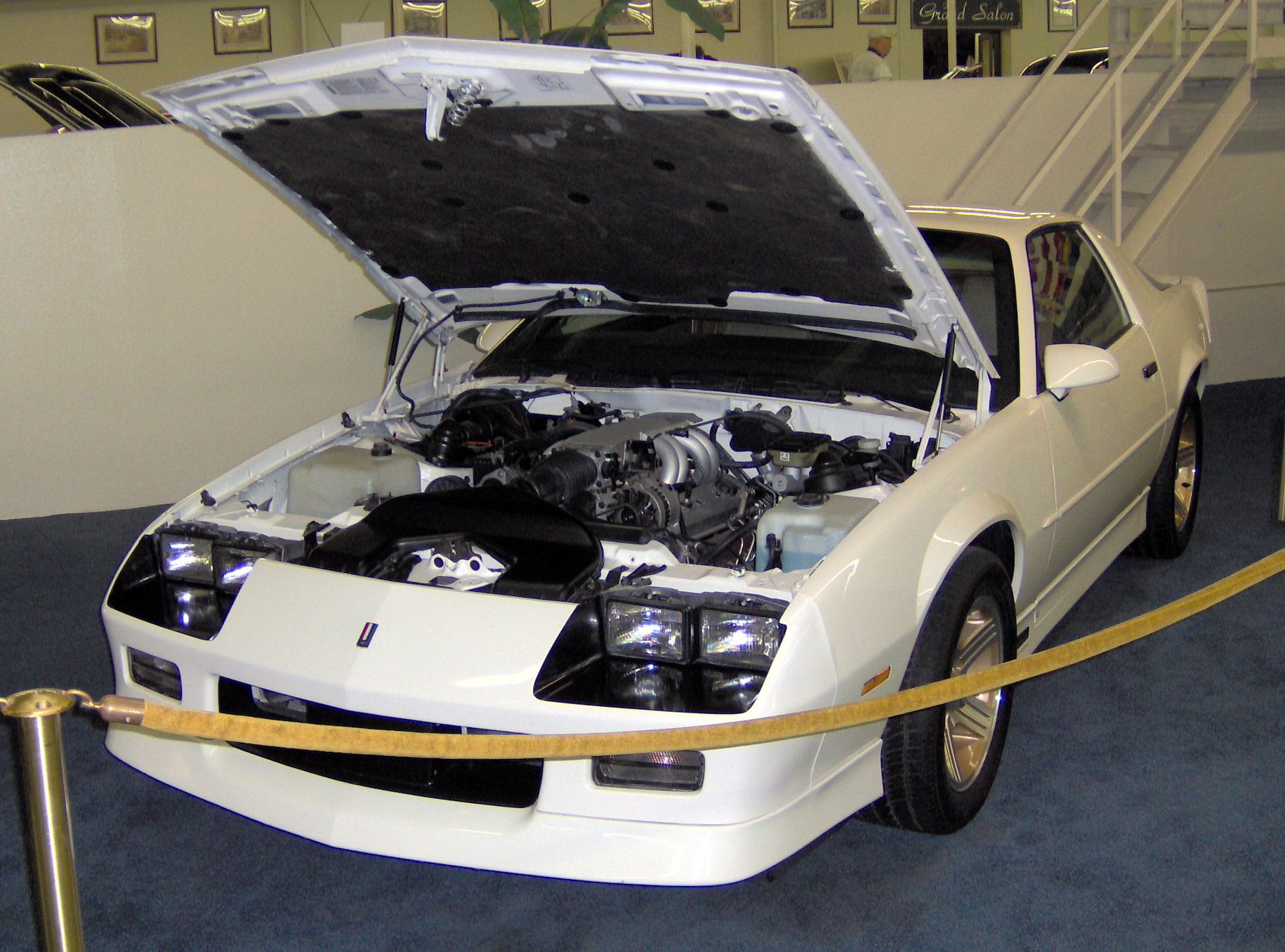
- optional Tuned Port Injection, the fuel-injection system of the Corvette.
Eighties Cars adds louvred bonnet inserts and more aggressive ground effects and spoilers than on the Z28. Four-wheel disc brakes, T-tops and air conditioning were among the options.

IROC-Z engines by year
| Year | Engine | Power (SAE net) | Torque | Note |
|---|---|---|---|---|
| 1985 | 5.0 L69 HO, four-barrel carburettor | 142 kW (190 hp) | 325 Nm (240 lb-ft) | manual gearbox only, per Eighties Cars |
| 1985 | 5.0 LB9 Tuned Port Injection | 160 kW (215 hp) | 373 Nm (275 lb-ft) | automatic only |
| 1986 | 5.0 LB9 TPI | 142 kW (190 hp) automatic / 160 kW (215 hp) manual | 386 Nm (285 lb-ft), automatic | manual TPI now offered |
| 1987 | 5.7 L98 TPI | 168 kW (225 hp) | 447 Nm (330 lb-ft) | automatic only |
| 1988 | 5.7 L98 TPI | 172 kW (230 hp) | 447 Nm (330 lb-ft) | |
| 1989 | 5.7 L98 TPI | 179 kW (240 hp) | 468 Nm (345 lb-ft) | TH700-R4 automatic only |
| 1990 | 5.7 L98 TPI | 183 kW (245 hp) | 468 Nm (345 lb-ft) | last year |
Eighties Cars also lists the carburettor 5.0 LG4 with 116 kW (155 bhp) as the standard engine of the 1985 Z28 range. Wikipedia gives 1986 for the 5.7 in its text and 1987 in its table; the table year is used here. Motor Trend timed a 1985 IROC-Z with the LB9 at 6.9 seconds from 0 to 60 mph, as Eighties Cars reports.

Fuel economy of the 1985 engines
Eighties Cars quotes the 1985 EPA ratings for the three 5.0 engines of the Z28 and IROC-Z range. The litre figures are our conversion from US miles per gallon.
| 1985 engine | EPA city | EPA highway |
|---|---|---|
| 5.0 LG4, carburettor, 116 kW (155 bhp) | 16 mpg (14.7 l/100 km) | 22 mpg (10.7 l/100 km) |
| 5.0 L69 HO, 142 kW (190 hp) | 15 mpg (15.7 l/100 km) | 24 mpg (9.8 l/100 km) |
| 5.0 LB9 TPI, 160 kW (215 hp) | 16 mpg (14.7 l/100 km) | 22 mpg (10.7 l/100 km) |
The fuel tank held 16.1 US gallons, about 61 litres, which Eighties Cars puts at a range of 250 to 275 miles (400 to 440 km) with a 10 % reserve.
Convertible, 1LE and special runs
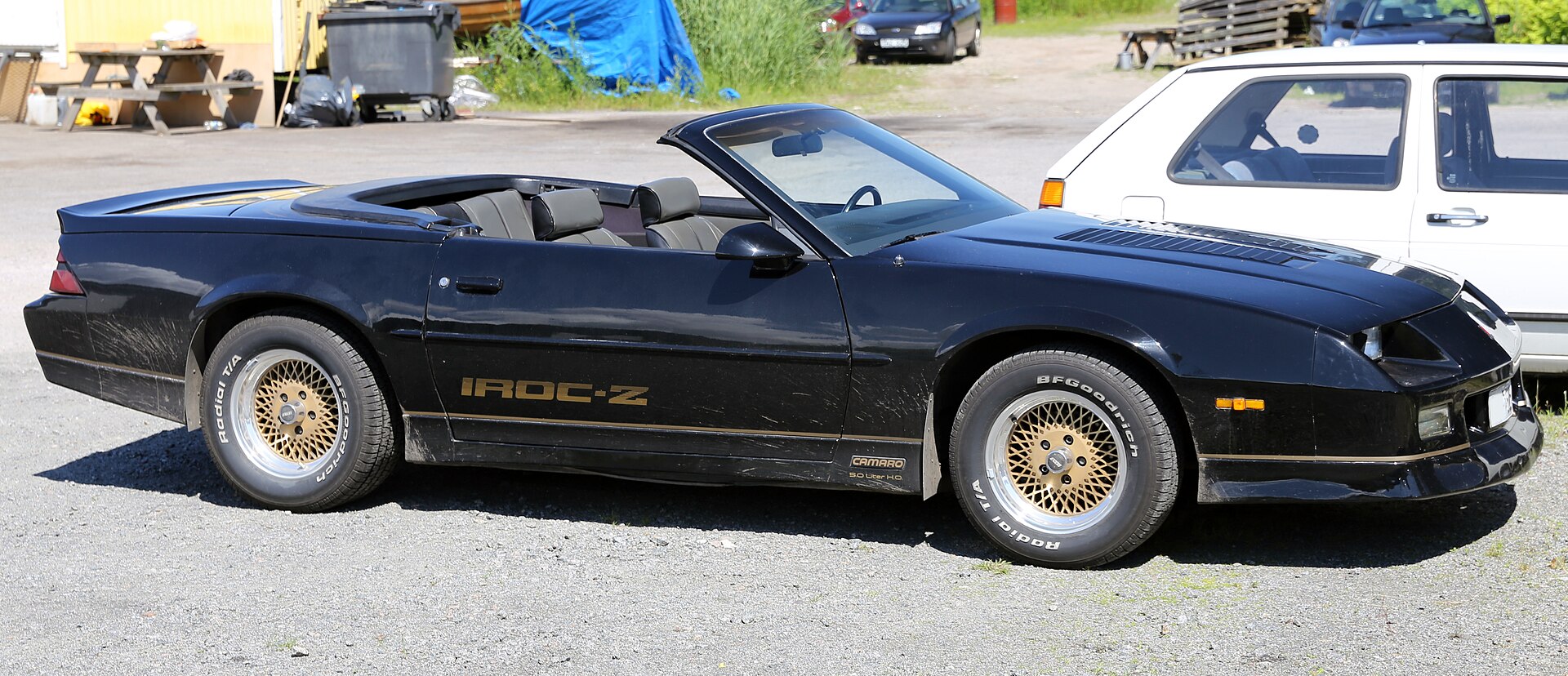
For 1987 the American Sunroof Corporation (ASC) converted T-top Camaros into convertibles. Wikipedia counts 1,007 of them across models but does not split out the IROC-Z share.
Some IROC-Zs received extra hardware. The G92 performance axle package without air conditioning triggered the 1LE equipment, built on 111 IROC-Z coupés in 1989 and 62 in 1990. In 1989, 1,426 coupés had the G92 package. Wikipedia also lists 2,497 IROC-Zs with the L69 and 205 with the LB9 and G92 axle in 1985.
| IROC-Z special figure | Number | Year |
|---|---|---|
| L69 IROC-Z | 2,497 | 1985 |
| LB9 with G92 axle | 205 | 1985 |
| G92 coupés | 1,426 | 1989 |
| 1LE IROC-Z coupés | 111 | 1989 |
| 1LE IROC-Z coupés | 62 | 1990 |
| Convertibles by ASC (all models) | 1,007 | 1987 |

Why the IROC-Z ended in 1990
Chevrolet decided not to renew its contract with the International Race of Champions, so 1990 was the last IROC-Z year. That year the Camaro also became the first F-body with a driver's airbag. For the 1991 facelift Chevrolet offered the RS and the Z28 again, but no IROC-Z.

Buying a Camaro IROC-Z
- Engine and gearbox: a 5.7 car should have an automatic; a manual car has a 5.0.
- Wheels: original 16-inch five-spoke wheels have "Front" or "Rear" cast into them.
- 1LE cars: check for the G92 axle and the absence of air conditioning on a claimed 1LE.
- Convertibles: 1987 and later, converted by ASC.
- 1988 on: the IROC-Z replaced the base Z28, so a 1988–1990 IROC-Z is the performance Camaro of those years.
Photo gallery

Chevrolet Camaro IROC-Z in our rankings
- No. 105 of 557 · Biggest engines: cars (5,733 cc · top 20%)
- No. 66 of 173 · Biggest engines: coupes (5,733 cc · top 39%)
- No. 37 of 91 · Most powerful cars of the 1990s (183 kW · top 41%)
- No. 24 of 59 · Most powerful cars of the 1980s (168 kW · top 43%)
- No. 176 of 368 · Most torque: cars (468 Nm · top 48%)
- No. 520 of 859 · Most powerful cars (183 kW · top 61%)
Bigger engine than 80% of ranked cars in the 1CARS catalog (No. 105 of 557).
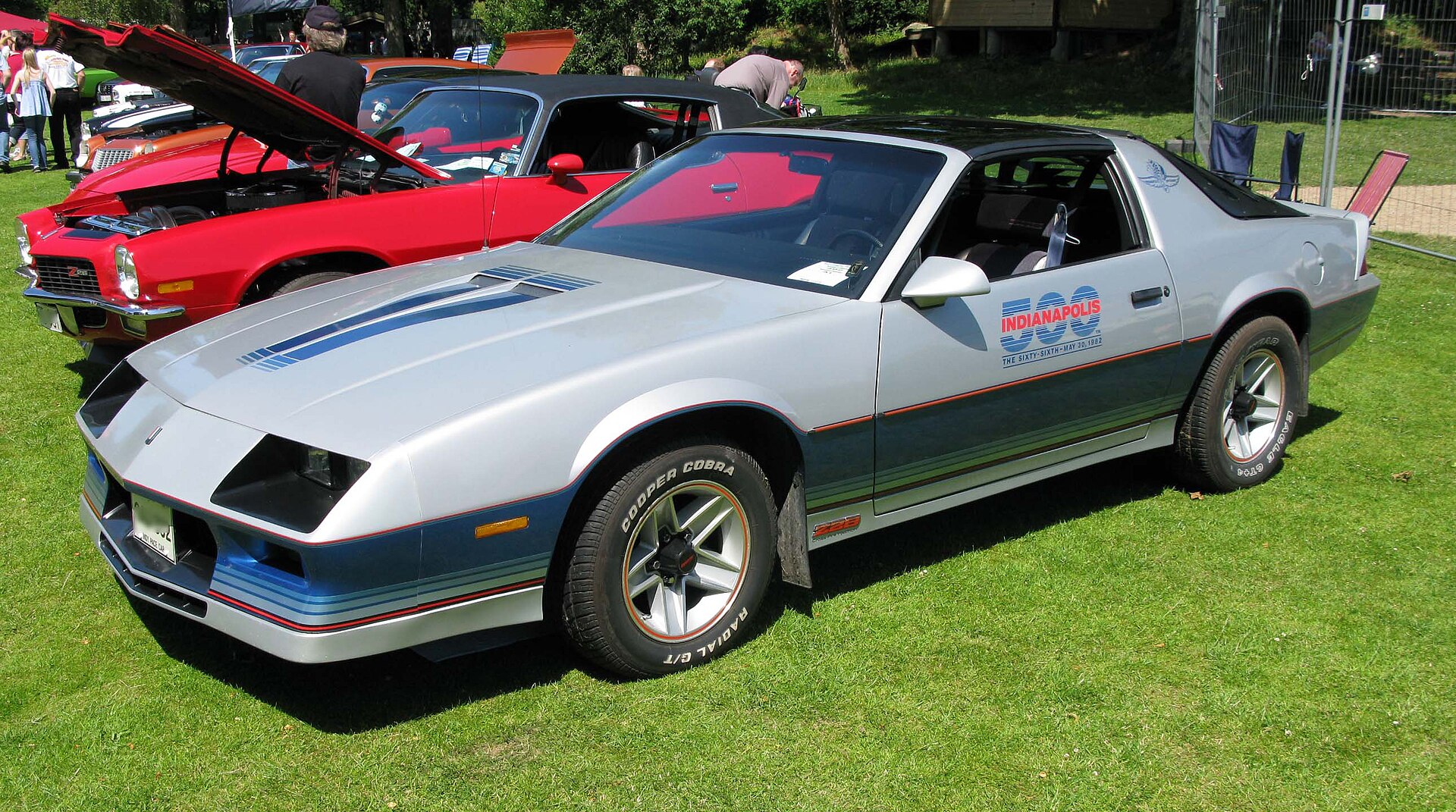
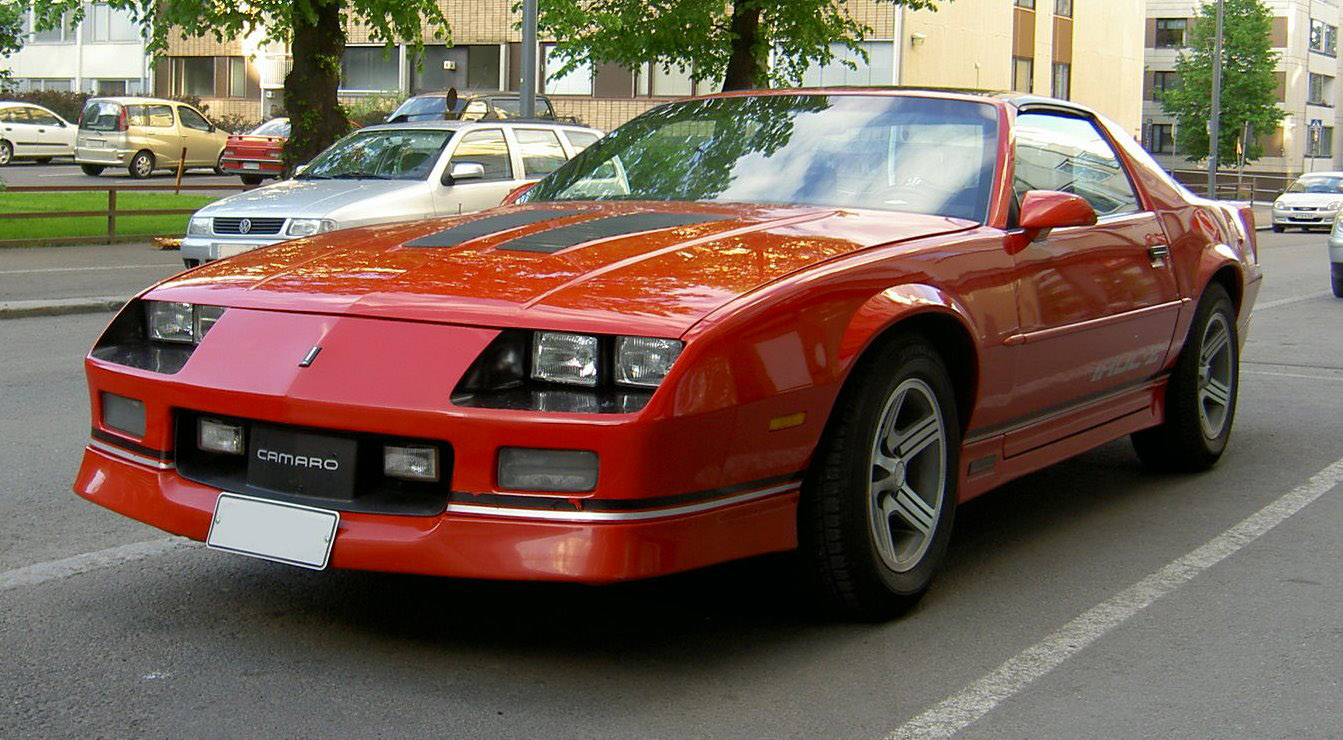
Chevrolet Camaro IROC-Z photos 6
FAQ
What does IROC-Z stand for?
IROC stands for the International Race of Champions; the IROC-Z was a performance package on the Camaro Z28.
What years was the IROC-Z made?
From 1985 to 1990. It started as a Z28 option and replaced the base Z28 from 1988.
What engines did the IROC-Z have?
5.0-litre V8s (L69 and LB9 Tuned Port Injection) and from 1987 the 5.7-litre L98 TPI, with 142–183 kW (190–245 hp, SAE net).
How fast is a Camaro IROC-Z?
Motor Trend timed a 1985 LB9 car at 6.9 seconds from 0 to 60 mph, according to Eighties Cars.
Why was the IROC-Z discontinued?
Chevrolet did not renew its International Race of Champions contract, so the name ended after 1990.
Data sources
Data checked by an editor against the sources below.