 Bentley 3 Litre
Specs, engines and history
Published Sources (1) Report an error
By Felix Hartmann, Automotive Technology & EV Contributor
- Built
- 1921–1929
- Top power
- 52 kW (71 PS)
Which 3 Litre to choose
Our verdict · Felix Hartmann
- For touring: a Blue Label car from 1924 onward, with four-wheel brakes and usually a Vanden Plas tourer body.
- For sporting use: a Red Label Speed Model, the most common sporting version with 513 built.
- For the ultimate version: one of the 18 Green Label Super Sports cars on the short chassis.
- For long-distance comfort: a car on the 130 in wheelbase, available from 1923.
Check the chassis number against the factory records, because bodies and engines were often changed over the decades. Later Bentley models are listed in the Bentley catalogue.
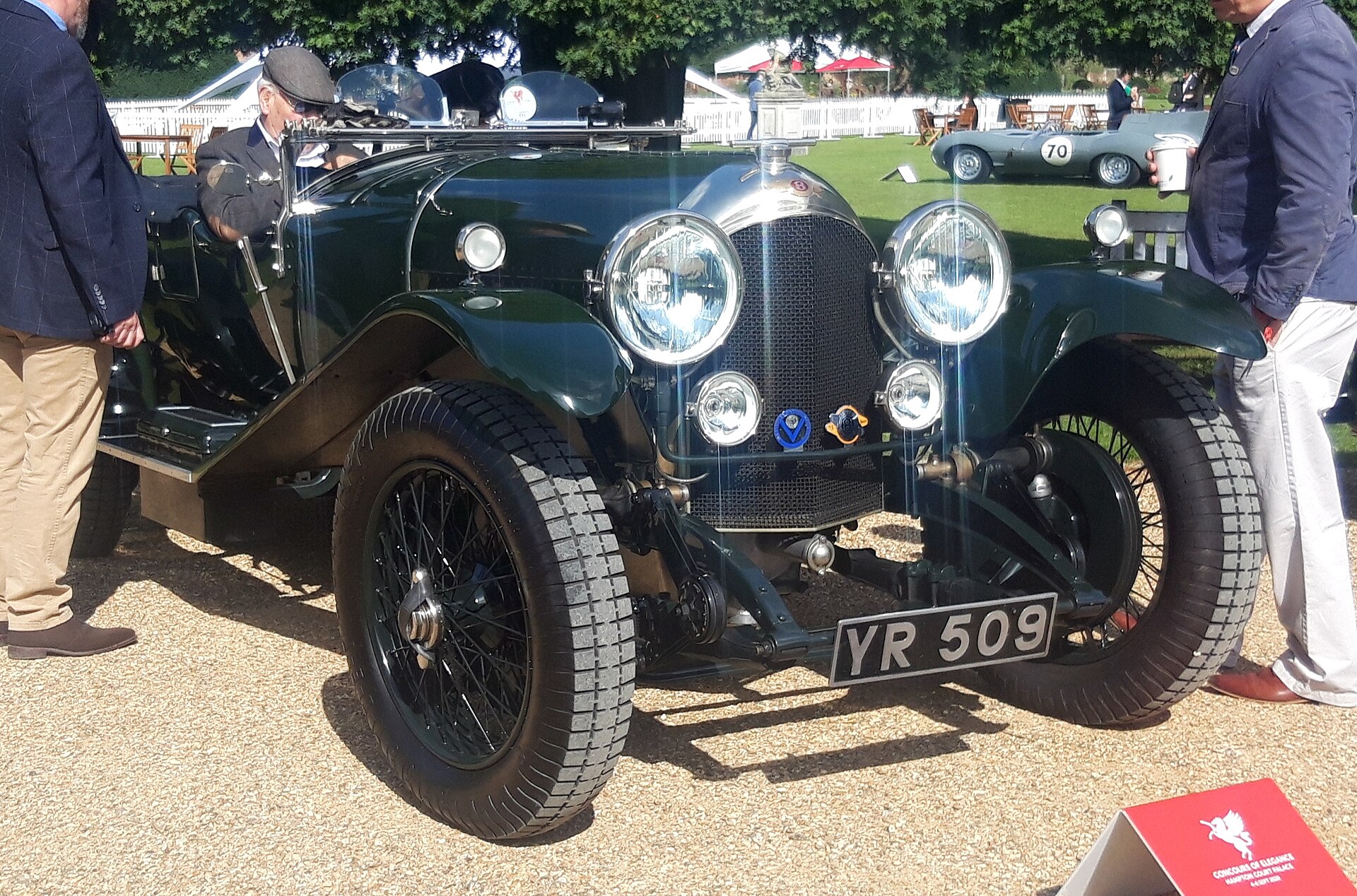
The Bentley 3 Litre was the first car of Bentley Motors, built at Cricklewood in north London from 1921 to 1929. W. O. Bentley's four-cylinder sports car combined a 16-valve overhead-camshaft engine with a long, strong chassis, and it won the 24 Hours of Le Mans in 1924 and 1927. With 1,622 chassis it was also the best-selling model of the original Bentley company. The 4½ Litre succeeded it.
In short
- Chassis shown in 1919, first customer car delivered in September 1921; 1,622 built up to 1929.
- 2,996 cc straight-four with a single overhead camshaft, four valves and two spark plugs per cylinder: about 52 kW (70 hp) untuned.
- Standard car about 129 km/h (80 mph); the Super Sports was guaranteed to reach 161 km/h (100 mph).
- Le Mans winner in 1924 (Duff and Clement) and 1927 (Benjafield and Davis in "Old Number 7").
Bentley 3 Litre at a glance
| Parameter | Metric | Imperial |
|---|---|---|
| Maker | Bentley Motors Limited, Cricklewood | — |
| Production | 1921–1929 | — |
| Built | 1,622 chassis | — |
| Engine | 2,996 cc straight-four, SOHC, four valves per cylinder | 183 cu in |
| Bore × stroke | 80 × 149 mm | 3.1 × 5.9 in |
| Power | about 52 kW (70 hp) untuned | — |
| Gearbox | four-speed manual | — |
| Brakes | rear wheels only to 1924, then all four wheels | — |
| Wheelbase | 2,743 mm, 2,984 mm or 3,302 mm | 108 / 117.5 / 130 in |
| Weight | 1,800 kg (English Wikipedia) | 4,000 lb |
| Top speed | about 129 km/h (standard), 145 km/h (Speed Model), over 161 km/h (Super Sports) | 80 / 90 / 100 mph |
| Successor | Bentley 4½ Litre | — |
Development: 1919 to the first delivery
English Wikipedia credits the car to Walter Owen Bentley, with a chassis derived from a Humber design by Frederick Tasker Burgess and an engine designed by Clive Gallop. English Wikipedia notes that the engine was based on the 1914 Mercedes racing engine.
The chassis appeared at the London Motor Show in 1919, but the engine was not ready; German Wikipedia describes the first exhibit as a non-running mock-up shown in May 1919. Perfecting the engine took two years, and the first customer car was delivered in September 1921. Bentley sold rolling chassis and usually sent buyers to Vanden Plas for the body. Most cars were bodied as open tourers, and some dealers ordered short runs of identical bodies. Customers included Prince George, Duke of Kent, and the actresses Gertrude Lawrence and Beatrice Lillie.
| Year | Event |
|---|---|
| May 1919 | chassis and mock-up engine shown |
| September 1921 | first customer car delivered |
| 1923 | long 130 in wheelbase added; fourth place at the first Le Mans 24 Hours |
| 1924 | four-wheel brakes; Speed and short-chassis models; Le Mans win |
| 1926–1927 | factory fits a Roots supercharger to chassis 220 |
| 1927 | second Le Mans win with "Old Number 7" |
| 1929 | production ends; the 4½ Litre takes over |

The 16-valve engine
The engine was a cast-iron monobloc four with a bore of 80 mm and a very long stroke of 149 mm, giving 2,996 cc. A single overhead camshaft, driven by bevel gears, opened four valves per cylinder in hemispherical, pent-roof combustion chambers. Each cylinder had two spark plugs, and two carburettors fed the engine, which used dry-sump lubrication.
English Wikipedia gives about 52 kW (70 hp) for the untuned engine. The 1927 Le Mans entry list rated the 3-litre racing engines at 66 kW (88 bhp). With a weight of about 1,800 kg, the standard car had around 29 kW per tonne, and our power-to-weight calculator shows how far that is from a modern sports car. Ettore Bugatti called the 3 Litre "the fastest lorry in the world", a remark the company took as a compliment.
A four-speed gearbox drove the rear wheels. Until 1924 only the rear wheels had brakes; four-wheel brakes arrived that year. In the winter of 1926–1927 the factory service department fitted a Roots-type supercharger to chassis 220, driven from the crankshaft, two years before Tim Birkin's supercharged Bentleys.

Blue, Red and Green Label versions
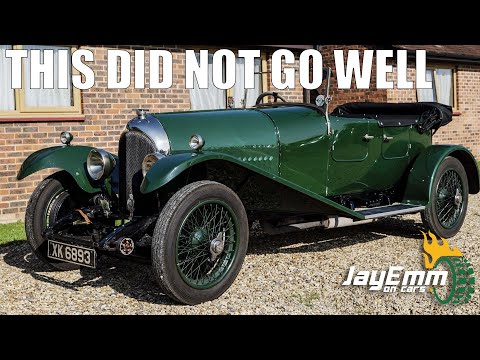
The radiator badge told buyers which version they had, although customers could order other colours.
| Variant | Years | Body / purpose | Engine | Notes |
|---|---|---|---|---|
| Standard (Blue Label) | 1921–1929 | touring, 117.5 in or 130 in wheelbase (long from 1923) | 2,996 cc, about 52 kW | 1,088 built; five-year warranty |
| Speed Model (Red Label) | 1924–1929 | sporting tourer, 117.5 in | 5.3:1 compression | 513 built; about 145 km/h; five-year warranty |
| Super Sports (Green Label) | 1924–1929 | short 108 in chassis | 6.3:1 compression | 18 built; 161 km/h guaranteed; 12-month warranty |
| Experimental | 1919–1921 | development cars | 2,996 cc | 3 built |
German Wikipedia describes the 100 mph Super Sports as the fastest series production road car in the world at the time, a title later taken by the 4½ Litre.
Le Mans: 1923, 1924 and 1927
Bentley entered the first 24 Hours of Le Mans, on 26–27 May 1923, with one 3 Litre for John Duff and Frank Clement. A stone broke a headlamp before midnight, and just before midday another punctured the fuel tank near Arnage. Clement walked back to the pits and returned with fuel on a gendarme's bicycle; the repair, with a cork in the hole, took about two and a half hours. The car still finished fourth equal with 112 laps and set the fastest lap at 107.33 km/h (66.69 mph).
A year later, on 14–15 June 1924, Duff and Clement won the race outright in car number 8, the only entry from outside France. It was not easy. At about 2 am a gearbox blockage took half an hour to trace to a stray staple in the electrics, and at 2:30 pm a precautionary wheel change turned into a half-hour delay when one rear wheel would not come off. Under the new rules the final laps fell below the required average and were not counted, but the 120 laps completed before the long stop were enough: the Bentley finished one lap ahead of the Lorraine-Dietrich of Stoffel and Brisson. English Wikipedia counts 41 starters, of which 12 completed the 24 hours. In 1927 Bentley sent three cars. At about 9:40 pm, as drizzle began, a spinning car blocked the road at the Maison Blanche curves and eight cars collided, among them all three Bentleys. Sammy Davis hit the wreckage sideways in the 3 Litre known as "Old Number 7", drove to the pits and repaired the car in about 30 minutes. With Dudley Benjafield he went on to win by 20 laps, covering 137 laps of the 17.3 km circuit with damaged steering that pulled to the right.

Rolls-Royce era and surviving cars
When Rolls-Royce bought Bentley in 1931, it acquired the remaining 3 Litre stock as well. German Wikipedia records that in 1936 four used 3 Litres were rebuilt from stock parts, given new "RC" chassis numbers and Vanden Plas bodies, and sold with a five-year warranty. The full story of the marque is in our history of Bentley Motors, and the takeover from the other side in our history of Rolls-Royce.
The oldest surviving production Bentley is chassis 3, with engine 4 and a body by R. Harrison & Son, registered AX 3827. A 1927 Speed Model, chassis 1209 DE, is in the Simeone Foundation Automotive Museum in Philadelphia, and a 1924 car has been on show at the Shepparton Motor Museum in Victoria, Australia, since July 2019.
Photo gallery


Bentley 3 Litre in our rankings
- No. 445 of 912 · Longest-running car nameplates (8 years · top 53%)
- No. 71 of 79 · Most powerful convertibles and roadsters (52 kW · top 92%)
- No. 826 of 859 · Most powerful cars (52 kW · top 97%)
- No. 108 of 109 · Most powerful British cars (52 kW)
In production longer than 47% of ranked nameplates in the 1CARS catalog (No. 445 of 912).
FAQ
How many Bentley 3 Litre were built?
1,622 chassis between 1921 and 1929: 1,088 standard cars, 513 Speed Models, 18 Super Sports and 3 experimental cars.
What engine does the Bentley 3 Litre have?
A 2,996 cc straight-four with a single overhead camshaft, four valves and two spark plugs per cylinder, rated at about 52 kW (70 hp) untuned.
How fast is a Bentley 3 Litre?
About 129 km/h (80 mph) for the standard car, 145 km/h (90 mph) for the Speed Model and over 161 km/h (100 mph) for the Super Sports.
Did the Bentley 3 Litre win Le Mans?
Yes, twice: in 1924 with John Duff and Frank Clement, and in 1927 with Dudley Benjafield and Sammy Davis in "Old Number 7".
What do the Blue, Red and Green Labels mean?
The badge colour marked the version: Blue for the standard car, Red for the Speed Model and Green for the 100 mph Super Sports.
Data sources
Data checked by an editor against the sources below.