 Ford Taurus
All generations, specs and history
Published Sources (5) Report an error
By Sarah Whitmore, Senior Automotive Writer
- Built
- 1986–2019
- Generations
- 8
- Top power
- 272 kW (370 PS)
Timeline
Taurus generations
Click a generation for its own page
V and X overlapped in 2008–2009, so X sits on a second lane
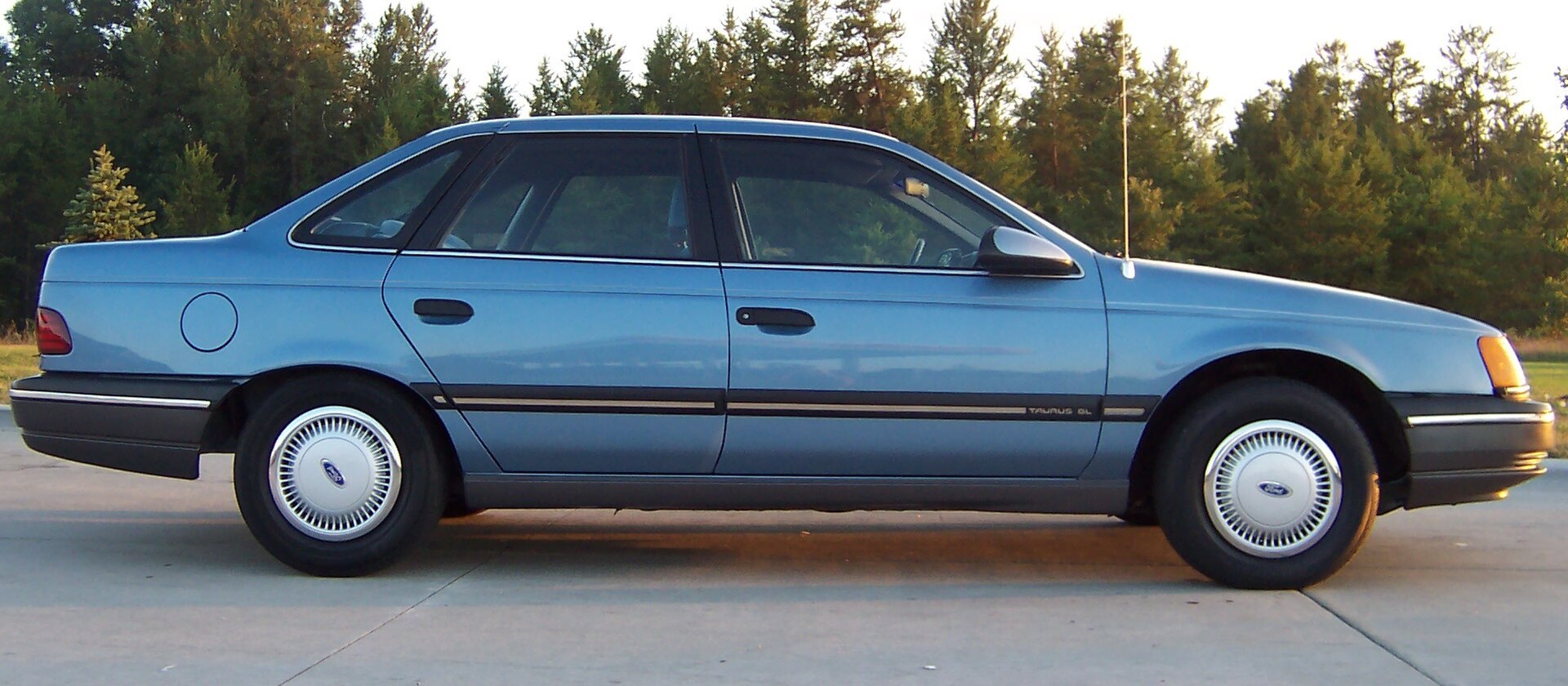
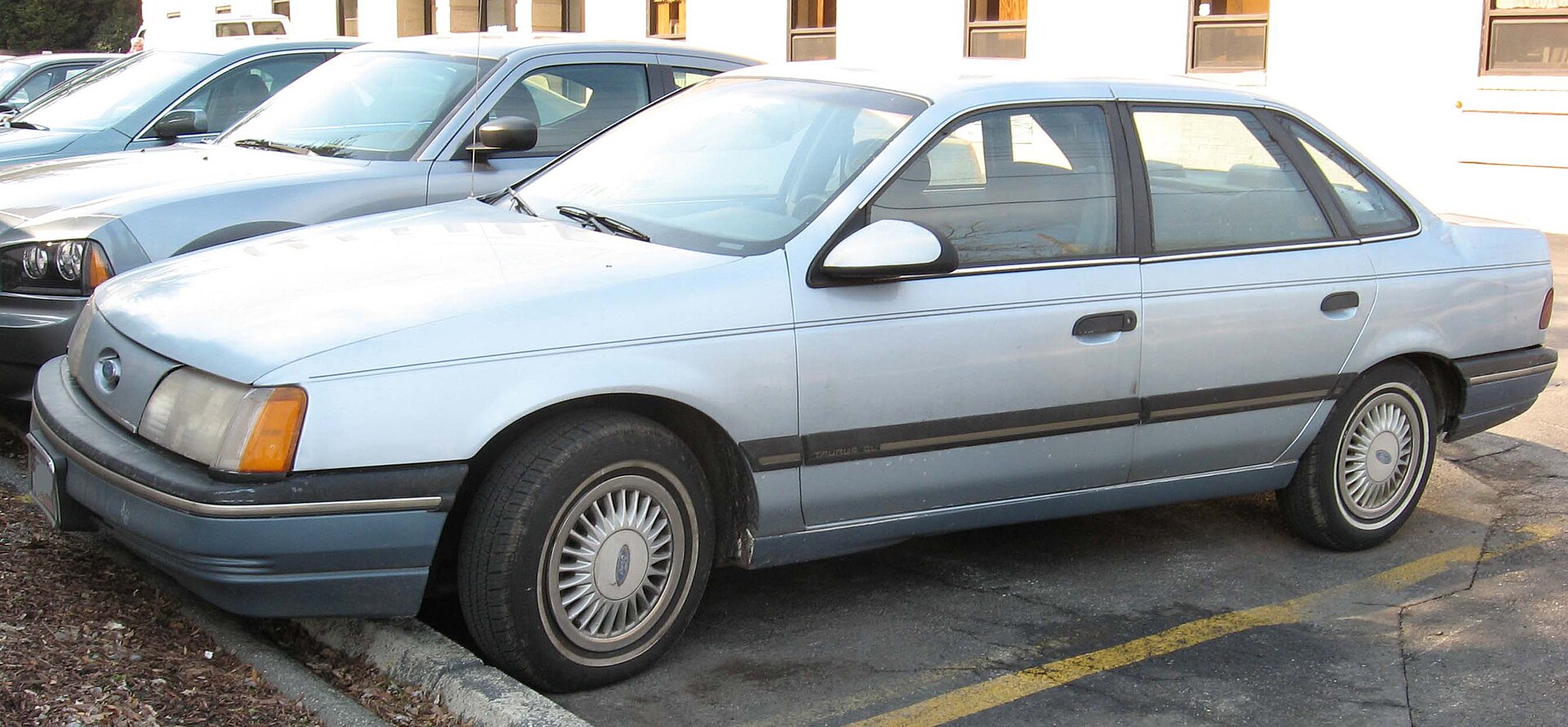
- Taurus I 1985–1991 · Sedan, Station wagon
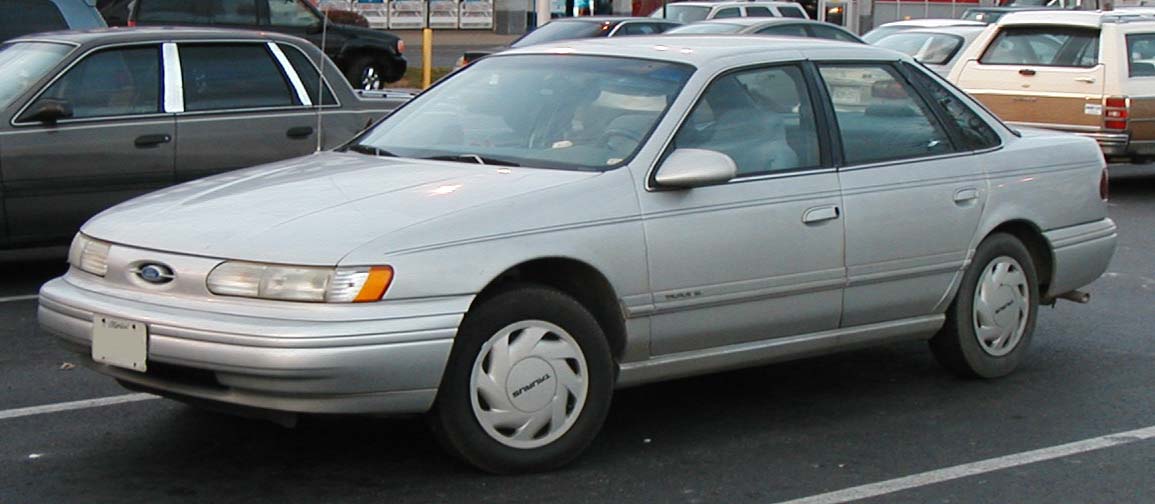
- Taurus II 1991–1995 · Sedan, Station wagon
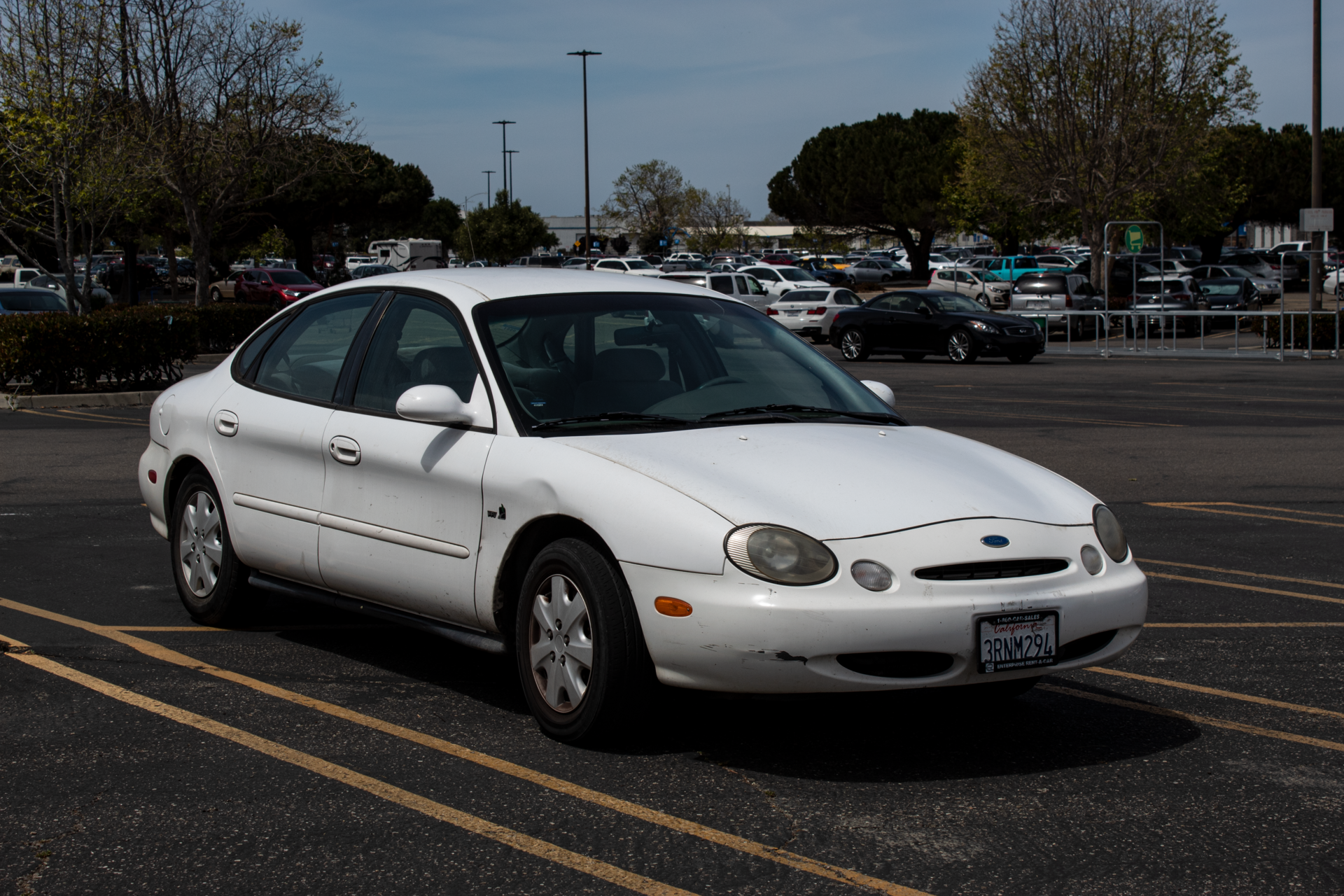
- Taurus III 1995–1999 · Sedan, Station wagon
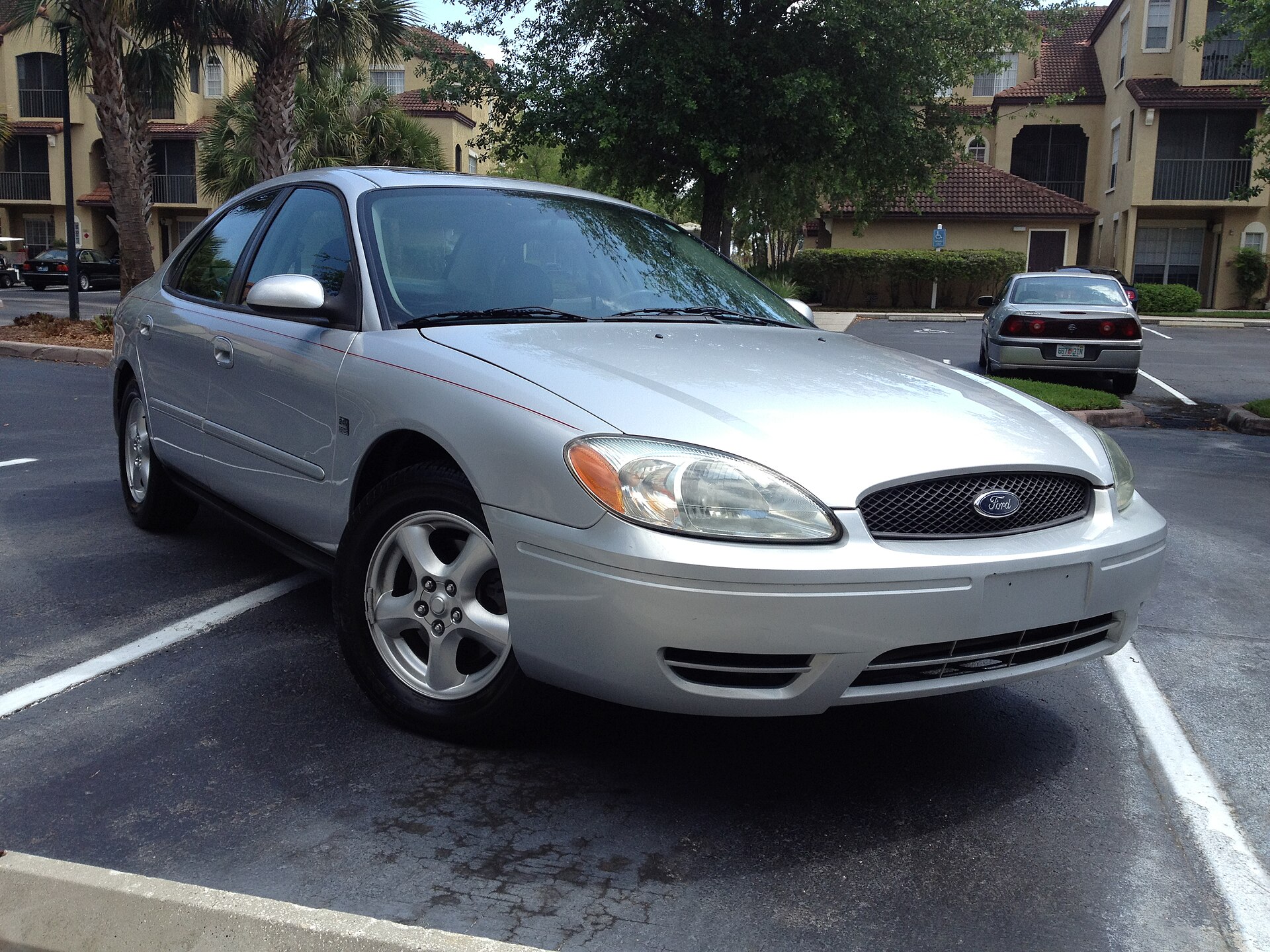
- Taurus IV 2000–2006 · Sedan, Station wagon
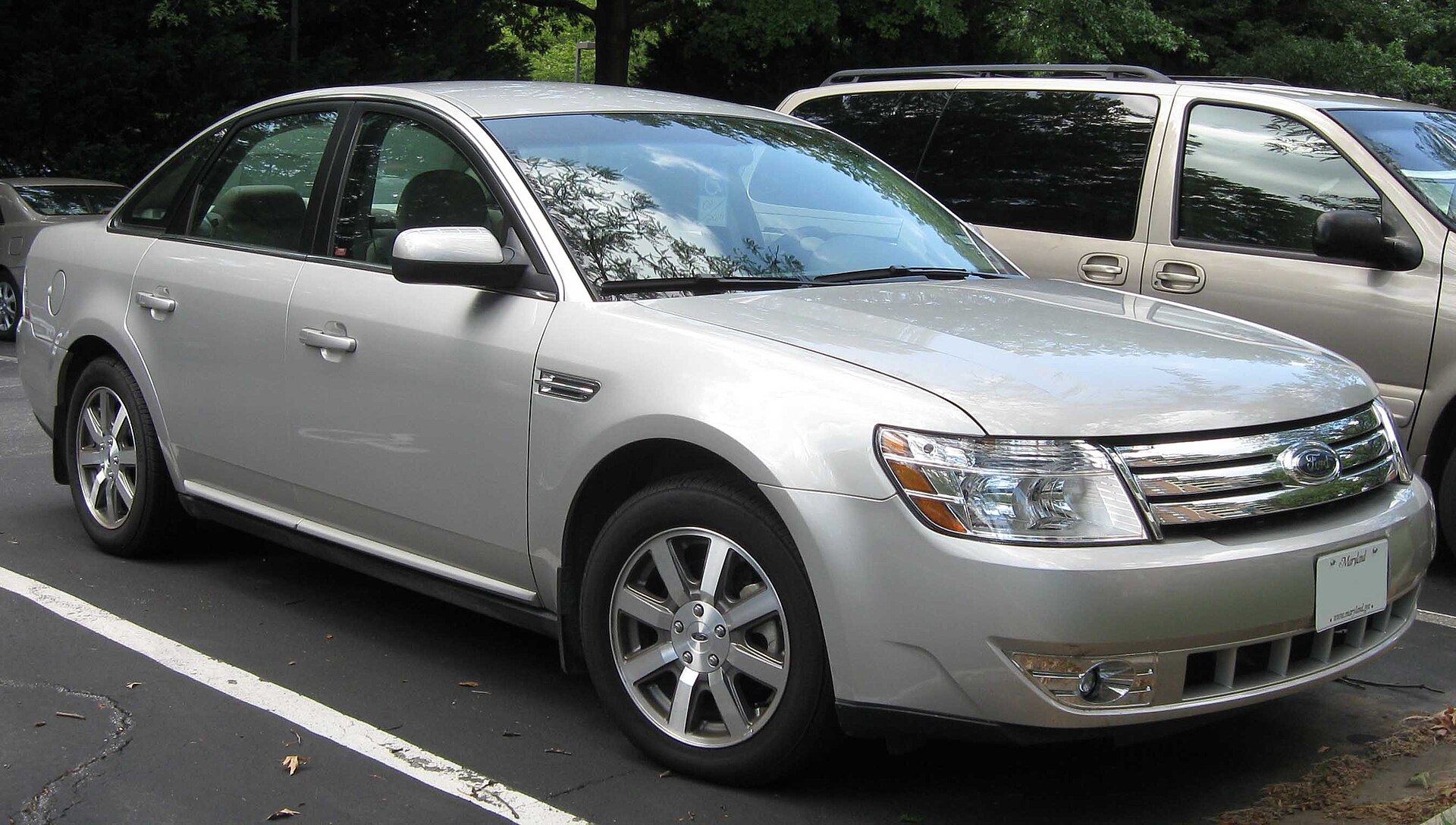
- Taurus V 2007–2009 · Sedan · 196 kW (266 PS)
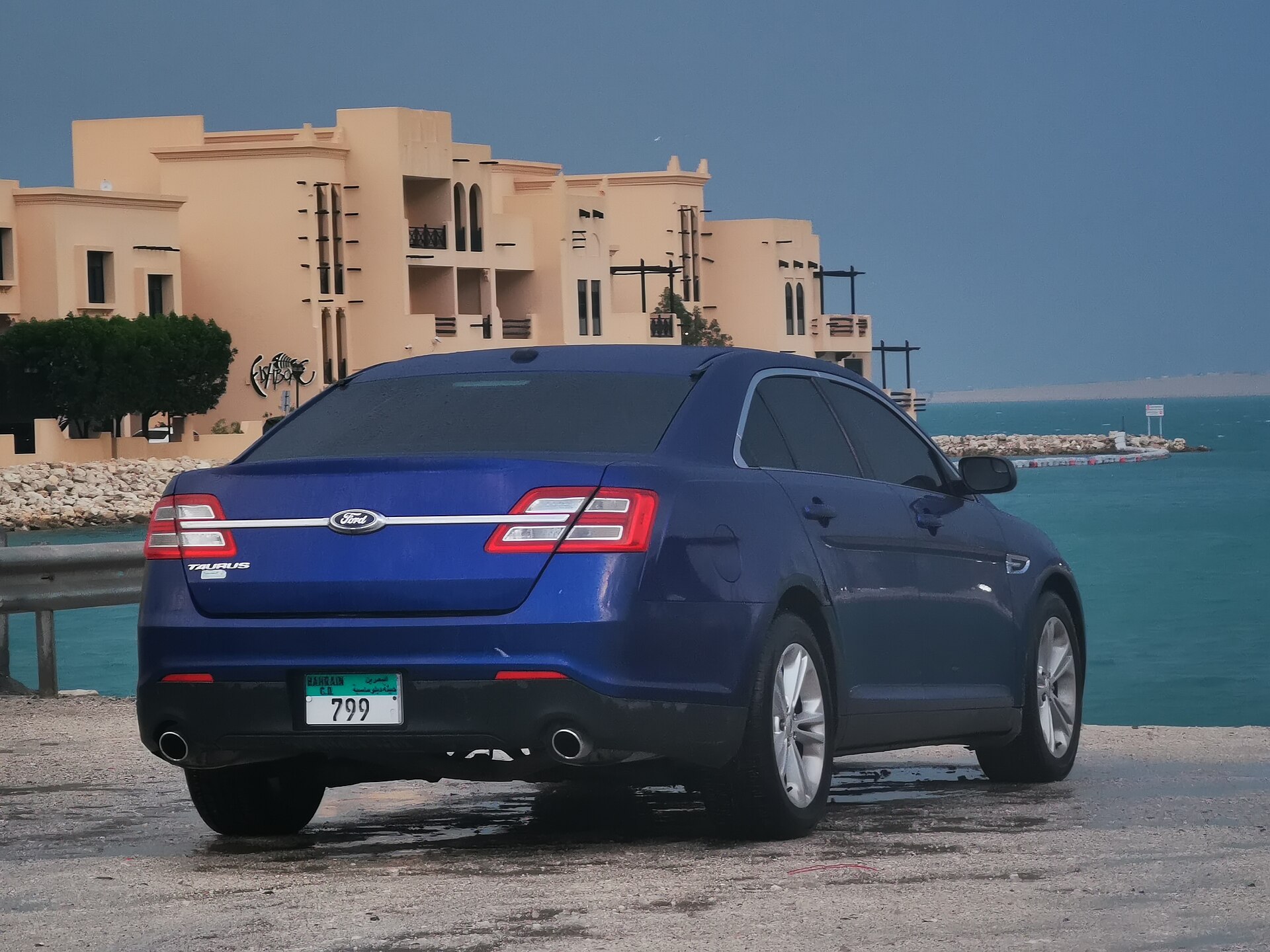
- Taurus VI 2010–2019 · Sedan
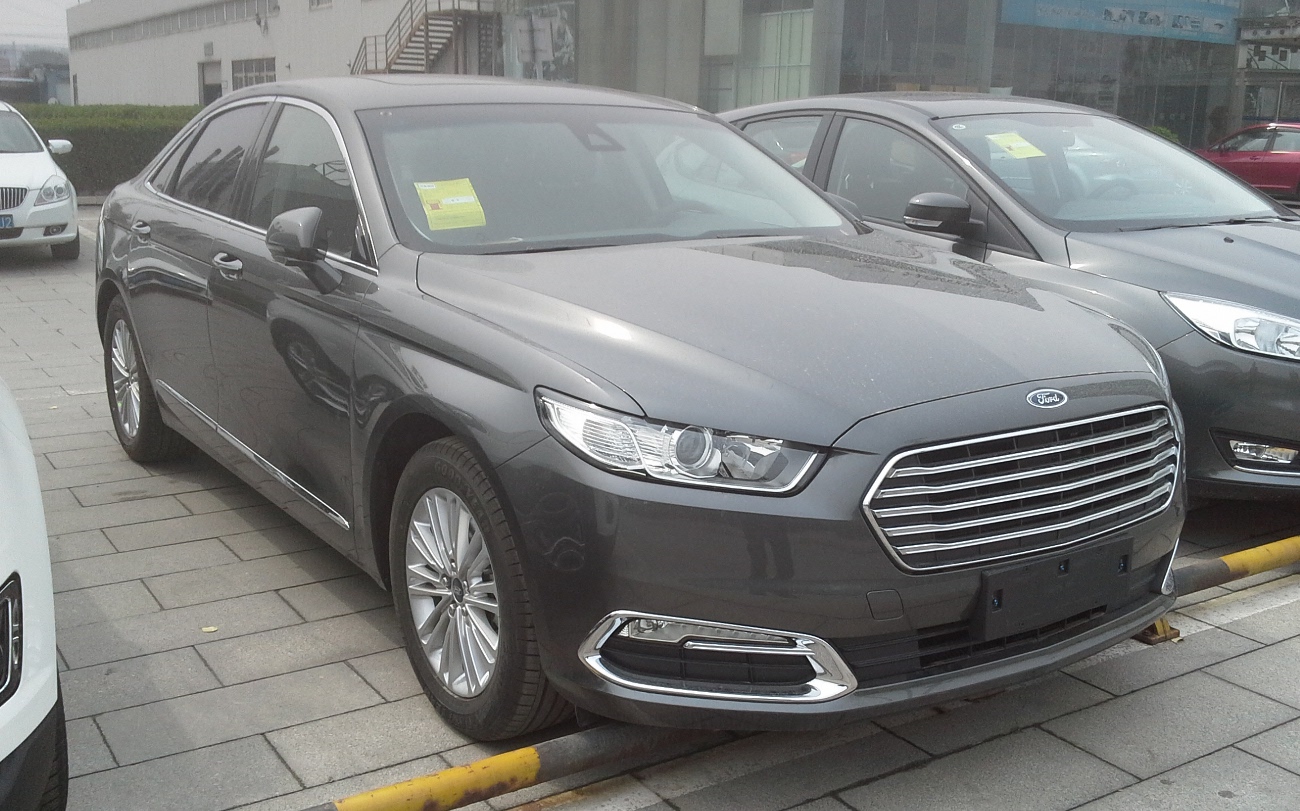
- Taurus VII 2015–2022 · Sedan
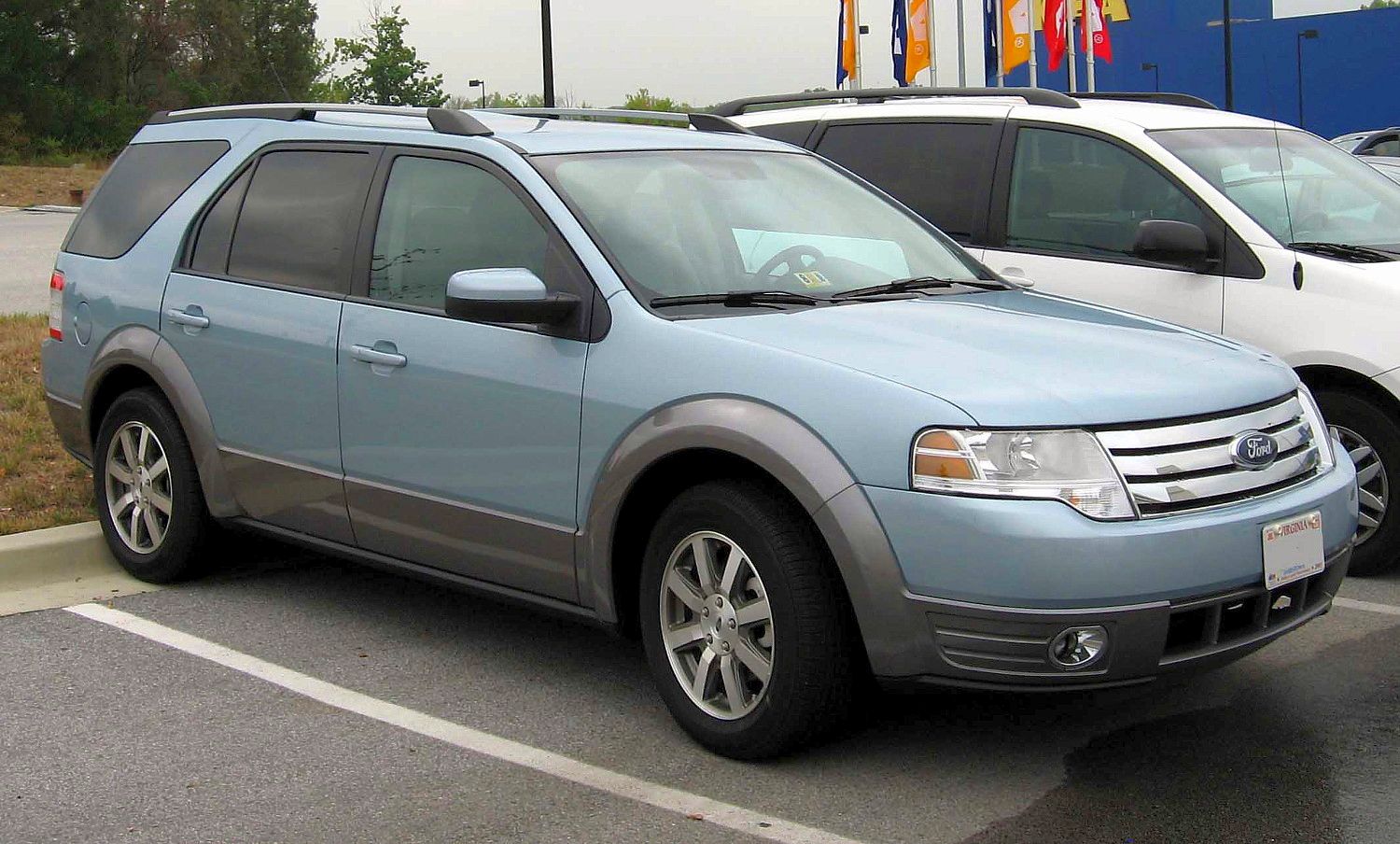
- Taurus X 2008–2009
Newest first · 8 generations since 1985
-
2015
-
2010
-
2008
-
2007
-
2000
-
1995
-
1991
-
1985


All generations by year: Taurus VII (2015–2022) · Taurus VI (2010–2019) · Taurus X (2008–2009) · Taurus V (2007–2009) · Taurus IV (2000–2006) · Taurus III (1995–1999) · Taurus II (1991–1995) · Taurus I (1985–1991)
Which one is mine?
Pick the year of first registration to see which generation it is.
Check by VINWhich generation to choose
Our verdict · Sarah Whitmore
- For a cheap, simple sedan: a fourth-generation car (2000–2007) with the pushrod 3.0 Vulcan V6 and the bigger boot.
- For collectors: a 1989–1991 SHO with the Yamaha V6 and the manual gearbox, the car that made the nameplate famous with enthusiasts.
- For a modern, fast sedan: a 2013–2019 SHO with 272 kW and all-wheel drive. Check the water pump on all 3.5 and 3.7 V6 engines: it sits inside the engine and its failure can damage the motor, which led to a class action.
- Avoid unless documented: 1996–1999 SHO V8 cars without proof of the camshaft repair.
The Ford Taurus was the front-wheel-drive sedan and wagon that Ford launched for the 1986 model year to replace the rear-drive LTD. Its rounded, aerodynamic body broke with the boxy American sedans of the early 1980s and won Motor Trend's Car of the Year award. From 1992 to 1996 it was the best-selling car in the United States. Six generations were built in Chicago and Atlanta until March 2019, and a separate long-wheelbase Taurus was sold in China from 2016 to 2022.
In short
- Built from October 1985 to March 2019 in the US; 7,519,919 Taurus were assembled up to the first withdrawal of the name.
- Mid-size from 1986 to 2007, full-size on the Volvo-derived D3 platform from 2008 to 2019.
- Engines from the 67 kW (90 hp) 2.5-litre four to the 272 kW (365 hp) 3.5 EcoBoost V6 of the 2010–2019 SHO.
- Motor Trend Car of the Year 1986, Car and Driver Ten Best 1986, America's best-selling car 1992–1996.
Size at a glance
Ford Taurus V
The Ford Taurus VI is 28 mm longer, 53 mm wider and 20 mm lower than the Ford Taurus V.
| Dimensions | Ford Taurus VI | Ford Taurus V | Difference |
|---|---|---|---|
| Length | 5,154 mm202.9 in | 5,126 mm201.8 in | +28 mm+1.1 in |
| Width | 1,935 mm76.2 in | 1,882 mm74.1 in | +53 mm+2.1 in |
| Height | 1,542 mm60.7 in | 1,562 mm61.5 in | −20 mm−0.8 in |
| Wheelbase | 2,868 mm112.9 in | 2,863 mm112.7 in | +5 mm+0.2 in |
Specs by version
Engines
| Version | Engine | Power | Gearbox | Drive | Production years |
|---|---|---|---|---|---|
| Taurus I · 2.5 HSC I4 | 2.5 l · 4 cyl · Petrol 2,500 cc | 67 kW 91 PS90 hp | — | Front-wheel drive | 1986–1991 |
| Taurus I · 3.0 Vulcan V6 | 3.0 l · 6 cyl · Petrol 3,000 cc | 104 kW 141 PS139 hp | 4-sp Automatic | Front-wheel drive | 1986–1991 |
| Taurus I · 3.8 Essex V6 | 3.8 l · 6 cyl · Petrol 3,800 cc | 104 kW 141 PS139 hp | 4-sp Automatic | Front-wheel drive | 1988–1991 |
| Taurus I · SHO 3.0 V6 (Yamaha) | 3.0 l · 6 cyl · Petrol 3,000 cc | 164 kW 223 PS220 hp | 5-sp Manual | Front-wheel drive | 1989–1991 |
| Taurus II · 3.0 Vulcan V6 | 3.0 l · 6 cyl · Petrol 3,000 cc | 104 kW 141 PS139 hp | 4-sp Automatic | Front-wheel drive | 1992–1995 |
| Taurus II · SHO 3.0 V6 (Yamaha) | 3.0 l · 6 cyl · Petrol 3,000 cc | 164 kW 223 PS220 hp | 5-sp Manual | Front-wheel drive | 1992–1995 |
| Taurus III · 3.0 Vulcan V6 | 3.0 l · 6 cyl · Petrol 3,000 cc | 108 kW 147 PS145 hp | 4-sp Automatic | Front-wheel drive | 1996–1999 |
| Taurus III · 3.0 Duratec V6 | 3.0 l · 6 cyl · Petrol 3,000 cc | 149 kW 203 PS200 hp | 4-sp Automatic | Front-wheel drive | 1996–1999 |
| Taurus III · SHO 3.4 V8 | 3.4 l · 8 cyl · Petrol 3,400 cc | 175 kW 238 PS235 hp | 4-sp Automatic | Front-wheel drive | 1996–1999 |
| Taurus IV · 3.0 Vulcan V6 | 3.0 l · 6 cyl · Petrol 3,000 cc | 116 kW 158 PS156 hp | 4-sp Automatic | Front-wheel drive | 2000–2007 |
| Taurus IV · 3.0 Duratec V6 | 3.0 l · 6 cyl · Petrol 3,000 cc | 149 kW 203 PS200 hp | 4-sp Automatic | Front-wheel drive | 2000–2005 |
| Taurus V · 3.5 Duratec V6 | 3.5 l · 6 cyl · Petrol 3,500 cc | 196 kW 266 PS263 hp | 6-sp Automatic | Front-wheel drive | 2008–2009 |
| Taurus V · 3.5 Duratec V6 AWD | 3.5 l · 6 cyl · Petrol 3,500 cc | 196 kW 266 PS263 hp | 6-sp Automatic | All-wheel drive | 2008–2009 |
| Taurus VI · 2.0 EcoBoost I4 | 2.0 l · 4 cyl · Petrol 2,000 cc | 179 kW 243 PS240 hp | 6-sp Automatic | Front-wheel drive | 2013–2017 |
| Taurus VI · 3.5 V6 | 3.5 l · 6 cyl · Petrol 3,500 cc | 196 kW 266 PS263 hp | 6-sp Automatic | Front-wheel drive | 2010–2012 |
| Taurus VI · 3.5 V6 | 3.5 l · 6 cyl · Petrol 3,500 cc | 215 kW 292 PS288 hp | 6-sp Automatic | Front-wheel drive | 2013–2019 |
| Taurus VI · SHO 3.5 EcoBoost V6 | 3.5 l · 6 cyl · Petrol 3,500 cc | 272 kW 370 PS365 hp | 6-sp Automatic | All-wheel drive | 2010–2019 |
Dimensions and weight
Show all 17 versions
| Version | Length | Width | Height | Wheelbase | Kerb weight |
|---|---|---|---|---|---|
| Taurus I · 2.5 HSC I4 | 4,785 mm188.4 in | 1,798 mm70.8 in | 1,379 mm54.3 in | 2,692 mm106.0 in | 1,380 kg3,042 lb |
| Taurus I · 3.0 Vulcan V6 | 4,785 mm188.4 in | 1,798 mm70.8 in | 1,379 mm54.3 in | 2,692 mm106.0 in | 1,380 kg3,042 lb |
| Taurus I · 3.8 Essex V6 | 4,785 mm188.4 in | 1,798 mm70.8 in | 1,379 mm54.3 in | 2,692 mm106.0 in | 1,380 kg3,042 lb |
| Taurus I · SHO 3.0 V6 (Yamaha) | 4,785 mm188.4 in | 1,798 mm70.8 in | 1,379 mm54.3 in | 2,692 mm106.0 in | 1,380 kg3,042 lb |
| Taurus II · 3.0 Vulcan V6 | 4,877 mm192.0 in | 1,808 mm71.2 in | — | 2,692 mm106.0 in | — |
| Taurus II · SHO 3.0 V6 (Yamaha) | 4,877 mm192.0 in | 1,808 mm71.2 in | — | 2,692 mm106.0 in | — |
| Taurus III · 3.0 Vulcan V6 | 5,016 mm197.5 in | 1,854 mm73.0 in | 1,400 mm55.1 in | 2,756 mm108.5 in | — |
| Taurus III · 3.0 Duratec V6 | 5,016 mm197.5 in | 1,854 mm73.0 in | 1,400 mm55.1 in | 2,756 mm108.5 in | — |
| Taurus III · SHO 3.4 V8 | 5,016 mm197.5 in | 1,854 mm73.0 in | 1,400 mm55.1 in | 2,756 mm108.5 in | — |
| Taurus IV · 3.0 Vulcan V6 | 5,019 mm197.6 in | 1,854 mm73.0 in | 1,425 mm56.1 in | 2,756 mm108.5 in | 1,504 kg3,316 lb |
| Taurus IV · 3.0 Duratec V6 | 5,019 mm197.6 in | 1,854 mm73.0 in | 1,425 mm56.1 in | 2,756 mm108.5 in | 1,504 kg3,316 lb |
| Taurus V · 3.5 Duratec V6 | 5,126 mm201.8 in | 1,882 mm74.1 in | 1,562 mm61.5 in | 2,863 mm112.7 in | 1,697 kg3,741 lb |
| Taurus V · 3.5 Duratec V6 AWD | 5,126 mm201.8 in | 1,882 mm74.1 in | 1,562 mm61.5 in | 2,863 mm112.7 in | 1,780 kg3,924 lb |
| Taurus VI · 2.0 EcoBoost I4 | 5,154 mm202.9 in | 1,935 mm76.2 in | 1,542 mm60.7 in | 2,868 mm112.9 in | — |
| Taurus VI · 3.5 V6 | 5,154 mm202.9 in | 1,935 mm76.2 in | 1,542 mm60.7 in | 2,868 mm112.9 in | 1,821 kg4,015 lb |
| Taurus VI · 3.5 V6 | 5,154 mm202.9 in | 1,935 mm76.2 in | 1,542 mm60.7 in | 2,868 mm112.9 in | — |
| Taurus VI · SHO 3.5 EcoBoost V6 | 5,154 mm202.9 in | 1,935 mm76.2 in | 1,542 mm60.7 in | 2,868 mm112.9 in | — |
Verified Manufacturer and type-approval data from our catalog · Sources and methodology
Ford Taurus at a glance
| Specification | Ford Taurus |
|---|---|
| Production | October 1985 – October 2006 and May 2007 – March 2019 (model years 1986–2019) |
| Plants | Chicago Assembly; Atlanta Assembly (Hapeville) until 2006 |
| Generations | six in North America, plus a China-only Taurus (2016–2022) |
| Body | four-door sedan; five-door wagon 1986–2005 |
| Layout | front engine, front-wheel drive; all-wheel drive available from 2008 |
| Power range | 67–272 kW (90–365 hp) |
| Sister car | Mercury Sable (1986–2005, 2008–2009) |
| Predecessor / successor | Ford LTD (1983–1986) / none in the US; Police Interceptor Utility for police fleets |
The Taurus is part of our Ford catalogue, next to its smaller European-built cousin, the Ford Fusion of 2002–2012. To set it against rivals such as the Toyota Camry, use our car comparison tool, or search used sedans by size and power in the car finder.
How the 1986 car changed Ford's sedans
In the early 1980s Ford's large family sedans, led by the LTD, still had rear-wheel drive and upright, square bodies. The Taurus and its Mercury twin, the Sable, were developed as a clean break: transverse engines, front-wheel drive and a smooth, aerodynamic body that looked nothing like the cars it replaced. Production started in October 1985 and the car went on sale on 26 December 1985 as a 1986 model.
Buyers took to the shape quickly. Ford built 236,362 Taurus in the first model year, and the one-millionth car was sold during the 1989 model year. Wikipedia's production table adds up to 1,959,671 first-generation cars, including 472,157 wagons, while its text speaks of more than two million. Either way, the Taurus set the template for American family sedans of the next decade.
Price mattered too: a 1986 dealer video, shown again by Ford Authority, put the Taurus GL at US$11,748. It claimed the car undercut the Chevrolet Celebrity by about US$800 in 1986 and held its value better.

Taurus generations from 1986 to 2019
| Generation | Model years | Platform | Engines | Notes |
|---|---|---|---|---|
| First | 1986–1991 | DN5 | 2.5 I4, 3.0 V6, 3.8 V6, SHO 3.0 V6 | Car of the Year 1986; 1,959,671 built |
| Second | 1992–1995 | DN5 (reskinned) | 3.0 V6, 3.8 V6, SHO 3.0/3.2 V6 | US best-seller; 1,509,031 built |
| Third | 1996–1999 | DN101 | 3.0 Vulcan V6, 3.0 Duratec V6, SHO 3.4 V8 | oval styling; about 1.4 million built |
| Fourth | 2000–2007 | D186 | 3.0 Vulcan V6, 3.0 Duratec V6 | 2007 for fleets only; wagon to 2004 |
| Fifth | 2008–2009 | D3 | 3.5 Duratec V6 | renamed Ford Five Hundred, AWD option |
| Sixth | 2010–2019 | D3 | 3.5 V6, 3.5 EcoBoost V6, 2.0 EcoBoost I4 | SHO returns; Police Interceptor |
| China | 2016–2022 | CD4 (long wheelbase) | EcoBoost I4, 2.7 EcoBoost V6 | Changan Ford, Hangzhou |
First and second generation: the best-seller years
The first Taurus (1986–1991) offered a 2.5-litre four, the 3.0 Vulcan V6 and, from 1988, the torquier 3.8 Essex V6, with a five-speed manual or three- and four-speed automatics.
For the 1992 model year Ford gave the car new panels everywhere except the doors, a longer body, a rounder roof and a new dashboard. Only V6 engines and automatic gearboxes remained in the regular range. A passenger airbag became standard in 1993–1994, which made the Taurus the first American mid-size sedan with two front airbags as standard. The second generation reached 1,509,031 cars in four model years, and the Taurus stayed America's best-selling car through the whole period.

Oval styling and the New Edge redesign
The 1996 redesign was bolder. Under chief designer Jack Telnack the whole car was built around ovals: the grille opening, the tail lamps, the rear window and the side glass all repeated the shape. The DN101 platform added 64 mm of wheelbase, and a new 3.0-litre Duratec DOHC V6 joined the Vulcan. Critics nicknamed the car the "bubble" Taurus. It stayed America's number one car in 1996, but rental fleets took about half of that year's sales, and in 1997 the Toyota Camry and Honda Accord moved ahead.
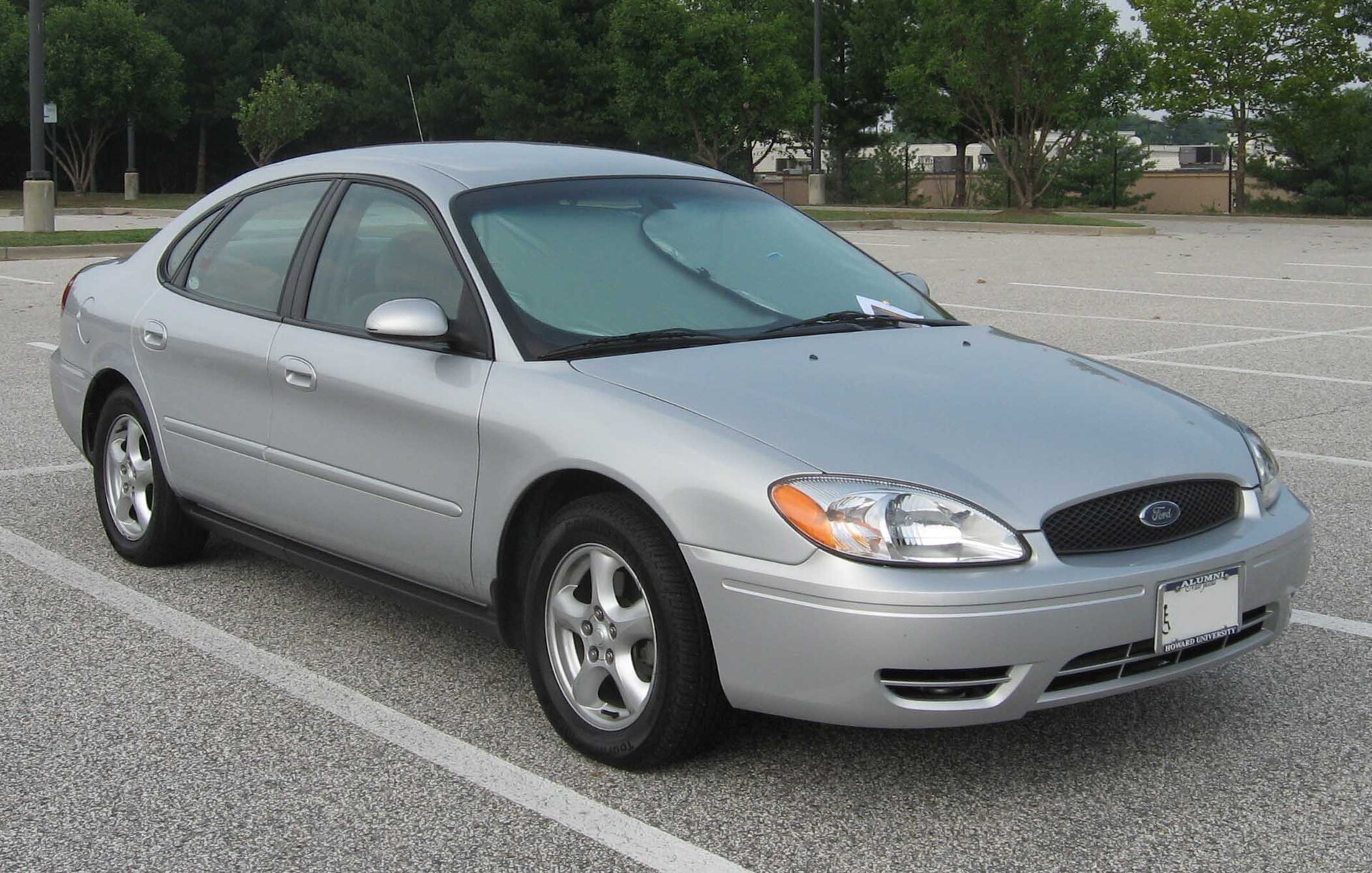
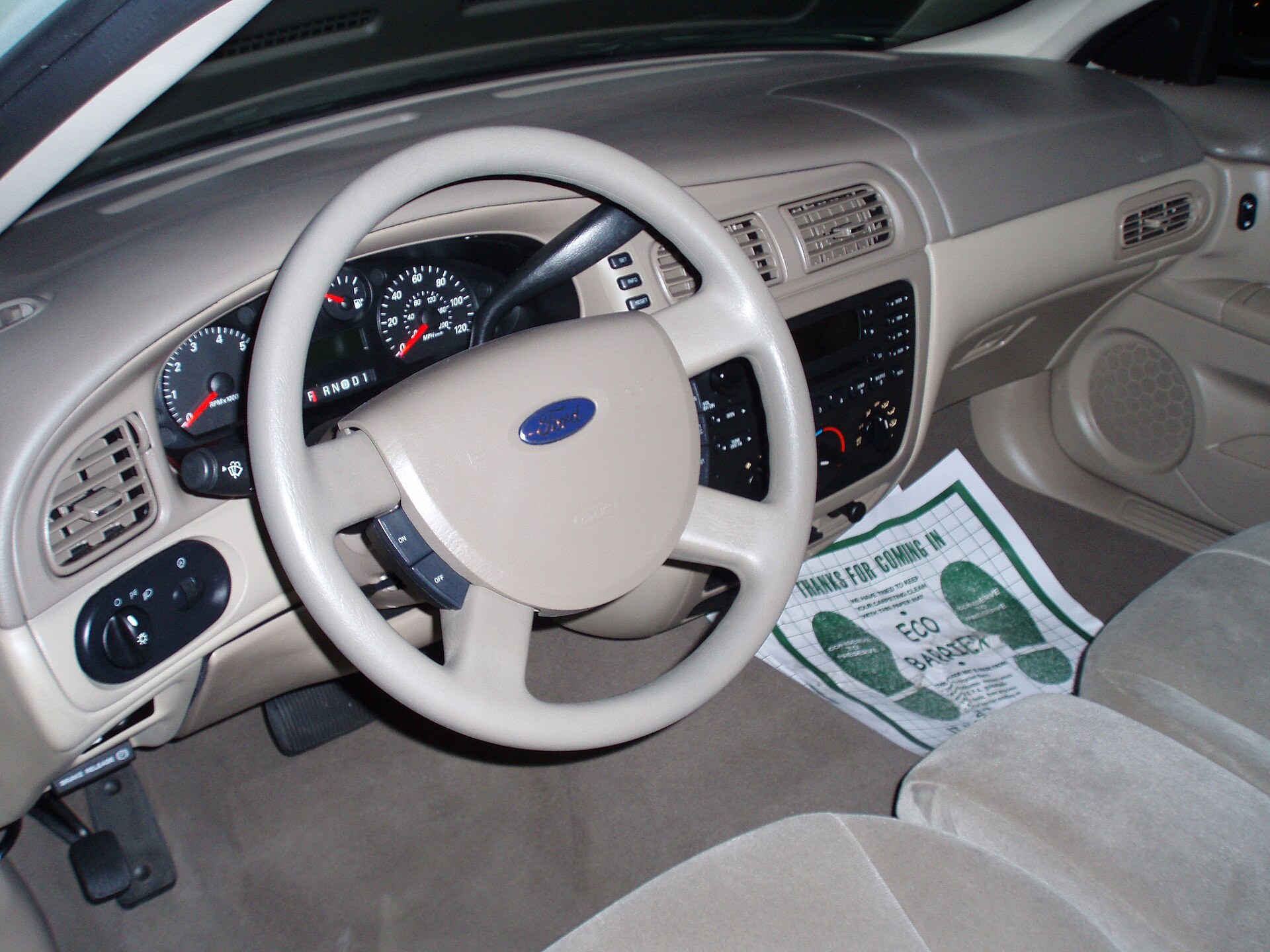
The fourth generation of 2000 answered the criticism with a more upright tail, a higher roof and a much larger boot. Designer Moray Callum kept the doors of the old car but gave the rest a conservative "New Edge" look. Side airbags were available, and the Duratec V6 was dropped after 2005. Wagon production ended on 8 December 2004, retail sales of the sedan stopped after the 2006 model year, and the last car left the Atlanta plant on 27 October 2006. The 2007 model year was sold to fleets only.
Full-size era on the Volvo-derived D3 platform
In 2006 Ford's new chief executive Alan Mulally asked how the Taurus could go away when it was "the best selling car in America". Soon the Ford Five Hundred full-size sedan, built since 2004 on the D3 platform derived from Volvo's P2 (Volvo S80) architecture, was facelifted and renamed Taurus for the 2008 model year. It received the 3.5-litre Duratec 35 V6 instead of the old 3.0-litre, and a six-speed automatic developed jointly by Ford and General Motors replaced the CVT. All-wheel drive became available, the 2008 car was an IIHS Top Safety Pick, and it scored five stars in the US government crash tests. The crossover version of the same car was sold as the Taurus X until February 2009.
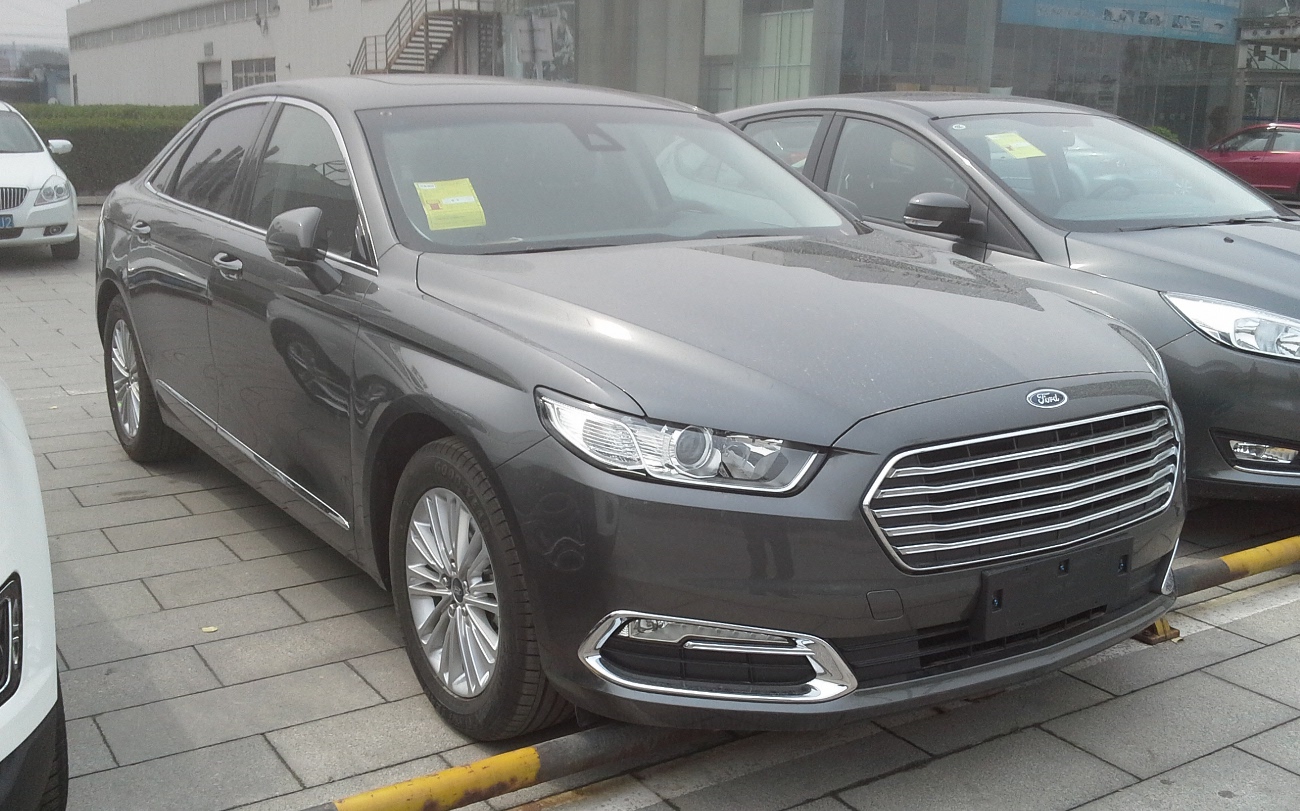
The sixth generation followed in June 2009. It kept the D3 base (2,868 mm wheelbase) but had a new, larger body. The 2013 refresh brought more power for the 3.5 V6, a new grille, LED tail lamps, torque vectoring, the MyFord Touch screen and an optional 2.0 EcoBoost four (to 2017). From 2013 the Police Interceptor Sedan, with a police-only 3.7-litre V6 of 227 kW (305 hp), replaced the Crown Victoria.
Ford announced the end of its US sedans on 25 April 2018, and the last American Taurus left Chicago on 1 March 2019. In China the name lived on in a long-wheelbase sedan based on the Fusion/Mondeo. Changan Ford built it in Hangzhou and sold it from 2016 to 2022 with EcoBoost four-cylinder engines and a 2.7 EcoBoost V6.

Taurus SHO: Yamaha V6, V8 and EcoBoost
Ford's Special Vehicle Operations developed the SHO (Super High Output), which appeared in late 1988 as a 1989 model. Its 3.0-litre DOHC V6 was built by Yamaha and produced 164 kW (220 hp); for the first years it came only with a five-speed manual. Sales were higher than Ford had expected, so production continued through 1991.
From 1993 the SHO could be ordered with an automatic, paired with a 3.2-litre Yamaha V6 of equal power. The 1996–1999 SHO switched to a 3.4-litre V8 with 175 kW (235 hp), designed with Yamaha heads and a Cosworth-cast block, but automatic only. Its camshafts could separate from their sprockets around 80,000 km (50,000 miles); welding them is the usual fix.
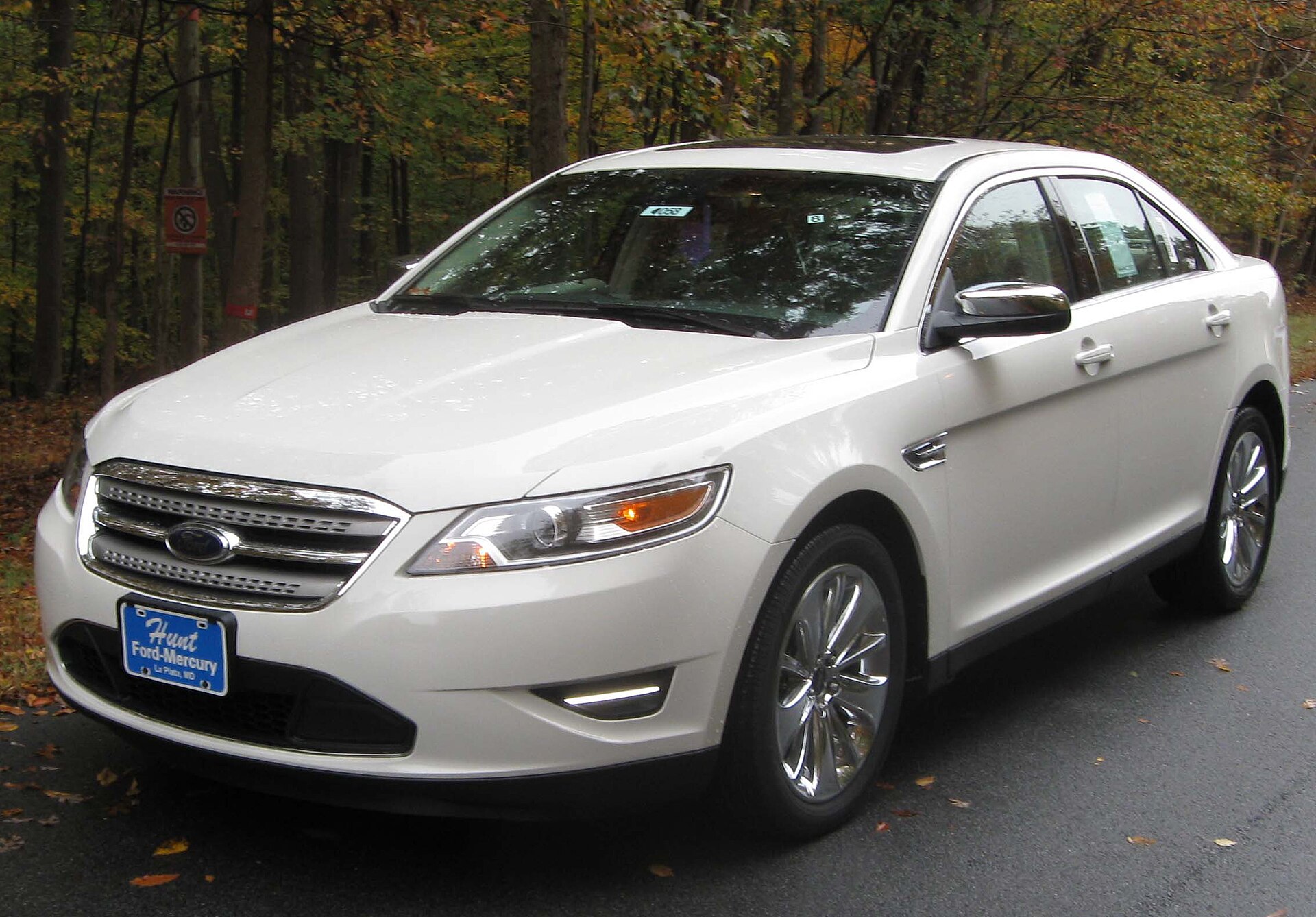
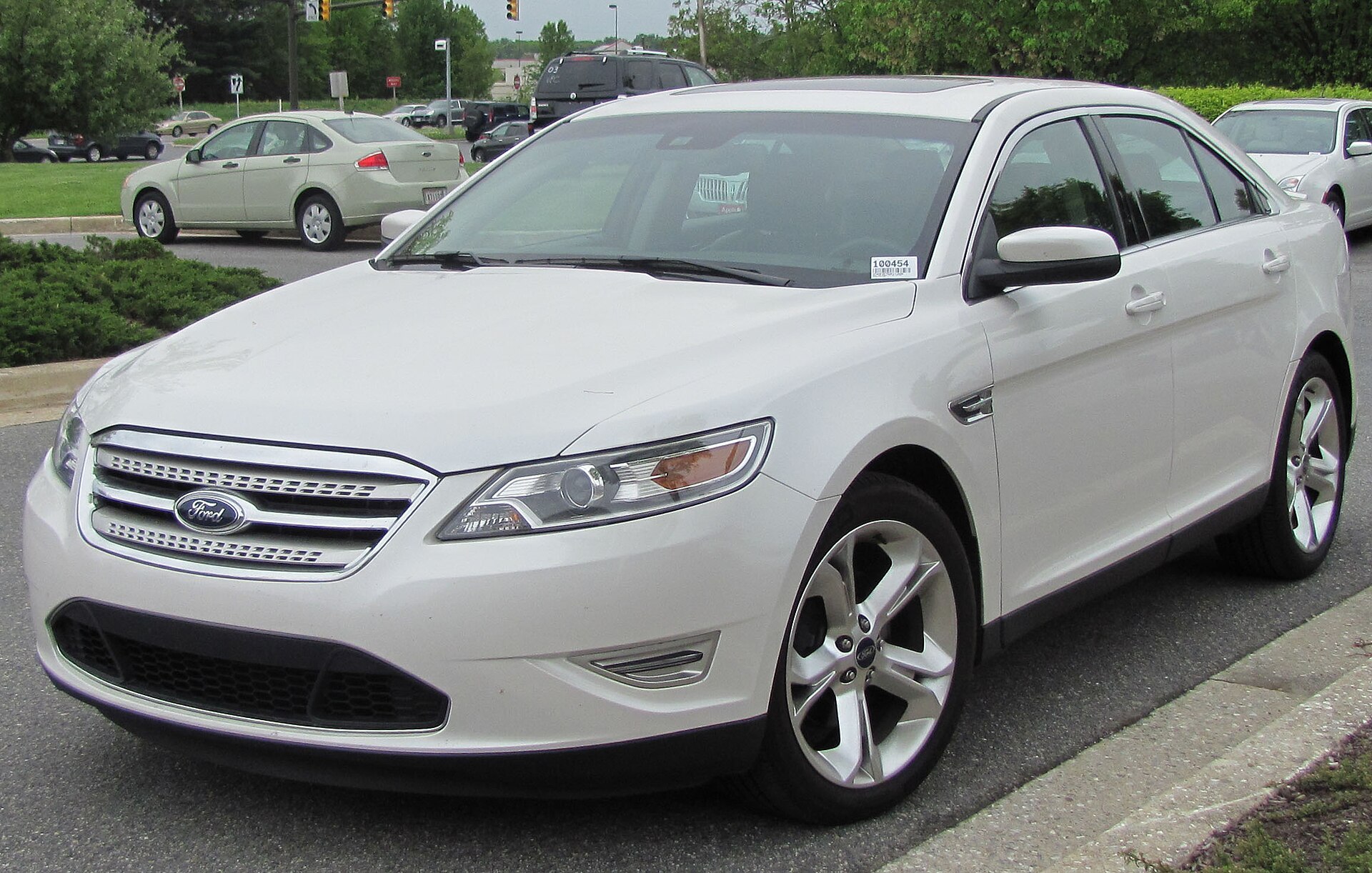
After a ten-year gap the SHO returned in August 2009 with the twin-turbo 3.5 EcoBoost V6, a six-speed automatic and standard all-wheel drive. The Performance Package added a 3.16:1 final drive and stronger brakes. This last SHO stayed in the range until 2019.

Engines and power
| Engine | Years | Power | Torque |
|---|---|---|---|
| 2.5 HSC I4 | 1986–1991 | 67 kW (90 hp) | — |
| 3.0 Vulcan V6 | 1986–1995 / 1996–1999 / 2000–2007 | 104 / 108 / 116 kW | 251 Nm (2000–2007) |
| 3.8 Essex V6 | 1988–1995 | 104 kW (140 hp) | 292 Nm |
| 3.0 Yamaha V6 (SHO) | 1989–1995 | 164 kW (220 hp) | — |
| 3.0 Duratec V6 | 1996–2005 | 149 kW (200 hp) | — |
| 3.4 V8 (SHO) | 1996–1999 | 175 kW (235 hp) | — |
| 3.5 V6 | 2008–2012 / 2013–2019 | 196 / 215 kW (263 / 288 hp) | 344 Nm (police spec) |
| 2.0 EcoBoost I4 | to 2017 | 179 kW (240 hp) | 366 Nm |
| 3.5 EcoBoost V6 (SHO) | 2010–2019 | 272 kW (365 hp) | 475 Nm |
All Taurus engines except the manual-gearbox SHOs and early five-speed cars were paired with automatics: four speeds until 2007, six speeds from 2008. The last 3.5 V6 was rated at 19 mpg city and 29 mpg highway, roughly 12.4 and 8.1 l/100 km.
Dimensions and weight by generation
| Generation | Wheelbase | Length (sedan) | Width | Kerb weight |
|---|---|---|---|---|
| First (1986–1991) | 2,692 mm | 4,785 mm | 1,798 mm | 1,380 kg |
| Second (1992–1995) | 2,692 mm | 4,877 mm | 1,808 mm | 1,414–1,575 kg |
| Third (1996–1999) | 2,756 mm | 5,016 mm | 1,854 mm | — |
| Fourth (2000–2007) | 2,756 mm | 5,019 mm | 1,854 mm | 1,504 kg |
| Fifth (2008–2009) | 2,863 mm | 5,126 mm | 1,882 mm | 1,697 kg FWD, 1,780 kg AWD |
| Sixth (2010–2019) | 2,868 mm | 5,154 mm | 1,935 mm | 1,821 kg |
Prices over the years
- 1986 Taurus GL: US$11,748 in 1986.
- 1996 base car: about US$18,000 at launch in 1996.
- 2009 Taurus SE: US$24,125 in 2009, about €17,300.
- 2010 Taurus SHO: US$37,995 including delivery in 2010, about €28,700.
- Price at the end of production: about US$28,000 in 2019, about €25,000.
Outside North America the Taurus was a rare sight: Ford Australia imported the third generation for 1996 only, and later the China-built car was exported to the Middle East from 2020.
Photo gallery


Ford Taurus evolution in numbers
Did you know?
- Our catalog covers 8 generations of the Ford Taurus, from 1985 to 2022.
- The biggest jump in power came with the Taurus VI: up to 272 kW (370 PS), 76 kW more than the Taurus V.
Most powerful version, kW
Length, mm
Figures from the 1cars catalog: power is the strongest version of each generation; generations without the figure are left out.
Image credits · Photos from Wikimedia Commons under free licences
- Ford Taurus I · Photo: IFCAR / Wikimedia Commons, Public domain
- Ford Taurus III · Photo: LukaCali / Wikimedia Commons, CC BY-SA 4.0
- Ford Taurus IV · Photo: TrueCamoflauge / Wikimedia Commons, CC BY-SA 3.0
- Ford Taurus V · Photo: IFCAR / Wikimedia Commons, Public domain
- Ford Taurus VI · Photo: ToyGTone / Wikimedia Commons, CC0
- Ford Taurus VII · Photo: Navigator84 / Wikimedia Commons, CC BY-SA 4.0
- Ford Taurus X · Photo: IFCAR / Wikimedia Commons, Public domain
Ford Taurus in our rankings
- No. 10 of 80 · Widest sedans (1,935 mm)
- No. 35 of 912 · Longest-running car nameplates (37 years · top 5%)
- No. 21 of 420 · Longest cars (5,154 mm · top 5%)
- No. 15 of 345 · Cars with the most generations (8 generations · top 6%)
- No. 11 of 86 · Longest sedans (5,154 mm · top 13%)
- No. 95 of 403 · Widest cars (1,935 mm · top 24%)
In production longer than 95% of ranked nameplates in the 1CARS catalog (No. 35 of 912).
Ford Taurus photos 6
FAQ
Why was the Ford Taurus so important?
It replaced Ford's boxy rear-drive sedans with an aerodynamic front-wheel-drive design, won Car of the Year 1986 and was America's best-selling car from 1992 to 1996.
How many generations of the Taurus are there?
Six in North America (1986–2019), plus a separate long-wheelbase Taurus built in China from 2016 to 2022.
What does SHO stand for?
Super High Output. The first SHO of 1989 had a 164 kW (220 hp) Yamaha-built V6; the last one (2010–2019) had a 272 kW twin-turbo EcoBoost V6.
Why did Ford stop making the Taurus?
Ford announced in April 2018 that it would end the Taurus along with most of its North American sedans; the last one was built on 1 March 2019.
Data sources
Data checked by an editor against the sources below.
- Wikipedia — Ford Taurus
- Wikipedia — Ford Taurus (fifth generation)
- Wikipedia — Ford Taurus (first generation)
- Wikipedia — Ford Taurus (second generation)
- Wikipedia — Ford Taurus (third generation)