 Maserati Coupé and Spyder
Specs, engines and history
Published Sources (1) Report an error
By Felix Hartmann, Automotive Technology & EV Contributor
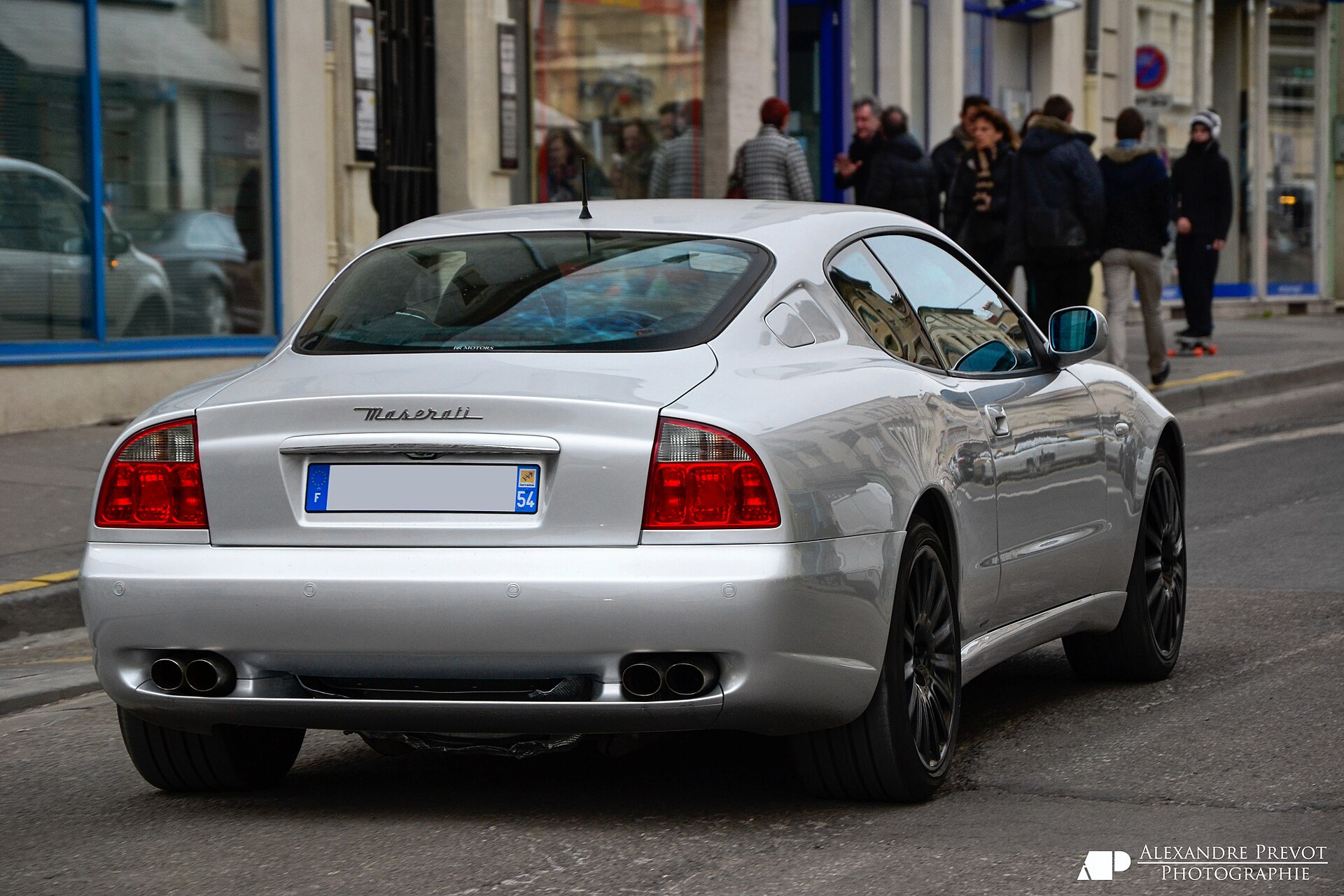
The Maserati Coupé and Spyder, often called the 4200 GT, are front-engined grand tourers built in Modena from 2001 to 2007. They replaced the 3200 GT, kept its Giugiaro-designed shape but switched from a twin-turbo V6/V8 tradition to a naturally aspirated 4.2-litre V8 based on a Ferrari design. The Spyder also marked Maserati's return to North America after an absence of eleven years. Including the sportier GranSport versions, 13,423 cars were built before the GranTurismo and GranCabrio took over.
In short
- Spyder shown at Frankfurt in 2001, Coupé at Detroit in 2002; built in Modena until 2007; 13,423 cars including GranSport versions.
- 4,244 cc naturally aspirated 90° V8 (F136 family): 287 kW (390 PS) at 7,000 rpm and 450 Nm at 4,500 rpm.
- Six-speed manual or six-speed Cambiocorsa automated manual, rear transaxle, weight split 48:52.
- Coupé: 0–100 km/h in 4.9 s, 285 km/h; GranSport with 294 kW (400 PS) and 290 km/h.
Maserati Coupé and Spyder at a glance
| Specification | Maserati Coupé / Spyder |
|---|---|
| Production | 2001–2007 (Spyder), 2002–2007 (Coupé), Viale Ciro Menotti plant, Modena (Italy) |
| Cars built | 13,423 including GranSport and GranSport Spyder |
| Body | four-seat coupé; two-seat Spyder with soft top; front engine, rear-wheel drive |
| Engine | F136 4,244 cc V8, 90°, 32 valves, dry sump |
| Power | 287 kW (390 PS) at 7,000 rpm; GranSport 294 kW (400 PS) |
| Torque | 450 Nm at 4,500 rpm |
| Gearbox | six-speed manual or six-speed Cambiocorsa, rear transaxle |
| Kerb weight | 1,670–1,680 kg (Coupé), 1,720–1,730 kg (Spyder) |
| Predecessor / successor | 3200 GT / GranTurismo and GranCabrio |
The Coupé and Spyder preceded the GranTurismo and the GranCabrio. All models are listed in the Maserati catalogue.
History: from 3200 GT to 4200 GT
The new cars were a development of the 3200 GT, which had not been sold in the United States. The Spyder was unveiled at the Frankfurt motor show in 2001, and the Coupé followed at the Detroit motor show in 2002. US sales began in March 2002 for the Spyder and in May for the Coupé, ending Maserati's eleven-year absence from North America. Forbes named the Spyder its Best GT of 2001.
The unofficial name "4200 GT" refers to the engine: displacement grew from 3.2 litres (3,217 cc) in the 3200 GT to 4.2 litres (4,244 cc). More importantly, the new V8 was naturally aspirated. For about twenty years, Maserati's engines had relied on twin turbochargers.
All cars were built at Maserati's historic Viale Ciro Menotti plant in Modena. A small facelift in late 2004 brought a larger grille, a new rear bumper and air outlet and the Saetta logo on the rear pillars.
Design by Giugiaro and Fumia
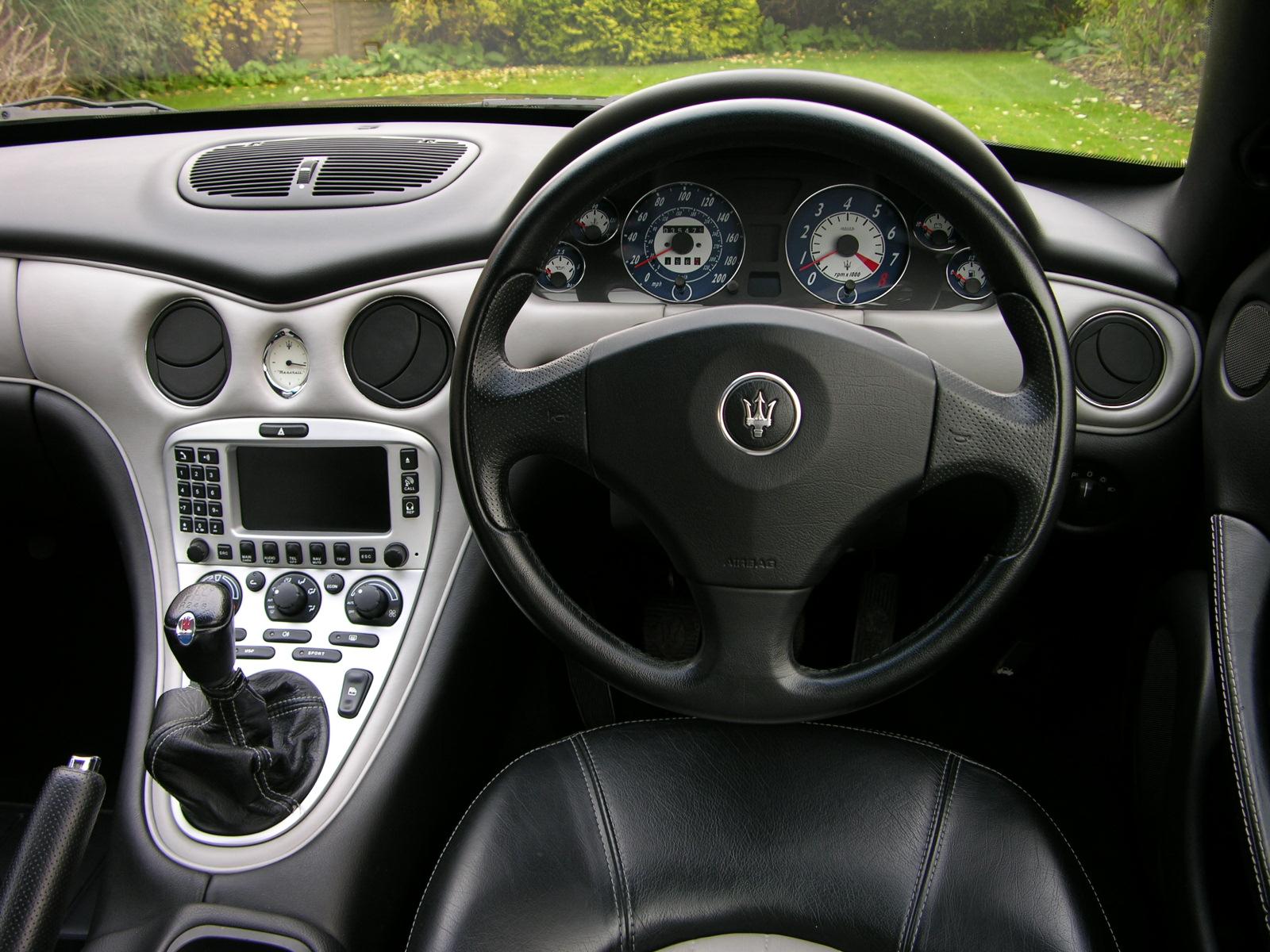
The body was designed by Giorgetto Giugiaro of Italdesign, who had already shaped the Ghibli, Bora, Quattroporte III and 3200 GT. Enrico Fumia designed the interior, based largely on the 3200 GT's cabin as facelifted in 1999.
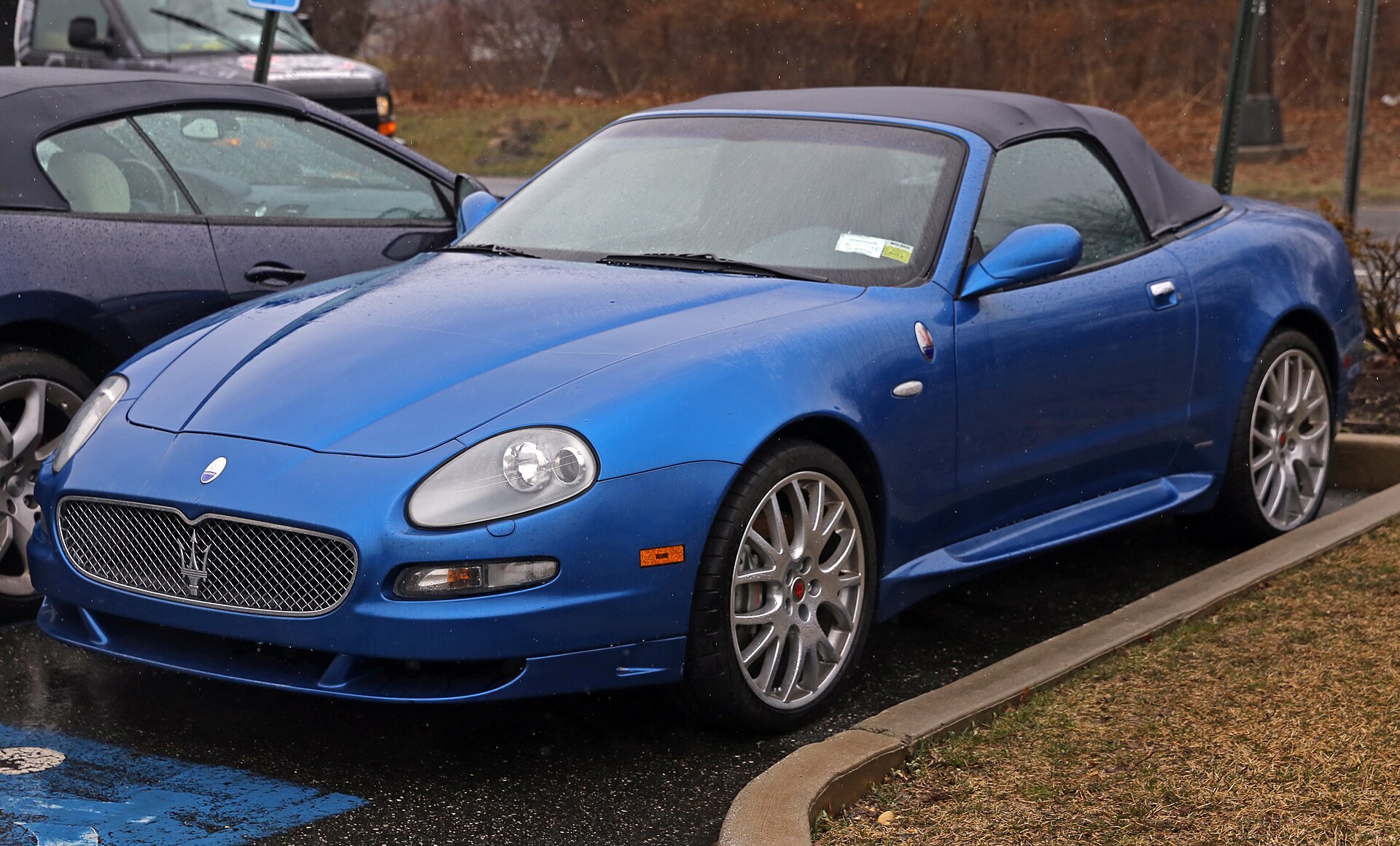
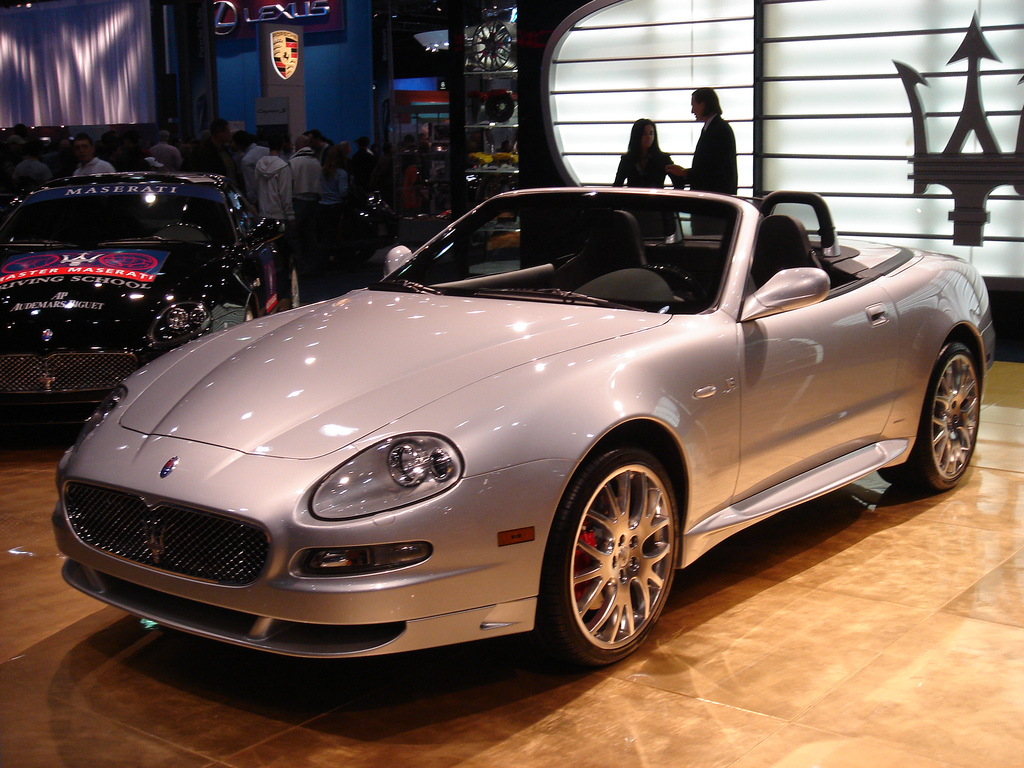
Customers could choose from 16 exterior colours, ten shades of leather and, for the Spyder, five colours for the soft top. The standard wheels were 18-inch; most buyers chose seven-spoke sport wheels after 2003, and these became standard by 2005. Options included xenon headlights, satellite navigation, a hands-free phone, cruise control, parking sensors and heated seats.
Two body styles, two wheelbases
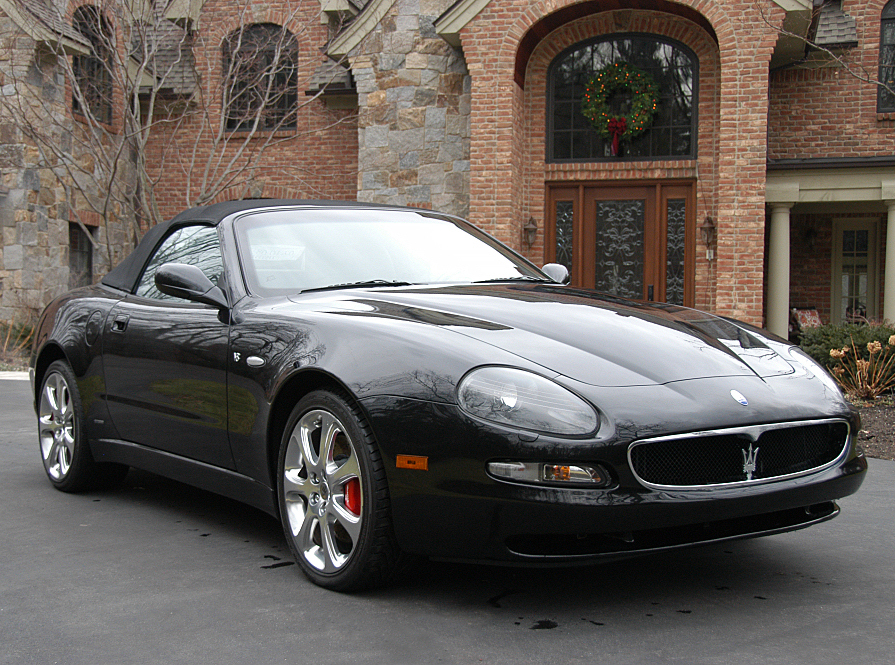
The two body styles differ more than usual. The Coupé is a genuine four-seater, with room for two adults in the back, on a 2,660 mm wheelbase. The Spyder is a two-seater with a wheelbase 220 mm shorter, at 2,440 mm. Its soft top opens or closes in about 30 seconds, and from 2003 it had a glass rear window instead of a plastic one.
| Dimension | Coupé | Spyder |
|---|---|---|
| Length | 4,523 mm | 4,303 mm |
| Width | 1,822 mm | 1,822 mm |
| Height | 1,305 mm | 1,305 mm |
| Wheelbase | 2,660 mm | 2,440 mm |
| Kerb weight | 1,670–1,680 kg | 1,720–1,730 kg |
| 0–100 km/h | 4.9 s | 5.0 s |
| Top speed | 285 km/h | 283 km/h |

Engine and Cambiocorsa gearbox
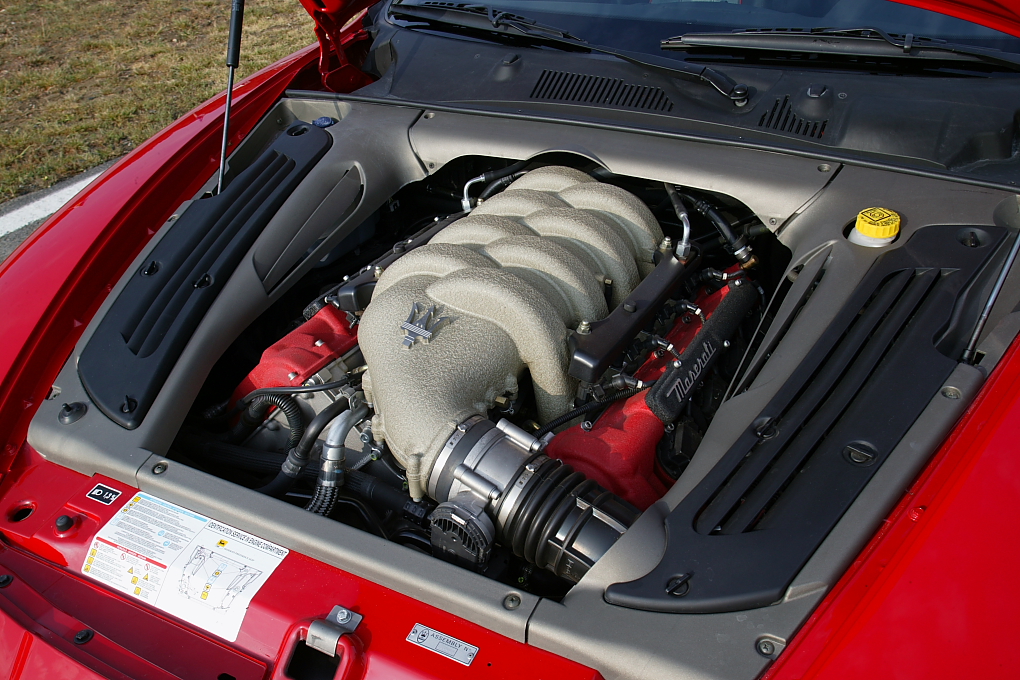
The engine is the Ferrari-Maserati F136 R. It is a 90° V8 of 4,244 cc (bore 92 mm, stroke 80 mm) with four camshafts, four valves per cylinder, a compression ratio of 11.1:1 and dry-sump lubrication. It weighs 184 kg and produces 287 kW (390 PS) at 7,000 rpm and 450 Nm at 4,500 rpm.
Power goes to a gearbox mounted at the rear axle (transaxle), which gives a weight distribution of 48% front and 52% rear. Two transmissions were offered: a six-speed manual with a normal clutch pedal, sold as the GT, and the six-speed Cambiocorsa, an automated manual by Graziano with paddles behind the steering wheel. Cambiocorsa offers Normal, Sport, Auto and Low Grip modes; in Sport it changes gear in about a quarter of a second. Most buyers chose it: of the 13,423 cars, 11,409 had Cambiocorsa.


Chassis and safety
The suspension uses aluminium double wishbones front and rear with anti-roll bars. The Skyhook adaptive damping system uses six accelerometers and adjusts the dampers at least 40 times per second. Brembo four-piston calipers act on cross-drilled discs. From the 2004 model year the Maserati Stability Program (MSP) became standard. Front and side airbags and seat-belt pre-tensioners were fitted.
GranSport, Trofeo and special editions
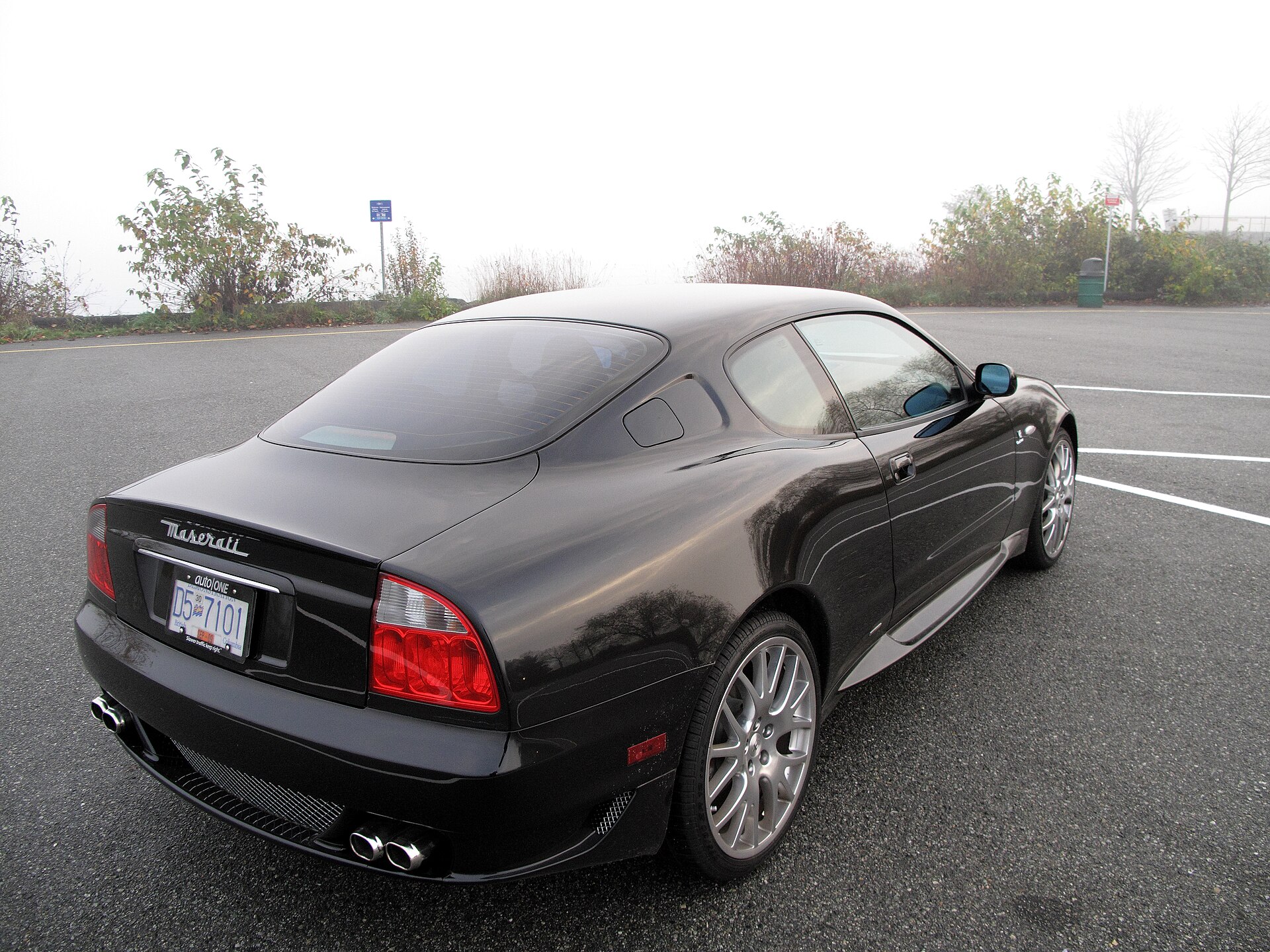
GranSport (2004). Shown at the Geneva motor show in March 2004, the GranSport had a body and interior reworked by Frank Stephenson, 294 kW (400 PS) at 7,000 rpm and 452 Nm, a 10 mm lower ride height and a drag coefficient lowered by 0.02 to 0.33. It was sold only with Cambiocorsa and 19-inch "Trofeo" wheels. It reached 100 km/h in 4.85 seconds and 290 km/h.
GranSport Spyder (2005). Introduced at the Frankfurt motor show in September 2005, with 0–100 km/h in 4.95 seconds and 290 km/h.
Trofeo. A racing version for Maserati's one-make series from 2003, with 309 kW (420 PS) and 249 kg less weight.
Special editions. The Spyder 90th Anniversary of 2004 was built in 90 cars for North America and 90 for other markets. The GranSport MC Victory of 2006 (181 cars) was shown at Geneva, and Zagato built nine GS Zagato coupés, shown at Villa d'Este in 2007.
| Model | Years | Built |
|---|---|---|
| Spyder | 2001–2007 | 3,889 |
| Coupé | 2002–2007 | 6,449 |
| GranSport | 2004–2007 | 2,613 |
| GranSport Spyder | 2005–2007 | 472 |
| Total | 13,423 |

Legacy
The Coupé and Spyder brought Maserati back to the United States and ended its long reliance on turbocharged engines. For the brand's background, see our history of Maserati.
Photo gallery


Maserati Coupé and Spyder in our rankings
In production longer than 31% of ranked nameplates in the 1CARS catalog (No. 564 of 912).
Maserati Coupé and Spyder photos 6
FAQ
Why is the Maserati Coupé called 4200 GT?
The name refers to the 4.2-litre (4,244 cc) V8, compared with the 3.2-litre engine of the earlier 3200 GT.
What engine does the Maserati Coupé have?
A naturally aspirated 4,244 cc V8 of the F136 family with 287 kW (390 PS) at 7,000 rpm and 450 Nm; the GranSport has 294 kW (400 PS).
What is Cambiocorsa?
Maserati's six-speed automated manual gearbox, made by Graziano and operated with paddles. 11,409 of the 13,423 cars had it.
How many Maserati Coupés and Spyders were built?
13,423 in total: 6,449 Coupés, 3,889 Spyders, 2,613 GranSports and 472 GranSport Spyders.
What is the difference between the Coupé and the Spyder?
The Coupé is a four-seater on a 2,660 mm wheelbase; the Spyder is a two-seat convertible with a 220 mm shorter wheelbase.
Data sources
Data checked by an editor against the sources below.