 Maserati A6G
All generations, specs and history
Published Sources (1) Report an error
By Felix Hartmann, Automotive Technology & EV Contributor
- Built
- 1950–1957
- Generations
- 2
- Top power
- 118 kW (160 PS)
Timeline
A6G generations
Click a generation for its own page
- A6G 2000 1950–1951 · Coupe · 66–74 kW (90–101 PS)
- A6G/54 1954–1957 · Coupe · 110–118 kW (150–160 PS)
Newest first · 2 generations since 1950
-
1954
-
1950


All generations by year: A6G/54 (1954–1957) · A6G 2000 (1950–1951)
Which one is mine?
Pick the year of first registration to see which generation it is.
Check by VINThe Maserati A6G is a family of two-litre, six-cylinder grand tourers that Maserati built in small numbers in the 1950s, each with a body made by an Italian coachbuilder. It began with the A6G 2000 of 1950–1951 and continued with the much faster twin-camshaft A6G/54 of 1954–1956. Only about 76 cars were made, bodied by Pinin Farina, Frua, Vignale, Allemano and Zagato.
In short
- A6G 2000 (1950–1951): 1,954 cc single-camshaft straight-six, about 67–75 kW (90–100 hp), 16 cars.
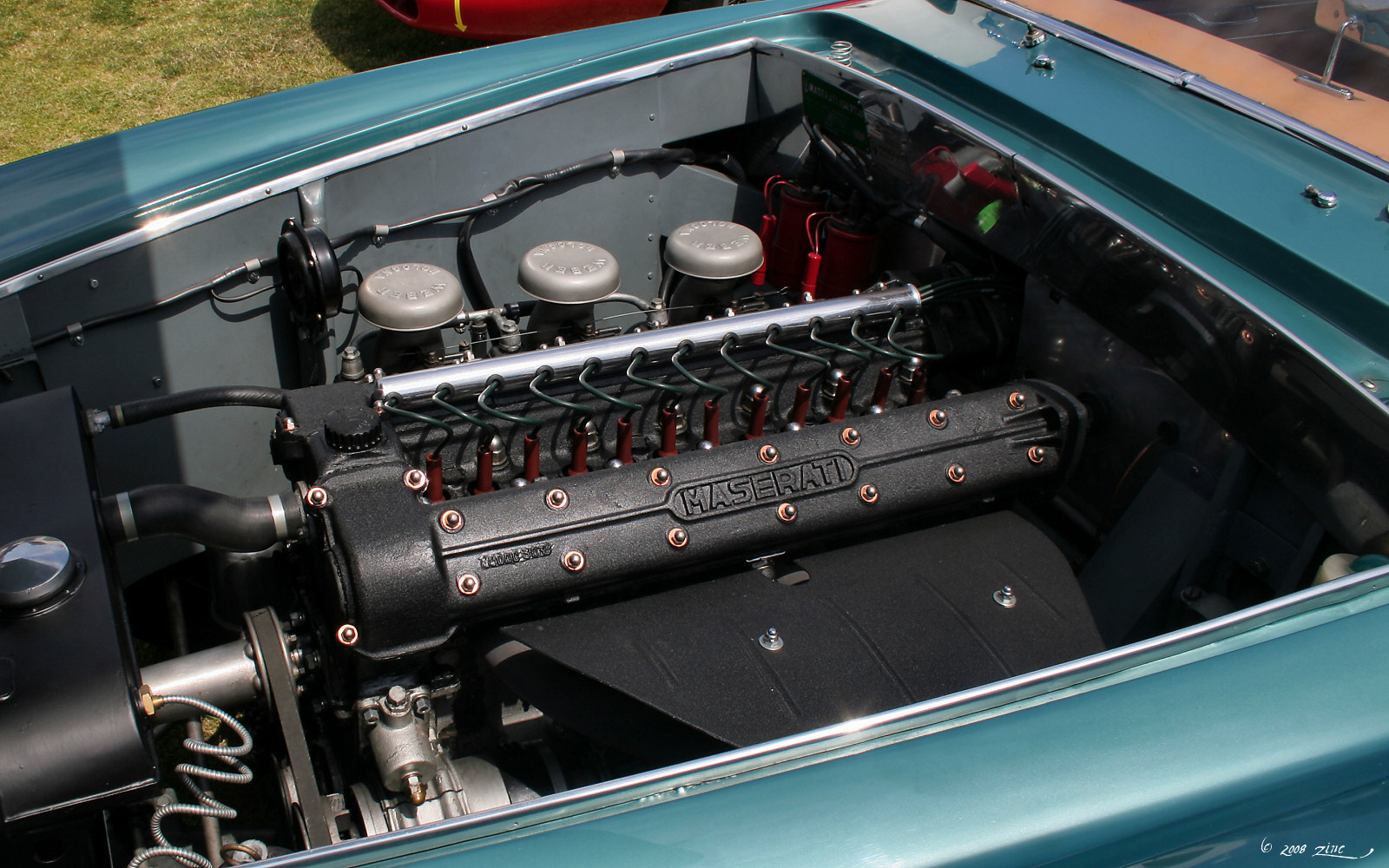
- A6G/54 (1954–1956): 1,986 cc twin-camshaft straight-six with three twin-choke Weber carburettors, 112 kW (150 hp), 119 kW (160 hp) with twin ignition from 1956; 60 cars.
- Four-speed manual gearbox; top speeds of 160–180 km/h (A6G 2000) and 195–210 km/h (A6G/54).
- Successor to the A6 1500 of 1947, Maserati's first production road car.
Maserati A6G at a glance
| Model | Years | Engine | Power | Top speed | Built |
|---|---|---|---|---|---|
| A6 1500 (predecessor) | 1947–1950 | 1,488 cc straight-six, SOHC | 48 kW (65 hp) | 146–154 km/h | 61 |
| A6G 2000 | 1950–1951 | 1,954 cc straight-six, SOHC, three carburettors | 67–75 kW (90–100 hp) | 160–180 km/h | 16 |
| A6G/54 | 1954–1956 | 1,986 cc straight-six, DOHC, three Weber carburettors | 112–119 kW (150–160 hp) | 195–210 km/h | 60 |
The A6G sits between Maserati's first road car and the 3500 GT of 1957. All models are listed in the Maserati catalogue, and the company's background is in our history of Maserati.
Background: the A6 1500
The story starts with the A6 1500, Maserati's first production road car. Work on it began in 1941 and was finished after the war. The prototype, bodied by Pinin Farina, was shown at Geneva, and 61 cars were built from 1947 to 1950. It had a 1,488 cc single-camshaft six-cylinder engine of 48 kW (65 hp) and reached 146–154 km/h. The A6G took the same idea — a small, fast, coachbuilt grand tourer — and gave it a two-litre engine.
The A6G 2000 (1950–1951)
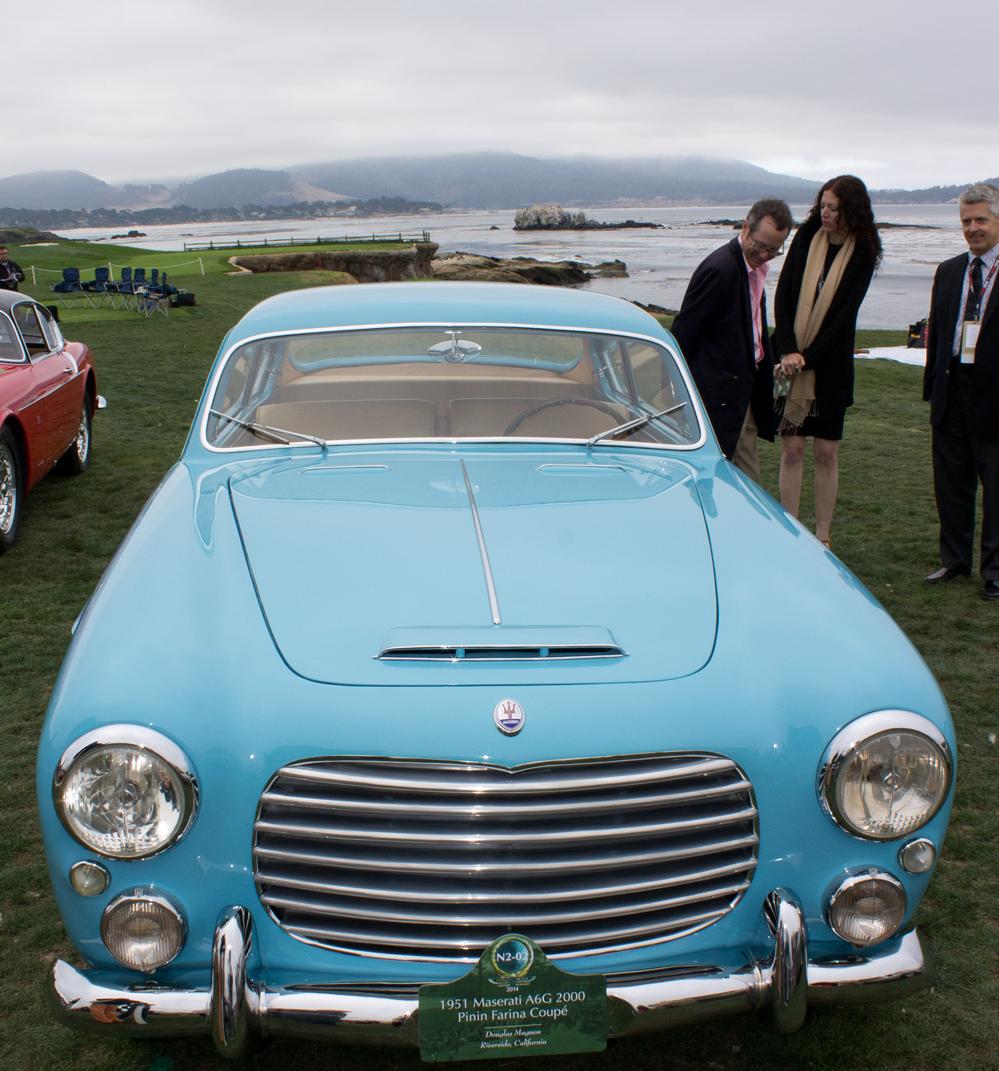
The first A6G used a 1,954 cc straight-six with a single overhead camshaft and three carburettors, producing about 67–75 kW (90–100 hp). Depending on the body, the top speed was 160–180 km/h. The gearbox was a four-speed manual.
Only 16 were built, and almost every one is different:
- Pinin Farina: 9 cars, 2+2 fastback coupés.
- Frua: 5 convertibles and 1 coupé.
- Vignale: 1 coupé, designed by Giovanni Michelotti.


The A6G/54 (1954–1956)
After a pause, Maserati returned in 1954 with a much more powerful version. The A6G/54 has a 1,986 cc straight-six with double overhead camshafts and three twin-choke Weber carburettors. It produced 112 kW (150 hp) at 6,000 rpm, and from 1956 twin ignition raised this to 119 kW (160 hp). The top speed rose to 195–210 km/h — a big step from the first A6G.
| Parameter | Metric | Imperial |
|---|---|---|
| Engine capacity | 1,986 cc | 121 cu in |
| Power (1954) | 112 kW at 6,000 rpm | 150 hp |
| Power (1956, twin ignition) | 119 kW | 160 hp |
| Top speed | 195–210 km/h | 121–130 mph |
Sixty A6G/54s were built, again with a variety of bodies.


Coachbuilders
The A6G/54 was offered by several coachbuilders, each with its own character:
- Allemano: 21 three-box coupés designed by Giovanni Michelotti — the most numerous version.
- Frua: 6 coupés and 12 Gran Sport spyders.
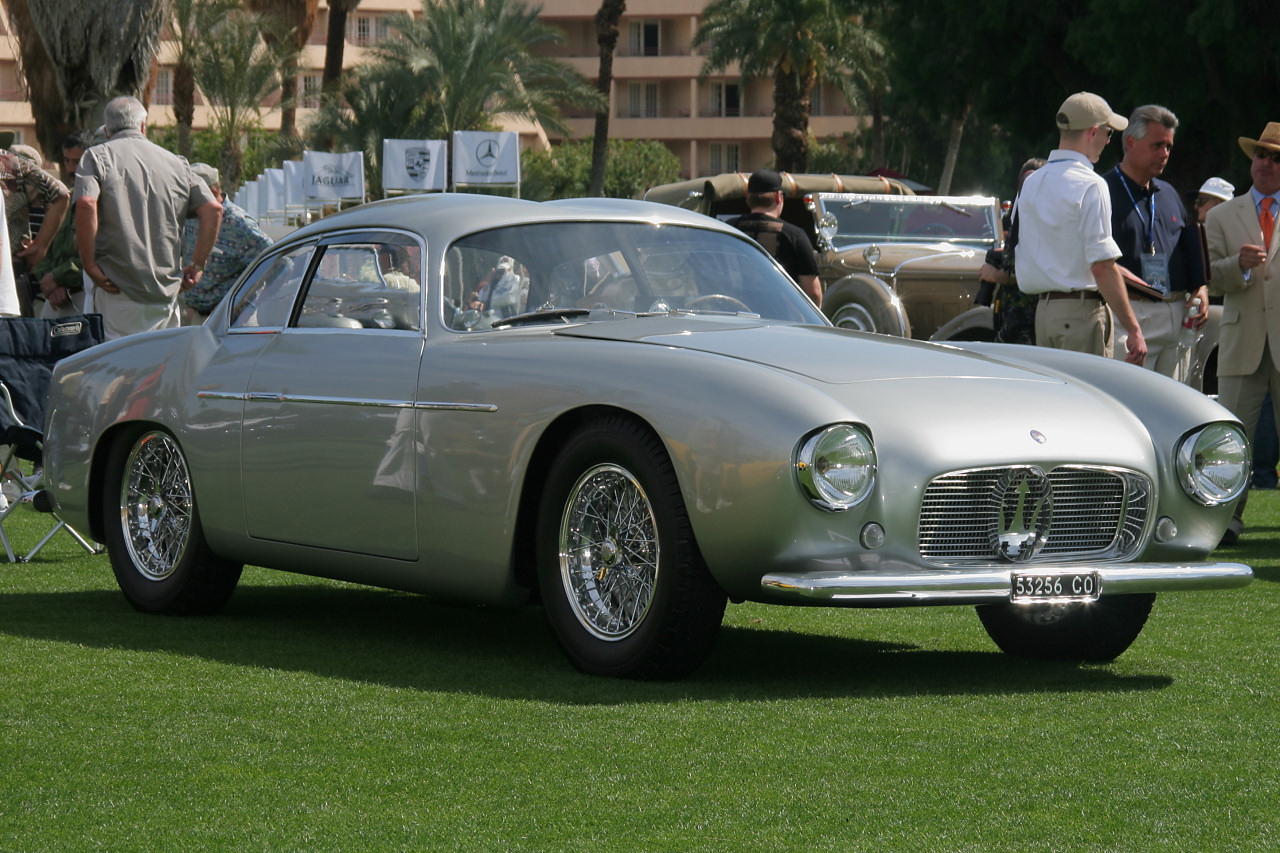
- Zagato: 20 fastback coupés aimed at competition, plus one Zagato spider (chassis 2101), shown at the Geneva motor show in 1955.
The Zagato cars were the ones aimed at competition. Because each car was built by hand by an outside coachbuilder, the A6G never had a single "standard" body.

The name and the racing relatives
The name explains the car. "A" stands for Alfieri Maserati, one of the founding Maserati brothers, and "6" for the six-cylinder engine. The "G" stands for ghisa, Italian for cast iron, referring to the cast-iron cylinder block.
The road-going A6G had close relatives on the race track, built in larger numbers:
| Racing model | Years | Engine and power | Built |
|---|---|---|---|
| A6CS ("A6 Sport") | 1947 | 1,493 cc straight-six, 48 kW (65 hp) | 2 prototypes |
| A6GCS "Monofaro" | 1947–1953 | 1,978 cc straight-six, 89 kW (120 hp) at first | 15 |
| A6GCS/53 | 1953 | improved two-litre six, 125 kW (170 hp) | 52 |
The A6GCS made its debut at Modena in 1947 with Luigi Villoresi and Alberto Ascari, and Giovanni Bracco won the 1948 Italian championship in one; its nickname "Monofaro" came from its single central headlamp. The A6GCS/53 was built for the World Sportscar Championship. Most were spiders bodied by Fantuzzi or by Celestino Fiandri, while four berlinettas were designed by Aldo Brovarone at Pinin Farina for the Rome dealer Guglielmo Dei.
Timeline
| Year | Event |
|---|---|
| 1941 | Work begins on the A6 1500 |
| 1947 | A6 1500 enters production as Maserati's first road car |
| 1950 | A6G 2000 with 1,954 cc engine |
| 1951 | End of the A6G 2000 after 16 cars |
| 1954 | A6G/54 with twin-cam 1,986 cc engine |
| 1955 | Zagato spider shown at Geneva |
| 1956 | Twin ignition, 119 kW (160 hp); production ends after 60 cars |
Legacy
The A6G family shows Maserati's transition from a racing-car maker to a builder of road cars, with bodies from many of the leading Italian coachbuilders of the period. With fewer than 80 cars built, every A6G is rare today. The next Maserati grand tourer was the 3500 GT of 1957.
Photo gallery

Maserati A6G: first vs latest generation
| Spec | A6G 2000 | A6G/54 | Change |
|---|---|---|---|
| Years | 1950–1951 | 1954–1957 | 4 years apart |
| Most powerful version | 74 kW (101 PS) | 118 kW (160 PS) | +44 kW (+59%) |
Oldest and newest generation in the 1cars catalog. Power is the strongest version of each; other rows are shown only when both generations have the figure.
Maserati A6G in our rankings
- No. 481 of 912 · Longest-running car nameplates (7 years · top 60%)
- No. 651 of 859 · Most powerful cars (118 kW · top 76%)
- No. 113 of 127 · Most powerful Italian cars (118 kW · top 89%)
- No. 289 of 313 · Most powerful coupes (118 kW · top 93%)
- No. 234 of 345 · Cars with the most generations (2 generations)
In production longer than 40% of ranked nameplates in the 1CARS catalog (No. 481 of 912).
FAQ
How many Maserati A6Gs were built?
About 76: 16 A6G 2000s in 1950–1951 and 60 A6G/54s in 1954–1956.
What engine does the A6G have?
A two-litre straight-six: single-cam with 67–75 kW (90–100 hp) in the A6G 2000, twin-cam with up to 119 kW (160 hp) in the A6G/54.
Who built the bodies?
Pinin Farina, Frua and Vignale for the A6G 2000; Allemano, Frua and Zagato for the A6G/54.
How fast is the A6G/54?
Depending on the body, between 195 and 210 km/h.
What does the name A6G mean?
"A" stands for Alfieri Maserati, "6" for the six-cylinder engine and "G" for ghisa, the Italian word for cast iron, after the cast-iron engine block.
Data sources
Data checked by an editor against the sources below.