 Lexus NX
All generations, specs and history
Published Sources (1) Report an error
By Felix Hartmann, Automotive Technology & EV Contributor
- Built
- 2014–present
- Generations
- 2 · AGZ10 to AZ20
Timeline
NX generations
Click a generation for its own page


- NX I (AGZ10) 2014–2021 · SUV
- NX II (AZ20) Current 2021–now · SUV
Newest first · 2 generations since 2014
All generations by year: NX II (AZ20) (2021–now) · NX I (AGZ10) (2014–2021)
Which one is mine?
Pick the year of first registration to see which generation it is.
Check by VINThe Lexus NX is a compact premium crossover with front- or all-wheel drive, positioned between the Lexus UX and RX. It was the first car of its kind for Lexus, combining bold design, capable technology, a roomy cabin and rich equipment. Lexus says the name stands for "Nimble Crossover". The NX was previewed by the LF-NX concept in 2013, presented at the Beijing motor show in April 2014 and built from August 2014. A facelift was shown at the 2017 Shanghai motor show, and the second generation was revealed in June 2021.
In short
- First generation (2014–2021), sharing structure with the Toyota RAV4; facelifted in 2017.
- NX 200 with 110 kW (150 PS), NX 200t/NX 300 turbo with 175 kW (238 PS) and NX 300h hybrid with E-Four all-wheel drive.
- Second generation (2021 onwards) on the GA-K platform, including the NX 450h+ plug-in hybrid with an 18.1 kWh battery.
- The NX quickly became Lexus's best-selling model in Europe.
Lexus NX at a glance
The NX is a five-seat monocoque crossover with a transverse engine. More Lexus models are listed in our Lexus catalogue.
First generation (2014–2021)
Exterior
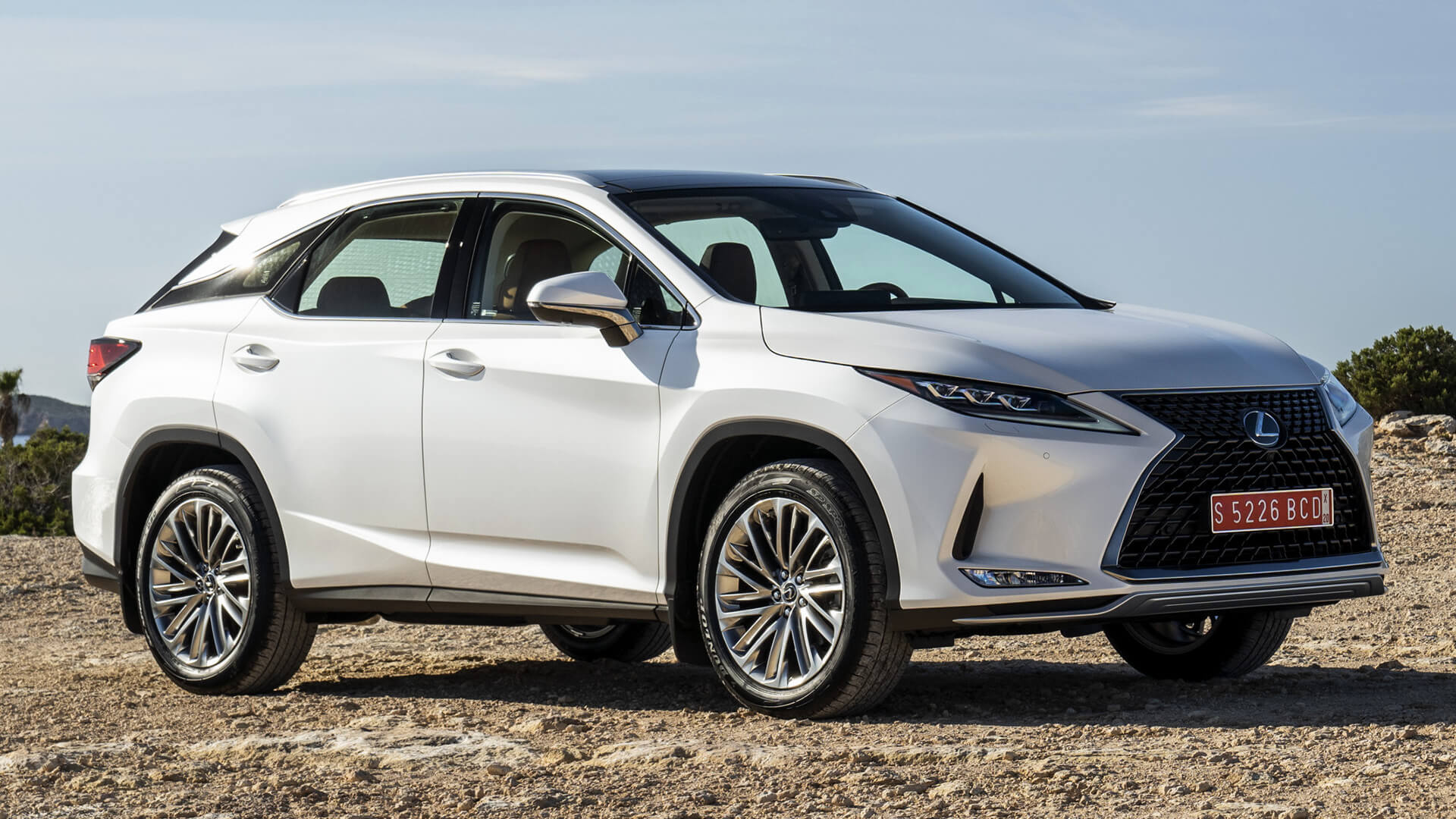
The NX's styling draws on the Lexus IS saloon and keeps the elongated shape of the concept. The facelift gave it a more aggressive and upmarket face. It brought new headlights with three LED projectors on each side, L-shaped LED daytime running lights, a more expressive bumper and revised intakes that cool the brakes. The huge hourglass-shaped spindle grille remained. The side features a long bonnet, steeply raked windscreen pillars, elegant creases and massive wheel arches with plastic protection housing 18-inch alloys. Ground clearance is 185–190 mm, enough for kerbs and light rough roads. The rear has distinctive LED tail lights, a large tailgate and a substantial bumper with integrated fog lamps. Exhaust outlets vary by version: pentagonal on some, trapezoidal on the NX 300 F Sport and hidden on others, with larger matt chrome inserts on the hybrid. Twelve colours are offered, as well as bespoke paint.
Interior
The NX is Lexus's most affordable SUV but does not feel cheap. Materials include leather, aluminium, Alcantara and high-quality plastics, and its infotainment system is one of the best in the class. A three-spoke steering wheel faces two analogue dials with a bright trip-computer screen between them. All five seats are leather-trimmed with soft padding; the front seats have heating, ventilation, good side support and electric adjustment. A large touchscreen sits at the top of the centre console, with an analogue clock flanked by air vents, physical switches, connectivity sockets, Apple CarPlay and Android Auto. The tunnel carries a drive-mode controller, the gear selector, the parking brake, two cupholders and a large armrest. Three adults can sit comfortably in the rear, which has heating and adjustable backrests and head restraints; with two passengers, the centre backrest becomes an armrest. The well-trimmed boot holds 500 litres, has a wide opening and an almost ideal shape but a fairly high loading sill, and the rear backrest folds in sections.
Engines and transmissions
| Version | Engine | Power (kW / PS) | Torque | Gearbox | Drive |
|---|---|---|---|---|---|
| NX 200 | 2.0 I4, naturally aspirated | 110 kW / 150 PS | 193 Nm | Multidrive CVT | FWD or AWD |
| NX 200t / NX 300 | 2.0 turbo I4 (8AR-FTS) | 175 kW / 238 PS | — | 6-speed automatic | AWD |
| NX 300h | 2.5 I4 + front and rear electric motors | 145 kW / 197 PS (system) | — | CVT | E-Four AWD |
The NX 200 reaches 100 km/h in 12.3 seconds and 180 km/h, using 7.2–7.5 l/100 km. The NX 200t (renamed NX 300) uses an aluminium 2.0-litre turbo with a twin-scroll turbocharger, direct injection and Dual VVT-iW, which allows it to run on the Atkinson or Otto cycle. It reaches 100 km/h in 7.2 seconds and uses about 8.8 l/100 km. The NX 300h combines a 2.5-litre engine with 114 kW (155 PS) and a front electric motor with 105 kW (143 PS). A 50 kW (68 PS) motor drives the rear wheels when needed, with no mechanical link between the axles. It reaches 100 km/h in 9.3 seconds and uses about 5.4 l/100 km, and its nickel-metal-hydride battery sits under the rear seat.
Dynamic Torque Control AWD drives the front wheels and can send up to 50% of torque to the rear when slip is detected.
Chassis and safety
The NX shares its platform with the Toyota RAV4, with plenty of aluminium and high-strength steel. Suspension is fully independent: MacPherson struts at the front and double wishbones at the rear. After the facelift every version got Adaptive Variable Suspension, previously reserved for the F Sport, with more progressive springs and dampers. Steering has electric assistance, and all four brakes are ventilated discs. Laser screw welding and structural adhesives increase body stiffness. Equipment includes ABS, brake assist, traction and stability control, eight airbags, tyre-pressure monitoring, ISOFIX, cruise control, blind-spot monitoring, rear cross-traffic alert, adaptive high beam, Lexus Safety System+ and full-LED lighting. Higher trims add rain sensors, a heated steering wheel, a 10-inch screen, heated rear seats, perforated leather, wireless charging, a panoramic camera system and a panoramic roof.
Second generation (2021 onwards)
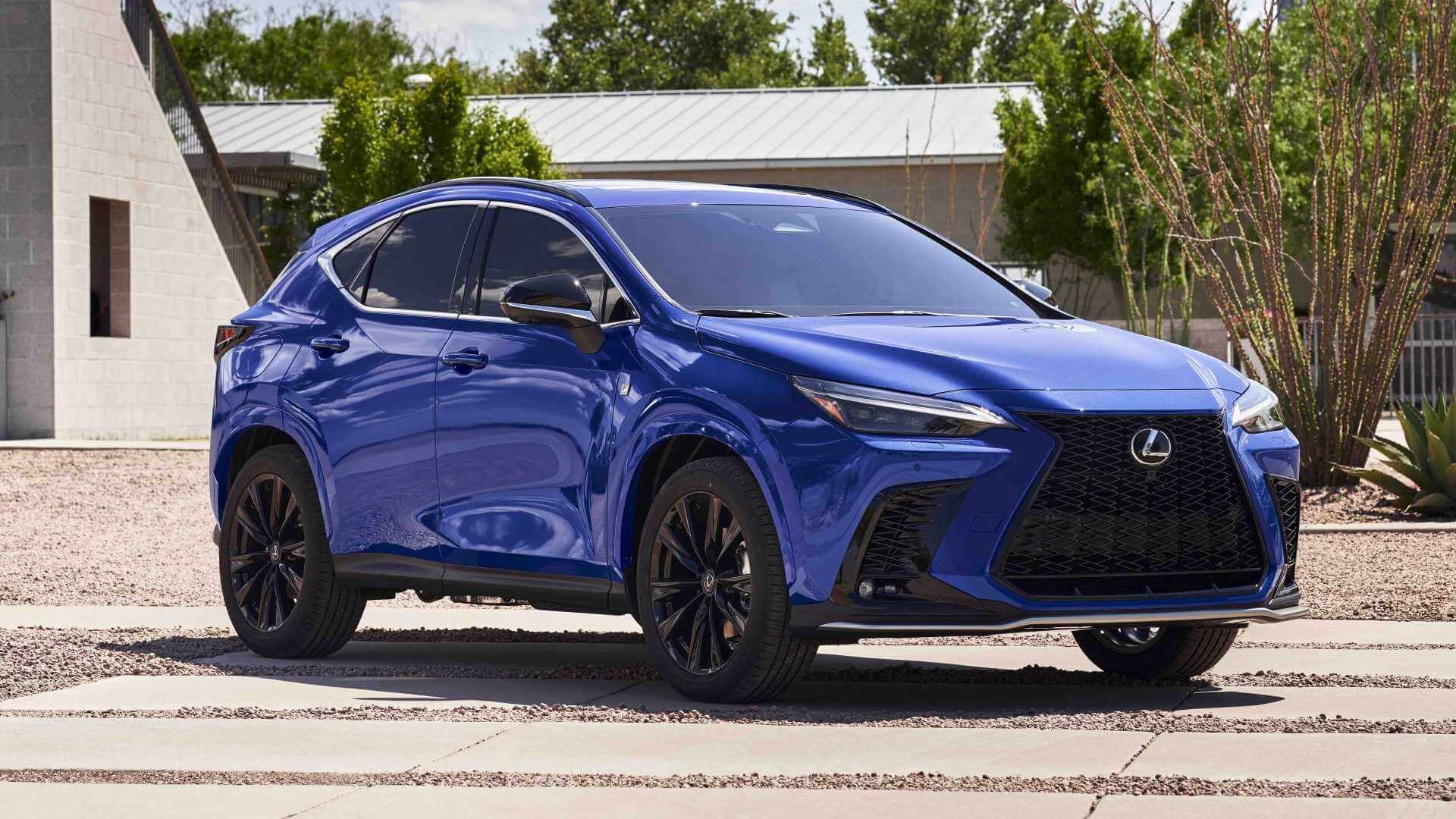
The second NX was revealed in June 2021 on the GA-K platform, shared with the Toyota RAV4 and Harrier/Venza, with a 2,690 mm wheelbase. It offers the NX 250 (2.5-litre) and the NX 350 with a 2.4-litre turbo of about 205 kW (279 PS). Above them sit the NX 350h hybrid with about 179 kW (243 PS) and the NX 450h+ plug-in hybrid with about 227 kW (309 PS) and an 18.1 kWh battery. The 2022 model earned an IIHS Top Safety Pick+ and five stars from Euro NCAP.
Key specifications by generation
| Parameter | First generation | Second generation |
|---|---|---|
| Years | 2014–2021 | 2021 onwards |
| Platform | Shared with Toyota RAV4 | GA-K |
| Power (kW / PS) | 110–175 kW / 150–238 PS | up to about 227 kW / 309 PS |
| Hybrid | NX 300h | NX 350h, NX 450h+ (PHEV) |
| Boot | 500 l | — |
Strengths and weaknesses
Owners praise the NX's stylish, sporty design, comfort, safety, reliability, build quality, pleasant materials, roomy cabin and large boot, as well as its handling; all-wheel drive and decent ground clearance help on rough roads. Criticisms include a high price, sound insulation that could be better, a lack of truly powerful engines and limited visibility. Rivals include the Audi Q5, BMW X3, Mercedes-Benz GLC, Volvo XC60, Range Rover Evoque, Jaguar F-Pace and Porsche Macan.
Image credits · Photos from Wikimedia Commons under free licences
- Lexus NX I (AGZ10) · Photo: Alexander Migl / Wikimedia Commons, CC BY-SA 4.0
- Lexus NX II (AZ20) · Photo: Ethan Llamas / Wikimedia Commons, CC BY-SA 4.0
Lexus NX in our rankings
- No. 317 of 912 · Longest-running car nameplates (12 years · top 35%)
- No. 150 of 305 · Oldest car models still on sale (12 years · top 50%)
- No. 315 of 345 · Cars with the most generations (2 generations)
In production longer than 65% of ranked nameplates in the 1CARS catalog (No. 317 of 912).
FAQ
What does Lexus NX stand for?
According to Lexus, "Nimble Crossover".
What engines does the first-generation Lexus NX have?
The NX 200 with 110 kW (150 PS), the NX 200t/NX 300 turbo with 175 kW (238 PS) and the NX 300h hybrid with 145 kW (197 PS) combined.
Is there a plug-in hybrid Lexus NX?
Yes, the second-generation NX 450h+ with an 18.1 kWh battery.
How big is the Lexus NX boot?
500 litres in the first generation.
Data sources
Data checked by an editor against the sources below.