 Kia Mohave
Specs, engines and history
Published Sources (1) Report an error
By Sarah Whitmore, Senior Automotive Writer
Verdict
Our verdict · Sarah Whitmore
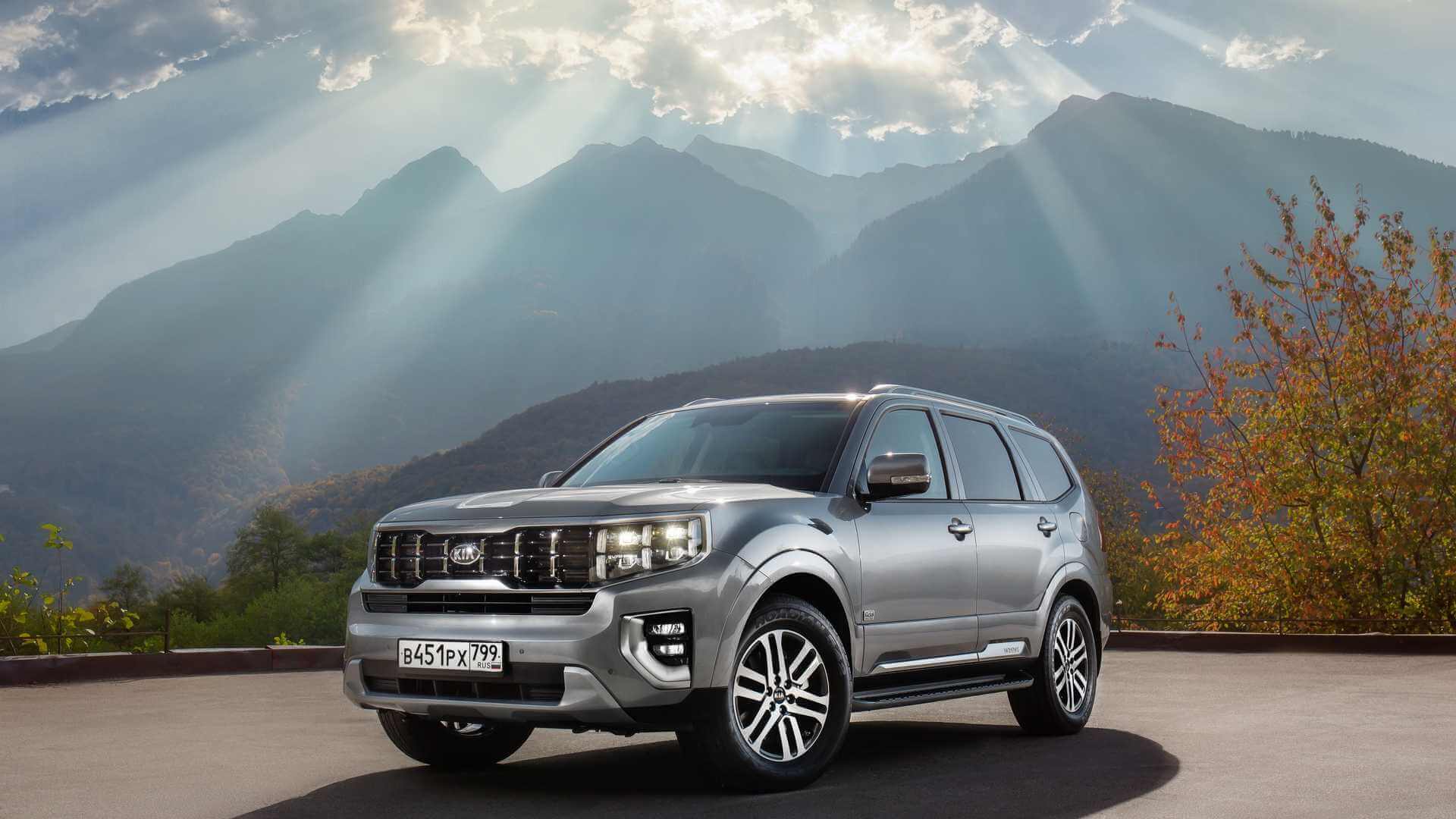
The updated Mohave impresses with its level of luxury, equipment and capability. Although there is only one engine, its strong pulling power copes with everything, including light off-road driving with the four-wheel-drive system. The new, more stylish exterior and ergonomic, high-tech cabin keep the Mohave a family SUV without a big rise in price.
The Kia Mohave is a mid-size body-on-frame SUV with four-wheel drive, built by Kia from 2008 to 2024. It debuted at the Detroit motor show in January 2008 and was sold in North America as the Kia Borrego. Buyers liked its ladder-frame construction, solid looks, roomy cabin and strong diesel engine. Over time, though, its design and equipment fell behind, so in September 2019 Kia presented a heavily updated Mohave with a modern, stylish exterior, a completely new interior and new features, while the technical specifications changed little.
In short
- Body-on-frame SUV built from 2008 to 2024; sold as the Borrego in North America, facelifted in 2016 and thoroughly updated in 2019.
- The updated Mohave uses a 3.0 V6 CRDi diesel with 191 kW (260 PS) and an eight-speed automatic.
- Four-wheel drive with a multi-plate clutch, low range and six driving modes.
- Seven seats in three rows and 350 to 2,765 litres of luggage space.
Kia Mohave at a glance
The Mohave was previewed by the Kia Mesa concept in 2005 and styled under Peter Schreyer, Kia's design chief and a former Audi designer. More Kia models are listed in our Kia catalogue.
| Item | Detail |
|---|---|
| Debut | Detroit motor show, January 2008 |
| Names | Mohave; Borrego in North America (2009–2011) |
| Construction | Ladder frame with separate body |
| Facelifts | 2016; 2019 (major update) |
| Production | 2008–2024 |
| Seats | 7 |
Exterior of the 2019 update
It is almost impossible to find shared elements between the earlier and updated Mohave: Kia redesigned both the front and the rear. The front has a massive grille, a large bumper and full LED headlights whose vertical inserts echo those of the grille. Each headlight has four lenses and six LED elements that work as daytime running lights or, in the lower row, as indicators. Chrome surrounds highlight the lights and grille. The bumper has an auxiliary grille with a chrome lip in the centre and plastic inserts with vertical LED fog lamps at the sides.
Look closely and you will see a new emblem: instead of the Kia lettering, the model's own logo with curling lines appears. In its home market the updated SUV is sold as "Mohave The Master". The centre of the bonnet is raised, which makes the car look tougher, and the windscreen is not very large and only moderately raked.
The profile is strict but tasteful, without lots of plastic or chrome trim. The wheel arches are slightly flared with cut-off edges, and protective plastic runs all around the car. Chrome trims at the bottom of the doors carry the version badge, and there are chrome handles and window surrounds. The large mirrors have LED indicators, electric adjustment, power folding, two-position memory and heating even on the base version. Standard wheels are 18-inch alloys, with 20-inch wheels optional. One drawback noticed by some drivers: a raised door trim near the mirrors makes it hard to see the lower part of the mirror, especially for shorter drivers. Ground clearance is 217 mm.
At the rear, the almost vertical tailgate carries a small spoiler with an LED brake light, LED tail lights with square sections and a full-width LED strip with the model name in the centre, plus the tailgate button, rear camera and a button that opens the rear window. The bumper has two horizontal fog lamps, a black plastic insert, a chrome trim and twin exhaust tips; a tow bar can be fitted at the factory.
Interior
The Mohave has a seven-seat cabin in three rows, and the updated model has a completely new interior. Imitation materials are used — aluminium-look inserts, matt wood veneer, gloss black and leatherette — but where it matters, the cabin looks and feels decent.
The driver's seat is very comfortable. The four-spoke leather steering wheel is heated as standard; base versions have manual height adjustment, while higher trims have electric height and reach adjustment. Simpler versions have Supervision instruments with analogue dials and a 7-inch trip computer, while the Premium version has a 12.3-inch digital instrument panel and a head-up display. The front seats are leather-trimmed with electric adjustment including lumbar support, heating and ventilation; the Premium adds memory for the seat, wheel and mirrors and Nappa leather.
The centre console has a 12.3-inch touchscreen for the new infotainment system, which is more responsive and has attractive graphics. Even the base version has navigation, a rear camera, Apple CarPlay and Android Auto. Below the screen are two air vents, infotainment buttons and dual-zone climate controls with convenient rocker switches. The wide tunnel carries a leather-trimmed gear lever, two cupholders and a rotary drive-mode selector, and the armrest is trimmed in leatherette.
The second row is comfortable too, with plenty of legroom and headroom and a flat floor. The seats slide individually and their backrests recline over a wide range. Rear passengers have a fold-down armrest with two cupholders, their own climate controls and vents in the roof and on the tunnel, controls for the front passenger seat, two USB ports, a 220 V socket, heating, reading lights and ISOFIX mounts. The third row is reasonably roomy, folds flat and has a USB port and its own air conditioning. With all seats in use the boot holds 350 litres, 1,219 litres with the third row folded and 2,765 litres with both rear rows folded. It has lighting, a 12 V socket and an underfloor organiser, and a power tailgate is optional. The spare wheel is mounted under the body.
Engines and transmission
| Engine | Power | Torque | Notes |
|---|---|---|---|
| 3.0 V6 CRDi VGT diesel | 191 kW (260 PS) | — | Updated Mohave (2019) |
| 3.8 V6 petrol | 206 kW (276 hp) | — | Early Borrego |
| 4.6 V8 petrol | 269 kW (361 hp) | — | Early Borrego; 3,400 kg towing |
The diesel V6 has a variable-geometry turbocharger, common-rail injection and 24 valves. Its official combined consumption is about 9.3 l/100 km, although real-world figures are higher. It reaches 100 km/h in 8.7 seconds and has a top speed of 190 km/h.
The diesel is paired with an eight-speed automatic. The four-wheel-drive system uses a multi-plate clutch to send torque to the front wheels, varying the split between 10:90 and 50:50 front to rear depending on conditions, and there is a low-range transfer case. The updated electronic control offers six driving modes: Comfort, Eco, Sport, Mud, Sand and Snow.
Chassis
Structurally, the updated Mohave changed little. It has a ladder frame carrying the body and engine, independent suspension with double wishbones at the front and a multi-link rear axle, and optional rear air suspension. To make this big SUV easier to drive, Kia replaced the hydraulic power steering with R-MDPS electric assistance. All four wheels have disc brakes, ventilated at the front.
Safety and equipment
The update also expanded comfort and safety equipment: nine airbags, a head-up display, LED headlights and tail lights, the digital instrument cluster, a Wi-Fi hotspot with 4G LTE, an immobiliser, trailer stability assistance, the drive-mode selector, tyre-pressure monitoring, stability control, lane keeping assist, pedestrian detection, a surround-view camera, blind-spot monitoring, keyless entry, remote functions and smartphone connectivity, heated and ventilated seats, adaptive cruise control, three-zone climate control, navigation, front and rear parking sensors, wireless charging, automatic parking, rear cross-traffic alert, automatic emergency braking, a hands-free power tailgate and ISOFIX mounts, depending on the version. Higher trims add a sunroof and a Lexicon audio system with 13 speakers and a subwoofer.
What owners say
Owners like the Mohave's good performance, torquey engine and high driving position, and its off-road ability thanks to four-wheel drive and good ground clearance. The roomy cabin, big luggage area, reliability and third row are also praised. On the downside, some dislike the suspension and the materials of the pre-update car, the paint quality and the lack of engine choice, and fuel consumption in town is high. The update addressed many of these points.
Rivals
The Mohave competed with the Toyota Land Cruiser Prado, Mitsubishi Pajero Sport, Toyota Fortuner, Hyundai Palisade, Nissan Pathfinder, Honda Pilot and, at a higher price, the Audi Q7, BMW X5 and Volvo XC90.
Kia Mohave in our rankings
In production longer than 73% of ranked nameplates in the 1CARS catalog (No. 233 of 912).
FAQ
Is the Kia Mohave the same as the Kia Borrego?
Yes. The Mohave was sold in North America as the Borrego for a short period.
Does the Kia Mohave have a ladder frame?
Yes. It is a body-on-frame SUV with a separate ladder frame.
What engine does the updated Kia Mohave have?
A 3.0 V6 CRDi diesel with 191 kW (260 PS), paired with an eight-speed automatic and four-wheel drive.
How many seats does the Kia Mohave have?
Seven, in three rows.
Data sources
Data checked by an editor against the sources below.