 Genesis G80
All generations, specs and history
Published Sources (2) Report an error
By Felix Hartmann, Automotive Technology & EV Contributor
- Built
- 2016–present
- Generations
- 2 · DH to RG3
Timeline
G80 generations
Click a generation for its own page


- G80 I (DH) 2016–2020 · Sedan
- G80 II (RG3) Current 2020–now · Sedan
Newest first · 2 generations since 2016
All generations by year: G80 II (RG3) (2020–now) · G80 I (DH) (2016–2020)
Which one is mine?
Pick the year of first registration to see which generation it is.
- RG3 2020–present
- DH 2016–2020
The Genesis G80 is a premium executive sedan — an E-segment car in European terms — with rear- or all-wheel drive, built by the Hyundai Motor Group's luxury brand Genesis. It replaced the Hyundai Genesis sedan, and with the second generation the Koreans set out to win over buyers who would traditionally choose European premium brands. The name is simple: G stands for Genesis and 80 shows its place in the range.
In short
- The first G80 was an updated, rebranded Hyundai Genesis, launched in 2016; the second generation (RG3) was revealed in a livestream on 30 March 2020.
- The RG3 uses the rear-drive M3 platform, an eight-speed automatic and optional all-wheel drive.
- Engines: a 224 kW (304 PS) 2.5 turbo, a 279 kW (380 PS) 3.5 twin-turbo V6 and a 154 kW (210 PS) 2.2 diesel; the Electrified G80 has 272 kW (370 PS).
- The cabin is built around a 14.5-inch central screen and a 12.3-inch digital instrument display; a facelift was revealed in December 2023.
Safety
-
RG3 · NHTSA 2025
US NCAP (NHTSA)
-
DH · NHTSA 2019
US NCAP (NHTSA)
Stars from different years and organisations are not directly comparable: test protocols change every few years.
Genesis G80 at a glance
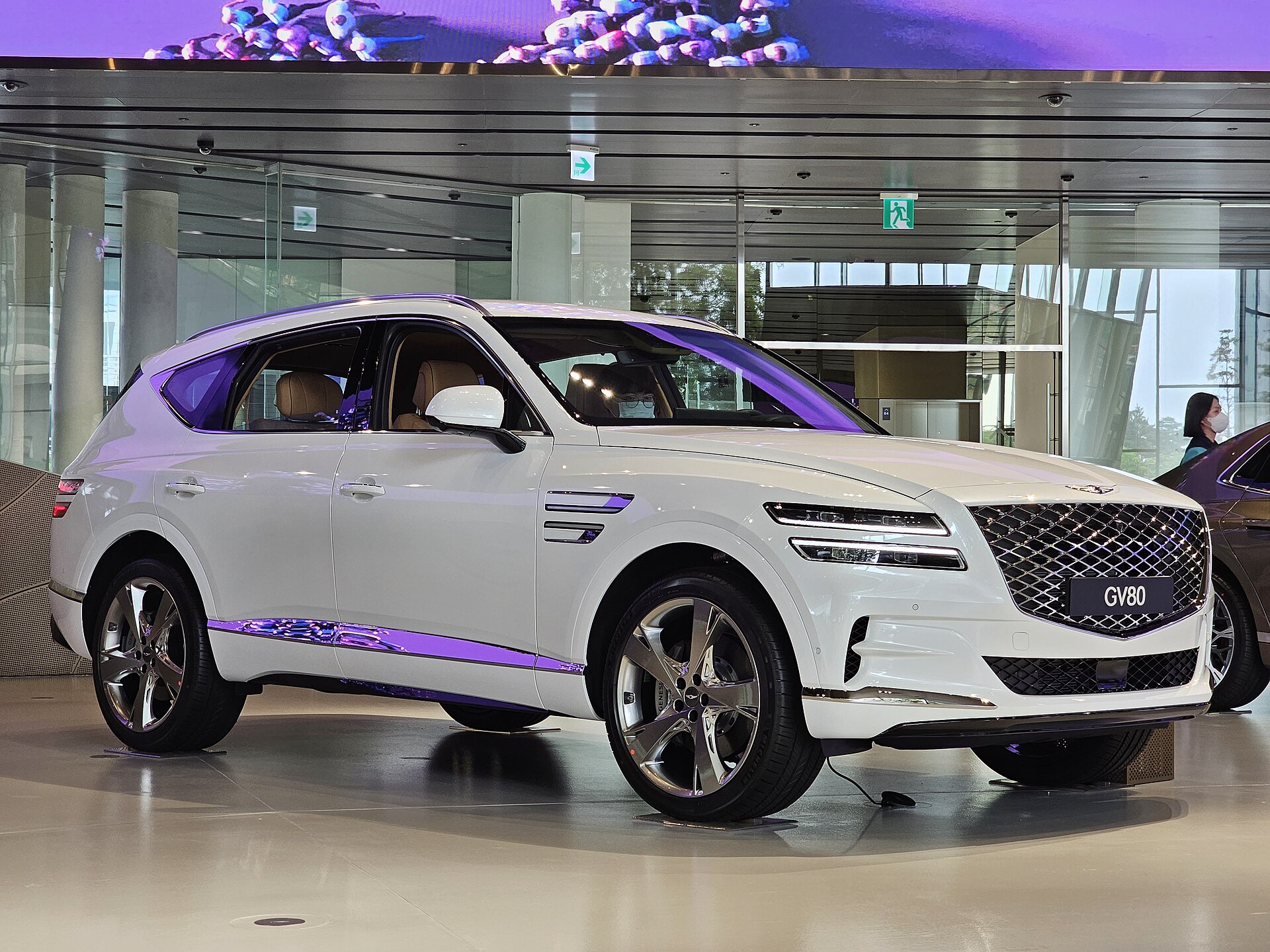
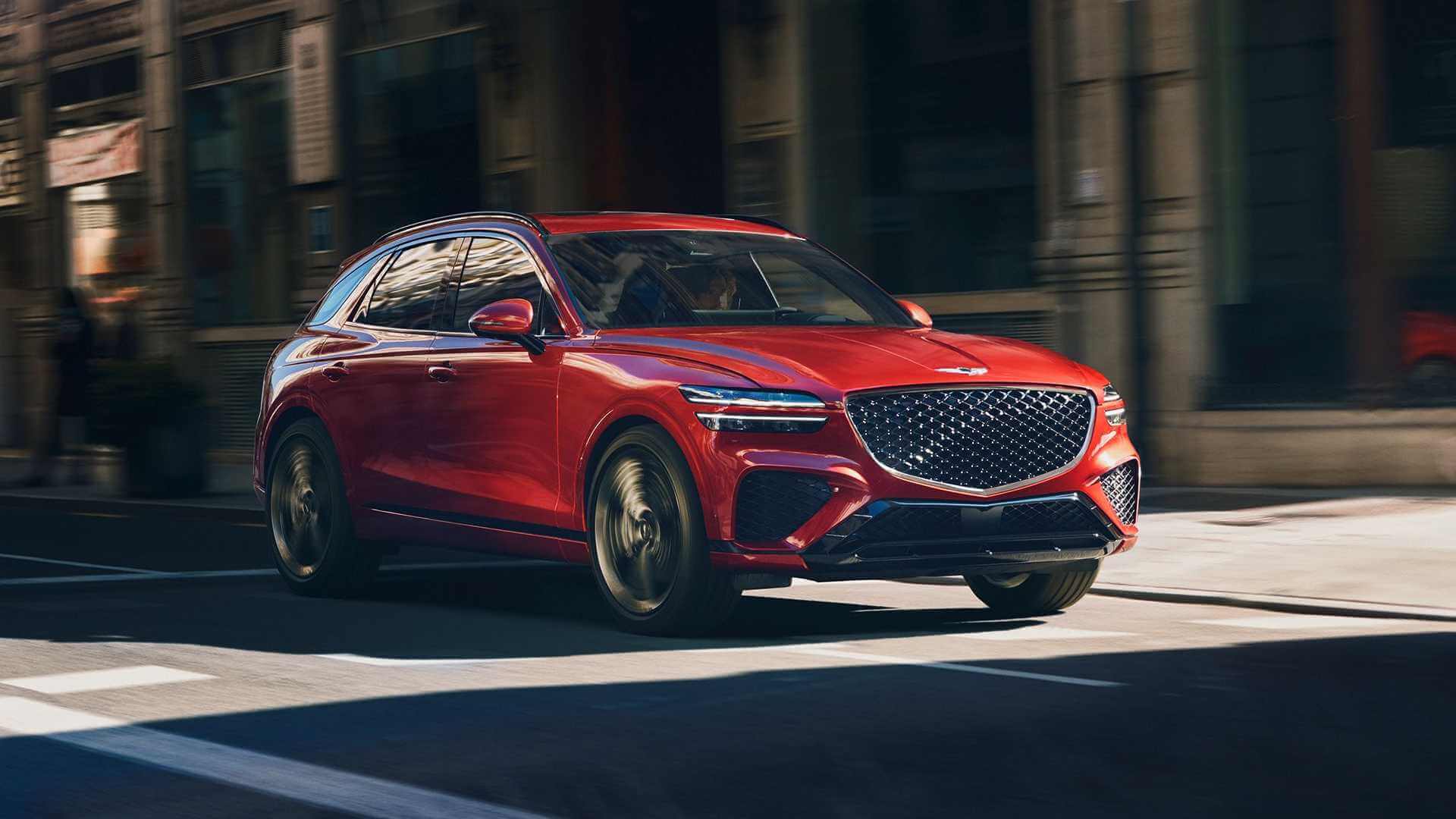
The G80 name first appeared in 2016, when the second-generation Hyundai Genesis (DH) was updated and rebranded. It debuted at the Detroit motor show in January 2016 and was then shown at the Busan motor show in June 2016. The all-new second generation, code-named RG3, was unveiled on 30 March 2020 in a live online broadcast from the company's headquarters in South Korea. It brought a more elegant exterior, a modern luxury cabin and high-performance engines, and in 2021 it was joined by the all-electric Electrified G80. A facelift for the 2024 model year was revealed on 14 December 2023. More of the brand's range is in our Genesis catalogue, and the closely related SUV is covered in our Genesis GV80 review.
Exterior
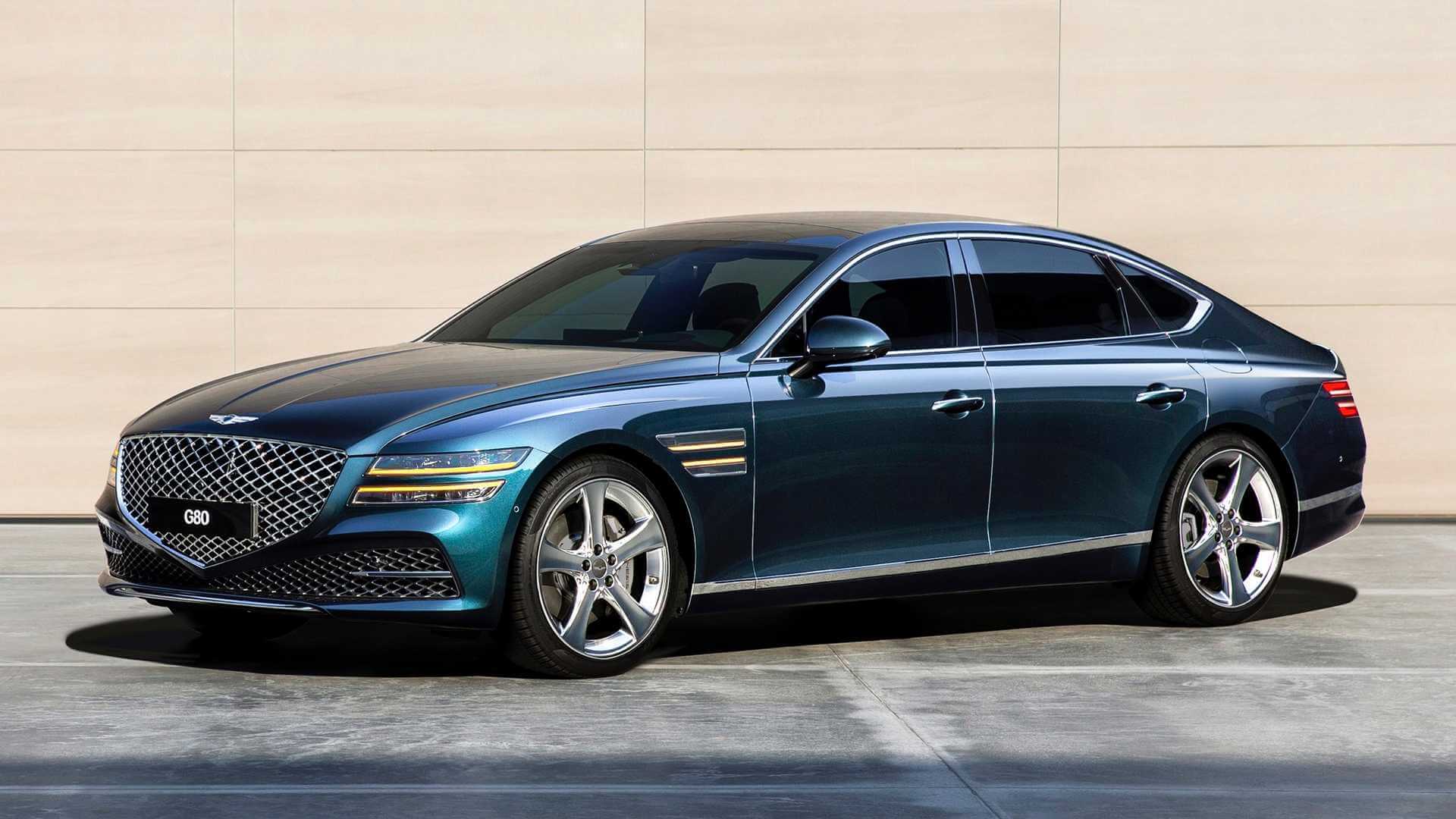
At first glance the new G80 looks stunning and very different from its predecessor. It is a substantial car with many carefully crafted details and smooth transitions in height, designed in the brand's "Athletic Elegance" language.
The front is large but not tall, and slightly raked, which helps visibility from the driver's seat. A long, gently curved bonnet with slightly raised edges ends at the Genesis winged badge. The centre of the bumper is dominated by the large, almost triangular crest grille with a fine chrome mesh, set slightly into the body. On each side, the headlights consist of two slim horizontal LED strips — one for high beam and one for low beam — the "quad lamp" signature of the brand. The lower bumper has a wide intake with gloss-black inserts and fog lights.
From the side, the window line forms an almost semicircular arc with a thin chrome surround, and gloss-black pillars make the glass look like one continuous surface. Side repeaters echo the two-line headlight graphic. Flared wheel arches, sculpted sills and large wheels complete the profile: 18-inch wheels are standard, with 19- and 20-inch options, and ground clearance is about 150 mm.
The rear has a long, steeply sloping roof with a large rear window, a short, angled boot lid with a small lip spoiler, tail lights with the same two-line design as the headlights, chrome lettering, a dark diffuser and large pentagonal exhaust outlets.
Interior and practicality
The luxurious cabin closely resembles that of the GV80 SUV. Materials include real leather, wood, aluminium, quality plastics and fabric. The driver has a four-spoke multifunction steering wheel, a 12.3-inch digital instrument display, a head-up display and a touch-sensitive controller under the right hand. A Lexicon audio system with active noise cancellation and three-zone climate control are available.
The dashboard is uncluttered. Most functions are handled through a wide 14.5-inch touchscreen, which also runs the infotainment system with Android Auto and Apple CarPlay and can be updated over the air. Below it are slim air vents and a panel of touch buttons and dials for the climate control. The dashboard flows into a large centre tunnel with a covered compartment containing cupholders that can heat or cool drinks, a small connectivity panel and an armrest with a cool box. Instead of a conventional gear lever there is a rotary selector.
The G80 seats five, though four travel more comfortably. The seats are leather-trimmed, with adjustable side bolsters, heating, ventilation, massage, electric adjustment and memory. Higher trims have multi-contour seats with seven air cells each, whose pressure changes automatically with the driving mode. Rear passengers can have their own entertainment and climate controls, and Genesis says the sloping roof does not compromise rear comfort; thin pillars help visibility. Every version has a power boot lid.
Engines and transmissions (second generation)
| Engine | Power (kW / PS) | Torque | Consumption (combined) |
|---|---|---|---|
| 2.5 T-GDi petrol (4-cyl turbo) | 224 kW / 304 PS | 422 Nm | about 9.2 l/100 km |
| 3.5 T-GDi petrol (V6 twin-turbo) | 279 kW / 380 PS | 530 Nm | about 10.7 l/100 km |
| 2.2 CRDi diesel (4-cyl) | 154 kW / 210 PS | 441 Nm | — |
| Electrified G80 (two motors) | 272 kW / 370 PS | 700 Nm | electric |
The 2.5-litre four-cylinder has an aluminium block and head, combined direct and port injection, a turbocharger with a liquid-cooled intercooler, 16 valves and variable timing on both camshafts. The 3.5-litre V6 has twin turbochargers, combined injection, a liquid intercooler and 24 valves with variable timing. The diesel uses an aluminium block, a turbocharger and common-rail injection. All combustion engines drive through an eight-speed automatic. Rear-wheel drive is standard, and the optional all-wheel-drive system uses a multi-plate clutch to engage the front axle. Depending on the version, 0–100 km/h takes 5.1 to 6.5 seconds and top speed is 240–250 km/h. The Electrified G80 uses an 87.2 kWh battery (94.5 kWh from 2024) and 800-volt technology.
Chassis
The second-generation G80 uses a rear-wheel-drive platform with a longitudinal engine and a monocoque body made of 42% ultra-high-strength steel and 19% aluminium. Suspension is fully independent, with a multi-link rear and anti-roll bars at both ends. An adaptive chassis is optional, with electronically controlled dampers that adjust their stiffness using information from a front camera that scans the road ahead. Steering is rack-and-pinion with electric assistance, and the brakes are ventilated discs all round with ABS, EBD and other aids.
Safety and equipment
The G80 has an extensive list of safety systems. Rear collision-avoidance assist warns of pedestrians or passing vehicles when reversing and stops the car if the driver does not react. Safe exit assist prevents the rear doors from being opened while a vehicle is approaching from behind. Side collision avoidance, blind-spot monitoring with automatic braking and intelligent headlights that switch individual high-beam segments to avoid dazzling others are also fitted. There are ten airbags, including a driver's knee airbag and a front centre airbag between the seats.
Depending on the market, base versions include ten airbags, ABS and stability control, dual-zone climate control, full LED lights, the 14.5-inch infotainment system, synthetic leather, parking sensors front and rear, cruise control, heated and electrically adjustable front seats and 19-inch wheels. The top-spec version adds Nappa leather, a panoramic roof, the digital instruments, the premium Lexicon audio system, three-zone climate control, a head-up display, surround-view cameras, soft-close doors, adaptive headlights, ventilated front seats, heated rear seats, adjustable suspension and blind-spot monitoring.
Strengths and weaknesses
Owners, mostly of the first generation, praise the striking design, modern LED lights, high comfort, stability on the road and quality materials; the powerful petrol engines and all-wheel drive make the car feel very planted. Equipment and safety are generous, and the price is attractive compared with rivals. Drawbacks are higher fuel consumption and, on the previous generation, an all-wheel-drive system that could not be switched off. Rivals include the BMW 5 Series, Mercedes-Benz E-Class, Volvo S90, Cadillac CT6 and Kia Stinger.
Image credits · Photos from Wikimedia Commons under free licences
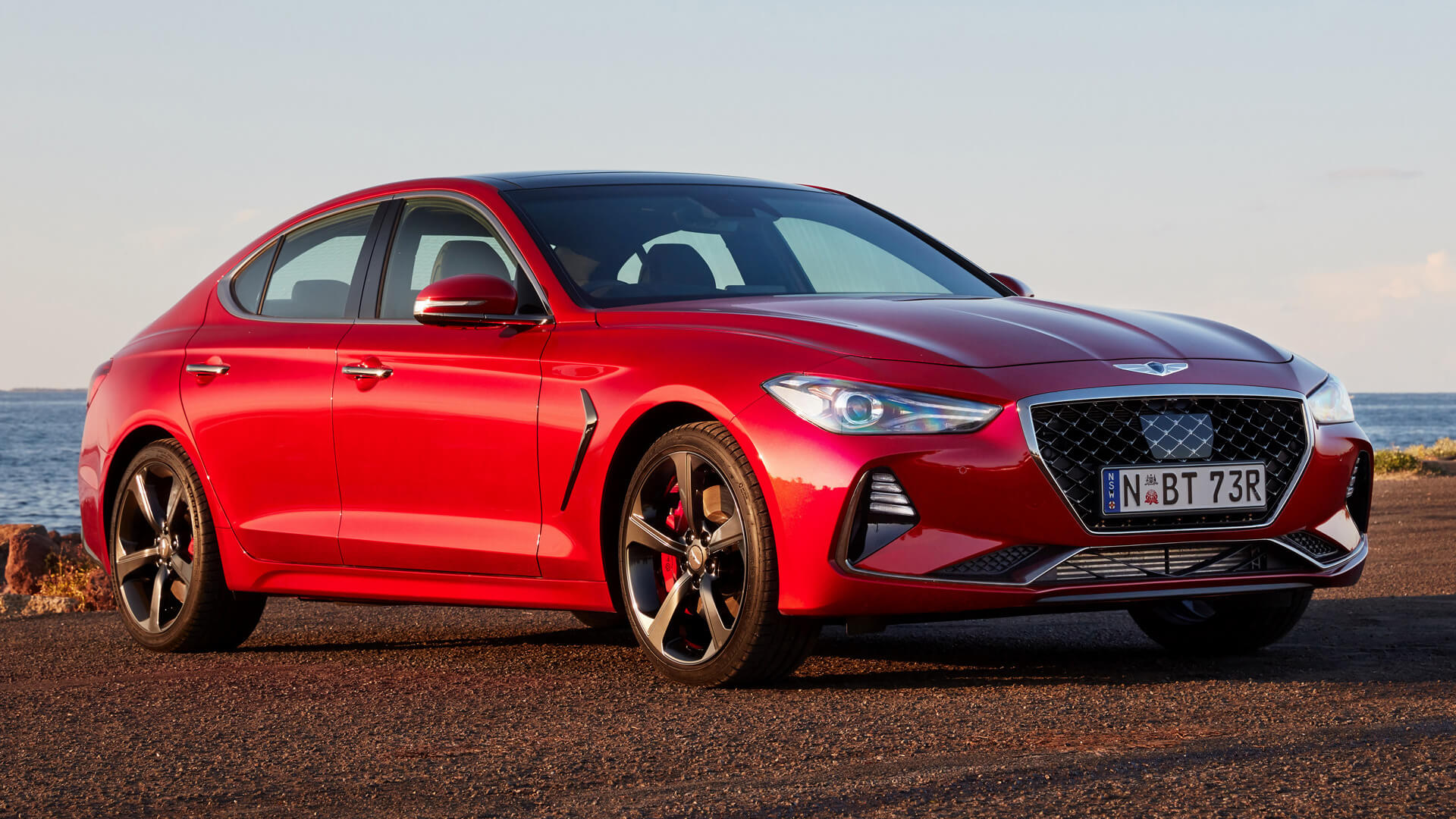
- Genesis G80 I (DH) · Photo: Alexander Migl / Wikimedia Commons, CC BY-SA 4.0
- Genesis G80 II (RG3) · Photo: Alexander Migl / Wikimedia Commons, CC BY-SA 4.0
Genesis G80 in our rankings
- No. 384 of 912 · Longest-running car nameplates (10 years · top 43%)
- No. 161 of 305 · Oldest car models still on sale (10 years · top 55%)
- No. 324 of 345 · Cars with the most generations (2 generations)
In production longer than 57% of ranked nameplates in the 1CARS catalog (No. 384 of 912).
FAQ
When did the second-generation Genesis G80 come out?
It was revealed in a livestream on 30 March 2020 and went on sale that year.
What engines does the Genesis G80 have?
A 2.5 turbo with 224 kW (304 PS), a 3.5 twin-turbo V6 with 279 kW (380 PS) and a 2.2 diesel with 154 kW (210 PS); the Electrified G80 has 272 kW (370 PS).
Is the Genesis G80 rear-wheel drive?
Yes, rear-wheel drive is standard, with optional all-wheel drive.
How many airbags does the Genesis G80 have?
Ten, including a driver's knee airbag and a front centre airbag.
Is there an electric Genesis G80?
Yes. The Electrified G80 uses two motors with 272 kW (370 PS) and an 800-volt battery system.
Data sources
Data checked by an editor against the sources below.
- Wikipedia — Genesis G80
- NHTSA 5-Star Safety Ratings (US NCAP) — U.S. Government work, public domain