 Genesis GV70
Specs, engines and history
Published Sources (2) Report an error
By Felix Hartmann, Automotive Technology & EV Contributor
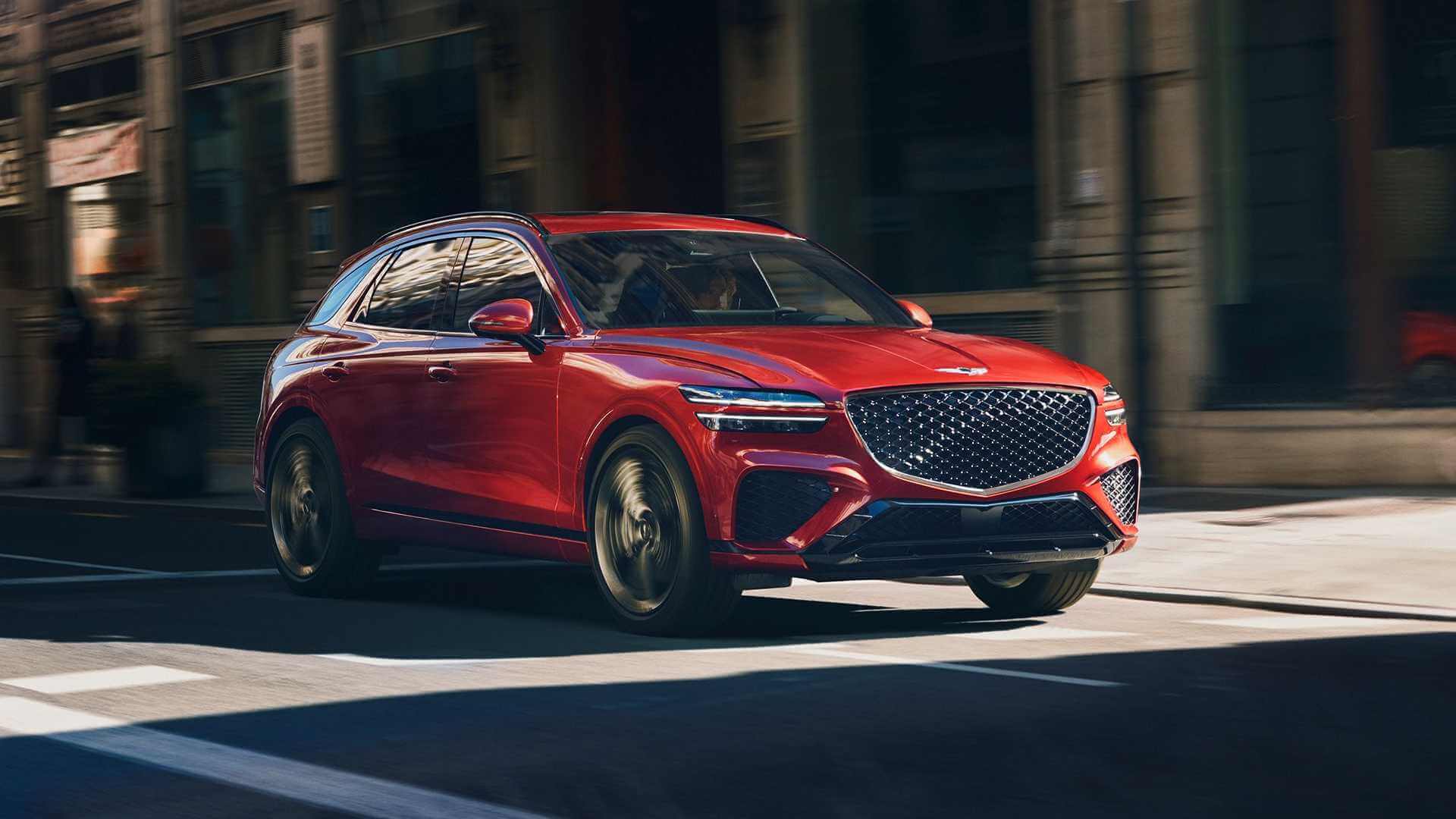
The Genesis GV70 is a premium mid-size SUV with rear- or all-wheel drive from Genesis, the luxury brand of Hyundai. Its presentation came in two stages: the exterior, interior and some equipment were revealed in October 2020, and the full engine range and specifications followed in December 2020. It was the brand's second SUV after the larger GV80, and it combines elegant design, a luxurious cabin, strong engines and modern technology. An electric version followed in 2021, and a facelift was unveiled on 26 April 2024.
In short
- Built in Ulsan, South Korea, and Montgomery, Alabama, on Hyundai's rear-wheel-drive M3 platform; 4,715 mm long with a 2,875 mm wheelbase.
- Engines: 2.5 turbo with 224 kW (304 PS), 3.5 turbo V6 with 279 kW (380 PS) and 2.2 diesel with 154 kW (210 PS), all with an eight-speed automatic.
- Electrified GV70: 320 kW (435 PS), up to 360 kW (489 PS) in Boost Mode, 77.4 kWh battery (84 kWh from 2024).
- 2022 MotorTrend SUV of the Year; 542-litre boot.
Safety
-
NHTSA 2025
US NCAP (NHTSA)
Stars from different years and organisations are not directly comparable: test protocols change every few years.
Genesis GV70 at a glance
The GV70 is a monocoque SUV with a longitudinal front engine. More Genesis models are listed in our Genesis catalogue.
Exterior
The GV70 looks like nothing Hyundai built before, with large dimensions and many original details. The long front sits fairly low for an SUV and slopes for good visibility. A prominent ridge runs down the centre of the bonnet, with recessed sections at the sides. The "Quad Lamps" headlights consist of two horizontal LED strips stacked on top of each other, and the shield-shaped "Crest Grille" has a fine chrome mesh. The bumper has side intakes that cool the front brakes, linked by a body-coloured strip; there is no plastic cladding.
The profile has a sloping roof with a shark-fin antenna, a roof spoiler and a distinctive line running from the headlights to the rear. Door-mounted mirrors carry indicators, and large wheel arches house 18- to 21-inch wheels. Thirteen paint colours are offered, and ground clearance is 185 mm. The GV70 Sport has larger intakes, dark chrome trim, exclusive wheels of up to 21 inches and round exhaust tips. At the rear, split horizontal lights of different lengths recall the GV80, below a wide spoiler with a brake-light strip and a steeply raked rear window.
Interior
Materials and fit are of a high standard, with leather, Alcantara and aluminium in a choice of colours. The cabin looks minimalist but has plenty of controls, arranged within an oval theme that links the single-spoke steering wheel to the centre console; the Sport has a three-spoke wheel with touch buttons. A 12.3-inch digital instrument cluster (8 inches on the base version) offers several display modes. The front seats are electrically adjustable, heated and ventilated, and the passenger seat can be folded from behind. Ergo Motion seats have seven air cells in each backrest, pronounced side bolstering and many adjustments.
A 14.5-inch infotainment screen with Android Auto and Apple CarPlay offers excellent graphics and an intuitive menu, though the driver must lean forward to touch it. Below are horizontal vents and an oval panel with two climate knobs with integrated displays. A dual antibacterial air-purification system and Active Sound Design, which enhances the engine sound, are fitted. On the tunnel, a rotary gear selector and a similar infotainment controller sit side by side, followed by cupholders, storage and a narrow armrest. The rear seats recline and offer enough space, although the cushion shape suits two people best. The boot holds 542 litres, or 1,678 litres with a flat floor when the rear seats are folded.
The 2024 facelift replaced the separate instrument and infotainment screens with a 27-inch OLED display and updated the headlights, grille, wheels, climate controls and centre console.
Engines and transmissions
| Engine | Fuel | Power (kW / PS) | Torque |
|---|---|---|---|
| 2.5 T-GDi I4 | Petrol | 224 kW / 304 PS | 422 Nm |
| 3.5 T-GDi V6 | Petrol | 279 kW / 380 PS | 530 Nm |
| 2.2 CRDi I4 | Diesel | 154 kW / 210 PS | 441 Nm |
| Electrified GV70 (dual motor) | Electric | 320 kW / 435 PS (360 kW / 489 PS with Boost) | — |
The petrol engines use combined port and direct injection and variable valve timing; the diesel has an aluminium block and common-rail injection. Some markets received lower-rated versions of the 2.5T and the diesel. Published figures give combined consumption of about 7.8 l/100 km for the diesel and 10.3–11.3 l/100 km for the petrol engines, 0–100 km/h in 5.1–8.3 seconds and top speeds of 211–250 km/h.
All combustion versions use an eight-speed automatic controlled by a rotary selector. Rear-wheel drive is available, and the HTRAC all-wheel-drive system uses a multi-plate clutch to engage the front wheels; an electronic limited-slip rear differential (e-LSD) is optional. Terrain modes for snow, sand and mud complement the Eco, Comfort, Custom and Sport drive modes.
The Electrified GV70 was revealed on 19 November 2021 and released in March 2022. Its 77.4 kWh battery gives 445–455 km on the WLTP cycle; the 84 kWh battery introduced in 2024 increases this to 479 km.
Chassis
The M3 platform has a longitudinal engine and extensive use of high-strength steel. Suspension is independent with coil springs and anti-roll bars at both ends, MacPherson struts at the front and a multi-link rear. Optional adaptive dampers use Road Preview, which reads the road ahead with the front camera. Steering is rack-and-pinion with electric assistance, and all four brakes are ventilated discs (360 mm front, 345 mm rear).
Safety and equipment
The GV70 offers forward collision avoidance, blind-spot collision avoidance, driver attention warning, smart cruise control, a surround-view monitor, remote smart parking assist, rear cross-traffic collision avoidance, augmented-reality navigation, Highway Driving Assist II, ten airbags, Rear Occupant Alert, fingerprint driver authentication, LED lights, a rear camera and a head-up display. Higher trims add Nappa leather, 21-inch wheels, a panoramic roof, an 18-speaker Lexicon audio system, adaptive cruise control, automatic parking, three-zone climate control and heated and ventilated front and rear seats. In Euro NCAP's 2021 test it scored 89% for adult occupants, 87% for children, 64% for vulnerable road users and 87% for safety assist.
Key specifications
| Parameter | Value |
|---|---|
| Presented | October–December 2020 |
| Platform | Hyundai M3 |
| Length / wheelbase | 4,715 mm / 2,875 mm |
| Power (combustion) | 154–279 kW / 210–380 PS |
| Gearbox | 8-speed automatic |
| Ground clearance | 185 mm |
| Boot | 542 / 1,678 l |
| Wheels | 18–21 in |
Strengths and weaknesses
Early owners praise the GV70's sporty styling, reasonable fuel consumption, excellent suspension, sound insulation and comfort, the easy-to-use infotainment system with its large screen, build quality, materials, rich equipment and an impressive number of driver assistants; all-wheel drive and decent ground clearance allow light off-road driving. The main drawback is the high price, and rear space is tighter than in the larger GV80. Rivals include the BMW X3, Mercedes-Benz GLC, Audi Q5, Volvo XC60 and Porsche Macan.
Genesis GV70 in our rankings
- No. 607 of 912 · Longest-running car nameplates (6 years · top 69%)
- No. 210 of 305 · Oldest car models still on sale (6 years · top 75%)
In production longer than 31% of ranked nameplates in the 1CARS catalog (No. 607 of 912).
FAQ
What engines does the Genesis GV70 have?
A 2.5 turbo with 224 kW (304 PS), a 3.5 turbo V6 with 279 kW (380 PS) and a 2.2 diesel with 154 kW (210 PS); there is also the all-electric Electrified GV70.
Is there an electric Genesis GV70?
Yes, the Electrified GV70 has 320 kW (435 PS), rising to 360 kW (489 PS) in Boost Mode, and a 77.4 or 84 kWh battery.
Where is the Genesis GV70 built?
In Ulsan, South Korea, and Montgomery, Alabama, USA.
How big is the Genesis GV70 boot?
542 litres, or 1,678 litres with the rear seats folded.
Data sources
Data checked by an editor against the sources below.
- Wikipedia — Genesis GV70
- NHTSA 5-Star Safety Ratings (US NCAP) — U.S. Government work, public domain