 Jeep Grand Cherokee
All generations, specs and history
Published Sources (2) Report an error
By Felix Hartmann, Automotive Technology & EV Contributor
- Built
- 1992–present
- Generations
- 5 · ZJ to WL
Timeline
Grand Cherokee generations
Click a generation for its own page


- Grand Cherokee (ZJ) 1992–1998 · SUV
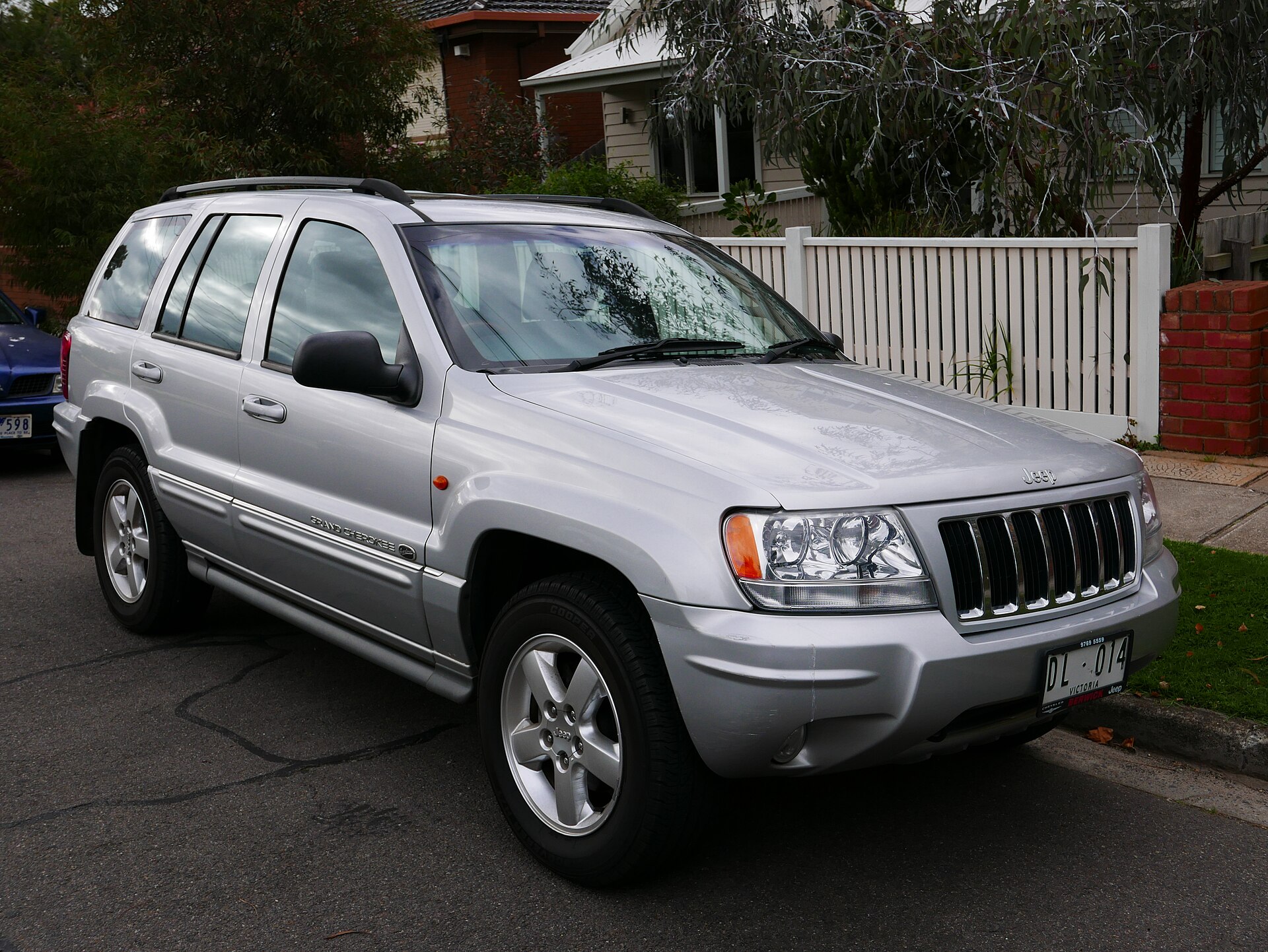
- Grand Cherokee (WJ) 1998–2004 · SUV
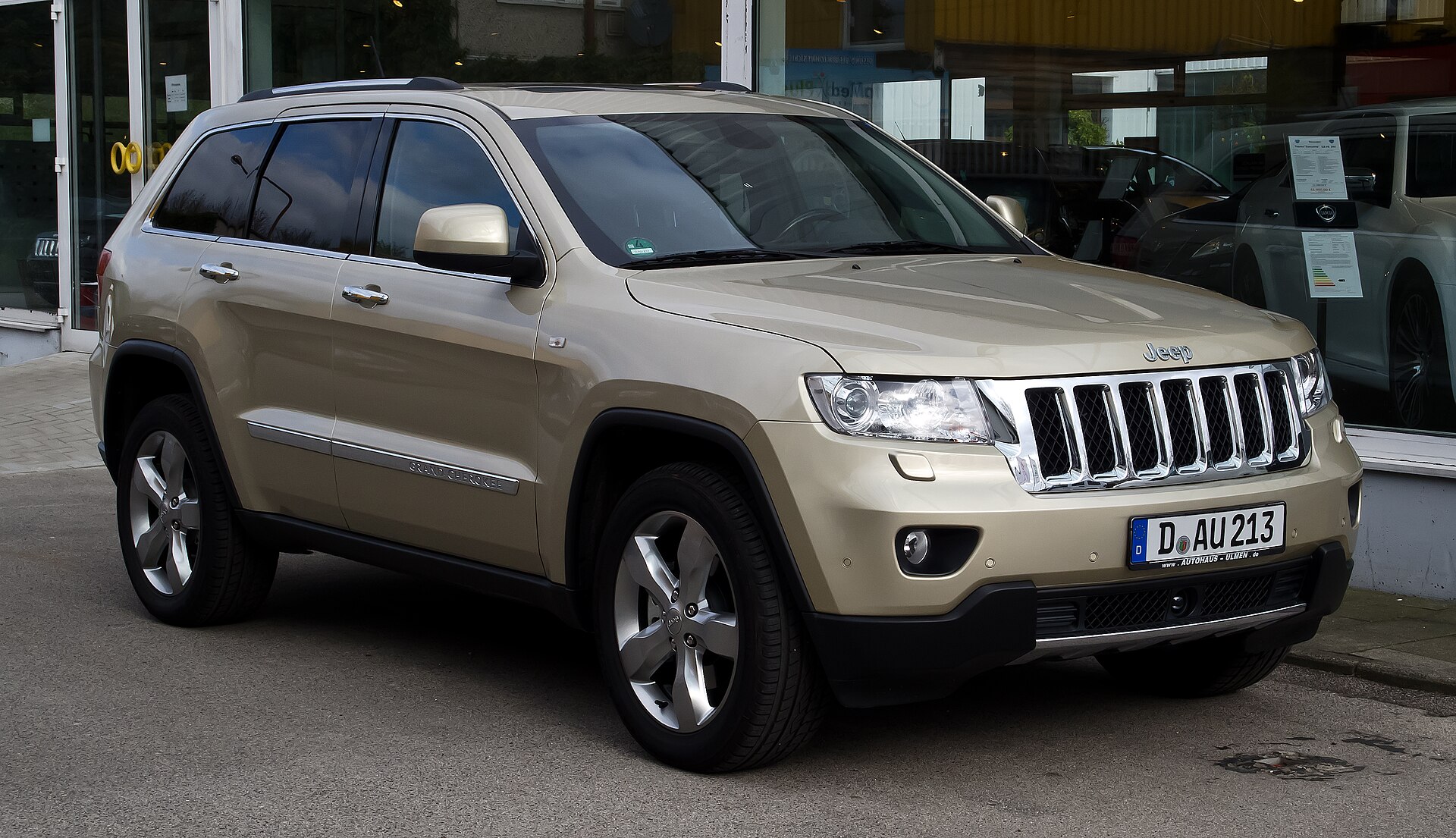
- Grand Cherokee (WK) 2005–2010 · SUV
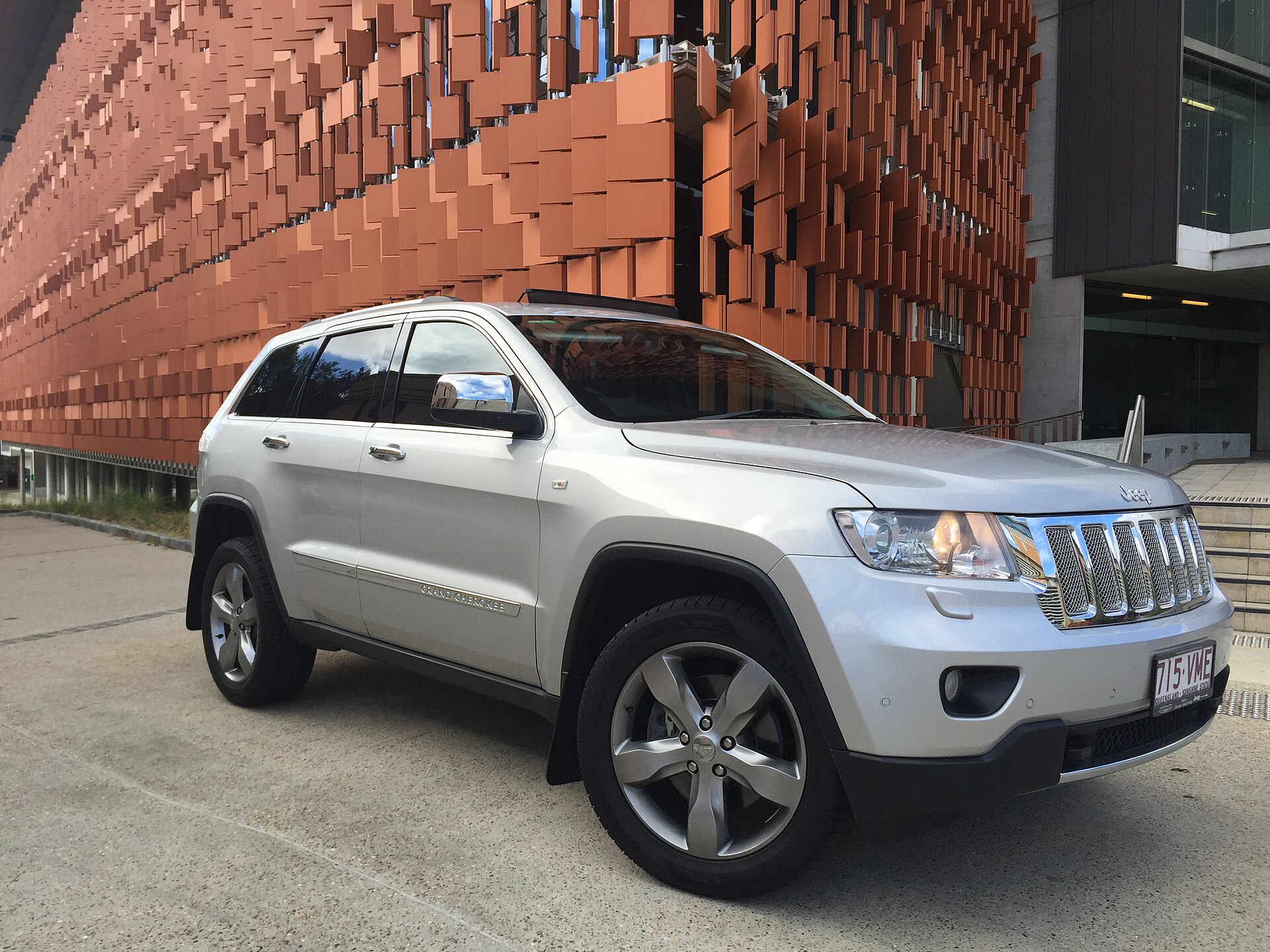
- Grand Cherokee (WK2) 2010–2022 · SUV
- Grand Cherokee (WL) Current 2022–now · SUV
Newest first · 5 generations since 1992
-
2022
-
2010
-
2005
-
1998
-
1992
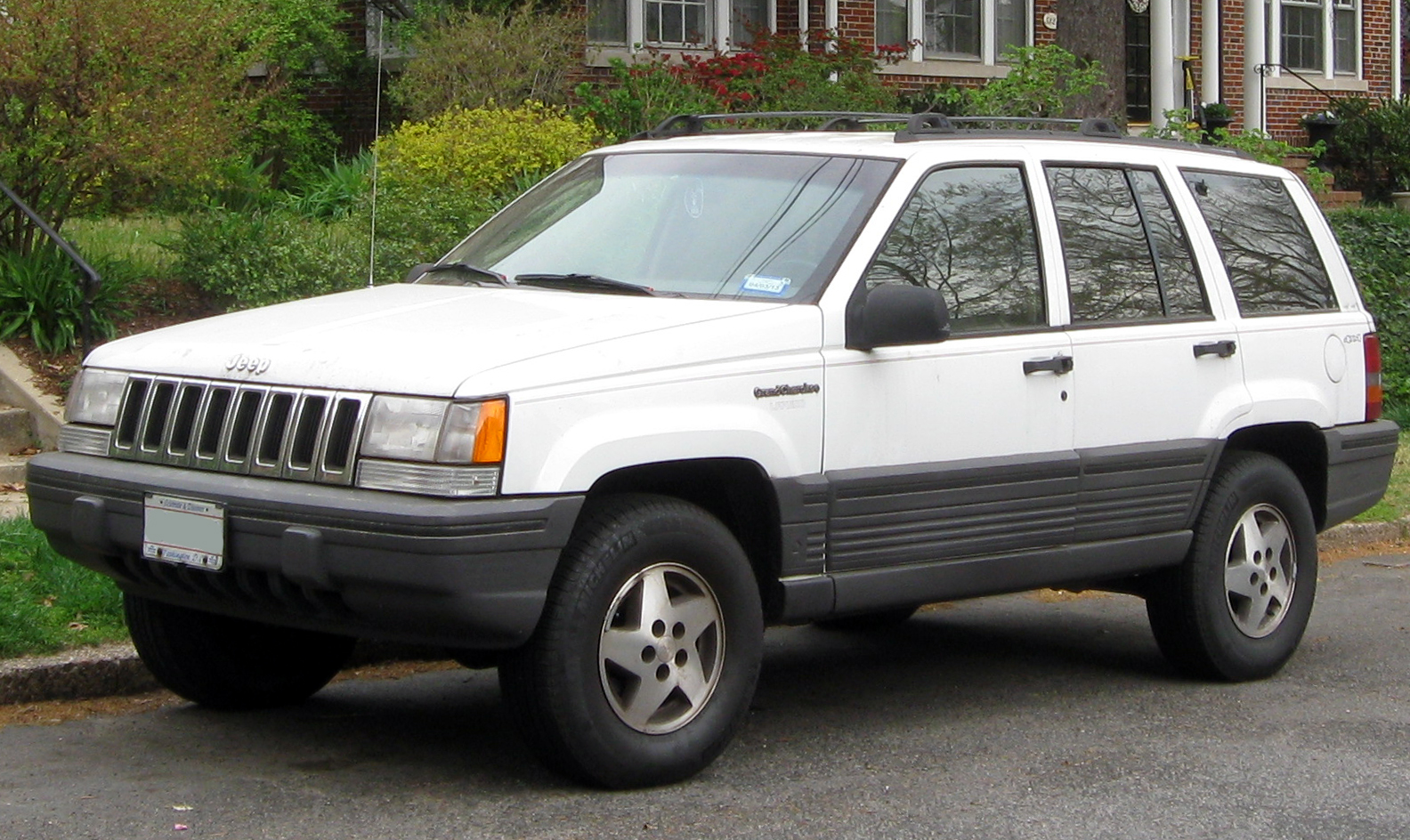
All generations by year: Grand Cherokee (WL) (2022–now) · Grand Cherokee (WK2) (2010–2022) · Grand Cherokee (WK) (2005–2010) · Grand Cherokee (WJ) (1998–2004) · Grand Cherokee (ZJ) (1992–1998)
Which one is mine?
Pick the year of first registration to see which generation it is.
Check by VINThe Jeep Grand Cherokee is a mid-size premium SUV and the flagship of the Jeep range for most of its life. It is not just a status symbol: it is also a genuinely talented off-roader. Five generations have been built since 1992, and the model has been one of Jeep's best-selling vehicles worldwide.
In short
- Five generations: ZJ (1992), WJ (1998), WK (2004), WK2 (2009/2010) and WL (2021).
- Every Grand Cherokee has a unibody structure; from the WK2 onwards it has fully independent suspension.
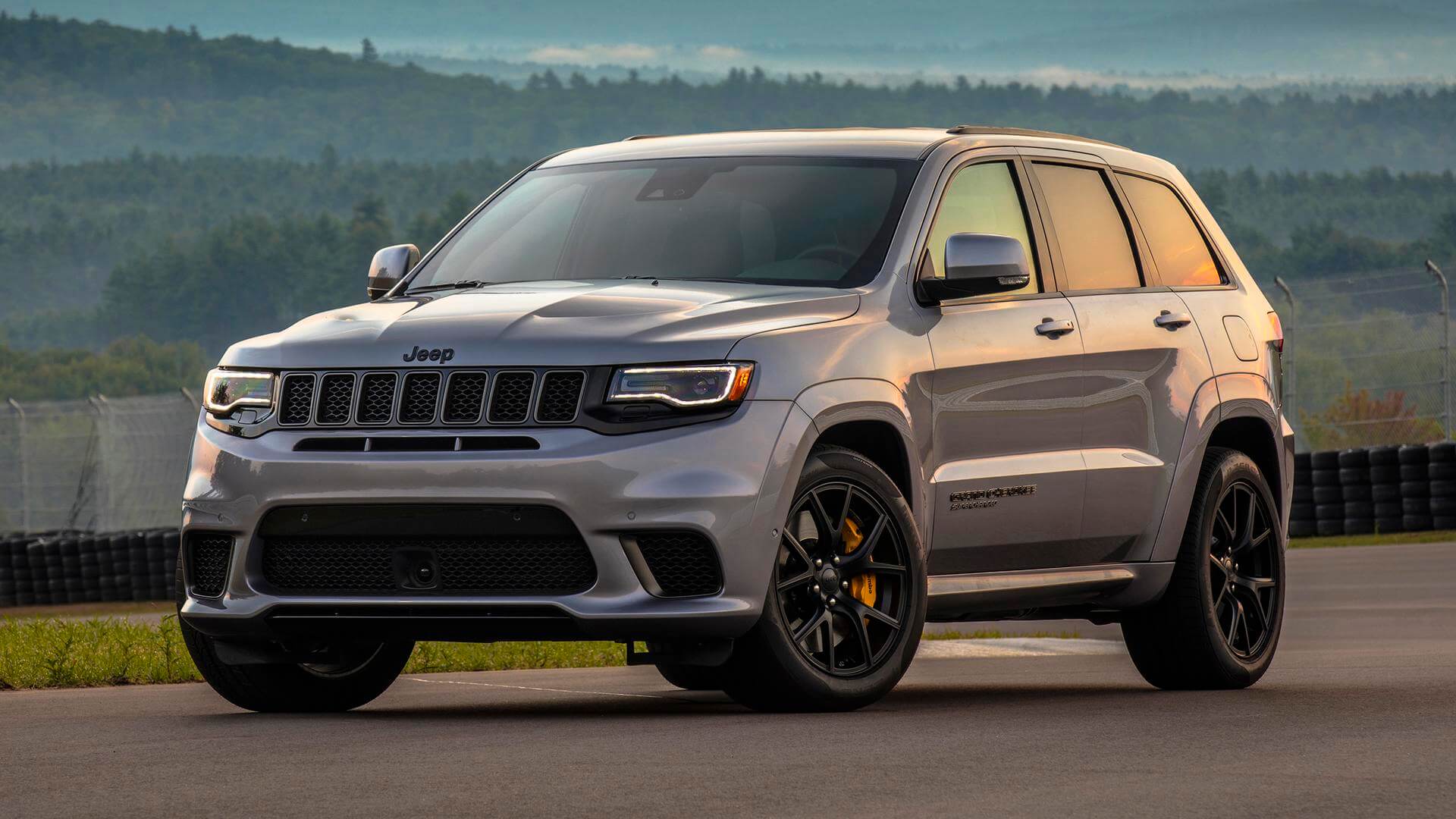
- WK2 engines ranged from the 3.0 V6 diesel and 3.6 Pentastar V6 to Hemi V8s and the 527 kW (717 PS) supercharged Trackhawk.
- Quadra-Trac and Quadra-Drive four-wheel-drive systems, low range and Quadra-Lift air suspension keep it capable off-road.
Safety
-
WL · NHTSA 2025
US NCAP (NHTSA)
Stars from different years and organisations are not directly comparable: test protocols change every few years.
Jeep Grand Cherokee at a glance
The Grand Cherokee first appeared in 1992 as a more upmarket companion to the long-running Wagoneer line. Generation by generation it became more luxurious and civilised, without losing its family traits. The first generation was famously presented at the 1992 Detroit motor show, the third at the New York show in 2004 and the fourth at the New York show in April 2009; the fourth was updated in 2013 and 2017. The fifth generation arrived in 2021, starting with the three-row Grand Cherokee L. More of the brand's range is in our Jeep catalogue, and its story is told in the history of Jeep.
Generations
| Generation | Model years | Construction | Notes |
|---|---|---|---|
| ZJ | 1993–1998 | Unibody, live axles | First Grand Cherokee; 1,647,188 built |
| WJ | 1999–2004 | Unibody, live axles | Only 127 parts shared with the ZJ |
| WK | 2005–2010 | Unibody, independent front | Introduced in New York in 2004 |
| WK2 | 2011–2022 | Unibody, fully independent | Platform later used by the Mercedes-Benz W166 |
| WL | from 2022 | Unibody, fully independent | Two- and three-row (L) versions, 4xe plug-in hybrid |
First generation: ZJ (1992–1998)
The ZJ appeared at the beginning of 1992 at the Detroit motor show and went on sale that April. It was updated after four years and built until 1998, mainly in Detroit, with export cars also assembled in Graz, Austria. Today it looks simple, and some drivers value it precisely for that rugged simplicity. Rectangular headlights flank Jeep's chrome seven-slot grille, the bumpers are simple, and much of the lower body is protected by plastic. Ground clearance is a useful 200 mm.
Better-equipped ZJs have leather and wood trim. American cars of the time were not known for expensive materials or perfect build quality, but they were reliable. The five-seat cabin has thick, softly bolstered seats and plenty of room, a large analogue instrument panel and simple audio and heating controls. A big gear selector sits between the seats, with the four-wheel-drive lever beside it. The boot holds 1,135 litres, or 2,255 litres with the rear seat folded, according to published figures.
Petrol engines included a 4.0-litre inline six with about 130 to 140 kW (177 to 190 PS) and V8s of 5.2 and 5.9 litres with about 155 to 180 kW (211 to 245 PS); a 2.5-litre turbodiesel with 85 kW (115 PS) was offered in some markets. A four-speed automatic was standard, with a manual on some early cars. Drivetrains ranged from rear-wheel drive on a few early models to part-time and permanent four-wheel drive. The ZJ has a unibody structure with coil-sprung live axles front and rear, hydraulic power steering and disc brakes.
Second generation: WJ (1998–2004)
The WJ was launched in September 1998 and shared only 127 parts with its predecessor. It was larger, better looking, more powerful and came only with automatic transmissions. The styling became softer, with rounded headlights, a redesigned grille and a bumper integrated into the design, and the rear glass could be opened separately. Ground clearance rose to 210 mm, and owners rate the paint quality highly.
Inside, soft-touch plastics, leather and wood give a quality feel, and squeaks are rare even today. A leather three-spoke multifunction wheel, small displays in the dials and comprehensive gauges - including battery voltage - were fitted, along with electrically adjustable front seats. Petrol engines were the 4.0-litre inline six and a 4.7-litre V8 with about 140 to 190 kW (190 to 258 PS); a five-cylinder turbodiesel of 2.7 litres (later a 3.1) produced about 103 to 120 kW (140 to 163 PS). Four- or five-speed automatics were offered with rear-wheel drive or four-wheel drive with a transfer case; Quadra-Drive used Vari-Lok limited-slip differentials.
Third generation: WK (2004–2010)
The WK was unveiled at the New York motor show in spring 2004. Its front had rounded projector headlights, a sculpted bonnet and Jeep's seven-slot chrome grille, with headlight washers and recessed fog lights. Strongly flared wheel arches and chrome trim gave it a monumental but balanced look, and ground clearance was 209 mm. Comfort and equipment improved, though some plastics became prone to squeaks. The boot holds 978 litres, or 1,909 litres with the rear seats folded.
Petrol V6 and V8 engines of 3.7 to 5.7 litres produced about 154 to 240 kW (210 to 326 PS), and a 3.0-litre common-rail V6 diesel delivered 160 kW (218 PS) and 510 Nm. A five-speed automatic was standard. The Quadra-Drive II system could send up to 100% of the torque to either axle, using an electronically controlled centre differential, low range and electronic limited-slip differentials. The WK introduced independent double-wishbone front suspension, with a five-link live axle at the rear.
Fourth generation: WK2 (2009/2010–2021)
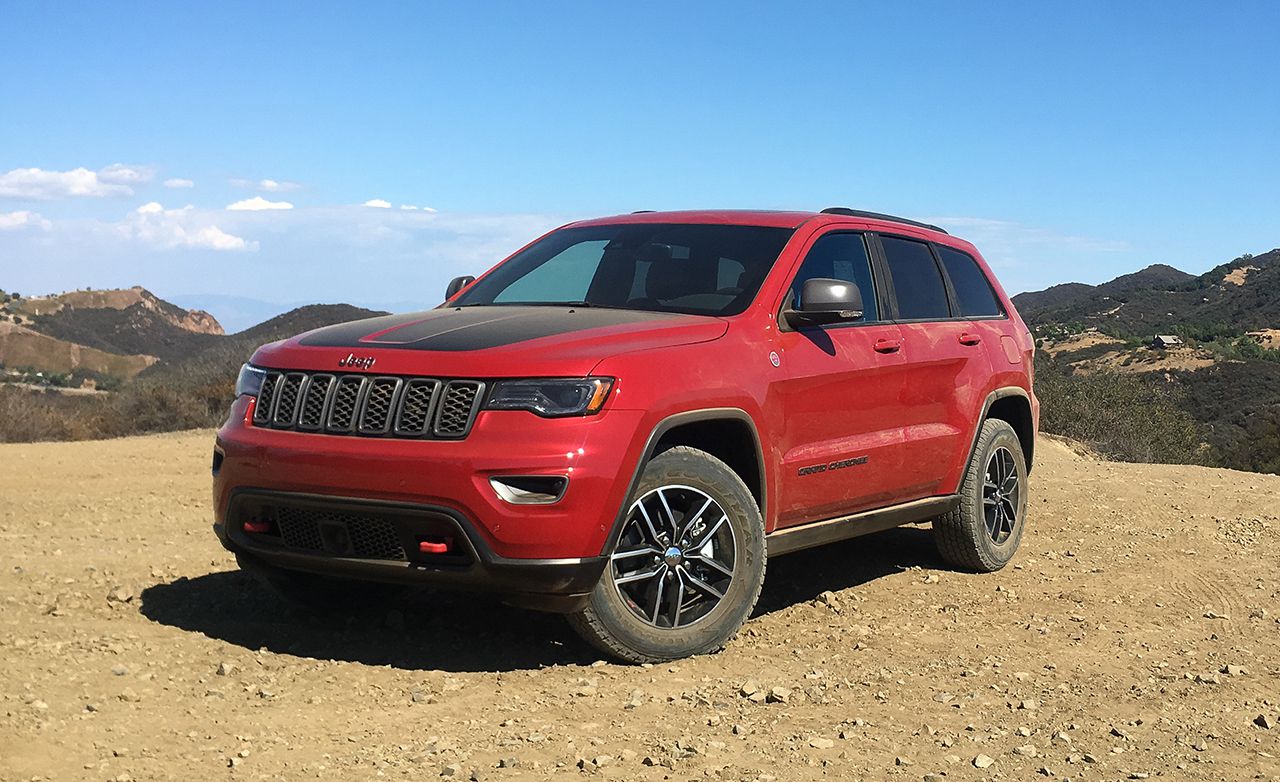
The WK2 was unveiled at the New York motor show in April 2009 and went on sale in summer 2010. A facelift was shown at the Detroit show in January 2013, and a further update followed in 2017. Its design is more universal than the brutal earlier models, with LED lights, a modern grille and a bumper with a large intake; the sides keep large, almost rectangular arches and wheels of 18 to 20 inches. With coil springs, ground clearance is 238 mm; with Quadra-Lift air suspension it varies from 152 to 282 mm depending on the mode.
The cabin finally received materials worthy of the word "premium", improved ergonomics and the Uconnect infotainment system with a 5- or 8.4-inch screen, plus a 7-inch digital instrument display and a new gear selector. The front seats offer a wide range of adjustment, the rear seats three adults, and the boot holds 782 litres, or 1,554 litres with the rear seats folded, with a full-size spare under the floor.
| WK2 engine | Power (kW / PS) | Torque |
|---|---|---|
| 3.0 V6 diesel (outside North America) | 179 kW / 243 PS | - |
| 3.6 Pentastar V6 petrol | 220 kW / 299 PS | 353 Nm |
| 5.7 Hemi V8 | 268 kW / 365 PS | 529 Nm |
| 6.4 Hemi V8 (SRT) | 350 kW / 477 PS | 637 Nm |
| 6.2 supercharged Hemi V8 (Trackhawk) | 527 kW / 717 PS | 875 Nm |
An eight-speed automatic with paddle shifters was used from the 2014 model year. Quadra-Trac II has an electronically controlled centre differential and low range; Quadra-Drive II adds electronic limited-slip differentials. According to published figures, top speed is about 206 km/h and 0–100 km/h takes 8.3 to 9.8 seconds for the V6 versions. The WK2 uses a steel unibody with plenty of high-strength steel and fully independent suspension with double wishbones at the front and a multi-link rear. Its platform was later used for the Mercedes-Benz ML (W166).
Fifth generation: WL (from 2021)
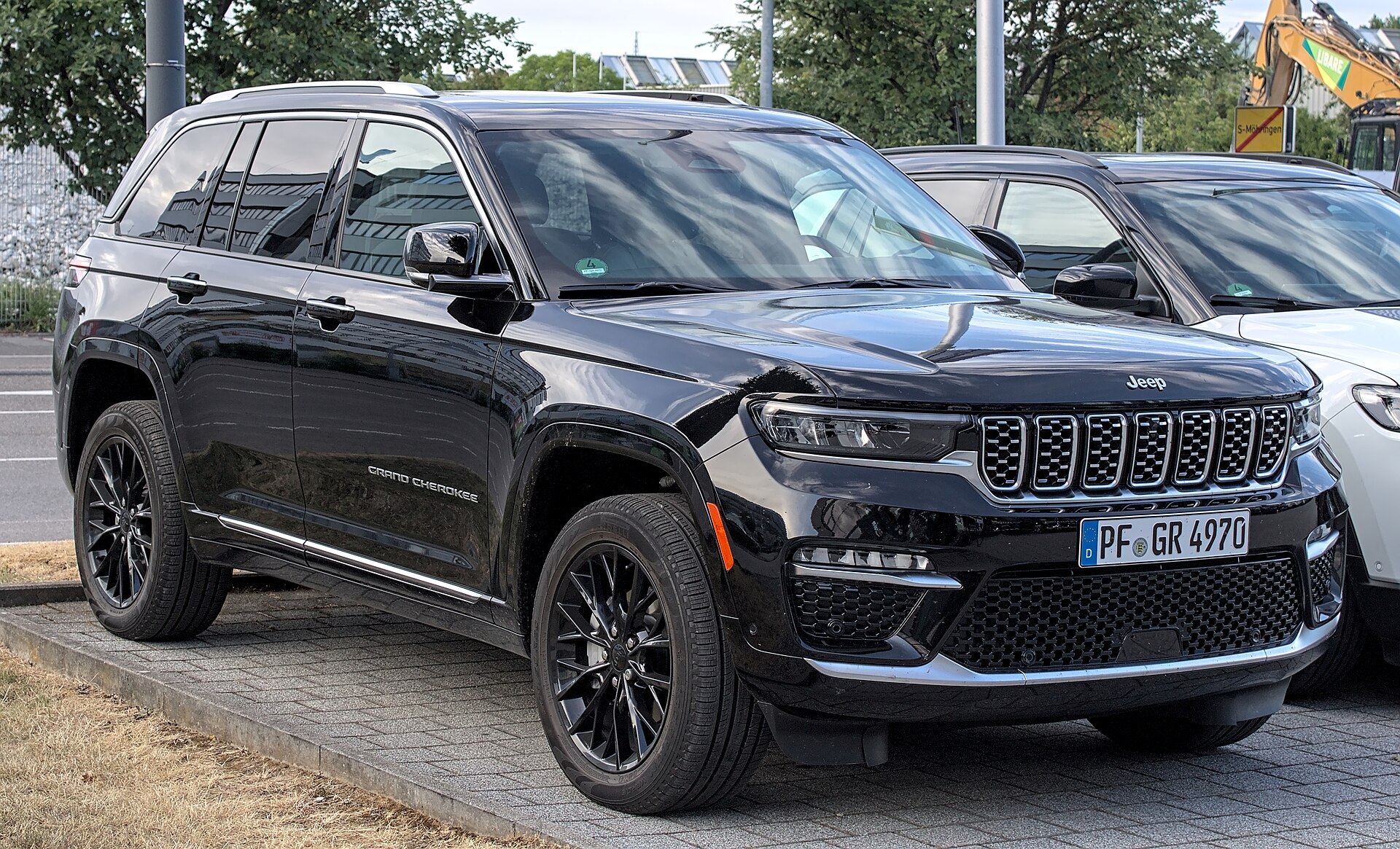
The three-row Grand Cherokee L was revealed on 7 January 2021, followed by the two-row model on 30 September 2021. All engines use an eight-speed automatic: a 3.6 Pentastar V6 with mild-hybrid assistance, a 5.7 Hemi V8 for a short time, and the 4xe plug-in hybrid with a 2.0 turbo engine, 280 kW (380 PS) combined, a 17 kWh battery and about 40 km of electric range. Quadra-Trac I, Quadra-Trac II and Quadra-Drive II are offered, and Quadra-Lift air suspension is standard on the Trailhawk.
Safety and equipment
The WK2 offers bi-xenon headlights with LED running lights, parking assistance, tyre-pressure monitoring, a rain sensor, a reversing camera, Selec-Terrain, curtain, front, rear and driver's knee airbags, LATCH child-seat mounts, hill-start assist and hill descent control, traction control, ABS, stability control with roll mitigation, adaptive cruise control, blind-spot monitoring, lane-departure and forward-collision warnings and brake assist. Its high-strength steel body has crumple zones designed to reduce impact forces in frontal and side collisions.
Strengths and weaknesses
Owners praise the reliable 3.6-litre engine, the looks, high ground clearance and four-wheel drive, good build quality and materials, sound ergonomics and plenty of space. The sound of the V8 versions is a highlight for many. Weak points include high fuel consumption with the larger engines and, in the WK, interior plastics prone to squeaks. Rivals include the Toyota Land Cruiser Prado, Volkswagen Touareg, BMW X5, Volvo XC90, Audi Q7, Lexus GX and Mitsubishi Pajero.
Jeep Grand Cherokee evolution in numbers
Did you know?
- The Jeep Grand Cherokee has been around for 34 years: 5 generations in our catalog since 1992.
- The longest-running generation is the Grand Cherokee (WK2) (2010–2022): 12 years.
Image credits · Photos from Wikimedia Commons under free licences
- Jeep Grand Cherokee (ZJ) · Photo: IFCAR / Wikimedia Commons, Public domain
- Jeep Grand Cherokee (WJ) · Photo: OSX / Wikimedia Commons, Public domain
- Jeep Grand Cherokee (WK) · Photo: M 93 / Wikimedia Commons, CC BY-SA 3.0 de
- Jeep Grand Cherokee (WK2) · Photo: Kgbo / Wikimedia Commons, CC BY-SA 4.0
- Jeep Grand Cherokee (WL) · Photo: Alexander-93 / Wikimedia Commons, CC BY-SA 4.0
Jeep Grand Cherokee in our rankings
- No. 46 of 912 · Longest-running car nameplates (34 years · top 6%)
- No. 36 of 305 · Oldest car models still on sale (34 years · top 13%)
- No. 67 of 345 · Cars with the most generations (5 generations · top 25%)
In production longer than 94% of ranked nameplates in the 1CARS catalog (No. 46 of 912).
FAQ
How many generations of the Jeep Grand Cherokee are there?
Five: ZJ (1992), WJ (1998), WK (2004), WK2 (2009/2010) and WL (2021).
Does the Jeep Grand Cherokee have a ladder frame?
No. Every generation uses a unibody structure; the WK2 and WL also have fully independent suspension.
What is the most powerful Jeep Grand Cherokee?
The WK2 Trackhawk, with a supercharged 6.2-litre V8 producing 527 kW (717 PS) and 875 Nm.
What is the difference between Quadra-Trac II and Quadra-Drive II?
Both have a centre differential and low range; Quadra-Drive II adds electronic limited-slip differentials for more traction off-road.
Is there a hybrid Jeep Grand Cherokee?
Yes. The fifth-generation Grand Cherokee 4xe is a plug-in hybrid with 280 kW (380 PS) combined.
Data sources
Data checked by an editor against the sources below.
- Wikipedia - Jeep Grand Cherokee
- NHTSA 5-Star Safety Ratings (US NCAP) — U.S. Government work, public domain