 Subaru WRX
All generations, specs and history
Published Sources (6) Report an error
By Sarah Whitmore, Senior Automotive Writer
- Built
- 1992–present
- Generations
- 5 · GC/GF to VB
Timeline
WRX generations
Click a generation for its own page


- WRX GC/GF 1992–2000 · Sedan, Station wagon
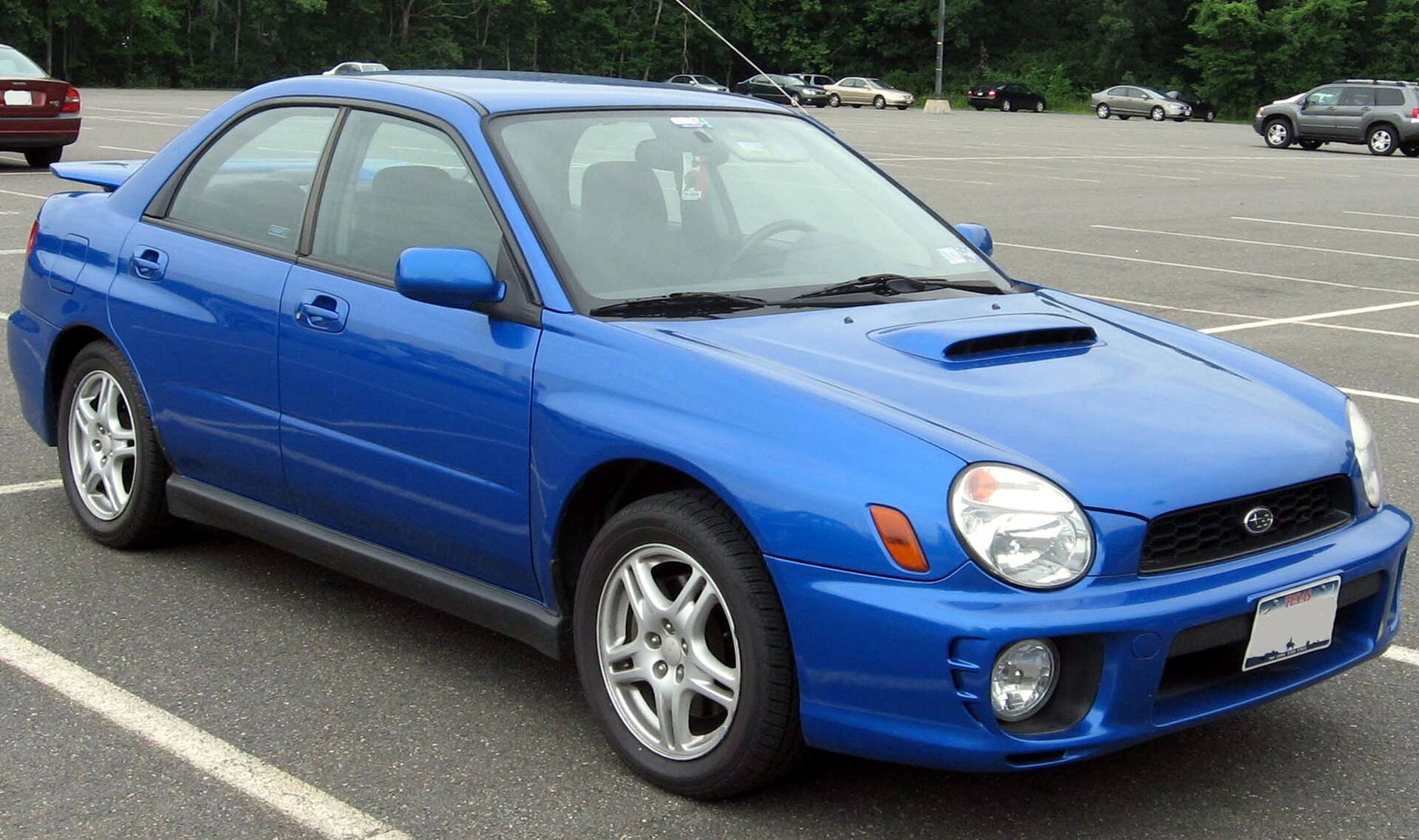
- WRX GD/GG 2000–2007 · Sedan, Station wagon
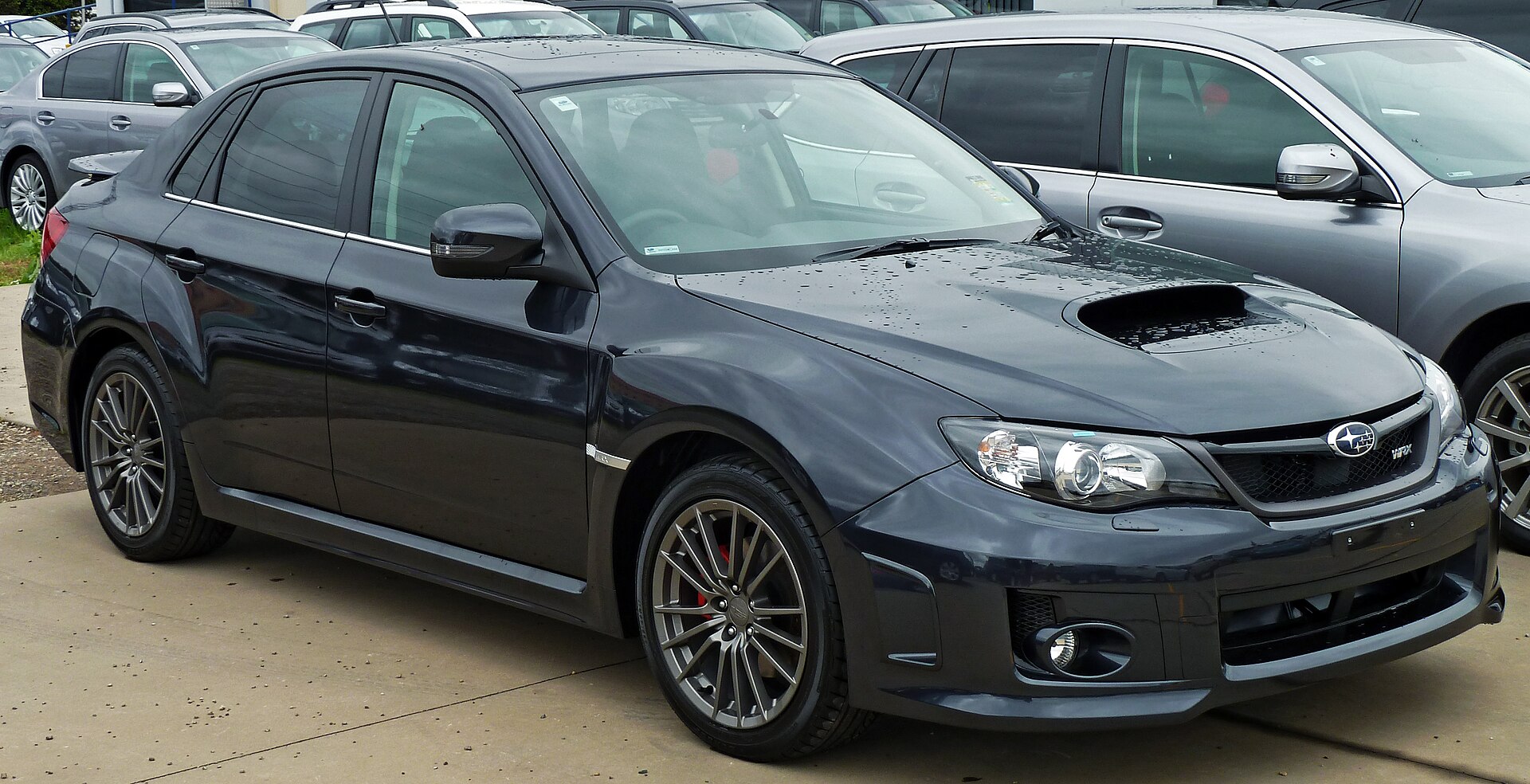
- WRX GE/GH/GR/GV 2007–2014 · Sedan, Hatchback
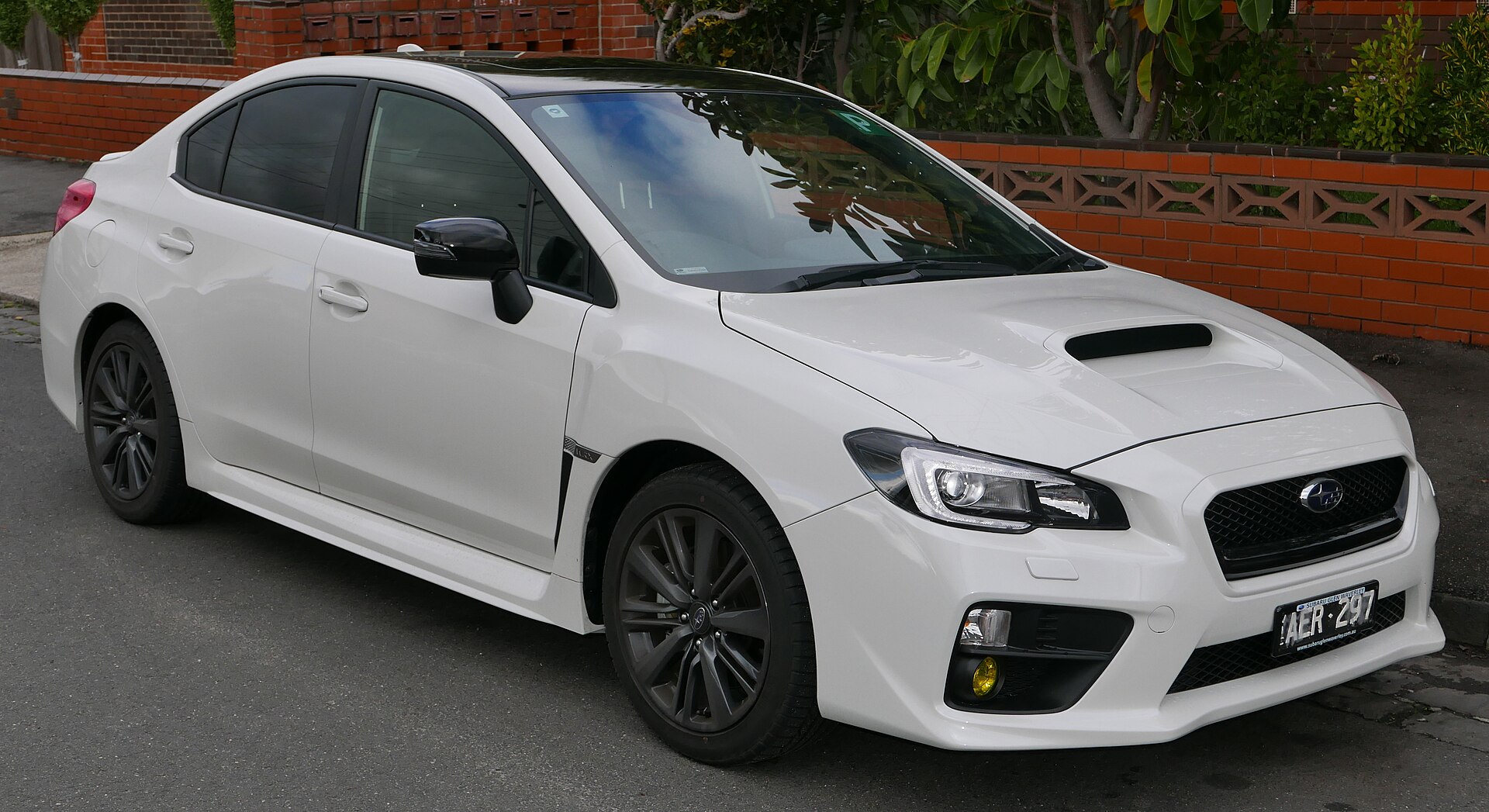
- WRX VA 2015–2021 · Sedan
- WRX VB Current 2022–now · Sedan, Station wagon
Newest first · 5 generations since 1992
-
2022
-
2015
-
2007
-
2000
-
1992
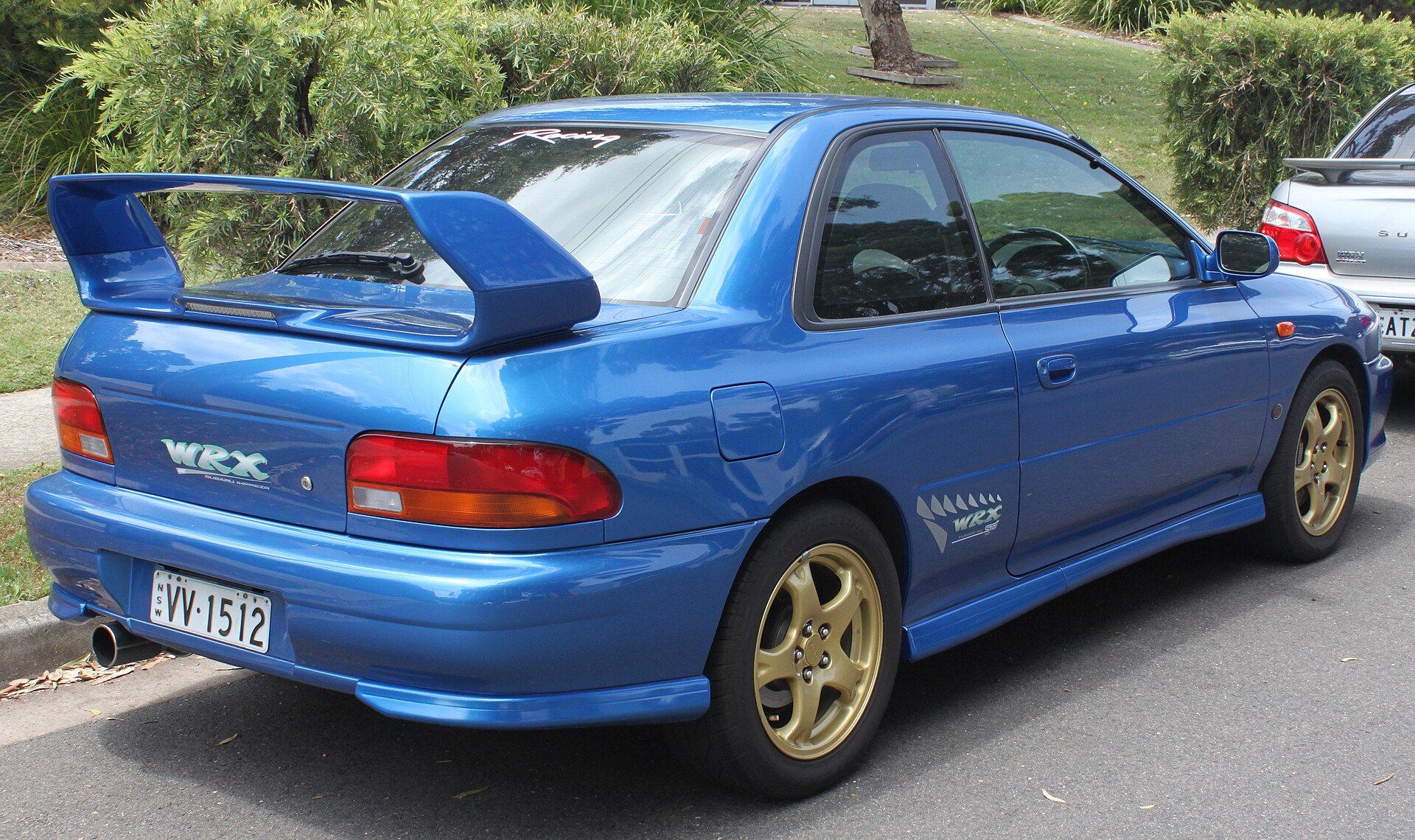
All generations by year: WRX VB (2022–now) · WRX VA (2015–2021) · WRX GE/GH/GR/GV (2007–2014) · WRX GD/GG (2000–2007) · WRX GC/GF (1992–2000)
Which one is mine?
Pick the year of first registration to see which generation it is.
- VB 2022–present
- VA 2015–2021
- GE/GH/GR/GV 2007–2014
- GD/GG 2000–2007
- GC/GF 1992–2000
Verdict
Our verdict · Sarah Whitmore
Subaru produced a high-quality, stylish and modern car for those who love to drive fast, with a high level of safety and, from the fourth generation, a pleasant modern cabin. With excellent performance and near-benchmark handling, the WRX can take on more prestigious sports cars that cost far more.
The Subaru Impreza WRX is the hot version of the compact Impreza saloon, designed from the start for people who love driving fast — ordinary drivers and professionals alike. The name stands for "World Rally eXperimental". Four generations were built as Impreza-based models up to 2021; from the fourth generation Subaru dropped "Impreza" from the name, and the WRX became a model in its own right, available only as a four-door saloon. For those who want even more, there is the Subaru WRX STI.
In short
- Four generations from 1992 to 2021: GC/GF (1992), GD/GG (2000), GE/GH/GR/GV (2007) and VA (2014/2015); a fifth, VB, followed for the 2022 model year.
- Turbocharged flat-four (boxer) petrol engines and Symmetrical AWD on every generation.
- The fourth-generation WRX has a 2.0 direct-injection turbo with 197 kW (268 hp); the STI uses a 2.5 turbo with 221 kW (300 PS).
- Saloon, coupé, estate and, in the third generation, hatchback bodies.
Specs by version
Engines
| Version | Engine | Gearbox | Drive | Production years |
|---|---|---|---|---|
| VA · 2015–2021 | ||||
| VA · 2 L 4 cyl Automatic (AV-S8) · 2021 (EPA) | 2.0 l · 4 cyl 2,000 cc | CVT | All-wheel drive | 2021 |
| VA · 2 L 4 cyl Manual 6-spd · 2021 (EPA) | 2.0 l · 4 cyl 2,000 cc | 6-sp Manual | All-wheel drive | 2021 |
| VA · 2 L 4 cyl Automatic (AV-S8) · 2020 (EPA) | 2.0 l · 4 cyl 2,000 cc | CVT | All-wheel drive | 2020 |
| VA · 2 L 4 cyl Manual 6-spd · 2020 (EPA) | 2.0 l · 4 cyl 2,000 cc | 6-sp Manual | All-wheel drive | 2020 |
| VA · 2 L 4 cyl Automatic (AV-S8) · 2019 (EPA) | 2.0 l · 4 cyl 2,000 cc | CVT | All-wheel drive | 2019 |
| VA · 2 L 4 cyl Manual 6-spd · 2019 (EPA) | 2.0 l · 4 cyl 2,000 cc | 6-sp Manual | All-wheel drive | 2019 |
| VA · 2.5 L 4 cyl Manual 6-spd · 2021 (EPA) | 2.5 l · 4 cyl 2,500 cc | 6-sp Manual | All-wheel drive | 2021 |
| VA · 2.5 L 4 cyl Manual 6-spd · 2020 (EPA) | 2.5 l · 4 cyl 2,500 cc | 6-sp Manual | All-wheel drive | 2020 |
| VA · 2.5 L 4 cyl Manual 6-spd · 2019 (EPA) | 2.5 l · 4 cyl 2,500 cc | 6-sp Manual | All-wheel drive | 2019 |
| VB · 2022–present | ||||
| VB · 2.4 L 4 cyl Automatic (AV-S8) · 2026 (EPA) | 2.4 l · 4 cyl 2,400 cc | CVT | All-wheel drive | 2026 |
| VB · 2.4 L 4 cyl Manual 6-spd · 2026 (EPA) | 2.4 l · 4 cyl 2,400 cc | 6-sp Manual | All-wheel drive | 2026 |
| VB · 2.4 L 4 cyl Automatic (AV-S8) · 2025 (EPA) | 2.4 l · 4 cyl 2,400 cc | CVT | All-wheel drive | 2025 |
| VB · 2.4 L 4 cyl Manual 6-spd · 2025 (EPA) | 2.4 l · 4 cyl 2,400 cc | 6-sp Manual | All-wheel drive | 2025 |
| VB · 2.4 L 4 cyl Automatic (AV-S8) · 2024 (EPA) | 2.4 l · 4 cyl 2,400 cc | CVT | All-wheel drive | 2024 |
| VB · 2.4 L 4 cyl Manual 6-spd · 2024 (EPA) | 2.4 l · 4 cyl 2,400 cc | 6-sp Manual | All-wheel drive | 2024 |
| VB · 2.4 L 4 cyl Automatic (AV-S8) · 2023 (EPA) | 2.4 l · 4 cyl 2,400 cc | CVT | All-wheel drive | 2023 |
| VB · 2.4 L 4 cyl Manual 6-spd · 2023 (EPA) | 2.4 l · 4 cyl 2,400 cc | 6-sp Manual | All-wheel drive | 2023 |
| VB · 2.4 L 4 cyl Automatic (AV-S8) · 2022 (EPA) | 2.4 l · 4 cyl 2,400 cc | CVT | All-wheel drive | 2022 |
| VB · 2.4 L 4 cyl Manual 6-spd · 2022 (EPA) | 2.4 l · 4 cyl 2,400 cc | 6-sp Manual | All-wheel drive | 2022 |
Performance
Show all 19 versions
| Version | Fuel consumption |
|---|---|
| VA · 2015–2021 | |
| VA · 2 L 4 cyl Automatic (AV-S8) · 2021 (EPA) | 11.2 l/100 km21.0 mpg US · 25.2 mpg UK |
| VA · 2 L 4 cyl Manual 6-spd · 2021 (EPA) | 10.2 l/100 km23.1 mpg US · 27.7 mpg UK |
| VA · 2 L 4 cyl Automatic (AV-S8) · 2020 (EPA) | 11.2 l/100 km21.0 mpg US · 25.2 mpg UK |
| VA · 2 L 4 cyl Manual 6-spd · 2020 (EPA) | 10.2 l/100 km23.1 mpg US · 27.7 mpg UK |
| VA · 2 L 4 cyl Automatic (AV-S8) · 2019 (EPA) | 11.2 l/100 km21.0 mpg US · 25.2 mpg UK |
| VA · 2 L 4 cyl Manual 6-spd · 2019 (EPA) | 10.2 l/100 km23.1 mpg US · 27.7 mpg UK |
| VA · 2.5 L 4 cyl Manual 6-spd · 2021 (EPA) | 13.1 l/100 km18.0 mpg US · 21.6 mpg UK |
| VA · 2.5 L 4 cyl Manual 6-spd · 2020 (EPA) | 12.4 l/100 km19.0 mpg US · 22.8 mpg UK |
| VA · 2.5 L 4 cyl Manual 6-spd · 2019 (EPA) | 12.4 l/100 km19.0 mpg US · 22.8 mpg UK |
| VB · 2022–present | |
| VB · 2.4 L 4 cyl Automatic (AV-S8) · 2026 (EPA) | 11.2 l/100 km21.0 mpg US · 25.2 mpg UK |
| VB · 2.4 L 4 cyl Manual 6-spd · 2026 (EPA) | 10.7 l/100 km22.0 mpg US · 26.4 mpg UK |
| VB · 2.4 L 4 cyl Automatic (AV-S8) · 2025 (EPA) | 11.2 l/100 km21.0 mpg US · 25.2 mpg UK |
| VB · 2.4 L 4 cyl Manual 6-spd · 2025 (EPA) | 10.7 l/100 km22.0 mpg US · 26.4 mpg UK |
| VB · 2.4 L 4 cyl Automatic (AV-S8) · 2024 (EPA) | 11.2 l/100 km21.0 mpg US · 25.2 mpg UK |
| VB · 2.4 L 4 cyl Manual 6-spd · 2024 (EPA) | 10.7 l/100 km22.0 mpg US · 26.4 mpg UK |
| VB · 2.4 L 4 cyl Automatic (AV-S8) · 2023 (EPA) | 11.2 l/100 km21.0 mpg US · 25.2 mpg UK |
| VB · 2.4 L 4 cyl Manual 6-spd · 2023 (EPA) | 10.7 l/100 km22.0 mpg US · 26.4 mpg UK |
| VB · 2.4 L 4 cyl Automatic (AV-S8) · 2022 (EPA) | 11.2 l/100 km21.0 mpg US · 25.2 mpg UK |
| VB · 2.4 L 4 cyl Manual 6-spd · 2022 (EPA) | 10.7 l/100 km22.0 mpg US · 26.4 mpg UK |
Verified Manufacturer and type-approval data from our catalog · Sources and methodology
Safety
-
VB · NHTSA 2025
US NCAP (NHTSA)
-
VA · NHTSA 2021
US NCAP (NHTSA)
Stars from different years and organisations are not directly comparable: test protocols change every few years.
Subaru Impreza WRX at a glance
More Subaru models are listed in our Subaru catalogue.
| Generation | Codes | Years | Bodies | Engine |
|---|---|---|---|---|
| First | GC/GF | 1992–2000 | Saloon, coupé, estate | 2.0 turbo boxer |
| Second | GD/GG | 2000–2007 | Saloon, estate | 2.0 and 2.5 turbo boxer |
| Third | GE/GH/GR/GV | 2007–2014 | Hatchback, saloon | 2.5 turbo boxer |
| Fourth | VA | 2014–2021 | Saloon | 2.0 turbo (WRX), 2.5 turbo (STI) |
| Fifth | VB | 2021 onwards | Saloon | 2.4 turbo boxer |
History
The WRX story began in 1992. In 1993 Subaru replaced the Legacy with the Impreza in the World Rally Championship, and the car's rally successes made it famous. The Impreza was built as a saloon, coupé and estate, and the third generation also as a hatchback. Besides the regular Impreza, Subaru produced two hot versions: the WRX, with a sporty character and racing looks, and the WRX STI, a true sports saloon.
First generation (1992–2000)
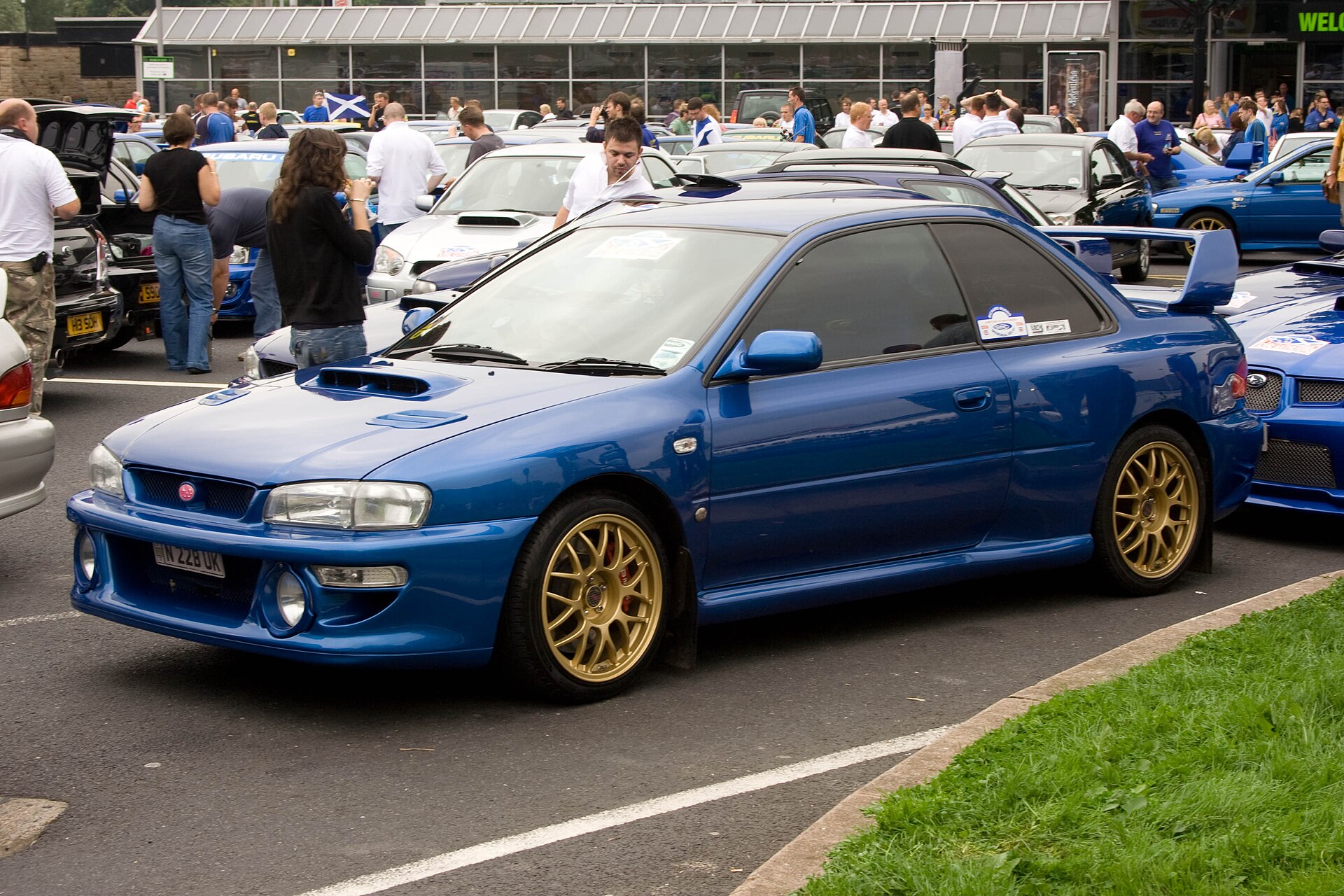
The first WRX combined a strong structure, sportily tuned mechanicals and powerful engines. It had pleasant, smooth lines that hinted at its abilities. Small headlights flanked a compact grille, and the front bumper carried large round fog lamps. Today the styling may not look especially sharp, but at the time — especially with sports body kits — the car caused a sensation. The large bonnet scoop became a hallmark of the series, and the famous gold wheels were available from the factory. Ground clearance was 155 mm.
The interior was budget-grade, with cloth seats and a plastic dashboard, but build quality was at the usual high Japanese level. Space was limited, especially in the rear. The driver had a four-spoke steering wheel and fully analogue instruments with a trip-computer display on the left. The centre console carried the air-conditioning controls, a radio, an ashtray and a lighter, and the tunnel had the gear lever, handbrake and armrest.
The hot versions used a 2.0-litre turbocharged boxer engine with multi-point injection and 16 valves, producing about 155–206 kW (211–280 PS) and 290–353 Nm depending on version and market. Power went to all four wheels through a five-speed manual or four-speed automatic. The car was built on a shortened platform of the larger Legacy, with a longitudinal engine and fully independent suspension: MacPherson struts at the front and transverse links at the rear. Rack-and-pinion steering had hydraulic assistance, and the brakes were ventilated discs at the front and solid discs at the rear, with ABS.
Second generation (2000–2007)
The second-generation Impreza WRX arrived in 2000 with bold styling, strong petrol engines, all-wheel drive and finely tuned handling, and it reached the United States for the 2002 model year. It was updated twice, in 2002 and 2005, each time with significant visual changes and technical improvements.
There was no longer a two-door version. At first the car had round headlights, which many fans disliked, so in 2002 they were replaced by large rectangular headlights rounded towards the centre, together with reshaped bumpers; the large fog lamps stayed but were recessed. In 2005 the front changed again, with narrower projector headlights, a new three-section grille and completely new bumpers, while at the rear only the light graphics changed. Ground clearance was 150 mm. The rear spoiler and bonnet scoop look very effective, and after the 2005 update the WRX STI looked quite different.
The cabin remained more sporty than comfortable: air conditioning, electric windows and mirrors were about all. Materials were simple fabric and plastic, the front bucket seats gave a good driving position, and the rear was not roomy, as the car itself was small. The dashboard and console changed with each update; the version after the second facelift looked nicer but less sporty. The boot held 401 litres.
Engines were turbocharged flat-fours of 2.0 to 2.5 litres with multi-point injection and 16 valves, producing about 160–184 kW (218–250 PS) and 292–333 Nm depending on version and market. Five-speed manuals and four-speed automatics were offered, always with all-wheel drive. The front suspension used MacPherson struts and the rear a multi-link design.
Third generation (2007–2014)
The third generation was shown in spring 2007. The Sport Wagon estate was replaced by a five-door hatchback. At the New York motor show in 2010 Subaru presented an updated model with retouched styling, wider tracks and better handling.
Whatever the version, the car looks harmonious and purposeful, with a substantial front bumper, a huge bonnet scoop and flared wheel arches housing 17-inch wheels; there are four exhaust tips at the rear. Ground clearance of the sports version was 155 mm. The cabin is minimalist: the sporty touches are the three-spoke steering wheel, sports seats with WRX logos and aluminium-trimmed pedals — and nothing distracts the driver. The instruments are informative, and the simple dashboard has a double-DIN radio and three climate knobs. Materials are simple, but build quality is good. There is more space than before, front and rear, and the boot holds 368 litres.
The engine was a 2.5-litre turbocharged boxer with multi-point injection, 16 valves, variable valve timing and an intercooler, producing 165–195 kW (225–265 PS) and 306–343 Nm depending on version, with combined consumption of 10.3–10.4 l/100 km. Japanese versions had a twin-scroll VF-49 turbocharger, while US cars used a single-scroll VF-48. A five-speed manual or a four-speed automatic was fitted, always with all-wheel drive and a centre differential with a viscous coupling. The car reached 100 km/h in 5.2–6 seconds and had top speeds of 209–250 km/h. The suspension was fully independent, with MacPherson struts at the front, double wishbones at the rear and anti-roll bars at both ends.
Fourth generation (2014–2021)
In November 2013 Subaru showed the fourth generation in the United States, now simply called the Subaru WRX and sold from the 2015 model year. It had a more dynamic look, a stylish cabin and a lively engine with a new manual gearbox. A refresh followed later, bringing a look closer to the fifth-generation Impreza and better interior materials.
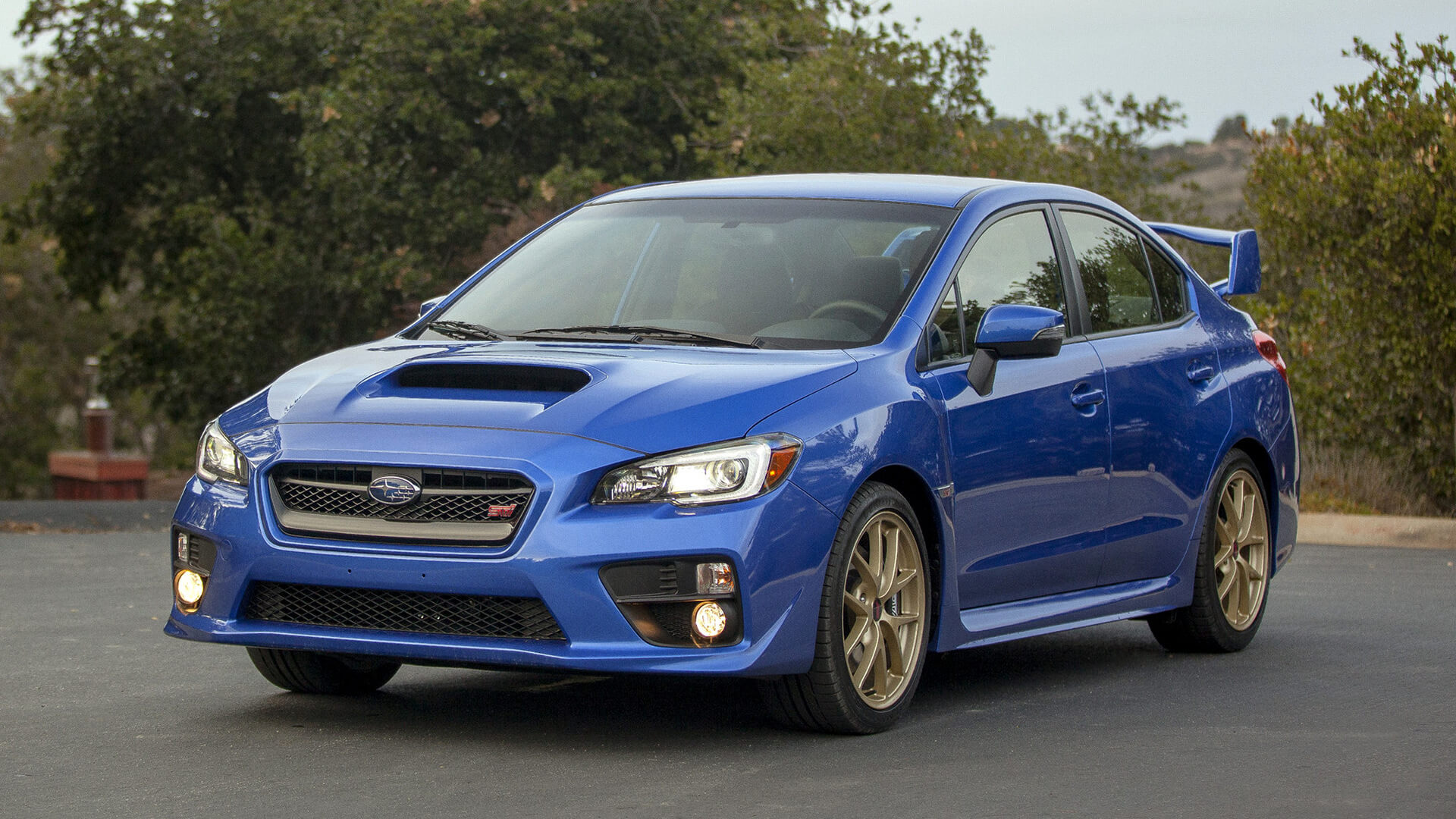
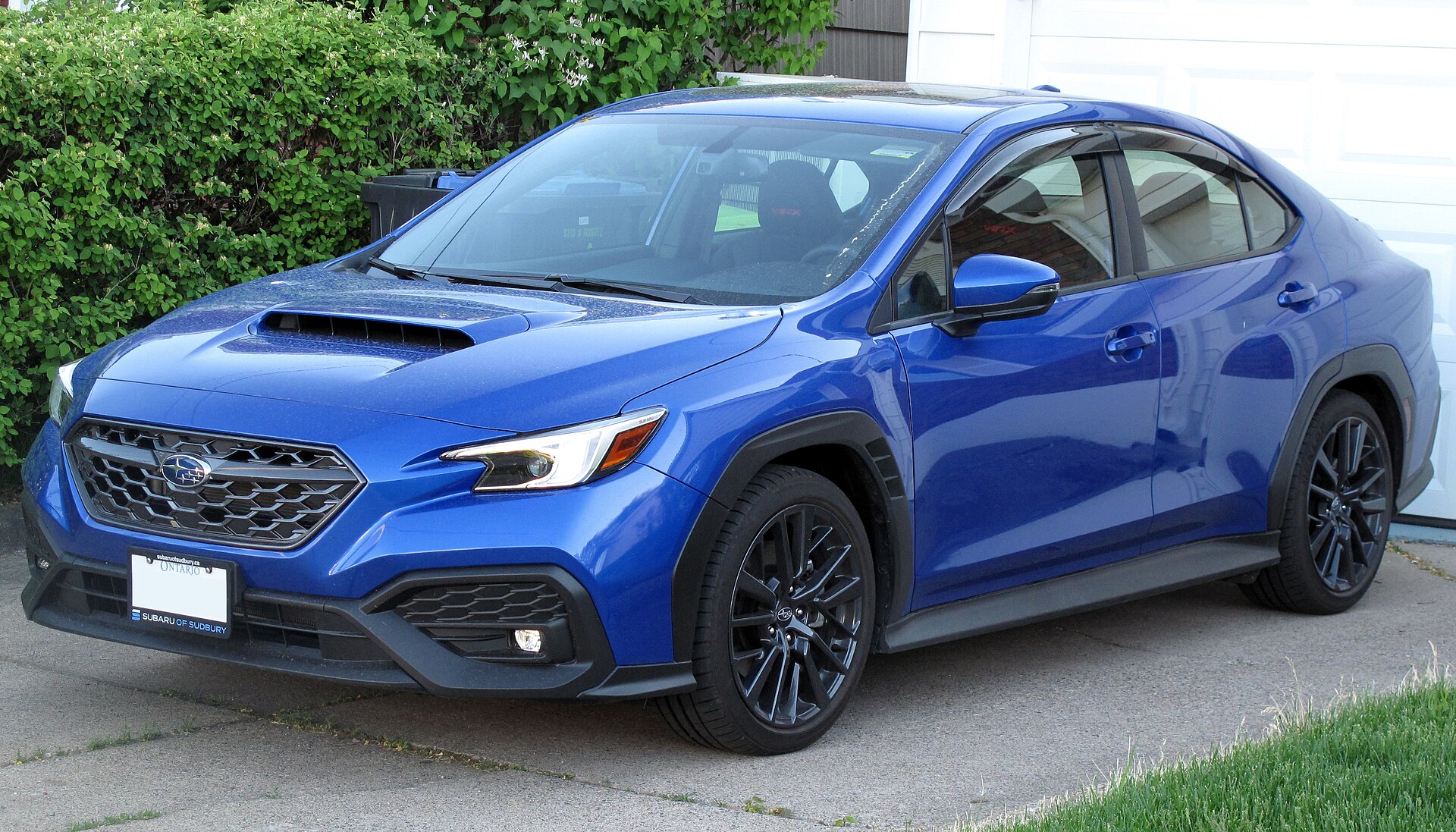
The updated WRX looks stylish, modern and slightly predatory, with a hexagonal grille, modern headlights, a sculpted bonnet with a large scoop and a muscular bumper with a big intake and LED fog lamps. The sides have pumped-up wheel arches, a domed roof and narrow vents behind the front wheels that improve aerodynamics. Ground clearance is 135 mm, and the base car rides on 18-inch wheels. At the rear are stylish lights, a small boot-lid spoiler and a large bumper with a diffuser and four exhaust tips; the STI adds a big rear wing and STI badges.
For years critics had called Subaru interiors plain and uninspiring, and this time Subaru listened. The flat-bottomed multifunction steering wheel and clear instruments with two analogue dials and an LCD between them are joined by a small information display at the top of the dashboard, a compact infotainment screen (7 inches on higher trims) and three climate knobs. The front seats are excellent, with good side support and many adjustments. Three people fit in the rear, and the backrest folds. The boot holds 460 litres and can be more than doubled.
| Version | Engine | Power | Torque | Gearbox |
|---|---|---|---|---|
| WRX | 2.0 flat-four, direct injection, twin-scroll turbo | 197 kW (268 hp) | 350 Nm | 6-speed manual or Lineartronic CVT |
| WRX STI | 2.5 flat-four turbo, large intercooler | 221 kW (300 PS) | 407 Nm | 6-speed manual |
The WRX's all-aluminium engine uses about 9–9.2 l/100 km on average and around 12.5 l/100 km in town. It reaches 100 km/h in 6.0 seconds with the manual (6.3 with the CVT); the STI does it in 5.2 seconds. Symmetrical AWD is standard: manual cars have a viscous-coupling centre differential with a 50:50 split, while CVT cars use a planetary centre differential with a 45:55 split in favour of the rear. The suspension uses MacPherson struts at the front and a multi-link rear axle, and the electric power steering adjusts its assistance in quick manoeuvres. Brakes are 315 mm ventilated front discs with twin-piston calipers and 287 mm rear discs.
Safety equipment includes a rear camera, the three-mode SI-Drive system, stability control, front, side, curtain and driver's knee airbags, light and rain sensors, cruise control, automatic high beam, rear vehicle detection, heated windscreen, rear window and mirrors, LED headlights and fog lamps, ABS and an immobiliser. Subaru says the body uses a large share of ultra-high-strength steel and is 41% stiffer in torsion than the previous WRX.
What owners say
Owners describe the fourth-generation WRX as high-quality, tight and agile. The steering is light, the manual gearbox a little stiff, and the cabin is far more comfortable than before. They also praise the strong performance and moderate fuel consumption for such an engine.
Rivals
Natural rivals are hot hatchbacks and sports saloons such as the Volkswagen Golf GTI and Golf R, Ford Focus ST and RS and Mitsubishi Lancer Evolution.
Subaru WRX evolution in numbers
Did you know?
- The Subaru WRX has been around for 34 years: 5 generations in our catalog since 1992.
- The longest-running generation is the WRX GC/GF (1992–2000): 8 years.
Image credits · Photos from Wikimedia Commons under free licences
- Subaru WRX GC/GF · Photo: Jeremy from Sydney, Australia / Wikimedia Commons, CC BY 2.0
- Subaru WRX GD/GG · Photo: IFCAR / Wikimedia Commons, Public domain
- Subaru WRX GE/GH/GR/GV · Photo: OSX / Wikimedia Commons, Public domain
- Subaru WRX VA · Photo: OSX / Wikimedia Commons, Public domain
- Subaru WRX VB · Photo: Elise240SX / Wikimedia Commons, CC BY-SA 4.0
Subaru WRX in our rankings
- No. 49 of 912 · Longest-running car nameplates (34 years · top 6%)
- No. 39 of 305 · Oldest car models still on sale (34 years · top 13%)
- No. 68 of 345 · Cars with the most generations (5 generations · top 25%)
- No. 67 of 131 · Biggest engines: sedans (2,500 cc · top 52%)
- No. 320 of 557 · Biggest engines: cars (2,500 cc · top 58%)
- No. 168 of 256 · Most economical cars (10.2 l/100 km · top 66%)
In production longer than 94% of ranked nameplates in the 1CARS catalog (No. 49 of 912).
FAQ
What does WRX stand for?
World Rally eXperimental, a reference to the car's rally origins.
When did the Subaru WRX stop being called Impreza?
With the fourth generation, sold from the 2015 model year, the WRX became a standalone model.
Is every Subaru WRX all-wheel drive?
Yes. Every generation uses Subaru's Symmetrical all-wheel drive.
How powerful is the fourth-generation Subaru WRX?
The WRX has 197 kW (268 hp) and 350 Nm; the WRX STI has 221 kW (300 PS) and 407 Nm.
Data sources
Data checked by an editor against the sources below.
- Wikipedia — Subaru WRX
- Wikipedia — Subaru Solterra
- US EPA fueleconomy.gov — 43629.shtml
- US EPA fueleconomy.gov — 43628.shtml
- US EPA fueleconomy.gov — 43630.shtml
- NHTSA 5-Star Safety Ratings (US NCAP) — U.S. Government work, public domain