
 Subaru Impreza
All generations, specs and history
Updated Published Sources (7) Report an error
By Sarah Whitmore, Senior Automotive Writer Reviewed by Oleksandr Hnatiuk

- Built
- 1992–present
- Generations
- 6 · GC/GF to GU
- Top power
- 110 kW (150 PS)
Timeline
Impreza generations
Click a generation for its own page


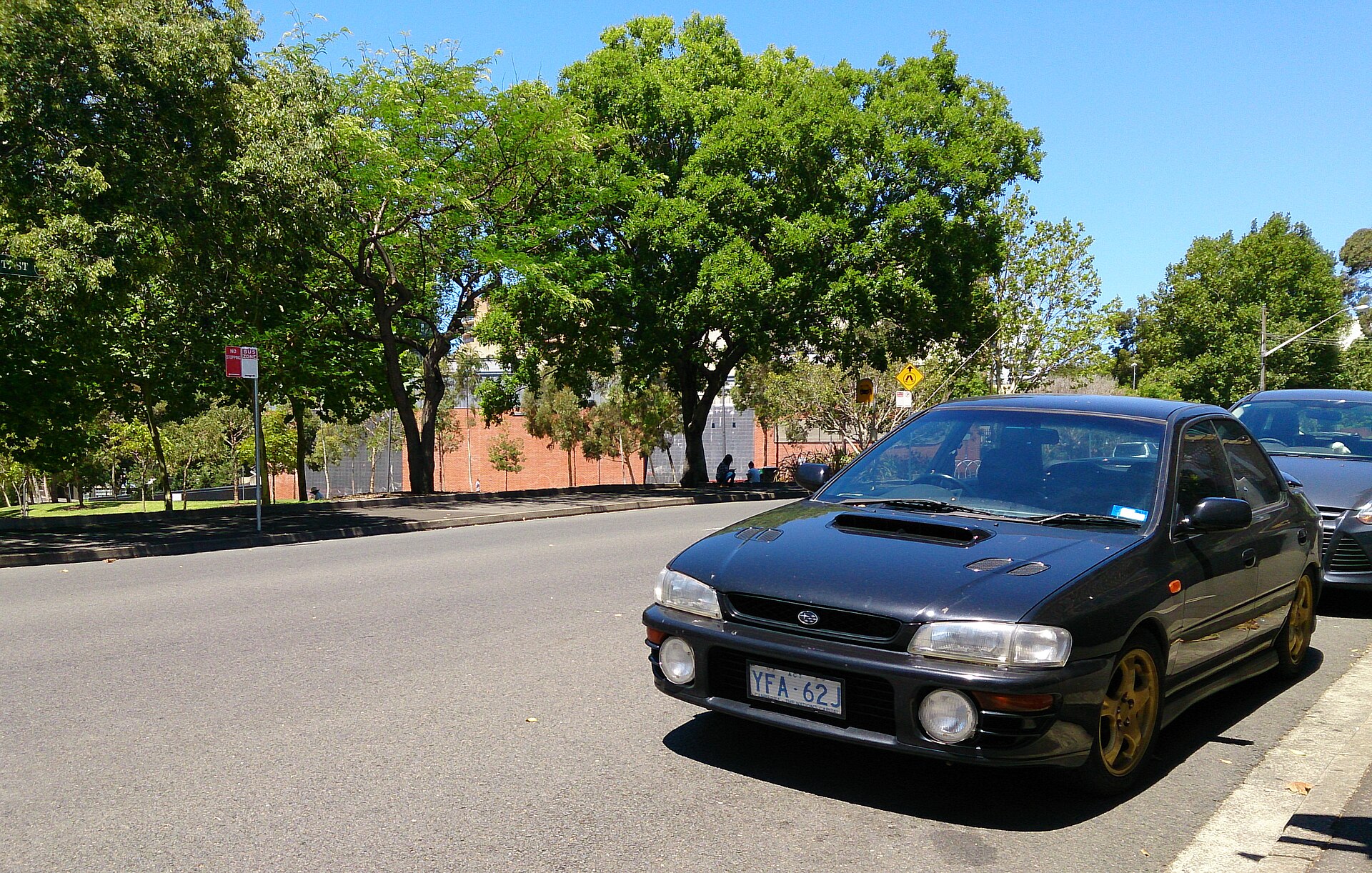
- Impreza GC/GF 1992–2000 · Sedan, Station wagon
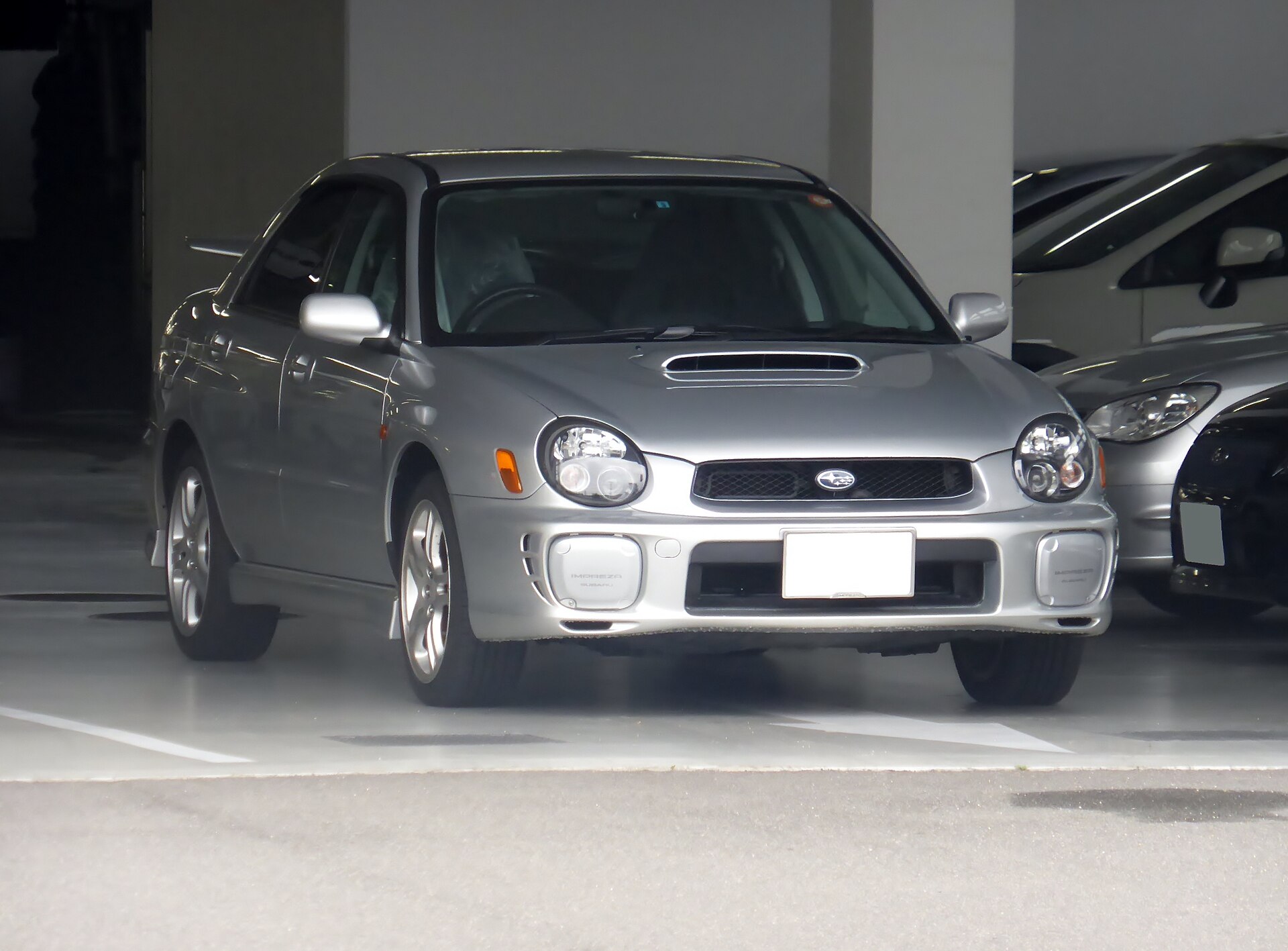
- Impreza GD/GG 2000–2007 · Sedan, Station wagon
- Impreza GE/GH 2007–2011 · Sedan, Hatchback
- Impreza GJ/GP 2011–2016 · Sedan, Hatchback · 84–110 kW (114–150 PS)
- Impreza GK/GT 2016–2023 · Sedan, Hatchback
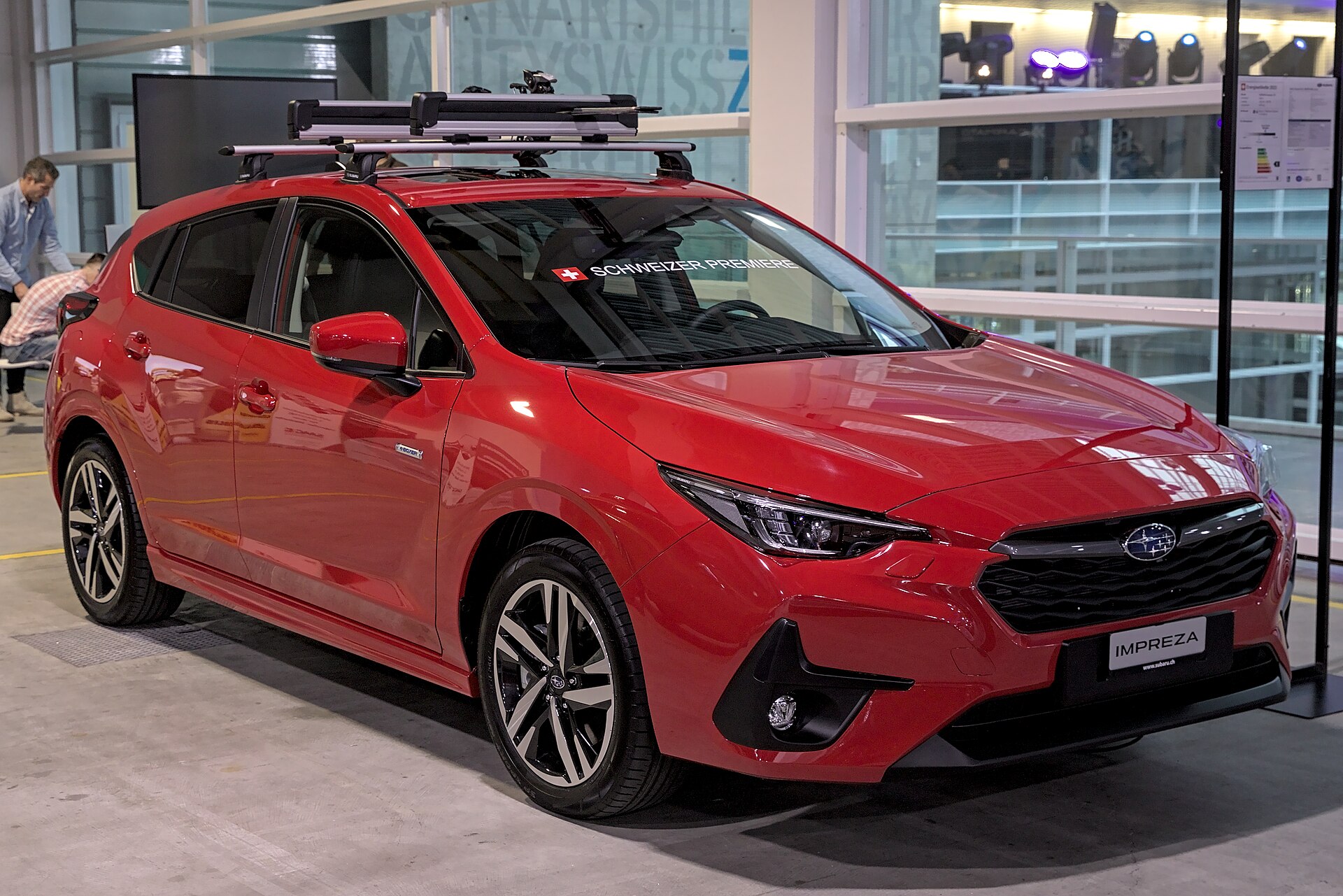
- Impreza GU Current 2023–now · Hatchback
Newest first · 6 generations since 1992
-
2023
- 2016 GK/GT 2016–2023 · Sedan, Hatchback
-
2011
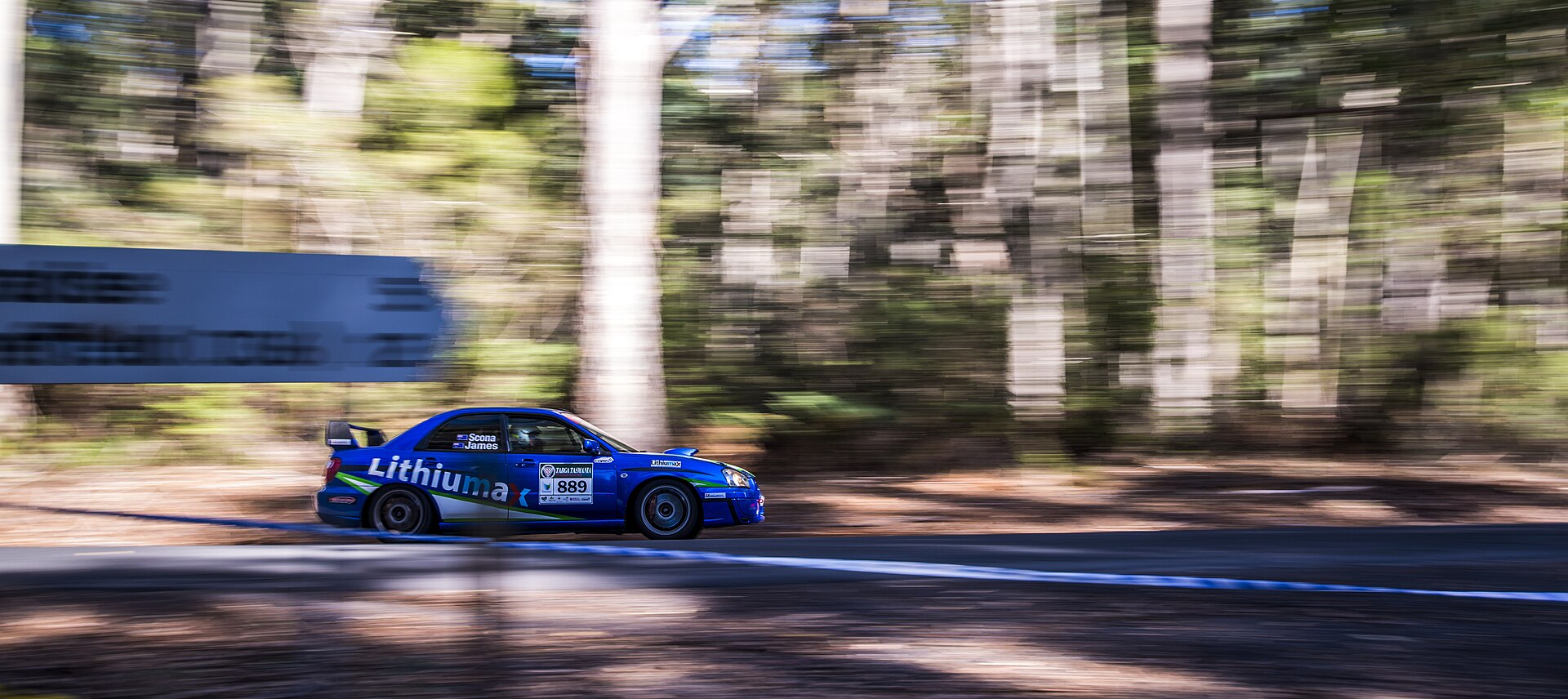
- 2007 GE/GH 2007–2011 · Sedan, Hatchback
-
2000
-
1992
All generations by year: Impreza GU (2023–now) · Impreza GK/GT (2016–2023) · Impreza GJ/GP (2011–2016) · Impreza GE/GH (2007–2011) · Impreza GD/GG (2000–2007) · Impreza GC/GF (1992–2000)
Which one is mine?
Pick the year of first registration to see which generation it is.
Check by VINWhich Subaru Impreza 4 to buy
Our verdict · Sarah Whitmore
The 2.0i with the Lineartronic CVT is the best all-round choice, because it is both quicker and more economical in daily traffic. The 1.6i manual suits buyers who want the lowest price and drive gently. Look for a 2015 or later car if you value the quieter cabin. Ask for proof of regular oil and CVT fluid changes. Buyers who need more ground clearance should look at the XV or the Subaru Forester 4. The brand's story continues in the history of Subaru.
The fourth-generation Subaru Impreza is a compact family car sold as the GJ saloon and the GP five-door hatchback. It was unveiled at the New York International Auto Show in April 2011 and replaced in Japan in October 2016. Every European car pairs a flat-four boxer engine of 84 or 110 kW with permanent all-wheel drive.
In short
- Engines: 1.6 FB16 with 84 kW (114 PS) and 2.0 FB20 with 110 kW (150 PS), both naturally aspirated boxers.
- Gearboxes: five- or six-speed manual, or the Lineartronic CVT automatic.
- Saloon: 4,580 mm long with a 460-litre boot; the hatchback is 4,414 mm long.
- Five-star ANCAP rating (2012) and an IIHS Top Safety Pick+ award (2013).

Size at a glance
| Dimensions | Subaru Impreza GJ/GP |
|---|---|
| Length | 4,580 mm180.3 in |
| Width | 1,740 mm68.5 in |
| Height | 1,465 mm57.7 in |
| Wheelbase | 2,645 mm104.1 in |
| Boot | 460 L16.2 cu ft |
Specs by version
Engines
| Version | Engine | Gearbox | Drive | Production years |
|---|---|---|---|---|
| GJ/GP · 2011–2016 | ||||
| GJ/GP · 1.6 84 kW (114 PS) Sedan | 1.6 l · Petrol 1,600 cc | 5-sp Manual | - | - |
| GJ/GP · 2.0 110 kW (150 PS) Sedan | 2.0 l 2,000 cc | - | - | - |
| GU · 2023–present | ||||
| GU · 2 L 4 cyl Automatic (AV-S8) · 2026 (EPA) | 2.0 l · 4 cyl 2,000 cc | CVT | All-wheel drive | 2026 |
| GU · 2 L 4 cyl Automatic (AV-S8) · 2025 (EPA) | 2.0 l · 4 cyl 2,000 cc | CVT | All-wheel drive | 2025 |
| GU · 2 L 4 cyl Automatic (AV-S8) · 2024 (EPA) | 2.0 l · 4 cyl 2,000 cc | CVT | All-wheel drive | 2024 |
| GU · 2.5 L 4 cyl Automatic (AV-S8) · 2026 (EPA) | 2.5 l · 4 cyl 2,500 cc | CVT | All-wheel drive | 2026 |
| GU · 2.5 L 4 cyl Automatic (AV-S8) · 2025 (EPA) | 2.5 l · 4 cyl 2,500 cc | CVT | All-wheel drive | 2025 |
| GU · 2.5 L 4 cyl Automatic (AV-S8) · 2024 (EPA) | 2.5 l · 4 cyl 2,500 cc | CVT | All-wheel drive | 2024 |
Performance
Show all 6 versions
| Version | Fuel consumption |
|---|---|
| GU · 2023–present | |
| GU · 2 L 4 cyl Automatic (AV-S8) · 2026 (EPA) | 8.1 l/100 km29.0 mpg US · 34.9 mpg UK |
| GU · 2 L 4 cyl Automatic (AV-S8) · 2025 (EPA) | 7.8 l/100 km30.2 mpg US · 36.2 mpg UK |
| GU · 2 L 4 cyl Automatic (AV-S8) · 2024 (EPA) | 7.8 l/100 km30.2 mpg US · 36.2 mpg UK |
| GU · 2.5 L 4 cyl Automatic (AV-S8) · 2026 (EPA) | 8.1 l/100 km29.0 mpg US · 34.9 mpg UK |
| GU · 2.5 L 4 cyl Automatic (AV-S8) · 2025 (EPA) | 8.1 l/100 km29.0 mpg US · 34.9 mpg UK |
| GU · 2.5 L 4 cyl Automatic (AV-S8) · 2024 (EPA) | 8.1 l/100 km29.0 mpg US · 34.9 mpg UK |
Dimensions and weight
Show all 2 versions
Verified Manufacturer and type-approval data from our catalog · Sources and methodology
Safety
-
GK/GT · NHTSA 2022
US NCAP (NHTSA)
-
GJ/GP · NHTSA 2015
US NCAP (NHTSA)
Stars from different years and organisations are not directly comparable: test protocols change every few years.
The Subaru Impreza 4 at a glance
| Fact | Impreza IV (GJ saloon / GP hatchback) |
|---|---|
| Revealed | New York International Auto Show, April 2011 |
| On sale | Japan 20 December 2011; US late 2011 (2012 model year); Europe April 2013 |
| Bodies | 4-door saloon (Impreza G4 in Japan), 5-door hatchback (Impreza Sport) |
| Engines | 1.6 and 2.0 litre flat-four petrol (boxer) |
| Power | 84–110 kW (114–150 PS) |
| Drive | Symmetrical all-wheel drive |
| Successor | Fifth generation, on sale in Japan from 13 October 2016 |
The fourth Impreza was nearly the same size as the third, but it was lighter, more economical and had a longer wheelbase. The old 1cars text added two details: the wheelbase grew by 25 mm, and the base of the front pillars moved about 200 mm forward. That gave wider door openings and a roomier cabin. The Subaru XV crossover was built on the same car and reached European dealers in March 2012, a year before the Impreza itself.
FB16 and FB20 boxer engines, gearboxes and performance
Both engines belong to Subaru's FB family of long-stroke flat-fours with chain-driven twin camshafts. In the United States, only the 2.0-litre engine was sold.

| Version | Power | Torque | Gearbox | 0–100 km/h | Top speed |
|---|---|---|---|---|---|
| 1.6i | 84 kW (114 PS) | 150 Nm (111 lb-ft) | 5-speed manual | 12.3 s | 189 km/h (117 mph) |
| 1.6i Lineartronic | 84 kW (114 PS) | 150 Nm (111 lb-ft) | CVT | 12.6 s | 181 km/h (112 mph) |
| 2.0i | 110 kW (150 PS) | 196–198 Nm (145–146 lb-ft) | 6-speed manual | 10.5 s | 197 km/h (122 mph) |
| 2.0i Lineartronic | 110 kW (150 PS) | 196–198 Nm (145–146 lb-ft) | CVT | 11.1 s | - |
The CVT figures come from the old 1cars text. The CVT in US cars had paddle shifters with a six-step manual mode. In Europe, the 2.0i manual had six gears and the 1.6i had five.
By our calculation, a 1.6i manual carries about 15.6 kg per kW, while the 2.0i manual carries about 12.1 kg per kW. The bigger engine adds 31 % more power for only 20 kg more weight, which explains its much stronger overtaking. Try other cars in the 1cars power-to-weight calculator.
How the Symmetrical AWD and chassis work
All-wheel drive was standard in every market. According to the old 1cars text, manual cars use a viscous-coupling centre differential. Lineartronic cars use Active Torque Split, an electronically controlled multi-plate clutch that varies the split between the axles. The engine sits low and in line with the gearbox, which keeps the drivetrain symmetrical from left to right.

The suspension has MacPherson struts at the front and double wishbones at the rear. The 1.6 used hydraulic power steering and the 2.0 electric power steering, according to the old 1cars text. Disc brakes, ABS, brake assist, stability control and hill-start assist (manual cars) were standard.
Size, cabin and boot of the GJ saloon and GP hatchback
| Parameter | Metric | Imperial |
|---|---|---|
| Length (saloon / hatchback) | 4,580 / 4,414 mm | 180.3 / 173.8 in |
| Width | 1,740 mm | 68.5 in |
| Height (saloon) | 1,465 mm | 57.7 in |
| Wheelbase | 2,645 mm | 104.1 in |
| Ground clearance (old 1cars text) | 145 mm | 5.7 in |
| Kerb weight (manual saloon) | 1,310–1,330 kg | 2,888–2,932 lb |
| Boot (saloon) | 460 l | 16.2 cu ft |
| Fuel tank | 60 l | 15.9 US gal |
The hatchback's 65/35 split rear seat folds to give 52.4 cu ft (about 1,484 litres) of cargo space by the US measuring method. The cabin is wider and brighter than in the third generation. The old 1cars text noted front seatbacks 60 mm taller than before and rear air vents. Two adults sit comfortably in the back, but the transmission tunnel makes the middle seat tight. Compare the saloon's footprint with other cars using the 1cars size comparison tool.

Fuel economy and running costs
Official European combined figures were 7.2 l/100 km (32.7 mpg US) for the smaller engine with a manual gearbox. The larger engine needed 7.9 l/100 km (29.8 mpg US) with the same type of gearbox. The Lineartronic CVT cut these to 7.0 and 7.6 l/100 km. Urban use pushes the 2.0 up to about 11 l/100 km. All-wheel drive costs fuel compared with front-wheel-drive rivals, and both engines need 95-octane petrol.

The FB engines use timing chains, so there is no belt to replace. The CVT fluid should still be changed on schedule. Use the 1cars fuel cost calculator to estimate yearly spending.
Trims and equipment
Equipment varied by market, from the basic grade in the United States to the Premium and Limited trims. Japanese buyers could choose four grades with the 1.6-litre or 2.0-litre engine, with or without EyeSight. That stereo-camera system, with two cameras beside the rear-view mirror, was offered only in Japan at first. According to the old 1cars text, even the base car had climate control, heated front seats, Bluetooth and a USB port. Higher grades added a touchscreen, a reversing camera, leather and 16- or 17-inch alloy wheels.

The 2015 model-year update brought a new grille, bumpers and door mirrors, plus more sound deadening. The old 1cars text listed a choice of nine paint colours for its market and xenon headlights as an option.
Impreza 4 safety: ANCAP, IIHS and Euro NCAP
ANCAP gave the Impreza five stars in 2012 with 35.33 of 37 points. It scored 14.33 of 16 in the frontal offset test and full marks in the side and pole tests. In the United States, the IIHS rated it "Good" in the moderate overlap, side, roof strength and head restraint tests. It named the car a Top Safety Pick+ in 2013. We found no separate Euro NCAP test of the Impreza. The closely related XV earned five stars from Euro NCAP in 2012, with 86 % for adult and 90 % for child protection.

Rivals: how the Impreza 4 compares
| Model | Drive | Strengths | Where the Impreza wins |
|---|---|---|---|
| Subaru Impreza 4 | AWD | Traction, low centre of gravity | - |
| Ford Focus 3 | FWD | Handling, turbo engines, wide range | All-weather grip |
| Toyota Corolla 11 | FWD | Low running costs, reputation for durability | Grip, ride on rough roads |
| Volkswagen Golf 7 | FWD (4Motion optional) | Cabin quality, efficient turbo engines | Standard AWD at a lower price |
| Mazda3 (2013) | FWD | Fuel economy, steering feel | Traction in snow and rain |
The Impreza was rarely the most economical or the quickest car in this class. Its case rested on standard all-wheel drive, good crash results and a long-lived boxer engine.

Subaru Impreza evolution in numbers
Did you know?
- The Subaru Impreza has been around for 34 years: 6 generations in our catalog since 1992.
- The longest-running generation is the Impreza GC/GF (1992–2000): 8 years.
Image credits · Photos from Wikimedia Commons under free licences
- Subaru Impreza GC/GF · Photo: FotoSleuth / Wikimedia Commons, CC BY 2.0
- Subaru Impreza GD/GG · Photo: Tokumeigakarinoaoshima / Wikimedia Commons, CC0
- Subaru Impreza GJ/GP · Photo: Tom Reynolds from Melbourne, Australia / Wikimedia Commons, CC BY 2.0
- Subaru Impreza GU · Photo: Alexander-93 / Wikimedia Commons, CC BY-SA 4.0
Subaru Impreza in our rankings
- No. 10 of 91 · Biggest engines: hatchbacks (2,500 cc)
- No. 55 of 1082 · Longest-running car nameplates (34 years · top 6%)
- No. 43 of 379 · Oldest car models still on sale (34 years · top 12%)
- No. 51 of 411 · Cars with the most generations (6 generations · top 15%)
- No. 32 of 101 · Smallest sedans (4,580 mm · top 32%)
- No. 134 of 321 · Biggest boot: cars (460 l · top 42%)
In production longer than 94% of ranked nameplates in the 1CARS catalog (No. 55 of 1082).
Subaru Impreza photos 16


Subaru Impreza videos 3

Crash test

Test drive

Video overview
FAQ
What engines does the fourth-generation Subaru Impreza have?
It uses two naturally aspirated boxer petrol engines: the 1.6-litre FB16 with 84 kW (114 PS) and the 2.0-litre FB20 with 110 kW (150 PS). The US market received only the 2.0-litre engine, with the same 110 kW output.
Is the Subaru Impreza 4 all-wheel drive?
Yes. Symmetrical all-wheel drive was standard. Manual cars use a viscous-coupling centre differential, and CVT cars use an electronically controlled multi-plate clutch that varies the torque split between the axles.
How safe is the 2011–2016 Subaru Impreza?
ANCAP awarded it five stars in 2012 with 35.33 of 37 points, and the IIHS named it a Top Safety Pick+ in 2013. Euro NCAP tested the closely related XV in 2012 and gave it five stars.
How big is the boot of the Subaru Impreza 4?
The saloon has a 460-litre boot. The hatchback has a 65/35 split folding rear seat and offers 52.4 cubic feet, about 1,484 litres, with the seats folded, measured by the US method.
When was the fourth-generation Impreza replaced?
The fifth generation was unveiled in March 2016 and went on sale in Japan on 13 October 2016. Some markets kept selling the fourth generation longer, and Europe received the new model in January 2018.
Data sources
Data checked by an editor against the sources below.
- The text of this article (1cars archive)
- Wikipedia - Subaru Impreza
- Wikipedia - Subaru WRX
- Latribuneauto - 2625 Retrouvez Tous Les Resultats Et Les Classements Des Crashs Tests Euro Ncap 2009 2
- Euro NCAP - Signed Sealed And Delivered
- US EPA fueleconomy.gov - 49348.shtml
- NHTSA 5-Star Safety Ratings (US NCAP) — U.S. Government work, public domain


