
 Subaru Outback
All generations, specs and history
Updated Published Sources (6) Report an error
By Sarah Whitmore, Senior Automotive Writer Reviewed by Oleksandr Hnatiuk

- Built
- 1994–present
- Generations
- 7
- Top power
- 194 kW (264 PS)
Timeline
Outback generations
Click a generation for its own page
- Outback I 1994–1999 · Station wagon · 99–121 kW (135–165 PS)
- Outback II 2000–2003 · Station wagon · 115–154 kW (156–209 PS)
- Outback III 2003–2009 · Station wagon · 127–180 kW (173–245 PS)
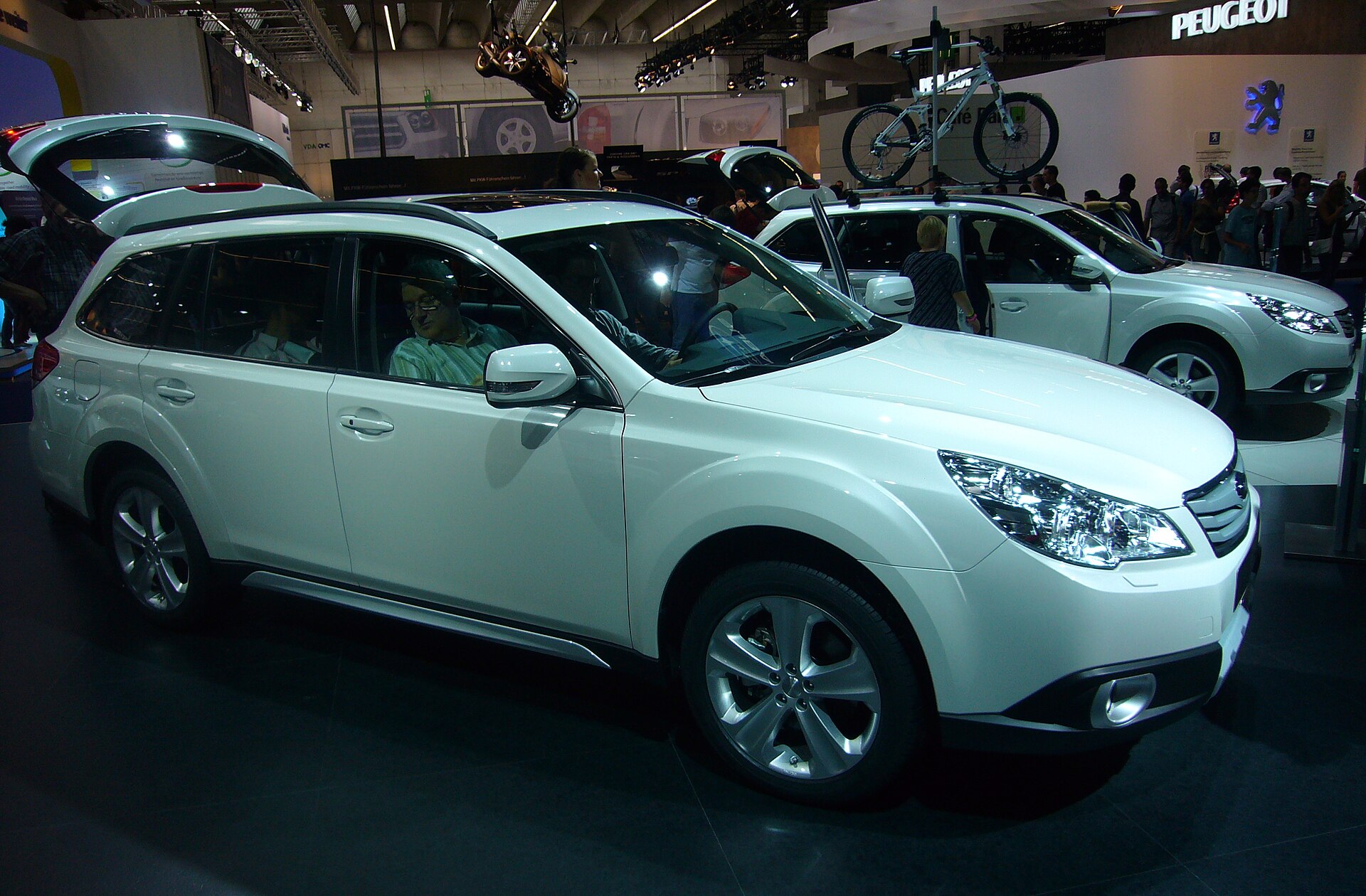
- Outback IV 2009–2014 · Station wagon · 123–183 kW (167–249 PS)
- Outback BS 2014–2019 · Station wagon · 110–191 kW (150–260 PS)
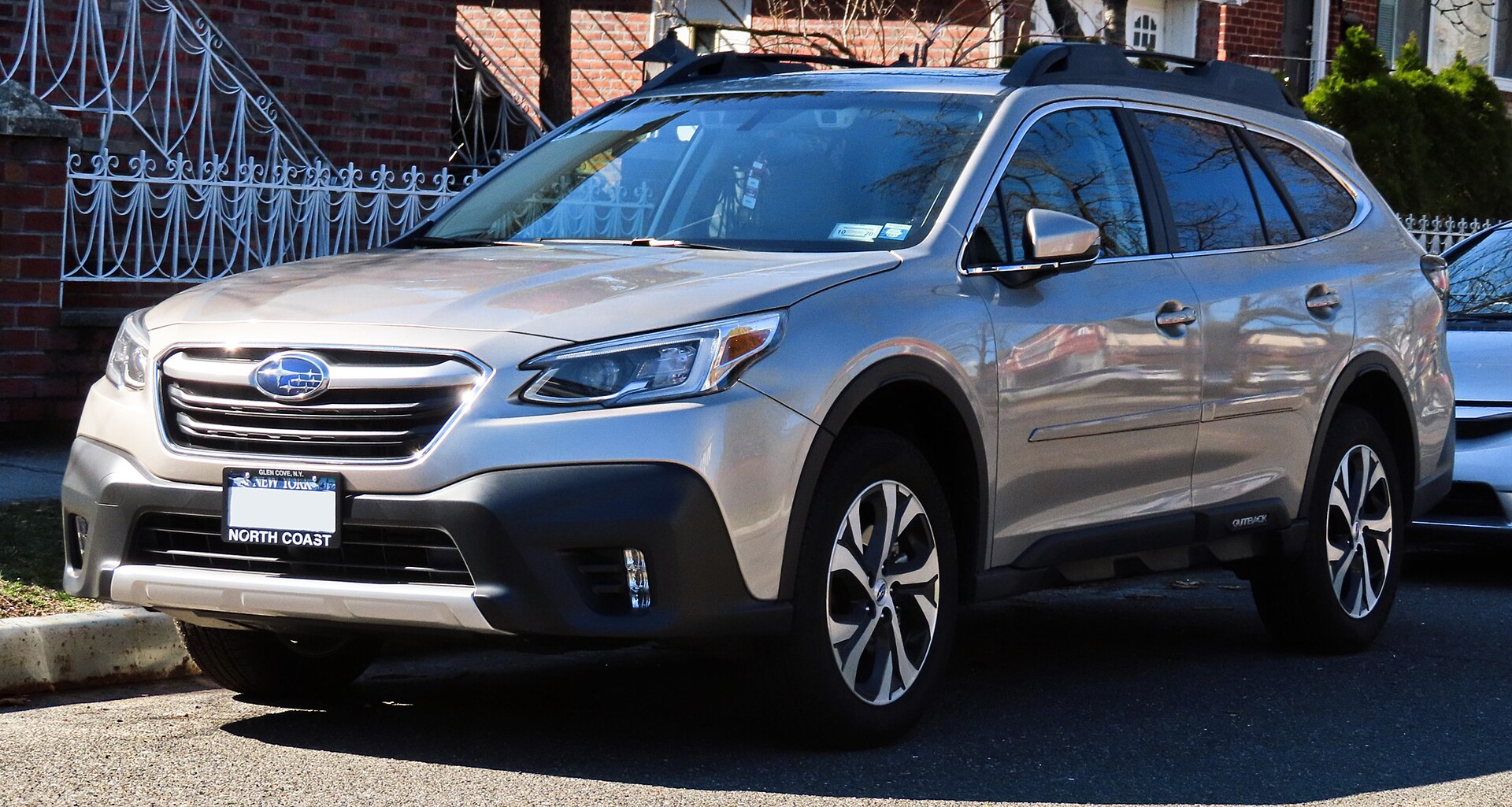
- Outback BT 2019–2025 · Station wagon · 136–194 kW (185–264 PS)
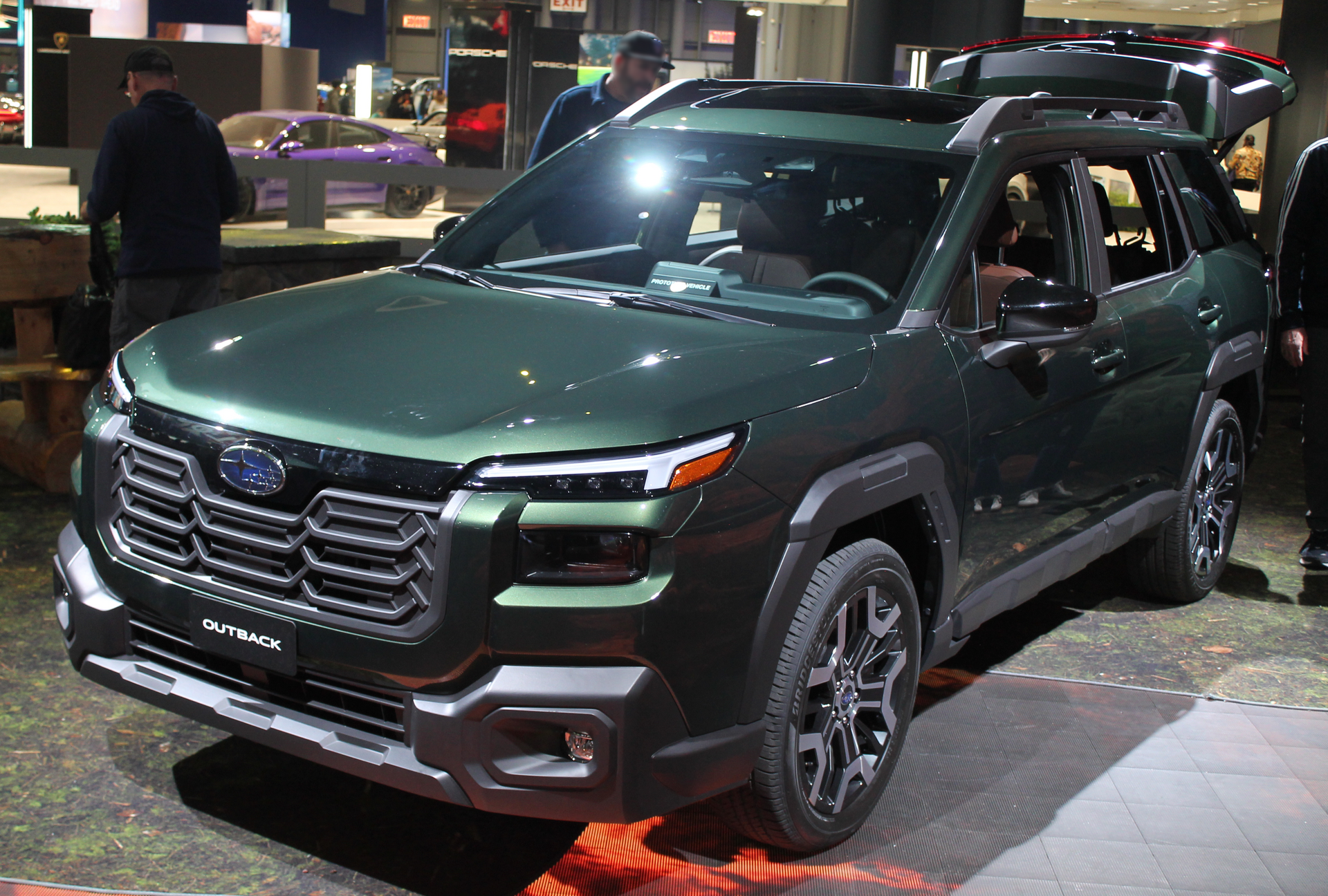
- Outback BU Current 2025–now · SUV
Newest first · 7 generations since 1994
-
2025
-
2019
-
2014

-
2009
-
2003
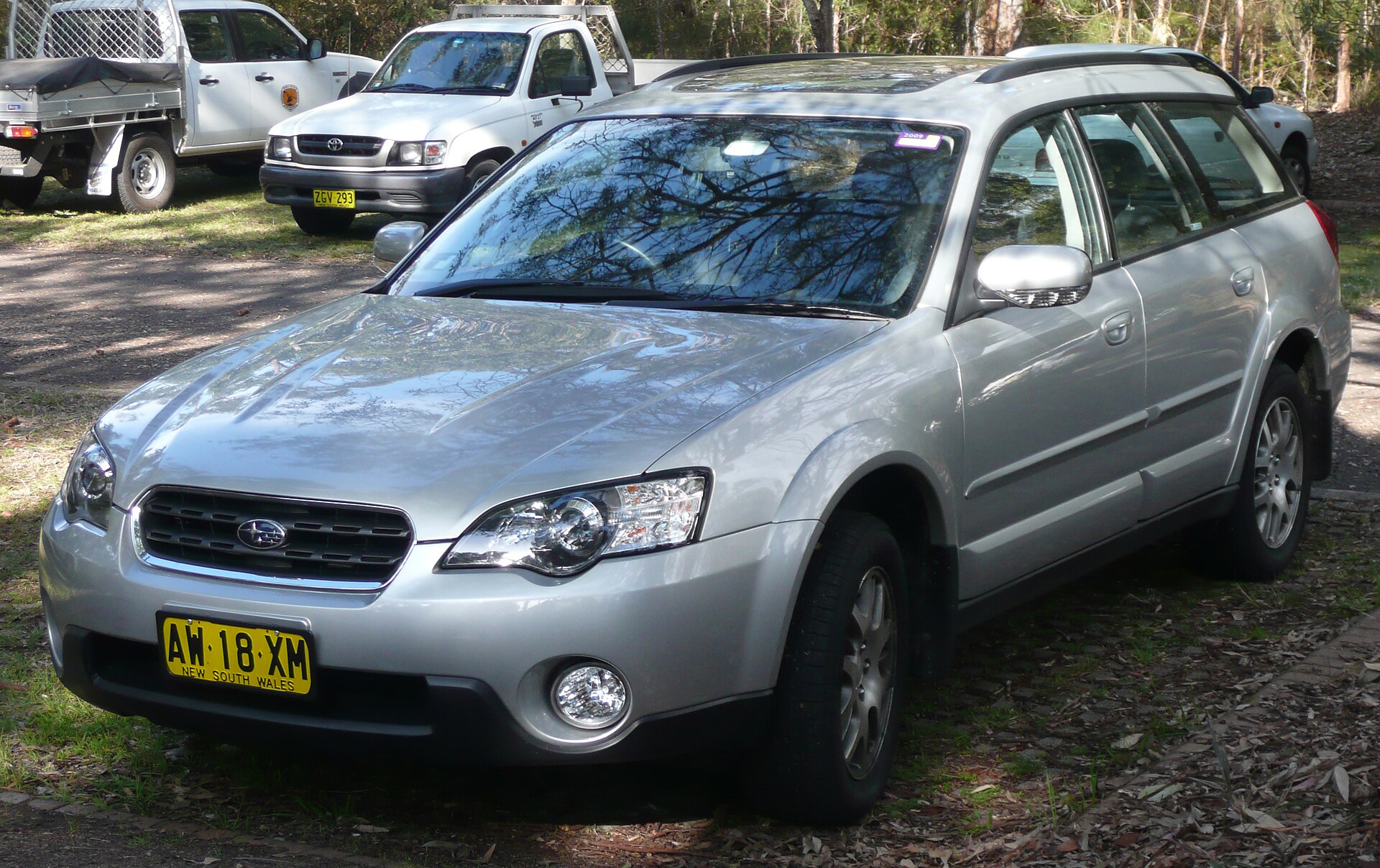
-
2000
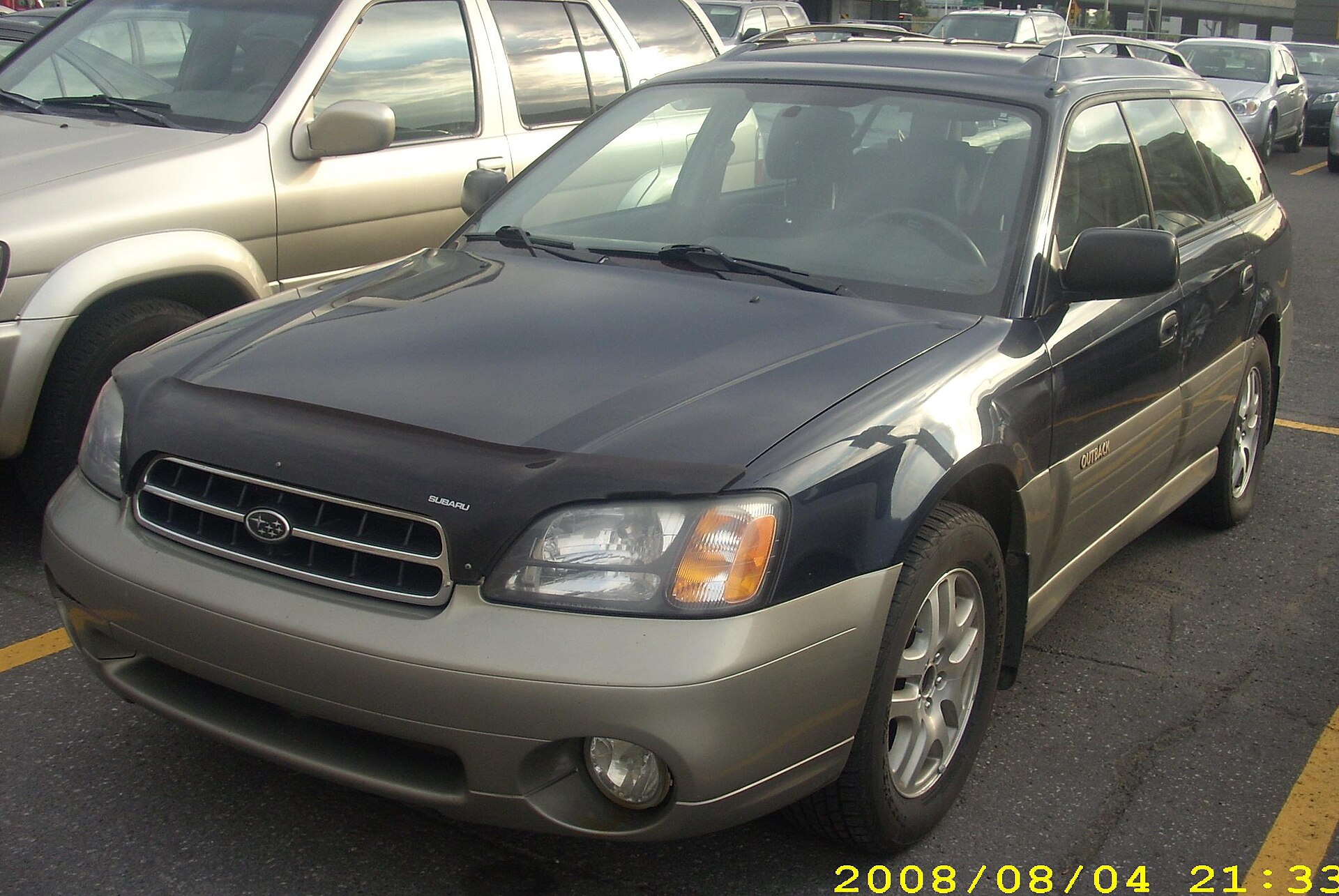
-
1994
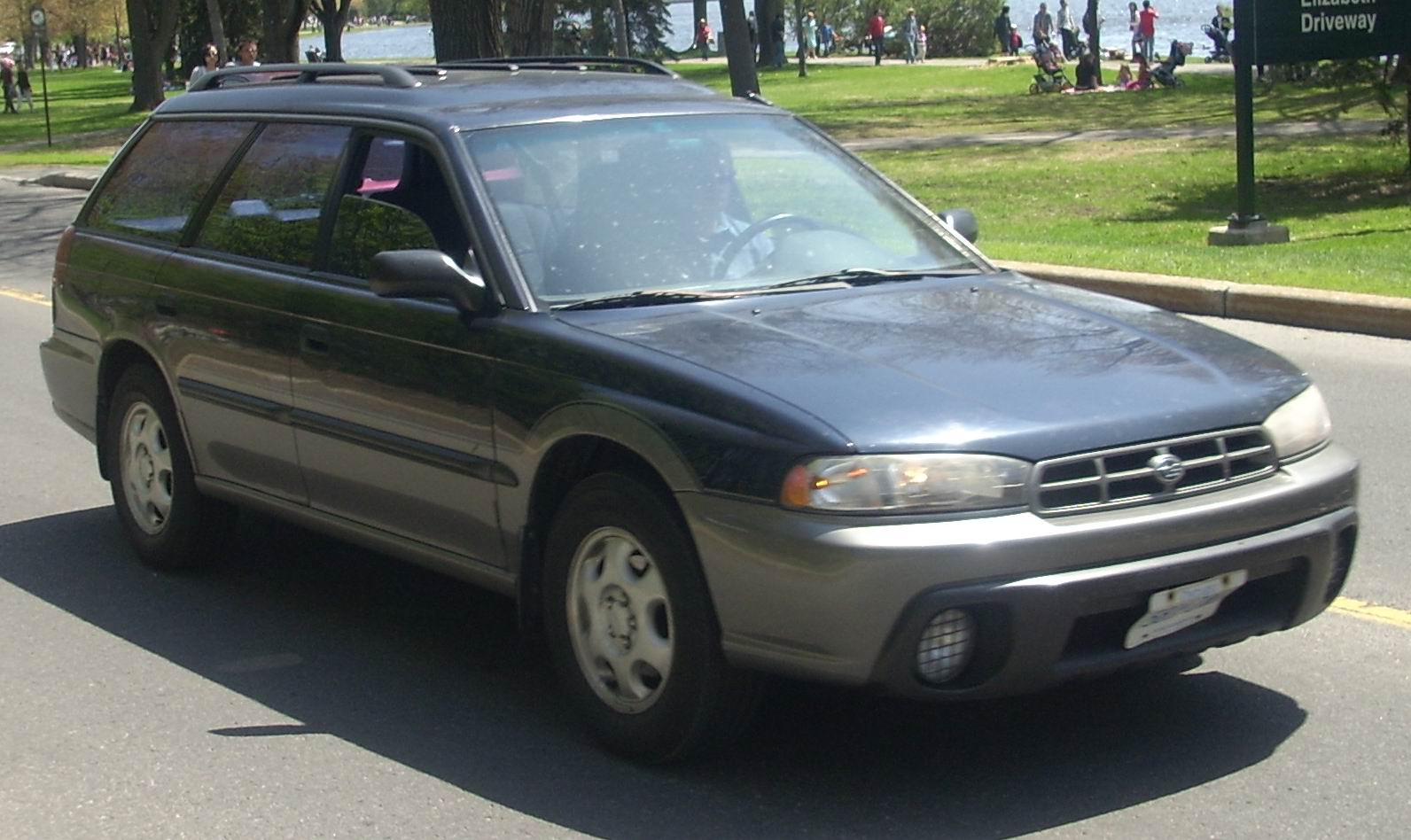


All generations by year: Outback BU (2025–now) · Outback BT (2019–2025) · Outback BS (2014–2019) · Outback IV (2009–2014) · Outback III (2003–2009) · Outback II (2000–2003) · Outback I (1994–1999)
Which one is mine?
Pick the year of first registration to see which generation it is.
- BU 2025–present
- BT 2019–2025
- BS 2014–2019
- Outback IV 2009–2014
- Outback III 2003–2009
- Outback II 2000–2003
- Outback I 1994–1999
Which Subaru Outback to buy
Our verdict · Sarah Whitmore
The facelifted fifth generation (2017–2019) with the 2.5 is a sensible used choice, and the sixth generation with EyeSight is the most modern Outback available in Europe. Check the CVT service history and fluid changes, oil consumption on older 2.5 engines, timing belts on older four-cylinder models, and the condition of the AWD system on high-mileage cars.
The Subaru Outback is a raised estate with permanent all-wheel drive, launched at the 1994 New York Auto Show as a version of the Subaru Legacy and now in its seventh generation. It pioneered the "all-terrain estate" idea, offers 200–240 mm of ground clearance and uses horizontally opposed boxer engines, from four-cylinder petrol and diesel units to six-cylinder 3.0 and 3.6 engines and the current 2.4 turbo.
In short
- Generations: BG (1994), BE/BH (1998), BP (2003), BR (2009), BS (2014), BT (2019) and BU (2025).
- Known in Japan first as the Legacy Grand Wagon and Lancaster; a separate model from the Legacy since the fifth generation.
- Fifth generation (BS): 2.5 petrol with 129 kW (175 PS), 3.6 six-cylinder with 191 kW, 2.0 diesel; Lineartronic CVT; facelift in 2017.
- Built at Ōta in Gunma, Japan, and from 1999 to 2025 also at Lafayette, Indiana, USA.

Specs by version
| Version | Engine | Power | Torque | Drive |
|---|---|---|---|---|
| Outback I · 2.0 99 kW (135 PS) | 2.0 l 2,000 cc | 99 kW 135 PS133 hp | 190 Nm140 lb-ft | All-wheel drive |
| Outback I · 121 kW (165 PS) | - | 121 kW 165 PS162 hp | 226 Nm167 lb-ft | All-wheel drive |
| Outback II · 2.5 115 kW (156 PS) | 2.5 l · 2 cyl 2,500 cc | 115 kW 156 PS154 hp | 223 Nm164 lb-ft | All-wheel drive |
| Outback II · 3.0 154 kW (209 PS) | 3.0 l · 6 cyl 3,000 cc | 154 kW 209 PS207 hp | 285 Nm210 lb-ft | All-wheel drive |
| Outback III · 2.5 127 kW (173 PS) | 2.5 l · 4 cyl 2,500 cc | 127 kW 173 PS170 hp | 227 Nm167 lb-ft | All-wheel drive |
| Outback III · 3.0 180 kW (245 PS) | 3.0 l · 6 cyl 3,000 cc | 180 kW 245 PS241 hp | 297 Nm219 lb-ft | All-wheel drive |
| Outback IV · 123 kW (167 PS) | - | 123 kW 167 PS165 hp | 229 Nm169 lb-ft | All-wheel drive |
| Outback IV · 183 kW (249 PS) | - | 183 kW 249 PS245 hp | 350 Nm258 lb-ft | All-wheel drive |
Verified Manufacturer and type-approval data from our catalog · Sources and methodology
Safety
-
BT · NHTSA 2024
US NCAP (NHTSA)
-
BS · NHTSA 2018
US NCAP (NHTSA)
Stars from different years and organisations are not directly comparable: test protocols change every few years.
Subaru Outback at a glance
In the early 1990s Subaru of America needed a hit, and lacking the money for an all-new SUV, it raised the Legacy estate, added cladding and fog lights and called it the Outback. Sales rose from 14,805 in 1995 to 60,575 in 1999 in the US, and a Subaru executive later credited the Outback with saving the company. The brand's story is told in the history of Subaru, and the range, from the Subaru Forester to the Subaru Legacy, is in the Subaru catalogue.

| Generation | Code | Years | Main engines | Ground clearance |
|---|---|---|---|---|
| 1st | BG | 1994–1999 | 2.2 and 2.5 four | 198–200 mm |
| 2nd | BE/BH | 1998–2003 | 2.5 four, 3.0 six | 190 mm |
| 3rd | BP | 2003–2009 | 2.5, 2.5 turbo, 3.0 six, 2.0 diesel | 200–220 mm |
| 4th | BR | 2009–2014 | 2.5, 3.6 six, 2.0 diesel | 220 mm |
| 5th | BS | 2014–2019 | 2.5, 3.6 six, 2.0 diesel | 213 mm |
| 6th | BT | 2019–2025 | 2.5, 2.4 turbo, 1.8 turbo (Japan) | 220 mm (Wilderness 240 mm) |
| 7th | BU | 2025– | 2.5, 2.4 turbo | 220 mm (Wilderness 240 mm) |
First and second generations (1994–2003)
The first Outback combined the Legacy estate body with higher suspension, two-tone paint and a roof rack. Engines were a 2.2 boxer with 101 kW (135 hp) and, from 1996, a twin-cam 2.5 with up to 123 kW (165 hp), with a 5-speed manual or 4-speed automatic. Manual cars had permanent AWD with a viscous centre coupling, while automatics used an electronically controlled multi-plate clutch. Suspension was fully independent.

The second generation, launched in Japan as the Lancaster in September 1998, kept the 2.5 four-cylinder with 123 kW and added a 3.0 flat-six. It was sold as an estate and, in some markets, a saloon. In 1999 the Lancaster introduced Subaru's ADA driver-assistance system with stereo cameras, a forerunner of EyeSight.
Third and fourth generations (2003–2014)
Launched at Frankfurt on 22 October 2003 with the Outback name in all markets, the third generation was lighter and stiffer, with a smoother body and up to 220 mm of ground clearance. Engines included a 2.5 with 130 kW (175 hp), the 2.5 turbo XT with 181 kW (243 hp), the 3.0 flat-six and, from 2008 in Europe, Subaru's first boxer diesel, the 2.0D. Top Gear named it Car of the Year in 2007.

The fourth generation, shown in New York in April 2009, grew noticeably, with a length of 4,801 mm and 220 mm of ground clearance. It introduced the Lineartronic CVT alongside a 6-speed manual, and engines included the 2.5i, the 3.6R flat-six with 183 kW (249 PS) and a 5-speed automatic, and the 2.0 boxer diesel in Europe. Motor Trend named it Sport/Utility of the Year for 2010.
Fifth generation (BS, 2014–2019) in detail
Launch and design
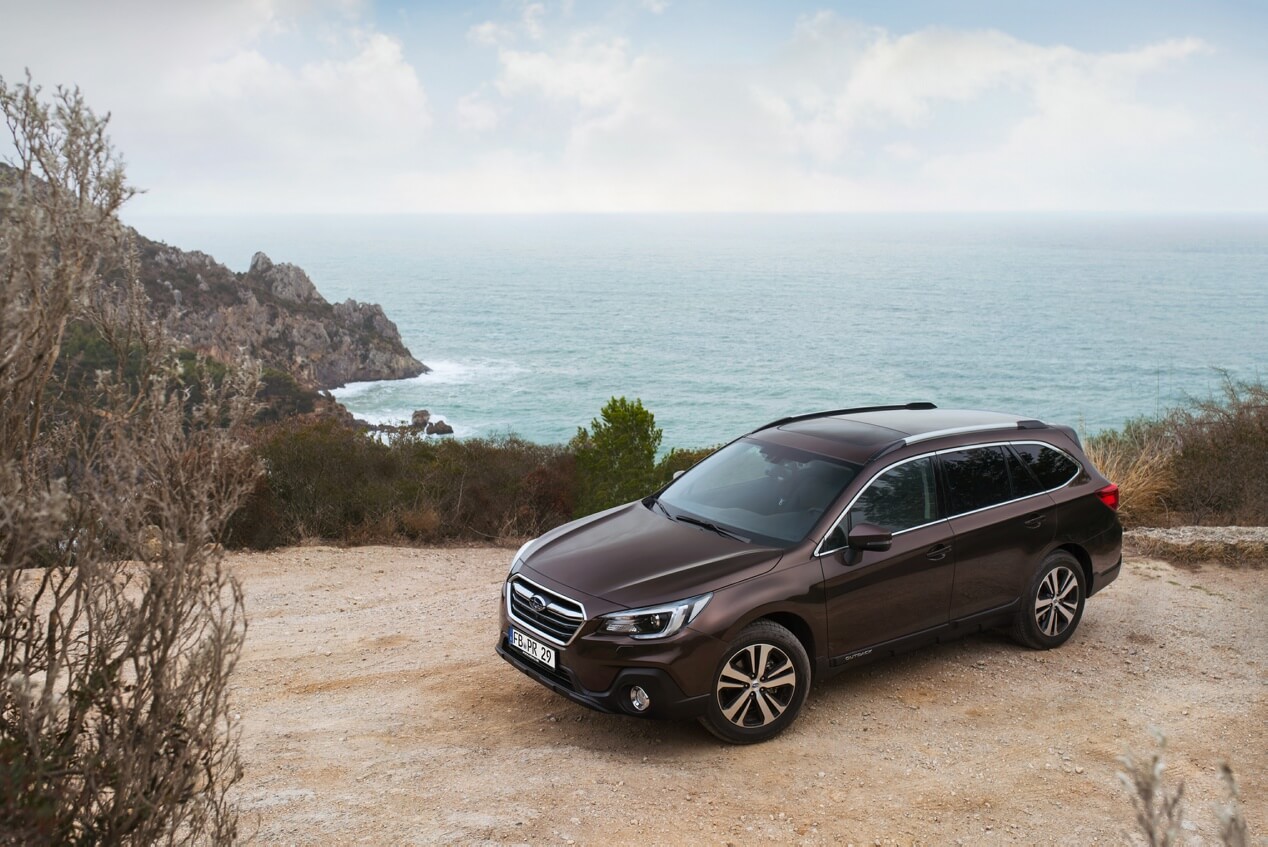
The fifth Outback was shown at the New York Auto Show in April 2014 and in Europe at Geneva in 2015. For the first time it was a separate model rather than a Legacy version. It has a bolder grille, headlights with LED daytime running lights, an aluminium bonnet, roof rails and plastic cladding around the body. Front quarter windows and door-mounted mirrors improve visibility. The body uses more high-strength steel, and Subaru claimed 67% higher stiffness than before.

Engines and drivetrain
| Engine | Power | Torque | 0–100 km/h | Top speed |
|---|---|---|---|---|
| 2.5i boxer four | 129 kW (175 PS) | 236 Nm | 10.2 s | 198 km/h |
| 3.6R boxer six | 191 kW (260 PS) | 335 Nm | 7.6 s | 235 km/h |
| 2.0D boxer diesel (Europe) | 110 kW (150 PS) | – | – | – |
The Lineartronic CVT can simulate stepped gears, and Symmetrical AWD normally splits torque about 60:40, varying it up to 50:50 with a multi-plate clutch. X-Mode helps on slippery surfaces and steep descents, and Active Torque Vectoring brakes the inside wheel in corners. The 3.6R uses about 9.9 L/100 km combined.
Interior, boot and safety
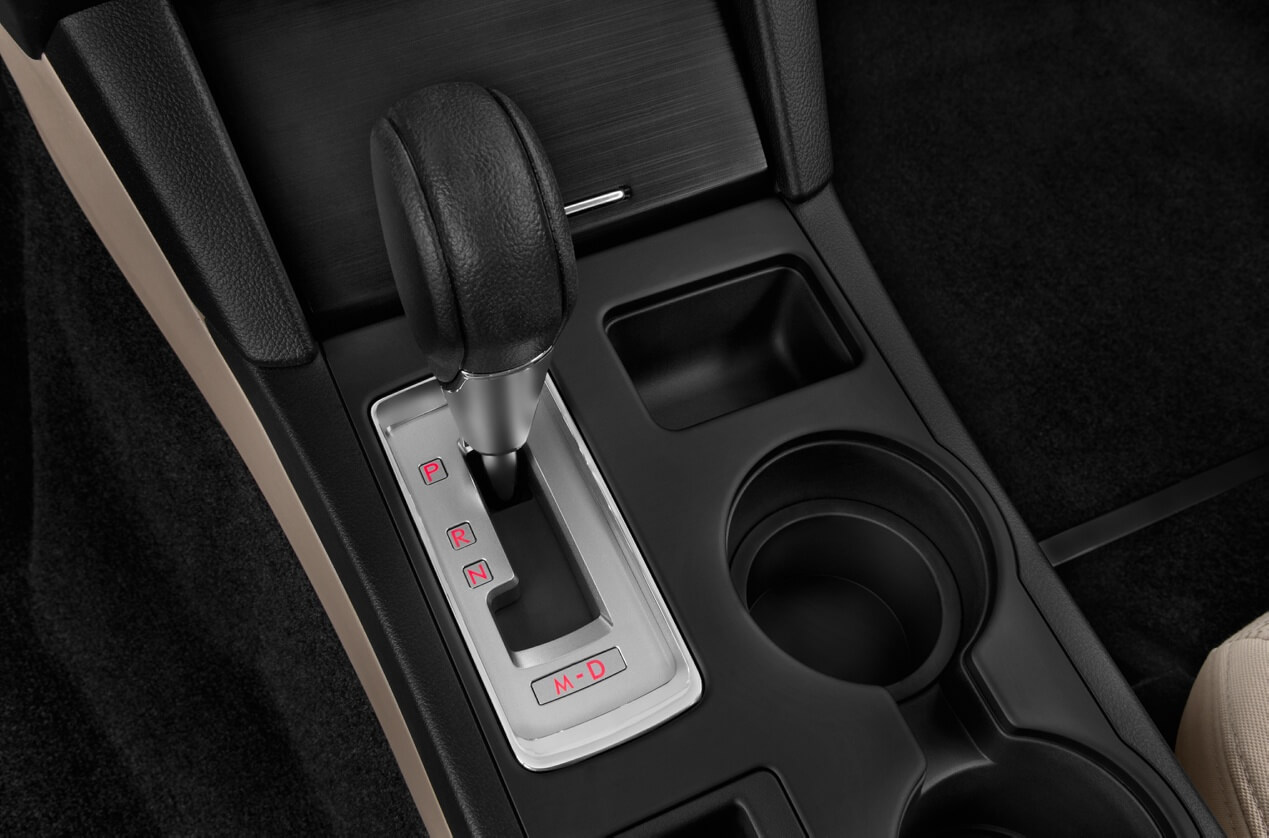
The cabin is roomier and better finished than the fourth generation's, with leather, wood-effect and chrome trim on top versions, a 7-inch touchscreen, dual-zone climate control and heated front and rear seats. The rear bench seats three, and the boot holds 527 litres, or about 1,800 litres with the seats folded. A near full-size spare wheel sits under the floor.
Euro NCAP tested the 2.0D with EyeSight in 2014, scoring 85% for adult and 87% for child occupants, 73% for pedestrians and 70% for safety assist; the IIHS named it a Top Safety Pick. EyeSight's stereo cameras provide pre-collision braking, adaptive cruise control and lane departure warning, and the car has seven airbags, including a driver's knee airbag.
The 2017 facelift
Shown in New York on 12 April 2017, the update brought a new bumper and grille, steering-responsive LED headlights, new 17- and 18-inch wheels, reshaped mirrors and thicker side glass for less wind noise, a larger screen, a revised CVT with seven simulated steps, active grille shutters and retuned suspension and steering. The boot grew slightly to about 530 litres.
Sixth and seventh generations (2019 to today)
The sixth Outback (BT) was revealed in New York on 17 April 2019 and reached Europe in April 2021, with the 2.5 boxer of 136 kW (182 hp) and the CVT. Other markets got the 2.4 turbo with 194 kW (260 hp) and, in Japan, a 1.8 turbo. The Wilderness version of 2022 has 240 mm of clearance, all-terrain tyres and a shorter final drive. In the 2021 test aligned with Euro NCAP it scored 88% for adult and 91% for child occupants and 96% for safety assist.

The seventh generation, revealed on 16 April 2025, turned the Outback into a boxier crossover SUV with the 2.5 boxer and the 2.4 turbo, a CVT and standard AWD, after Subaru ended the Legacy saloon. Sales began in North America in August 2025 and in Australia in November 2025.
Rivals: how the Outback compares
The Outback competes with the Volvo V90/V60 Cross Country, Audi A4/A6 allroad, Volkswagen Passat Alltrack and Skoda Octavia Scout, as well as mid-size SUVs. Its strengths are permanent AWD, ground clearance, a large boot and safety; its weaknesses are the CVT's feel under hard acceleration and modest performance from the 2.5. More models are listed among Japanese cars and 4x4 vehicles.


Subaru Outback evolution in numbers
Did you know?
- The Subaru Outback has been around for 32 years: 7 generations in our catalog since 1994.
- The biggest jump in power came with the Outback II: up to 154 kW (209 PS), 33 kW more than the Outback I.
Most powerful version, kW
Figures from the 1cars catalog: power is the strongest version of each generation; generations without the figure are left out.
Image credits · Photos from Wikimedia Commons under free licences
- Subaru Outback I · Photo: Bull-Doser / Wikimedia Commons, Public domain
- Subaru Outback II · Photo: Bull-Doser / Wikimedia Commons, Public domain
- Subaru Outback III · Photo: OSX / Wikimedia Commons, Public domain
- Subaru Outback IV · Photo: Rutger van der Maar / Wikimedia Commons, CC BY 2.0
- Subaru Outback BT · Photo: Kevauto / Wikimedia Commons, CC BY-SA 4.0
- Subaru Outback BU · Photo: Raszbeary / Wikimedia Commons, CC BY 4.0
Subaru Outback in our rankings
- No. 5 of 18 · Biggest engines: station wagons (3,000 cc)
- No. 65 of 1082 · Longest-running car nameplates (32 years · top 7%)
- No. 32 of 411 · Cars with the most generations (7 generations · top 9%)
- No. 51 of 379 · Oldest car models still on sale (32 years · top 14%)
- No. 56 of 130 · Most powerful Japanese cars (194 kW · top 44%)
- No. 162 of 354 · Most powerful cars of the 2010s (191 kW · top 46%)
In production longer than 93% of ranked nameplates in the 1CARS catalog (No. 65 of 1082).
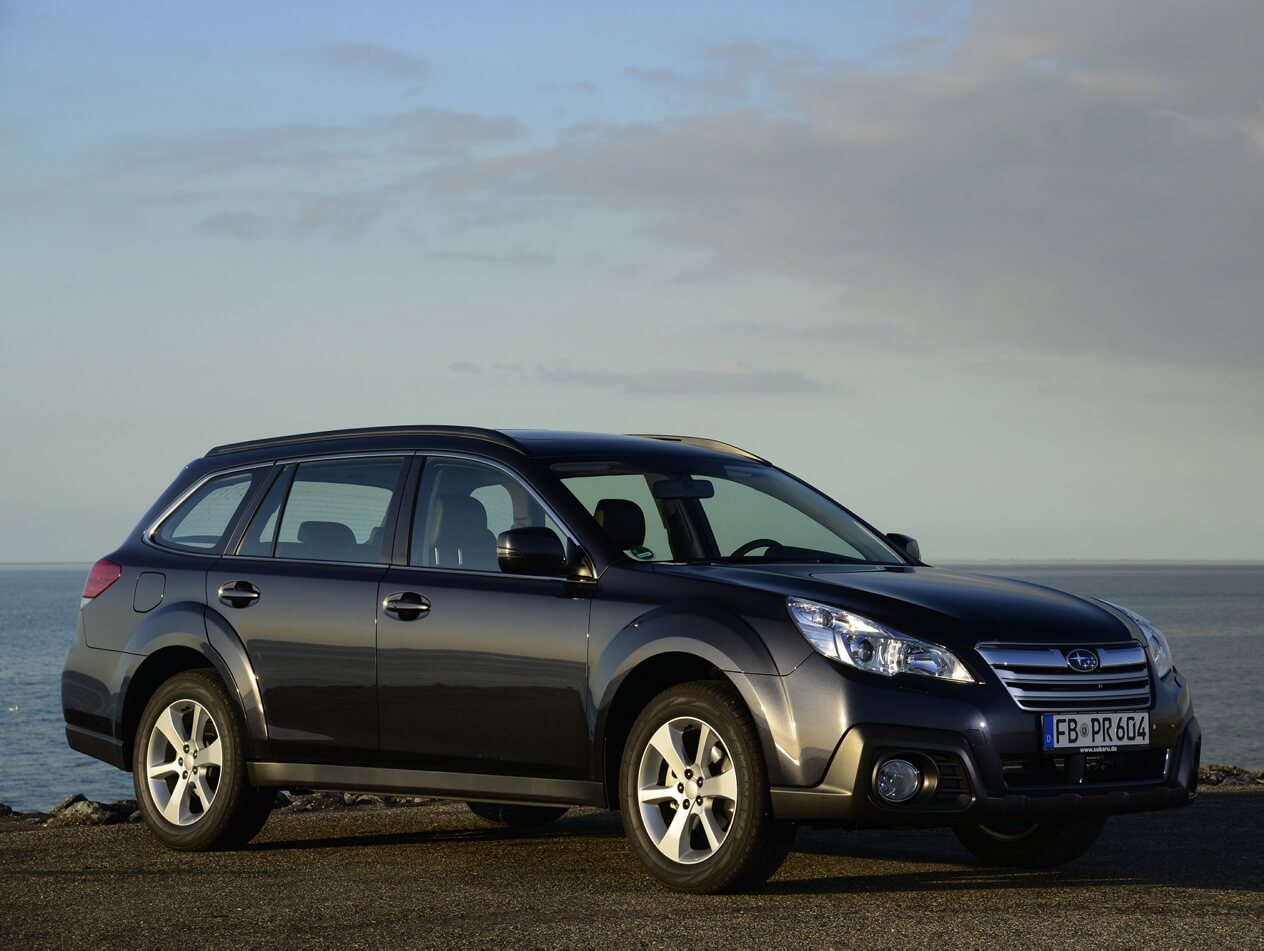
Subaru Outback photos 53








Subaru Outback videos 6

Subaru Outback video 1

Subaru Outback video 2

Subaru Outback video 3

Subaru Outback video 4

Subaru Outback video 5

Subaru Outback video 6
FAQ
How many generations of the Subaru Outback are there?
There are seven: BG (1994), BE/BH (1998), BP (2003), BR (2009), BS (2014), BT (2019) and BU (2025). The first two were also sold as the Legacy Grand Wagon or Lancaster in Japan.
Is the Subaru Outback four-wheel drive?
Yes. Every Outback has permanent Symmetrical all-wheel drive. Fifth-generation cars split torque about 60:40 front to rear and can vary it up to 50:50 with a multi-plate clutch.
What engines does the Subaru Outback have?
Outbacks use boxer engines: 2.0 to 2.5-litre four-cylinders, 3.0 and 3.6 six-cylinders, a 2.0 diesel in Europe from 2008 and, in the latest generations, a 2.4 turbo with 194 kW.
What is the ground clearance of the Subaru Outback?
Recent Outbacks have about 213–220 mm of ground clearance, and the Wilderness versions 240 mm. That is more than most estates and similar to many SUVs.
How big is the Subaru Outback boot?
The fifth-generation Outback holds 527 litres with the rear seats up and about 1,800 litres folded; the 2017 facelift raised the seats-up figure to about 530 litres.
Data sources
Data checked by an editor against the sources below.
- The text of this article (1cars archive)
- Wikipedia - Subaru Outback
- Co
- Automotiveworld - Subaru Outback Awarded Maximum Five Star Rating In 2021 Euro Ncap Safety Test
- ADAC
- NHTSA 5-Star Safety Ratings (US NCAP) — U.S. Government work, public domain


