 Porsche 928
Specs, engines and history
Published Sources (1) Report an error
By Felix Hartmann, Automotive Technology & EV Contributor
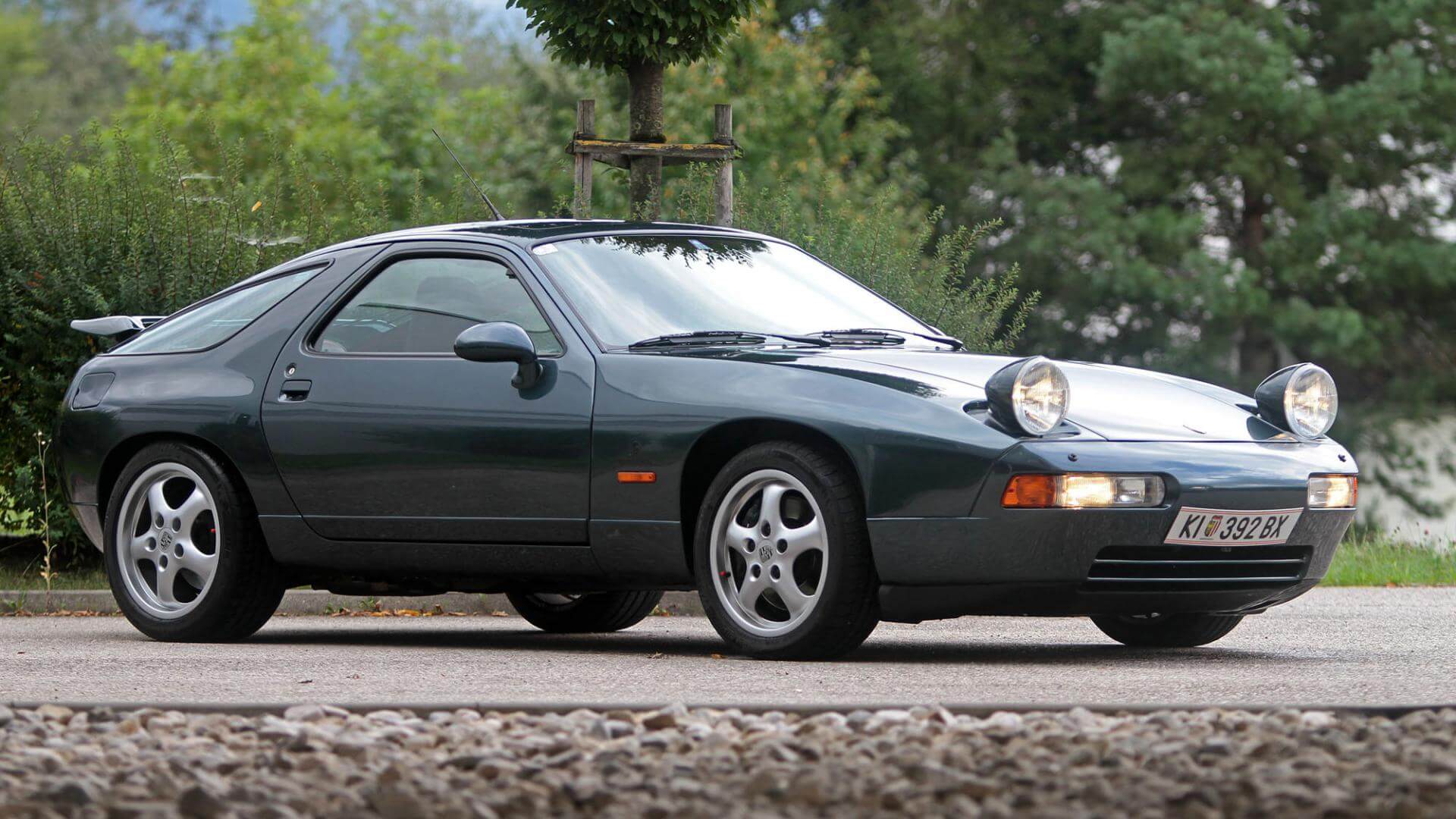
The Porsche 928 is a front-engined V8 grand tourer that Porsche built from 1977 to 1995 as a two-door hatchback coupé. Made at Zuffenhausen in Stuttgart, it made its debut at the Geneva motor show in March 1977 and went on sale as a 1978 model. In 1978 it became European Car of the Year, the only sports car ever to win the award.
In short
- Front-mounted aluminium V8 driving the rear wheels through a transaxle for near 50/50 weight distribution.
- Engines grew from a 4.5 V8 with 177 kW (240 PS) to the 5.4 V8 of the 928 GTS with 257 kW (350 PS).
- Aluminium doors, front wings and bonnet on a galvanised steel body.
- About 61,000 cars were built in 18 years.
Porsche 928 at a glance
The 928 is a 2+2 hatchback coupé with a front engine, a rear-mounted gearbox and rear-wheel drive. It was designed by Wolfgang Möbius under the direction of Anatole Lapine. More Porsche models are listed in our Porsche catalogue, and news about the car is collected under the Porsche 928 tag.
History
At the end of the 1960s Porsche's management felt the rear-engined 911 had reached the limit of its development and began work on a successor with broader appeal. The engineers experimented with different layouts before choosing a front-mounted, water-cooled V8 and a transaxle - a configuration aimed especially at the American market, where large, refined engines were popular. The fuel crisis of the 1970s slowed development and hurt demand for big-engined cars, and in the end the 911 did not go away: Porsche sold both side by side, with the 928 positioned as the more luxurious and comfortable grand tourer. Chief executive Peter Schutz later confirmed that the 911 would stay in the range.
Porsche 928 versions
| Version | Years | Engine | Power (kW / PS) |
|---|---|---|---|
| 928 | 1978–1982 | 4.5 V8, 16 valves | 177 kW / 240 PS (North America 163 kW / 219 hp) |
| 928 S | 1980–1983 | 4.7 V8, 16 valves | 221 kW / 300 PS |
| 928 S (S2 in the UK) | 1984–1986 | 4.7 V8, 16 valves | 228 kW / 310 PS |
| 928 S4 | 1987–1991 | 5.0 V8, 32 valves | 235 kW / 320 PS |
| 928 CS / SE | 1988–1989 | 5.0 V8, 32 valves | 235 kW / 320 PS |
| 928 GT | 1989–1991 | 5.0 V8, 32 valves | 243 kW / 330 PS |
| 928 GTS | 1992–1995 | 5.4 V8, 32 valves | 257 kW / 350 PS |
The S4 was the best-selling version with about 15,700 cars, while the limited Club Sport (19 cars) and SE (42 cars) are the rarest.
Exterior
The 928's silhouette is fast and clean, with a long bonnet, a pointed nose and a side view free of unnecessary detail. Its round pop-up headlights, which lie flat in the bonnet when not in use, and the smooth, rounded nose earned it the nickname "the shark". The body-coloured plastic bumpers were integrated into the shape of the car - unusual at the time - and largely housed the lights, indicators and number plate. The so-called "telephone dial" wheels, with their round holes, became one of the car's trademarks. Long doors and the large curved rear window with rounded triangular side windows complete the design.
The body was made of galvanised steel, while the doors, front wings and bonnet were aluminium to save weight. Thanks to the galvanising, Porsche could offer a long anti-corrosion warranty, and many 928s have survived in good condition.
Interior
In materials and comfort the 928 was a big step up from the more spartan 911. Power steering, electric mirrors, air conditioning and cruise control were part of its appeal. The driver faced a four-spoke steering wheel with a rectangular hub and a clear instrument cluster under a deep anti-glare hood. The dashboard had no sharp edges, and the steeply raked centre console was ergonomically sound, although the central armrest was rather narrow for two people. The front seats were comfortable, with an anatomical shape and good lateral support. The 928 is a four-seater, but the rear seats are much less comfortable than the front. The luggage compartment holds 178 litres according to published figures, rising to 580 litres with the rear seatbacks folded.
Engines and transmissions
All 928 engines are all-aluminium V8s with Bosch fuel injection. The original 4.5-litre engine produced 177 kW (240 PS), or 163 kW (219 hp) in North America because of emissions rules, and published figures give 0–100 km/h in about 7 seconds. The 4.7-litre 928 S of 1980 raised output to 221 kW (300 PS), and the 1987 S4 introduced a 5.0-litre four-valve-per-cylinder engine with 235 kW (320 PS).
The final 928 GTS of 1992 had a 5.4-litre V8 with 257 kW (350 PS); according to published figures its crankshaft had eight counterweights instead of six for smoother running, and it produced about 490 Nm, reached 100 km/h in about 5.5 seconds and had a top speed of 275 km/h. Gearboxes were a five-speed manual or a Mercedes-Benz-sourced automatic with three and later four speeds; the manual was dropped from the S4 in 1990 and was the only gearbox on the GT.
Chassis
The 928 had fully independent suspension, with the multi-link Weissach axle at the rear. The Weissach axle provided passive rear-wheel steering, countering the toe-out that would otherwise appear when the rear suspension was loaded on a trailing throttle and so reducing the tendency to oversteer - an important safety advance at the time. The transaxle layout gave balanced weight distribution and excellent stability at high speed. Later US versions received firmer dampers, and the lightweight Club Sport had a limited-slip differential with up to 40% locking according to published figures.
Key specifications
| Parameter | Value |
|---|---|
| Production | 1977–1995 |
| Body | 2+2 hatchback coupé |
| Length | 4,520–4,524 mm |
| Width | 1,837–1,890 mm |
| Height | 1,275–1,282 mm |
| Wheelbase | 2,500 mm |
| Kerb weight | 1,450–1,620 kg |
| Power | 163–257 kW (219–350 PS) |
| Cars built | about 61,000 |
Strengths and weaknesses
The 928's strengths are its refined V8, its balanced transaxle chassis, high-speed stability, comfort and equipment far beyond the 911 of its day, and a timeless design that still looks modern. Its weaknesses were a high price even for the base version, limited rear-seat space and, in later years, growing competition from cheaper and more modern rivals such as the Mercedes-Benz 500 SL and BMW 850i. Sales never matched Porsche's original hopes - by 1990 output was around one car per day - but today the 928 is a sought-after classic.
Porsche 928 in our rankings
In production longer than 77% of ranked nameplates in the 1CARS catalog (No. 190 of 912).
FAQ
Was the Porsche 928 meant to replace the 911?
Yes, it was conceived as a possible successor, but Porsche kept building the 911 and sold both side by side.
What engine does the Porsche 928 have?
A front-mounted aluminium V8, growing from 4.5 litres and 177 kW (240 PS) to 5.4 litres and 257 kW (350 PS) in the GTS.
How many Porsche 928s were built?
About 61,000 between 1977 and 1995.
Why is the Porsche 928 called "the shark"?
Because of its smooth, pointed nose with pop-up headlights.
Did the Porsche 928 win any awards?
It was European Car of the Year 1978, the only sports car to win the title.
Data sources
Data checked by an editor against the sources below.