 Nissan Rogue
All generations, specs and history
Published Sources (2) Report an error
By Felix Hartmann, Automotive Technology & EV Contributor
- Built
- 2007–present
- Generations
- 3
Timeline
Rogue generations
Click a generation for its own page


Newest first · 3 generations since 2007
-
2020
-
2013
-
2007
All generations by year: Rogue III (2020–now) · Rogue II (2013–2020) · Rogue I (2007–2013)
Which one is mine?
Pick the year of first registration to see which generation it is.
- Rogue III 2020–present
- Rogue II 2013–2020
- Rogue I 2007–2013
The Nissan Rogue is a compact crossover built by Nissan for the North American market. It made its debut in January 2007 and is assembled in the United States, Canada and Mexico. Three generations have been produced, and the latest was officially presented in North America on 15 June 2020. The new Rogue brought a new platform, a redesigned exterior, a stylish interior and extended equipment - a full generation change rather than a facelift.
In short
- Three generations since 2007; the third was unveiled on 15 June 2020.
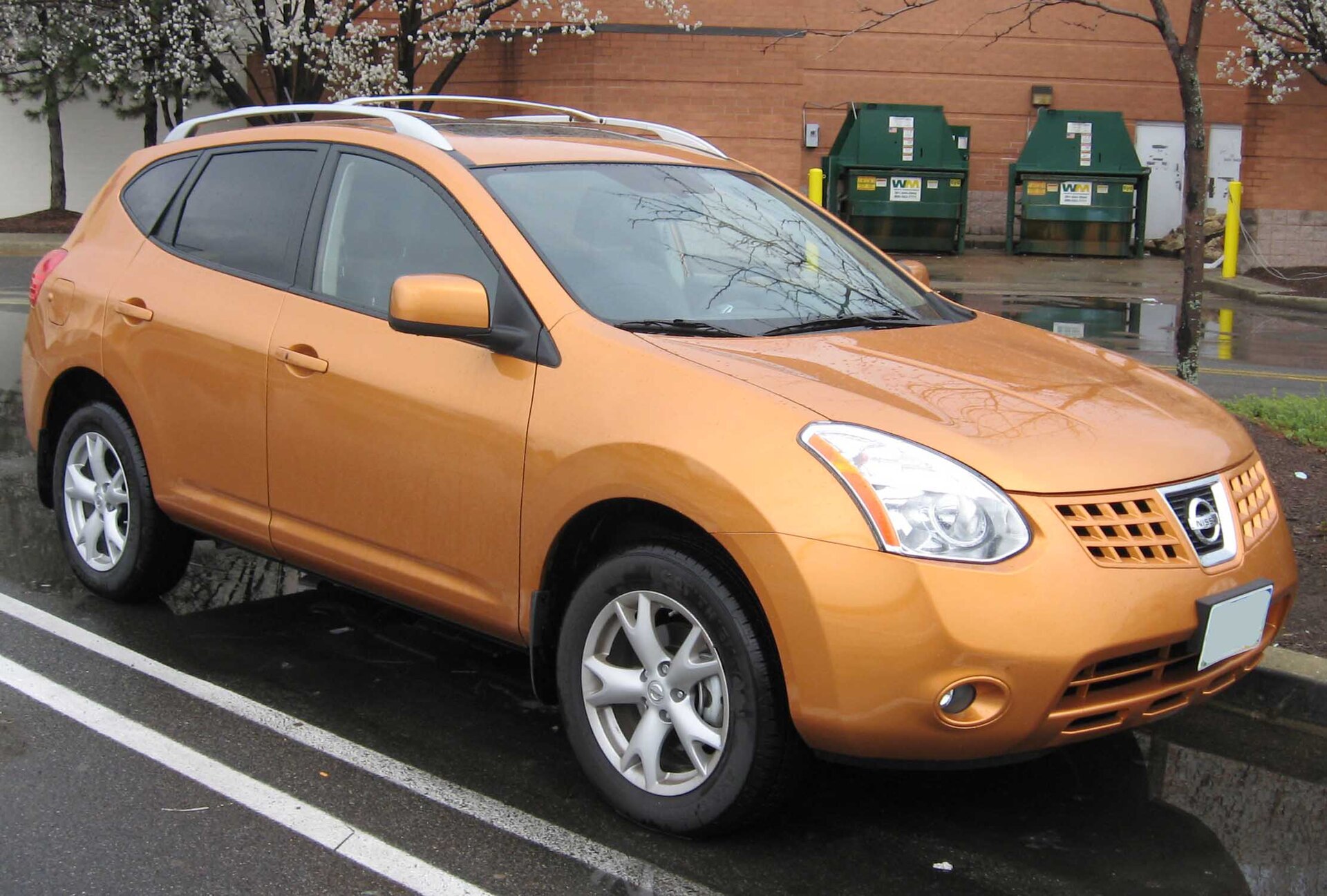
- The first Rogue was the North American counterpart of the Qashqai, and the second of the Nissan X-Trail.
- The third generation uses the CMF-C/D platform and a 2.5-litre direct-injection engine with 135 kW (184 PS) and 245 Nm, paired with an Xtronic CVT.
- Ten airbags and the Safety Shield 360 package on every version; a 1,113-litre luggage area.
Safety
-
Rogue III · NHTSA 2025
US NCAP (NHTSA)
-
Rogue II · NHTSA 2019
US NCAP (NHTSA)
-
Rogue I · NHTSA 2012
US NCAP (NHTSA)
Stars from different years and organisations are not directly comparable: test protocols change every few years.
Nissan Rogue at a glance
The Rogue is a five-seat monocoque crossover with a transverse engine, front-wheel drive as standard and optional all-wheel drive. More Nissan models are listed in our Nissan catalogue, and an extreme take on its smaller sibling is covered in our Nissan Juke-R 2.0 article.
History
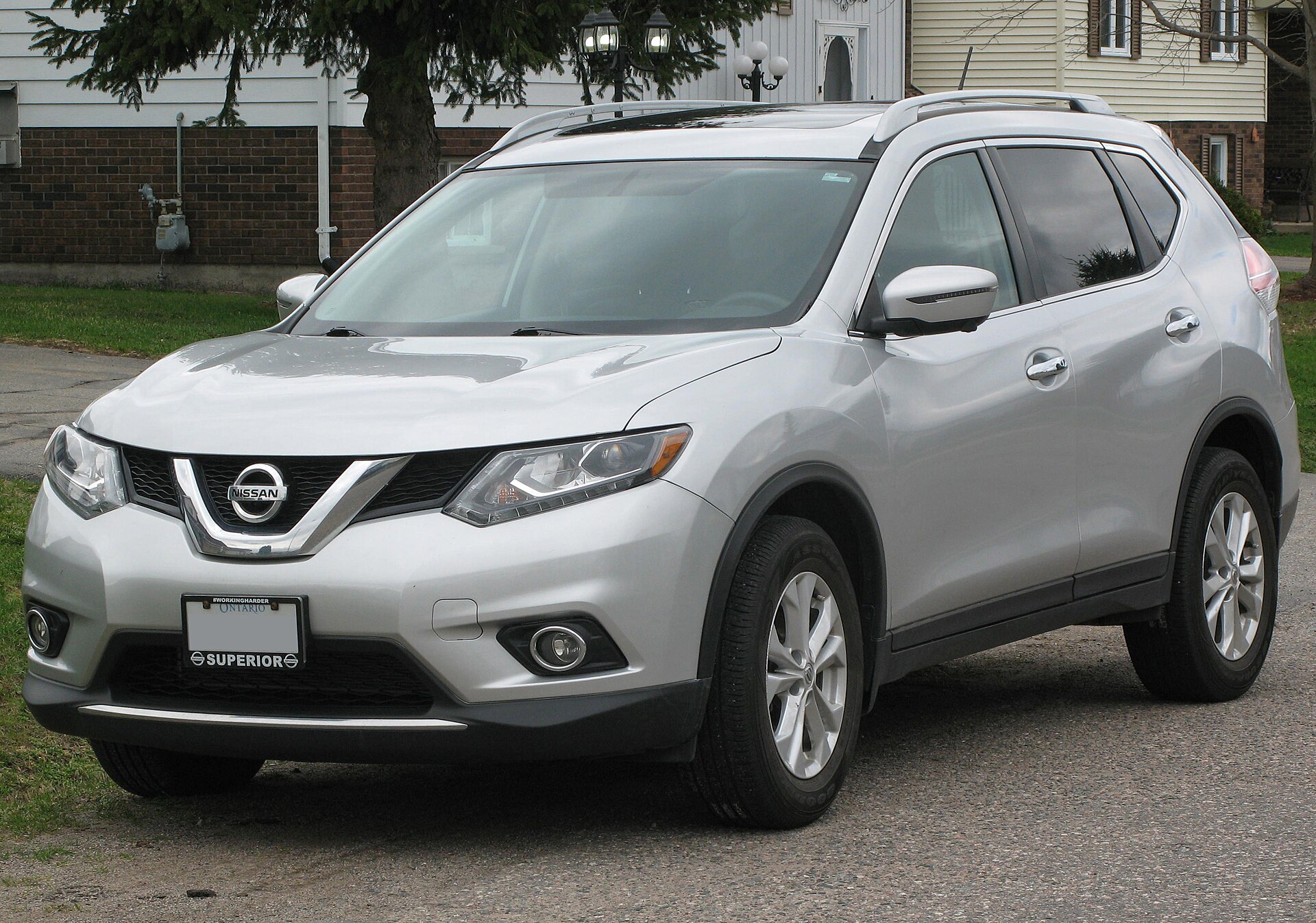
The first Rogue was the North American counterpart of the Nissan Qashqai, which made its debut slightly earlier at the 2006 Paris motor show. The second generation corresponded to the Nissan X-Trail sold in Europe and elsewhere. To keep it competitive, Nissan developed a new generation, launched first as the Rogue in North America, with the new X-Trail for other markets to follow.
Third generation (2020 onwards)
Exterior
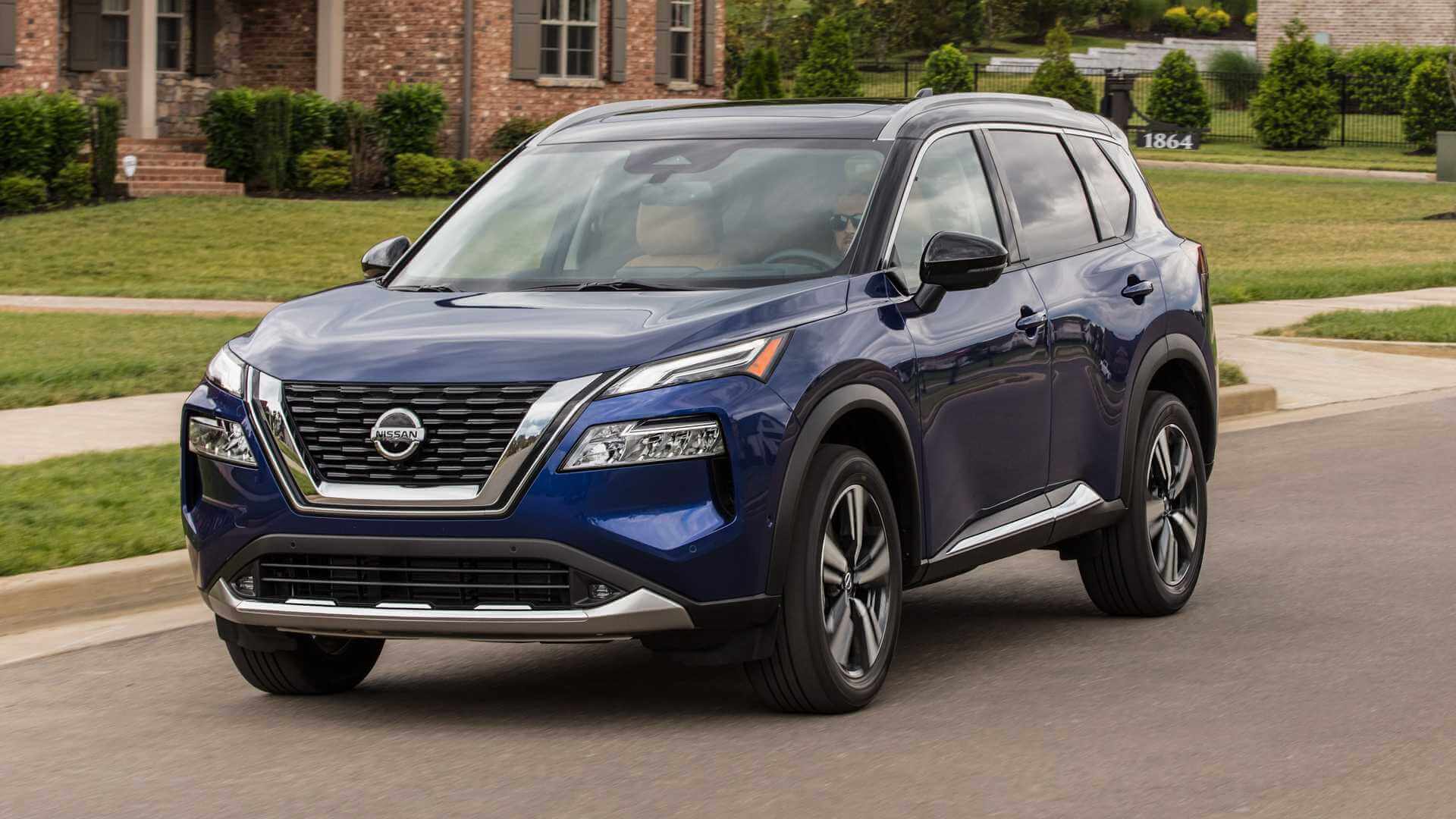
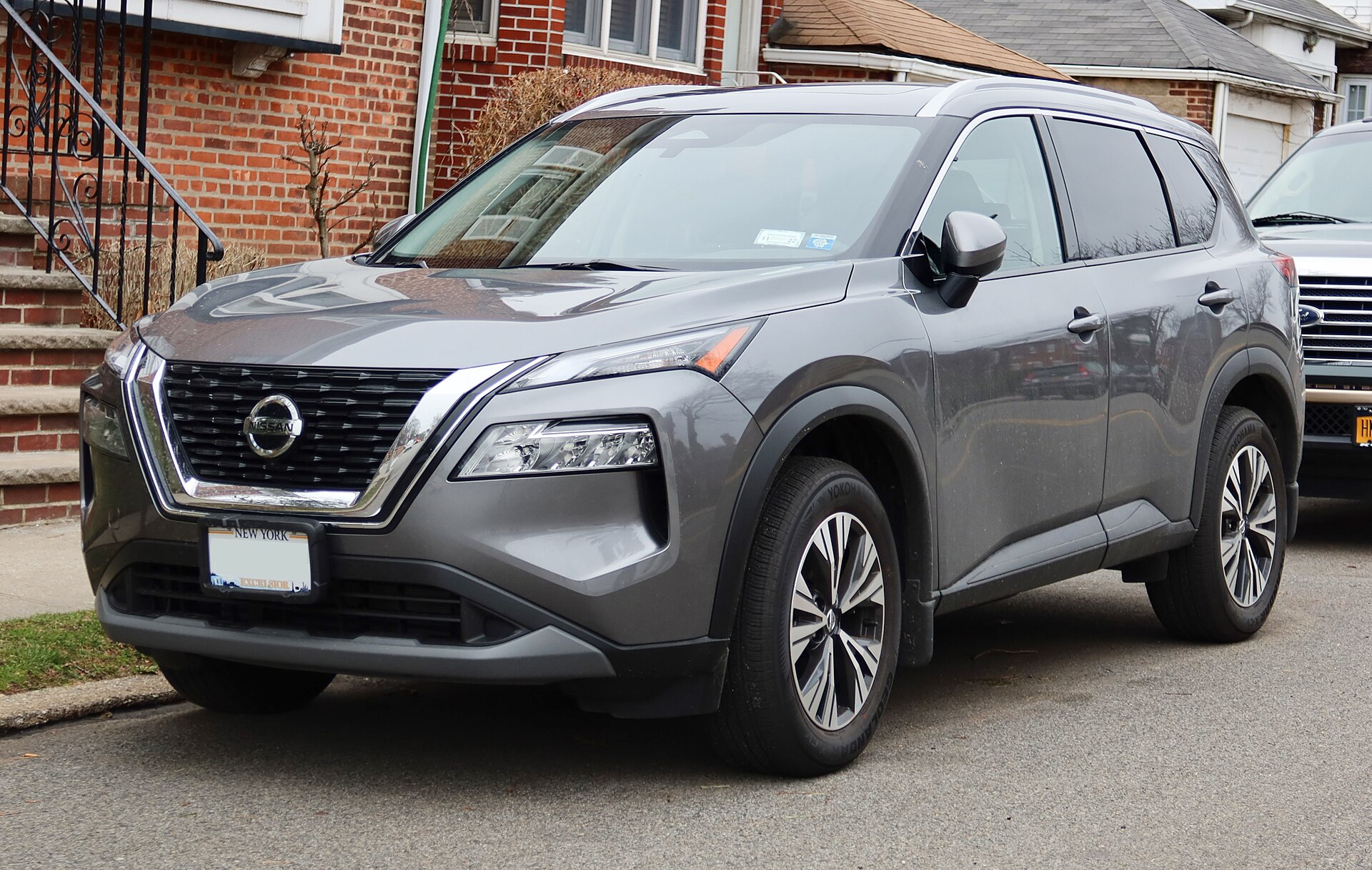
The third Rogue drops the off-road styling cues of its predecessors in favour of a more traditional crossover look, while keeping Nissan's signature design. It looks most dynamic from the front, with high, wave-shaped edges on the gently sloping bonnet, a large silver surround for a coarse-mesh grille, a reworked V-shaped grille, angular two-tier headlights and vertical side air curtains. The plastic lower bumper has a silver skid plate and integrated fog lamps.
The profile combines a steeply raked windscreen with a roofline that falls towards the rear, black window surrounds highlighted by a silver strip, three side windows, new mirrors and slightly recessed door handles. Rounded square wheel arches, protective sill trims and five-spoke alloy wheels shape the lower body, and high-set plastic cladding protects the body on rough roads. Base versions have 17-inch alloys; more expensive versions have wheels of up to 19 inches. Unlike its predecessor, the new Rogue has door-mounted mirrors, rear doors that open to 85 degrees and LED lights front and rear even on base versions. At the rear are a roof spoiler with a third brake light, a wide rear window, high-set LED tail lights, a large Nissan badge, ribbed tailgate creases, rear fog lamps, a shaped lower bumper and an exhaust tip below it.
Interior
The five-seat cabin uses several types of genuine leather, ergonomic plastics and polished metal panels. A sporty steering wheel with buttons faces a 12.3-inch digital instrument panel with three display modes on more expensive versions; standard versions have analogue dials with a 7-inch trip-computer screen in the centre (up from 5 inches). A head-up display reduces driver distraction. A 9-inch infotainment screen sits in the centre, and USB-A and USB-C sockets, Apple CarPlay and Android Auto are available from the base version. The centre console has butterfly-style lids that open upwards, and the tunnel holds a compact gear selector, cupholders, an infotainment controller and a range of organisers; the armrest compartment is large enough for a portable cool box.
The elegant front seats are comfortable, with good shaping and side support, electric or manual adjustment and heating. Optional Zero Gravity seats come in black, grey or light-brown leather. Three people fit in the rear, where reclining backrests and more legroom compensate for any shortage of space; the rear seat does not slide, and there is no third row. The luggage area holds 1,113 litres, or 2,098 litres with the rear seats folded, and its regular shape makes loading easy. The Divide-N-Hide two-section floor can be raised and set vertically, with useful storage at both sides and room for canisters. The SL and Platinum versions have a power tailgate.
Engine and transmission
| Engine | Power (kW / PS) | Torque | Gearbox |
|---|---|---|---|
| 2.5 PR25DD four-cylinder, naturally aspirated, direct injection, DOHC | 135 kW / 184 PS | 245 Nm | Xtronic CVT |
The upgraded 2.5-litre engine switched from multi-point to direct injection and gained 9 kW (12 PS) and 8 Nm. For the 2022 model year Nissan replaced it with a 1.5-litre three-cylinder VC-Turbo with variable compression, rated at 150 kW (204 PS). The CVT is controlled by a compact joystick-style selector. Front-wheel-drive versions have three driving modes (Standard, Eco and Sport); all-wheel-drive versions add Off-Road and Snow, and use a new, faster-acting electro-hydraulic clutch to engage the rear wheels.
Chassis
The third Rogue is built on the modular CMF-C/D platform, with a redesigned multi-link rear suspension and MacPherson struts at the front. It is 45 kg lighter than before, and Nissan says body rigidity is 27% higher. The bonnet, front wings and side doors are aluminium, while the tailgate and fuel tank are made of high-strength plastic. Steering is rack-and-pinion with electric assistance.
Safety and equipment
Every version has ten airbags, three sets of ISOFIX anchorages in the second row and the Safety Shield 360 package, which includes lane departure and rear cross-traffic warnings, pedestrian detection, automatic emergency braking, blind-spot monitoring, adaptive high beams, Snug Kids, tyre-pressure monitoring, ABS, forward collision warning, front, side and rear sonar and traffic-sign recognition. More expensive versions add ProPilot Assist with lane keeping, intelligent cruise control and automatic parking, and the top-spec version has driver monitoring and an extra airbag.
The base version offers air conditioning, LED headlights, fabric seats, 17-inch alloys, an 8-inch touchscreen, heated seats and power heated mirrors, height adjustment for the steering column and driver's seat, and electric windows. The top-spec version adds leather, 19-inch alloys, a panoramic roof, power front seats with memory, three-zone climate control, navigation, wireless charging, a 10.8-inch head-up display, a ten-speaker Bose audio system, the 9-inch centre screen and the 12.3-inch digital instruments.
Key specifications (third generation)
| Parameter | Value |
|---|---|
| Presented | 15 June 2020 |
| Platform | CMF-C/D |
| Engine | 2.5 PR25DD, 135 kW / 184 PS, 245 Nm |
| Gearbox | Xtronic CVT |
| Drive | Front or all-wheel drive |
| Seats | 5 |
| Luggage area | 1,113 / 2,098 l |
| Wheels | 17–19 in |
Rivals
The Rogue competes with the Toyota RAV4, Honda CR-V, Mazda CX-5, Subaru Forester, Hyundai Tucson and Mitsubishi Outlander. The third generation improved on its predecessor in looks, technology, cabin quality, luggage space, equipment and safety.
Nissan Rogue evolution in numbers
Did you know?
- The Nissan Rogue has been around for 19 years: 3 generations in our catalog since 2007.
- The longest-running generation is the Rogue II (2013–2020): 7 years.
Image credits · Photos from Wikimedia Commons under free licences
- Nissan Rogue I · Photo: IFCAR / Wikimedia Commons, Public domain
- Nissan Rogue II · Photo: Elise240SX / Wikimedia Commons, CC BY-SA 4.0
- Nissan Rogue III · Photo: Kevauto / Wikimedia Commons, CC BY-SA 4.0
Nissan Rogue in our rankings
- No. 186 of 912 · Longest-running car nameplates (19 years · top 21%)
- No. 111 of 305 · Oldest car models still on sale (19 years · top 38%)
- No. 204 of 345 · Cars with the most generations (3 generations · top 68%)
In production longer than 79% of ranked nameplates in the 1CARS catalog (No. 186 of 912).
FAQ
Is the Nissan Rogue the same as the Nissan X-Trail?
The second-generation Rogue corresponded to the X-Trail, and the third generation was launched as the Rogue in North America with the new X-Trail for other markets to follow; the first Rogue was the counterpart of the Qashqai.
What engine does the third-generation Nissan Rogue have?
A 2.5-litre direct-injection four-cylinder with 135 kW (184 PS) and 245 Nm, paired with an Xtronic CVT.
Does the Nissan Rogue have all-wheel drive?
Yes, as an option, with an electro-hydraulic clutch and extra Off-Road and Snow driving modes.
How big is the Nissan Rogue boot?
1,113 litres, or 2,098 litres with the rear seats folded.
Data sources
Data checked by an editor against the sources below.
- Wikipedia - Nissan Rogue
- NHTSA 5-Star Safety Ratings (US NCAP) — U.S. Government work, public domain