 Nissan Murano
All generations, specs and history
Published Sources (2) Report an error
By Felix Hartmann, Automotive Technology & EV Contributor
- Built
- 2002–present
- Generations
- 4
Timeline
Murano generations
Click a generation for its own page


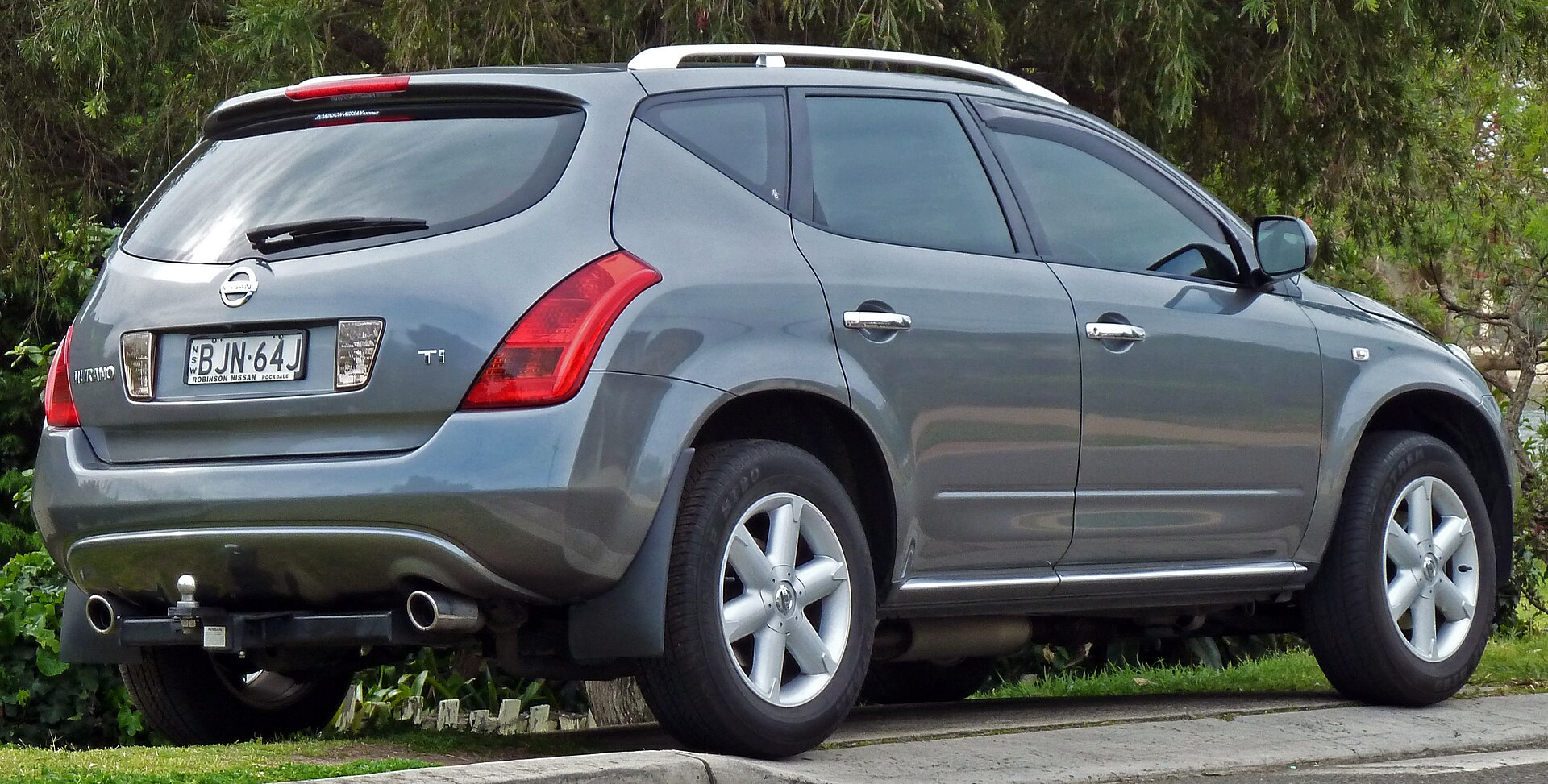
- Murano Z50 2002–2008 · SUV
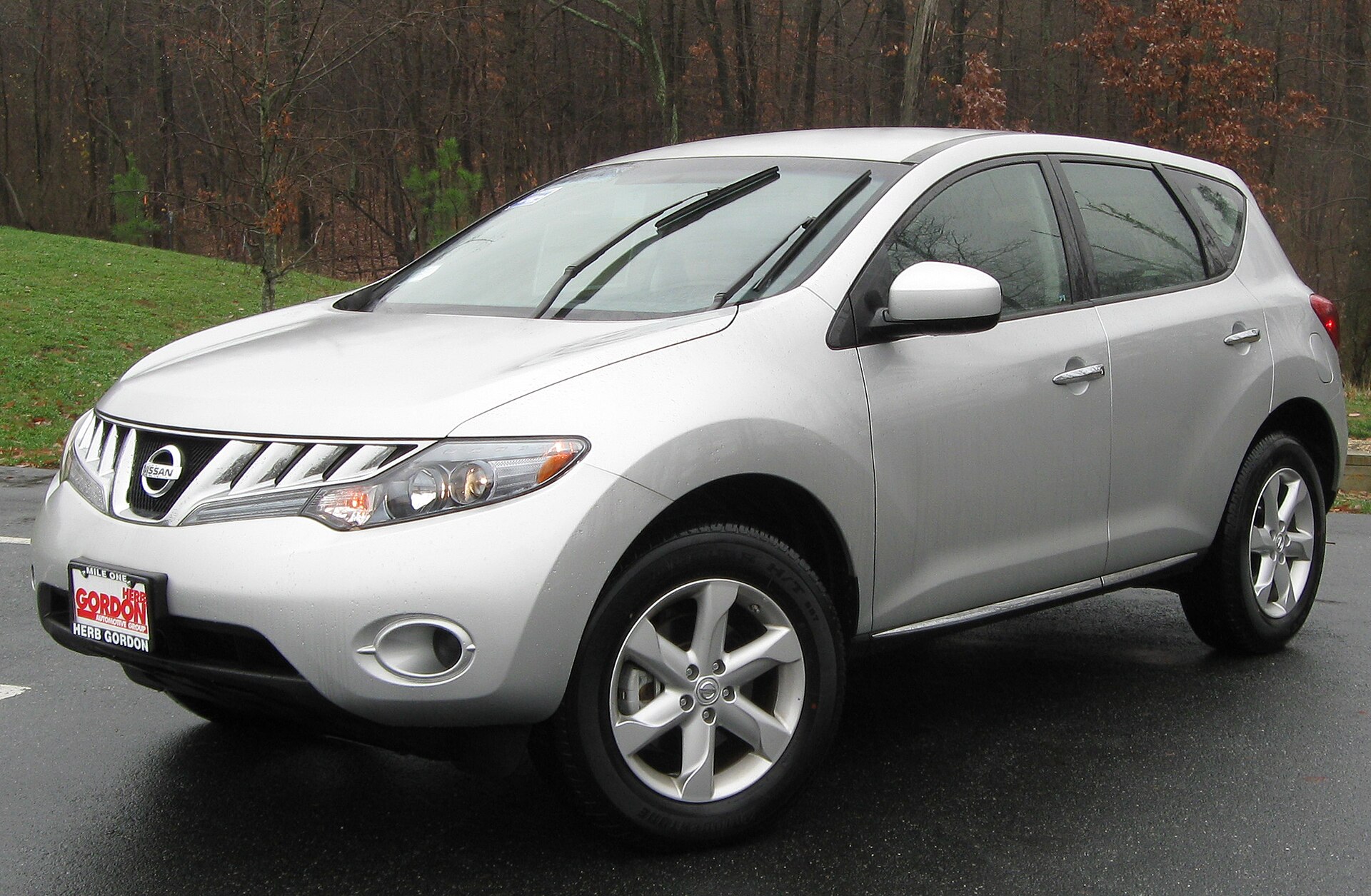
- Murano Z51 2008–2014 · Convertible, SUV
- Murano Z52 2014–2024 · SUV
- Murano IV Current 2024–now · SUV
Newest first · 4 generations since 2002
-
2024
-
2014
-
2008
-
2002
All generations by year: Murano IV (2024–now) · Murano Z52 (2014–2024) · Murano Z51 (2008–2014) · Murano Z50 (2002–2008)
Which one is mine?
Pick the year of first registration to see which generation it is.
Check by VINThe Nissan Murano is a front- or all-wheel-drive mid-size crossover positioned at the premium end of the market; Nissan calls it the flagship of its crossover range. It was developed in the United States, primarily for American buyers, and is named after the Italian island of Murano. This article covers the first three generations: Z50 from 2002, Z51 from 2008 and Z52, revealed at the New York motor show in April 2014. A fourth generation with a 2.0-litre VC-Turbo engine followed in 2024.
In short
- Z50 (2002–2008), Z51 (2008–2014) and Z52 (2014–2024); a fourth generation arrived in 2024.
- The core engine is a 3.5-litre V6 with 172–183 kW (234–249 PS), paired with a CVT; the Z51 also offered a 2.5 dCi diesel in Europe.
- Front-wheel drive or automatic All Mode 4x4-i all-wheel drive.
- The Z52 boot holds 454 litres, rising to 1,603 litres with a flat floor.
Safety
-
Murano IV · NHTSA 2025
US NCAP (NHTSA)
-
Z52 · NHTSA 2023
US NCAP (NHTSA)
-
Z51 · NHTSA 2013
US NCAP (NHTSA)
Stars from different years and organisations are not directly comparable: test protocols change every few years.
Nissan Murano at a glance
The Murano is a monocoque crossover with a transverse engine and independent suspension at both ends (MacPherson front, multi-link rear). More Nissan models are listed in our Nissan catalogue, and the smaller Nissan X-Trail sits below it in the range.
Nissan Murano generations
First generation: Z50 (2002–2008)
The first Murano's distinctive, flowing "bio-design" divided opinion, but gave the car a style of its own. Small headlights, a neat grille, round fog lamps and unusual vertical tail lights beside a large tailgate set it apart, and it rode on 18-inch wheels with 180 mm of ground clearance. Inside, a three-spoke multifunction wheel faced three separate instrument cowls, and a screen sat between slim vertical vents. The boot is very large, and the rear seats fold to a flat floor.
The Z50 was built on the Nissan FF-L platform, shared with the third-generation Altima. Its 3.5-litre V6 produced 172 or 182 kW (234 or 248 PS), paired with a CVT and automatic all-wheel drive; 0–100 km/h took 8.9 seconds and top speed was 200 km/h.
Second generation: Z51 (2008–2014)
The Z51 became more comfortable, more composed and more advanced. Its styling is more muscular while keeping the original lines; horizontal triangular tail lights replaced the bulky vertical ones, and the front end matched the Nissan Rogue. Ground clearance is 178 mm. Inside there was black or beige leather with double stitching, aluminium inserts, a revised console and instruments with buttons on the dial housings, soft adjustable lighting, electric front seats, a power tailgate and power-folding second-row backrests. The car was updated in 2010.
The upgraded 3.5 V6 produced 183 kW (249 PS) with a CVT; 0–100 km/h took 8 seconds and top speed was 210 km/h. Japan also had a 2.5-litre four-cylinder with 125 kW (170 PS) and a CVT, and Europe a 2.5 dCi turbodiesel with 140 kW (190 PS) and a six-speed automatic.
Third generation: Z52 (2014–2024)
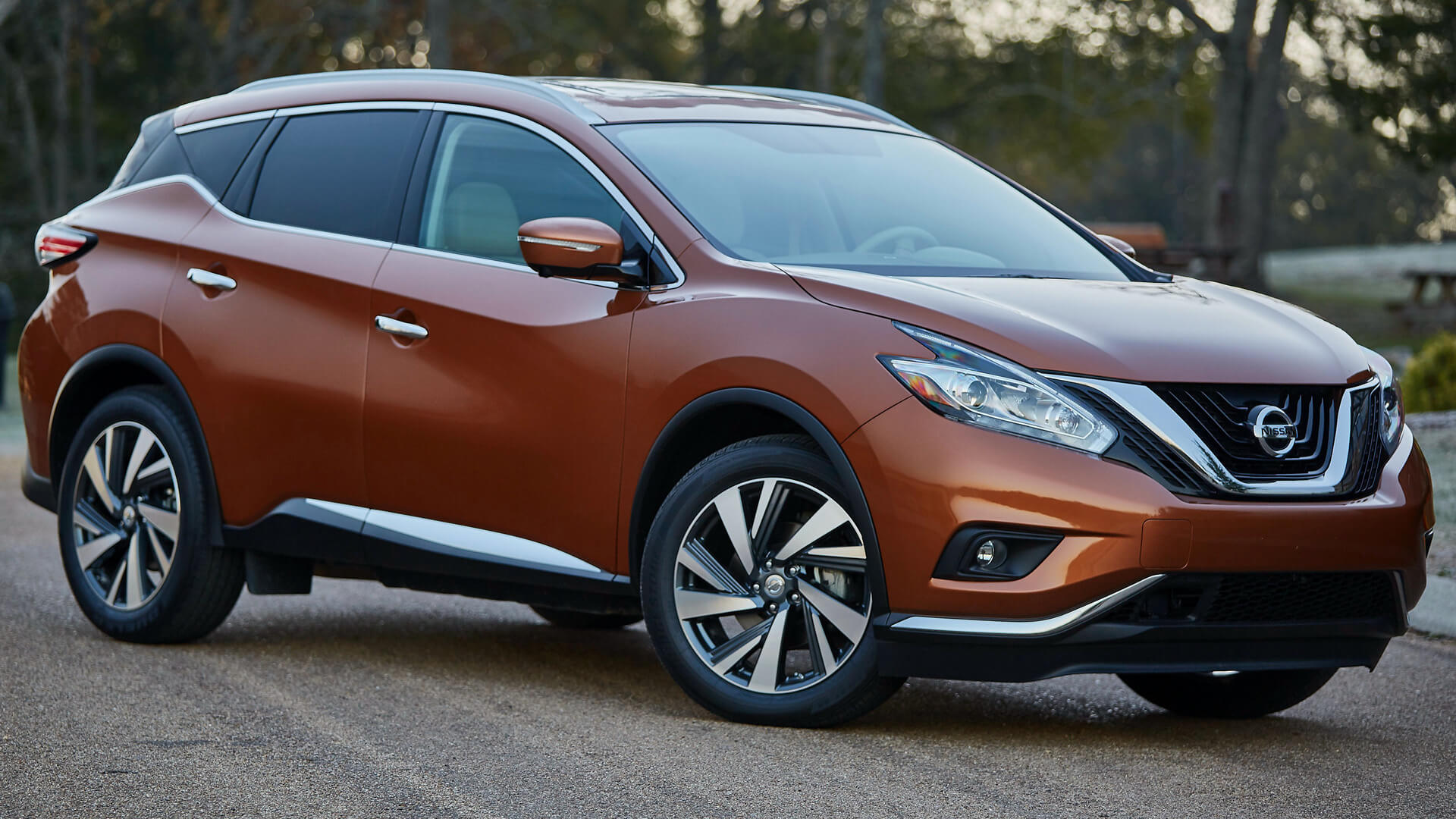
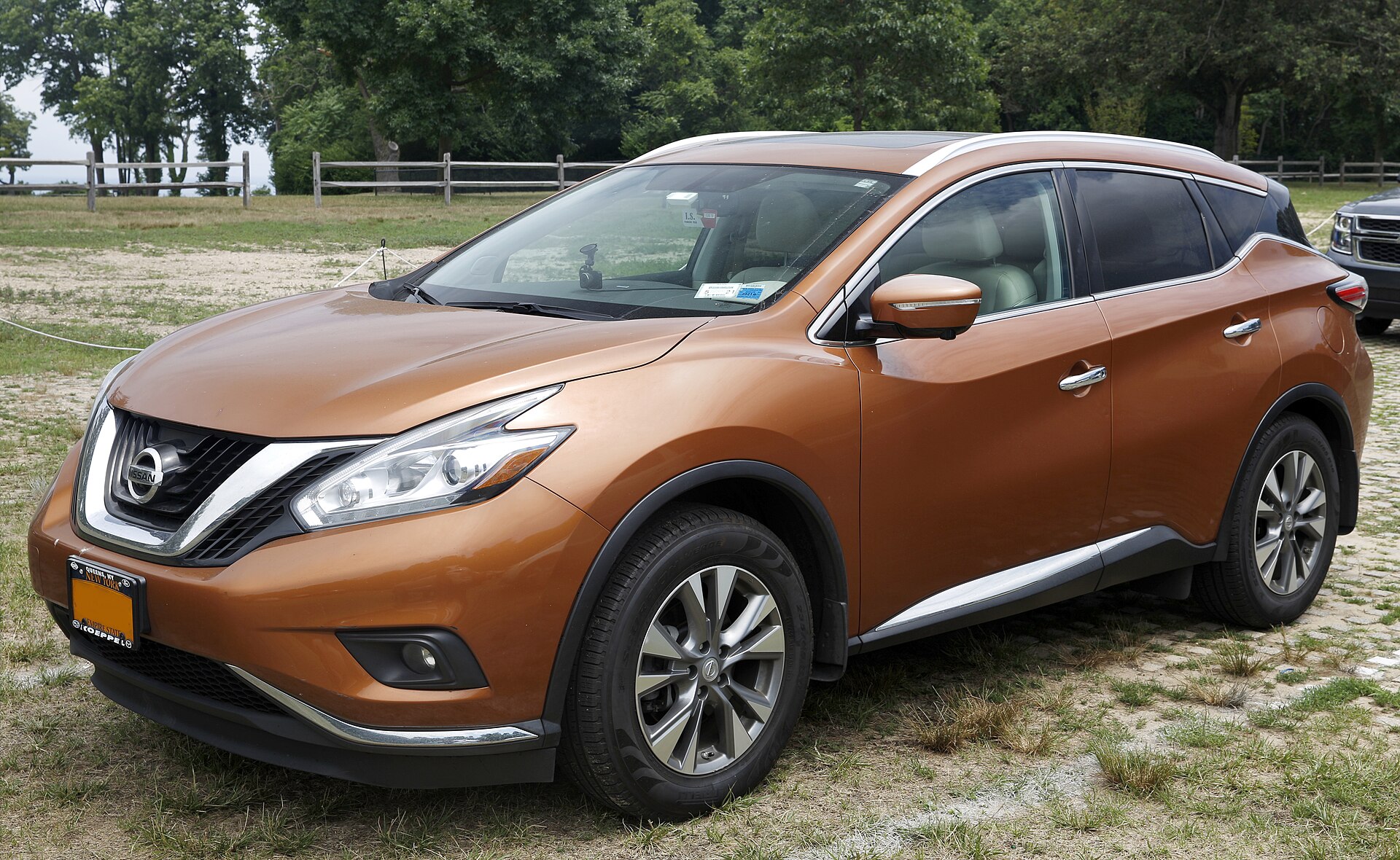
The Z52 was revealed in New York in April 2014 and has been updated several times; the latest facelift was shown in Los Angeles. It gained new headlights with prominent LED running lights and Nissan's split "eyelash" graphic on a black background, a black V-shaped grille surround with chrome, new LED fog lamps in triangular black trim and more pronounced bonnet creases. The windscreen has partial heating as standard and full heating optionally. Keyless entry and power-folding mirrors with LED indicators are standard. Wheels are 18 or 20 inches, and the roof is solid, with a sunroof or panoramic. Ground clearance is 184 mm.
The cabin uses several types of quality leather, fabric and metal, with a metal panel on the leather dashboard housing a touchscreen and controls. A compact leather steering wheel carries many buttons, and a configurable digital display can show navigation, media or classic instruments. "Zero Gravity" front seats offer good support and a wide range of adjustment; depending on version, seats are electrically adjustable, heated and ventilated. Rear passengers get their own armrest, climate control, heated reclining backrests and optional screens in the front headrests. The boot holds 454 litres, rising to 1,603 litres with a flat floor, with a full-size spare and, on higher trims, a Bose subwoofer.
Engines and transmissions (Z52)
| Engine | Power (kW / PS) | Torque | Gearbox |
|---|---|---|---|
| 3.5 V6 VQ35DE, aluminium, forged rods, steel crankshaft | 183 kW / 249 PS | 325 Nm | Xtronic CVT with 7 virtual ratios |
| 2.5 supercharged four-cylinder hybrid with electric motor (US, 2016–2017) | 186 kW / 253 PS (system) | - | Xtronic CVT |
The V6 reaches 100 km/h in 7.9–8.2 seconds and 210 km/h, using 9.9–10.2 l/100 km. The hybrid uses a 0.6 kWh traction battery. Base versions are front-wheel drive; others have All Mode 4x4-i with an electronically controlled multi-plate clutch and active torque distribution.
The Z52 rides on the Nissan D platform with a high-strength steel body, MacPherson struts at the front and a multi-link rear with coil springs and anti-roll bars. Brakes are discs all round (larger ventilated front discs with twin-piston calipers) with ABS, EBD and brake assist, and the steering has variable hydraulic assistance.
Safety and equipment
The Z52 has ten airbags, including rear side airbags and a front passenger knee airbag. Available systems include automatic emergency braking, pedestrian and traffic-sign recognition, blind-spot monitoring, rear obstacle monitoring, lane departure and lane-change warning, hill-start assist, an electric parking brake, navigation, parking sensors, keyless entry and rain and light sensors. Standard equipment includes LED headlights, leather upholstery, dual-zone climate control, a rear camera, power front seats, a power tailgate and front and rear parking sensors.
Key specifications by generation
| Parameter | Z50 | Z51 | Z52 |
|---|---|---|---|
| Years | 2002–2008 | 2008–2014 | 2014–2024 |
| V6 power (kW / PS) | 172–182 kW / 234–248 PS | 183 kW / 249 PS | 183 kW / 249 PS |
| 0–100 km/h (V6) | 8.9 s | 8.0 s | 7.9–8.2 s |
| Ground clearance | 180 mm | 178 mm | 184 mm |
| Boot | - | - | 454 / 1,603 l |
Strengths and weaknesses
Owners like the Murano's looks, performance, equipment, safety, comfortable seats, spacious cabin, practical boot, Bose audio and value for money, and the all-wheel drive helps on rough tracks. On the other hand, it is thirsty, sound insulation could be better, repairs are expensive, paint quality is average and the low-hanging exhaust can suffer because of the modest ground clearance. Rivals include the Ford Edge, Toyota Venza (Harrier), Hyundai Santa Fe, Kia Sorento and Mazda CX-7.
Nissan Murano evolution in numbers
Did you know?
- The Nissan Murano has been around for 24 years: 4 generations in our catalog since 2002.
- The longest-running generation is the Murano Z52 (2014–2024): 10 years.
Image credits · Photos from Wikimedia Commons under free licences
- Nissan Murano Z50 · Photo: OSX / Wikimedia Commons, Public domain
- Nissan Murano Z51 · Photo: IFCAR / Wikimedia Commons, Public domain
- Nissan Murano Z52 · Photo: Mr.choppers / Wikimedia Commons, CC BY-SA 3.0
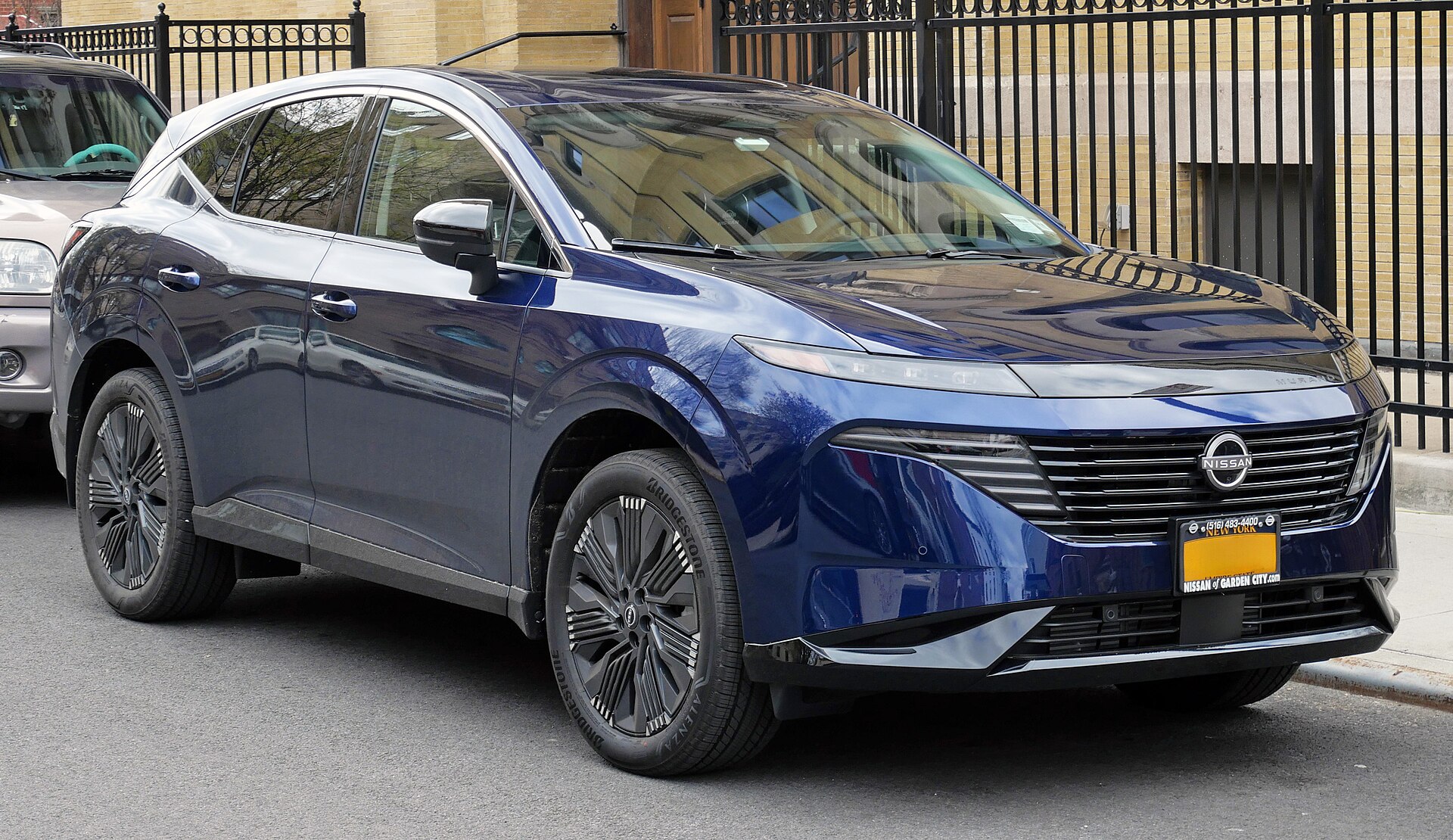
- Nissan Murano IV · Photo: Kevauto / Wikimedia Commons, CC BY-SA 4.0
Nissan Murano in our rankings
- No. 122 of 912 · Longest-running car nameplates (24 years · top 14%)
- No. 82 of 305 · Oldest car models still on sale (24 years · top 28%)
- No. 129 of 345 · Cars with the most generations (4 generations · top 41%)
In production longer than 86% of ranked nameplates in the 1CARS catalog (No. 122 of 912).
FAQ
Where does the name Murano come from?
From the Italian island of Murano.
How many generations of the Nissan Murano are there?
Four: Z50 (2002), Z51 (2008), Z52 (2014) and the fourth generation launched in 2024.
What engine does the Nissan Murano have?
Mainly a 3.5-litre V6 with up to 183 kW (249 PS) and a CVT; other markets have had a 2.5 four-cylinder, a 2.5 dCi diesel and a hybrid.
How big is the Nissan Murano boot?
The third generation offers 454 litres, or 1,603 litres with the rear seats folded.
Data sources
Data checked by an editor against the sources below.
- Wikipedia - Nissan Murano
- NHTSA 5-Star Safety Ratings (US NCAP) — U.S. Government work, public domain