Skoda Yeti — Specs, Engines and History
The Skoda Yeti is a compact SUV from the Czech manufacturer Skoda. A concept was shown at the 2005 Geneva motor show, and series production began in 2009. A facelift followed in 2013, and production ended in 2018, when the larger Skoda Karoq took over. In between, the Yeti won Top Gear Magazine's Family Car of the Year award, finished fourth in the 2010 European Car of the Year contest, and in 2015 the 500,000th car left the factory.
Key takeaways
- Built 2009–2018; facelift shown at Frankfurt in 2013; replaced by the Karoq.
- Petrol TSI engines with 77–112 kW (105–152 PS) and TDI diesels, including a 2.0 TDI with 103 kW (140 PS).
- Haldex all-wheel drive with an Off-road mode; the facelift brought a fifth-generation clutch.
- VarioFlex rear seats that slide, recline, fold and can be removed; up to 1,760 litres of luggage space.
Skoda Yeti at a glance
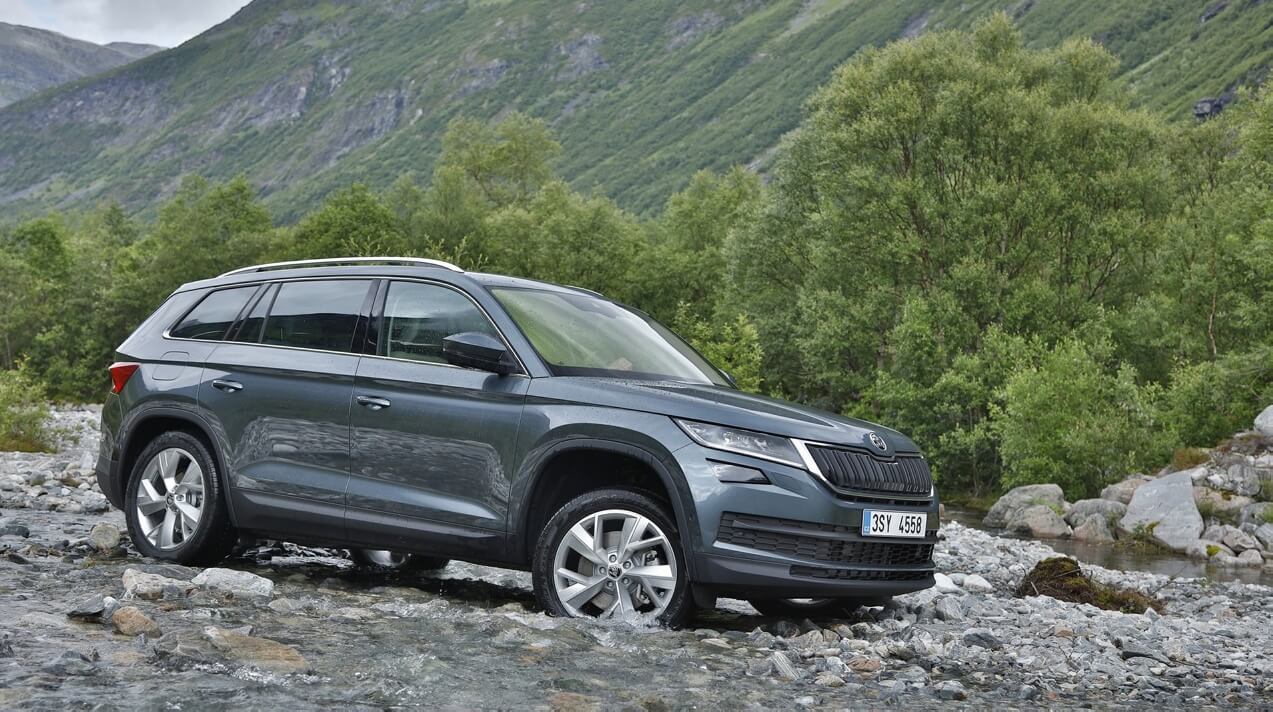
The first production Yeti left the factory in November 2009 and attracted attention immediately with its unconventional styling and generous equipment. It rides on the platform of the Skoda Octavia, with MacPherson struts at the front and a multi-link rear axle. Other Skoda models are listed in our Skoda catalogue, and the brand's crossover sibling is covered in our Skoda Kodiaq article.
Design
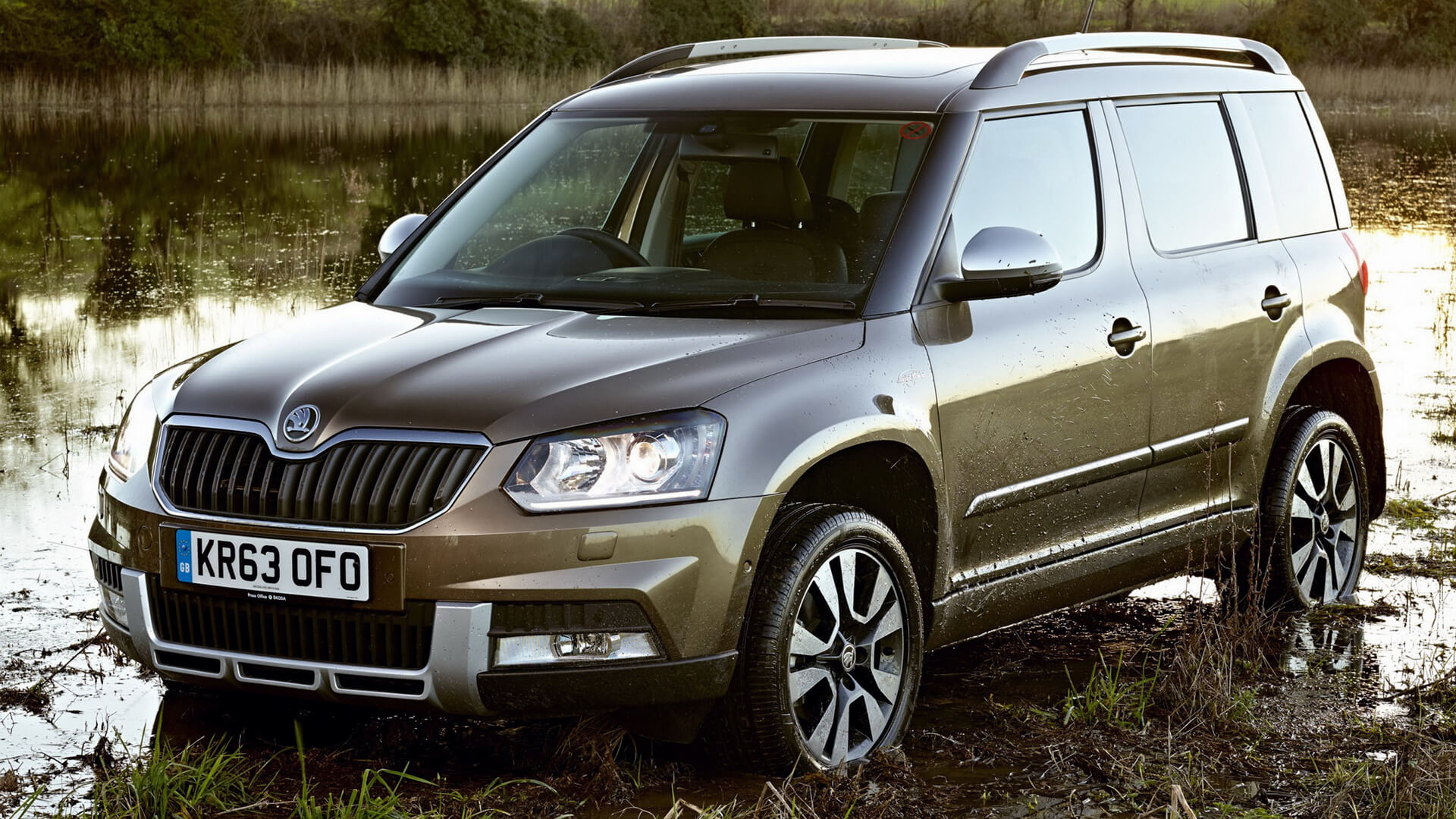
Until 2013 the Yeti's most distinctive feature was its four headlights: round lamps near the centre served as daytime running lights and fog lamps, while the outer rectangular units provided dipped and main beam. A traditional Skoda grille with a chrome strip and a strong bumper with a silver-framed lower intake made the car instantly recognisable, even at night.
In profile, the Yeti looks like a wagon lifted off the road: a sloping bonnet, sculpted wheel arches for 16- or 17-inch wheels, a large glass area, a high, flat roof and an almost vertical tail. Black rear pillars contrast with the body colour and make the large windows appear even bigger, which also keeps the cabin bright. Skoda quotes 180 mm of ground clearance.
The facelift dropped the round upper lamps: rectangular fog lamps moved low into an all-new bumper with protective trim, the headlights received modern internals, and the grille gained a chrome upper edge. New side mouldings and roof rails completed the update.
Interior and practicality
Materials are solid, though in early cars they could creak on rough roads. The driving position is upright; the firm seat has widely spaced bolsters, and some drivers find long journeys tiring even with electric adjustment. The three-spoke multifunction wheel adjusts for height and reach, and the two-cowl instrument panel with a central trip computer is clear. Wide doors that open far make getting in and out easy.
Depending on version, audio ranges from radio preparation to a double-DIN CD/MP3 unit with eight speakers or a system with a colour Maxi Dot display; dual-zone climate control was available, while base cars have air conditioning. The front seats are heated. The rear uses the VarioFlex system: the outer seats slide and recline, and all three can fold or be removed entirely. Three adults fit, though the centre passenger has a high transmission tunnel to contend with. The facelifted car adds trays with cupholders on the front seat backs.
Luggage space is 405–510 litres with five seats, depending on the rear seat position, 1,580 litres with the rear seats folded and 1,760 litres with them removed.
Engines and transmissions
| Engine | Power (kW / PS) | Gearbox | Drive | 0–100 km/h | Top speed | Consumption |
|---|---|---|---|---|---|---|
| 1.2 TSI | 77 kW / 105 PS | 6-speed manual or 7-speed DSG | Front | 11.8 s | 175 km/h | 6.4 l/100 km |
| 1.4 TSI | 90 kW / 122 PS | 6-speed manual or DSG | Front | 10.5 s | 185 km/h | 6.9 l/100 km |
| 1.8 TSI | 112 kW / 152 PS | manual or DSG | All-wheel drive | 8.7 s | 196 km/h | 8.0 l/100 km |
| 2.0 TDI (example) | 103 kW / 140 PS, 320 Nm | automatic | All-wheel drive | — | — | about 6.5 l/100 km |
TDI diesels — 1.6 and 2.0 litres — were offered from launch and were the most popular choice in Europe. The 1.2 TSI is short of power for a car of this size, so the larger engines are the better choice. The 1.8 TSI combines strong performance with all-wheel drive and an Off-road mode that helps on descents. Before the facelift, all-wheel drive used a fourth-generation Haldex clutch; the updated car switched to the fifth generation, which is lighter, reacts faster and can send up to 90% of the torque to one axle.
Chassis and safety
Suspension is independent at all four corners: MacPherson struts with wishbones and an anti-roll bar at the front, a multi-link axle at the rear. The facelift brought revised tuning for better comfort in town. Steering is electrically assisted, and the brakes are discs all round, ventilated at the front on better-equipped versions.
The updated Yeti has stability control, up to nine airbags, ABS, brake assist, engine drag torque control (MSR), traction control (ASR), tyre-pressure monitoring, hill-start assist, hill-descent control and hazard lights that flash under emergency braking.
Key specifications
| Parameter | Value |
|---|---|
| Production | 2009–2018 (facelift 2013) |
| Platform | Skoda Octavia |
| Power | 77–112 kW / 105–152 PS (petrol), 103 kW / 140 PS (diesel) |
| Drive | Front or all-wheel drive (Haldex) |
| Ground clearance | 180 mm (manufacturer) |
| Luggage space | 405–510 l; 1,580 l folded; 1,760 l seats removed |
Strengths and weaknesses
Owners like the Yeti's original looks, reliability, roominess, fuel economy and practical, comfortable cabin, and all-wheel-drive versions cope well away from paved roads. On the other hand, early cars were known for interior rattles and weak paint, the body gets dirty quickly, the cabin is slow to warm up in winter, base versions are sparsely equipped, ground clearance and the boot could be larger, and repairs are expensive. Rivals include the Peugeot 2008, Ford EcoSport, Mitsubishi ASX, Kia Sportage, Opel Mokka and Nissan Juke.
FAQ
When was the Skoda Yeti made?
From 2009 to 2018. A concept appeared in 2005, and the facelift was shown at the 2013 Frankfurt motor show.
What replaced the Skoda Yeti?
The larger Skoda Karoq, launched in 2018.
Does the Skoda Yeti have four-wheel drive?
Yes. The 1.8 TSI and the 2.0 TDI come with Haldex all-wheel drive; the facelift introduced a faster fifth-generation clutch.
How big is the Skoda Yeti boot?
405–510 litres with five seats, 1,580 litres with the rear seats folded and 1,760 litres with them removed.