
VAZ-2106 — History, Engineering and Legacy
The VAZ-2106 is a rear-wheel-drive small family sedan built at the Volga Automobile Plant (VAZ) from 1976 to 2006 and exported as the Lada 1600. Developed as a modernised version of the VAZ-2103, it became one of the most widely produced cars of its era: more than 4.3 million were built. Over three decades of production it received a steady stream of small changes to its styling, equipment and engineering.
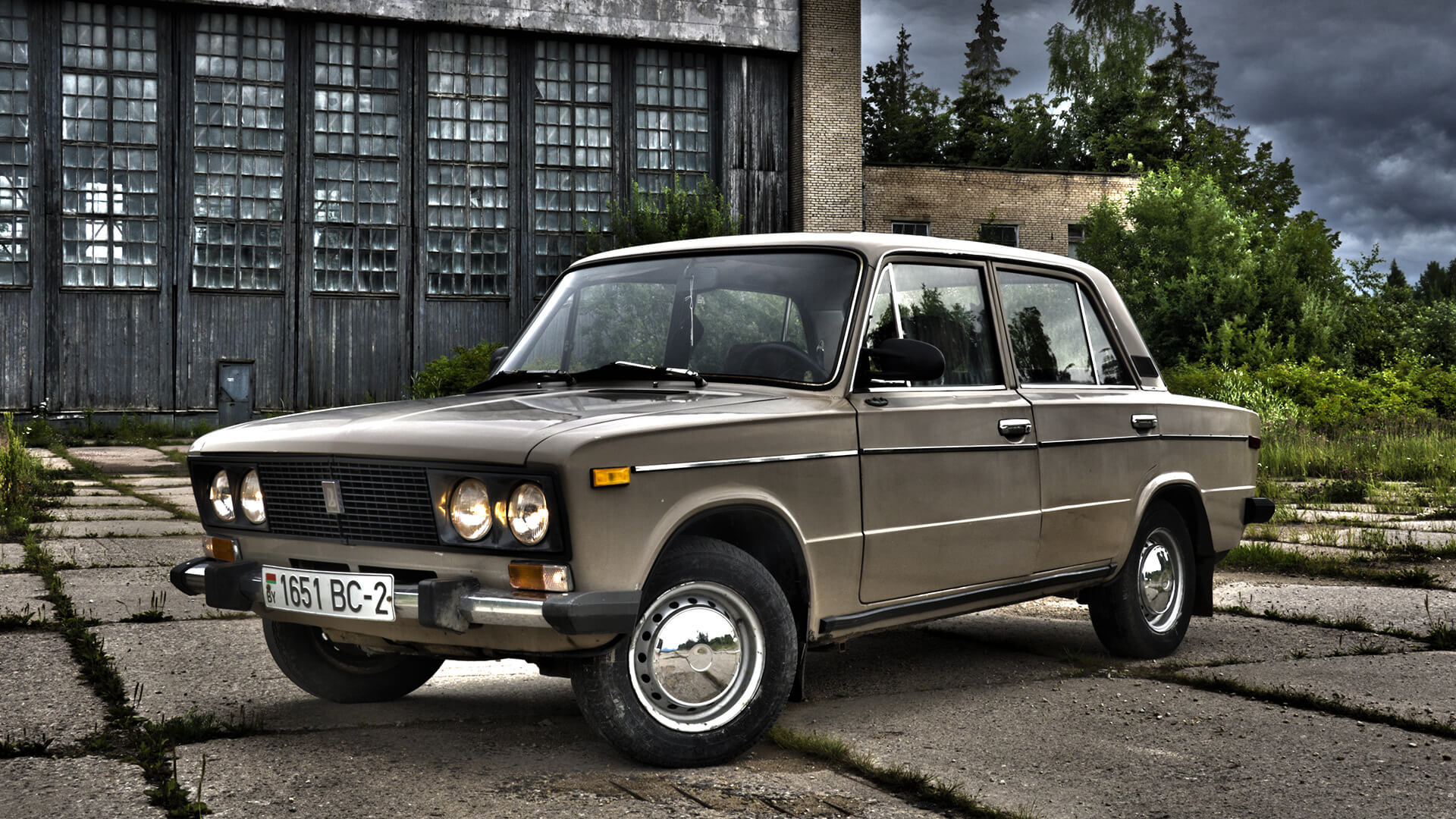
Key takeaways
- Built from 1976 to 2006; more than 4.3 million produced.
- A reworked, cheaper-to-build evolution of the VAZ-2103, with four round headlights.
- Carburettor engines of 1.3, 1.5 and 1.6 litres with 47–55 kW (64–75 PS), four- or five-speed manual gearboxes.
- Valued for simple, cheap repairs; criticised for dated comfort and no power steering.
VAZ-2106 at a glance: maker, production years and purpose
The "Six" was a four-door, five-seat sedan in the small-car class with a longitudinal front engine and rear-wheel drive. It was sold at home as the Zhiguli and abroad as the Lada 1600, and was used as everyday family transport, as a first car and as a work vehicle. More models of the brand are listed in our Lada catalogue, and the history of the factory is told in Lada history: the VAZ plant and its cars.
Development and production history
In 1974 the VAZ Style Centre began work on a modernised VAZ-2103, internally coded VAZ-21031; it entered series production as the VAZ-2106 in 1976. The 2103 was popular, and the plant wanted to build on that success. However, the designers were not allowed a deep re-skin: as with the 2103, they could only change the front and rear ends. At the same time the car had to shed its 1960s look in favour of the more angular lines and greater use of plastics then in fashion — and, unusually, it had to cost less to build than its predecessor.
The team achieved this by dropping expensive parts such as a grille framing the headlights and bumpers with L-shaped ends. In 1990 the plant added a better-equipped VAZ-21065 with halogen headlights, contactless electronic ignition and improved upholstery. Production finally ended in 2006.
| Year | Event |
|---|---|
| 1974 | Design work begins on the VAZ-21031, a modernised VAZ-2103 |
| 1976 | Series production of the VAZ-2106 starts |
| 1990 | VAZ-21065 version with halogen headlights and contactless ignition |
| 2006 | Production ends after more than 4.3 million cars |
Design and engineering
The VAZ-2106 kept the 2103's four round headlights — it was the last car from the factory with a quad-headlight front — but each pair now sat in its own square bezel, and the grille was made of plastic (early cars had a metal one). The side indicators became rectangular, and early cars carried reflectors on the rear wings. The "Six" had its own chrome wheel covers and still plenty of chrome trim. Ground clearance is a generous 170 mm.
At the rear, new tail lights combined the reversing lights and number-plate lighting, and the bumpers gained plastic end caps and overriders. Later cars used the bumpers from the VAZ-2105.
Inside there were new door cards — leatherette at first, fabric later — and new all-fabric seats. The large, flat-rimmed steering wheel was carried over from the 2103 but now bore the VAZ sailing-ship emblem. The simple instrument panel with analogue gauges had a wood-effect finish, and the centre console held an analogue clock, round air vents and slider controls for the heater. The front seats were shapeless, with no side support to speak of, but did have headrests, soft padding and a reasonable range of adjustment. The cabin was soft to the touch — dashboard, seats, steering wheel and even the gear knob — although materials were basic and assembly quality could have been better. A rear armrest improved comfort for back-seat passengers.
The sedan is officially a five-seater, but only two sit comfortably in the back. The boot holds 375 litres, with the spare wheel mounted on the left and the fuel tank on the right; a small opening through to the cabin allows long items to be carried.
Engine and drivetrain
All engines are naturally aspirated in-line four-cylinder petrol units with eight valves, a single overhead camshaft and a carburettor (Ozone, DAAZ or Solex types):
| Engine | Power (kW / PS) | Torque |
|---|---|---|
| 1.3 litre | 47 kW / 64 PS | 94 Nm |
| 1.5 litre | 53 kW / 72 PS | 106 Nm |
| 1.6 litre | 55 kW / 75 PS | 116 Nm |
Power goes to the rear wheels through a four- or five-speed manual gearbox; the later five-speed reduced noise and fuel consumption at motorway speeds. Depending on version, the car reached 100 km/h in 16–18 seconds and a top speed of 143–150 km/h, with combined consumption of 8.6–10.1 l/100 km.
The all-steel body sits on a rear-drive platform with a longitudinal engine. The front suspension is independent, with double wishbones, telescopic dampers, coil springs and an anti-roll bar; the rear is a live axle located by four trailing links and a transverse rod. Steering is a worm-and-roller type without power assistance. The brakes are servo-assisted, with discs at the front and drums at the rear.
VAZ-2106 specifications
| Parameter | Value |
|---|---|
| Production | 1976–2006 |
| Body | 4-door sedan, 5 seats |
| Layout | Front engine, rear-wheel drive |
| Engines | 1.3 / 1.5 / 1.6 litre carburettor, 47–55 kW (64–75 PS) |
| Gearbox | 4- or 5-speed manual |
| 0–100 km/h | 16–18 s |
| Top speed | 143–150 km/h |
| Combined consumption | 8.6–10.1 l/100 km |
| Ground clearance | 170 mm |
| Boot | 375 l |
| Brakes | Front discs, rear drums, vacuum servo |
Variants and derivatives
| Variant | Years | Body / purpose | Engine | Notes |
|---|---|---|---|---|
| VAZ-2106 | 1976–2006 | Sedan | 1.3, 1.5, 1.6 | Base model; exported as Lada 1600 |
| VAZ-21065 | from 1990 | Sedan, better equipped | 1.6 | Halogen headlights, contactless ignition, improved trim |
The "Six" sat in the classic VAZ rear-drive family alongside the VAZ-2101, the 2105 and the 2107.
In service: operation, reliability and legacy
Owners describe the VAZ-2106 as solidly assembled for its type, cheap to keep running and easy to repair. The heater copes well in winter, the high ground clearance helps on poor roads, and the engine tolerates a wide range of oils and fuels. The downsides are the dated design, the lack of power steering, modest performance, rear-wheel drive in slippery conditions and seats that make long journeys tiring. Many cars are still on the road, and the model is easy to modify and maintain.
Preservation and collecting today
Ordinary used examples are cheap, but the best-preserved original cars sell for many times more, reflecting growing interest from collectors. Spare parts remain plentiful and inexpensive.
FAQ
When was the VAZ-2106 produced?
From 1976 to 2006 at the Volga Automobile Plant (VAZ).
How many VAZ-2106 cars were built?
More than 4.3 million.
What engines does the VAZ-2106 have?
Carburettor petrol engines of 1.3 litres (47 kW / 64 PS), 1.5 litres (53 kW / 72 PS) and 1.6 litres (55 kW / 75 PS).
What is the VAZ-21065?
A better-equipped version introduced in 1990, with halogen headlights, contactless ignition and improved upholstery.
What was the VAZ-2106 called outside its home market?
It was exported as the Lada 1600.



