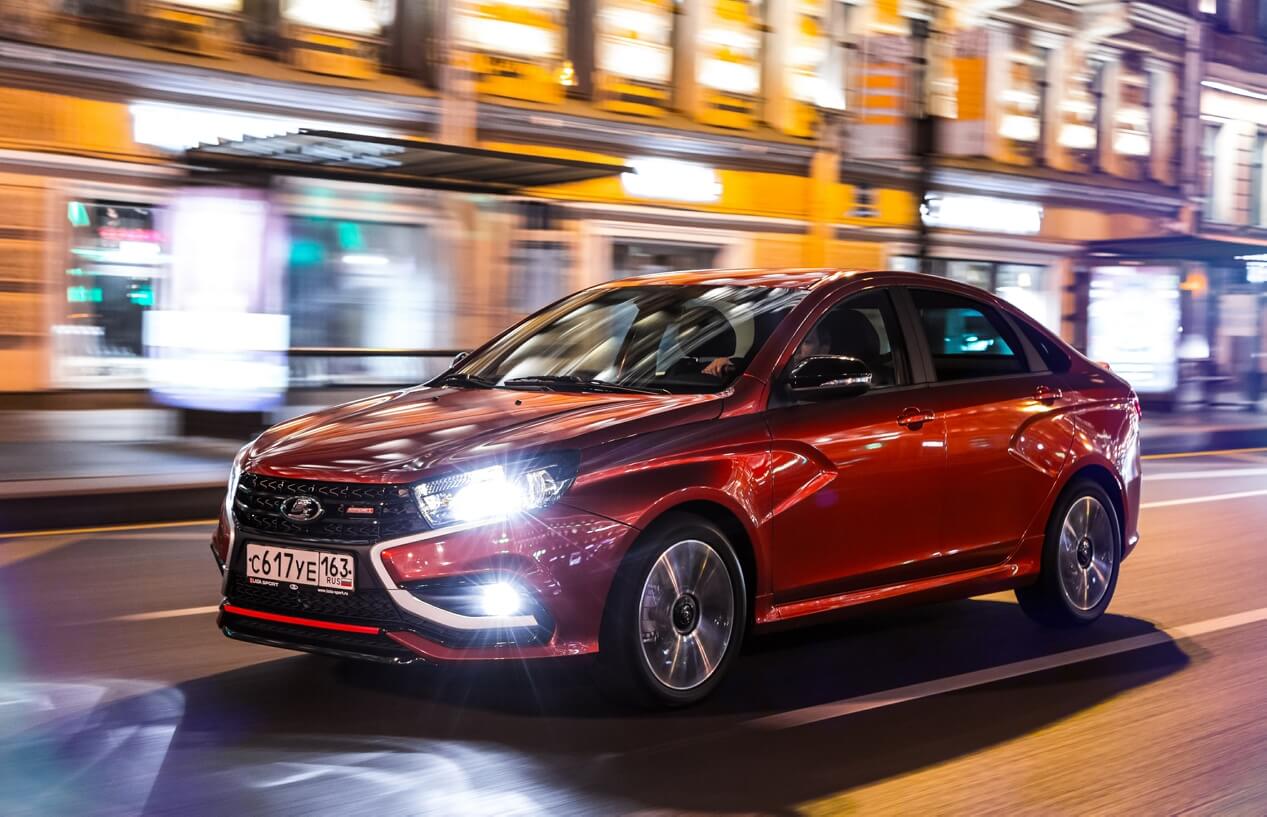
 Lada VAZ-2101
Specs, engines and history
Updated Published Sources (1) Report an error
By Felix Hartmann, Automotive Technology & EV Contributor

- Built
- 1970–1982
- Top power
- 44 kW (60 PS)
The Lada VAZ-2101 is a four-door saloon built by AvtoVAZ in the Soviet Union from 1970 to 1982. It is a licence-built, heavily modified Fiat 124 with more than 800 changes, a 1,198 cc overhead-camshaft engine rated at 44 kW (60 PS) and rear-wheel drive. In the USSR it was the Zhiguli; abroad it was sold as the Lada 1200.
In short
- A licence-built development of the Fiat 124, European Car of the Year 1967, re-engineered with more than 800 modifications for harsher roads and climate.
- Its 1,198 cc four-cylinder engine has a chain-driven overhead camshaft and produces 44 kW (60 PS) DIN, driving the rear wheels through a four-speed manual gearbox.
- The first cars left the line in April 1970; the base 2101 ran until 1982 and its 21011 and 21013 versions until 1988.
- Exported as the Lada 1200, 1300 and 1200S, it reached the UK in 1974 and started the whole family of rear-wheel-drive Lada saloons and estates.

Size at a glance
Moskvich-2140
The Lada VAZ-2101 is 175 mm shorter, 60 mm wider and 98 mm lower than the Moskvich-2140.
| Dimensions | Lada VAZ-2101 | Moskvich-2140 | Difference |
|---|---|---|---|
| Length | 4,075 mm160.4 in | 4,250 mm167.3 in | −175 mm−6.9 in |
| Width | 1,610 mm63.4 in | 1,550 mm61.0 in | +60 mm+2.4 in |
| Height | 1,382 mm54.4 in | 1,480 mm58.3 in | −98 mm−3.9 in |
| Wheelbase | 2,424 mm95.4 in | 2,400 mm94.5 in | +24 mm+0.9 in |
| Boot | - | 520 L18.4 cu ft | - |
Moskvich-408
The Lada VAZ-2101 is 15 mm shorter, 60 mm wider and 98 mm lower than the Moskvich-408.
| Dimensions | Lada VAZ-2101 | Moskvich-408 | Difference |
|---|---|---|---|
| Length | 4,075 mm160.4 in | 4,090 mm161.0 in | −15 mm−0.6 in |
| Width | 1,610 mm63.4 in | 1,550 mm61.0 in | +60 mm+2.4 in |
| Height | 1,382 mm54.4 in | 1,480 mm58.3 in | −98 mm−3.9 in |
| Wheelbase | 2,424 mm95.4 in | 2,400 mm94.5 in | +24 mm+0.9 in |
| Boot | - | 372 L13.1 cu ft | - |
Specs by version
Engines
Dimensions and weight
Show all 1 versions
| Version | Length | Width | Height | Wheelbase | Kerb weight |
|---|---|---|---|---|---|
| 1.2 (1,198 cc) | 4,075 mm160.4 in | 1,610 mm63.4 in | 1,382 mm54.4 in | 2,424 mm95.4 in | 955 kg2,105 lb |
Verified Manufacturer and type-approval data from our catalog · Sources and methodology
Lada VAZ-2101 at a glance
The VAZ-2101 is the first car built by AvtoVAZ, a compact family saloon produced from 1970 to 1982 as the base model of a family that lasted until 1988. The factory itself was built with Fiat's help in the late 1960s to make it. For the story of the company that followed, see our AvtoVAZ history.

In the USSR the car was the Zhiguli; for export, the name Lada was chosen in September 1971 from a magazine competition that drew 1,812 entries. Owners often call the 2101 "Kopeika".
Development and production history
The VAZ-2101 began with a 1966 agreement between Fiat and the Soviet government to help build a new car plant and put a Fiat model into production there. The chosen car was the Fiat 124, presented in 1966 and named European Car of the Year for 1967. Inside Fiat the Soviet version carried the designation 124R.
Fiat's car was not left as it was. Durability testing showed that the body and running gear needed strengthening for poor roads and harsh conditions, and the final specification differed from the Fiat in more than 800 details. One condition worked in Fiat's favour: the Soviet-built car was barred from sale in Italy, to protect the 124 in its home market.
Production started in April 1970. German reference sources put the first batch at six cars on 19 April, while English-language company histories give 22 April, so only the month is certain. About 22,000 cars were built in 1970, and the 100,000 mark followed by July 1971. By the end of 1973 the plant had a capacity of 660,000 cars a year, and on 21 December 1973 it reached its one-millionth car.
| Year | Event |
|---|---|
| 1966 | Fiat 124 presented; Fiat and the Soviet government agree to build the plant |
| 1970 | First VAZ-2101 cars built in April |
| 1971 | Exports begin on 21 February, Yugoslavia first; Western Europe follows in the autumn; Lada export name chosen in September |
| 1972 | 2102 estate in series production; 2103 (Lada 1500) launched |
| 1973 | Right-hand-drive 21012 and 21014 enter production on 22 May; one-millionth car on 21 December |
| 1974 | 21011 (Lada 1300) introduced; UK sales begin in May |
| 1976 | 2106 joins the range; East Germany adopts the Lada name |
| 1977 | 21013 (Lada 1200S) introduced |
| 1982 | Base 2101 ends |
| 1983 | Lada Riva replaces the 2101-based saloons in the UK |
| 1988 | 21013 ends, closing the 2101 family |
When exports ended is less clear: English-language sources say 1989, German ones 1984.
Design and engineering: what changed from the Fiat 124
The VAZ-2101 looks almost identical to the Fiat 124, but underneath it is a stronger, taller and heavier car built for rougher use.

Ground clearance was raised to 170 mm (6.7 in) laden, about 30 mm (1.2 in) more than the Fiat. The Fiat's rear disc brakes gave way to drums, which cope better with mud and dirt. The front discs measure 252.7 mm (9.95 in) and the rear drums 250 mm (9.84 in). The system is dual-circuit, with a load-dependent rear brake limiter.
The body uses thicker steel and extra reinforcement, added after cracks appeared in durability testing. This, together with the other changes, made the car about 90 kg (198 lb) heavier than the Fiat. Early cars also had a hand-crank starting handle and an auxiliary fuel pump; the starting handle was dropped later. Fiat required a national service network for the new car, and a locally developed antifreeze, Tosol A40, was introduced with it.
Suspension and steering
The chassis layout follows the Fiat pattern, with independent front suspension and a live rear axle. At the front, unequal-length wishbones carry coil springs and telescopic dampers. At the rear, a rigid axle is located by four trailing arms and a Panhard rod, again on coil springs. Steering is a worm-and-roller type. Tyres are 6.15-13 on 4½J × 13 steel wheels.
The 2101 is a simple car to understand and work on. Fuel is supplied by a carburettor, the camshaft is driven by a chain rather than a belt, and the suspension uses coil springs all round.
Engine and drivetrain
The VAZ-2101 engine is a water-cooled 1,198 cc inline four with a chain-driven single overhead camshaft and two valves per cylinder. It replaced the Fiat's overhead-valve unit, was designed by the NAMI research institute and, according to English-language sources, was never used in Fiat's own cars.

Bore and stroke are 76 × 66 mm (2.99 × 2.60 in), and a two-stage downdraught carburettor supplies the mixture. Output is 44 kW (60 PS) under the DIN standard. Soviet documents quote 46 kW (62 PS) under the GOST standard; it is the same engine measured differently. Torque is 87 N·m (64 lb-ft). The compression ratio is usually quoted as 8.5:1; German sources say it was 8.8:1 at first and reduced to 8.5:1 around 1975–1976.
The 21011 introduced a 1,294 cc engine with a larger 79 mm (3.11 in) bore and the same stroke. It produces 48 kW (65 PS) DIN, or 51 kW (69 PS) by GOST, with 93 N·m (69 lb-ft) of torque.
Power goes to the rear wheels through a single dry-plate clutch and a four-speed, fully synchronised manual gearbox. The clutch is hydraulically operated.
Lada VAZ-2101 specifications
The table covers the 1.2-litre VAZ-2101 saloon. Figures are catalogue and reference-book values; where sources differ, a range is given.

| Parameter | Metric | Imperial |
|---|---|---|
| Body | 4-door saloon | 4-door saloon |
| Engine | Petrol inline-four, SOHC, 8 valves | Petrol inline-four, SOHC, 8 valves |
| Displacement | 1,198 cc | 73.1 cu in |
| Bore × stroke | 76 × 66 mm | 2.99 × 2.60 in |
| Maximum power (DIN) | 44 kW (60 PS) | 59 hp |
| Maximum torque | 87 N·m | 64 lb-ft |
| Gearbox | 4-speed manual | 4-speed manual |
| Drive | Rear-wheel drive | Rear-wheel drive |
| Length | 4,073 mm | 160.4 in |
| Width | 1,611 mm | 63.4 in |
| Height | about 1,440 mm | about 56.7 in |
| Wheelbase | 2,424 mm | 95.4 in |
| Ground clearance (laden) | 170 mm | 6.7 in |
| Kerb weight | 945–955 kg | 2,083–2,105 lb |
| Fuel tank | 39 L | 10.3 US gal |
| Top speed | 140 km/h | 87 mph |
| 0–100 km/h | 20–22 s | 20–22 s (0–62 mph) |
| Fuel consumption (combined) | about 8.0 L/100 km | about 29.4 mpg US |
| Braking distance from 80 km/h | 38 m | 125 ft from 50 mph |
Period road tests recorded 8.0–10.2 L/100 km (23.1–29.4 mpg US). For comparison, the 1.3-litre 21011 is quoted at 145 km/h (90 mph), 18 seconds to 100 km/h and a kerb weight of 1,010 kg (2,227 lb).
Variants and derivatives
The 2101 family covers three saloons, estates, right-hand-drive export cars, an upmarket sister model and police specials. Export names follow engine size: Lada 1200 for the 2101, 1300 for the 21011, 1200S for the 21013 and 1500 for the 2103.

| Variant | Years | Body / purpose | Engine | Notes |
|---|---|---|---|---|
| 2101 | 1970–1982 | 4-door saloon, base model | 1.2 L, 44 kW (60 PS) | Lada 1200 |
| 21011 | 1974–1981 | Saloon with updated trim | 1.3 L, 48 kW (65 PS) | Lada 1300; rubber bumper strip, new trim |
| 21013 | 1977–1988 | Saloon with 21011 trim | Modernised 1.2 L | Lada 1200S |
| 2102 | 1971/72–1986 | 5-door estate | 1.2 L | Folding rear seat; replaced by the 2104 |
| 21021 / 21023 | 1974–1985 / 1973–1985 | Estate | 1.3 L / 1.5 L | Lada 1300 Combi and 1500 Combi |
| 21012 / 21014 | From 1973 | Right-hand-drive saloon / estate | 1.2 L | For Japan, Australia and the UK |
| 2103 | 1972–1984 | Upmarket saloon | 1.5 L (1,452 cc) | Lada 1500; four headlights; based on the Fiat 124 S |
| 21016 | 1976–1981 | Police saloon | 1.5 L | 2103 engine in a 21011 body |
| 21018 | 1978 | Police saloon | Single-rotor Wankel | About 250 built; power figures differ between sources |
| 21019 "Arkan" | about 1983 | Police and state security | Two-rotor Wankel, 88 kW (120 PS) | Later rotary version |
English-language sources give 27 April 1972 as the start of 2102 production, German ones date its introduction to 1971, and more than 660,000 were built before it ended in 1986. The single-rotor Wankel in the 21018 proved short-lived, with an engine life quoted at about 20,000 km (12,400 mi); the two-rotor 21019 came later.
In service: operation, reliability and legacy
The VAZ-2101 was exported widely from its second year, and its basic engineering stayed in production for decades. Yugoslavia received the first export cars in 1971, followed by Finland, the Netherlands and Belgium. Cuba took cars from 1971. UK sales began in May 1974, making the 2101 family the first Ladas sold in Britain, and Canada followed in 1978. The car was never sold in the United States.

According to German reference figures, AvtoVAZ built 682,000 cars of the Zhiguli range in 1976, which would have made it the best-selling car series in the world that year, ahead of the Volkswagen Golf and the Oldsmobile Cutlass. The 2101 family alone is usually put at about 4.7 million cars between 1970 and 1988.
Known weak points
The best-documented weakness is the crankshaft, which wore faster than it should have. Parts supply was a problem for about two years around 1980, and carburettors made before about 1980 are generally rated better than later ones.
Legacy
The 2101's real legacy is the platform. The 2103, 2106 and 2105 all used its basic layout, and in the UK the Lada Riva took over from 1983. Estimates for all Fiat 124-derived Lada cars range from more than 14 million to about 17.3 million.
AvtoVAZ later moved to front-wheel drive with models such as the VAZ-2109 and the VAZ-2110 saloon, and the Lada Granta, presented in 2011, shows how far the range has travelled. The full range is in our list of all Lada models.
Collecting and preserving a VAZ-2101
For collectors, the VAZ-2101 is interesting mainly as the starting point of the Lada story and as the closest Soviet relative of the Fiat 124. It sits among other Soviet classic cars and the wider group of classic cars of the 1970s, and its simple engineering helps keep one running.

Identifying the exact version is the first step, because the saloons look very similar:
- Bumpers: a rubber bumper strip arrived with the 21011 in 1974.
- Indicators and dashboard: flat indicator lenses and new dashboard trim point to a 21011 or 21013.
- Brakes: self-adjusting rear brakes arrived with the 21011.
- Starting handle: a hand-crank starting handle and auxiliary fuel pump belong to early cars.
Published sources say little about values, club registers or parts supply, so we do not quote any; an inspection by someone who knows these cars is the safer route. Other compact saloons of the period make useful comparisons.
Rivals
Compare with…
Compare Lada VAZ-2101 with
- Moskvich-412 full comparison
- Moskvich-2140 full comparison
- Moskvich-408 quick spec comparison
-
Classic
- Years
- 1976–1988
- Body
- Sedan
- Fuel
- Petrol
- Power
- 55 kW (75 PS)
-
Classic
- Years
- 1964–1975
- Body
- Sedan
- Fuel
- Petrol
- Power
- 37–40 kW (50–54 PS)


Lada VAZ-2101 in our rankings
- No. 5 of 86 · Smallest sedans (4,075 mm)
- No. 6 of 53 · Lightest sedans (955 kg)
- No. 18 of 304 · Lightest cars (955 kg · top 6%)
- No. 53 of 420 · Smallest cars (4,075 mm · top 13%)
- No. 294 of 912 · Longest-running car nameplates (12 years · top 35%)
- No. 375 of 420 · Longest cars (4,075 mm · top 90%)
Shorter than 94% of ranked sedans in the 1CARS catalog (No. 5 of 86).
Lada VAZ-2101 photos 17


Lada VAZ-2101 videos 2
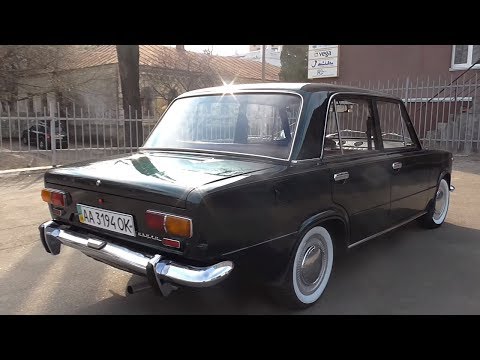
Lada VAZ-2101 video 1

Lada VAZ-2101 video 2
FAQ
Is the VAZ-2101 the same as the Lada 1200?
Yes. The VAZ-2101 was sold in the USSR as the Zhiguli and abroad as the Lada 1200. The 21011 was the Lada 1300, the 21013 the Lada 1200S and the related 2103 the Lada 1500.
How different was the VAZ-2101 from the Fiat 124?
It looks almost the same, but it differs in more than 800 details. The main changes are a ground clearance raised to 170 mm (6.7 in), rear drum brakes instead of discs, a thicker and reinforced body, a starting handle and a new 1,198 cc engine with a chain-driven overhead camshaft.
What engine does the Lada 2101 have?
It has a 1,198 cc water-cooled inline four with a single overhead camshaft driven by a chain. It produces 44 kW (60 PS) DIN, quoted as 46 kW (62 PS) by the Soviet GOST standard, and 87 N·m (64 lb-ft) of torque. The 21011 used a 1,294 cc version with 48 kW (65 PS).
Was the VAZ-2101 sold in the UK?
Yes. UK sales began in May 1974, and the 2101 family was the first Lada sold in Britain. Right-hand-drive cars were built from May 1973. In 1983 the Lada Riva replaced these saloons in British showrooms.
How many VAZ-2101 were built?
No exact figure is confirmed by independent sources. German reference works give about 4.7 million for the 2101 family, including the 21011 and 21013, from 1970 to 1988. All Fiat 124-derived Lada cars together are estimated at well over 14 million, with figures of up to 17.3 million.
What replaced the VAZ-2101?
The base 2101 ended in 1982, but its versions continued: the 21013 ran until 1988. The 2106 of 1976 and the 2105 of 1979–1980 took over in the range, and in the UK the Lada Riva replaced the 2101-based cars in 1983.
Data sources
Data checked by an editor against the sources below.