
 Lada Largus Cross
Specs, engines and history
Updated Published Sources (2) Report an error
By Oleksandr Hnatiuk, Automotive Editor & Used Car Specialist Reviewed by Felix Hartmann

- Built
- 2015–present
- Top power
- 78 kW (106 PS)
Which Largus Cross to buy
Our verdict · Oleksandr Hnatiuk
The seven-seat Cross is the most practical choice for large families who drive on poor roads, while the five-seater has the bigger boot. Cars built from 2015 to 2017 use the Renault K4M engine, which has a strong reputation for durability and shares parts with many Dacia and Renault models. When buying used, check the underbody and the plastic body cladding for damage from off-road use, as well as the clutch and suspension.
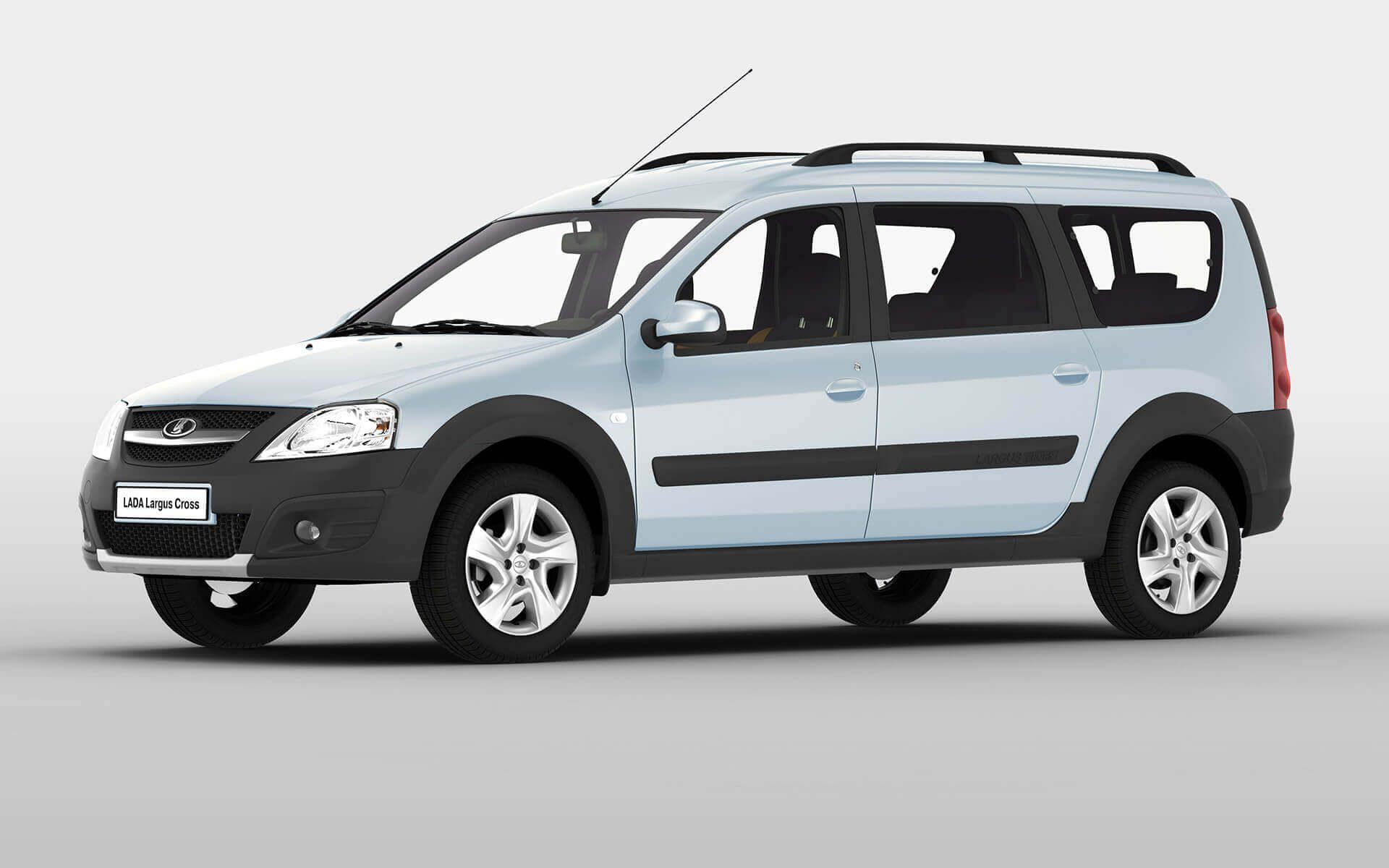
The Lada Largus Cross is the raised, rugged-looking version of the Lada Largus estate, launched in 2015 and renamed simply Largus Cross in the 2021 update. It keeps the long-wheelbase body of the Dacia Logan MCV with five or seven seats but adds higher suspension, plastic body protection and its own interior trim, powered by a 1.6-litre 16-valve petrol engine with 77–78 kW.
In short
- Body: 5-door estate with five or seven seats, 4,470 mm long on a 2,905 mm wheelbase.
- Ground clearance: 170 mm fully laden, against 145 mm for the regular Largus (manufacturer figures quoted in the old 1cars text).
- Engine: 1.6 16V petrol with 77 kW (105 PS), later 78 kW (106 PS), five-speed manual, front-wheel drive.
- Versions: Cross Black Edition (2016); renamed Largus Cross in 2021.

Size at a glance
| Dimensions | Lada Largus Cross |
|---|---|
| Length | 4,470 mm176.0 in |
| Height | 1,682 mm66.2 in |
| Wheelbase | 2,905 mm114.4 in |
| Boot | 560 L19.8 cu ft |
Specs by version
Engines
Performance
Show all 1 versions
| Version | 0–100 km/h | Fuel consumption |
|---|---|---|
| 1.6 77 kW (105 PS) Station wagon | 13.5 s 0–62 mph | 9.0 l/100 km26.1 mpg US · 31.4 mpg UK |
Dimensions and weight
Verified Manufacturer and type-approval data from our catalog · Sources and methodology
Largus Cross at a glance
Lada presented the idea of a raised Largus in mid-2014, shortly after the Kalina Cross, and the production Cross went on sale in 2015. It targets buyers who want the space of the Lada Largus with a tougher look and better clearance for rough roads, without the cost of a true SUV. The brand's story is in the history of AvtoVAZ and Lada, and the range is in the Lada catalogue.

| Fact | Value |
|---|---|
| Maker | AvtoVAZ (Lada) |
| Launch | 2015 (shown in 2014) |
| Base model | Lada Largus (Dacia Logan MCV, first generation) |
| Body | 5-door estate, 5 or 7 seats |
| Engine | 1.6 L 16V petrol |
| Gearbox | 5-speed manual |
| Drive | Front-wheel drive |
| Fuel tank | 50 L |
What is different from the regular Largus
The Cross is mechanically very close to the standard estate, but several changes give it its own character:
- Raised suspension: the body sits higher, and the overall height grows by 46 mm to 1,682 mm.
- Body protection: black plastic cladding protects the lower body and wheel arches, and the body is 6 mm wider at 1,756 mm.
- Interior trim: orange accents on the doors, dashboard and seats, plus heated front seats with more pronounced side bolsters, according to the old 1cars text.
- Engine: the Cross has always used the 16-valve 1.6, rather than the 8-valve unit offered in the cheapest Largus estates.
The Cross Black Edition of 2016 added a black roof, black wheels and black mirror caps.
Engine, gearbox and fuel use
| Period | Engine | Power | Torque | Gearbox |
|---|---|---|---|---|
| 2015–2017 | Renault K4M 1.6 16V | 77 kW (105 PS) | – | 5-speed manual |
| 2017–2021 | VAZ-21129 1.6 16V | 78 kW (106 PS) | 148 Nm | 5-speed manual |
| from 2021 | 1.6 16V | 78 kW (106 PS) | – | 5-speed manual |
The Renault K4M is a cast-iron-block 16-valve engine shared with the Dacia Logan and Duster. From 2017 AvtoVAZ's own VAZ-21129 took its place, the old 1cars text reports. Front-wheel drive is the only layout; there is no four-wheel-drive Largus Cross.

The old 1cars text gives combined fuel use of about 9 litres per 100 km (26 mpg US), about 12 litres in town and no more than 8 litres on the open road. The higher body and larger frontal area mean the Cross uses slightly more fuel than the regular estate.
Dimensions, clearance and boot
| Parameter | Metric | Imperial |
|---|---|---|
| Length | 4,470 mm | 176.0 in |
| Width | 1,756 mm | 69.1 in |
| Height | 1,682 mm | 66.2 in |
| Wheelbase | 2,905 mm | 114.4 in |
| Ground clearance (fully laden) | 170 mm | 6.7 in |
| Boot, 5 seats | 560 L, up to about 2,350 L | 19.8 cu ft, up to 83 cu ft |
| Boot, 7 seats | 135 L | 4.8 cu ft |
| Fuel tank | 50 L | 13.2 US gal |
The clearance figure is the manufacturer's value with a full load, including passengers in the third row; the regular Largus is quoted at 145 mm under the same conditions. Unladen, the gap is larger, and the old 1cars text reports measurements of around 210 mm for the Cross. That is enough for gravel tracks and snowy roads, but not for serious off-road driving.

On rough roads
The higher suspension is the Cross's main advantage. The old 1cars text reports that it copes well with broken tarmac and unpaved roads, protects passengers from harsh impacts and lets drivers park on high kerbs where the regular estate would scrape. The same source notes that the extra height costs about 0.4 litres per 100 km more in town and 0.8 litres more on the open road compared with the standard Largus. Drivers still need care away from made roads, because the Cross has neither four-wheel drive nor underbody protection designed for rough terrain.

Interior and seating
The Largus Cross is offered with five or seven seats. In the seven-seat version, the third row holds two passengers and can be removed relatively easily, while the second-row backrest only folds forward. With five seats, the boot holds 560 litres, enough for a family's luggage, and folding the rear seats creates a flat, van-like load floor. All seats have three-point belts and head restraints.
Owners quoted in the old 1cars text praised the space, the seven-seat option, the large boot and the higher clearance. They criticised the noise insulation, the long clutch-pedal travel, the limited seat support and the quality of the multimedia system.
Safety and equipment
Like the regular Largus, the Cross has not been tested by Euro NCAP. Equipment includes airbags, ABS, central locking with remote control and an immobiliser, and better-equipped cars have air conditioning and heated front seats. The old 1cars text describes AvtoVAZ's own frontal crash tests of the Largus at 64 km/h, in which the passenger compartment stayed intact.

Rivals: how the Largus Cross compares
The Largus Cross competes with practical estates and raised hatchbacks such as the Dacia Logan MCV, the Renault Dokker and the Renault Sandero Stepway. Compared with the Lada XRAY, it is far roomier but less modern. Its strengths are space for seven, a long wheelbase and robust mechanicals; its weaknesses are a basic cabin, no automatic gearbox and no four-wheel drive.

Rivals
Compare with…
Compare Lada Largus Cross with
- Dacia Logan MCV quick spec comparison
- Renault Dokker quick spec comparison
- Renault Sandero Stepway quick spec comparison
-
Ended 2020
- Years
- 2006–2020
- Body
- Station wagon
- Fuel
- Petrol, Diesel, LPG / CNG
- Power
- 51–77 kW (69–105 PS)
2 generations
- I
- II
-
Ended 2021
- Years
- 2012–2021
- Body
- Minivan / MPV, Van
- Fuel
- Petrol, Diesel
- Power
- 55–97 kW (75–132 PS)
-
In production
- Years
- 2008–present
- Body
- Hatchback
- Fuel
- Petrol, Diesel, LPG / CNG
- Power
- 51–85 kW (69–116 PS)
3 generations
- I
- II
- III


Lada Largus Cross in our rankings
- No. 4 of 20 · Smallest station wagons (4,470 mm)
- No. 47 of 321 · Biggest boot: cars (560 l · top 15%)
- No. 418 of 1113 · Longest-running car nameplates (11 years · top 39%)
- No. 236 of 536 · Smallest cars (4,470 mm · top 45%)
- No. 179 of 381 · Oldest car models still on sale (11 years · top 49%)
- No. 322 of 536 · Longest cars (4,470 mm · top 61%)
Bigger boot than 85% of ranked cars in the 1CARS catalog (No. 47 of 321).
Lada Largus Cross photos 23



Lada Largus Cross videos 6

Lada Largus Cross video 1

Lada Largus Cross video 2

Lada Largus Cross video 3

Lada Largus Cross video 4

Lada Largus Cross video 5

Lada Largus Cross video 6
FAQ
What is the ground clearance of the Lada Largus Cross?
The manufacturer quotes 170 mm with a full load, compared with 145 mm for the regular Largus. Unladen, the old 1cars text reports measurements of around 210 mm.
Is the Lada Largus Cross four-wheel drive?
No. Despite its rugged look, the Largus Cross is front-wheel drive only. It has higher suspension and body protection but no all-wheel-drive system or low-range gearing.
Does the Largus Cross have seven seats?
Yes. It is available with five or seven seats. The seven-seat version has a removable third row with two seats, but leaves only 135 litres of luggage space behind it.
What engine does the Largus Cross use?
It uses a 1.6-litre 16-valve petrol engine with a five-speed manual gearbox: the Renault K4M with 77 kW until 2017, then AvtoVAZ's VAZ-21129 with 78 kW.
How does the Largus Cross differ from the regular Largus?
It sits higher, with 1,682 mm overall height, has plastic body cladding, orange interior accents and heated seats, and always uses the 16-valve engine rather than the 8-valve unit.
Data sources
Data checked by an editor against the sources below.
- The text of this article (1cars archive)
- Wikipedia - Lada Largus


