 SEAT Ibiza
All generations, specs and history
Published Sources (1) Report an error
By Felix Hartmann, Automotive Technology & EV Contributor
- Built
- 1984–present
- Generations
- 5 · 021A to 6F
Timeline
Ibiza generations
Click a generation for its own page


- Ibiza 021A 1984–1993 · Hatchback
- Ibiza 6K 1993–2002 · Hatchback
- Ibiza 6L 2002–2008 · Hatchback
- Ibiza 6J 2008–2017 · Hatchback, Station wagon
- Ibiza 6F Current 2017–now · Hatchback
Newest first · 5 generations since 1984
-
2017
-
2008
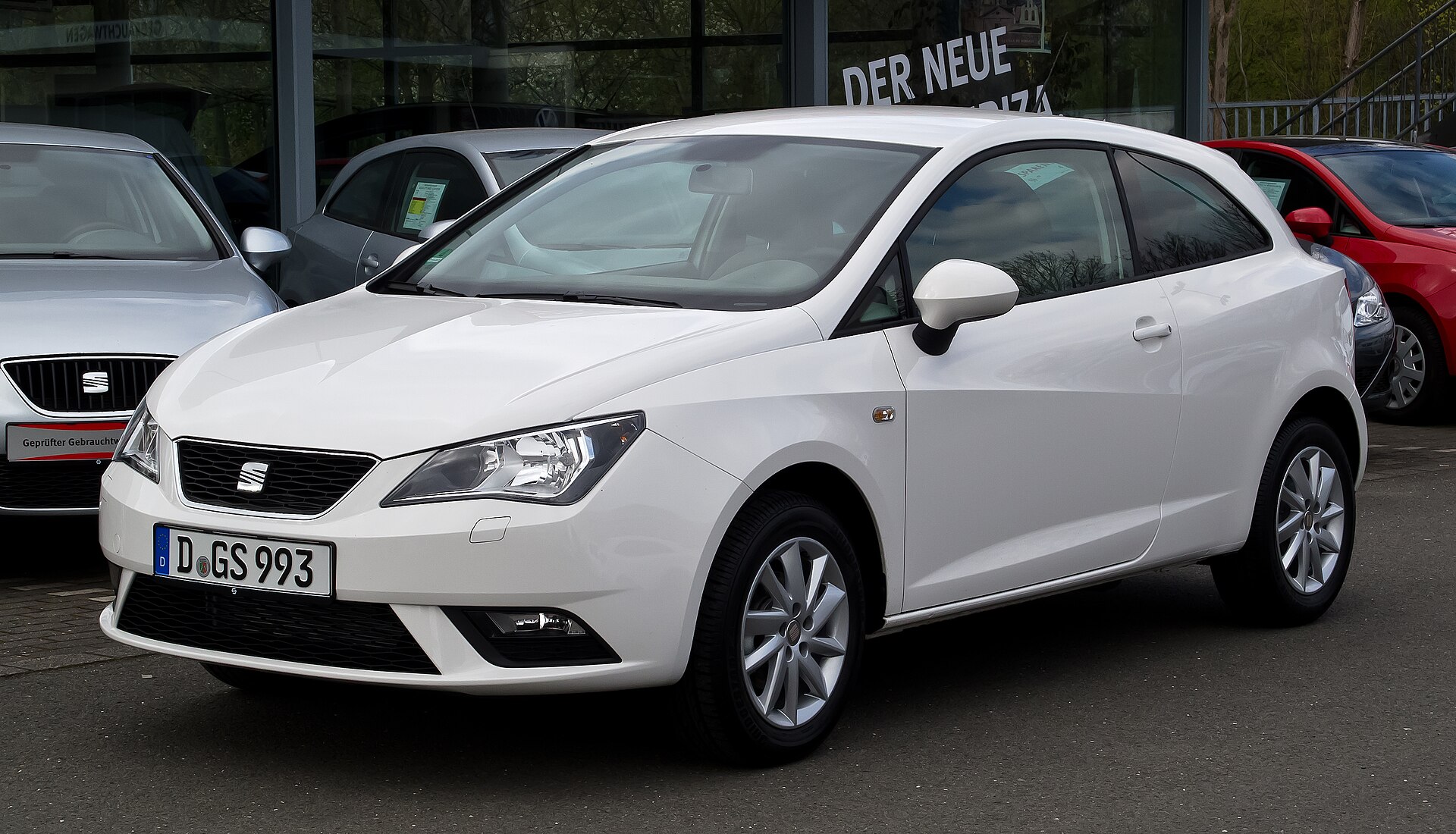
-
2002
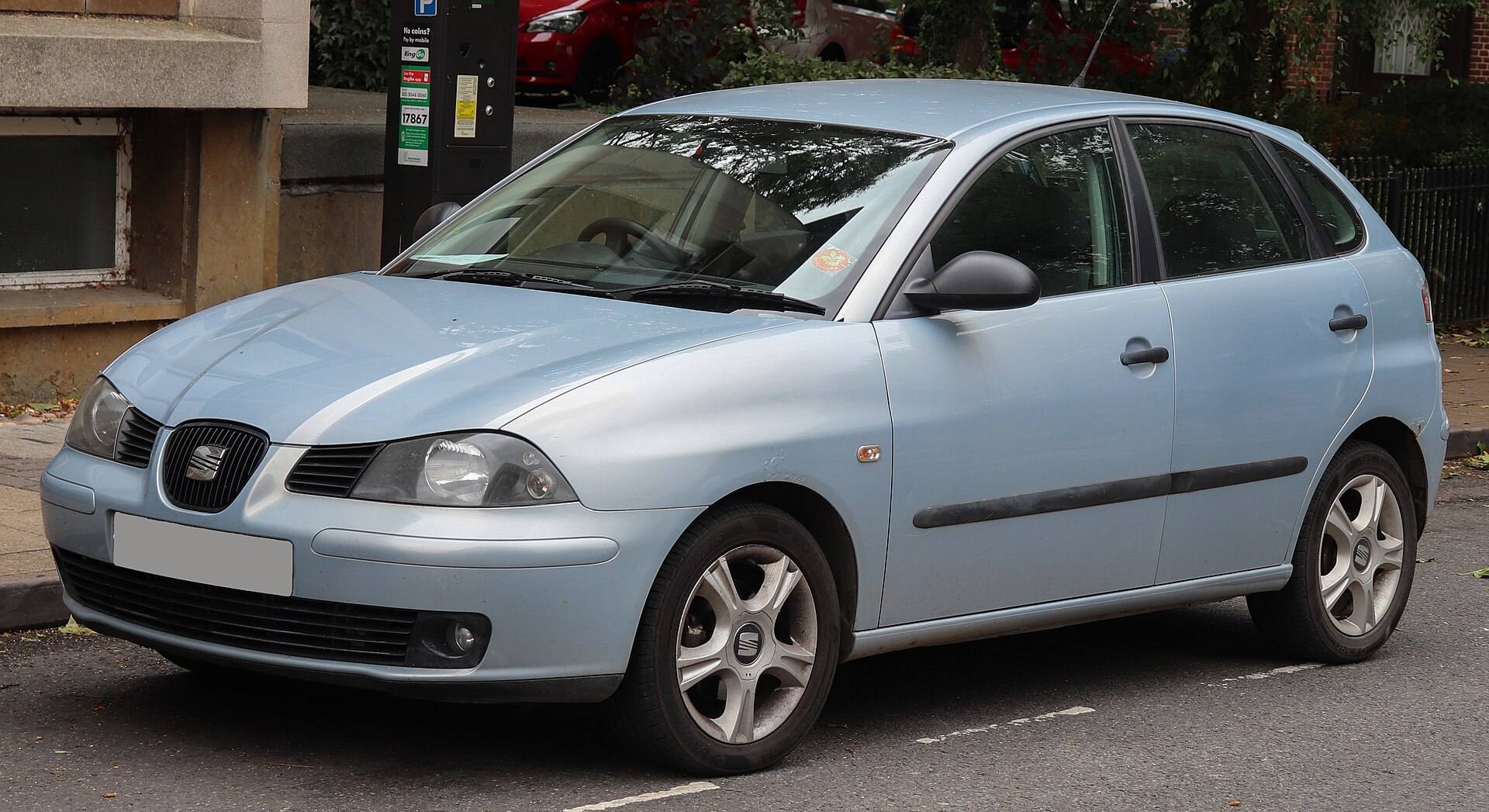
-
1993
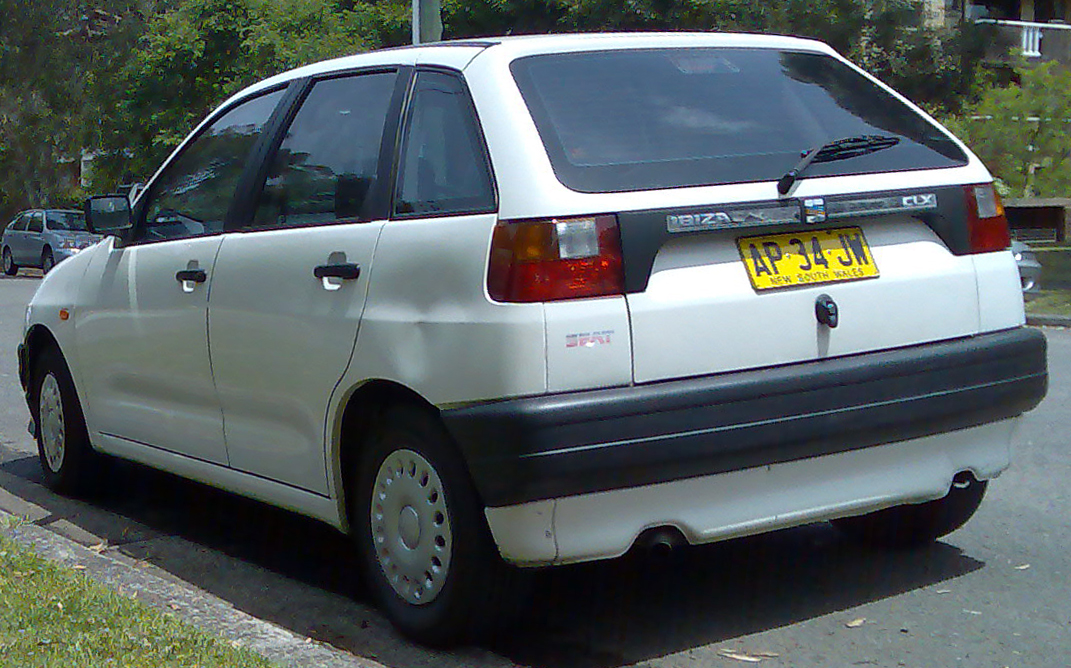
-
1984
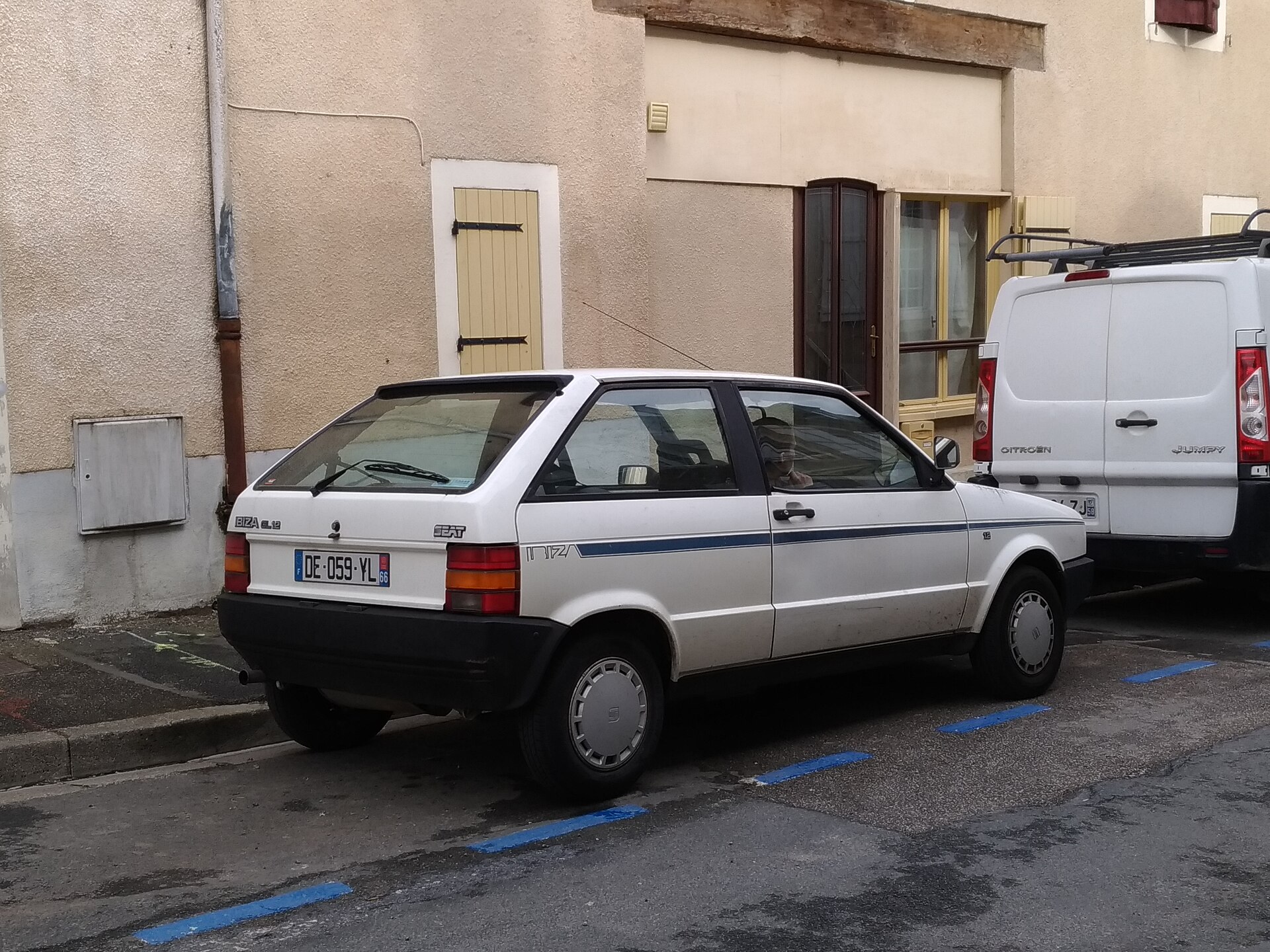
All generations by year: Ibiza 6F (2017–now) · Ibiza 6J (2008–2017) · Ibiza 6L (2002–2008) · Ibiza 6K (1993–2002) · Ibiza 021A (1984–1993)
Which one is mine?
Pick the year of first registration to see which generation it is.
Check by VINThe SEAT Ibiza is a subcompact (B-segment) hatchback and the Spanish brand's key model - often called the most popular Spanish car. Its formula has long been described as Spanish temperament combined with German technology. Five generations have been built since 1984; the latest was unveiled on 31 January 2017 at a special event in Barcelona.
In short
- Five generations: 1984, 1993, 2001, 2008 (6J) and 2017.
- The first Ibiza, styled by Giorgetto Giugiaro's Italdesign, was SEAT's first car of its own design; 1,342,001 were built.
- From the second generation onwards the Ibiza was developed within the Volkswagen Group.
- The fifth generation rides on the MQB A0 platform and uses only turbocharged engines, including a CNG version.
SEAT Ibiza at a glance
The Ibiza started as a three- and five-door hatchback. A wagon (estate) joined in 2010, while the three-door and the van version were dropped after 2017, leaving a five-door hatchback. All generations are front-wheel drive with MacPherson front suspension and a torsion-beam rear axle. Other models of the brand are in our SEAT catalogue, and the company's story is told in SEAT history.
SEAT Ibiza generations
First generation (1984–1993)
The original Ibiza had an angular but fashionable body and interior designed by Giorgetto Giugiaro of Italdesign. It was SEAT's first car of its own design rather than a licence-built Fiat, and it was marketed as a charismatic small car with Italian design, German technology and Spanish spirit. It reached the final of the European Car of the Year contest. A 1988 update changed the grille and equipment; a second update in 1991 brought new headlights, grille, bumpers and sill trims. Ground clearance was 125 mm, and 1,342,001 cars were built.
The cabin was restrained, with a small steering wheel and three round instruments. Petrol engines were naturally aspirated eight-valve four-cylinders of 0.9 to 1.7 litres with carburettors or multi-point injection, producing 29–74 kW (40–100 PS) and 60–138 Nm. There was also a 1.7-litre diesel with 40 kW (54 PS) and 98 Nm. All engines came with a five-speed manual gearbox. Suspension used MacPherson struts at the front and a twist beam at the rear; the rack-and-pinion steering had no power assistance, and brakes were front discs and rear drums.
Second generation (1993–2002)
The second Ibiza, presented in Barcelona, was developed and built entirely under the control of the Volkswagen Group and updated in 1999. It had a smoother, rounder body, modern headlights and large tail lights partly set into the tailgate. The interior improved markedly, with a four-spoke steering wheel, two large dials and good-quality materials, although the seats were far from ideal.
Petrol engines were eight-valve, multi-point injection four-cylinders of 1.0 to 1.6 litres with 37–74 kW (50–101 PS) and 86–140 Nm. Naturally aspirated and turbocharged 1.9-litre diesels produced 47–81 kW (64–110 PS) and 124–235 Nm. All came with a five-speed manual. The car used the Volkswagen Group A03 platform; the 1999 update brought hydraulic power steering, and ABS was available.
Third generation (2001–2008)
Launched in 2001 and facelifted in 2006, the third Ibiza was styled by Walter de Silva, formerly of Alfa Romeo - which may explain its slightly aggressive, Italian look. Large headlights merge into a split grille, and round fog lamps are set deep into the bumper. Ground clearance is 130 mm, and corrosion protection is good. One quirk: the badge on the tailgate doubles as the opening handle, and the mechanism tends to clog with dirt over time.
Materials are simple plastics and fabric, and the rear bench is tight for three. The sporty Cupra had bolstered front seats. The centre console is angled towards the driver, and the climate control has a small display. The boot holds 265 litres, or 765 litres with the rear seats folded.
Petrol engines with three or four cylinders, naturally aspirated or turbocharged, ranged from 1.2 to 2.0 litres and 40–110 kW (54–150 PS), with 106–220 Nm. Turbodiesels with three or four cylinders and 1.4 to 1.9 litres produced 51–96 kW (70–130 PS) and 155–310 Nm. Gearboxes were five- or six-speed manuals and a four-speed automatic. The platform was the Volkswagen Group A04 (PQ24), and the steering gained electro-hydraulic assistance.
Fourth generation: 6J (2008–2017)
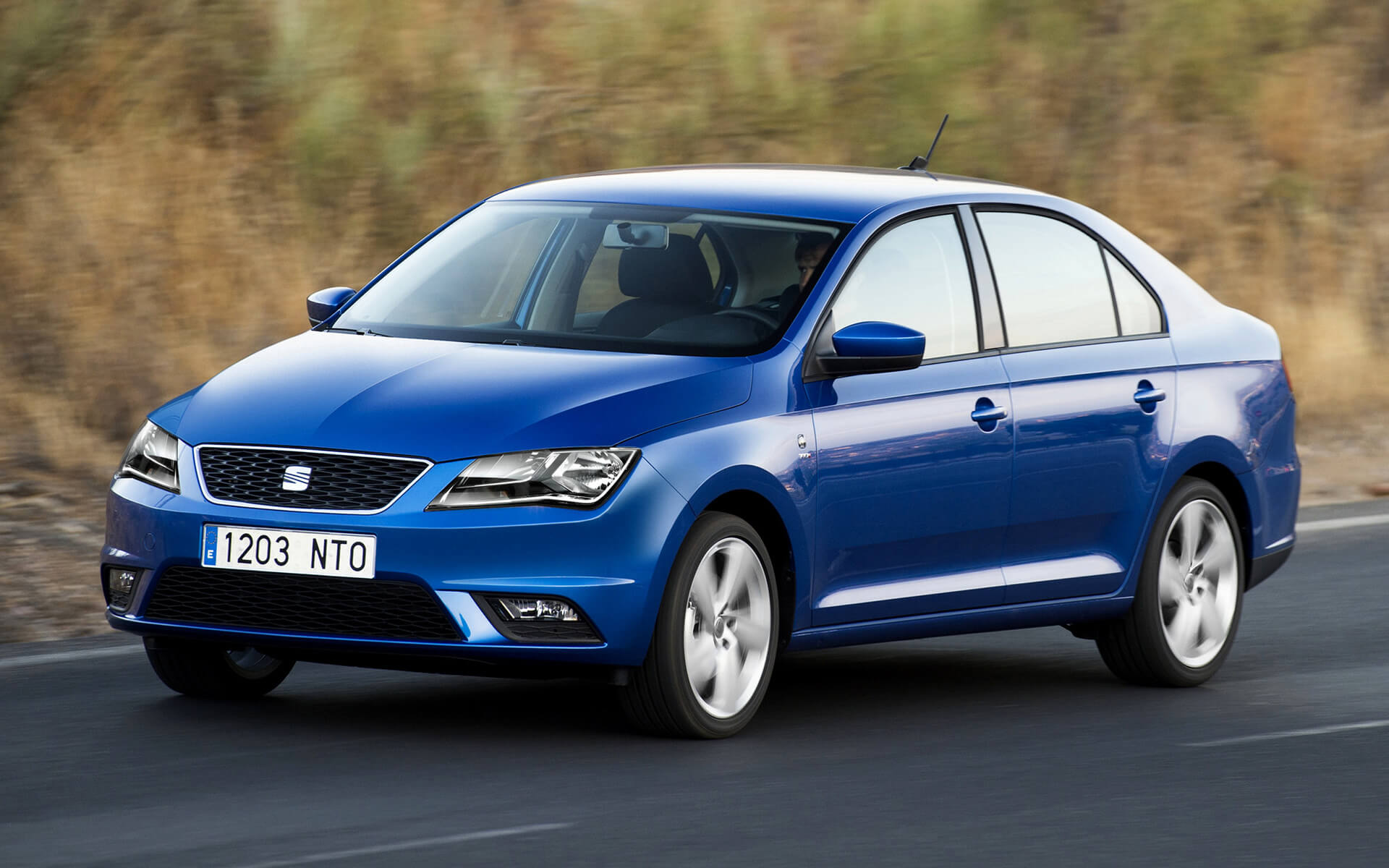
The 6J was unveiled in Madrid in 2008. A three-door SC version arrived at the end of 2010, and the car was updated in 2012 and again in spring 2015. It has a sculpted bonnet, headlights with partial LED lighting, a chrome-trimmed grille and a large lower air intake. Ground clearance is 150 mm; base versions use 15-inch steel wheels, with 16-inch wheels optional.
The interior follows Volkswagen practice: ergonomic, if not distinctive. A leather-trimmed three-spoke steering wheel, sporty dials, a large trip computer and a small touchscreen are fitted. Three people fit in the back. The hatchback's boot holds 292 litres; the wagon offers 430 litres, or 1,164 litres with the rear seats folded.
Engines included a 1.0-litre three-cylinder with 55 kW (75 PS) and 95 Nm, turbocharged 1.0 TSI versions with 70–81 kW (95–110 PS) and 160–200 Nm, a 1.2 TSI with 66 kW (90 PS) and 160 Nm and a 1.4 TSI with 110 kW (150 PS) and 250 Nm; combined consumption ranged from 4.2 to 5.9 l/100 km. A turbodiesel was offered with 55, 66 and 77 kW (75, 90 and 105 PS) and 210, 230 and 250 Nm, using 3.4–3.6 l/100 km. Gearboxes were five- and six-speed manuals and a seven-speed dual-clutch automatic. Depending on version, 0–100 km/h took 7.6–14.3 seconds and top speed was 172–220 km/h. The 6J shares its PQ25 platform with the Volkswagen Polo and has disc brakes on all four wheels.
Fifth generation (2017 onwards)
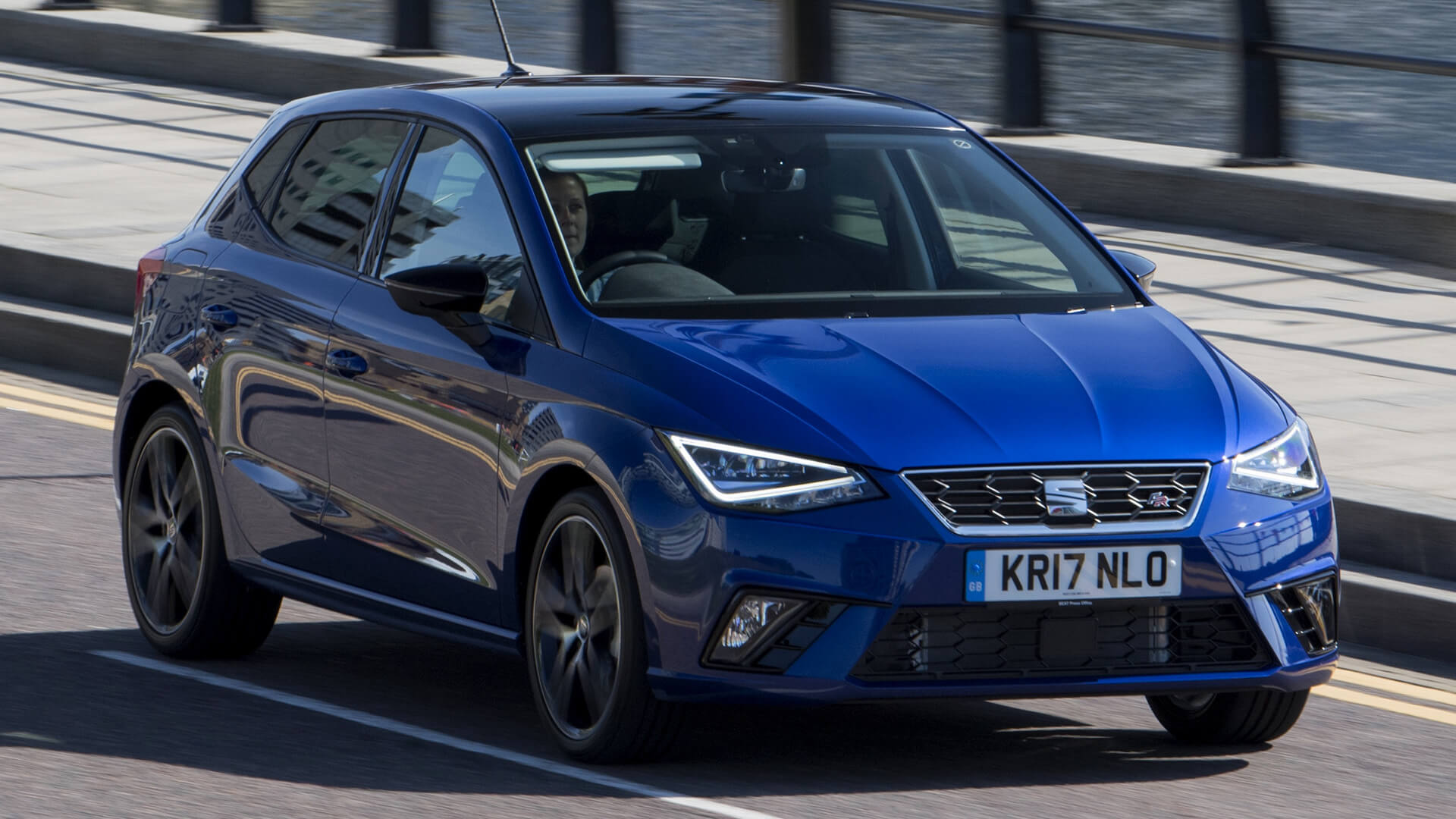
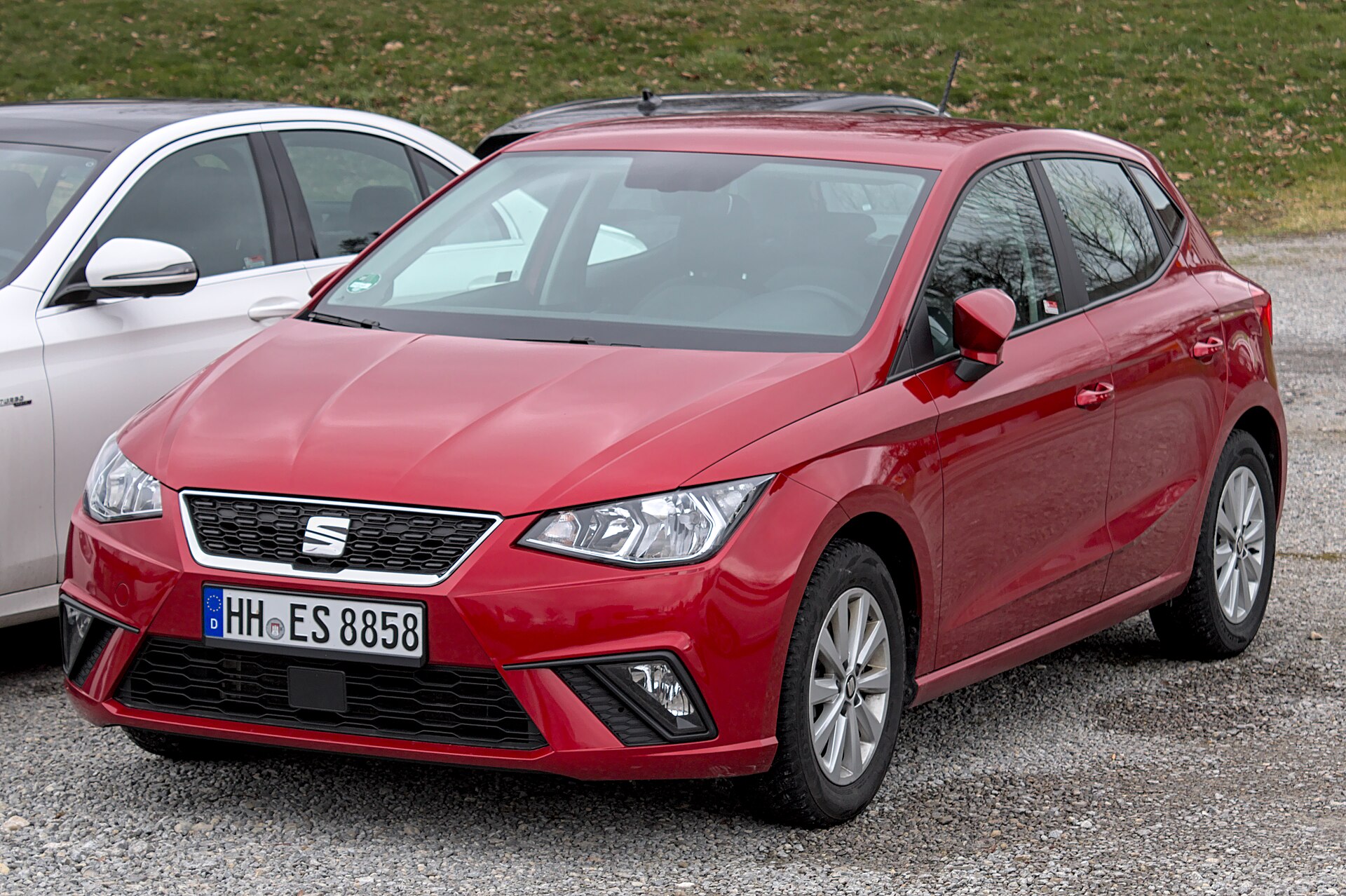
The fifth Ibiza adopted the sharp design language of the larger SEAT Leon, with creased bonnet lines that continue into the bumper, a narrow chrome-edged grille, X-shaped bumper graphics and vertical fog lamps. LED daytime running lights are optional, and higher trims have full LED headlights. Ground clearance is 140 mm, and 18-inch alloy wheels are available. A rising chrome window line limits rear passengers' view, and the tail lights have a three-dimensional design. The three-door version was discontinued.
Inside, build quality is high even if the materials reflect the price class. There is a 5- or 8-inch touchscreen with Apple CarPlay, Android Auto and MirrorLink, dual-zone climate control, USB and AUX sockets and an optional Beats audio system with seven speakers and 300 W. The rear bench has three headrests, but two people sit there most comfortably. The boot holds 355 litres, rising to 1,165 litres with the rear seats folded.
All engines meet Euro 6:
- 1.0 TSI three-cylinder petrol, 12 valves, direct injection: 70 kW (95 PS) or 85 kW (115 PS), both 200 Nm; plus a 66 kW (90 PS) version that runs on compressed natural gas (CNG).
- 1.5 TSI four-cylinder from the EA211 evo family, running the efficient Miller cycle with a variable-geometry turbocharger and variable valve timing: 110 kW (150 PS), 250 Nm.
- 1.6 TDI common-rail turbodiesel: 59, 70 or 85 kW (80, 95 or 115 PS).
Engines up to about 74 kW (100 PS) use a five-speed manual; more powerful versions get a six-speed manual, with a seven-speed DSG dual-clutch gearbox optional. The car rides on the MQB A0 platform, with anti-roll bars at both ends, disc brakes all round (ventilated at the front) and progressive electric power steering. Safety and assistance systems include cruise control, autonomous emergency braking, driver fatigue detection, airbags, electronic stability control, Hill Hold Control and tyre-pressure monitoring; adaptive cruise control, LED headlights, a rear camera and keyless entry are available.
Engines and power by generation
| Generation | Years | Petrol | Diesel | Power range (kW / PS) |
|---|---|---|---|---|
| 1st | 1984–1993 | 0.9–1.7 | 1.7 | 29–74 kW / 40–100 PS |
| 2nd | 1993–2002 | 1.0–1.6 | 1.9 (NA and turbo) | 37–81 kW / 50–110 PS |
| 3rd | 2001–2008 | 1.2–2.0 (NA and turbo) | 1.4–1.9 turbo | 40–110 kW / 54–150 PS |
| 4th (6J) | 2008–2017 | 1.0, 1.0 TSI, 1.2 TSI, 1.4 TSI | turbodiesel | 55–110 kW / 75–150 PS |
| 5th | 2017– | 1.0 TSI, 1.0 CNG, 1.5 TSI | 1.6 TDI | 59–110 kW / 80–150 PS |
Key specifications by generation
| Parameter | 1st | 3rd | 4th (6J) | 5th |
|---|---|---|---|---|
| Ground clearance | 125 mm | 130 mm | 150 mm | 140 mm |
| Boot (hatchback) | - | 265 / 765 l | 292 l | 355 / 1,165 l |
| Platform | own | VW A04 (PQ24) | VW PQ25 | VW MQB A0 |
| Gearboxes | 5-speed manual | 5/6-speed manual, 4-speed auto | 5/6-speed manual, 7-speed DSG | 5/6-speed manual, 7-speed DSG |
Strengths and weaknesses
Owners of earlier generations praise the Ibiza's looks, handling, lively performance, compact dimensions, comfortable cabin and reliability. Common criticisms are a lack of power in some versions, a firm suspension and higher-than-expected fuel consumption. Rivals include the Ford Fiesta, Nissan Micra, Citroën C3, Skoda Fabia and Honda Jazz.
Image credits · Photos from Wikimedia Commons under free licences
- SEAT Ibiza 021A · Photo: Guillaume Vachey from Chalon sur Saone, France / Wikimedia Commons, CC0
- SEAT Ibiza 6K · Photo: OSX / Wikimedia Commons, Public domain
- SEAT Ibiza 6L · Photo: Vauxford / Wikimedia Commons, CC BY-SA 4.0
- SEAT Ibiza 6J · Photo: M 93 / Wikimedia Commons, CC BY-SA 3.0 de
- SEAT Ibiza 6F · Photo: Alexander Migl / Wikimedia Commons, CC BY-SA 4.0
SEAT Ibiza in our rankings
- No. 29 of 912 · Longest-running car nameplates (42 years · top 4%)
- No. 24 of 305 · Oldest car models still on sale (42 years · top 8%)
- No. 61 of 345 · Cars with the most generations (5 generations · top 25%)
In production longer than 96% of ranked nameplates in the 1CARS catalog (No. 29 of 912).
FAQ
How many generations of the SEAT Ibiza are there?
Five: 1984, 1993, 2001, 2008 (6J) and 2017.
Who designed the first SEAT Ibiza?
Giorgetto Giugiaro of Italdesign designed both the body and the interior. The third generation was styled by Walter de Silva.
What platform is the current SEAT Ibiza built on?
The fifth generation uses the Volkswagen Group's MQB A0 platform. The fourth generation shared the PQ25 platform with the Volkswagen Polo.
Is there a natural-gas SEAT Ibiza?
Yes. The fifth generation was offered with a 1.0-litre engine of 66 kW (90 PS) adapted to run on compressed natural gas.
How big is the SEAT Ibiza boot?
The fifth-generation hatchback offers 355 litres, or 1,165 litres with the rear seats folded. The fourth-generation wagon had 430 litres.
Data sources
Data checked by an editor against the sources below.