 Audi RS6
All generations, specs and history
Published Sources (1) Report an error
By Felix Hartmann, Automotive Technology & EV Contributor
- Built
- 2002–2025
- Generations
- 4 · C5 to C8
Timeline
RS6 generations
Click a generation for its own page
- RS6 C5 2002–2004 · Sedan, Station wagon
- RS6 C6 2008–2010 · Sedan, Station wagon
- RS6 C7 2013–2018 · Station wagon
- RS6 C8 2019–2025 · Station wagon
Newest first · 4 generations since 2002
-
2019
-
2013
-
2008
-
2002
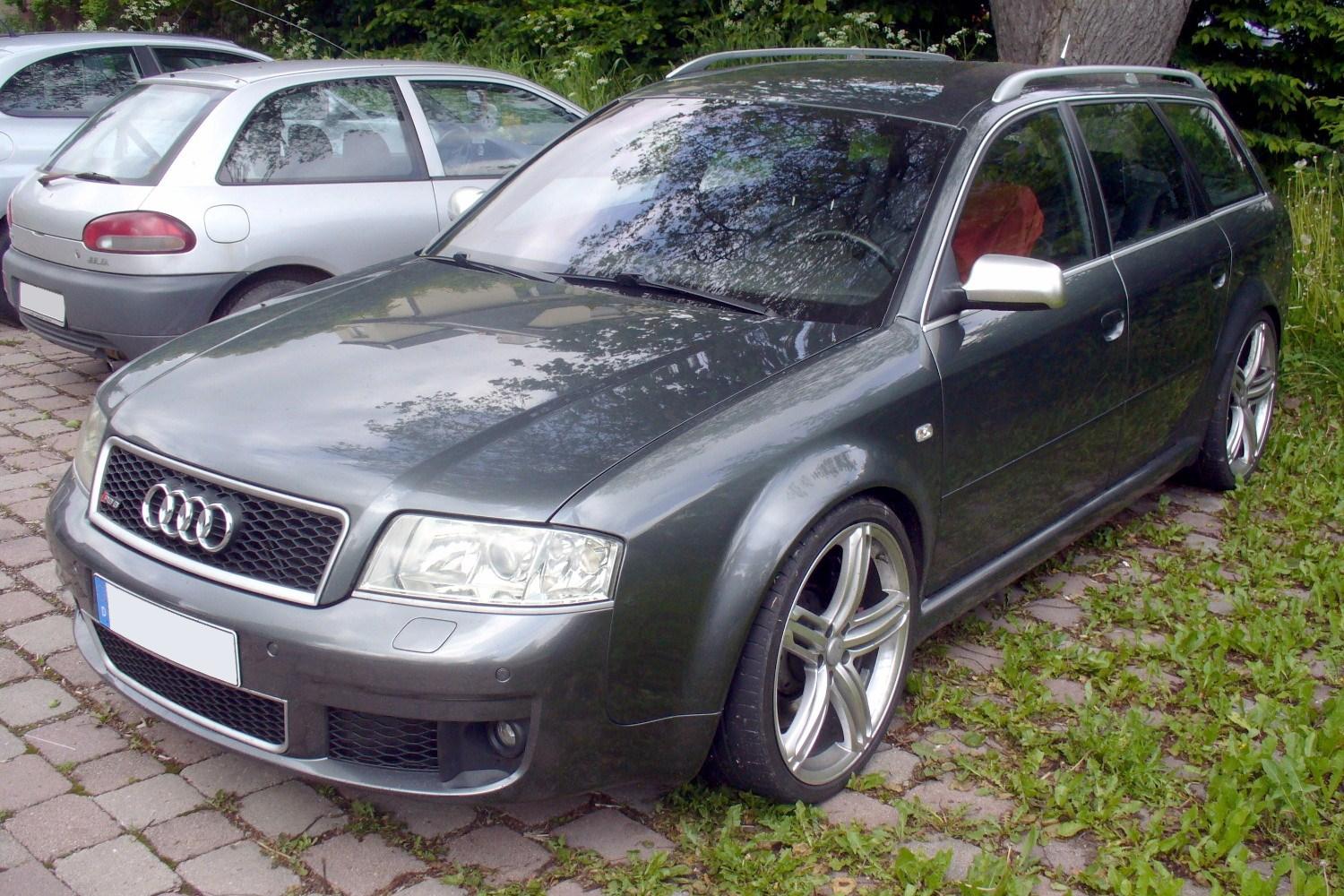


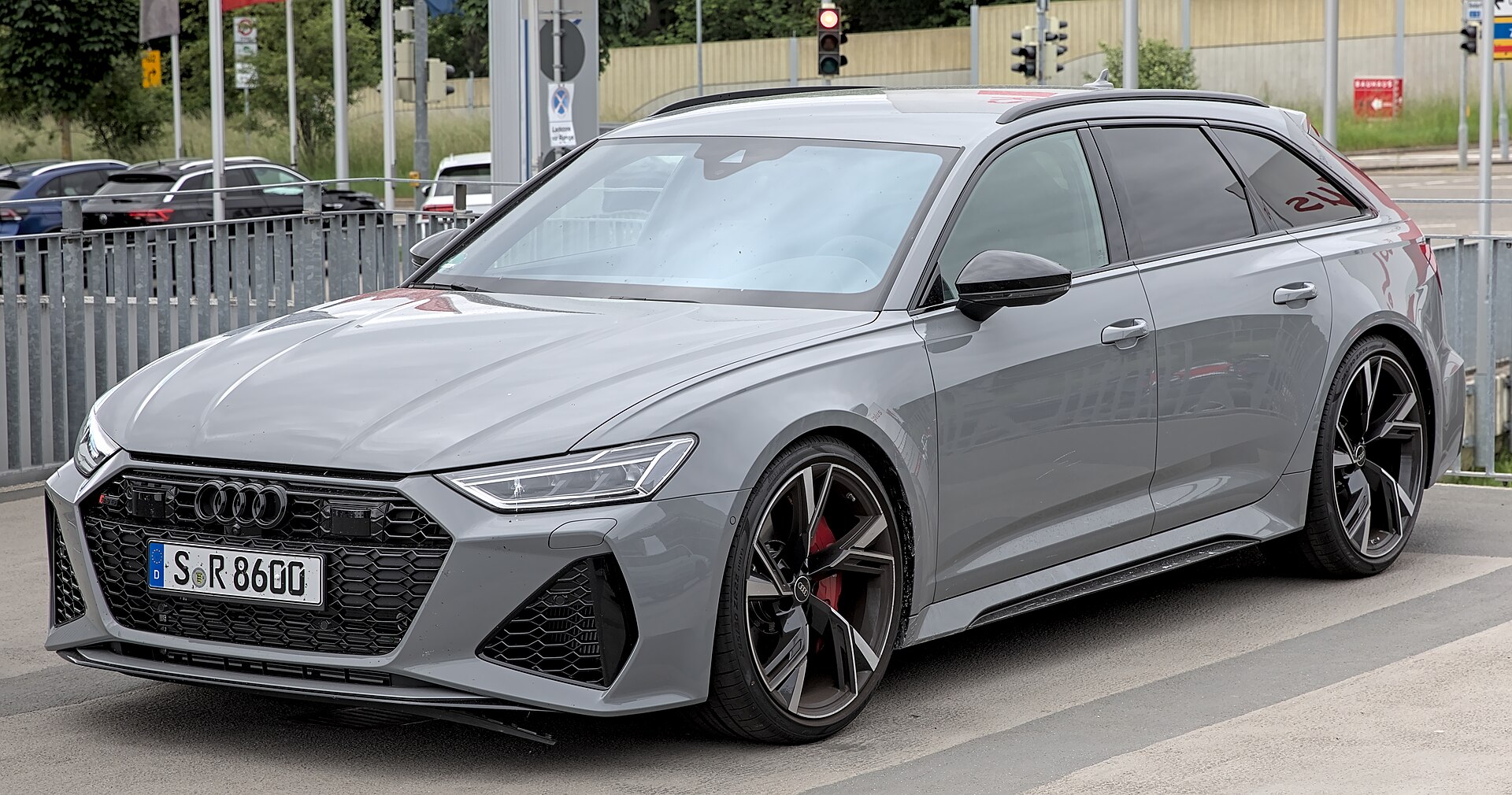
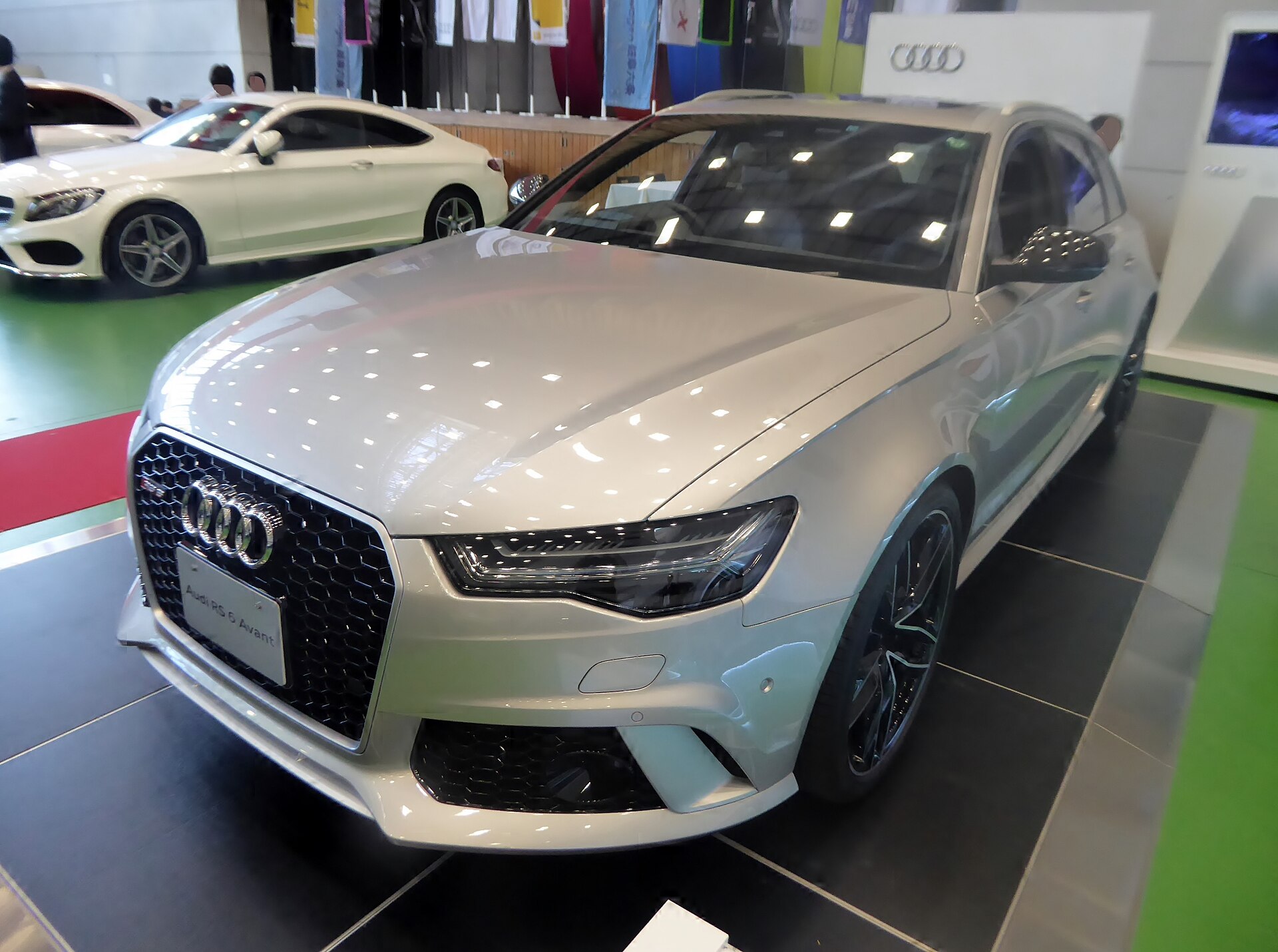
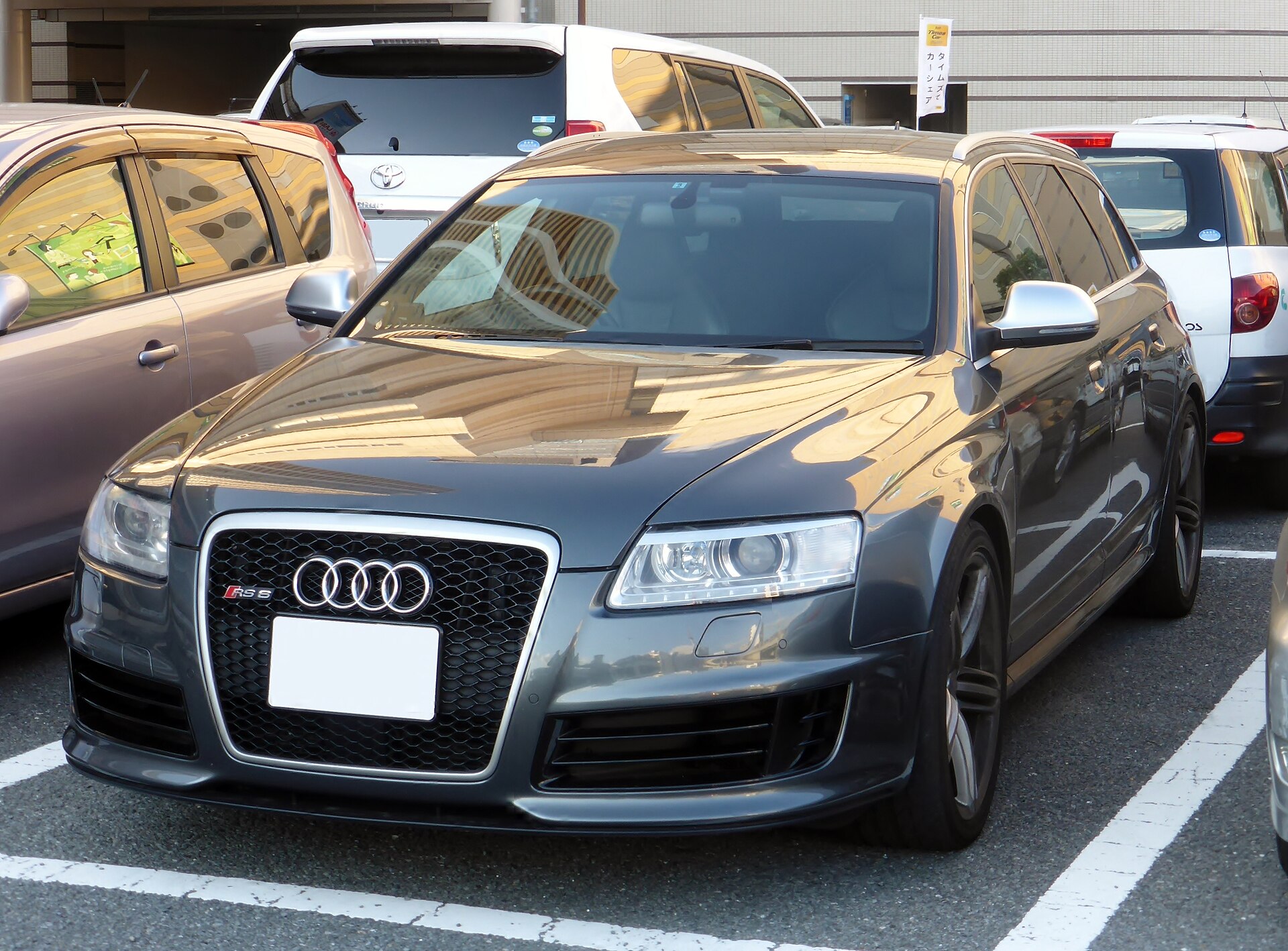
All generations by year: RS6 C8 (2019–2025) · RS6 C7 (2013–2018) · RS6 C6 (2008–2010) · RS6 C5 (2002–2004)
Which one is mine?
Pick the year of first registration to see which generation it is.
Check by VINThe Audi RS6 Avant is the high-performance version of the Audi A6, built as an estate (Avant) since 2002. Four generations have been produced, and the latest, the C8, was unveiled in 2019. Like other RS models, it starts from the regular car: only the A6 body is retained, combined with a far more powerful engine, sports suspension and bodywork modified for better aerodynamics.
In short
- Four generations: C5 (2002–2008), C6 (2008–2013), C7 (2012–2019) and C8 (2019 onwards).
- Engines: 4.2 twin-turbo V8 (C5), 5.0 twin-turbo V10 (C6) and 4.0 twin-turbo V8 (C7, C8) with 331–445 kW (450–605 PS).
- Permanent quattro all-wheel drive in every generation.
- The C8 has a 441 kW (600 PS), 800 Nm mild-hybrid V8 and reaches 100 km/h in 3.6 seconds.
Audi RS6 Avant at a glance
The RS6 Avant combines the practicality of a large estate with supercar performance: many drivers mistake it for an ordinary family car. More Audi models are listed in our Audi catalogue, and the regular model it is based on is covered in our Audi A6 section.
Audi RS6 generations
First generation: C5 (2002–2008)
The first RS6 arrived in 2002, based on the C5 Audi A6 that had been in production since 1997. It had quattro all-wheel drive, sporty if restrained styling, a comfortable three-spoke steering wheel, clear and simple instruments and a pleasant centre console.
Under the bonnet was a 4.2-litre twin-turbo V8 with 331 kW (450 PS) and 560 Nm, paired with a five-speed automatic. It reached 100 km/h in 5.9 seconds and was limited to 250 km/h. In 2004 Audi built a limited run of RS6 Plus Avant models with 353 kW (480 PS), a top speed of 280 km/h and 0–100 km/h in 4.4 seconds.
Second generation: C6 (2008–2013)
After six years the RS6 moved to the C6 A6. Because the regular C6 had already been facelifted, the RS6 launched with the updated tail lights. It looked more solid, stricter and sportier, with stylish headlights, a large grille with big chrome rings, attractive wheels, a large tailgate and chrome exhaust tailpipes at each side. The interior improved considerably: a flat-bottomed steering wheel, brighter and more modern instruments, and seats with good support.
The engine was now a 5.0-litre twin-turbo V10, related to the V10 of the Lamborghini Gallardo, producing 427 kW (580 PS) and 650 Nm. It reached 100 km/h in 4.6 seconds, with top speed again limited to 250 km/h.
Third generation: C7 (2012–2019)
The C7 RS6 Avant was unveiled at the 2012 Geneva motor show and went on sale in 2013. It was updated in 2014, and in 2015 Audi added the RS6 Avant Performance with a more powerful engine and minor changes to the exterior and interior.
The designers aimed to combine power and practicality. A more muscular front bumper has huge side intakes with round fog lamps and a sharp splitter; a sculpted bonnet leads to narrow, aggressive LED headlights. Heavily flared wings house 20-inch alloys, with 21-inch wheels optional (and standard on the Performance). Mirrors are chrome or carbon, there is a small roof spoiler, and ground clearance is 100–120 mm. The rear has a diffuser and two large oval tailpipes, plus RS badges.
Inside, leather sports seats with electric adjustment, memory, heating and ventilation face a flat-bottomed three-spoke multifunction wheel and clear instruments with a large speedometer and rev counter and a trip computer between them. The infotainment screen folds away into the dashboard. Leather, Alcantara and carbon trim are used, with blue or red contrast stitching on the Performance, and a Bang & Olufsen sound system is available. The rear seats two adults comfortably in individual seats, with an armrest and a separate climate zone, giving four-zone climate control overall. The boot holds 565 litres, or 1,680 litres with the rear seats folded.
The C7 used a 4.0-litre twin-turbo V8 with 412 kW (560 PS) and 700 Nm, an eight-speed automatic and quattro drive: 0–100 km/h in 3.9 seconds, with top speed limited to 250 km/h, or 280 or 305 km/h with the Dynamic and Dynamic Plus packages. It uses about 14 l/100 km of 98-octane petrol in town and 7 l/100 km out of town. The Performance raised boost pressure for 445 kW (605 PS) and 700 Nm, reaching 100 km/h in 3.7 seconds and 200 km/h in 12.1 seconds. Suspension is multi-link with adaptive air springs and 20 mm of manual height adjustment; a stiffer sports set-up was also available. Ventilated discs are fitted all round, with ceramic brakes optional. About 20% of the body panels are aluminium, saving 100 kg compared with the previous model.
Fourth generation: C8 (2019 onwards)
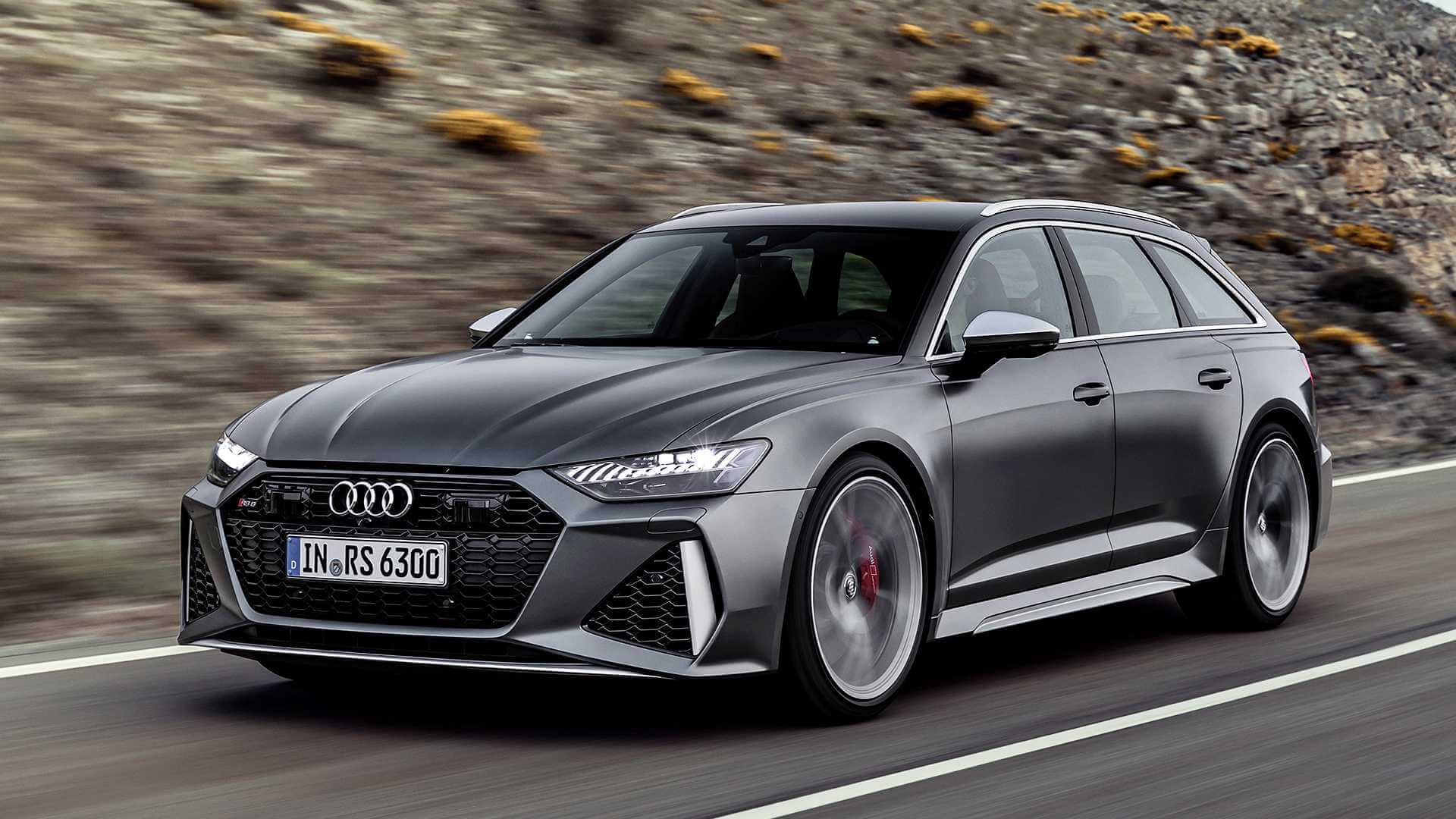
The C8 RS6 Avant was unveiled at the Frankfurt motor show in September 2019, and for the first time Audi announced the RS6 for the US market. The front end is longer, with a sloping bonnet and a deep central recess, and a larger Singleframe grille with a finer mesh and a thicker frame runs from the bonnet down to the splitter. Slimmer headlights add aggression, and matrix laser headlights in a dark finish are optional. Two huge side intakes cool the engine. The body is about 80 mm wider than the regular A6 Avant, and the side has stepped surfaces, slightly smaller mirrors and gently flared arches over 21-inch wheels (22-inch optional). At the rear, the tailgate is more steeply raked, the roof spoiler larger, the triangular tail lights are linked by a chrome strip, and a chrome diffuser frames two huge exhaust outlets.
The interior uses Alcantara, metal and carbon, with a little plastic and fabric. The compact leather steering wheel has a round centre and thin spokes with many buttons, and the instruments are virtual. The front sports bucket seats have excellent side support, extensive electric adjustment, heating and cooling, and the pedals have metal covers. A 10-inch touchscreen sits in the centre of the dashboard, with an 8.6-inch screen for climate and comfort functions below it. A covered storage tray, the gear selector and drive controls sit on the tunnel, followed by an armrest with cupholders and a cool box. The rear seats three with plenty of room and the same comfort features as the front. The boot holds 565 litres, or 1,650 litres with the seats folded, and the tailgate opens with a kick under the bumper as standard.
Engines and transmissions
| Generation | Engine | Power (kW / PS) | Torque | Gearbox | 0–100 km/h |
|---|---|---|---|---|---|
| C5 (2002–2008) | 4.2 V8 twin-turbo | 331 kW / 450 PS | 560 Nm | 5-speed automatic | 5.9 s |
| C5 RS6 Plus (2004) | 4.2 V8 twin-turbo | 353 kW / 480 PS | - | 5-speed automatic | 4.4 s |
| C6 (2008–2013) | 5.0 V10 twin-turbo | 427 kW / 580 PS | 650 Nm | - | 4.6 s |
| C7 (2012–2019) | 4.0 V8 twin-turbo | 412 kW / 560 PS | 700 Nm | 8-speed automatic | 3.9 s |
| C7 Performance (2015) | 4.0 V8 twin-turbo | 445 kW / 605 PS | 700 Nm | 8-speed automatic | 3.7 s |
| C8 (2019–) | 4.0 TFSI V8 twin-turbo, 48 V mild hybrid | 441 kW / 600 PS | 800 Nm | 8-speed tiptronic | 3.6 s |
The C8's engine was developed by Audi Sport GmbH. Its 48-volt belt-driven starter-generator and cylinder deactivation, which shuts down half of the cylinders under light load, save about 0.8 l/100 km; when the driver lifts off between 55 and 160 km/h, the car can coast with the engine off for up to 40 seconds. Top speed is electronically limited to 250 km/h, and launch control and a retuned gearbox improve acceleration. In 2023 Audi added the RS6 Avant performance, with 463 kW (630 PS) and 850 Nm.
The eight-speed tiptronic drives a permanent quattro system with a mechanical centre differential. It normally splits torque 40/60 front to rear, but can send up to 70% to the front or up to 85% to the rear. Rear-wheel steering and an active rear differential are standard. Audi drive select offers six modes: Comfort, Auto, Dynamic and Efficiency, plus two configurable modes, RS1 and RS2.
The C8 uses sports air suspension and a multi-link rear axle, with some links and subframes made of aluminium. Above 120 km/h the body lowers by 10 mm, and at lower speeds it can be raised by 20 mm to clear obstacles. Audi says a new power-steering system gives finer road feel. Dynamic Ride Control, with steel springs and three-mode adjustable dampers, is optional.
Safety and equipment (C8)
The C8 has front, rear and side airbags, curtain airbags and a driver's knee airbag, adaptive cruise control, tyre-pressure monitoring, blind-spot and cross-traffic monitoring, collision warning, pedestrian warning, 3D navigation, parking assistance, pedestrian and traffic-sign recognition, lane keeping, driver fatigue monitoring, a five-camera surround view, a laser scanner, rain and light sensors, keyless entry, smartphone connectivity and automatic garage parking. More expensive versions add night vision, extra radars and sensors and highly automated driving functions.
Price
For the European launch in the first quarter of 2020, the C8 RS6 Avant was priced at around €125,000, with eight versions available in Europe.
Key specifications
| Parameter | C5 | C6 | C7 | C8 |
|---|---|---|---|---|
| Years | 2002–2008 | 2008–2013 | 2012–2019 | 2019 onwards |
| Engine | 4.2 V8 | 5.0 V10 | 4.0 V8 | 4.0 V8 MHEV |
| Power (kW / PS) | 331–353 kW / 450–480 PS | 427 kW / 580 PS | 412–445 kW / 560–605 PS | 441 kW / 600 PS |
| Top speed | 250–280 km/h | 250 km/h | 250–305 km/h | 250 km/h (limited) |
| Boot | - | - | 565 / 1,680 l | 565 / 1,650 l |
Rivals
The RS6 Avant has few direct rivals, but strong ones: the Mercedes-AMG E 63 Estate, the Jaguar XFR-S Sportbrake, the BMW M5 and the Porsche Panamera Sport Turismo.
Audi RS6 evolution in numbers
Did you know?
- The Audi RS6 ran for 23 years, from 2002 to 2025, over 4 generations in our catalog.
- The longest-running generation is the RS6 C8 (2019–2025): 6 years.
Image credits · Photos from Wikimedia Commons under free licences
- Audi RS6 C5 · Photo: Thomas doerfer / Wikimedia Commons, CC BY-SA 3.0
- Audi RS6 C6 · Photo: Tokumeigakarinoaoshima / Wikimedia Commons, CC0
- Audi RS6 C7 · Photo: Tokumeigakarinoaoshima / Wikimedia Commons, CC BY-SA 4.0
- Audi RS6 C8 · Photo: Alexander Migl / Wikimedia Commons, CC BY-SA 4.0
Audi RS6 in our rankings
- No. 128 of 912 · Longest-running car nameplates (23 years · top 15%)
- No. 125 of 345 · Cars with the most generations (4 generations · top 41%)
In production longer than 85% of ranked nameplates in the 1CARS catalog (No. 128 of 912).
FAQ
How many generations of the Audi RS6 Avant are there?
Four: C5 (2002), C6 (2008), C7 (2012) and C8 (2019).
How powerful is the Audi RS6 Avant C8?
Its 4.0-litre twin-turbo V8 with 48-volt mild-hybrid technology produces 441 kW (600 PS) and 800 Nm.
How fast is the Audi RS6 Avant?
The C8 reaches 100 km/h in 3.6 seconds; the C7 with the Dynamic Plus package could reach 305 km/h.
Which Audi RS6 had a V10 engine?
The C6 generation (2008–2013), with a 5.0-litre twin-turbo V10 producing 427 kW (580 PS).
How big is the Audi RS6 Avant boot?
565 litres, rising to 1,680 litres in the C7 and 1,650 litres in the C8 with the rear seats folded.
Data sources
Data checked by an editor against the sources below.