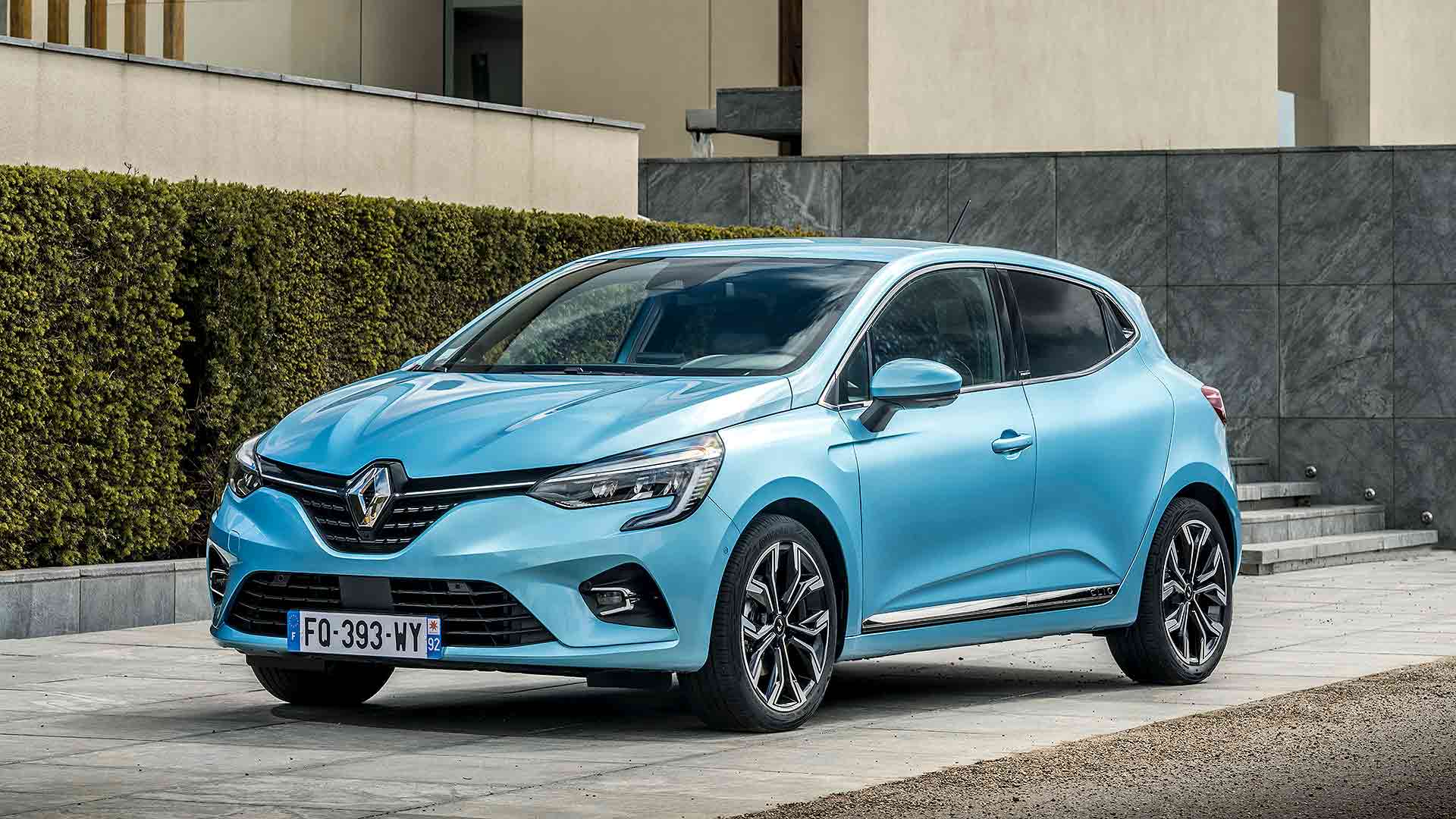
Cheapest electric cars in 2026: seven small EVs ranked by price
The cheapest electric car in Germany in late 2026 is the Dacia Spring: the first generation cost €16,900 until September 2026, and the second generation is listed by ADAC from December 2026 at €17,900. Only three electric cars stay below €20,000 in ADAC's August 2026 overview, the Spring, the Leapmotor T03 and the new Renault Twingo E-Tech, and four more small electric cars cost between €23,000 and €27,000.
This page ranks those seven by German list price and shows what each entry version delivers for the money: battery, WLTP range, DC charging speed and safety rating. The last column of the table divides the list price by the WLTP range, a 1cars figure that shows how much each kilometre of official range costs. For the best electric cars at any price, see the best electric cars; beginners will find easy choices among the best first electric cars.
Quick answers
- Cheapest electric car: Dacia Spring – €17,900 for the second generation (from December 2026).
- Longest range under €20,000: Leapmotor T03 – 275 km WLTP for €18,900.
- Best in ADAC's 2025 test: Hyundai Inster – overall grade 2.3.
- Four Euro NCAP stars: Renault 5 E-Tech (2024) and Hyundai Inster (2025, per ADAC).
| Model and entry version (ADAC, Germany) | Power | Battery (net) | WLTP range | DC peak | List price | Price per km of range |
|---|---|---|---|---|---|---|
| Dacia Spring electric 80 Expression (2nd gen.) | 60 kW (82 PS) | 27.5 kWh | 246 km | 50 kW | €17,900 (from 12/2026) | €73 |
| Leapmotor T03 | 70 kW (95 PS) | 36.0 kWh | 275 km | 45 kW | €18,900 (from 09/2024) | €69 |
| Renault Twingo E-Tech Electric Evolution | 60 kW (82 PS) | 27.5 kWh | 263 km | 50 kW | €19,990 (from 04/2026) | €76 |
| Citroën ë-C3 113 Standard Range You | 83 kW (113 PS) | 43.8 kWh | 322 km | 100 kW | €23,450 (from 03/2024) | €73 |
| Hyundai Inster 42 kWh Select | 71 kW (97 PS) | 42 kWh | 327 km | 73 kW | €24,650 (from 01/2025) | €75 |
| Fiat Grande Panda Electric Pop | 83 kW (113 PS) | 43.8 kWh | 320 km | 100 kW | €25,990 (from 10/2025) | €81 |
| Renault 5 E-Tech 120 Urban Range Evolution | 90 kW (122 PS) | 40 kWh | 317 km | 80 kW | €26,290 (from 01/2025) | €83 |
German list prices without the manufacturer discounts or state incentives that some markets offer. The month shows when the version went on sale in Germany. On price per kilometre of WLTP range the Leapmotor T03 is the best value at €69, and the Renault 5 is the dearest at €83.
-
1. Dacia Spring
Cheapest electric car
- Production years
- 2021–present
- Body type
- Hatchback
- Fuel
- Electric
- Power output
- 33–60 kW (45–82 PS)
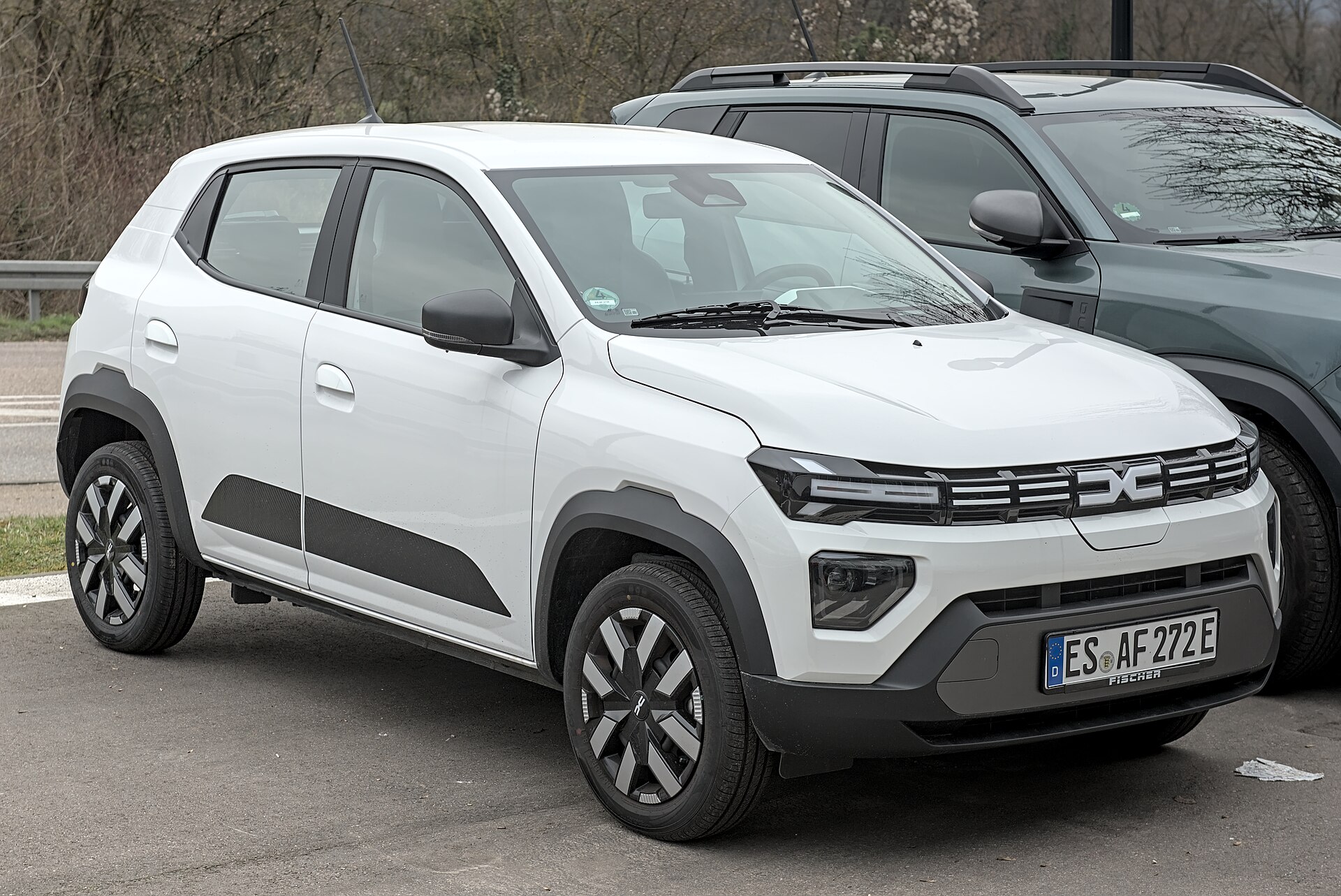
The Spring has been the cheapest electric car in Germany for years. The first generation's Electric 70 Essential, with 52 kW (70 PS), 24.3 kWh and 221 km WLTP, cost €16,900 until September 2026. Its successor is listed from December 2026 at €17,900 as the electric 80 Expression: 60 kW (82 PS), 175 Nm, 27.5 kWh usable, 246 km WLTP at 12.9 kWh/100 km and 50 kW DC charging, 28 minutes to 80%. The boot holds 337 litres plus an 18-litre front compartment. The drawbacks: four seats, and the first generation received one Euro NCAP star in 2021.
Pros
- ��17,900 for the second generation
- 12.9 kWh/100 km WLTP
- 50 kW DC on the new car
Cons
- Four seats; one Euro NCAP star for the first generation
Spec sheet: Dacia Spring I Electric 65 Extreme 48 kW (65 PS)
Full review: Dacia Spring -
2. Leapmotor T03
Longest range under €20,000
- Production years
- 2020–present
- Body type
- Hatchback
- Fuel
- Electric
- Power output
- 40–85 kW (54–116 PS)
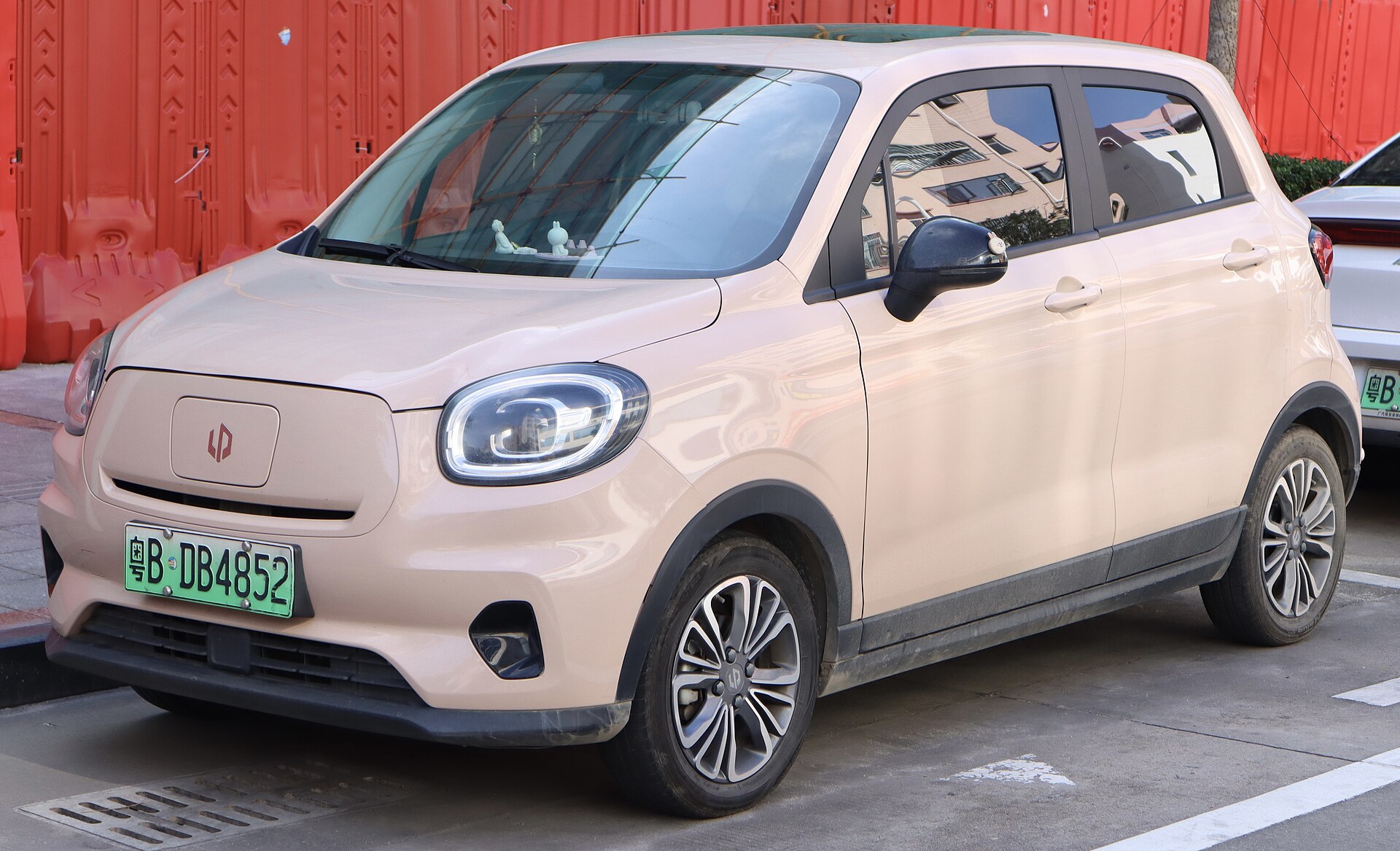
For €18,900 the T03 has the largest battery of the three electric cars below €20,000: 36.0 kWh usable, LFP chemistry, good for 275 km WLTP. That makes it the cheapest per kilometre of range in this list, at €69. The 70 kW (95 PS) motor reaches 100 km/h in 12.7 s, and ADAC lists 1,175 kg and a 210-litre boot. The drawbacks: DC charging at only 45 kW (36 minutes to 80%), a high ADAC Ecotest consumption of 19.4 kWh/100 km, no Euro NCAP test at the time, and fifth place in ADAC's 2025 comparison.
Pros
- 275 km WLTP for €18,900
- Lowest price per km of range here (€69)
- Eight-year battery warranty
Cons
- 45 kW DC and 19.4 kWh/100 km in ADAC's test
Spec sheet: Leapmotor T03 I (37.3 kWh, Europe) 70 kW (95 PS)
Full review: Leapmotor T03 -
3. Renault Twingo IV
Most efficient city car
- Production years
- 2026–present
- Body type
- Hatchback
- Fuel
- Electric
- Power output
- 60 kW (82 PS)
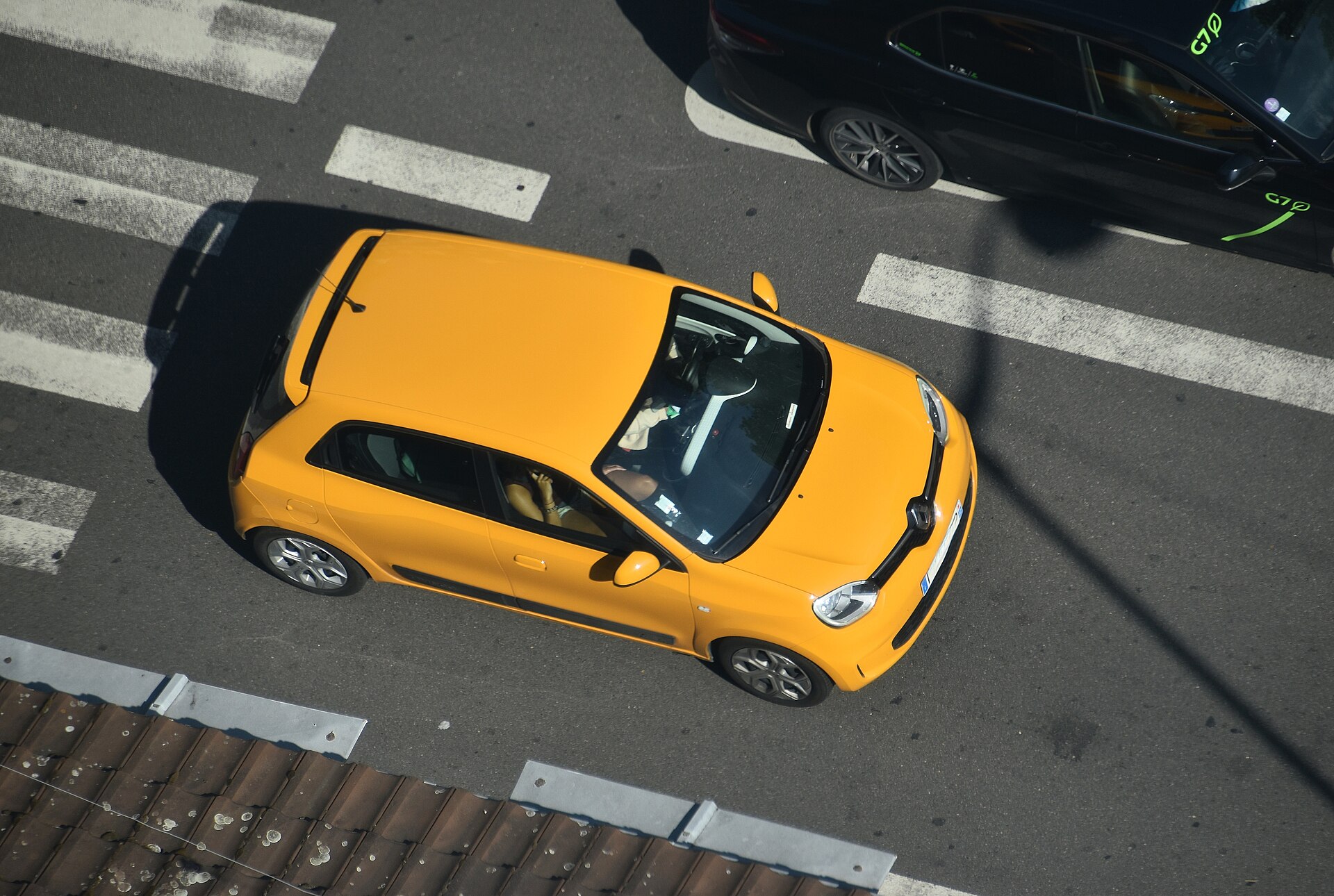
Renault's fourth Twingo arrived in Germany in April 2026 as an electric car only. The Evolution costs €19,990 and has 60 kW (82 PS), 175 Nm and 27.5 kWh usable. ADAC lists 263 km WLTP at 12.7 kWh/100 km, equal to the old Spring and the lowest consumption here, together with 12.1 s to 100 km/h. Charging is quick for the class: 50 kW DC to 80% in 28 minutes and 155 minutes for a full charge at 11 kW AC. The drawbacks: four seats, a 305-litre boot and a two-year vehicle warranty.
Pros
- 12.7 kWh/100 km WLTP
- 11 kW AC and 50 kW DC standard
- 263 km WLTP range
Cons
- Four seats and a two-year vehicle warranty
Spec sheet: Renault Twingo IV E-Tech Electric 60 kW (82 PS)
Full review: Renault Twingo IV -
4. Citroen C3 IV
Most space for the money
- Production years
- 2024–present
- Body type
- Hatchback
- Fuel
- Petrol, Hybrid, Electric
- Power output
- 74–83 kW (101–113 PS)
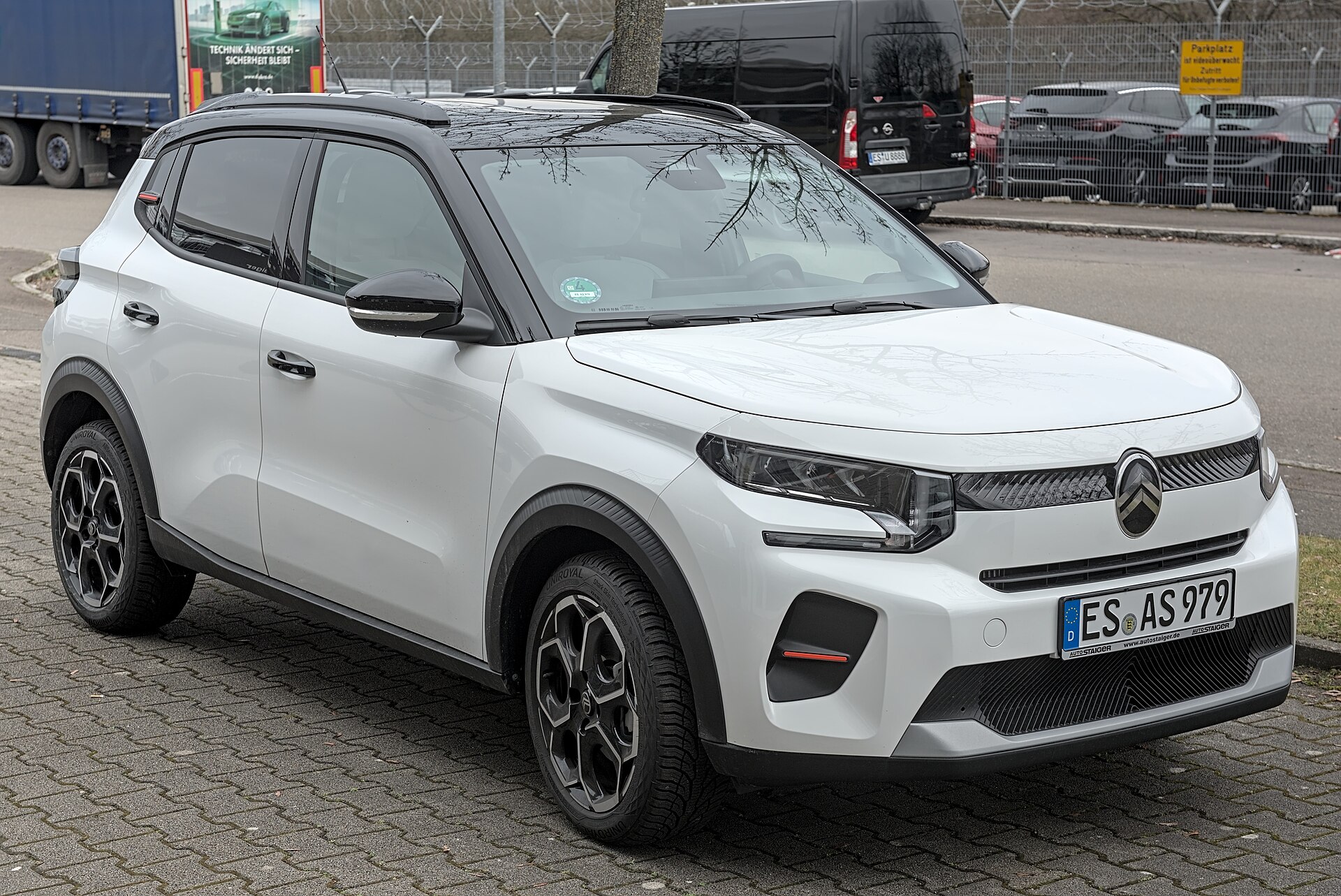
The ë-C3 is the cheapest electric five-seater here: ADAC lists the 113 Standard Range You at €23,450 (version from March 2024). The 83 kW (113 PS) motor and 43.8 kWh LFP battery give 322 km WLTP; in ADAC's own test the car covered 255 km. DC charging at up to 100 kW takes 10–80% in about 26 minutes, and the boot holds 400 litres, the most in this list. The car is 4,015 mm long and weighs 1,491 kg. The drawbacks: sparse equipment in the You trim, noted by ADAC, and no Euro NCAP result in the sources used.
Pros
- 400-litre boot and five seats
- 100 kW DC charging
- ��73 per km of WLTP range
Cons
- Basic You trim and no Euro NCAP result yet
Spec sheet: Citroen C3 IV Turbo 100 74 kW (101 PS)
Full review: Citroen C3 IV -
5. Hyundai Inster
Winner of ADAC's comparison
- Production years
- 2024–present
- Body type
- Hatchback
- Fuel
- Electric
- Power output
- 71–85 kW (97–116 PS)
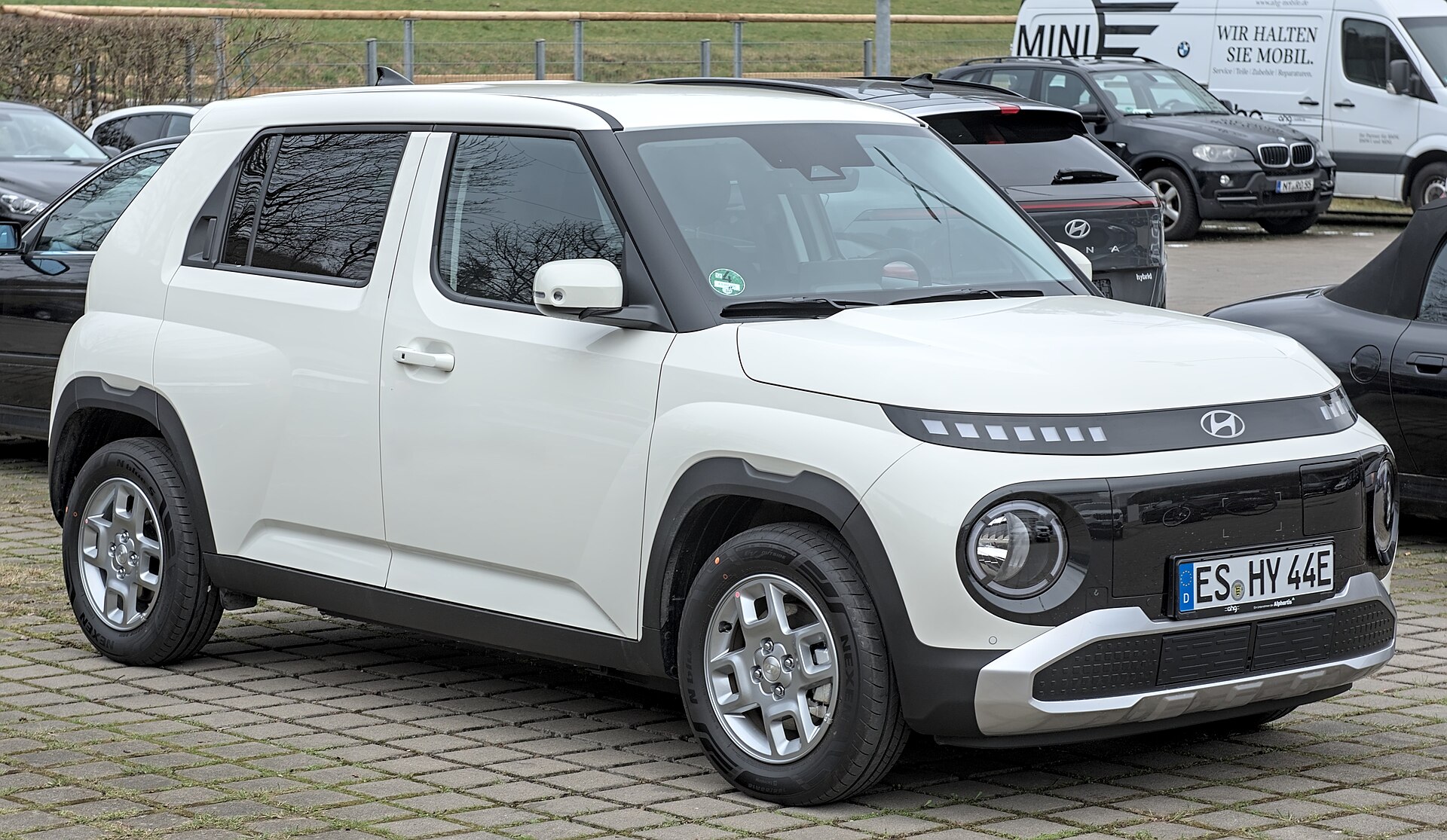
The Inster won ADAC's November 2025 comparison of six affordable electric cars with an overall grade of 2.3. The 42 kWh Select costs €24,650 in Germany and has 71 kW (97 PS) and 147 Nm; ADAC lists 327 km WLTP, the longest range of the entry versions here, and 15.9 kWh/100 km in its Ecotest. ADAC lists five years on the car and eight years or 160,000 km on the battery. ADAC shows four Euro NCAP stars from a 2025 test. The drawbacks: four seats, a 280-litre boot and DC charging at 73 kW in ADAC's data.
Pros
- Best overall grade in ADAC's 2025 test
- 327 km WLTP (ADAC)
- Five-year vehicle warranty
Cons
- Four seats and a 280-litre boot
Spec sheet: Hyundai Inster AX1 Standard Range 42 kWh 71 kW (97 PS)
Full review: Hyundai Inster -
6. Fiat Grande Panda
Runner-up in ADAC's test
- Production years
- 2025–present
- Body type
- Hatchback
- Fuel
- Petrol, Hybrid, Electric
- Power output
- 74–83 kW (101–113 PS)
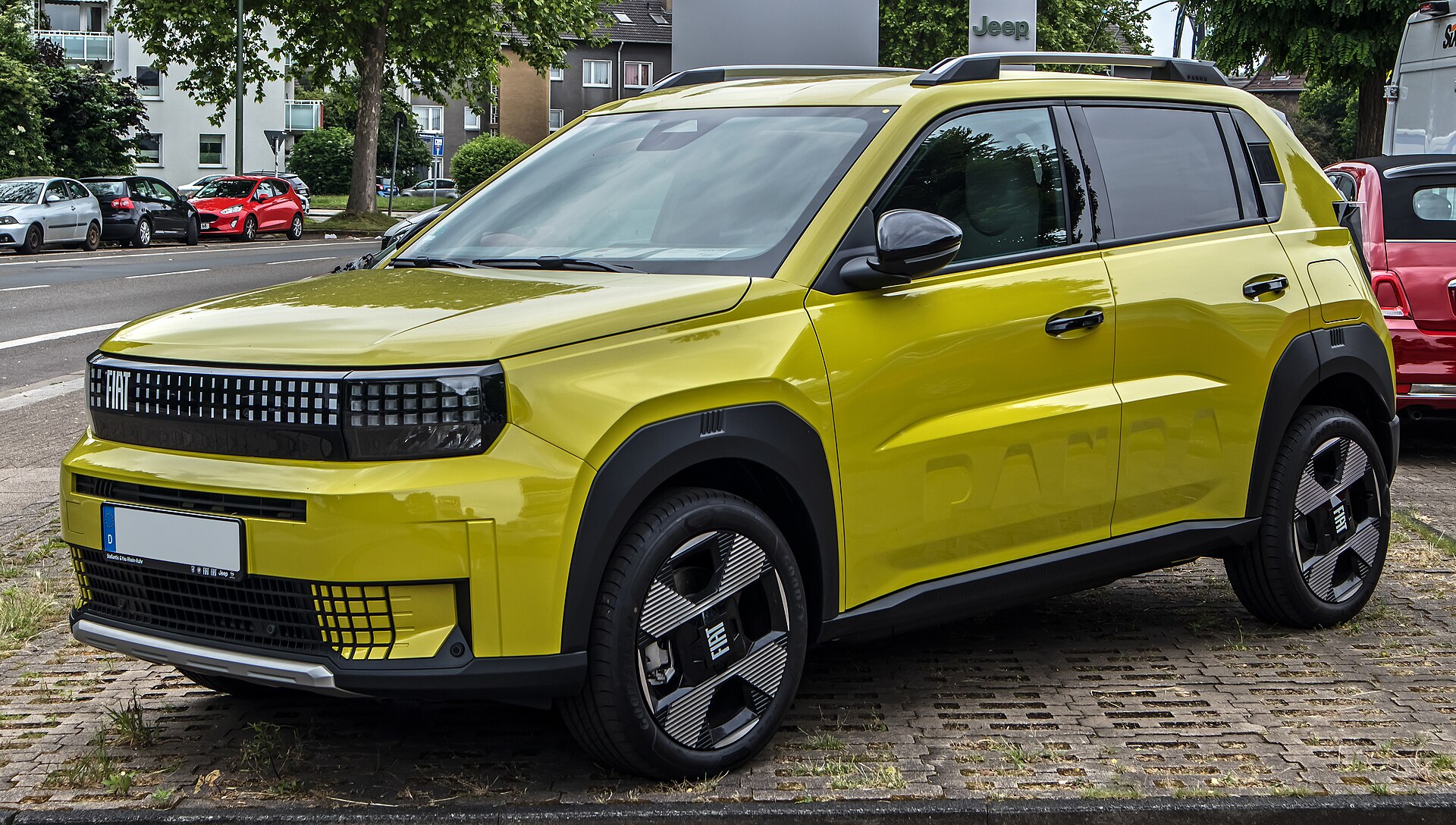
The Grande Panda Electric shares its 83 kW (113 PS) motor and 44 kWh LFP battery with the ë-C3 and came second in ADAC's 2025 comparison with a grade of 2.5. The Electric Pop costs €25,990 in Germany (from October 2025). ADAC lists 320 km WLTP at 16.8 kWh/100 km, 100 kW DC charging with 27 minutes to 80%, and a 361-litre boot. A charging cable is built into the front of the car for AC charging at up to 7.4 kW. The drawbacks: €2,540 more than the ë-C3, a two-year warranty and no Euro NCAP result yet.
Pros
- Built-in charging cable
- 100 kW DC, 27 minutes to 80%
- Five seats and 361 litres
Cons
- ��81 per km of WLTP range and a two-year warranty
Spec sheet: Fiat Grande Panda I Electric (44 kWh) 83 kW (113 PS)
Full review: Fiat Grande Panda -
7. Renault 5 E-Tech Electric
Quickest and safest
- Production years
- 2024–present
- Body type
- Hatchback
- Fuel
- Electric
- Power output
- 70–110 kW (95–150 PS)
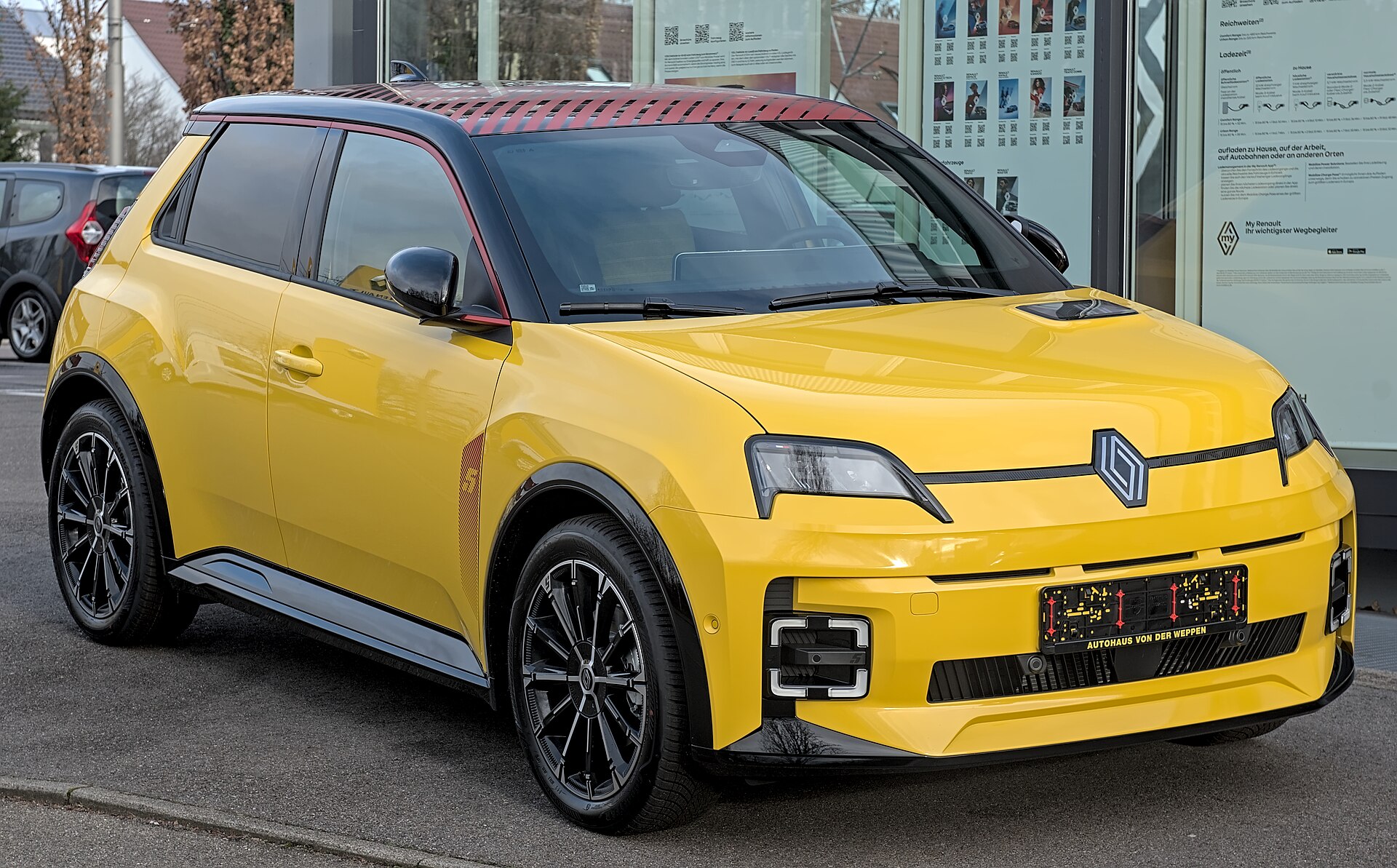
The Renault 5 is the dearest car here but also the quickest: the 120 Urban Range with 90 kW (122 PS) reaches 100 km/h in 9.0 s. The Evolution costs €26,290 in Germany and has a 40 kWh battery for 317 km WLTP at 14.4 kWh/100 km, with DC charging at 80 kW, 31 minutes to 80%. Euro NCAP gave it four stars in December 2024, and it was European Car of the Year 2025. For €29,290 the 52 kWh version adds 417 km WLTP. The drawbacks: €83 per kilometre of WLTP range and a two-year vehicle warranty.
Pros
- Four Euro NCAP stars (2024)
- 0–100 km/h in 9.0 s
- 52 kWh option with 417 km WLTP
Cons
- Highest price per km of range here
Spec sheet: Renault 5 E-Tech E-Tech Electric 120 Urban Range (40 kWh) 90 kW (122 PS)
Full review: Renault 5 E-Tech Electric
Catalog: All electric cars in the catalog — every model with specs, not only our picks.
How we chose
Selection. All battery-electric cars from mainstream brands whose cheapest German version costs less than €27,000 and that have a 1cars model page. The starting points were ADAC's list of new cars below €20,000 (14 August 2026) and ADAC's comparison test of six affordable electric cars (press release of 20 November 2025). The BYD Dolphin Surf, which shared third place in that test and was the only car above €25,000 in the tested version, has no 1cars model page yet and is left out.
Data sources. Prices, power, usable battery capacity, WLTP range and consumption, charging data, seats and warranties come from the ADAC Autokatalog page of each named version, accessed in October 2026. Euro NCAP results come from ADAC's pages, Euro NCAP's own press release and Wikipedia; where no source gives a result for the current car, the text says so. The price per kilometre is the German list price divided by the WLTP range, rounded to whole euros.
Ranking. The order follows the German list price of the cheapest version, from the lowest. Dacia's first-generation Spring Electric 70 Essential (€16,900, 221 km WLTP) left the price list in September 2026 and is described with its successor. More on the leading cars on the 1cars pages for the Leapmotor T03 and the Hyundai Inster.
Frequently asked questions
What is the cheapest electric car in 2026?
In Germany it is the Dacia Spring. The first-generation Spring Electric 70 Essential cost €16,900 until September 2026, and ADAC lists the second-generation Spring electric 80 Expression at €17,900 from December 2026.
Which electric cars cost less than €20,000?
In ADAC's August 2026 list there are three: the Dacia Spring, the Leapmotor T03 at €18,900 and the Renault Twingo E-Tech Electric at €19,990. All three are four-seaters.
Which cheap electric car has the longest range?
Among the entry versions here, the Hyundai Inster 42 kWh with 327 km WLTP according to ADAC, followed by the Citroën ë-C3 with 322 km. The Renault 5 with the 52 kWh battery reaches 417 km for €29,290 (2025). Below €20,000 the Leapmotor T03 goes furthest, with 275 km.
Which cheap electric car charges fastest?
The Citroën ë-C3 and the Fiat Grande Panda Electric accept up to 100 kW DC; ADAC gives 10–80% in about 26 minutes for the ë-C3 and 27 minutes to 80% for the Grande Panda.
Are cheap electric cars safe?
The Renault 5 E-Tech and the Hyundai Inster have four Euro NCAP stars according to ADAC. The first-generation Dacia Spring had one star in 2021, and the Leapmotor T03, Twingo E-Tech, ë-C3 and Grande Panda had no published result in the sources used.