
 Audi TT
All generations, specs and history
Published Sources (1) Report an error
By Oleksandr Hnatiuk, Automotive Editor & Used Car Specialist
- Built
- 1998–2023
- Generations
- 3 · 8N to FV
- Top power
- 294 kW (400 PS)
Timeline
TT generations
Click a generation for its own page

- TT 8N 1998–2006 · Coupe, Roadster · 110–184 kW (150–250 PS)
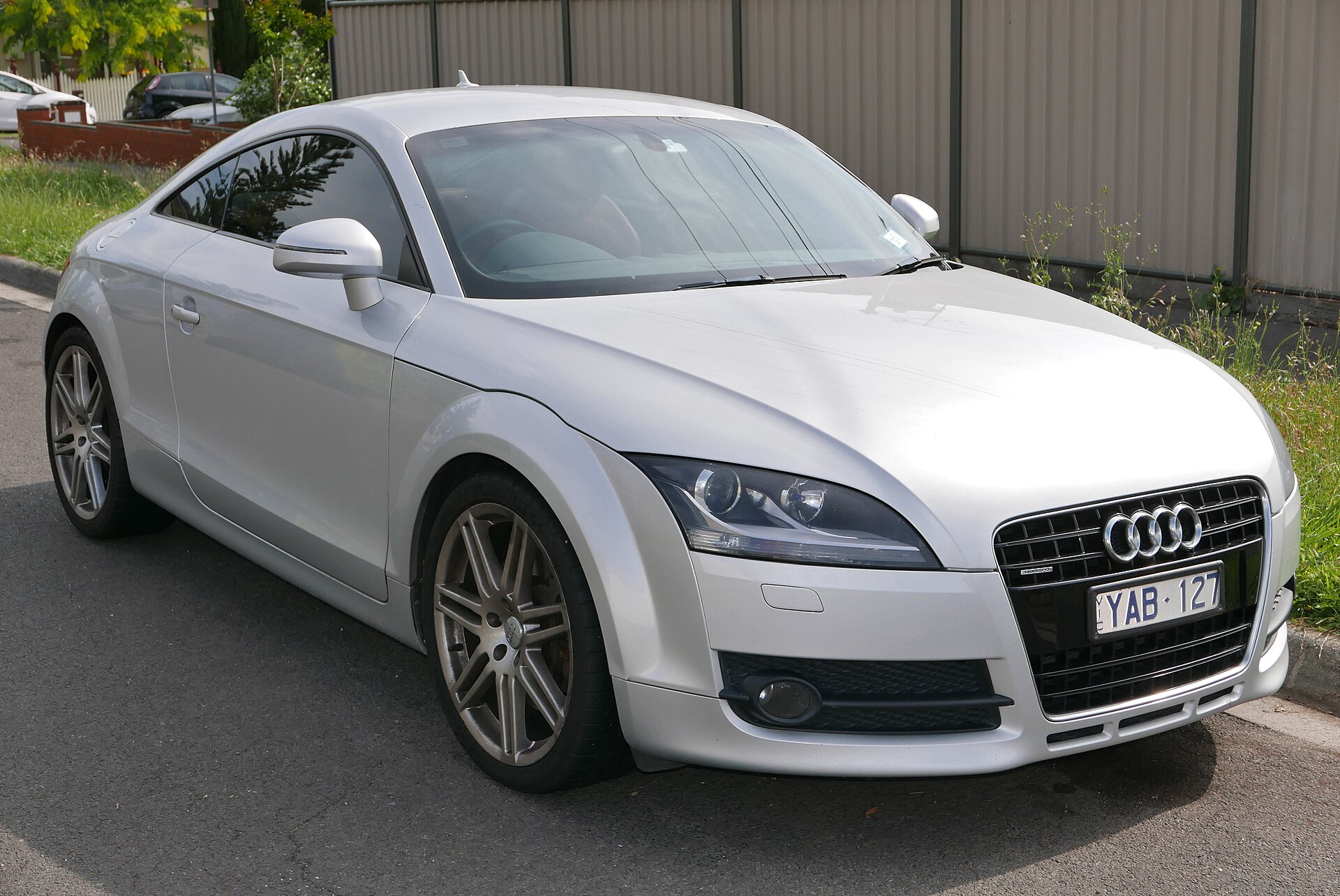
- TT 8J 2006–2014 · Coupe, Roadster · 118–265 kW (160–360 PS)
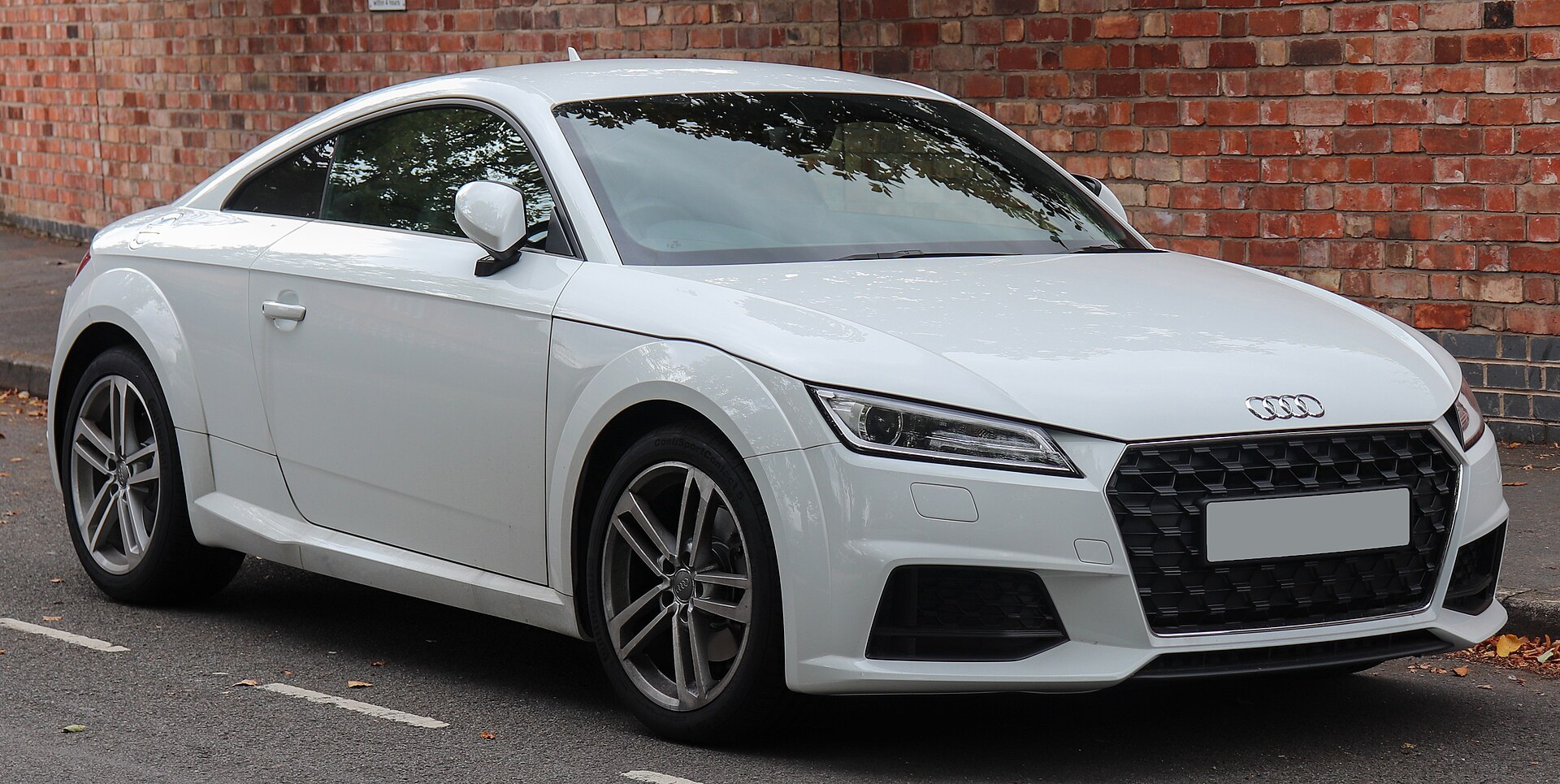
- TT FV/8S 2014–2023 · Coupe, Roadster · 135–294 kW (184–400 PS)
Newest first · 3 generations since 1998
- 2014 FV 2014–2023 · Coupe, Roadster · 135–294 kW (184–400 PS)
-
2006
-
1998
All generations by year: TT FV/8S (2014–2023) · TT 8J (2006–2014) · TT 8N (1998–2006)
Which one is mine?
Pick the year of first registration to see which generation it is.
The Audi TT is a compact sports coupé and two-seat roadster that Audi built in three generations from 1998 to November 2023, with final assembly in Győr, Hungary. Underneath it shared Volkswagen Group platforms with the Golf and the A3. Outputs ran from 110 kW (150 PS) in the first 1.8 T to 294 kW (400 PS) in the last TT RS, and 662,762 cars were made.
In short
- Three generations: 8N (1998-2006), 8J (2006-2014) and FV, also called 8S (2014-2023), each as a 2+2 coupé and a two-seat roadster.
- Front-wheel drive or quattro all-wheel drive; the TT was the first production Audi offered with the dual-clutch DSG gearbox, from July 2003.
- Fast versions: the TTS with up to 235 kW (320 PS) and the TT RS with a 2.5-litre five-cylinder of 250 to 294 kW (340 to 400 PS).
- The name comes from the Isle of Man TT motorcycle race, where Audi's predecessor NSU competed.
Specs by version
Engines
| Version | Engine | Power | Torque | Drive | Production years |
|---|---|---|---|---|---|
| 8N · 1998–2006 | |||||
| 8N · 1.8 T 132 kW | 4 cyl · Petrol | 132 kW 179 PS177 hp | 235 Nm173 lb-ft | - | 1998–2006 |
| 8N · 3.2 VR6 quattro 184 kW | 6 cyl · Petrol | 184 kW 250 PS247 hp | 320 Nm236 lb-ft | All-wheel drive | 2003–2006 |
| 8J · 2006–2014 | |||||
| 8J · TTS 2.0 TFSI 200 kW | 4 cyl · Petrol | 200 kW 272 PS268 hp | 350 Nm258 lb-ft | All-wheel drive | 2008–2014 |
| 8J · TT RS 2.5 TFSI 250 kW | 5 cyl · Petrol | 250 kW 340 PS335 hp | 450 Nm332 lb-ft | All-wheel drive | 2009–2014 |
| FV · 2014–2023 | |||||
| FV · 45 TFSI 180 kW | 4 cyl · Petrol | 180 kW 245 PS241 hp | 370 Nm273 lb-ft | - | 2018–2023 |
| FV · TT RS 2.5 TFSI 294 kW | 5 cyl · Petrol | 294 kW 400 PS394 hp | 480 Nm354 lb-ft | All-wheel drive | 2016–2023 |
Performance
Show all 3 versions
| Version | 0–100 km/h | Top speed |
|---|---|---|
| 8J · 2006–2014 | ||
| 8J · TTS 2.0 TFSI 200 kW | 5.2 s 0–62 mph | 250 km/h155 mph |
| 8J · TT RS 2.5 TFSI 250 kW | 4.5 s 0–62 mph | 250 km/h155 mph |
| FV · 2014–2023 | ||
| FV · TT RS 2.5 TFSI 294 kW | - | 280 km/h174 mph |
Dimensions and weight
Show all 3 versions
| Version | Length | Kerb weight | Boot |
|---|---|---|---|
| 8J · 2006–2014 | |||
| 8J · TT RS 2.5 TFSI 250 kW | 4,198 mm165.3 in | 1,450 kg3,197 lb | - |
| FV · 2014–2023 | |||
| FV · 45 TFSI 180 kW | 4,191 mm165.0 in | - | 305 l10.8 cu ft |
| FV · TT RS 2.5 TFSI 294 kW | 4,191 mm165.0 in | - | - |
Verified Manufacturer and type-approval data from our catalog · Sources and methodology
Audi TT at a glance
| Specification | Audi TT |
|---|---|
| Segment and body | compact sports car: 2+2 coupé, two-seat roadster |
| Production | February 1998 to November 2023, 662,762 built |
| Plants | Győr, Hungary (final assembly); 8N and 8J bodyshells from Ingolstadt |
| Platforms | PQ34 (8N), PQ35 (8J), MQB (FV/8S) |
| Design | J Mays and Freeman Thomas; concept shown at Frankfurt in 1995 |
| Drive | front-wheel drive or quattro all-wheel drive |
| Engines | 1.8 T, 1.8 and 2.0 TFSI, 2.0 TDI, 3.2 VR6, 2.5 TFSI five-cylinder |
| Power | 110 kW (150 PS) to 294 kW (400 PS) |
| Gearboxes | 6-speed manual, 6-speed DSG, 6- and 7-speed S tronic |
| Length (FV/8S) | 4,191 mm (165.0 in) coupé, 4,177 mm (164.4 in) roadster |
| Boot (FV/8S coupé) | 305 litres |
| Quickest version | TT RS plus (8J): 0-100 km/h in 4.1 s, 280 km/h |
Audi TT generations: 8N, 8J and FV/8S
Audi made three generations of the TT, and each started as a coupé, with the roadster following a few months later.
| Generation | Coupé | Roadster | Platform | Power range |
|---|---|---|---|---|
| 8N | Feb 1998 to Jun 2006 | Aug 1999 to Jun 2006 | PQ34 (A4 platform) | 110-184 kW (150-250 PS) |
| 8J | Apr 2006 to Mar 2014 | Nov 2006 to Mar 2014 | PQ35 (A5 platform) | 118-265 kW (160-360 PS) |
| FV/8S | Aug 2014 to Nov 2023 | Nov 2014 to Nov 2023 | MQB | 135-294 kW (184-400 PS) |
Styling of the original car began in spring 1994 at the Volkswagen Group design studio in California under J Mays and Freeman Thomas. The TT concept appeared at the Frankfurt motor show in 1995, and a roadster study called TTS followed at Tokyo that November. Audi design chief Marc Lichte later traced the 8N shape to the Bauhaus school.
The 8J of 2006 grew in every direction and mixed an aluminium front structure with a steel rear. The third generation moved to the MQB platform of the Audi A3 and Golf; it replaced the central screen with a 12.3-inch Virtual Cockpit in front of the driver, and the coupé's boot grew by 13 litres to 305 litres.

Audi TT engines and specs by version
| Version | Generation | Engine | Power | Torque |
|---|---|---|---|---|
| 1.8 T | 8N | 1.8 turbo four | 132 kW (180 PS) | 235 Nm |
| 1.8 T quattro | 8N | 1.8 turbo four | 165 kW (225 PS) | 280 Nm |
| 3.2 quattro | 8N, 8J | 3.2 VR6 | 184 kW (250 PS) | 320 Nm |
| 2.0 TFSI | 8J | 2.0 turbo four | 147-155 kW (200-211 PS) | 280-350 Nm |
| 2.0 TDI quattro | 8J | 2.0 turbodiesel four | 125 kW (170 PS) | 350 Nm |
| 40 TFSI | FV/8S | 2.0 turbo four | 145 kW (197 PS) | 320 Nm |
| 45 TFSI | FV/8S | 2.0 turbo four | 180 kW (245 PS) | 370 Nm |
| TTS | FV/8S | 2.0 turbo four | 225-235 kW (306-320 PS) | 400 Nm |
| TT RS | FV/8S | 2.5 turbo five | 294 kW (400 PS) | 480 Nm |
The first TT used the 20-valve 1.8 T in outputs from 110 kW (150 PS) to 177 kW (240 PS), plus a 3.2 VR6 from 2003. The six-speed DSG arrived in July 2003, which made the TT the first production Audi with a dual-clutch gearbox. On the 8J a six-speed manual was standard and S tronic optional on every engine; the 2.0 TDI quattro of 2008 made it the first sports car with TDI technology, according to Audi.
The FV/8S launched in 2014 with a 2.0 TFSI of 169 kW (230 PS), a TTS of 228 kW (310 PS) and a front-drive 2.0 TDI of 135 kW (184 PS), later also offered with quattro. After the 2018 facelift the range was renamed 40 TFSI and 45 TFSI.
For economy, Audi claimed 67.3 mpg (4.2 L/100 km, UK gallons, NEDC) for the 2014 TT 2.0 TDI. Honest John's owner data put real-world figures for the third generation between 24 and 61 mpg (11.8 to 4.6 L/100 km), on average 81 percent of the official number.
The first Audi TT and its 1999 high-speed recall
Early 8N cars were linked to fatal crashes at speeds above 180 km/h (112 mph), in sudden lane changes or sharp bends. In late 1999 and early 2000 Audi recalled both the coupé and the roadster. The fix added the Electronic Stability Programme or Anti-Slip Regulation, a small rear spoiler and revised suspension with modified control arms and firmer dampers. On an early 8N, check that this work was done.
Car and Driver put the TT on its Ten Best list for 2000 and 2001. The last of the line, the 2005-2006 TT quattro Sport, had 177 kW (240 PS), weighed 1,390 kg and reached 62 mph in 5.9 seconds.

TTS and TT RS: the fastest Audi TT versions
The TTS of 2008 took the 2.0 TFSI to 200 kW (272 PS) and 350 Nm; the coupé reached 100 km/h in 5.2 seconds and the roadster in 5.6, with top speed limited to 250 km/h. A year later the TT RS added a 2.5-litre turbocharged five-cylinder with 250 kW (340 PS) and 450 Nm. It did 0-100 km/h in 4.5 seconds and could be ordered with a 280 km/h limit. A manual came first and a seven-speed S tronic was offered from 2010. The 2012 TT RS plus raised output to 265 kW (360 PS) and cut the sprint to 4.1 seconds with S tronic.
On the third generation the TTS started at 228 kW (310 PS), dropped to 225 kW (306 PS) for 2019 to 2021 and finished at 235 kW (320 PS). The TT RS returned in 2016 with 294 kW (400 PS) and 480 Nm from the five-cylinder, quattro only. Parkers quotes 0-62 mph in 3.7 seconds and a top speed of 174 mph (280 km/h).

Audi TT production numbers and the end in 2023
Audi built 662,762 TTs over 25 years. The first full year, 1999, brought 44,022 coupés and 8,557 roadsters; in 2023 only 9,530 coupés were made. Audi ended production in Győr in November 2023 because sales of two-door coupés kept falling. The TT was sold across Europe, North America and Australia; CarExpert lists it as no longer available new in Australia.
The run-out brought several limited editions:
- TT 20th Anniversary Edition, January 2019, 999 cars.
- A 100-car TT RS coupé edition announced in October 2022, in a grey paint with fixed equipment.
- TT RS Heritage Edition: 50 cars for the USA, where the RS left the range after 2022.
- Final Edition (2023), UK only, with accents in Tango Red, Chronos Grey or Glacier White.
Used Audi TT problems and what to check
The third-generation car is the safest used buy. In What Car?'s 2025 reliability survey it placed sixth of 12 coupés, convertibles and sports cars with 96.1 percent. Only 7 percent of owners reported a fault, all of them in the air-conditioning. Check that recalls were done: a shield between bracket and fuel tank on cars built from 29 April 2014 to 24 May 2019, plus front airbag work on a limited batch. Kerbed wheels, worn seat bolsters and squeaking front pads are the usual wear items.
On an 8J, listen for creaking window regulators, look for sagging leather seat bases and expect xenon headlamps to mist after washing. The 2.0 TFSI and 2.0 TDI need a cambelt every five years or 75,000 miles (120,700 km). Two recalls matter: new DSG software for cars built from September 2008 to August 2009, and a brake servo fix on TT RS models from May to July 2009. A full service history counts for more than low mileage on a 2.0 TFSI or 3.2 VR6.
Audi TT vs rivals and which one to buy
The TT always sold on design and all-weather grip rather than pure handling. A Porsche Cayman is the sharper mid-engined driver's car but costs more, while the BMW Z4 is the obvious rear-drive alternative to the TT Roadster. The rear seats of the coupé suit children only, and UK insurance groups run from 25 to 45.
For everyday use, a 2018-2023 TT 45 TFSI quattro or TTS gives the best mix of pace and reliability record. The TT RS is the one to buy for its five-cylinder engine, and it has held its value well; the 8N 3.2 VR6 with DSG is the cheapest way into a quattro TT with six cylinders. Every other Audi model line is listed in the Audi catalogue.
Audi TT evolution in numbers
Did you know?
- The Audi TT ran for 25 years, from 1998 to 2023, over 3 generations in our catalog.
- The longest-running generation is the TT FV/8S (2014–2023): 9 years.
- The biggest jump in power came with the TT 8J: up to 265 kW (360 PS), 81 kW more than the TT 8N.
Most powerful version, kW
Figures from the 1cars catalog: power is the strongest version of each generation; generations without the figure are left out.
Audi TT: first vs latest generation
| Spec | TT 8N | TT FV/8S | Change |
|---|---|---|---|
| Years | 1998–2006 | 2014–2023 | 16 years apart |
| Most powerful version | 184 kW (250 PS) | 294 kW (400 PS) | +110 kW (+60%) |
Oldest and newest generation in the 1cars catalog. Power is the strongest version of each; other rows are shown only when both generations have the figure.
Audi TT in our rankings
- No. 128 of 1344 · Longest-running car nameplates (25 years · top 10%)
- No. 71 of 549 · Fastest cars (280 km/h · top 14%)
- No. 18 of 117 · Fastest German cars (280 km/h · top 16%)
- No. 24 of 131 · Smallest coupes (4,191 mm · top 19%)
- No. 108 of 562 · Power-to-weight: cars (172 kW/t · top 20%)
- No. 163 of 731 · Smallest cars (4,191 mm · top 23%)
In production longer than 90% of ranked nameplates in the 1CARS catalog (No. 128 of 1344).
FAQ
When did Audi stop making the TT?
Audi stopped building the TT in November 2023 at its Győr plant in Hungary, after 25 years and 662,762 cars. Falling demand for two-door coupés was the reason. The last special models were a 100-car TT RS edition, the TT RS Heritage Edition and the UK Final Edition.
Is the Audi TT reliable?
Yes, the third-generation TT has a strong record. It scored 96.1 percent in What Car?'s 2025 reliability survey, and only 7 percent of cars reported faults, all with the air-conditioning. Older 8J cars need cambelt changes and checks on window regulators and seats.
How fast is the Audi TT RS?
The 2016-2023 Audi TT RS has a 2.5-litre five-cylinder with 294 kW (400 PS) and reaches 62 mph in 3.7 seconds, with a top speed of 280 km/h (174 mph). The earlier 8J TT RS plus did 0-100 km/h in 4.1 seconds with S tronic.
Is the Audi TT based on the Volkswagen Golf?
Yes, all three TT generations used Volkswagen Group platforms shared with the Golf and Audi A3: PQ34 for the 8N, PQ35 for the 8J and MQB for the FV/8S. The body, interior and suspension tuning are specific to the TT.
What does TT stand for in Audi TT?
TT refers to the Isle of Man Tourist Trophy motorcycle race, where NSU, one of Audi's predecessor companies, competed. Audi has also used the reading Technology and Tradition.
Data sources
Data checked by an editor against the sources below.
- Wikipedia - Audi TT


