
 Porsche Cayman
All generations, specs and history
Updated Published Sources (5) Report an error
By Felix Hartmann, Automotive Technology & EV Contributor Reviewed by Oleksandr Hnatiuk

- Built
- 2005–2025
- Generations
- 3 · 987c to 982c
- Top power
- 368 kW (500 PS)
Timeline
Cayman generations
Click a generation for its own page


- Cayman 987c 2005–2012 · Coupe · 180–243 kW (245–330 PS)
- Cayman 981c 2013–2016 · Coupe · 202–283 kW (275–385 PS)
- 718 Cayman 982c 2016–2025 · Coupe · 184–368 kW (250–500 PS)
Newest first · 3 generations since 2005
-
2016

-
2013

-
2005
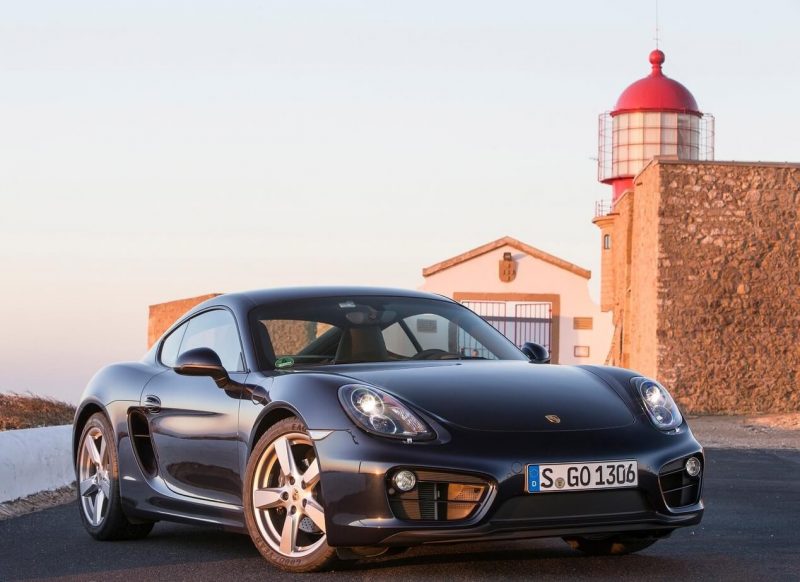
All generations by year: 718 Cayman 982c (2016–2025) · Cayman 981c (2013–2016) · Cayman 987c (2005–2012)
Which one is mine?
Pick the year of first registration to see which generation it is.
Check by VINWhich Porsche Cayman to buy
Our verdict · Felix Hartmann
A 981 Cayman S or GTS is the sweet spot for many buyers: modern, light and with the six-cylinder sound. The 718 GTS 4.0 or GT4 offers the best engine and holds its value, while the GT4 RS is a collector's car. Budget buyers can choose a facelifted 987.2 with direct injection, which avoids the main weaknesses of the earlier engines. Compare it with its open sister, the Porsche Boxster, or move up to the 911 Carrera. More models are in the Porsche catalogue.
The Porsche Cayman is a two-seat mid-engined sports coupé built from 2005 to October 2025 in three generations: the 987, the 981 and the 982, sold as the 718 Cayman. It shares its platform with the Boxster roadster. Engines ranged from a 180 kW (245 PS) 2.7-litre flat-six to the 368 kW (500 PS) 4.0-litre of the 2021 Cayman GT4 RS.
In short
- 987 (2005–2012): Cayman S from late 2005, base 2.7 from July 2006, PDK and direct injection with the 2009 facelift, lightweight Cayman R in 2011.
- 981 (2013–2016): stiffer, lighter body with up to 239 kW (325 PS), plus the 283 kW (385 PS) Cayman GT4 of 2015.
- 718 (2016–2025): turbocharged flat-fours of 2.0 and 2.5 litres, then 4.0 flat-sixes for the GTS 4.0, GT4 and GT4 RS.
- Porsche ended combustion-engined Cayman production in October 2025 and has confirmed fully electric successors.

Size at a glance
| Dimensions | Porsche Cayman 987c |
|---|---|
| Length | 4,372 mm172.1 in |
| Width | 1,801 mm70.9 in |
| Height | 1,305 mm51.4 in |
| Wheelbase | 2,416 mm95.1 in |
| Boot | 275 L9.7 cu ft |
Specs by version
Engines
| Version | Engine | Power | Drive | Production years |
|---|---|---|---|---|
| 987c · 2005–2012 | ||||
| 987c · 3.4 235 kW (320 PS) Coupe | 3.4 l 3,400 cc | 235 kW 320 PS315 hp | Rear-wheel drive | - |
| 981c · 2013–2016 | ||||
| 981c · Cayman GT4 | 3.8 l · 6 cyl · Petrol 3,800 cc | 283 kW 385 PS380 hp | Rear-wheel drive | 2015–2016 |
Dimensions and weight
Verified Manufacturer and type-approval data from our catalog · Sources and methodology
Porsche Cayman at a glance
The Cayman took the Boxster's mid-engine layout and added a fixed roof and a rear hatch, which made the body stiffer and gave it two luggage areas. Porsche positioned it between the Boxster and the 911, and for most of its life the coupé had slightly more power than the equivalent roadster. Cars were built in Germany and, until 2012, also at Valmet in Uusikaupunki, Finland; from 2012 production moved to Osnabrück. The brand's wider story is in Porsche's history.

| Generation | Code | Years | Body styles | Engines | Power (kW / PS) |
|---|---|---|---|---|---|
| First | 987c | 2005–2012 | 2-door coupé | 2.7, 2.9, 3.4 flat-six | 180–243 kW (245–330 PS) |
| Second | 981c | 2013–2016 | 2-door coupé | 2.7, 3.4, 3.8 flat-six | 202–283 kW (275–385 PS) |
| Third | 982c (718) | 2016–2025 | 2-door coupé | 2.0, 2.5 turbo flat-four; 4.0 flat-six | 220–368 kW (300–500 PS) |
First generation 987 (2005–2012)
The Cayman S made its debut at the Frankfurt Motor Show in 2005 and went on sale late that year with a 3.4-litre flat-six of 217 kW (295 PS). The base Cayman with a 2.7-litre engine of 180 kW (245 PS) followed in July 2006. Porsche quoted 6.1 seconds to 100 km/h, 260 km/h and a kerb weight of about 1,340 kg. The 2009 facelift (987.2) brought a 2.9-litre engine with 195 kW (265 PS) for the base car and a direct-injection 3.4 with 235 kW (320 PS) for the S. The seven-speed PDK dual-clutch gearbox replaced the old Tiptronic automatic.
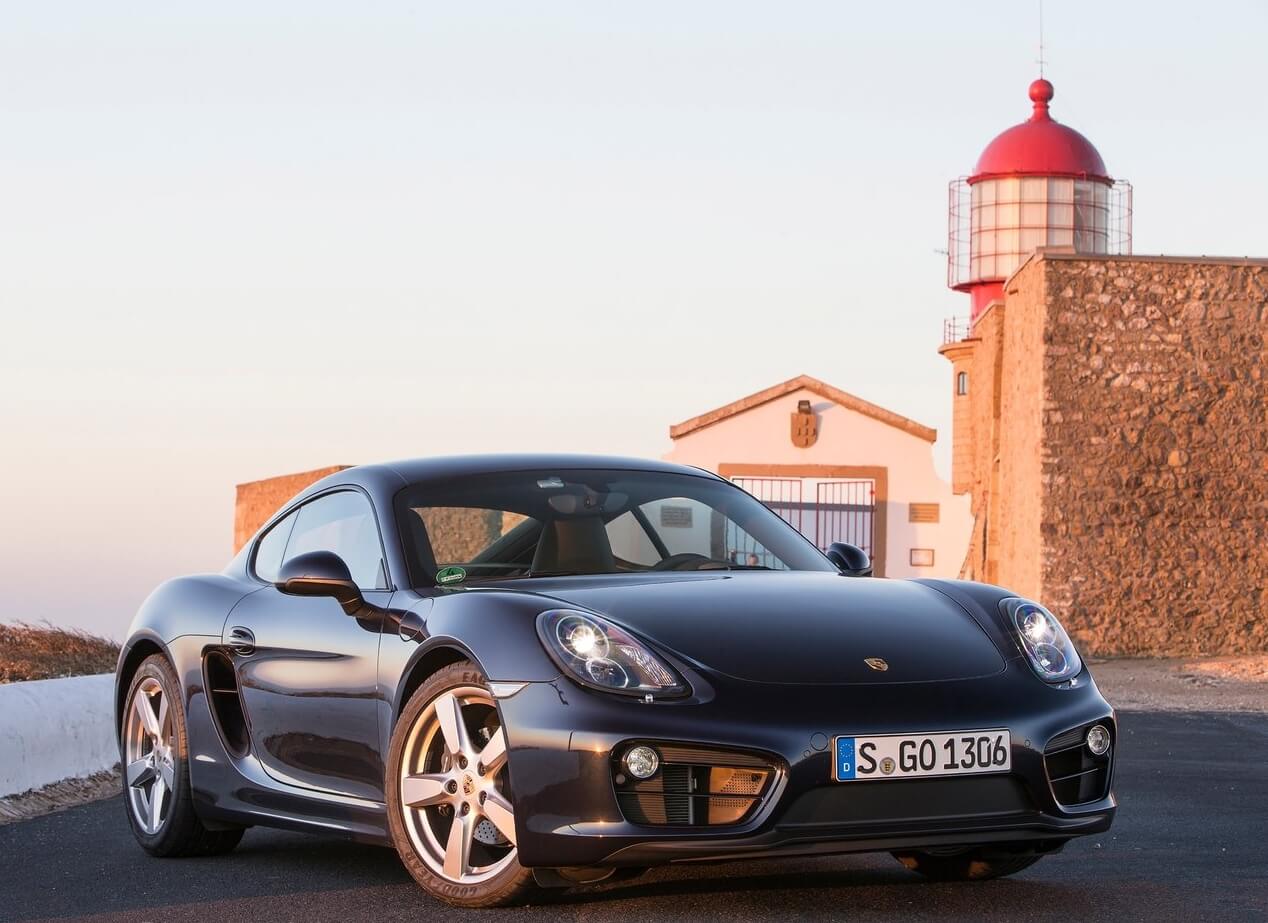
The limited Cayman R of 2011 was about 55 kg lighter than the Cayman S, with a lower suspension and 243 kW (330 PS). It reached 100 km/h in 4.7 seconds with PDK and Sport Chrono and had a top speed of 282 km/h with the manual gearbox.
Second generation 981 (2013–2016)
The 981 Cayman went on sale in spring 2013 as a 2014 model. It used a body that was 40% stiffer in torsion than before and made more use of aluminium, and Porsche claimed up to 15% lower fuel consumption. The base 2.7 gained 10 PS over its predecessor, reaching 202 kW (275 PS), while the 3.4-litre Cayman S produced 239 kW (325 PS). The old 1cars text adds that the new car was about 30 kg lighter and lapped the Nürburgring Nordschleife in under eight minutes.

The GTS of 2014 added 11 kW, for 250 kW (340 PS). In 2015 the Cayman GT4 took a slightly detuned 3.8-litre flat-six from the 911 Carrera S, turned through 180 degrees, with 283 kW (385 PS) and 420 Nm. It came only with a six-speed manual, reached 295 km/h, and 2,500 were built in 2015–2016.
Third generation: the 718 Cayman (2016–2025)
For the 2017 model year Porsche renamed the car 718 Cayman, a reference to the 718 racing car of the late 1950s, and replaced the flat-six with turbocharged flat-four engines. The base 2.0-litre produced 220 kW (300 PS) and the 2.5-litre 718 Cayman S 257 kW (350 PS), with 0–97 km/h in 3.9 seconds for the S. The GTS of October 2017 raised the 2.5 to 272 kW (370 PS).

Critics missed the sound of the six, and in 2020 Porsche brought it back. The GTS 4.0 has a 4.0-litre naturally aspirated flat-six with 294 kW (400 PS) and 420 Nm, and the GT4 uses the same engine with 309 kW (420 PS). The 2021 Cayman GT4 RS took a 4.0-litre unit with 368 kW (500 PS) and 450 Nm. It reached 100 km/h in 3.4 seconds and lapped the Nordschleife 23 seconds faster than the GT4.
| Model | Engine | Power | Gearbox | Notes |
|---|---|---|---|---|
| 718 Cayman | 2.0 turbo flat-four | 220 kW (300 PS) | 6-speed manual or 7-speed PDK | Entry model |
| 718 Cayman S | 2.5 turbo flat-four | 257 kW (350 PS) | Manual or PDK | Variable-geometry turbo |
| 718 Cayman GTS 4.0 | 4.0 flat-six | 294 kW (400 PS) | Manual or PDK | Six-cylinder return, 2020 |
| 718 Cayman GT4 | 4.0 flat-six | 309 kW (420 PS) | Manual or PDK | Track-focused |
| 718 Cayman GT4 RS | 4.0 flat-six | 368 kW (500 PS) | 7-speed PDK | 0–100 km/h in 3.4 s |
Practicality, cabin and safety
Two boots make the Cayman more practical than its looks suggest. According to the old 1cars data, there are 150 litres at the front and 275 litres under the rear hatch, 425 litres in total. The cabin seats two, with a low driving position, a three-dial instrument cluster and a centre screen. All versions have Porsche Stability Management and the airbags of the Porsche Side Impact Protection System. Brakes use four-piston aluminium monobloc callipers, with six-piston front callipers on the more powerful models. Options included LED headlights with dynamic main beam, adaptive cruise control and ventilated seats.

| Parameter | Metric | Imperial |
|---|---|---|
| Layout | Mid-engine, rear-wheel drive | – |
| Seats | 2 | – |
| Boot, front + rear (981, 718) | 150 + 275 l | 5.3 + 9.7 cu ft |
| Kerb weight (987 base, early) | about 1,340 kg | 2,954 lb |
| Top speed (GT4) | 295 km/h (981) | 183 mph |
Rivals and common problems
| Model | Layout | Engines | Power |
|---|---|---|---|
| Porsche 718 Cayman | Mid-engine, RWD | 2.0–4.0 petrol | 220–368 kW |
| Alpine A110 | Mid-engine, RWD | 1.8 turbo | 185–221 kW |
| BMW Z4 (G29) | Front-engine, RWD | 2.0–3.0 turbo | 145–250 kW |
| Audi TT RS | Front-engine, AWD | 2.5 five-cylinder turbo | 294 kW |
Compared with an Alpine A110 S, the 718 Cayman S has about 36 kW more but weighs more. Set any two of these against each other in the 1cars comparison tool, or see where the GT4 RS ranks among the quickest coupés.

On 987 cars, look for signs of the intermediate-shaft bearing and bore-scoring problems known on M97 flat-six engines, and for oil leaks from the rear main seal. On all generations, check the coolant pipes and the radiators, which collect debris in the front intakes. Cars used on track need a close look at brakes and clutch. A specialist pre-purchase inspection with a reading of the engine's over-rev records is worth paying for.


Porsche Cayman evolution in numbers
Did you know?
- The Porsche Cayman ran for 20 years, from 2005 to 2025, over 3 generations in our catalog.
- The longest-running generation is the 718 Cayman 982c (2016–2025): 9 years.
- The biggest jump in power came with the 718 Cayman 982c: up to 368 kW (500 PS), 85 kW more than the Cayman 981c.
Most powerful version, kW
Figures from the 1cars catalog: power is the strongest version of each generation; generations without the figure are left out.
Porsche Cayman: first vs latest generation
| Spec | Cayman 987c | 718 Cayman 982c | Change |
|---|---|---|---|
| Years | 2005–2012 | 2016–2025 | 11 years apart |
| Most powerful version | 243 kW (330 PS) | 368 kW (500 PS) | +125 kW (+51%) |
Oldest and newest generation in the 1cars catalog. Power is the strongest version of each; other rows are shown only when both generations have the figure.
Porsche Cayman in our rankings
- No. 10 of 22 · Biggest boot: coupes (275 l)
- No. 59 of 388 · Power-to-weight: cars (211 kW/t · top 16%)
- No. 189 of 1082 · Longest-running car nameplates (20 years · top 19%)
- No. 222 of 1011 · Most powerful cars (368 kW · top 22%)
- No. 23 of 99 · Smallest coupes (4,372 mm · top 24%)
- No. 24 of 85 · Lightest coupes (1,340 kg · top 29%)
Better power-to-weight than 84% of ranked cars in the 1CARS catalog (No. 59 of 388).
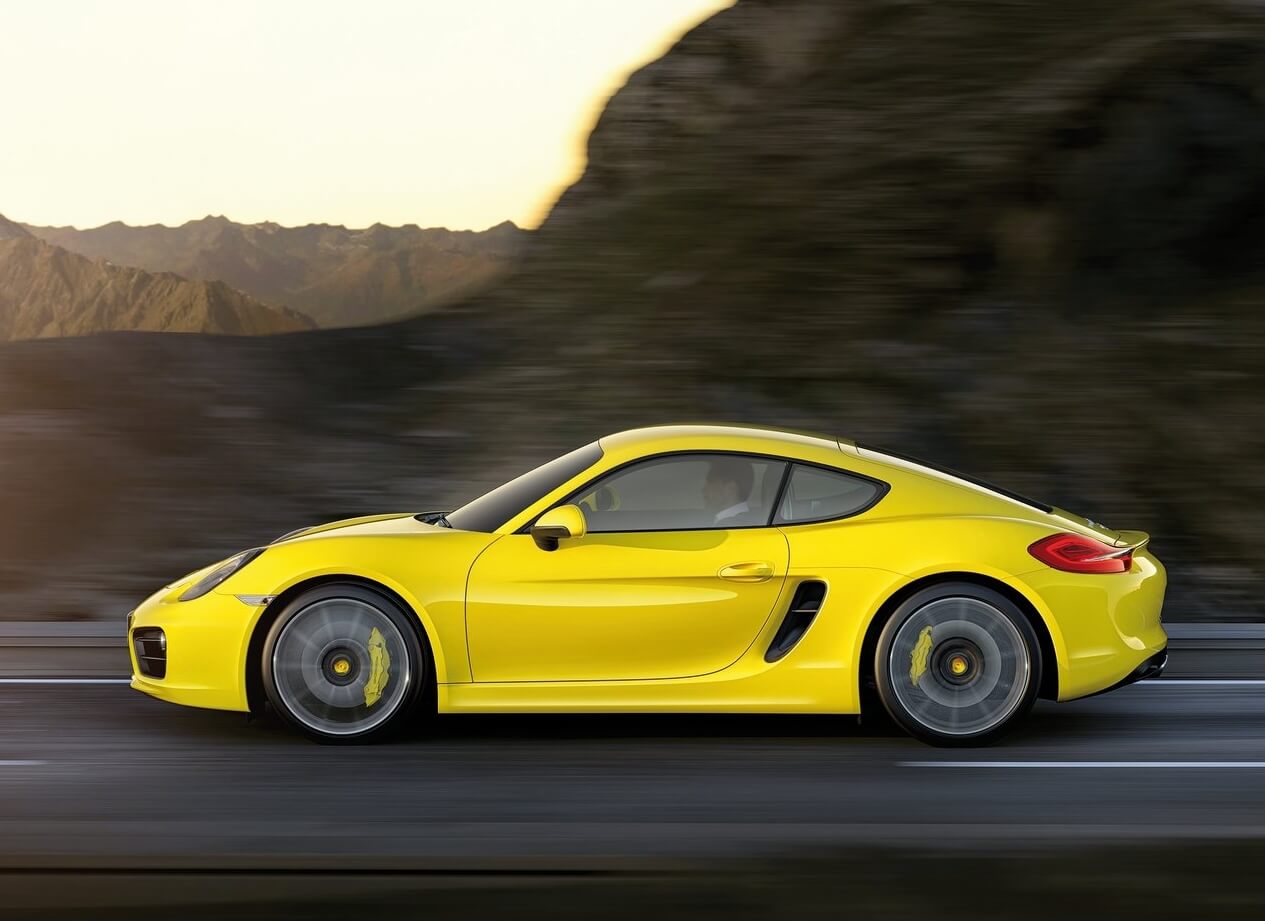
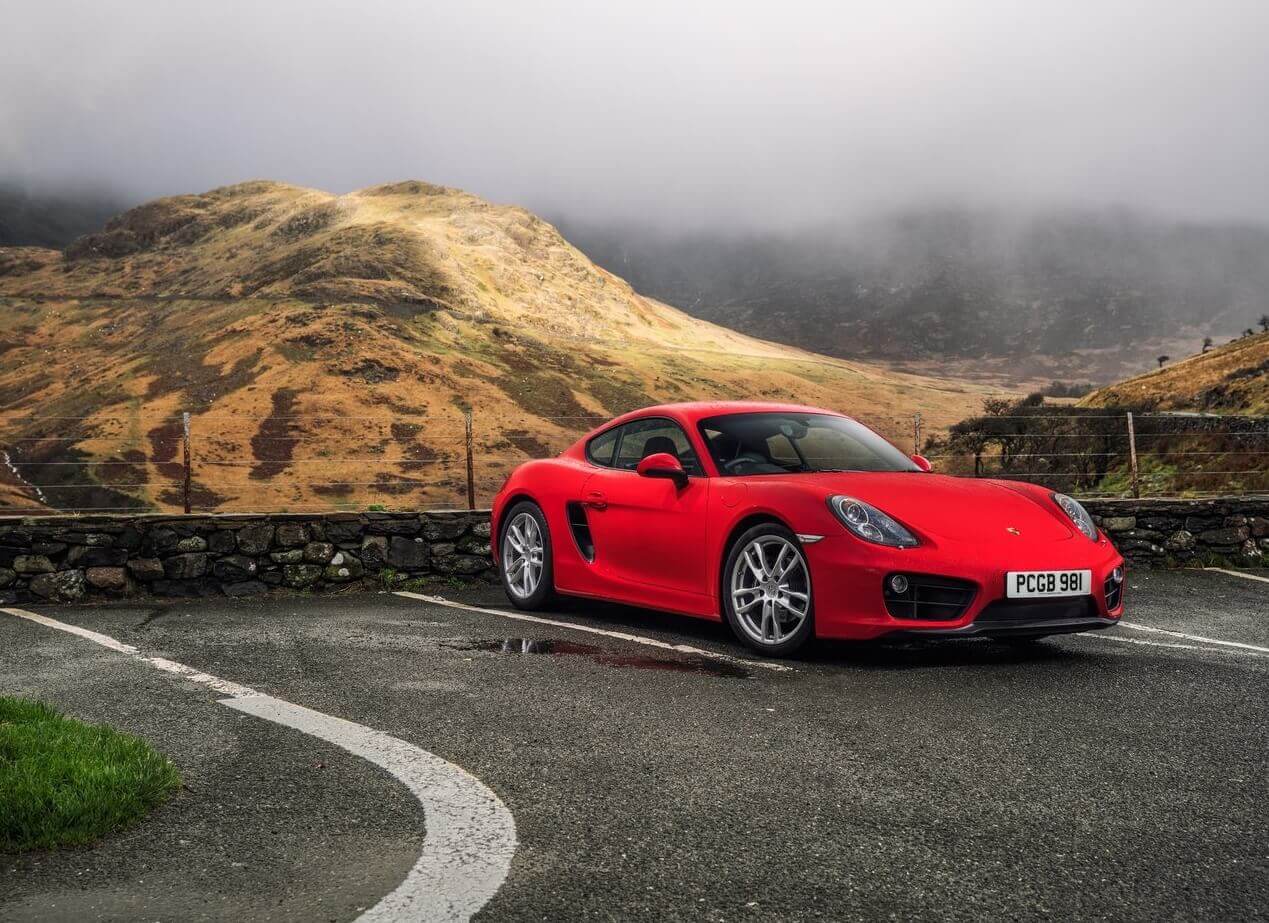
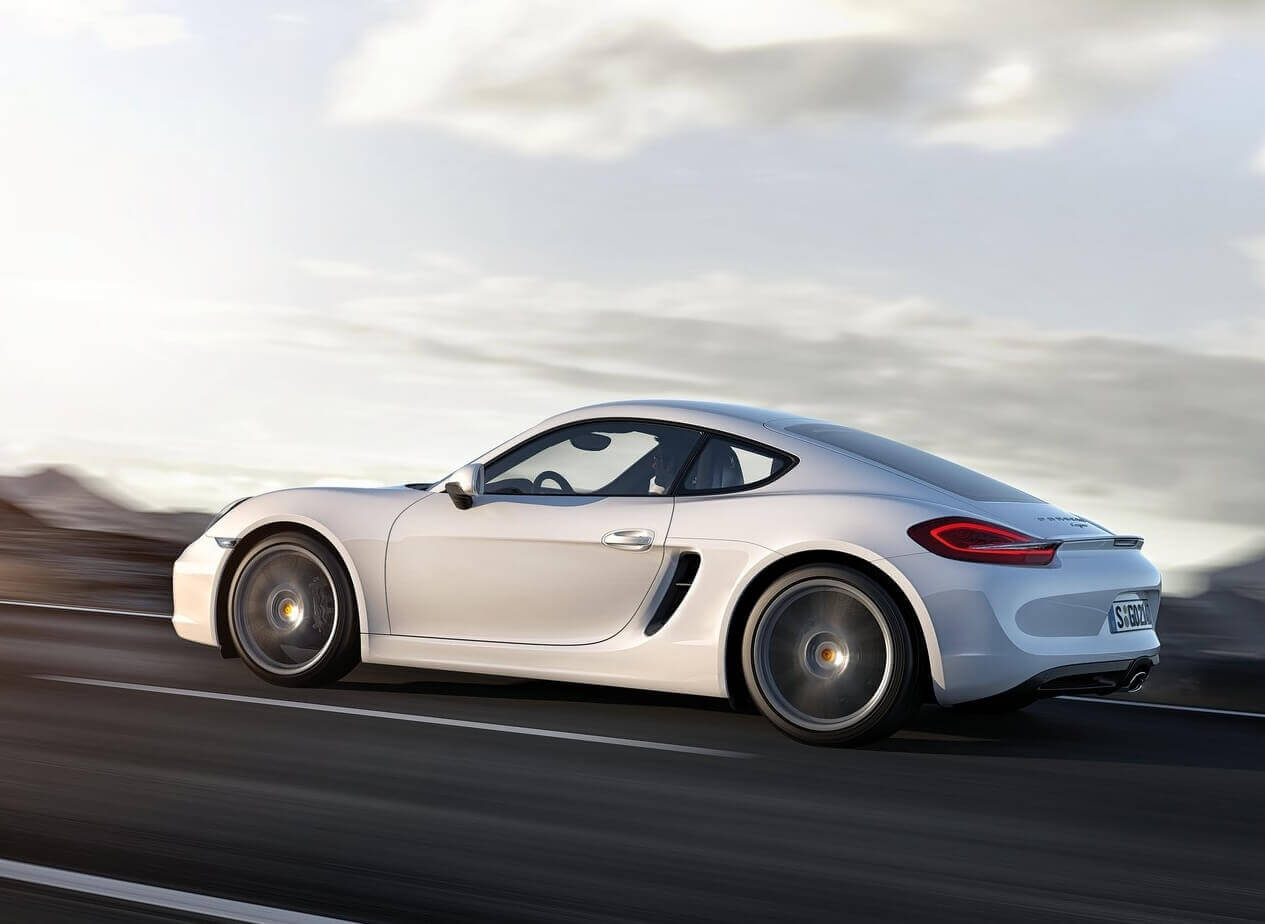
Porsche Cayman photos 30







Porsche Cayman videos 2

Test drive

Video overview
FAQ
How many generations of the Porsche Cayman are there?
There are three: the 987 from 2005 to 2012, the 981 from 2013 to 2016 and the 982, sold as the 718 Cayman, from 2016 until production of the combustion-engined car ended in October 2025.
Which Porsche Cayman generation is the most reliable?
The 981 and the 718 are generally the most robust. Direct-injection 987.2 engines from 2009 are also strong, while early 987 cars with M97 engines need careful checks for bore scoring and intermediate-shaft bearing wear.
What is the most powerful Porsche Cayman?
The 2021 Cayman GT4 RS is the most powerful, with a 4.0-litre flat-six producing 368 kW (500 PS) and 450 Nm. It reaches 100 km/h in 3.4 seconds and was 23 seconds faster than the GT4 on the Nordschleife.
Is the Porsche Cayman available with an automatic gearbox?
Yes. Early 987 cars offered a five-speed Tiptronic automatic, and from 2009 the seven-speed PDK dual-clutch gearbox replaced it. A six-speed manual remained available on most versions, and the GT4 RS was PDK-only.
What are the main rivals of the Porsche Cayman?
Its rivals include the Alpine A110, BMW Z4, Audi TT RS, Lotus Emira and, earlier, the Lotus Evora. The Cayman stands out with its mid-engine balance, two boots and a wide choice of engines.
Data sources
Data checked by an editor against the sources below.
- The text of this article (1cars archive)
- Wikipedia - Porsche Cayman
- Wikipedia - Porsche Boxster and Cayman (987)
- Wikipedia - Porsche Boxster and Cayman (981)
- Wikipedia - Porsche Boxster and Cayman (982)


