
 Jeep CJ
All generations, specs and history
Published Sources (4) Report an error
By Sarah Whitmore, Senior Automotive Writer
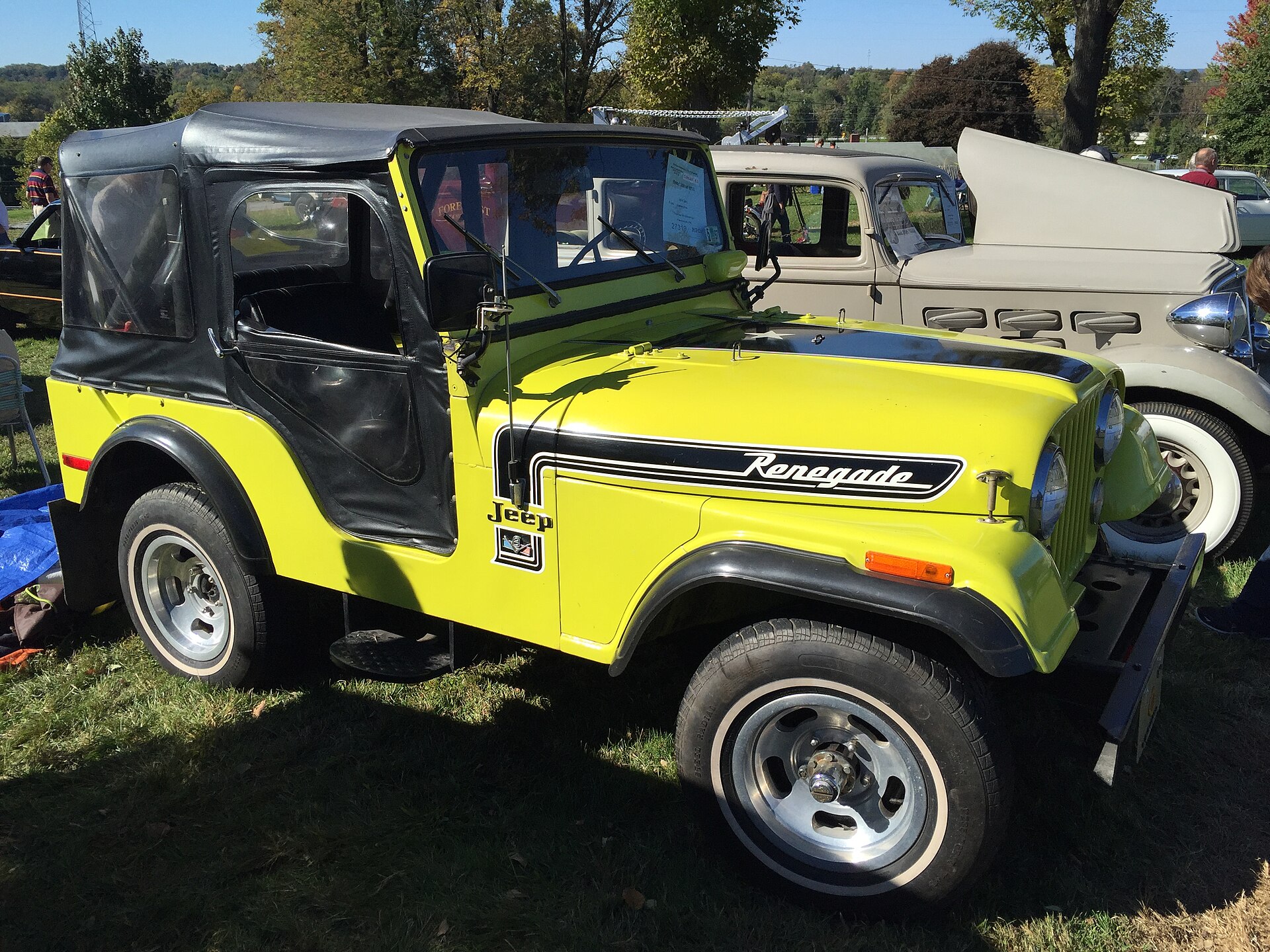
- Built
- 1945–1986
- Generations
- 7 · CJ-2A to CJ-8
- Top power
- 116 kW (158 PS)
Timeline
CJ generations
Click a generation for its own page
CJ-3B and CJ-5 overlapped in 1955–1968, so CJ-5 sits on a second lane
- CJ-2A 1945–1949 · SUV · 45 kW (61 PS)
- CJ-3A 1949–1953 · SUV · 45 kW (61 PS)
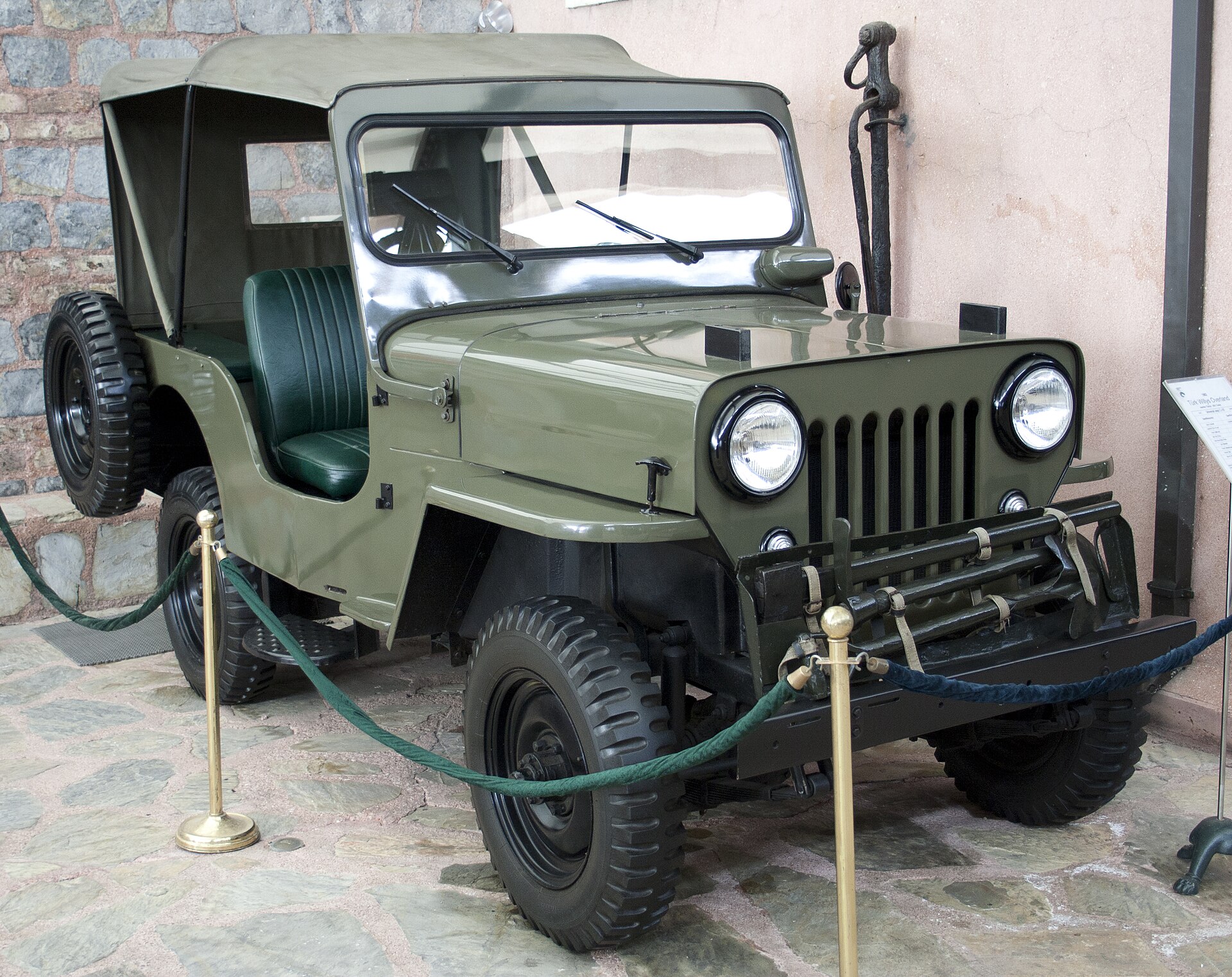
- CJ-3B 1953–1968 · SUV · 54–56 kW (73–76 PS)
- CJ-5 1955–1983 · SUV · 46–116 kW (63–158 PS)
- CJ-6 1955–1981 · SUV
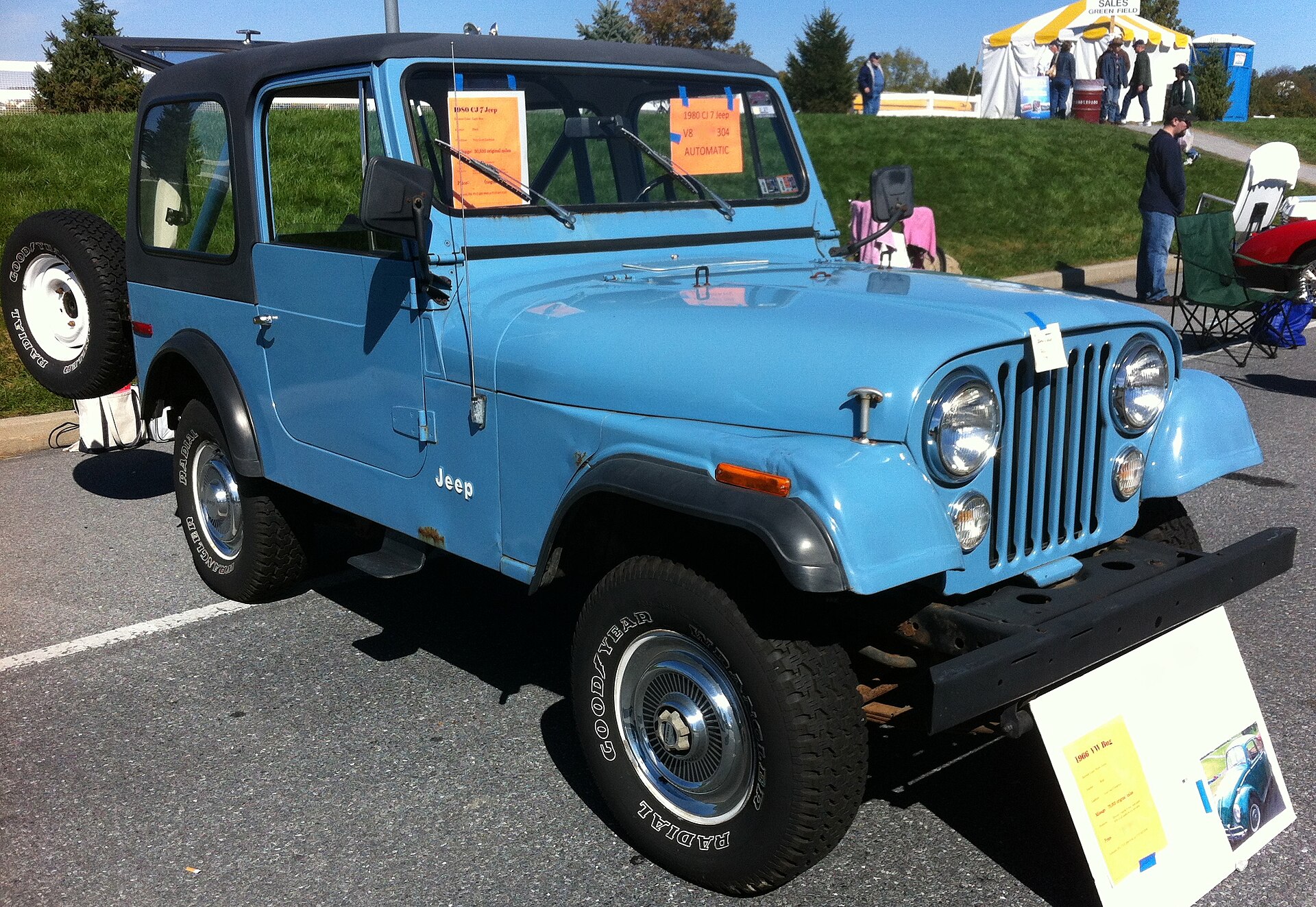
- CJ-7 1976–1986 · SUV
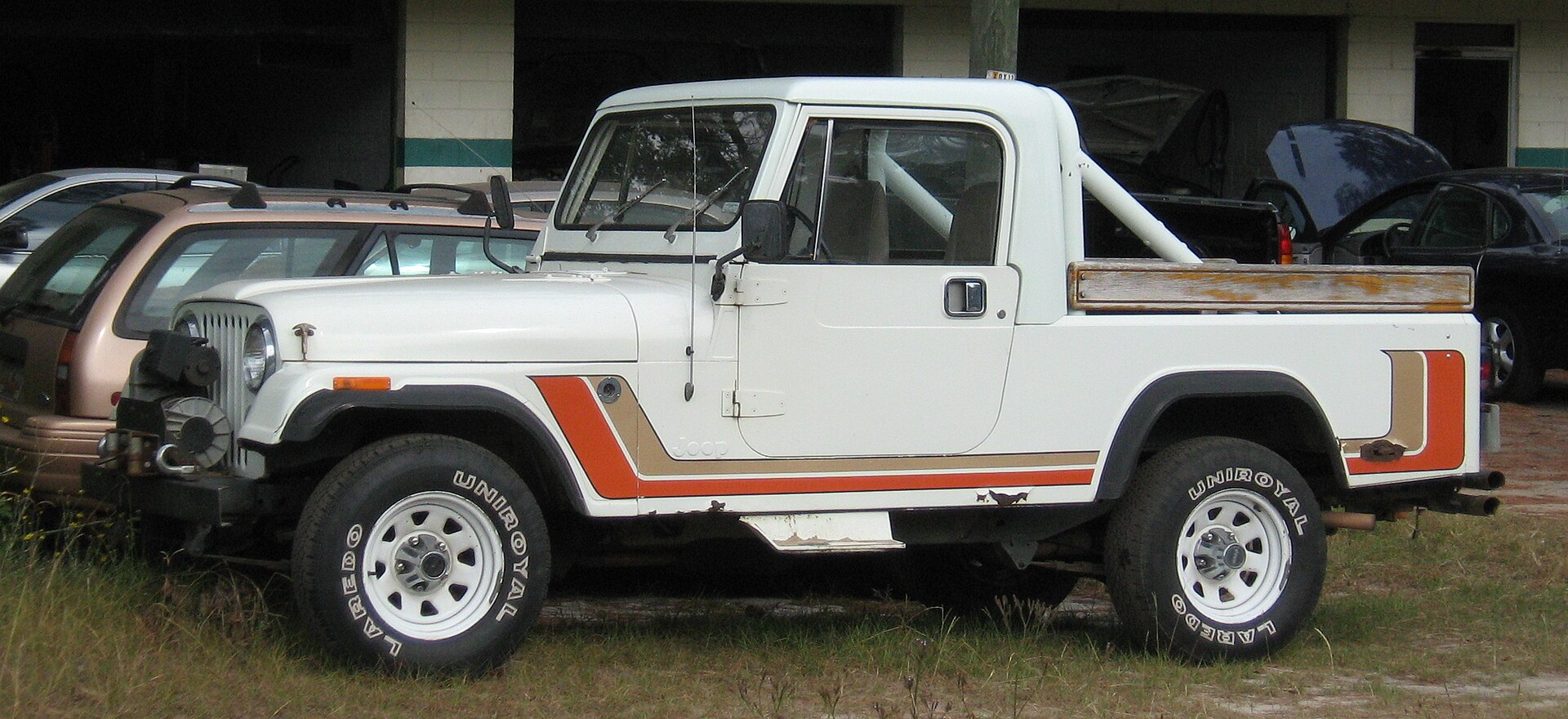
- CJ-8 Scrambler 1981–1986 · Pickup
Newest first · 7 generations since 1945
-
1981
-
1976
- 1955 CJ-5 1955–1983 · SUV · 46–116 kW (63–158 PS) CJ-3B and CJ-5 overlapped in 1955–1968
- 1955 CJ-6 1955–1981 · SUV
-
1953
- 1949 CJ-3A 1949–1953 · SUV · 45 kW (61 PS)
- 1945 CJ-2A 1945–1949 · SUV · 45 kW (61 PS)


All generations by year: CJ-8 Scrambler (1981–1986) · CJ-7 (1976–1986) · CJ-5 (1955–1983) · CJ-6 (1955–1981) · CJ-3B (1953–1968) · CJ-3A (1949–1953) · CJ-2A (1945–1949)
Which one is mine?
Pick the year of first registration to see which generation it is.
The Jeep CJ, for Civilian Jeep, is the line of open four-wheel-drive Jeeps built from 1945 to 1986, from the CJ-2A to the CJ-7 and CJ-8 Scrambler. It began as a peacetime version of the Willys MB with the 45 kW (60 hp) Go Devil four and ended under AMC with sixes and a 304 V8. More than 1.5 million were built in the United States.
In short
- Seven main series: CJ-2A (1945-1949), CJ-3A (1949-1953), CJ-3B (1953-1968), CJ-5 (1955-1983), CJ-6 (1955-1981), CJ-7 (1976-1986) and CJ-8 Scrambler (1981-1986).
- Four owners in 41 years: Willys-Overland, Willys Motors under Kaiser from 1953, Kaiser Jeep from 1963 and American Motors from 1970.
- The CJ-5 was the best seller with 603,303 built over 29 model years; the CJ-7 added 379,299.
- Licence production abroad ran far longer, with Mahindra in India building CJ-based Jeeps until 2010.
Specs by version
Engines
| Version | Engine | Power | Torque | Gearbox | Drive | Production years |
|---|---|---|---|---|---|---|
| CJ-2A 2.2 Go Devil | 2.2 l · 4 cyl · Petrol 2,199 cc | 45 kW 61 PS60 hp | 142 Nm105 lb-ft | 3-sp Manual | Four-wheel drive (4×4) | 1945–1949 |
| CJ-3A 2.2 Go Devil | 2.2 l · 4 cyl · Petrol 2,199 cc | 45 kW 61 PS60 hp | - | 3-sp Manual | Four-wheel drive (4×4) | 1949–1953 |
| CJ-3B 2.2 Hurricane | 2.2 l · 4 cyl · Petrol 2,199 cc | 54 kW 73 PS72 hp | 152 Nm112 lb-ft | 3-sp Manual | Four-wheel drive (4×4) | 1953–1968 |
| CJ-5 2.2 Hurricane | 2.2 l · 4 cyl · Petrol 2,199 cc | 56 kW 76 PS75 hp | 155 Nm114 lb-ft | 3-sp Manual | Four-wheel drive (4×4) | 1955–1971 |
| CJ-5 5.0 V8 304 | 5.0 l · 8 cyl · Petrol 4,982 cc | 112 kW 152 PS150 hp | - | Manual | Four-wheel drive (4×4) | 1972 |
| CJ-5 3.7 Dauntless V6 | 3.7 l · 6 cyl · Petrol 3,687 cc | 116 kW 158 PS156 hp | - | Manual | Four-wheel drive (4×4) | 1965–1971 |
| CJ-7 5.0 V8 304 | 5.0 l · 8 cyl · Petrol 4,982 cc | - | - | - | Four-wheel drive (4×4) | 1976 |
| CJ-8 Scrambler | Petrol | - | - | - | Four-wheel drive (4×4) | 1981–1986 |
Dimensions and weight
Show all 8 versions
| Version | Wheelbase |
|---|---|
| CJ-2A 2.2 Go Devil | 2,032 mm80.0 in |
| CJ-3A 2.2 Go Devil | 2,032 mm80.0 in |
| CJ-3B 2.2 Hurricane | 2,032 mm80.0 in |
| CJ-5 2.2 Hurricane | 2,057 mm81.0 in |
| CJ-5 5.0 V8 304 | 2,121 mm83.5 in |
| CJ-5 3.7 Dauntless V6 | 2,057 mm81.0 in |
| CJ-7 5.0 V8 304 | 2,375 mm93.5 in |
| CJ-8 Scrambler | 2,629 mm103.5 in |
Verified Manufacturer and type-approval data from our catalog · Sources and methodology
Jeep CJ at a glance
| Specification | Jeep CJ |
|---|---|
| Years | 1945-1986 (US production) |
| Production total | more than 1.5 million (Wikipedia) |
| Main plant | Toledo, Ohio (US); CJ-10 also in South Bend, Indiana, and Toluca, Mexico |
| Body styles | open two-door utility with soft or hard top; long-wheelbase CJ-6; CJ-8 pickup-style Scrambler |
| Makers | Willys-Overland, Willys Motors, Kaiser Jeep, American Motors |
| Layout | front engine, rear-wheel drive with selectable front drive, leaf springs, beam axles |
| Engines | 2.2 L I4 (L-134, F-134), Perkins and Isuzu diesels, 3.7 L Buick V6, AMC 3.8 and 4.2 L I6, 5.0 L V8 |
| Power | 45 kW (60 hp, Go Devil) to 116 kW (155 hp, Dauntless V6) |
| Wheelbase | 2,032 mm (80 in, CJ-2A) to 2,629 mm (103.5 in, CJ-6 and CJ-8) |
| Kerb weight | 1,090-1,350 kg (CJ-5, Car & Classic) |
| Top speed | 105-113 km/h (65-70 mph, CJ-5 Hurricane) to 137 km/h (85 mph, CJ-5 304 V8) |
| Price new | USD 1,411 (CJ-3B) and USD 1,475 (CJ-5) in 1955 |
Every series has its own wheelbase and body tub, which is why each counts as a generation in the Jeep catalogue.
| Series | Years | Wheelbase | Launch engine | Built |
|---|---|---|---|---|
| CJ-2A | 1945-1949 | 80 in (2,032 mm) | L-134 Go Devil, 45 kW (60 hp) | 214,760 |
| CJ-3A | 1949-1953 | 80 in (2,032 mm) | L-134 Go Devil, 45 kW (60 hp) | 131,843 |
| CJ-3B | 1953-1968 | 80 in (2,032 mm) | F-134 Hurricane, 54-56 kW (72-75 hp) | about 196,000 (155,494 in the US) |
| CJ-5 | 1955-1983 | 81 in (2,057 mm); 83.5-84 in from 1972 | F-134 Hurricane, 56 kW (75 hp) | 603,303 |
| CJ-6 | 1955-1981 | 101 in (2,565 mm); 103.5 in from 1972 | F-134 Hurricane | 50,172 |
| CJ-7 | 1976-1986 | 93.5 in (2,375 mm) | AMC sixes, 304 V8 | 379,299 |
| CJ-8 Scrambler | 1981-1986 | 103.5 in (2,629 mm) | as CJ-7 | about 27,800 |
CJ-2A and CJ-3A, the post-war Universal Jeep
Willys-Overland had built the wartime Willys MB in huge numbers and wanted a civilian product before the contracts ran out. The CJ-2A of 1945 was the result, sold as the Universal Jeep and aimed at farmers as much as anyone. It kept the 2.2-litre L-134 Go Devil four with 45 kW (60 hp) and 142 Nm (105 lb-ft), but used a T-90 three-speed gearbox in place of the MB's T-84. The grille went from nine slots to seven, and a power take-off let owners drive saws, pumps and farm implements from the engine.
The CJ-3A of 1949 changed little beyond a one-piece windscreen and a reshaped rear wheel well that let the driver's seat move back. A stripped Farm Jeep followed in 1951. Between them the two early series reached 346,603 cars, and Mitsubishi assembled about 550 CJ-3A-based J1 and J2 models for Japanese agencies.
Hurricane power and the tall-bonnet CJ-3B
Kaiser bought Willys-Overland in 1953, the same year the CJ-3B arrived. Its F-134 Hurricane engine moved the inlet valves into the head, raising output to 54-56 kW (72-75 hp) and torque to 152-155 Nm (112-114 lb-ft) depending on compression. The taller engine needed a higher grille and bonnet, which remains the quickest way to tell a 3B from a 2A or 3A. In 1955 it cost USD 1,411, and a four-speed gearbox became an option in 1963 for an extra USD 194.
The CJ-3B stayed in American production until 1968 and lived on abroad. Mitsubishi built Jeeps from 1953 to 1998, about 200,000 in total. Türk Willys Overland started in 1954, VIASA in Spain stretched the 3B into its own long model, and Mahindra kept building CJ-derived Jeeps in India until 1 October 2010.

CJ-5 and CJ-6, the military shape for civilians
The CJ-5, announced on 11 October 1954 and sold from 1955, took its rounded bonnet and wings from the military M38A1. It was about five inches longer than the CJ-3B, had a full-width body tub with more foot room, and gained a glovebox, while the drivetrain stayed close to the 3B's. The price in 1955 was USD 1,475. The CJ-6 used the same front with a 101 in (2,565 mm) wheelbase and sold 50,172 over its life, although US sales stopped after 1975.
Under Kaiser the engine list widened. A Perkins 192 cu in diesel of 46 kW (62 hp) was optional from 1961 to 1965, and from 1965 the Buick-built 225 cu in Dauntless V6 delivered 116 kW (155 hp). Car & Classic puts a Hurricane CJ-5 at 23-27 seconds from 0-60 mph and the V6 at 14-17 seconds.

AMC engines, the CJ-7 and the special editions
American Motors bought Kaiser Jeep in 1970 and fitted its own engines from 1972: the 232 cu in six as standard, the 258 as an option and the 304 V8, rated at 112 kW (150 hp) net in 1972; Wikipedia quotes 93 kW (125 hp) for later years, so figures vary between sources. The wheelbase grew by 2.5 in at the same time. A 1976 update brought a stronger frame, new body mounts, better steering and front disc brakes on later trucks.
The CJ-7 also arrived in 1976 with a 93.5 in (2,375 mm) wheelbase, a longer and taller body and the option of Quadra-Trac, an automatic four-wheel-drive system. Engines over its life included AMC and GM four-cylinders, the 258 six, the 304 V8 and an Isuzu 2.4-litre diesel. Trim packages sold the image: Renegade, Laredo and the Golden Eagle with its bonnet eagle, gold wheels and tan Levi's seats. For 1979 AMC marked 25 years of the CJ-5 with the Silver Anniversary edition in Quick Silver paint; AMC claimed 1,000, though a registry suggests about 850.

Scrambler, the rollover story and the Wrangler
The CJ-8 Scrambler of 1981 put a short pickup bed on a 103.5 in (2,629 mm) wheelbase. Ronald Reagan owned one, and about 230 were built for the postal service in Alaska. Production tables show 27,792 built from 1981 to 1986. The export-focused CJ-10 pickup came from South Bend and Toluca.
In December 1980 the CBS programme 60 Minutes showed a CJ-5 rolling over in a demonstration by the Insurance Institute for Highway Safety. It later emerged that the testers achieved eight rollovers in 435 runs and had added hidden weights. The CJ-5 ended in 1983, and the CJ-7 and Scrambler in 1986. The Jeep Wrangler, the YJ, replaced them for 1987. The obvious rival abroad was the Land Rover Series, launched in 1948 as a farm and utility vehicle along the same lines.

Jeep CJ today: what to check when buying
Originality is the first question. CJs were built to be modified, and Hagerty notes that untouched examples are rare and usually either restored or badly worn. Check that the bonnet, grille, engine and frame match the claimed series: a CJ-3B has the tall bonnet, a CJ-5 the rounded wings, and a 1972-on CJ-5 should carry an AMC engine. Early CJ-2As may sit on modified MB frames.
Rust protection was poor from new, so inspect the frame rails, body tub floor, footwells and body mounts. Car & Classic adds drum brakes all round on early cars, wandering steering from worn linkages and old wiring and fuel hoses as fire risks. Soft tops rot quickly. Parts supply is wide.
Values vary with originality more than series. Car & Classic listing data, checked in November 2026, showed Dutch CJ-5 sales from EUR 6,856 to EUR 22,566, with an average of EUR 16,398 in 2026. Hagerty ranks the CJ-3B Farm Jeep, the 1979 CJ-5 Silver Anniversary and the CJ-7 Golden Eagle among the most valuable versions.
Jeep CJ evolution in numbers
Did you know?
- The Jeep CJ ran for 41 years, from 1945 to 1986, over 7 generations in our catalog.
- The biggest jump in power came with the CJ-5: up to 116 kW (158 PS), 60 kW more than the CJ-3B.
Most powerful version, kW
Figures from the 1cars catalog: power is the strongest version of each generation; generations without the figure are left out.
Jeep CJ: first vs latest generation
| Spec | CJ-2A | CJ-8 Scrambler | Change |
|---|---|---|---|
| Years | 1945–1949 | 1981–1986 | 36 years apart |
| Wheelbase | 2,032 mm | 2,629 mm | +597 mm |
Oldest and newest generation in the 1cars catalog. Power is the strongest version of each; other rows are shown only when both generations have the figure.
Jeep CJ in our rankings
- No. 24 of 173 · Biggest engines: SUVs and crossovers (4,982 cc · top 14%)
- No. 215 of 808 · Biggest engines: cars (4,982 cc · top 27%)
- No. 108 of 174 · Most powerful cars of the 1960s (116 kW · top 63%)
- No. 106 of 171 · Most powerful cars of the 1970s (112 kW · top 63%)
- No. 938 of 1243 · Most powerful cars (116 kW · top 76%)
- No. 261 of 317 · Most powerful SUVs and crossovers (116 kW · top 84%)
Bigger engine than 86% of ranked SUVs and crossovers in the 1CARS catalog (No. 24 of 173).
FAQ
What does CJ stand for on a Jeep?
CJ stands for Civilian Jeep. Willys-Overland used it from the CJ-2A of 1945 to separate peacetime Jeeps from the military MB, and the name lasted under Kaiser and AMC until the CJ-7 and CJ-8 ended in 1986.
How many Jeep CJs were built?
More than 1.5 million in the United States, according to Wikipedia. The CJ-5 accounts for 603,303, the CJ-7 for 379,299 and the CJ-2A for 214,760, while licence builders such as Mitsubishi added about 200,000 more.
What is the difference between a CJ-5 and a CJ-7?
Mainly the wheelbase and doors. The CJ-5 rode on 81 in (later 83.5-84 in) and stayed in production until 1983, while the 1976 CJ-7 used 93.5 in, had a longer, taller body and offered Quadra-Trac four-wheel drive.
How much is a Jeep CJ-5 worth?
Most CJ-5s change hands for well under EUR 25,000. Car & Classic data for the Netherlands, checked in November 2026, showed sales between EUR 6,856 and EUR 22,566 in 2026, with an average of EUR 16,398. Original special editions such as the Silver Anniversary are worth more.
What replaced the Jeep CJ?
The Jeep Wrangler YJ, launched for 1987 after the CJ-7 and CJ-8 Scrambler ended in 1986. AMC still owned Jeep at the time; Chrysler bought AMC in 1987.
Data sources
Data checked by an editor against the sources below.
- Wikipedia - Jeep CJ
- Hagerty - Media
- Curbsideclassic - Curbside Classic Willys Jeep Cj 5 1955 1963 The Making Of An Icon
- Carandclassic - Jeep Cj5 Models And Specs


