
 Volkswagen LT
All generations, specs and history
Published Sources (1) Report an error
By Felix Hartmann, Automotive Technology & EV Contributor
- Built
- 1975–2006
- Generations
- 2
Timeline
LT generations
Click a generation for its own page

Newest first · 2 generations since 1975
- 1996 II 1996–2006
-
1975
All generations by year: LT II (1996–2006) · LT I (1975–1996)
Which one is mine?
Pick the year of first registration to see which generation it is.
- LT II 1996–2006
- LT I 1975–1996
Which LT to choose
Our verdict · Felix Hartmann
Before buying a high-roof van or camper, check its height against your garage door with our garage fit tool.
- For a classic camper: an LT1 with the 2.4 six-cylinder diesel or turbodiesel, ideally after the 1983 facelift with its updated interior.
- For off-road use: a factory Typ 29 4x4 (1985–1989) or one of the 156 Sülzer conversions, both rare today.
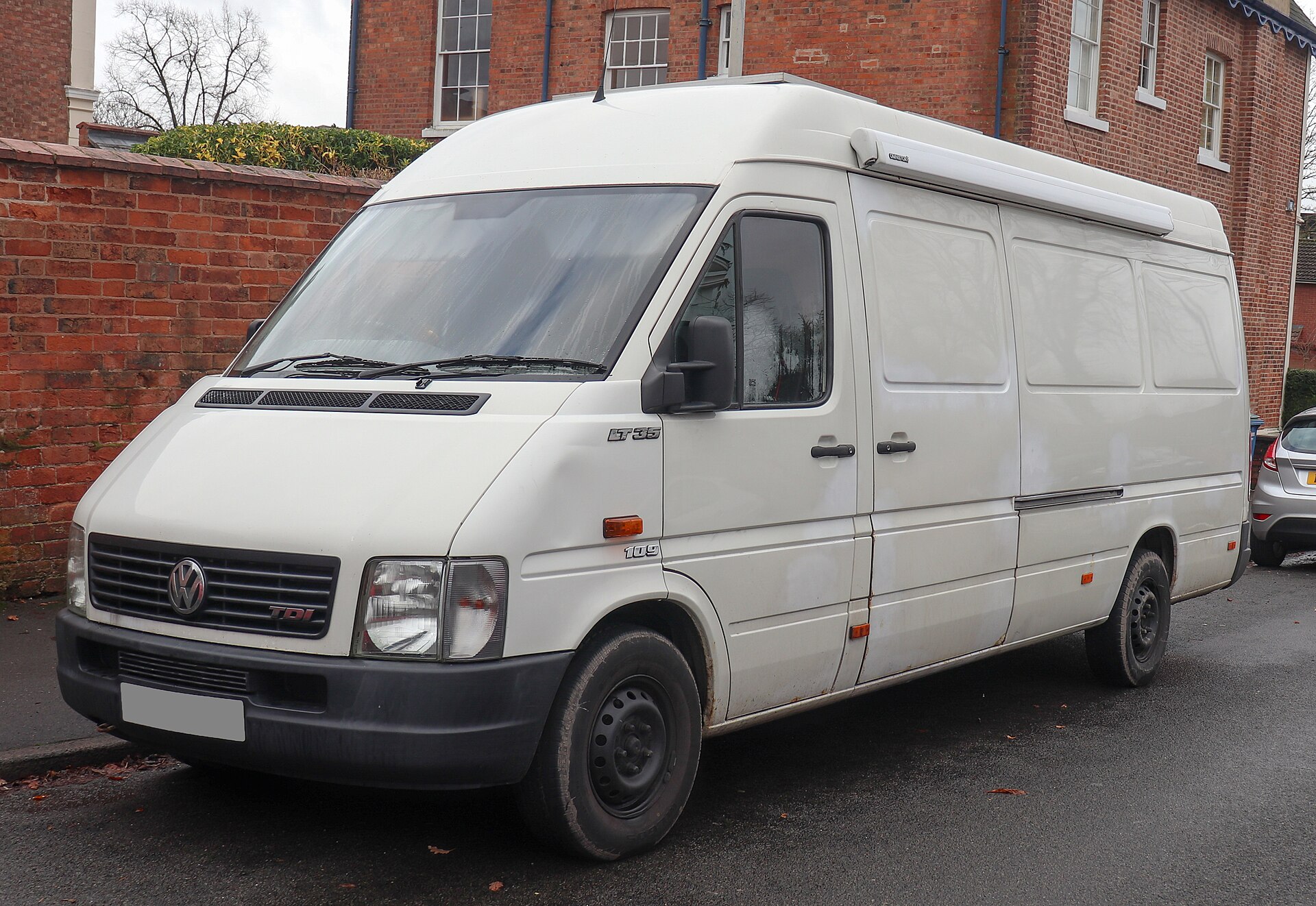
- For daily work: an LT2 with the 2.5 TDI five-cylinder; the 80 kW (109 PS) ANJ/AVR version was built longest, from 1999 to 2006.
- For heavy loads and towing: the 2.8 TDI common rail of 2002–2006 with 116 kW (158 PS) and 331 Nm.
The Volkswagen LT was Volkswagen's large van and light truck from 1975 to 2006. The name stands for Lasten-Transporter, German for load transporter. Two generations were built: the first, with its forward-control cab and Volkswagen, Perkins and Audi-derived engines, ran for 21 years; the second, developed together with Mercedes-Benz, shared its body with the Sprinter. In 2006 the Crafter took over.
In short
- LT1 (1975–1996): forward-control van and truck from 2.8 to 5.6 tonnes gross weight, about 470,000 built.
- LT2 (1996–2006): rear-wheel-drive van on the Mercedes-Benz Sprinter body, about 350,000 built in nine years.
- Engines from the 48 kW (65 PS) Perkins diesel of 1976 to the 116 kW (158 PS) 2.8 TDI common-rail of 2002–2006.
- Built as panel van, window van, pickup, crew cab, chassis cab and camper base; 4x4 versions existed for the first generation.
LT at a glance
| Specification | Volkswagen LT |
|---|---|
| Production | 1975–2006 (LT1 1975–1996, LT2 1996–2006) |
| Type codes | Typ 28, Typ 21, Typ 29 (4x4) for LT1; Typ 35 for LT2 |
| Class | large van / light commercial vehicle |
| Gross weight | 2.8–5.6 t (LT1), 2.6–4.6 t (LT2) |
| Body styles | panel van, window van, high roof, pickup, double cab, chassis cab, platform |
| Layout | front engine, rear-wheel drive; 4x4 on LT1 (Typ 29) |
| Power range | 48–116 kW (65–158 PS) |
| Related models | MAN-VW G series (1979–1993); Mercedes-Benz Sprinter (LT2) |
| Predecessor / successor | none / Volkswagen Crafter |
The LT belongs to our Volkswagen catalogue. Its successor has its own article on Crafter generations and load space, and the smaller van of the same era is covered in our Volkswagen Transporter overview.
Volkswagen LT generations
| Generation | Type code | Years | Body styles | Engines | Power (kW / PS) |
|---|---|---|---|---|---|
| LT1 | 28, 21, 29 (4x4) | 1975–1996 | van, window van, pickup, double cab, chassis cab | 2.0 and 2.4 petrol; 2.7 Perkins diesel, 2.4 diesel and turbodiesel | 48–75 kW (65–102 PS) |
| LT2 | 35 | 1996–2006 | van (three wheelbases), crew cab, chassis cab | 2.3 petrol; 2.5 SDI/TDI, 2.8 TDI | 55–116 kW (75–158 PS) |
LT1: the forward-control van of 1975
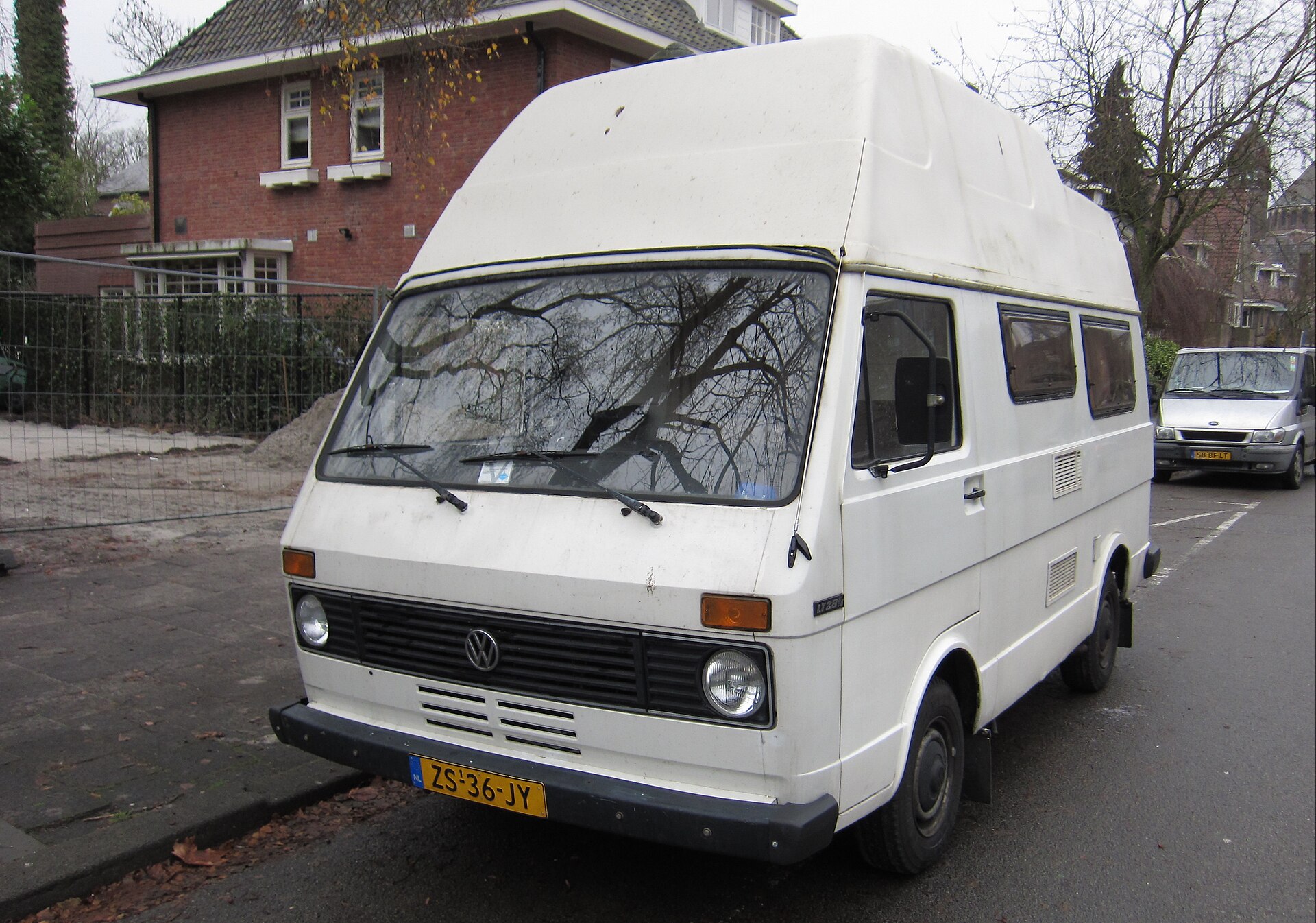
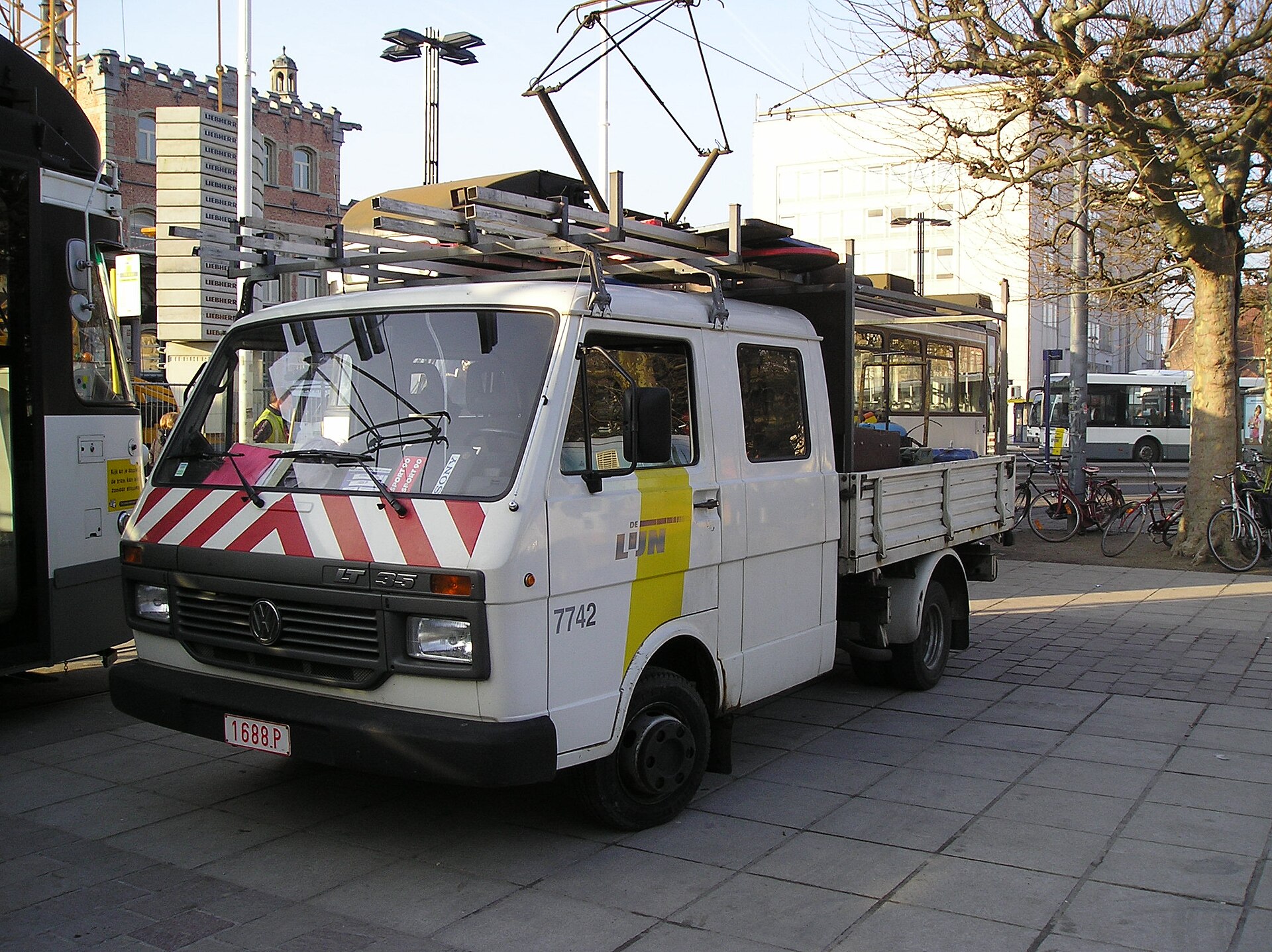
The first LT was launched in Berlin in 1975. It was a forward-control design, with the cab above the front axle, and it was offered in an unusually wide range of weights and wheelbases. The light LT 28, LT 31 and LT 35 covered 2.8 to 3.5 tonnes gross weight. The heavier LT 40 to LT 55 used a solid front axle, and the 5.6-tonne LT 55 arrived about two years after the 1983 facelift.
Three wheelbases were available: 2,500 mm, 2,950 mm and 3,650 mm, all with a body width of 2,085 mm. The longest wheelbase was 1,150 mm, or 46%, longer than the shortest. Bodies included panel vans, window vans, pickups, double cabs, platform trucks and chassis cabs for special bodies, with standard and high roofs.
Production started with 6,608 vehicles in 1975 and peaked at 34,383 in 1980. Totals differ: Wikipedia gives 471,221 for 1975–1996, while its yearly table adds up to 467,919.
Facelifts of 1983, 1986 and 1993
The 1983 update brought a new interior and dashboard, a new engine cover in the cab, a turbodiesel and a six-cylinder petrol engine. In 1986 rectangular headlamps replaced the round ones. A final change in spring 1993 added a grey plastic grille and rear lamp trims, and new diesel engines replaced the older ones.
LT1 4x4 and special versions
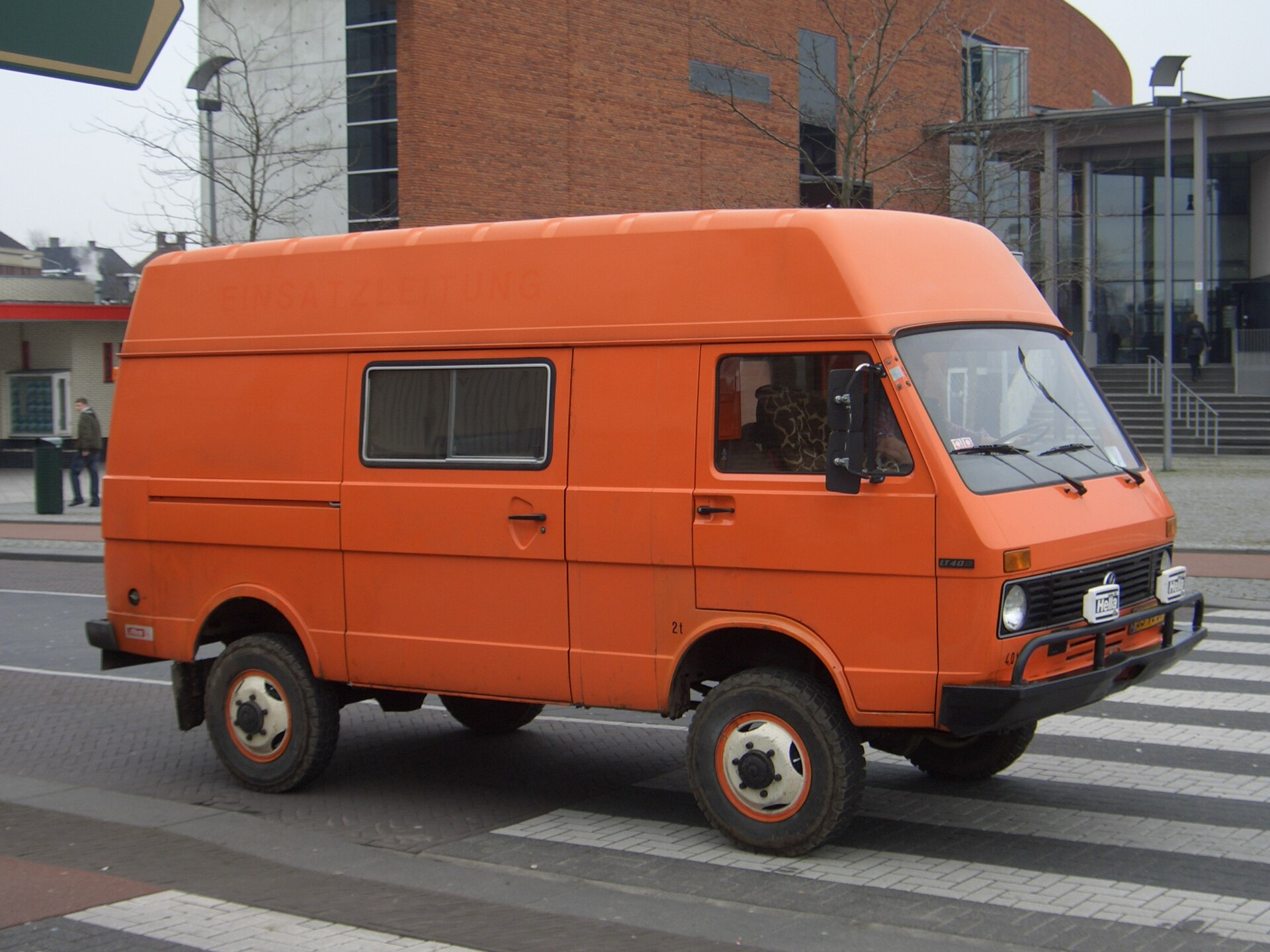
All-wheel-drive LTs began with the conversion specialist Sülzer, which built 156 six-cylinder LT 40 and LT 45 4x4s. Volkswagen took over in 1985 and built about 1,250 more as Typ 29. The transfer case was a New Process 208, replaced by the 241 in 1993. The Dutch firm De Vries built three 4x4 LTs, and one of them took part in the 1983 Dakar Rally. Steyr-Puch also used LT underpinnings for its Noriker. Above the LT, Volkswagen and MAN built a heavier joint range from 1979 to 1993, the MAN-VW G series for 6 to 10 tonnes gross weight.


LT1 engines
| Engine | Code | Years | Power | Torque |
|---|---|---|---|---|
| 2.0 petrol I4 (carburettor) | CH | 1975–1982 | 55 kW (75 PS) | 152 Nm |
| 2.0 petrol I4 (carburettor) | CL | 1976–1982 | 52 kW (71 PS) | 132 Nm |
| 2.4 petrol I6 (carburettor) | DL | 1982–1992 | 66 kW (90 PS) | - |
| 2.4 petrol I6 (injection) | 1E | 1988–1995 | 69 kW (94 PS) | - |
| 2.7 Perkins diesel I4 | CG | 1976–1982 | 48 kW (65 PS) | - |
| 2.4 diesel I6 | CP / DW | 1978–1992 | 55 kW (75 PS) | 155 Nm |
| 2.4 diesel I6 | 1S / ACT | 1988–1995 | 51 kW (69 PS) | 145 Nm |
| 2.4 turbodiesel I6 | DV | 1982–1992 | 75 kW (102 PS) | 195 Nm |
| 2.4 turbodiesel I6 | 1G | 1988–1992 | 68 kW (92 PS) | - |
| 2.4 turbodiesel I6, intercooled | ACL | 1991–1995 | 70 kW (95 PS) | 220 Nm |
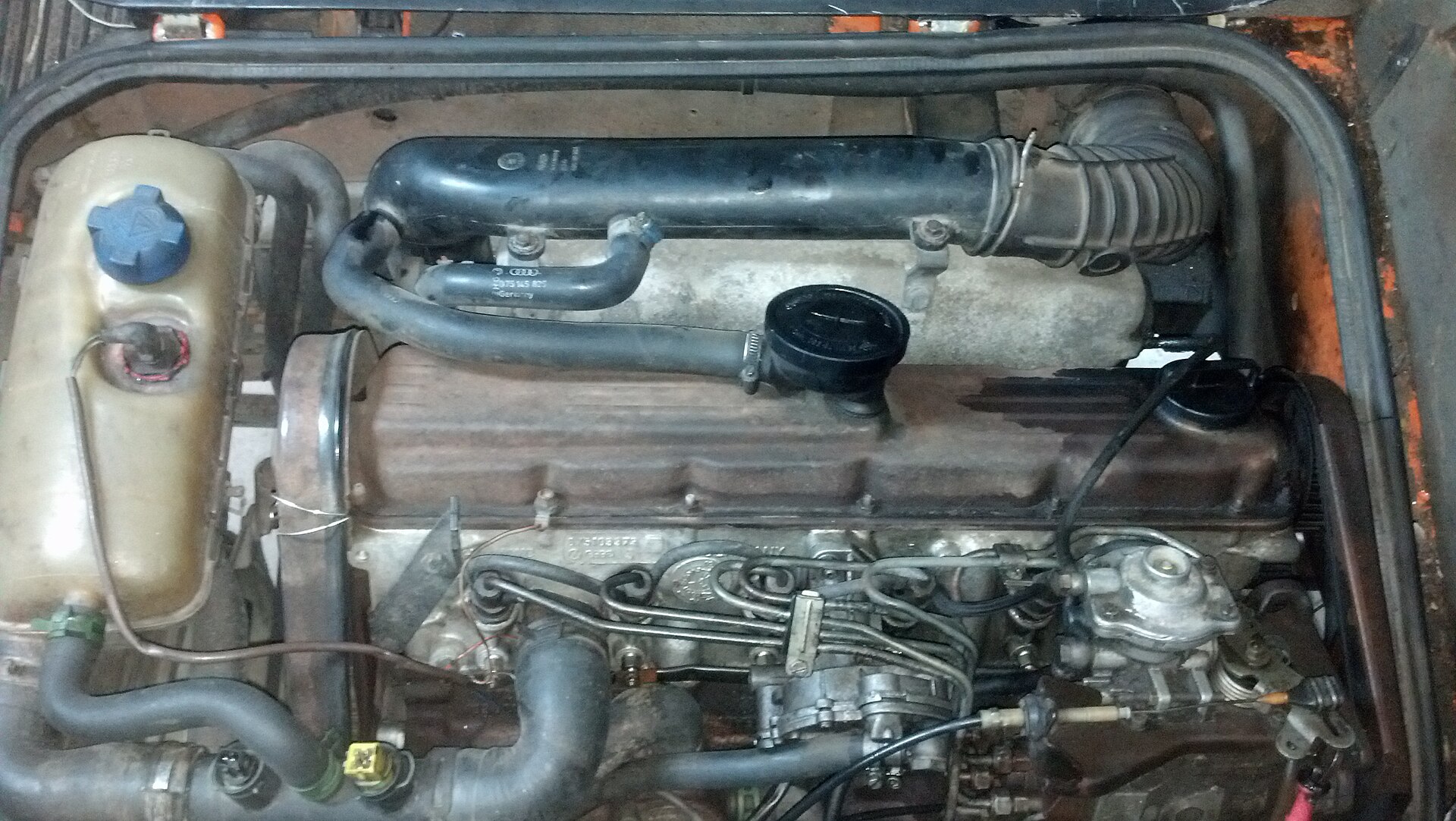
The 2.0 petrol four was related to the Audi 100 engine. The first diesel came from Perkins; from 1978 it was joined by a Volkswagen six-cylinder diesel derived from the Golf engine family, and the Perkins unit was dropped in 1982.

LT2: the Sprinter-based van of 1996
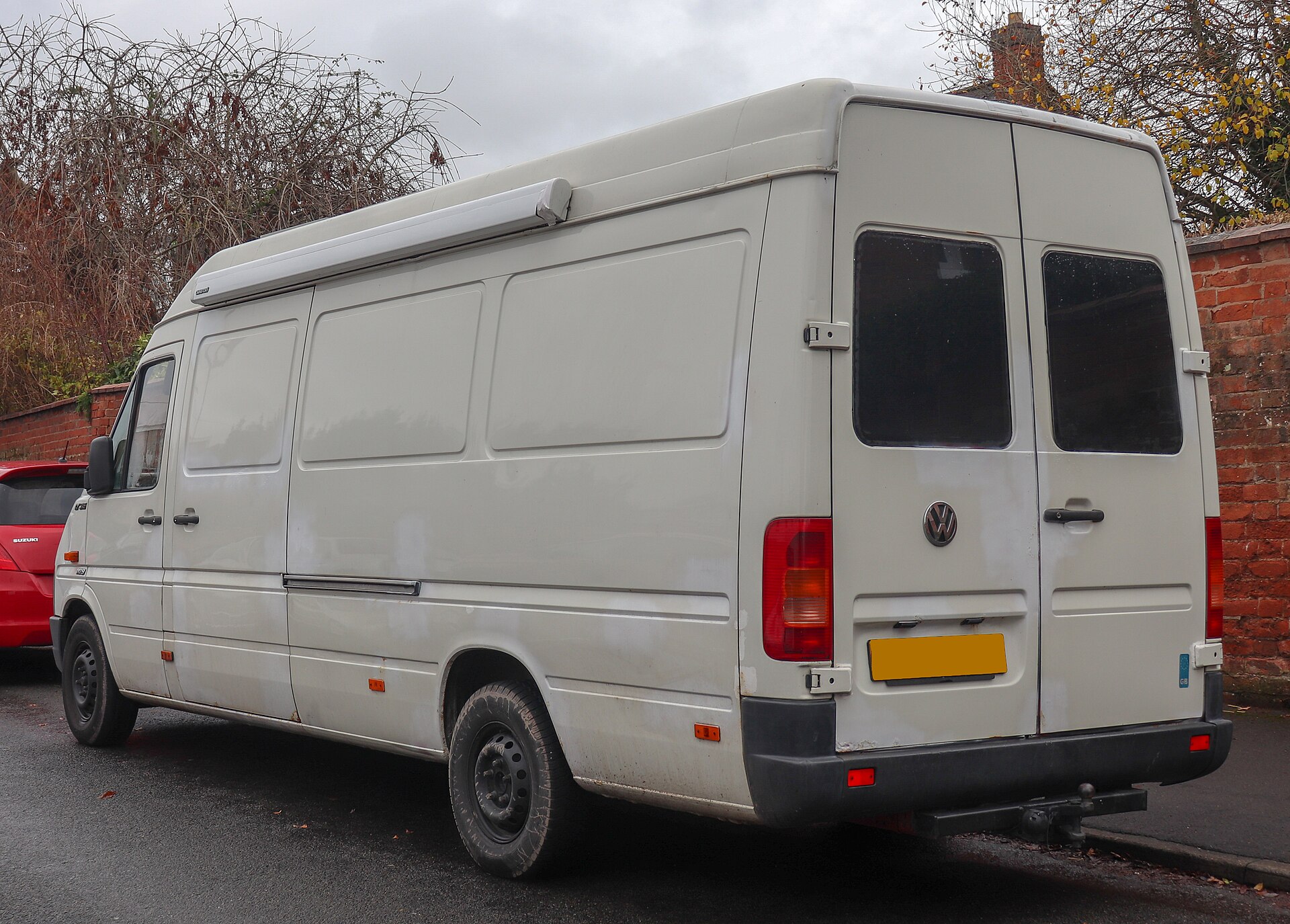
The second LT appeared in 1996 as a product of the commercial-vehicle cooperation between Volkswagen and Mercedes-Benz. It shared its body shell with the Mercedes-Benz Sprinter, but Volkswagen fitted its own engines and gearboxes. The layout changed completely: instead of a forward-control cab, the LT2 had a longitudinal engine under a short bonnet and rear-wheel drive.
The weight range was 2.6 to 4.6 tonnes. Volkswagen offered panel vans in three wheelbases, platform trucks, crew cabs and chassis for special bodies, plus a special-order articulated XLT.
| Engine | Code | Years | Power | Torque |
|---|---|---|---|---|
| 2.3 petrol I4 16V | AGL | 1996–2001 | 105 kW (143 PS) | 210 Nm |
| 2.5 SDI I5 | AGX | 1996–2001 | 55 kW (75 PS) | 160 Nm |
| 2.5 TDI I5 | BBE | 2001–2006 | 61 kW (83 PS) | 200 Nm |
| 2.5 TDI I5 | APA | 1999–2001 | 66 kW (90 PS) | 220 Nm |
| 2.5 TDI I5 | BBF | 2001–2006 | 70 kW (95 PS) | 240 Nm |
| 2.5 TDI I5 | AHD | 1996–1999 | 75 kW (102 PS) | 250 Nm |
| 2.5 TDI I5 | ANJ / AVR | 1999–2006 | 80 kW (109 PS) | 280 Nm |
| 2.8 TDI I4 | AGK | 1997–1998 | 92 kW (125 PS) | 280 Nm |
| 2.8 TDI I4 | ATA | 1999–2002 | 96 kW (131 PS) | 300 Nm |
| 2.8 TDI I4 common rail | AUH / BCQ | 2002–2006 | 116 kW (158 PS) | 331 Nm |
Over its ten years the LT2's most powerful diesel more than doubled the output of the base SDI (116 against 55 kW). Production ended in September 2006 after about 350,000 LT2s. A third LT generation had been planned but was cancelled; its place was taken by the Crafter, launched later in 2006. A competitor of that era is described in our Mercedes-Benz Sprinter overview.


Key specifications: LT 35 2.8 TDI (2002–2006)
| Parameter | Metric | Imperial |
|---|---|---|
| Engine | 2.8-litre four-cylinder common-rail TDI | 2.8-litre TDI |
| Power | 116 kW (158 PS) | 116 kW (156 hp) |
| Torque | 331 Nm | 244 lb-ft |
| Drive | rear-wheel drive | rear-wheel drive |
| Gross weight range (LT2) | 2.6–4.6 t | 5,730–10,140 lb |
Campers and conversions
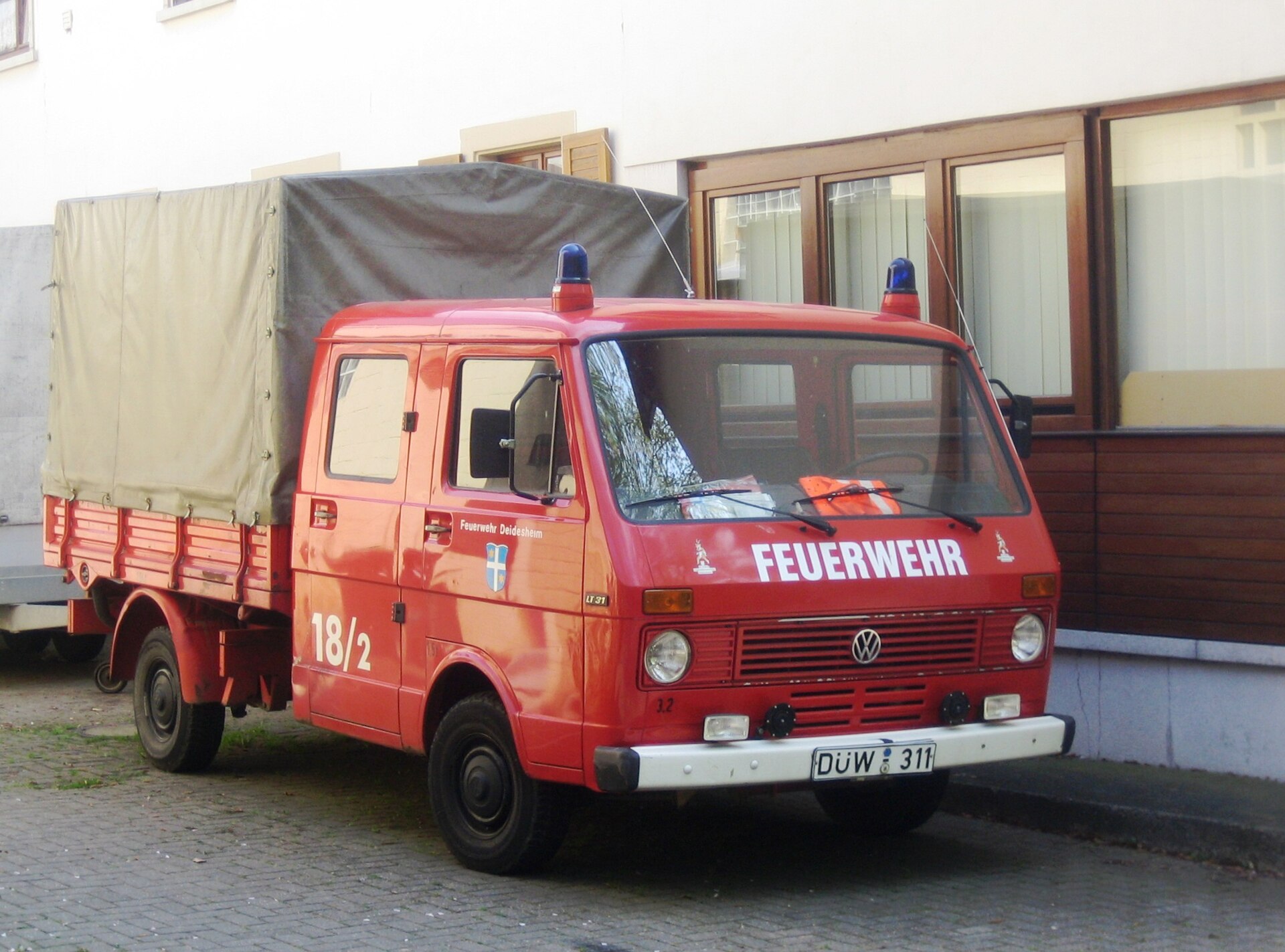
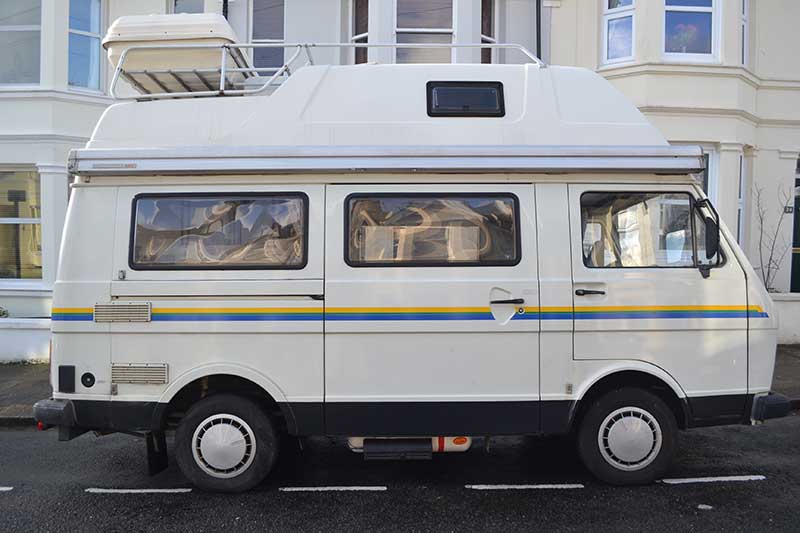
The LT was a common base for motorhomes. On the LT1, Westfalia built the Sven Hedin and Florida campers, and Karmann built more than 3,000 of its LT-based Distance Wide. LT1 chassis also carried fire-brigade bodies and minibus bodies; one Dutch minibus maker used the LT 50 chassis.

Photo gallery

Image credits · Photos from Wikimedia Commons under free licences
- Volkswagen LT I · Photo: Rutger van der Maar / Wikimedia Commons, CC BY 2.0
Volkswagen LT photos 6
FAQ
What does LT stand for?
Lasten-Transporter, German for load transporter.
How many generations of the Volkswagen LT are there?
Two: the forward-control LT1 (1975–1996) and the Sprinter-based LT2 (1996–2006).
Is the Volkswagen LT the same as the Mercedes Sprinter?
Only the second generation is related. It shares the body shell with the Sprinter, but it uses Volkswagen engines and gearboxes.
How many Volkswagen LTs were built?
About 470,000 of the first generation and about 350,000 of the second.
What replaced the Volkswagen LT?
The Volkswagen Crafter, introduced in 2006.
Data sources
Data checked by an editor against the sources below.


