 Honda Legend
All generations, specs and history
Published Sources (2) Report an error
By Felix Hartmann, Automotive Technology & EV Contributor
- Built
- 1985–2021
- Generations
- 5 · KA1-KA6 to KC2
- Top power
- 281 kW (382 PS)
Timeline
Legend generations
Click a generation for its own page


KA7/KA8 and KA9 overlapped in 1995–1996, so KA9 sits on a second lane
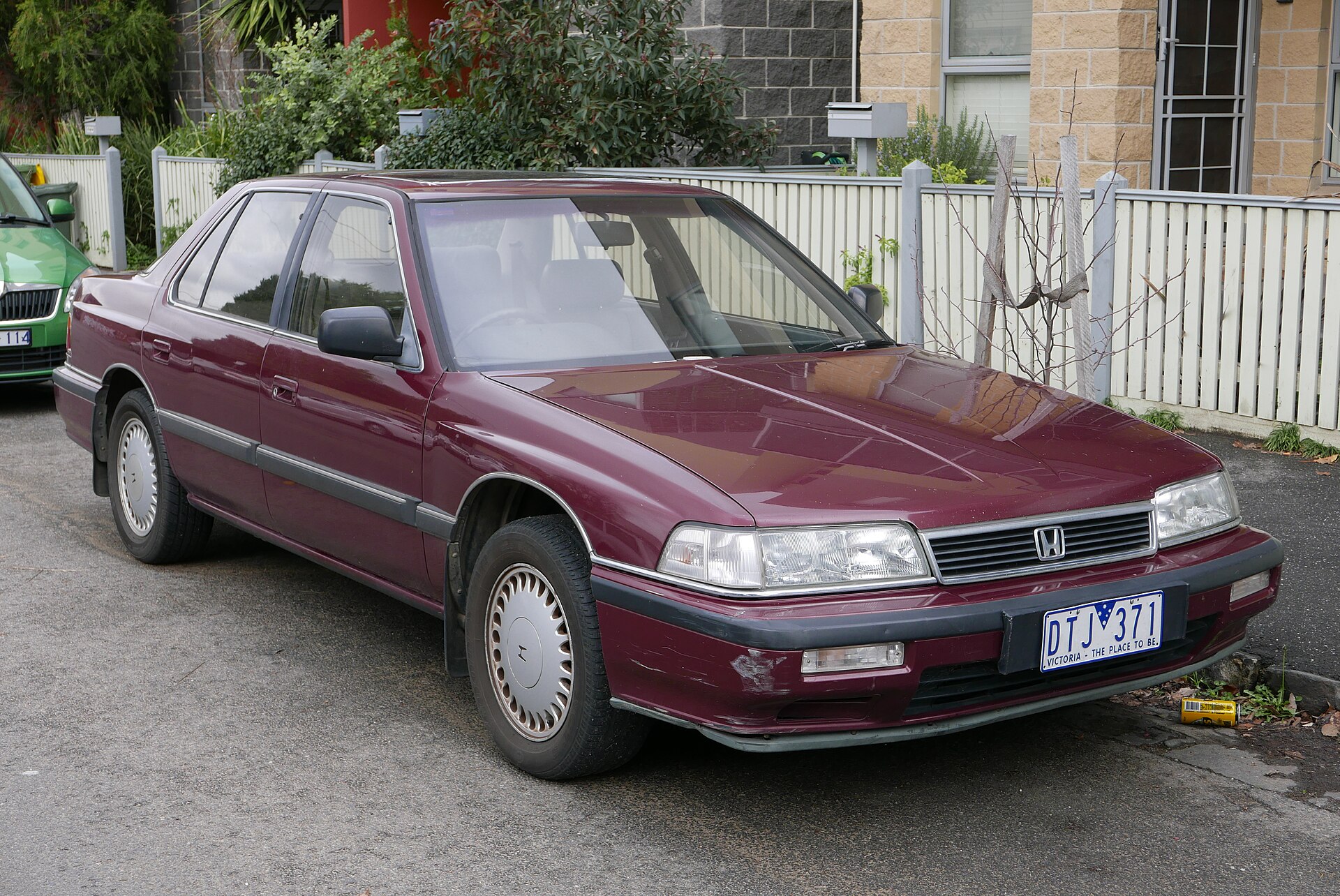
- Legend KA1-KA6 1985–1990 · Sedan, Coupe · 107–140 kW (145–190 PS)
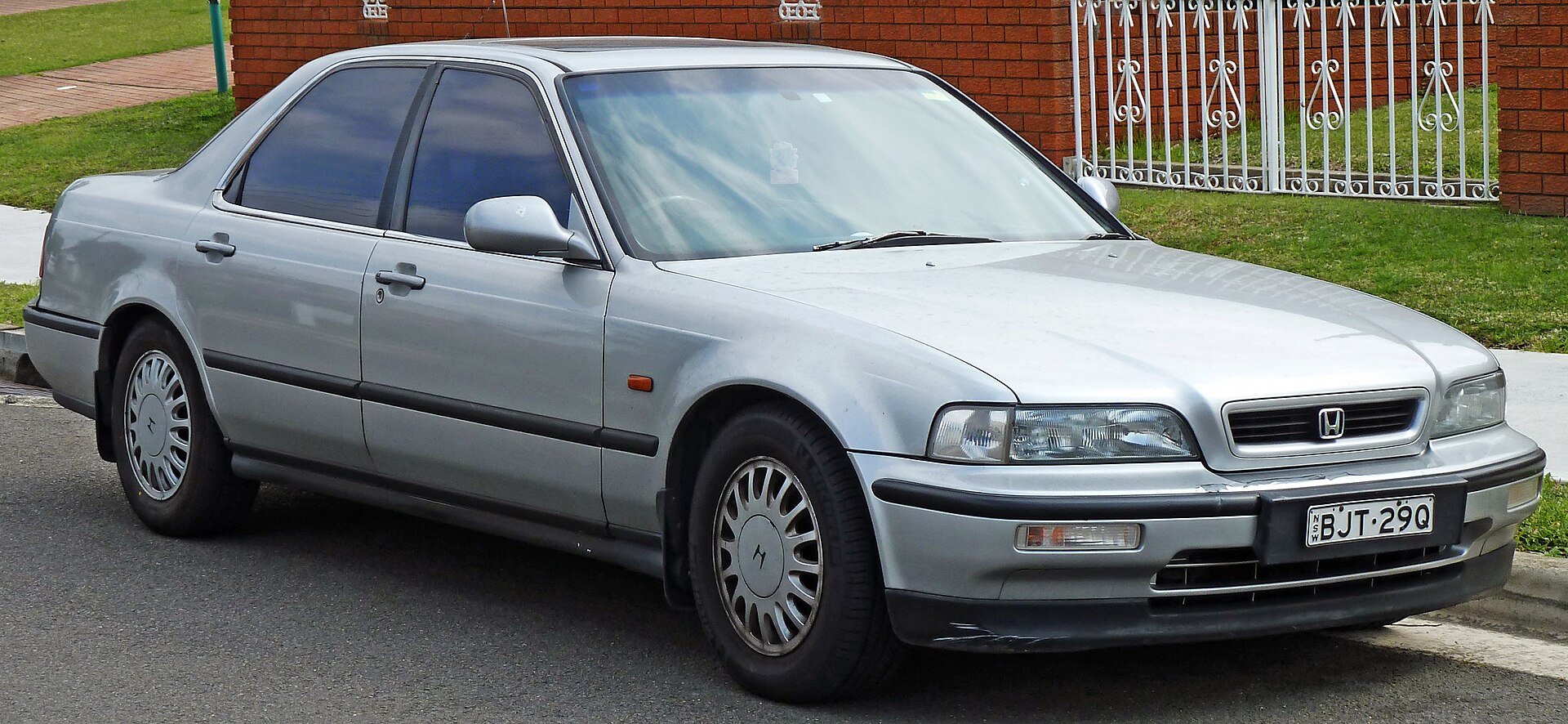
- Legend KA7/KA8 1990–1996 · Sedan, Coupe · 151–173 kW (205–235 PS)
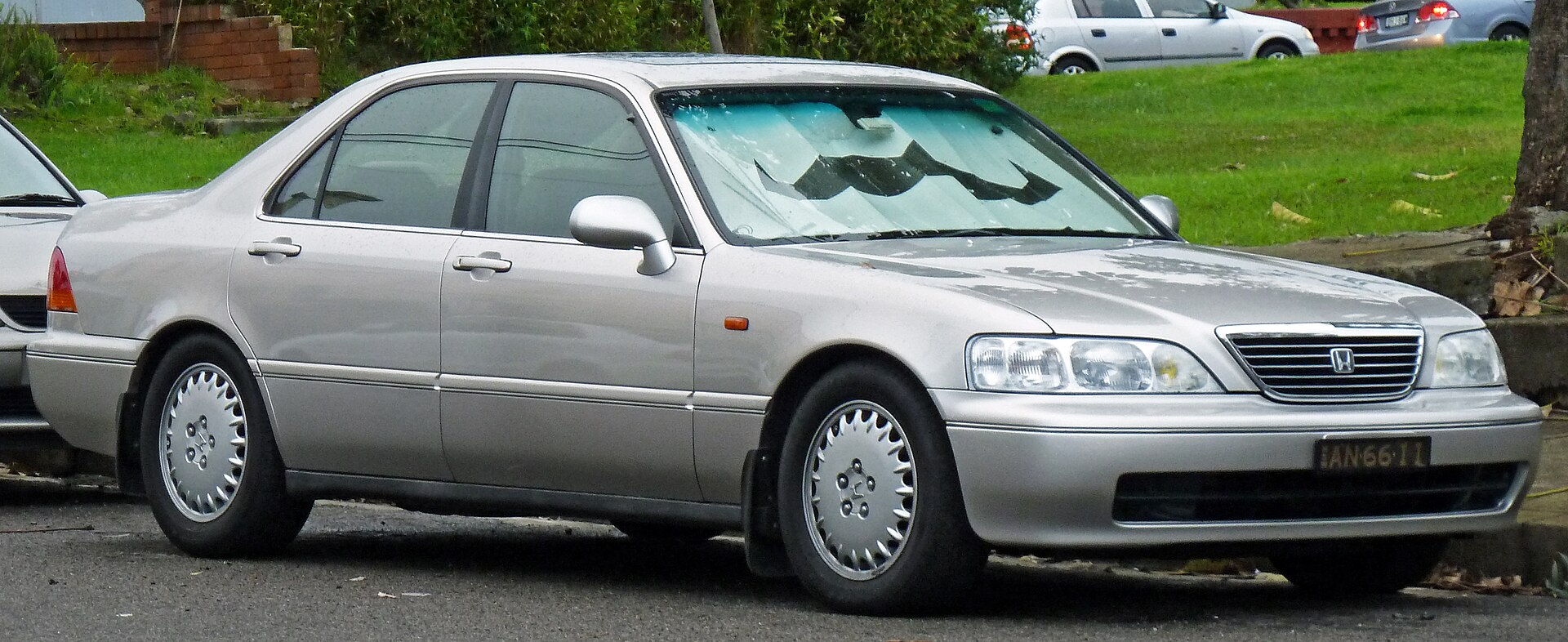
- Legend KA9 1995–2004 · Sedan · 151–158 kW (205–215 PS)
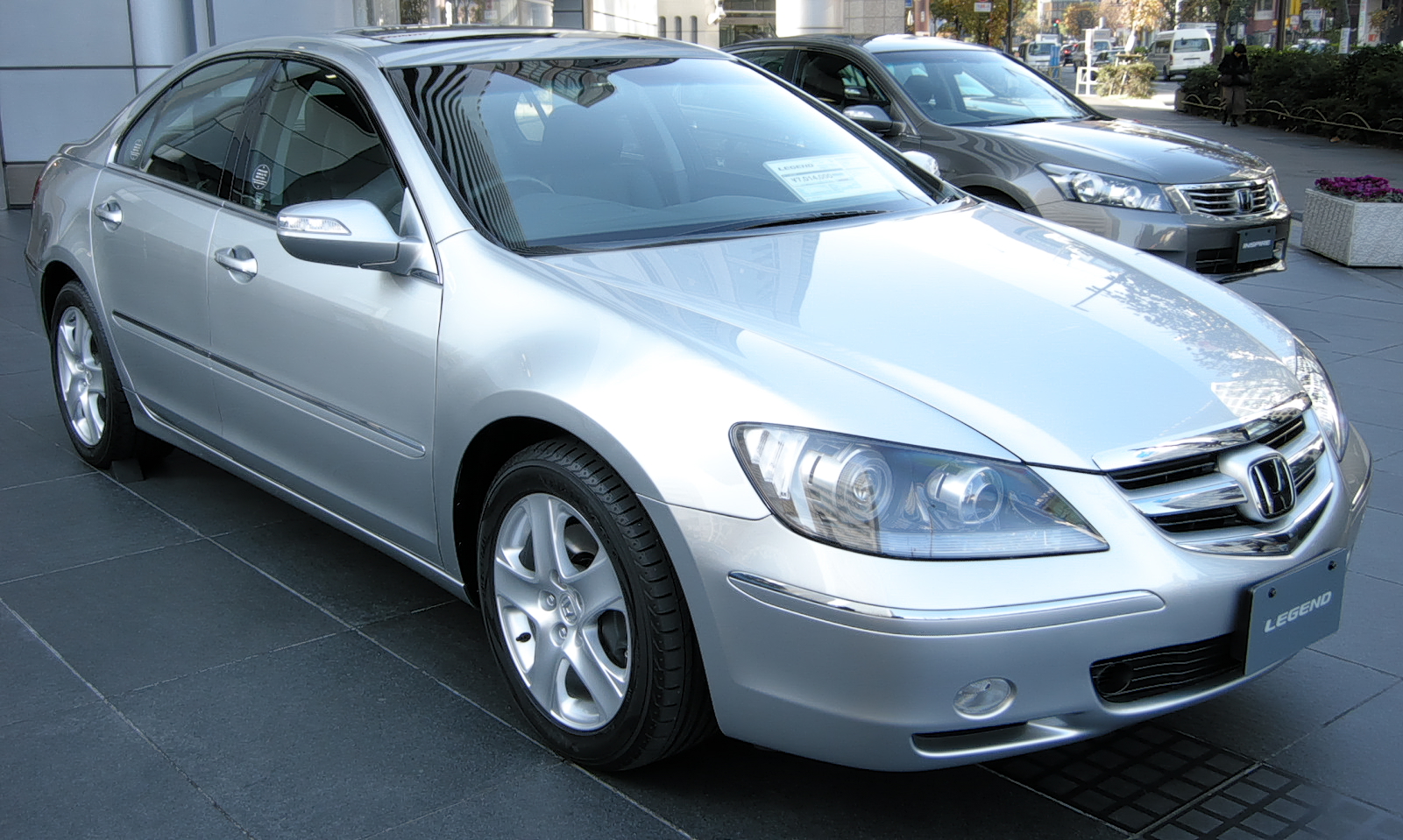
- Legend KB1/KB2 2004–2012 · Sedan · 217–221 kW (295–300 PS)
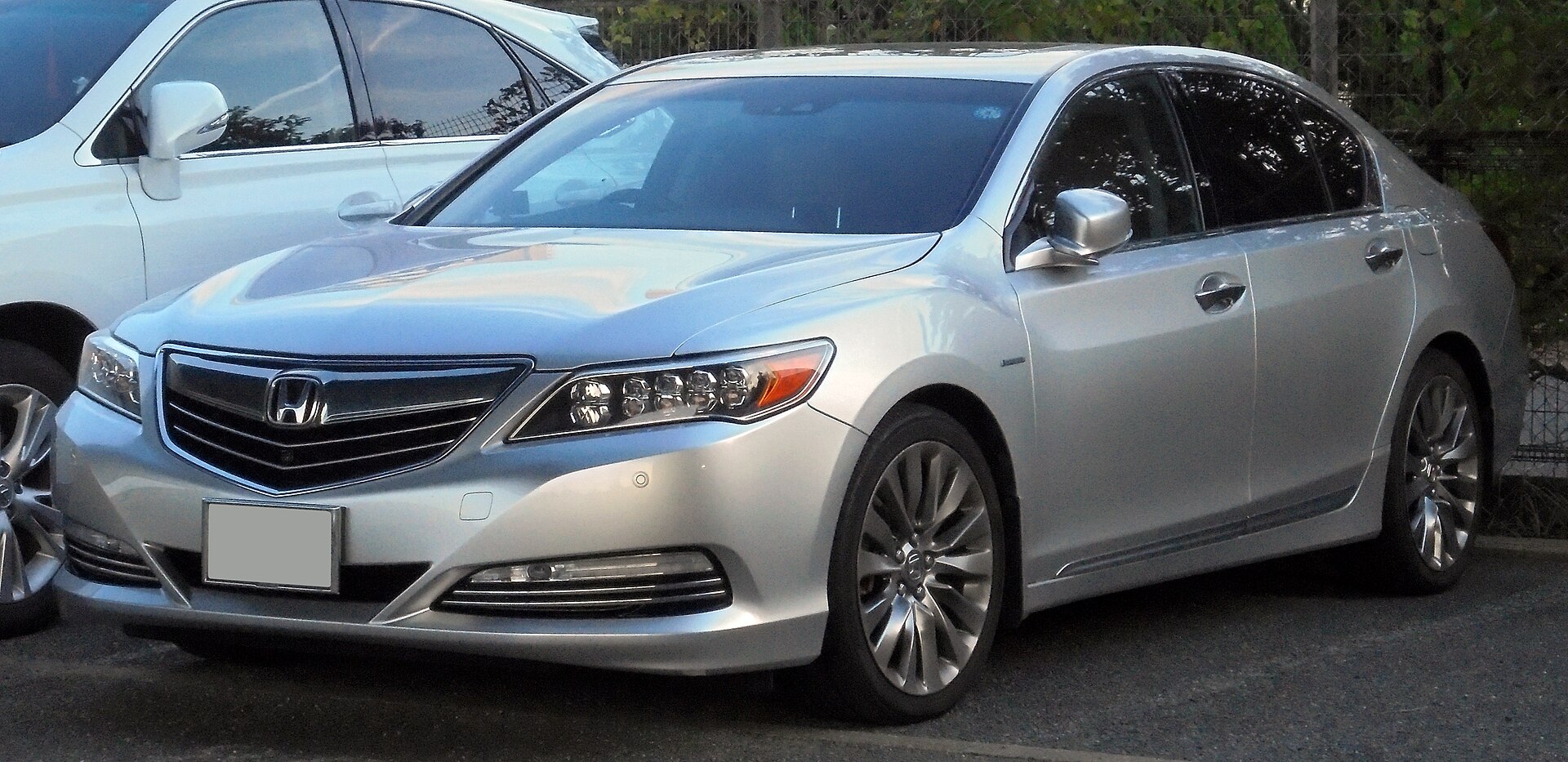
- Legend KC2 2014–2021 · Sedan · 281 kW (382 PS)
Newest first · 5 generations since 1985
- 2014 KC2 2014–2021 · Sedan · 281 kW (382 PS)
-
2004
-
1995
-
1990
-
1985
All generations by year: Legend KC2 (2014–2021) · Legend KB1/KB2 (2004–2012) · Legend KA9 (1995–2004) · Legend KA7/KA8 (1990–1996) · Legend KA1-KA6 (1985–1990)
Which one is mine?
Pick the year of first registration to see which generation it is.
Check by VINWhich Legend to buy: verdict
Our verdict · Felix Hartmann
- Most usable in Europe: a KB1 or KB2 with SH-AWD, the only generation sold here in the 2000s, with 217 kW (295 PS).
- The collector's car: a first-generation coupe or, in Japan, the rare 2.0 Wing Turbo.
- The technology piece: a KC2 Sport Hybrid; the Level 3 version was lease-only and limited to 100 cars.
The Honda Legend is Honda's flagship executive saloon, built in five generations between 1985 and 2021 and sold in North America as the Acura Legend, RL and RLX. It was the first Honda offered worldwide with nothing but V6 engines, it started life as a joint project with Austin Rover, and its last version became the first production car approved for Level 3 automated driving. Europe received the first four generations; the German price lists end in 2010.
In short
- Five generations: KA1-KA6 (1985-1990), KA7/KA8 (1990-1996), KA9 (1995-2004), KB1/KB2 (2004-2012) and the hybrid KC2 (2014-2021).
- Every Legend has a V6, from the 107 kW (145 PS) 2.0 of 1985 to the 3.5 Sport Hybrid, for which Acura quotes 281 kW (377 hp) of system output.
- The 2004 Legend introduced SH-AWD torque-vectoring all-wheel drive and was Japan Car of the Year 2004-2005.
- The last German list price was EUR 59,990 for the Legend 3.7 V6 (ADAC, 2009); the 2021 Level 3 car was leased only in Japan, 100 units at JPY 11,000,000 (about EUR 85,000 at the time).
Honda Legend at a glance
| Specification | Honda Legend |
|---|---|
| Segment | E-segment executive car |
| Years | 1985-2012 and 2014-2021 |
| Body styles | four-door saloon; two-door coupe (1987-1995) |
| Built | Japan (KB and KC at Sayama, Saitama); UK cars 1986-1988 also at Cowley, Oxford |
| Layout | transverse front-wheel drive (KA1-KA6), longitudinal front-wheel drive (KA7-KA9), SH-AWD (KB, KC) |
| Engines | 2.0 to 3.7-litre V6 petrol; 3.5 V6 hybrid |
| North American names | Acura Legend (1986-1995), Acura RL (1996-2012), Acura RLX (2014-2020) |
The Legend sits at the top of Honda's saloon range, above the Accord. Other Honda models are on our Honda brand page.
Generations
| Generation | Code | Years | Body styles | Engines | Power (kW / hp) |
|---|---|---|---|---|---|
| Legend I | KA1-KA6 | 1985-1990 | saloon, coupe from 1987 | 2.0, 2.0 turbo, 2.5, 2.7 V6 | 107-140 kW (145-190 PS) |
| Legend II | KA7/KA8 | 1990-1996 | saloon, coupe | 3.2 V6 | 151-173 kW (205-235 PS) |
| Legend III | KA9 | 1995-2004 | saloon | 3.5 V6 | 151-158 kW (205-215 PS) |
| Legend IV | KB1/KB2 | 2004-2012 | saloon | 3.5 and 3.7 V6, SH-AWD | 217-221 kW (295-300 PS) |
| Legend V | KC2 | 2014-2021 | saloon | 3.5 V6 Sport Hybrid SH-AWD | 281 kW (377 hp) system |
Power figures combine Japanese ratings (Wikipedia) and German ratings (ADAC), hence the ranges. The fifth-generation output is the figure Acura gives for the near-identical RLX Sport Hybrid. Germany first listed the KA9 in April 1996, half a year after its Japanese launch in October 1995.
First generation (1985-1990): the Rover connection
The first Legend went on sale in Japan on 22 October 1985, and the coupe followed on 6 February 1987. It grew out of Project XX, a joint venture with Austin Rover Group that began in 1981 and also produced the Rover 800, the replacement for the Rover SD1. Honda built the Legend in Japan for Japan and the United States, while British-market cars came from Cowley in Oxford. Only 4,409 UK-built Legends were made between 1986 and 1988, and Wikipedia notes that many failed Honda's quality checks.
The engine was mounted transversely and drove the front wheels, with about 63 per cent of the weight on the front axle. Buyers chose a five-speed manual or a four-speed automatic with a lock-up torque converter. It introduced several firsts, among them a driver airbag, anti-lock brakes and traction control on a front-wheel-drive car.
The rarest version is the Japanese 2.0 Wing Turbo of October 1988, with a variable-geometry turbocharger and 140 kW (190 PS). It existed mainly because Japanese road tax rose with engine size.

KA7/KA8 and KA9 (1990-2004): the longitudinal V6
The second Legend, launched on 24 October 1990, turned the engine round. The 3.2-litre C32A V6 sat lengthways behind the front axle, a layout Honda called "front-wheel-drive midship", and the weight distribution improved to about 60/40. It produced 158 kW (215 PS), or 173 kW (235 PS) in the Type II with the Touring package of 1992, which added progressive dampers and 16-inch wheels. The Legend also served as a test bed for technology from the NSX and gained a passenger airbag. Daewoo built the same car in Korea from 1994 to 1999 as the Arcadia.
The KA9 arrived on 26 October 1995 as a saloon only, with a 3.5-litre V6 rated at 158 kW (215 PS) in Japan and 151 kW (205 PS) in Germany. It was facelifted in 1998, received a new interior in 2003 and introduced Honda's internet-based Internavi navigation in Japan. In the United States the coupe disappeared and the Acura CL took its place.

KB1/KB2 (2004-2012): SH-AWD
The fourth generation, launched on 7 October 2004, went back to a transverse engine but added Super Handling All-Wheel Drive, which can send more torque to the outside rear wheel in a bend. The 3.5-litre J35A V6 made 221 kW (300 PS) in Japan, and the gearbox was a five-speed automatic until 2010 and a six-speed automatic afterwards. SH-AWD won a Popular Science innovation award and CNET's Tech Car of the Year 2005, and the Legend was Japan Car of the Year 2004-2005.
This was also the Legend Europe knew best. ADAC lists the 3.5 V6 automatic with 217 kW (295 PS) from October 2006 and the facelifted KB2, with a 3.7-litre V6 and the same 217 kW, from January 2009 to December 2010. British buyers got a single EX trim with an optional driver-assistance package. The 2009 update added a lane-keeping assistant, Intelligent Night Vision with pedestrian detection and a pop-up bonnet. Production at Sayama ended in 2012.

KC2 (2014-2021): Sport Hybrid and Level 3
After a two-year gap, Honda revealed the fifth Legend on 10 November 2014 and started sales on 20 February 2015. It was a near twin of the Acura RLX and came only as the Sport Hybrid SH-AWD: a 3.5-litre direct-injection V6 with a seven-speed dual-clutch gearbox, one electric motor in the transmission and two at the rear axle, which drive the rear wheels purely electrically. Acura quotes 231 kW (310 hp) for the engine alone and 281 kW (377 hp) and 462 Nm for the system, with a 1.3 kWh lithium-ion battery behind the rear seat.
A facelift on 2 October 2017 brought the Honda Sensing package with Traffic Jam Assist. On 5 March 2021 Honda began leasing 100 Legends with Honda SENSING Elite in Japan. Its Traffic Jam Pilot controls acceleration, braking and steering in congested expressway traffic, which made the Legend the first car certified for Level 3 conditional automation. In June 2021 Honda announced that the Sayama plant would close at the end of the year and that the Legend would have no successor.
Engines and performance
| Engine | Generation | Power | Torque |
|---|---|---|---|
| C20A 2.0 V6 | I | 107 kW (145 PS) | 172 Nm |
| C20A 2.0 V6 Wing Turbo | I, Japan from 1988 | 140 kW (190 PS) | 241 Nm |
| C25A 2.5 V6 | I | 121 kW (165 PS) | 211 Nm |
| C27A 2.7 V6 | I, from 1988 | 132 kW (180 PS) | 226 Nm |
| C32A 3.2 V6 | II | 158-173 kW (215-235 PS) | not published in our sources |
| 3.5 V6 | III | 158 kW (215 PS) | not published in our sources |
| J35A 3.5 V6 | IV | 221 kW (300 PS) | not published in our sources |
| 3.7 V6 (Europe) | IV facelift | 217 kW (295 PS) | not published in our sources |
| 3.5 V6 Sport Hybrid | V | 281 kW (377 hp) system | 462 Nm system |
German outputs were often lower than Japanese ones: ADAC lists the first-generation 2.5 with 110 or 127 kW and the 2.7 with 124 kW, and the 3.2 and 3.5 both with 151 kW (205 PS). Our power converter switches between kW, PS and hp.
Dimensions and space
| Parameter (KC2 / Acura RLX Sport Hybrid) | Metric | Imperial |
|---|---|---|
| Length (from 2018) | 5,032 mm | 198.1 in |
| Width | 1,890 mm | 74.4 in |
| Height (Legend) | 1,480 mm | 58.3 in |
| Wheelbase | 2,850 mm | 112.2 in |
| Kerb weight | 1,956-1,977 kg | 4,312-4,359 lb |
At 5,032 mm the facelifted car was the longest Honda or Acura saloon to that date. The KB was 4,973 mm long and the KA9 4,994-4,996 mm. Our sources give no boot volumes, so we leave them out.
Running costs and prices
The EPA rated the Acura RLX Sport Hybrid at 29 mpg (US) combined, about 8.1 l/100 km, against 23 mpg (about 10.2 l/100 km) for the front-wheel-drive RLX with the same V6. Our sources give no official European figures for older Legends; plug your own consumption into the fuel cost calculator.
ADAC records these German list prices (older ones converted from Deutsche Mark): EUR 22,906 for the 2.5 V6 saloon (1987), EUR 41,824 for the 3.2 V6 automatic (1991), EUR 38,337 for the 3.5 V6 (1996), EUR 56,600 for the 3.5 V6 (2006) and EUR 59,990 for the 3.7 V6 (2009).
Safety
Euro NCAP never published a Legend result in our sources. Australia's ANCAP tested the 2006 Legend and gave it 13.20 of 16 points in the frontal offset test, the maximum 16 of 16 in the side impact, 2 of 2 in the pole test and 3 of 3 for seat-belt reminders, with pedestrian protection rated "Adequate" and electronic stability control as standard. In the United States the 2015 Acura RLX received five stars overall from NHTSA and "Good" ratings from the IIHS in the frontal, side and roof-strength tests.
Reliability and known issues
We found few documented problems. In 2010 a brake-seal defect led to a recall of some fourth-generation cars. The UK-assembled first-generation cars of 1986-1988 had quality problems at the plant, which is one reason so few were built. Our sources contain no fault statistics beyond that.
Rivals
| Model | Engines | Power (hp) | Boot (l) | Price from (EUR) |
|---|---|---|---|---|
| Honda Legend 3.7 (KB2) | 3.7 V6 petrol | 217 kW (295 PS) | not published | 59,990 (Germany, 2009) |
| Lexus LS | V8 petrol, hybrid | not verified | not verified | not verified |
| Infiniti M | V6, V8 petrol, hybrid | not verified | not verified | not verified |
| Toyota Crown (Japan) | petrol, hybrid | not verified | not verified | not verified |
The US sales figures show the problem: in the first half of 2010 Acura sold 872 RLs against 5,650 Lexus LS and 6,602 Infiniti M. Use the comparison tool for exact versions.
Photo gallery


Honda Legend evolution in numbers
Did you know?
- The Honda Legend ran for 36 years, from 1985 to 2021, over 5 generations in our catalog.
- The longest-running generation is the Legend KA9 (1995–2004): 9 years.
- The biggest jump in power came with the Legend KB1/KB2: up to 221 kW (300 PS), 63 kW more than the Legend KA9.
Most powerful version, kW
Figures from the 1cars catalog: power is the strongest version of each generation; generations without the figure are left out.
Honda Legend: first vs latest generation
| Spec | Legend KA1-KA6 | Legend KC2 | Change |
|---|---|---|---|
| Years | 1985–1990 | 2014–2021 | 29 years apart |
| Most powerful version | 140 kW (190 PS) | 281 kW (382 PS) | +141 kW (+101%) |
Oldest and newest generation in the 1cars catalog. Power is the strongest version of each; other rows are shown only when both generations have the figure.
Honda Legend in our rankings
- No. 45 of 1082 · Longest-running car nameplates (36 years · top 5%)
- No. 20 of 130 · Most powerful Japanese cars (281 kW · top 16%)
- No. 72 of 411 · Cars with the most generations (5 generations · top 25%)
- No. 48 of 174 · Most powerful sedans (281 kW · top 28%)
- No. 340 of 1011 · Most powerful cars (281 kW · top 34%)
- No. 45 of 111 · Most powerful cars of the 1990s (173 kW · top 42%)
In production longer than 95% of ranked nameplates in the 1CARS catalog (No. 45 of 1082).
FAQ
Is the Honda Legend the same car as the Acura RL?
Yes. North America sold the Legend as the Acura Legend from 1986 to 1995, the Acura RL from 1996 to 2012 and, in its last generation, the Acura RLX from 2014 to 2020.
Was the Honda Legend sold in Europe?
Yes, the first four generations. ADAC lists German versions from 1987 to December 2010, the last one being the 3.7 V6 with 217 kW (295 PS).
Why is the 2021 Honda Legend famous?
Its Honda SENSING Elite system with Traffic Jam Pilot was the first Level 3 conditionally automated driving system approved for a production car. Honda leased 100 cars in Japan from March 2021.
When did Honda stop making the Legend?
In 2021. Honda announced in June 2021 that the Sayama plant would close at the end of that year and that the Legend would not be replaced.
Data sources
Data checked by an editor against the sources below.
- Wikipedia - Honda Legend
- Wikipedia - Acura RLX