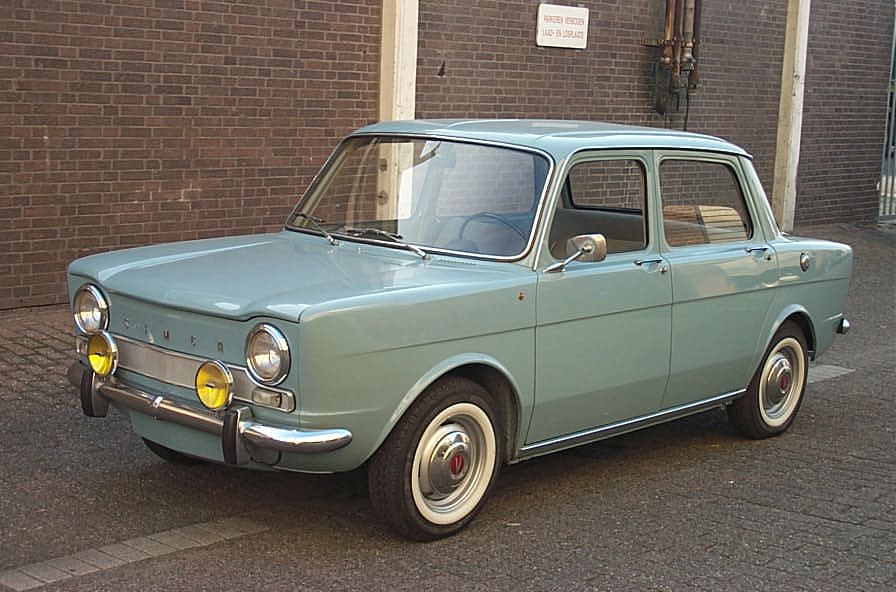
Simca — The Nanterre and Poissy Maker That Became Talbot
Simca was a French car maker founded in November 1934 by the Italian-born businessman Henri Pigozzi to build Fiat cars in France. It began with licence-built Fiats at Nanterre, created its own Aronde in 1951, bought Ford's French plant at Poissy in 1954 and built more than six million vehicles by 1973. Chrysler took control in 1963 and renamed the company Chrysler France in 1970. After PSA Peugeot Citroën bought Chrysler Europe in 1978, the Simca name gave way to Talbot, and the last Simca models ended in 1981.
Key takeaways
- Founded in November 1934 by Henri Pigozzi, Fiat's general agent in France; production began at the former Donnet works in Nanterre in 1935.
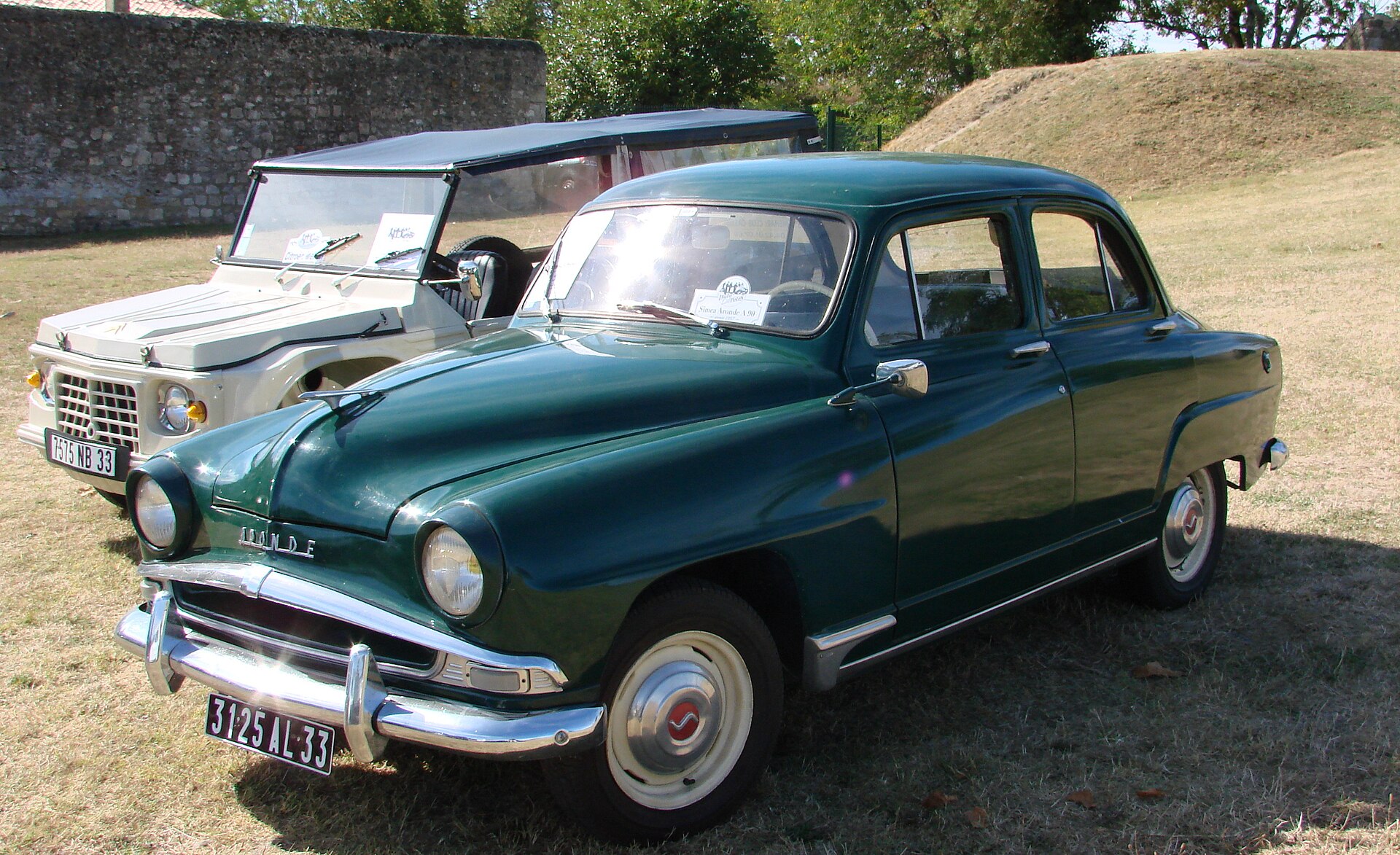
- The Aronde of 1951 was the first Simca not based on a Fiat; about 1.4 million were built.
- Chrysler raised its stake to about two-thirds in 1963; the company became Chrysler France on 1 July 1970.
- The Simca 1307 (1976) and Horizon (1979) won European Car of the Year; PSA took over in 1978 and replaced the name with Talbot.
Simca at a glance
| Fact | Value |
|---|---|
| Founded | November 1934 |
| Founder | Henri Pigozzi |
| Plants | Nanterre (1935–1961), Poissy (from 1954) |
| Early cars | Fiat-based Simca 5 (1936) and Simca 8 (1938) |
| Best-known models | Aronde, Vedette, 1000, 1100, 1301/1501, 1307, Horizon |
| Owners | Fiat, then Chrysler (control from 1963), PSA (1978) |
| Output 1936–1973 | 6,209,938 vehicles |
| End of the name | 1981, replaced by Talbot |
Origins: Henri Pigozzi and Fiat
Henri Pigozzi began working with Fiat founder Giovanni Agnelli in 1922 as a scrap dealer who bought old car bodies for Fiat to recycle. In 1924 he became Fiat's general agent in France. SAFAF, the French Fiat company, was founded in 1926 and from 1928 assembled Fiat cars in Suresnes; in 1934 it sold as many as 30,000 of them. In November 1934 Simca was founded, and in 1935 Fiat bought the former Donnet factory in Nanterre for it. Pigozzi ran the company from July 1935 until May 1963.
The first products were Fiat 508 Balilla and 518 Ardita models badged Simca-Fiat. In October 1936 came the Simca 5, a 3CV car based on the Fiat Topolino with a 570 cc engine, and for 1938 the Simca 8, a French version of the Fiat 508C. That year the name Simca replaced Simca-Fiat. Production continued in small numbers during the German occupation of 1940–1944, and the Nanterre plant escaped serious bomb damage. After liberation Simca repaired Jeep engines for the US Army.
The Aronde and growth after the war
In the first eight months of 1947 Simca exported 70% of its output, and in 1948 the Simca 6 went on sale before the equivalent Fiat. The real step forward came in 1951 with the Aronde, the first Simca not based on a Fiat design and the first with a unitary body. Its 1,221 cc engine produced 33.2 kW (44.5 bhp). Later versions had 1,290 cc, and the "Flash" engines of 1955 and later gave up to 42 kW (57 CV) in the Flash Spécial.
The Aronde also proved its toughness. In August 1953 a randomly chosen car ran for 40 days and nights at Montlhéry, covering 100,000 km at an average of more than 104 km/h and breaking over 30 international records. Output passed 100,000 Arondes on 17 March 1953 and 500,000 in January 1957, and the peak was 194,553 in 1959. In total about 1.4 million were built until 1964. In 1951 the company also took over the truck maker Unic.
Poissy, the Vedette and Talbot
In 1954 the company bought Ford SAF and its plant at Poissy, and Ford's V8 Vedette range joined the line-up. The Ariane of 1957 combined the Vedette body with the Aronde engine. It took over Saurer in 1956 and set up Simca do Brasil in São Paulo, which began building the Vedette in March 1959. In 1958 it bought the Talbot-Lago company, and the Talbot name was used from 1959 to 1970.
The same year Chrysler bought a 15% stake in Simca from Ford, although Fiat stayed the dominant shareholder. In 1959 combined output at Nanterre and Poissy exceeded 225,000 cars. In 1961 all production moved to Poissy, and the Nanterre works were sold to Citroën.

Chrysler, the 1000 and the 1100
The rear-engined Simca 1000 appeared in 1961. It came from Fiat's Project 122, which Pigozzi chose for Simca, and was the company's first car with its engine at the back. The 944 cc launch engine gave 33 to 40 kW (45 to 54 PS), and later engines ranged from 777 cc to 1,294 cc. The Rallye 3 of 1978, of which 1,000 were built, had 76 kW (103 PS). Poissy built 154,282 of them in 1962, the first full year, and the 1000 sold almost 2 million in all.
In 1963 Chrysler bought shares from Fiat and took control, with about two-thirds of the capital, later 77%. Pigozzi left in May 1963. Chrysler bought the British Rootes group in 1964, and Simca, Rootes and Barreiros formed Chrysler Europe in 1967. That year the Simca 1100 arrived: a three- or five-door hatchback with a transverse engine, front-wheel drive and independent suspension, one of the first designs of its kind. It reached nearly 300,000 cars in 1973 and about 2.2 million over its life, and models such as the Matra Rancho leisure vehicle were derived from it. From 1967 Simca cars carried the Chrysler pentastar.


Car of the Year, PSA and Talbot
On 1 July 1970 the company was renamed Chrysler France, though the Simca brand stayed on its cars. Output was 402,870 vehicles in 1970 and 588,119 in 1973. Unlike the rest of Chrysler Europe, which was weighed down by the former Rootes business, the French company was consistently profitable. The five-door 1307 hatchback, sold in Britain as the Chrysler Alpine, was European Car of the Year for 1976. The Horizon, built in France, Spain and the United Kingdom, won the same award for 1979.
Chrysler Europe collapsed in 1977, and in 1978 PSA Peugeot Citroën bought it for a nominal US$1 plus its debts. From August 1979 the former Chrysler and Simca models were sold under the revived Talbot name, at first as Simca-Talbot. By the end of 1981 the last Simca models were discontinued, and Talbot passenger cars were dropped in 1987. The Peugeot 309, the last Simca-derived design, stopped using Simca engines in October 1991. The Poissy plant is now a major Stellantis factory.
Simca models are listed in the Simca catalogue, and the rear-engined car is covered in the Simca 1000 article. The parent company is described in the history of Fiat, and the later owners are in the Chrysler and Talbot catalogues.
Simca timeline
| Year | Event |
|---|---|
| 1934 | Simca founded (November) |
| 1935 | Nanterre plant; Pigozzi takes charge |
| 1936 | Simca 5 based on the Fiat Topolino |
| 1951 | Aronde, first Simca design of its own |
| 1953 | Aronde covers 100,000 km at Montlhéry |
| 1954 | Ford SAF and the Poissy plant bought |
| 1958 | Talbot-Lago bought; Chrysler takes 15% |
| 1961 | Simca 1000; production concentrated at Poissy |
| 1963 | Chrysler takes control; Pigozzi leaves |
| 1967 | Simca 1100; Chrysler Europe formed |
| 1970 | Company renamed Chrysler France (1 July) |
| 1976 | Simca 1307 European Car of the Year |
| 1978 | PSA buys Chrysler Europe |
| 1979 | Horizon Car of the Year; Talbot name revived |
| 1981 | Last Simca models |
Landmark Simca models
| Model | Years | Why it matters |
|---|---|---|
| Simca 5 | 1936 onwards | French Fiat Topolino, the first small Simca |
| Aronde | 1951–1964 | First own design, about 1.4 million built |
| Vedette | 1954 onwards | V8 range from the Ford Poissy takeover |
| 1000 | 1961–1978 | Rear-engined small car, almost 2 million sold |
| 1100 | 1967–early 1980s | Early transverse front-drive hatchback |
| 1307 | 1975–1986 | European Car of the Year 1976 |
| Horizon | 1978–1987 | European Car of the Year 1979 |
Photo gallery

FAQ
Who founded Simca?
Henri Pigozzi, Fiat's general agent in France, founded Simca in November 1934 to build Fiat-based cars in France.
Was Simca part of Fiat?
Fiat was the dominant shareholder at first, and the early Simcas were Fiat designs. Chrysler took control in 1963 by buying shares from Fiat.
What happened to Simca?
The company became Chrysler France in 1970. After PSA bought Chrysler Europe in 1978, the Simca name was replaced by Talbot from 1979, and the last Simca models ended in 1981.
Which Simca won Car of the Year?
The Simca 1307 (sold in Britain as the Chrysler Alpine) for 1976 and the Simca Horizon for 1979.
Where were Simca cars built?
At Nanterre from 1935 and at Poissy from 1954; from 1961 all production was at Poissy.
Sources
- Wikipedia — Simca (accessed 24 Oct 2026)
- Wikipedia — Simca Aronde (accessed 24 Oct 2026)
- Wikipedia — Simca 1000 (accessed 24 Oct 2026)
- Wikipedia — Simca 1100 (accessed 24 Oct 2026)
- Wikipedia — Chrysler Europe (accessed 24 Oct 2026)
Found a mistake? Report an error