Isuzu — From Wolseley Kits to Trucks, Diesels and the D-Max
Isuzu is a Japanese maker of trucks, buses, pickups and diesel engines with headquarters in Yokohama. Its roots go back to a 1916 plan by Tokyo Ishikawajima Shipbuilding to build cars and a 1918 licence from Wolseley Motors of England. The Isuzu name, taken from the Isuzu River, dates from 1949. For half a century Isuzu also built passenger cars, from the Bellett and the Giugiaro-styled 117 Coupé to the Gemini and the Trooper, much of the time with General Motors as a shareholder. Today it concentrates on commercial vehicles, the D-Max pickup and the MU-X SUV.
Key takeaways
- The company began with a 1918 technical agreement with Wolseley Motors and adopted the Isuzu name in 1949.
- Its first passenger car of its own design was the Bellel of 1961; the 117 Coupé of 1968–1981 sold 86,192.
- General Motors held 34% from 1972 and up to 49% from 1999, and sold its entire stake in 2006.
- Isuzu left the US passenger-car market on 31 January 2009 and bought UD Trucks from Volvo in April 2021.
Isuzu at a glance
| Fact | Value |
|---|---|
| Origins | 1916 car plan of Tokyo Ishikawajima Shipbuilding; 1918 Wolseley licence |
| Isuzu name | 1949, after the Isuzu River ("fifty bells") |
| Headquarters | Yokohama Gate Tower, Yokohama, Japan |
| Business | Trucks, buses, pickups, SUVs and diesel engines |
| Best-known cars | Bellett, Florian, 117 Coupé, Gemini, Piazza, Trooper, D-Max |
| Major partners | Rootes (Hillman Minx), General Motors, Honda, Toyota, Mazda, Volvo |
| Key acquisition | UD Trucks, completed April 2021 |
Wolseley, Sumida and the road to the Isuzu name
The company's story starts in shipbuilding. In 1916 Tokyo Ishikawajima Shipbuilding planned a car venture with the Tokyo Gas and Electric Industrial Company. In 1918 it signed a technical agreement with Wolseley Motors that gave it the right to build and sell Wolseley vehicles in East Asia from knock-down kits. At its Fukagawa factory it built a Wolseley A9 15/40 HP passenger car, and from about 1921 the Wolseley-based CP truck, of which 550 were made by 1927.
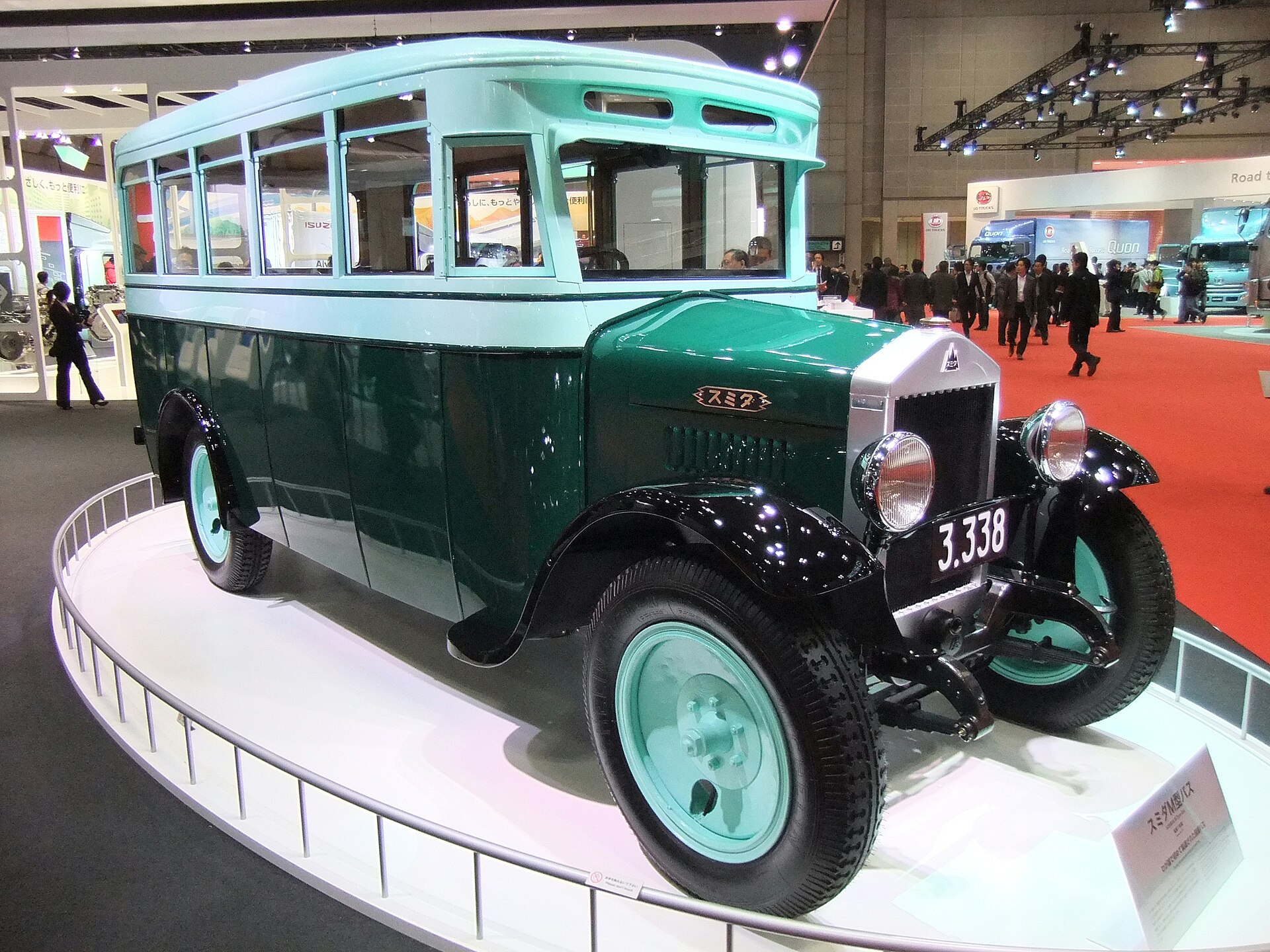
The Kanto earthquake of 1923 showed how much Japan needed its own heavy vehicles. In 1927 the company introduced the Sumida P-type two-ton truck and the Sumida M-type bus, named after the nearby Sumida River. In 1929 part of the business merged with DAT Automobile Manufacturing, a predecessor of Nissan, to form Jidosha Kogyo, whose vehicles were sold as Sumida and Chiyoda. The Tsurumi factory opened in 1934, and in 1937 Tokyo Automobile Industries was founded with a capital of ¥1,000,000 to build trucks and buses for the army. Hino was split off as a separate company in 1942.
After the war, truck and bus production resumed under the occupation authorities. In 1949, after consultation with the Ministry of International Trade and Industry, the company took the name Isuzu, after the Isuzu River. The name is said to mean "fifty bells".
First passenger cars: Hillman Minx, Bellett and the 117
Isuzu learned car building under licence. From 1953 to 1962 it assembled the Hillman Minx for the Rootes Group, and in 1961 it launched the Bellel, its first passenger car of its own design.
The Bellett followed in June 1963 as a saloon and coupé, with a 1.5-litre petrol engine and a 1.8-litre diesel. The diesel had 37 kW (50 PS) and a top speed of 104 km/h. The Bellett GT of April 1964 was the first Japanese car sold with a "GT" name. A 1.6-litre SOHC engine of 1966 gave 66 kW (90 PS), and the 1800 GT of 1970 had 85 kW (115 PS). The racing-oriented GT-R of September 1969 used the twin-cam engine of the 117 Coupé, and about 1,400 were made. A four-door Bellett finished tenth in the 1966 1000 Lakes Rally. Isuzu built 170,737 Belletts up to 1973.
The car that brought Isuzu attention abroad was the 117 Coupé, designed by Giorgetto Giugiaro and shown as a prototype at the Geneva Motor Show in 1966. Production began on a small scale in December 1968, and for the first years the cars were largely made by hand, rarely more than 50 a month. About 2,458 of these early cars were built up to late 1972. In 1970 the 117 became the first Japanese car with electronic fuel injection, a Bosch D-Jetronic system. Mass production began in March 1973, and a 2.2-litre diesel option from 1979 made it one of the first sports cars offered with a diesel engine. When it ended in 1981, 86,192 had been built. The Florian saloon of 1967–1983 sat alongside it.

General Motors years: Gemini, Piazza and Trooper
In the late 1960s Isuzu tried short alliances with Fuji Heavy Industries, Mitsubishi and Nissan. The lasting partner came in September 1971, when it signed a capital agreement with General Motors; GM took a 34% stake in 1972. The Gemini of 1974 was developed with GM and the Faster pickup was built from 1972 to 2002. Exports grew from 0.7% of production in 1973 to 35.2% in 1976, and diesels made up 63.4% of Isuzu's car production in 1983.
The Piazza hatchback of 1981–1993 was sold in the United States as the Impulse and later the Storm. In 1981 Isuzu began selling under its own name in the US with the P'Up pickup. In 1983 it launched the Trooper, a body-on-frame SUV that became one of its most widely shared models. The second Trooper of 1991–2002 was also sold as the Isuzu Bighorn in Japan, the Opel and Vauxhall Monterey in Europe, the Holden Jackaroo in Australia and, from 1995 to 1999, the Acura SLX in the United States. Its 3.5-litre V6 of 1998 gave 160 kW (218 PS). In the 1990s Consumer Reports rated the 1995–1997 Trooper "Not Acceptable" for rollover risk; NHTSA's own tests found no reason for a recall. In 2000 a jury found eight of the magazine's 17 contested statements false but awarded no damages to Isuzu.
Leaving the car market
In 1993 Isuzu started a vehicle exchange with Honda: the Rodeo became the Honda Passport and the Trooper the Acura SLX, while Honda's Odyssey was sold as the Isuzu Oasis. The same year Isuzu stopped exporting the Stylus, its last car built for the US market. In the late 1990s it dropped saloons and compact cars in most of Asia and Africa. In 2001 it ended production of the Trooper and its other SUVs in a restructuring. The exchange with Honda ended the same year.
Isuzu announced its withdrawal from the American market on 30 January 2008, and passenger-vehicle sales there ended on 31 January 2009. Canada had already seen its last Isuzu passenger models in 2001. More on the group that held Isuzu shares for 35 years is in the history of General Motors.
Pickups, trucks and new partners
What remained was the business Isuzu had always known best: trucks, buses and diesel engines. In 1998 it formed the DMAX diesel joint venture with GM, and in 1999 GM raised its stake to 49%. After a debt-for-equity restructuring in 2002, GM sold all its Isuzu shares in 2006 to Mitsubishi Corporation, Itochu and Mizuho Corporate Bank. Toyota bought 5.9% in November 2006, sold it in August 2018 and returned with 4.6% in March 2021, when Toyota, Hino and Isuzu formed Commercial Japan Partnership Technologies.
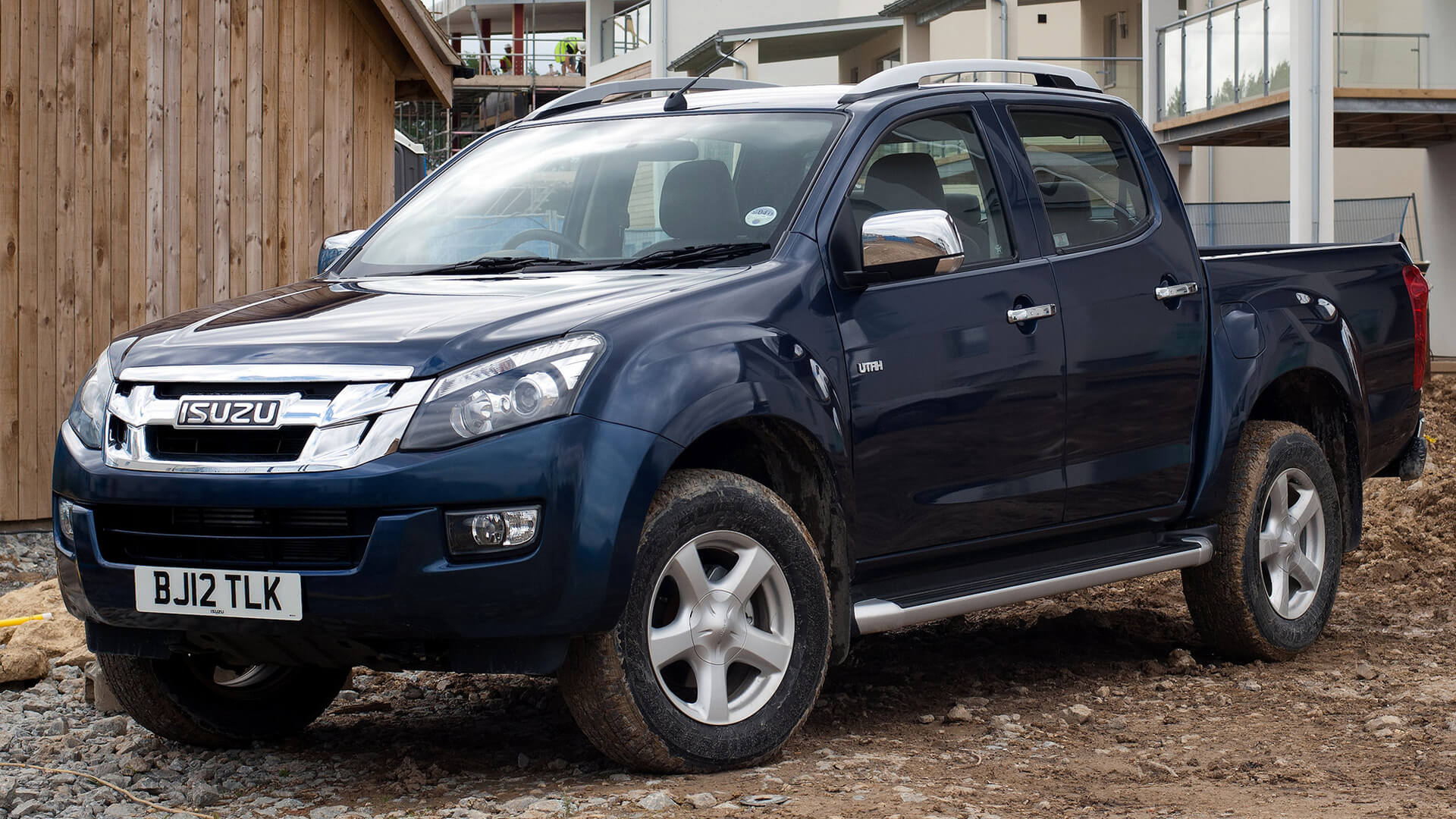
The D-Max pickup became the centre of Isuzu's light-vehicle business. The first generation was shown in Thailand in 2002 and shared its platform with the Chevrolet Colorado; the second of 2011 was again developed with GM. The third generation, revealed in Thailand on 11 October 2019, uses Isuzu's own platform and engines of 110 to 140 kW (150 to 190 PS). It is also the basis of the Mazda BT-50 of 2020, built in the same Thai plant. A battery-electric D-Max with a 66.9 kWh battery, two motors and 138 kW (188 PS) went into production in April 2025. The generations and engines are covered in the Isuzu D-Max guide.
On 1 April 2021 Isuzu completed the purchase of UD Trucks from Volvo. Its range now includes the Elf, Forward and Giga trucks and the Erga and Gala buses, alongside the D-Max and MU-X. Isuzu has had a plant in Thailand since 1966 and opened one in Andhra Pradesh, India, in 2016. Isuzu models on 1cars are listed in the Isuzu catalogue.

Isuzu timeline
| Year | Event |
|---|---|
| 1916 | Tokyo Ishikawajima Shipbuilding plans a car business |
| 1918 | Technical agreement with Wolseley Motors |
| 1927 | Sumida truck and bus |
| 1937 | Tokyo Automobile Industries founded |
| 1949 | Company renamed Isuzu |
| 1953 | Hillman Minx assembly begins |
| 1961 | Bellel, first Isuzu-designed car |
| 1963 | Bellett launched |
| 1968 | 117 Coupé production begins (December) |
| 1972 | General Motors takes a 34% stake |
| 1983 | Trooper launched |
| 2002 | D-Max launched in Thailand |
| 2006 | GM sells its stake; Toyota buys 5.9% |
| 2009 | US passenger-vehicle sales end (31 January) |
| 2021 | UD Trucks acquired from Volvo (April) |
| 2025 | Battery-electric D-Max enters production |
Landmark Isuzu models
| Model | Years | Why it matters |
|---|---|---|
| Sumida M-type bus | 1927 | Early domestic heavy vehicle |
| Bellel | 1961 | First passenger car of Isuzu's own design |
| Bellett GT | 1964–1973 | First Japanese car sold as a "GT" |
| 117 Coupé | 1968–1981 | Giugiaro design, first Japanese car with electronic fuel injection |
| Gemini | 1974 onwards | Small car developed with General Motors |
| Trooper | 1983–2002 | SUV sold under several brands worldwide |
| D-Max | 2002–present | Pickup at the centre of today's light-vehicle range |
FAQ
Where does the name Isuzu come from?
From the Isuzu River in Japan. The company adopted it in 1949; the name is said to mean "fifty bells".
Does Isuzu still make cars?
Not passenger cars in the traditional sense. Isuzu builds trucks, buses, diesel engines, the D-Max pickup and the MU-X SUV.
When did Isuzu leave the US market?
Isuzu announced the withdrawal on 30 January 2008, and its passenger-vehicle sales in the US ended on 31 January 2009.
Was Isuzu owned by General Motors?
GM was a shareholder, not the owner: 34% from 1972, up to 49% from 1999, until it sold all its shares in 2006.
Who designed the Isuzu 117 Coupé?
Giorgetto Giugiaro. The prototype was shown in Geneva in 1966, and 86,192 cars were built from 1968 to 1981.
Sources
- Wikipedia — Isuzu Motors (accessed 24 Oct 2026)
- Wikipedia — Isuzu Bellett (accessed 24 Oct 2026)
- Wikipedia — Isuzu 117 Coupé (accessed 24 Oct 2026)
- Wikipedia — Isuzu Trooper (accessed 24 Oct 2026)
- Wikipedia — Isuzu D-Max (accessed 24 Oct 2026)
Found a mistake? Report an error